Flores provides a vital masterclass in decolonizing art history by prioritizing regional context over Western benchmarks. His insights turn cultural hybridity from a colonial byproduct into a sophisticated tool for Southeast Asian self-definition.
Installieren Sie unsere Erweiterung an, um sofort in jedem Video zu suchen
EP81: Tribute to the Work of the Curator: Patrick Flores | Filipino, Biennale, NGS, Medalla, SaguilHinzugefügt:
The idea that there's only one standard to which everyone should aspire is also false and dangerous.
It's not like oh, we have to look up to the advancements of art as prescribed by Alfred Barr at the Museum of Modern Art. I think that's a dangerous proposition. If it's good enough for the Philippines, it should be good enough for Venice.
>> [music] [music] [music] >> The vision of NGS is regional. While it honors the national [music] art histories, it also tries to to move beyond national [music] art history to to create all these comparisons, relationships, juxtapositions [music] between artists, between artworks, and between movements. And of course, in conversation with a larger context, which is the world. We are looking at the world through Southeast Asia.
The National Gallery Singapore is interested [music] in in relating uh artists from different parts of the region. Like for instance, Hoya for instance, from the Philippines and then Affandi from Indonesia, [music] For instance, like Anita Magsaysay Ho from the Philippines and maybe Georgette Chen from Singapore. [music] There was an exhibition on Juan Luna for instance, but that exhibition uh related Luna to another another [music] artist of the same period, but from Indonesia, Raden Saleh. So, what NGS does is to to create a broader context for Luna, that Luna didn't exist in isolation, but was part of a larger history [music] beyond the national art history. The more recent one was on Fernando Zóbel.
Yeah, so I co-curated that exhibition >> [music] >> uh with two Spanish curators and another Filipino curator, NGS [music] uh Clarissa Chikiamco.
This was an exhibition that came from Prado in Madrid and then traveled to >> [music] >> to Ayala Museum in Manila and then um had the last stop uh in in Singapore, but we changed the title in Singapore and we further broadened the context [music] of Fernando Zóbel. He was part of American modernism because [music] he was exposed to like Rothko and let us say Harvard.
He was part of Philippine modernism >> [music] >> because he exhibited with the modernists in the Philippines and he was president of the Art Association of the [music] Philippines twice and taught at the Ateneo and donated his collection to the Ateneo.
>> [music] >> And then he was part of uh Spanish modernism because he was >> [music] >> well seen in the context of the Spanish informalists.
Well, the the precocity of Philippine modernism >> [music] >> uh in the context of the region owes something to the early exposure to Western style methods which would lead, of course, to to to to to modernism [music] at some point. I'm not saying that it's entirely a virtue >> [music] >> because uh some might argue that it also suppressed uh another tradition of doing [music] things, right? So, it was like a third form. Uh so, I think that this let us see some people would call it hybridity, [music] right? Because it gets um inspirations or [music] impulses from different cultures. Yeah, the ability of the Filipino artist [music] maybe just the Filipino in general to um to be sensitive to different cultures uh >> [music] >> comes from the fact that historically we had to struggle. I think we're the most colonized [music] country in the world.
Every time we were colonized, we had to struggle with the colonialism, but we also had to live with it.
The tension between the struggle and [music] the coexistence The Filipino is a like a bricoleur. A bricoleur is someone who like >> [music] >> uh make things out of things that the person finds around around him or her [music] to make do and also to invent.
To invent from all sorts of things around the >> [music] >> around around the person. So, there is uh on the one hand, there is, of course, mimicry [music] or imitation because there is a norm maybe that is being aspired to or being copied or that is dominant. There is also ingenuity, the instinct to be different. It's survivalist, but it's also transcendent.
The experience, the local experience, [music] doesn't disappear in the translation of the foreign form.
Yeah, >> [music] >> and I think that is the the strength of the Filipino artist.
There is mastery on the one hand, but there is also local expression on [music] the other.
That you can see that.
Uh so, even if like Lea Salonga >> [music] >> uh we sings pitch perfect in uh Broadway or [music] West End the body is still Filipino and the formation is Filipino. [music] The history of the body and the equipment is Filipino. She it can be explained historically how she's able to do it, right? Like [music] being trained by Repertory Philippines but also trained by German Moreno in that center of entertainment. So, it's it's a it's a complex it's a it's a it's a complex situation.
[music] A David Medalla is a wunderkind, indispensable figure in early global contemporary art.
Uh he is uh he's a cipher. He he is a a signpost uh of that period globally. And but never lost he is this position as Filipino, never renounced his passport [music] as Filipino and always in these late years, in my conversations with him, always talked about >> [music] >> the Filipino the Philippine culture folk tales for instance, [music] folk songs. That was part of David's late work.
He went [music] back to the folk.
HR is also singular for me. [music] The other one I think should be Nena Saguil who went through the entire history of modernism from 13 moderns, post-impressionism [music] to the School of Paris neorealism and to [music] non-objective art. And Nena is uh in a way distinct [music] because he was a woman and in a patriarchal art world it was difficult [music] to survive as a woman artist.
And he she went out of the Philippines, [music] right? She she had a career in in Paris for almost four decades.
[music] So, that really makes her exceptional. For me, Nena is an exceptional artist in in more [music] ways than one.
Although the the support of institutions [music] is not strong, the Philippine arts scene has always been lively and active [music] and I'd like to maybe echo the impression of one artist >> [music] >> from Hong Kong. He told me that, you know, in the Philippines, there is a great variety [music] of forms and styles and expressions. If it [music] is hyperrealism, you will get good hyperrealism.
If it is conceptual art, you will get good >> [music] >> conceptual art. The question, of course, is consolidation because I think there is dispersal, [music] no strong institutions to let us say harness the earn the energy.
In many ecosystems, you see [music] uh strong uh instances of consolidation, especially if there is a there are strong institutions, [music] right?
Yeah, but here true to the natural state of things like [music] being an archipelago the she spirit is also archipelagic so >> [music] >> always inter-island.
There were different comments on on what happened in 1964. [music] There was on the one hand uh of course, a celebration of the fact that we were able to do it. On the other hand, people were saying it exposed [music] the limits of uh of Philippine modern art, that it was like [music] not advanced enough or maybe belated. When Robert Rauschenberg won the Golden Lion with his mixed media work. We were presenting abstraction, right? Of Abueva and and Hoya. Yeah, were we late?
>> [music] >> Were we We did we have to catch up, right? Well, I think uh the art that was presented was the art of the time in Manila. [music] The idea that there's only one standard to which everyone should aspire is also false and uh dangerous.
It's not like, [music] "Oh, we have to look up to the advancements of art as prescribed by Alfred Barr at the Museum of Modern Art." I think that's [music] a dangerous proposition.
If it's good enough for the Philippines, it should be good enough for Venice. Except My practice has always been um about uh like translating [music] translating um the work of artists to [music] to a larger audience. I'd like to be remembered as a translator writer of criticism, as a curator of exhibitions, >> [music] >> and also as a thinker. And a good curator has to have [music] this sense of the humanities, right?
>> [music] >> Of course, today you have curators being trained in curatorial schools. I didn't go through that uh >> [music] >> that type of education. I learned curating through the humanities [music] and through writing. That's the more productive way to learn curating, not to overly specialize. [music] Uh curating is as is a specialized task but to to overly specialize, I think the person [music] loses this ecology, right? That the humanities always insists on.
The interconnectedness of disciplines, [music] for instance, the broadness of sympathies or curiosities.
And also [music] an a mindset in uh future practitioners because they are in different places, they were also formed differently. Some were formed academically as curators, trained as curators in specialized [music] courses.
Others are writers and critics. Some are artist curators.
>> [music] >> Uh what would it take for them to be good curators?
Exposure to different types of curatorial work, [music] engagement with the public.
It involves engagement with the community. [music] It also uh involves uh creation [music] of spaces uh that are not like typically marked as like curatorial spaces.
>> [music] >> Broad sympathies, meaning um curiosity about different disciplines that produce knowledge, [music] right?
So, art history is one, it's almost default but it should not be the default >> [music] >> discipline to tell the story of art. Art history has become the privileged >> [music] >> mode. I also want to change that mindset in in [music] at the National Gallery Singapore. And finally, maybe worldliness, worldly in the sense that uh um alert, [music] curiosity, and education, but also travel travel uh must be within [music] the country, within the locality, but of course also across the world.
>> [music] >> The curatorial role afford the return >> [music] >> of the Philippines uh the Venice Biennale through the Philippine Pavilion in 2015, [music] right? Yeah, after 51 years. We We were first >> [music] >> We first joined the the Biennale in '64 with Hoya and Abueva and Eric Torres as >> [music] >> as a curator. It was an important uh moment for me to to be in Venice >> [music] >> uh to be in the Biennale and also to to curate the Philippine Pavilion. It's [music] It was an honor. My proposal was chosen by a very enlightened jury.
Um uh it allowed me to uh to respond to a pressing [music] issue at the time and until now uh the condition [music] at the West Philippine Sea. And that's why I chose [music] Genghis Khan to be part of the pavilion. Genghis Khan was already in Venice previously at the film festival. For me, uh >> [music] >> the pavilion was also a lesson in art history because you have the [music] modern artists like Conde like Conde [music] and Francisco of the '50s and the '60s and then you have the work of Jose Joya and Cesar Ruiz in the [music] '70s and Danny Montelibano from the '90s to the present.
There's also an arc. I always try to >> [music] >> smuggle art history into my curatorial work. So, that kind of coming together, >> [music] >> I think is that attribute to the work of the curator.
>> [music]
Ähnliche Videos

Futurism: The Radical Art Revolution That Predicted the Modern World
HENITalks
154 views•2026-05-29

Jack Levine, Witches' Sabbath
smarthistory-art-history
471 views•2026-05-29

고가 중국도자기 경매
고가古家고도자기경매
203 views•2026-05-29

क्या भगवान शिव हारिती की नकल हैं? झूठे दावे का पर्दाफाश | हारिती बौद्ध देवी बनाम भगवान शिव
sanatansamiksha
1K views•2026-05-30

This is one of the biggest street art exhibitions in London but there’s a twist 👀 Danish
ExploringLondonCity
1K views•2026-05-30
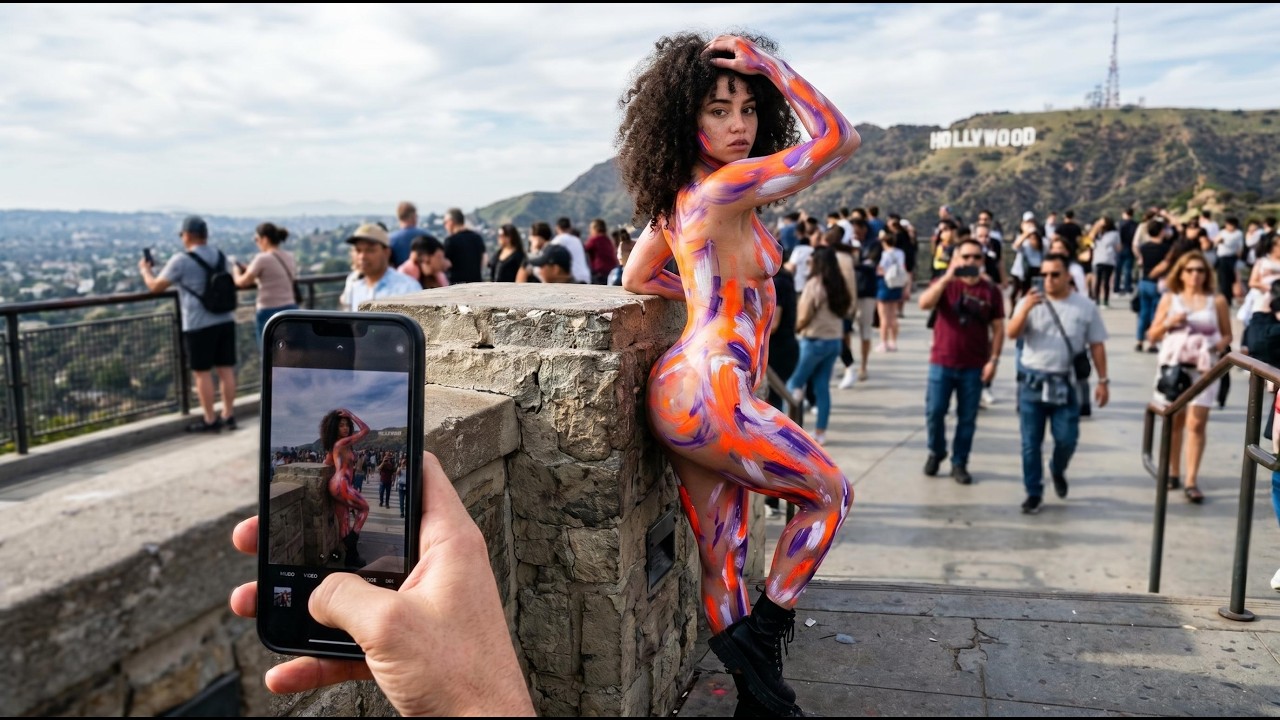
How Hollywood Body Art Changed the Way America Sees the Human Body Forever
Ink_and_Instinct
213 views•2026-06-02

Gudok Bull #4 #gudok #instruments #russia #russian #ancient #ancienthistory #sunoai #suno
aimechanicalbull
289 views•2026-05-29

Michelangelo Knew the Right Answer. They Ignored Him for 400 Years. | VERSO
VersoArt
123 views•2026-05-29



