Dr. Jalal delivers a polished and accessible overview of the brain that successfully bridges personal experience with academic fundamentals. It is an excellent primer for beginners, though it stays safely within the boundaries of well-established textbook science.
Install our extension to search inside any video instantly.
Dr. Baland Jalal | Intro to Neuroscience | Lecture 1 (Official)
Added:You know, after having my first sleep paralysis experience as a teenager. And it kind of changed the course of my [music] life.
And so, I had this experience, and this took me on a journey to understand the human brain. I wanted to [music] learn, you know, why do I exist? I have to learn about the brain because that is the place where existence [music] comes about.
My course, it's about a lot of things.
[music] It's the basics of the brain, the nervous system, how the brain communicates with the rest of the body, but also understanding [music] how information between neurons gives life to consciousness.
I found this stuff so boring, to be honest. It's just a lot of fancy Latin [music] names for different structures.
But once you actually learn what these things do, you just like, my god, [music] you have this communication between these cells, and here's the magic of reality. All our dreams, poetry, pity, [music] infinity, Shakespeare, all comes about through these neurons. That's crazy.
So, I'm trying to understand [music] the higher philosophical plane through understanding the brain, the interface between [music] neurons and flesh and blood and then higher abstract ideas and concepts.
Is neuroscience fun? What do you think, Alicia, huh? All these things [music] we can explain. That's why I got into this stuff, man.
All right. Well, very excited to be here to talk about the brain. And thank you so much for coming. I appreciate you guys coming from far distances in some cases.
So, this will be fun.
Um so, I'm originally Kurdish from Iraq.
I grew up in Copenhagen, Denmark. And um you know, I I grew up in a tough neighborhood over there. Yeah. Called the ghetto. It was really tough tough beginnings. And um I was a teenager in Copenhagen.
I had an experience. It was kind of weird.
I was sleeping in my my bedroom um this this morning. And I felt I felt like something was on my chest, you know, strangling me. It's kind of weird. I felt awake. I could see my surroundings. I could I could sense the room, I could ceiling, you know, my a Tupac poster was there and everything, you know. But I felt like there was some there was like there was like ghostly evil presence in the room.
And then suddenly I I I saw my I saw my legs like going up and down and I wanted to move, but I couldn't. I was literally like paralyzed. And at this point I thought I might die, you know, from this. What's going on? Am I dying? Is this like what death looks like, you know, this transition from this world to the next? Is that's what's hap- is that's happening now or It was It was crazy and with each moment I just felt things becoming more and more sort of intense to the point like, you know, I was being strangled and I was like, I'm going to die now.
It's getting worse. I mean, I can't breathe. I just WANTED TO LIKE SCRE- YOU KNOW, SCREAM, you know, you know, "Dad, Mom." But I couldn't I couldn't speak, you know. I was I was I couldn't [clears throat] say anything.
And then finally I was able to sort of jolt myself out of this this state.
So, you know, the next the next day I was like I was terrified. What do I do? Like do I go tell my parents? You know, the at the at the time I was you could say the black sheep in the family. Like I wasn't the the best kid.
So, what do I go tell my parents I had a ghost visit me in my in my my little room? Would that be nice? Probably not. That'd be That'd be pretty pretty insane, you know. And and and so do I Google I saw a ghost?
That'd be That'd be weird, you know.
What would happen there? And so I later discovered that there's something called sleep paralysis, this condition, this state where you're paralyzed from head to toe. And as you are paralyzed, you literally like might see a ghost in your in your room.
And this ghost might strangle you, you may feel like you're dying, you know, and can come come in all kinds of shapes. Uh some people have this creature this see this this being with like wearing a hat and this black outfit and and kind of looking kind of like I'm looking now. Uh Um but yeah, so they might see that that that this this guy like Freddy Krueger or in some cultures it has other names like you know, like space alien abduction might be one one version of this and and so I had this experience and this took me on a journey to understand the human brain.
Because I realized well, this is actually something the human brain constructs. It's something that the brain can create these sites, these vivid intense crisp visions of ghosts.
And if the brain can create this this must be fascinating and and at the time I was a really really bad student. I was very bad in school. I had the worst grades in science.
And I always was the worst of all like Dolly of physiology wasn't for me. Okay, I didn't like physiology, chemistry, all that kind of stuff. Not my thing, okay?
So, but I you know, having this experience, I I started to sort of look into the brain, what's going on and this took me away like took me on this journey to a different six different countries, seven different countries to study this phenomenon called sleep paralysis.
Um and I studied the brain. I went to California, studied with one of the legends in neuroscience under his under his wings, you know, learning about the brain and and all that stuff.
So, from this bedroom having this weird experience, I went all the way to all these places to study the brain. Is that clear?
That's what happened.
So, that was that was kind of my background. So, the brain is strange.
It's it's it's weird. It's it's this this organ, right? It may may it's made up of 100 100 billion neurons.
And these cells that we have in the in the brain. They communicate, they chitchat with each other, okay? So, the synapses, they use synapses. So, each one of these neurons, they have about 1,000 to 10,000 connections with other neurons, okay?
So, that makes the the brain the most complex form of matter in the known universe. So, everything we know in the whole universe, the brain is the most complex. It's just the most complex object in the known universe.
And so, in this course, you'll be learning about the human brain and and um we'll go from the nitty-gritty of neurons, synapses, and things like that.
We just got to learn that kind of stuff to have basics, like directions of the brain, you know, what are the names of the different structures of the brain.
So, we go from that all the way to things like Shakespeare and genius and how does you know, how does spirituality come about in the brain, you know, is there something like uh genius, you know, and so so that's kind of the journey, going from from the small stuff all the way to to the big stuff. That's the kind of the plan.
All right.
So, um >> [snorts] >> So, the brain the human brain uh if you look at it, it's it's unique in in in uh compared to other animals. If you look at something like the chimp, for example, right? If you look at a chimp brain, the chimp brain is not that different from ours in many ways. We have we share 98 of our percent of our genes with a with a with the chimp, right?
The only difference is the following.
When our um when cells start to divide, so you had a single cell, right? That became two cells and then division divided and more and more cells, you know, that continued all the way to 100 billion neurons. That was the end product for the human brain, right? But chimps, you know, they their brain also had the same division going on.
But because of a single gene, so there's a single gene deciding when this division this process of division and dividing of cells should stop. Okay? So, this single cell this single gene uh is different in human beings. So, it stops a few rounds earlier than in chimps.
So, for that reason their brain is 1/3 of our size.
Right? And for that reason you have all these this massive complex difference, you know, in terms of human the human brain being that vastly unique we have it we don't have it in language and things like that from a single from a single gene. That's quite quite interesting.
>> You're starting your own college?
>> Yeah, well, it's well started.
>> The progressive's hope for universal education at something [music] approximating zero cost. That's what we've got.
>> We can bring you the best lectures that you'll be able to get anywhere in [music] terms of their quality of content and also the production values.
>> All the people we're bringing on board are existential philosophers in some real sense. We think that a humanities education should enrich [music] your experience in every direction and be nothing but positive. Well, except also difficult and challenging, but that's also positive.
>> Yeah, I we certainly didn't have that when I was a kid.
>> I call this the this police the police officer gene. Is that is that single gene making all all that difference? Um Now, neurons they talk to each other. Okay?
And uh first you have the neuron itself.
Okay? So, this part of the talk by the way it's going to be it's more it's going to be a technical. I just want to lay a foundation for you before we go further up, right? So, you have the neurons they talk to each other through these thread-like fibers. You have the axon. So, the soma, you know, the cell body and then you have the axons. Okay? These fibers protrude like protruding coming out of the the neuron. And then on other neurons you have dendrites, other fibers.
Okay? And the axons and the dendrites, okay?
Allow the communication flow between neurons, okay?
And then there's a synapse in between.
Okay? The synapse is the gap from where the all the magic happens. That's where the communication occurs, right? Through these synapses, all right?
Cells in the brain, neurons, cell bodies, axons, okay? Dendrites.
Dendrites.
Okay? Synapses.
And that's where the the the this the the the communication takes place.
>> [snorts] >> Now, the cell body itself is kind of boring. Nothing much happens.
You have the mitochondria, you have the, you know, DNA. You have the basic stuff.
Right? So, what what the the the unique part is really the axons and the dendrites in in the the the the brain in brain cells compared to cells of the rest of of the body.
Now, in terms of the communication in the brain, it's chemical in the sense that it goes from it's electrical to the electrical impo- impulse called the action potential, all right? This is what allows the communication to occur. You have an elect- um action potential occur, electrical charge in the neuron travels down the axon.
And then a chemical reaction occurs whereby synapses uh they have uh vesicles that are being released. So, molecules are released.
These are the neurotransmitters, chemicals, okay? And they travel in this fluid like like you know, uh fluid like substance and then go to the other side of the of the dendrite. And this is the post pre-synaptic neuron and then post-synaptic neuron.
All right, to be honest with you, when I had when I had um biopsychology uh early very my first classes, I found this so stuff so boring to be honest.
Like because it kind of was like, well, here's the neuron. Like here is the synapse. Here is this. Here is that, right? And it was kind of boring, right?
Because there's no context really, right? So that is boring. And then we got to the brain centers and that's kind of the next step. So you go from neuron, then you go to the like the centers of the brain. Oh, this is the basal ganglia. Here's the globus pallidus.
Here's the ventral dorsolateral prefrontal cortex. Here is the brain stem all that. Kind of boring because there's no context. It's just a lot of fancy Latin names for different structures.
But once you actually learn what these things do, you just like, my god, you have this communication between these cells and here's the magic of like reality, all our dreams, poetry, pity, infinity, Shakespeare all comes about through this kind of chitchat. That's crazy. Like how is it that all our sensory experiences, you know, when we fall in love, everything comes about through this like through these neurons.
Makes no sense. Have you ever held a brain in your bloody hands and it's just like this charp you know, little substance. There's nothing unique about it when you look at it, okay? There's this there's this um it's like it's like jellylike substance and then you have there's like the cauliflower really, the cortex outer layer where like 30 billions of the neurons are you know, placed. And this folded but it's it's looked like a cauliflower because our brain has to have it all inside the skull. Otherwise, it would be like it just couldn't fit in there. So it's just like squeezing it all in and nothing fancy about it. But yet it's so fancy, man. It's crazy.
Agree clay?
Okay.
Very good. So, there are different types of neurons. And again, I'm going to the technicals cuz you you have to learn this, okay? You got to know this, all right? So, different types of neurons.
There's a multi um polar neurons, unipolar, bipolar, all this kind of stuff. And it just means that they're diff like some some neurons have the cell body and then one axon and when some dent like one dendrite dendrite others have have a few of the one process extending from the cell body.
Most of the neurons are what most are called multipolar. So, that means Jose that basically there are multiple processes extending from the cell body.
Does that make sense?
Multi, got it? Bi, two. Uni, one.
Interneuron, not none kind of thing, okay?
So, got it. Okay. Got to learn this, man.
And then there are myelin, fatty substance on the axon. The axon does what? Communicate, send signals.
Dendrite receives. Dendritic spine, that's the place where the the thing the the neurotransmitter sort of goes to, okay? Over here you have the um what you the the the axon terminal, okay? Axon terminal. Technical names, you got to learn them.
But yes, so you have this fatty like substance on the axon. These this is actually pretty cool because until you have like brain damage and you realize uh let's say you're depressed. So, for for depression you have all the stress and the you know glucocorticoids flooding the whole body and then you have like all this this myelin you know, being removed. And so, your neurons can't communicate that efficiently and fast. So, you realize this is very important. Or MS, multiple sclerosis, right? And then you don't have all this fatty substance on the axon allowing the action potential to occur, okay? The electrical charge.
Right? And the electrical charge itself, think about it. Here you have So, you have something that chemical chart like chemicals are charged.
They're called ions. And Dahlia would know this. So, they're called ions, right? And so, you have a bit of of this is, you know, you have the um uh sodium, which is positive, all right?
It's on the outside of the cell membrane, okay? And then you have potassium inside the cell, which is negative. And so, the cell is more negative at rest, okay? And the the membrane, meaning just the little wall that separates the the the blood and neuron from the from the rest, is kind of permeable, meaning that, you know, things can semipermeable, so things can go in at times, but other times they can't. Certain ions can can cross, others can't. Some chemicals, meaning.
Now, um here at this at this point um when the when there's a stimulus, the electrical electrical stimulus, you have the sodium ions rushing. They rush the cell, go inside, okay? And as they rush the cell, meaning that the there's some gates like channels, they open up, go inside the cell.
Cell now become a little bit more positive. And the potassium, they slowly, they'll be slower, go out.
That's flip from negative to positive.
And in that flip, it goes back, and that's the whole electrical thing.
Is that clear?
Do I make sense? I really do I?
Kind of make sense, right?
Outside, sodium, positive. Inside, potassium, negative. Resting state.
Electrical stimulus, these run go in the gates open, go inside. Just chemistry, go inside, changing the electrical charge in the cell.
Okay? And then it goes from that electrical to the chemical neurotransmitter dancing, dancing, dancing, dancing, going over there to the dendrite, to the dendritic spine.
Is that good?
All right, so we have all that going on.
All right, so these synapses are can be on and off at any given point. They could be in inhibitory excitatory.
Okay?
>> [snorts] >> And these neurochemicals these neurotransmitters that being sent to the other to the other side are crossing the big ocean can be either in inhibitory or excitatory in nature, meaning they can be more less likely to you know, start an action potential in the next neuron or not.
Create a signal in the next neuron or not, pretty much.
Right?
Uh and you have a you have different Actually, the brain has a lot of these neurotransmitters. These neurotransmitters, when I learned about them like serotonin, dopamine, glutamate, aspartate you know, GABA, all this stuff. Like I was like, what? Does that make sense?
That's kind of boring, like learning these these names.
But then I realized, my god, these actually have functions in everyday like everyday we kind of have a little bit more of this and we go through depression and then we might have glutamate go up you know, and then you have GABA, not enough GABA to inhibit the brain and you you know serotonin, you feel a sense of well-being you know, you're excited about this talk, so you have a lot of dopamine maybe or maybe or maybe not.
Okay.
So so these chemicals actually have functions, right? And there is something called neuropeptides like oxytocin you fall in love, a lot of oxytocin there, you know, like the bonding, you have a child like Michael he had a child he had a lot of he had a lot of oxytocin, right? Helping you your brain to remove you know, delete certain circuits and allowing you to bond with a child and being less selfish and less ego-centered and all that stuff.
And less stressed. Absolutely, my man.
So, you have all that. And so, these neurochemicals, about 14 we usually talk about neurotransmitters, but they're they're like maybe closer to 100. So, there's a lot of these.
So, you have those.
Yeah, as we said, their goal is to either in you know, inhibit or excite the next neuron. So, inhibitory or excitatory. So, this is there's this inha- inhibitory and excitatory dance going on in the brain.
Really, that's what it is. The brain is just going from inhibitory and excitatory. And certain neurochemicals like like the like glutamate, for example, which is the main next excitatory neurotransmitter in the brain, you know, that just makes the brain very, you know, excited. There's a lot of chemicals There's a lot of chemicals going on, a lot of action potentials, a lot of uh stuff going on.
For neuroplasticity, you need a lot lot of glutamate helps you uh you know, form new connections. Neuroplasticity is is a term for you know, the brain being able to change itself. And we'll go we'll get we'll get to that.
Okay, some more some more terms, okay, for you guys.
Amino acids. Amino acids are the names for certain a class of neurotransmitters like glutamate, aspartate, GABA, uh glycine, all right? The monoamines.
Monoamines is another name. Dopamine, epinephrine, norepinephrine, serotonin, all right?
So, they have different functions. They have a different basis neuro- you know, in molecular in terms of their molecular uh origin. And then, you have acetylcholine and the neuropeptides.
These are kind of the classes. But you can when you when you learn about them, they're very cool. Like acetylcholine, man, it's it's cool. Acetylcholine is a part of the attention system. So, when I learn to pay it like when I I want to change my brain to be more like better at some kind of skill or something, right? So acetylcholine is that neurotransmitter that's part of the nucleus basalis system, and so in order to change my brain and to release growth factors from like proteins that allow me to create new circuits in the brain, I need I need a lot of this acetylcholine.
So right? So what I do is for example, I have to pay a lot of attention to let's say learn a new skill like I don't know what would I learn that would be completely new like ballet or something, okay? That would be very new for me. So I would have to pay a lot of attention to this like you know? It's be very new and then I activate my nucleus basalis system and in the nucleus basalis you have this acetylcholine neurotransmitter being released and then when I release that I'm I have a lot of focus, I have a lot of attention and when I have that I release nerve growth factors which I'll get to later on and it allows my brain to be more plastic. It gets into a plastic state.
Did you you know that? That's kind of interesting. That's what I'm saying, we go from like the knowing the Latin names and all these kind of names and then we actually learn what it means to my life.
Okay, to Jose's life, you know, to balance life, you know, how do I actually change my brain for example, you know, by Well, you have to you know, you learn about it. So dopamine when you have this reward neurotransmitter is when you are excited, when you are happy, you know, you have this excitement, you have a certain form of happiness. It's not right There's two forms of pleasures and we'll get to that too. So that's the kind of more like I feel I'm feel satisfied. It's a consummatory kind of pleasure and then there's this excitement pleasure when I'm having a gift or something, you know, like I'm excited to unwrap the gift, okay? That's another time of sort of dopaminergic uh, of pleasure, you know? But the dopamine system is also part of the brain plastic system, so to speak.
And, um, so those are the kind of some of the functions that that these neurotransmitters have.
So we can say that that they're the new There are these neurotransmitters, and then they are, um, they're neuropeptides, which are kind of They're kind of different. They're sort of released in a different manner, you know, they have a sort of, you know, they are a bit different in that in that way. And And so, oxytocin would be one one example. Endorphins, they're kind of Endorphins, man, they're so interesting.
I found endorphins really interesting.
Do you know that Ronald Ronald Reagan when he was shot when he was shot, he was like boom, blasted, but yet like none of his security people knew that he was being He was shot. Nobody knew.
Because he didn't like have pain. He felt no pain, and they took this chap to his car, you know, and and nobody knew.
And then later when they interviewed him, he said, "I've only been shot in the movies, and in the movies I don't feel I I'm supposed to feel like pain and agony.
But when I was when I was shot in real life, I I didn't feel anything. And that's because the endorphins have the system of sort of quelling and and and, you know, inhibiting pain."
And And so a lot of pain, as we will see, pain is one of those systems in the brain that you can manipulate psychologically. There's a lot of like ways to trick yourself not to feel pain.
Pain is in in many ways an illusion.
Okay? The brain has certain gates and has potential to actually, you know, kill pain, right?
So, um, so these are the endorphins.
Or ac- acupuncture, for example. You know, like acupuncture when you when you have like for example, certain countries, in China for example, it's been used for a very, very long time, for hundreds of years, in before surgery. So they have somebody lying there, right? And so, he's you know, they don't do any painkillers. So, what they do, they might do acupuncture on this chap, and then they do the surgery, and he won't feel pain.
You know, over here in the West, we were like, "What are these guys doing, man?
That's that's some crazy stuff, you know?" But then, but then what they do it what they did actually, they they saw that when you do this on animals, it works, too.
What's going on?
You can do this on animals, and you're doing surgery on animals.
Right, doctor? You do some surgery on the animals, and it even works.
Then they had some drugs, antagonist drugs, to uh basically to antagonize the receptors of the endorphins, and lo and behold, the acupuncture doesn't work anymore. It doesn't have the pain quelling dampening abilities anymore.
So, he thought, "Oh my god, this it's working. Acupuncture may be working through the endorphin system."
All right? Neuropeptide.
Can you see? You go the boring name all the way to the function. And when when you go to the function, that's why this when when the interesting part comes in.
Got it?
Some more systems and divisions, okay? So, the brain goes from neurotransmitters, um neurons, right? And then we neurotransmitters and synapses and all that. And then we have They will sort of make circuits, so to speak.
They make circuits, meaning you have a cluster set of cluster of neuron you have a set of you have a cluster of neurons over here in the brain, set over here, clusters over here, and then they make circuits. They communicate, okay, right? So, through the axes axons, these fibers allow these different parts of the brain to communicate. So, these are called circuits. And together, if there are several circuits, we call it a system.
Okay, a system.
Roughly, we talk about the central nervous system, the CNS, and the peripheral nerve nervous system, system.
Okay, this fancy nerd speak for the brain and the spinal cord, right? The brain and the the brain and the spinal cord we call the central nervous system.
Okay, if you have a damage, car accident, can you regenerate your spinal cord?
No.
Impossible, right? That's not possible.
But if I cut the the the the wires here, the the the nerves here, can I regenerate?
Yeah, we can. Okay, we can.
Right? And that is because we have something called glia cells, Schwann cells, part of the glia family, that allows that to happen. Okay. I don't think I mentioned glia, so you should know there are multiple there all these various kinds of neurons, but they're also glia supporting cells. Not that exciting, but they help with some of the circuitry, help with some of the myelin, okay? There's actually they outnumber the neurons by 1 to 10, so there a bunch of these guys, but glia cells. And so they have fancy names like Schwann cells and all that. You don't need to know that, but the Schwann cells in the peripheral nervous system allow for that allow sort of the the tracks to regenerate. Sometimes actually what occurs, you may have a track like some nerves being cut, like say the the medial, radial, and ulnar nerves. Is that right, doctor? The ulnar, medial, and radial nerves, okay? So you got the nerves, right? And so you cut them, so the nerves are cut, but for some accident or something, you know, you have the nerves crossing in a wrong way, and then you move you want to move this finger, and then you move this one instead. That can happen, too.
But in the peripheral nervous system, which is a system that brings information from the sensory receptors, you have thermal, like pain receptors, temperature receptors, you know, touch receptors, all kinds of receptors here, uh you know, in the skin that send information from the spinal cord going to the brain. Peripheral nervous system.
Send commands to your organs.
Okay?
The glands part of the peripheral nervous system, okay? Central nervous system, peripheral nervous system.
The somatic nervous system is the one that sends commands to the muscles to move.
Okay?
And brings information from the sensory nerves.
Somatic nervous system.
The part of the peripheral nervous system that regulates the internal organs, all right?
Is the autonomic. Autonomic nervous system. The The glands, the hormones and all that kind of stuff. And that part uh can also be further divided into the parasympathetic and parasympathetic and the sympathetic nervous system.
Sympathetic meaning not that I'm being sympathetic with somebody, but I'm in a stress, hyper-vigilant, state fight and flight reaction kind of thing. So, when you're sort of agitated and all that kind of stuff, you're in the sympathetic state. And when you're relaxed, calm, meditative state, it's called the parasympathetic state.
So, you just got to learn this. This is the basics. Once we get out of this whole mess, it'll be more it'll be more fun.
And also, you have to learn about directions of the the brain. The directions meaning you have to like know if you're looking at this most complex form of the form of matter in the known universe, you kind of know want to know if you're going this way, what does that mean? What is left? Like even in my little ghetto in Copenhagen, you know, we had to know like what's the name of that street and that street and right? So, so what about the human brain, the most complex form of matter?
You got to kind of know uh where it's kind of going, which directions.
But when you when you talk about the brain, you go lateral, meaning out, medial, inside. That's what you call the structures.
Dorsal, up, ventral, down. Ventral, down. Dorsal, up. Lateral, lateral.
Medial, anterior, posterior. Superior sometimes also is used inferior.
Is that clear?
All right. Superior, inferior.
Dorsal also, ventral.
You go lateral, medial.
All right. And then you cut the brain, you cut the brain here, because you want to have a brain scan, and it's called a coronal view. All right. Not corona, but coronal view. All right. And then if you cut it from the middle right here, cut the middle here, it's called a sagittal view.
All right. Sagittal view.
Horizontal section. Horizontal.
It kind of look like a wrinkled man, really. Like it's kind of wrinkly, right? It's kind of all wrinkly. And these wrinkles you call gyrus.
Gyri, the wrinkles.
And they sort of folds in inside them are called sulci or sulcus. Sulcus.
All right.
And then in between you have the fissures. The fissure.
Like the longitudinal longitudinal fissure. Okay, here.
So, you have that, and then you have the corpus callosum, which is a wall that separates the two hemispheres.
So, each hemisphere is like this um like mirror mirror-like um walnuts, half on each side, and there's this wall allowing them to communicate. All right.
Now, if you cut this wall, Beland does a karate chop, cut this wall, and then these two won't be able to communicate, these two hemispheres. All right.
And that's interesting because it's actually done sometimes when people have or it was used to be done a lot when people had epileptic seizures, the grand mal seizures where they were like you know, a lot of movement and all that.
All these of electrical activity in the brain and so they have all this movement. So in to prevent that from spreading from one hemisphere to the other, they would cut the corpus callosum.
And that was interesting because then when you had this chap when you had this chap stand there like he was with the no corpus callosum has been surgically removed and you ask his hemisphere over here, the left hemisphere by communicating here over here with on a screen um you say Jalal do you prefer prefer vanilla or chocolate? I might go I prefer vanilla ice cream, okay?
And then you communicate with the other hemisphere over here on a screen.
You ask the same question, he says chocolate.
Okay. So here he says vanilla, here he says chocolate. Okay? And mind you each hemisphere sort of controls the other side of the body meaning everything I see in this from this side of the side of the world comes to my brain on the right side and vice versa.
So there's this when I move my left right arm here, it's the left hemisphere. When I left, right hemisphere. I get a stroke over here doesn't work. Right hemisphere.
So the corpus callosum when it's cut you know, you have two you have two individual two consciousness in the same body in a sense. That's interesting. So the corpus callosum allows the hemispheres to communicate. Man, I remember learning this and I thought no way. I mean it's boring. Telencephalon, diencephalon, it's the forebrain, upper brain, the the cortex, that kind of region, thalamus, like fancy names for structures and the you know, parts of the brain that are up here, okay? Got it?
Then you have the midbrain.
Middle part of the brain, mesencephalon.
Mesencephalon, you know?
And then you go to the hindbrain, the lower part of the brain, the brain stem, which is kind of the lower part. It's called the mesencephalon and myelencephalon.
All right. So, you have these names.
And let's let's start with the cortex.
So, the cortex is the upper part of the brain. It's It's the outer layer. As we said, there's one about approximately um something like uh 30 billion neurons.
Okay? So, if each of these makes contacts to about 1,000 to 10,000 other neurons through these synapses synapses, that is calculated to something about 100 million billion synapses.
Uh that's pretty crazy.
And there are different lobes. There are different areas in this cortex, in this outer layer of the brain.
Do you know Are you all familiar with the term cortex? I just want to kind of gauge you. If you all Do you all kind of know the term cortex?
Cortex.
And you're you're you're on top of it, man. I didn't I didn't know cortex when I was starting out, but obviously you're not starting out and and that's great. So, cortex, the outer layer of the of the brain is kind of is kind of a fancy It's a It's a fancy area because a lot of our higher faculties come you know, come about from the cortex. And it's divided into four lobes, four areas. So, you have the frontal lobes, this part. And in the frontal lobes, you have things like movement, motor cortex. Like move an arm occurs in the frontal lobes.
You have something like higher order thinking, uh decision-making, being able to plan for the future, you know, think logically, rationally, all that kind of stuff.
Also in the in the in the prefrontal uh cortex, meaning the most, you know, uh frontal part.
You have the You have the parietal lobes.
Parietal is the place in the brain where you have spatial navigation, meaning you kind of know yourself in space, where am I in space, you know, my body image. I close my eyes, okay? So, this is some So, we all have a body image, a sense of a self, a sense of an I, me, I feel anchored in this uh body.
I'm anchored in Balan's body. I I move my body from A to B in space, and I know where it's positioned. This is the parietal lobes, okay?
Is that clear? So, that's the parietal lobes. Uh when I uh move around in a room, navigating space, um then you have the occipital lobes, back of the brain, involved in vision, seeing, all right?
Seeing the world. Um so, you So, you have that. And then you have the temporal lobes. All right? So, that's the region of the brain involved in, well, hearing, because it's right next to the ears, but it has all kinds of functions.
Um it's very close to the emotional uh part of the brain, or it's on the outside surface. Um and um yeah, a lot of vision occurs over there, too. Communicates ability to see faces, recognize faces, temporal lobes.
So, it's a lot of that uh is is there, too.
Um so, yeah, that's the That's the outer layer of the brain.
You go a little bit deeper, uh you look at other structures. So, you have beneath it, you have places like the thalamus, involve It's a kind of a relay station, meaning when you have like you have any sensory information coming through the senses, which first is registered in the cortex, right? So, seeing, hearing, touch touch is in the parietal lobes, right? All these kind of things, right? It also it always goes through the thalamus. There's a region that's a kind of a stop station in the brain called the thalamus.
Actually, it's unknown exactly why we would need a stop station.
But there is this stop station in the brain for all sensory information processing.
But all the sensory information coming in always goes through this thalamus region.
For what? I don't know. God God only God knows, okay? But for that for some reason we have the thalamus, right?
So, thalamus is an important structure kind of lower down. Hypothalamus hypothalamus kind of means beneath.
That's kind of the hormone factory of the brain. We'll get to that because the hypothalamus is so fascinating, man. The hypothalamus is is in insane.
This is the hormone factory meaning it's sort of it directs all the hormones. It's it's it's sort of signals another part of the brain called the pituitary further down in the brain. And then it sends commands to the glands in the body where hormones are eventually being released. But this is kind of the master gland. In this part of the brain, you have when you get sleepy, okay? You need sunlight in order not to feel sleepy all the time. You need sunlight to set your biological clock, for example.
And so when you get that, my eyes doesn't like these these lights, but when when you get that, right? Um you communicate with the hypothalamus, okay? Setting your biological clock. Suprachiasmatic nucleus of the hypothalamus, okay?
Now, goodness me.
Same region of the brain controls aggression.
Same region of the brain controls sexual behavior, sexual motivation.
Now you then you might have might ask, why is why is raping or sexual aggression a factor for male male sexual motivation sometimes?
Right? So, the same part of the brain is like size of marbles control aggression and sexual behavior.
Right next to each other and when places in the brain are close to each other, you often see cross wiring and cross activation.
So, might it be a coincident coincidence over here that you have you know, sexual motivation and aggression being coming from the same part of the brain.
It's interesting.
>> [snorts] >> On that note, in the in the parietal lobe in the parietal lobe, there's a homunculus, meaning there's neurons creating a map of entire human body over there.
Okay? So, it's kind of it's called topogra- topographical organization.
And so, it kind of has this human like like a like a head arm, but it kind of looks like the way I'm looking now.
Like it has that same So, the a feet area is next to my leg area.
The leg area is next to rest of the body, the stomach, the arm.
So, it's it has that topographical organization, meaning it has that it it resembles the human form. Now, you might say, "Why does that come about?
Bellend, what is that about?"
Right? And we'll get to that cuz that's really really fascinating. It turns out there's a there's a very very straightforward reason for this. Okay?
There's a very straightforward reason for this. I'm going to keep that for later.
But, it turns out the feet area area is right next to the sexual organs in the brain.
Okay?
So, next time you get a feet massage, you may you may have other sensations, too.
Because there's a lot of lot of cross-wiring going on. And when two structures are next to each other in the brain, they tend to overlap a lot.
There's a lot of cross-wiring and cross-activity, okay?
So you So there there there some very interesting stuff. We'll We'll get to it.
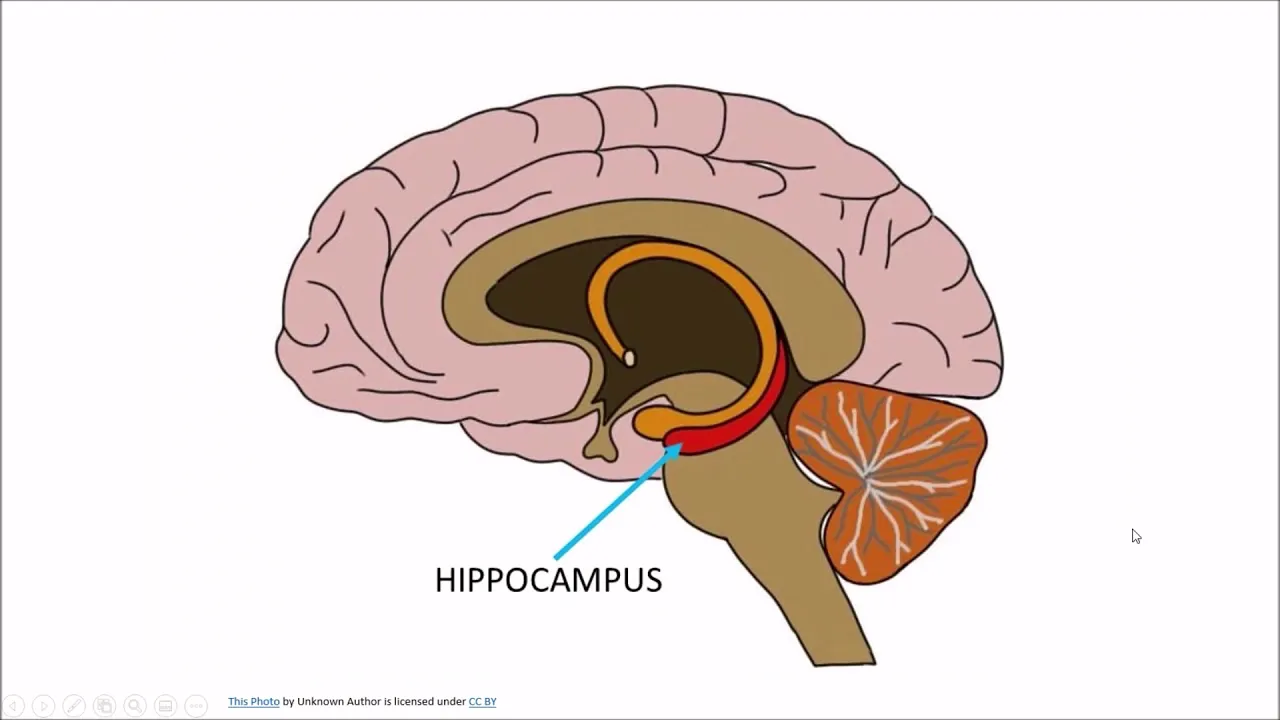
Now, you have the hypothalamus. You have the limbic structures of the brain, the emotional part of the brain. It's called the limbic structures. It's like a limbic ring. Okay, it's tucked behind your temporal lobes. Now we're getting deeper inside the brain.
A little bit deeper inside it. Limbic ring. In the limbic ring, you have things like the amygdala, processing fear, processing forms of aggression, fear, anxiety. It's called the amygdala, almond-like structure behind your ears, the amygdala. I'll get to this point over and over, the structure.
You have things like the fornix, okay?
The anterior cingulate. When it's it's active when I'm vigilant and I'm vigilantly monitoring the world. You know, obsessive-compulsive compulsive disorder, anterior cingulate is goes off the roof. It's always It's always active, you know.
This is dirty, you know, this is, you know, my I need to wash my hands.
Anterior cingulate kind of goes on top on the top here on the limbic.
Limbic ring. You have region called a septum where you have like excite like pleasure, excitement, dopamine. So you feel like excited.
It's in that limbic ring, the limbic ring.
Limbic structures. If you ever, you know, you will know that the limbic system is important. It's the emotional system of of the brain. Limbic system. Just remember this. It's going to come over and over in your life. You'll hear about limbic. Emotional part of the brain.
Okay?
Then you have another structure which I'll I'll go into depth with a little a little bit later, but it's called the It's called the um basal ganglia. Basal ganglia.
Also kind of deeper in the brain, all right? So, we went from the cortex deeper.
Basal ganglia, movement.
But, not all kinds of movement, because we said up here in the frontal lobes, you have like voluntary movement.
Okay? Voluntary movement, that's in the cortex. Command.
The in the cortex, move the land, move.
Okay. But, then you have another part of the brain, the basal ganglia, involved in voluntary um sorry, not voluntary, involuntary, automatic movements. Like when I jump out of bed, it's involuntary. Or when I walk, I don't really think about it. I kind of just walk, right? Or when I when you tell me a good joke, okay? I might laugh.
All right? So, that's so involuntary.
With my smiling, in fact, a good photographer when he tells me uh a good joke before he takes the portrait, I might smile.
But, can I smile Can I smile voluntarily? Michael, can I smile voluntarily?
>> A real smile.
>> Not a Not a real smile, right? So, there's two kinds of smiles. There's the voluntary smile and the automatic, real, wholehearted smile. Is that right? So, it turns out the uh the uh voluntary uh smile, it's kind of it's kind of uncharming. It's not really charming, is it? Like kind of doesn't look that good, right?
It turns out that because of the the muscular the muscles are different, using different muscles, uh actually have certain wrinkles here around the eyes over here when you smile, the real smile. It's called the Duchenne smile, the French neurologist, Duchenne. Over here, so you see these muscles. And so, if you want to know if you're, you know, your partner is actually happy about something, look at these muscles over here. If she's really smiling or she's making it up, you're faking it, you know? So, you can you can look at that.
And scientists sometimes, when they do research, they they'll actually film they have but they will record these muscles see if they're moving when you're smiling.
It's kind of interesting.
In Parkinson's disease or syndrome you have a death okay, of these dopaminergic neurons that allows movement to occur in the basal ganglia, okay? The basal ganglia is a lot of fancy names for various structures inside it called this globus pallidus globus pallidus, striatum, nucleus accumbens, um and things like that. The caudate, putamen, just fancy names for structures inside this basal ganglia. Just want to throw it out so you know the names, okay?
But here, if you have Parkinson's, there's a part of the brain uh in a slightly different structure called the substantia and here you have pitch black cells that actually that that uh you know this area die they die off the the the the cells that produce dopamine die here.
Okay, so because of that circuit going to the basal ganglia, you don't have have lack of movement. You become stiff.
And then you have Sydenham's chorea, another neurological disorder, you have too much dopamine.
Too much movement. You become like this.
Sydenham's chorea, this like jerky movements everywhere because there's now the system is lack of it's too excited.
Too much excitation in the system.
Sydenham's chorea.
Go further Let's go down in the brain, a little further down. That's the brainstem.
Okay?
The brainstem is interesting. You have the cerebellum. I mean this structure is it's about 20% of the volume of the brain, but yet 80 like 80 like there's about 80% of the neurons are in this structure called the cerebellum.
It's involved in things like memory, but procedural memories meaning memories that are like a procedure or automatic, like riding a bicycle or you know I don't know, like walking up the stairs or something like that. It's kind of automatic. That's all in the cerebellum.
It's a very interesting structure and it's it's involved in balance, it sense balance.
You have things like the medulla oblongata.
Right, I love that name, medulla oblongata.
It's another structure over there.
Like a kind of structure.
And that structure is also with the pons, things like breathing, respiratory, blood pressure, all that kind of stuff.
It's in that that region of the brain.
So, there's this tremendous modularity in the brain. This is what This is another point. There's been a conflict There's been a conflict, there's been like, you know, a lot of like thought going back and forth in terms of is the brain modular or is it like like a whole thing that always works in a in a in a larger context where everything is just working with everything and not in isolation.
Right?
Now, it turns out you actually have a language module in the brain.
Okay? So, there's a module over here in the left side of the brain involved in language. And this you have something called the Broca's area. It's kind of around the frontal cortex. Because the frontal is involved in spee- like motor uh execution. So, this is called the Broca's area.
You speak.
Speech. Syntax, grammar, all that kind of stuff.
Okay? There.
Then there's another region over here in the parietal called the Wernicke's area involved in in understanding language.
Grammar. Not grammar, sorry. Semantics, the actual understanding of language. In the Wernicke's.
And these are connected by a band of fibers fibers called fiber called the arcuate fasciculus.
Arcuate fasciculus.
Okay?
But mind you, if you have a stroke, let's say, in the Broca's area, right?
You have a stroke, you have damage, you have trauma to that part of the brain, you will not be able to produce language.
Your grammar will be all over the place.
Okay? It's not very good.
You want to speak, it's like the guy Paul Broca who who who discovered this, his first patient kept saying "Tan.
Tan. Tan." over and over. He had damage to his Broca's area. All right?
So, you can't produce language. Now, it's not like you can't speak. You can still speak because the motor area here in the brain controls your muscular the muscles in the execution of like being able to actually produce speech or produce like have movements of your your mouth. But, it's just your language you don't have this the grammar is not there. Your ability to produce grammar, which is very unique to humans.
Okay?
And the Wernicke's area on the other side on the other hand, if that part of the brain is is damaged, you can you speak very eloquently like Shakespeare, but everything is gibberish, nonsense, makes no sense.
Syntax is perfect.
Better than, you know, some of these schools English students in in some of these Shakespeare schools. Very good grammar.
But, the ability to understand language is gone.
You don't understand. It's gibberish.
You speak to them, they will they will act like they understand, you know, but they're just speaking gibberish. So, it's it's very scary. I actually saw a patient with this um It was recently uh it was actually a dear friend who had a stroke over there.
And it's it's like it's like meeting a schizophrenic all of a sudden. Even though they're not schizophrenic, but somehow that because of that part of the brain being sort of not working, they can't they can't they they seem so strange. It's see all it seems so strange. And even the logic, and I had this conversation with my my my mentor out there, my my my former mentor, my friend uh uh and and he we physician, uh neurologist, scientist. And And we were sort of looking at this with this patient and we were like discussing to what extent is language influence influencing thought? Because there's a lot of debate going on among researchers and in the world of like, you know, neuroscience going back all the all the way to Chomsky and and you know, uh Noam Chomsky saying, "Well, language is so strange. It's so unique because it seems like there's something going on here." I mean, no animal, no chimp, but 98 98% of our genes can speak. Can they Can they produce Shakespeare? No. Can they give this lecture? Probably not.
Can they like have a conversation? No. I mean, language, being able to understand and produce language is so unique.
Right? And then when you see that ability go away, you go like, "My god.
What's going on, man?" That's what's So, there's a re- There's a There's a region there, the the Wernicke's area.
And it worked together It works in in in together in sync with the Broca's area.
Broca.
Paul Broca and Carl Wernicke, who discovered the other module. So, there modules in the brain. There's a vision module that we as we talked about, being able to see, right?
Um there's a hearing module and so forth. So, the brain is extremely modular.
But yet, there's also a lot lot of cross-activation and and dynamic cross-talk between regions of the brain. And that's what makes the brain interesting.
A lot of cross-talk. And that's why we went from the era of the Paul Brocas and the Carl Wernickes and all that, where we said, "No, everything Every structure equals function, okay? You speak, you have speak module in the brain. You have, you know, you have the the the the language um you have the vision module of the brain. You have the math module of the brain." Can you There's actually a part of the brain that's that is specific for math, doing math. Angular gyrus, there's a math module in the brain.
Okay? Angular gyrus in the left hemisphere mainly. We have them in both sides, but on the left side and the temporal lobes is a region called the angular gyrus. It's actually unique to human human beings that's involved in calculation.
Some of these math savants, these people that have extraordinary math abilities, they have sometimes they might have a hypertrophied enlarged angular gyrus.
On the right side, the angular gyrus on the right side is involved in sort of the more abstract understanding of math, not merely computation and calculation.
The right side of the brain that's computational style, its way of being is more holistic, big picture, spatial. All right, that's the right hemisphere. So, the angular gyrus is more the the bigger concepts in math in the in the right hemisphere. It turns out Einstein had huge angular gyri.
>> [snorts] >> When they looked at his brain, he had huge angular gyri.
Which is quite interesting, isn't it?
Who knew?
He was was an interesting character, this Einstein.
All right.
So, there's one example we'll get to um about the There's something called the rubber hand illusion. Do you know about the rubber hand illusion?
It's an interesting one. So, you have your hand, place it here, your left hand.
All right. All right.
All right. Yeah, you do it. Please do it. Like Tony Robbins course, go ahead.
Do it. You put your left hand here, and then under and then your right hand you you put it underneath the table, right here.
Right hand underneath the table.
And then the blind comes, the blind comes and strokes and taps your hand. You go stroke, stroke, tap, tap, tap, stroke, stroke, tap, tap, tap.
Okay? But it doesn't do it on this left hand, but instead he does it on the table in front of you. So he actually strokes and tap tap tap strokes the table in front of you.
Your visual access Amadi, your visual access is now on your left hand and the table.
Your right hand, where is it? It's underneath the table.
It's underneath the table.
As I'm stroking tap tap stroke stroke tap tapping the table in front of you, I will also stroke and tap tap stroke stroke stroke the right hand your right hand underneath the table.
But mind you, I will do it in a precise synchronised manner. So the stroking and tapping on the table and the stroking and tapping on your right hand underneath the table is completely in sync. Is is is matched, completely matched, okay? Stroke stroke tap tap tap occurring on your hand underneath the table and on the and on the table itself is precise in in the way it's been being done. Is that clear?
Guess what happens in about a few minutes of me doing this.
You will feel touch sensations arising from the table as if it it was your hand right there.
You'll literally feel touch sensations arising from the brain from from the from the hand as if it was yours. Now your hand is the table. Your right hand is no longer underneath the table. You feel it's here on it's the table. And if I, Balint, was to take a hammer and smash the table, you would have your pain sensation. Pain receptors, pain cells, neurons in your brain somatosensory cortex become active for me inflicting pain to a table.
So that's the power of neuroscience, right? You can go like a few minutes, I can transform, you know, Jose into a table.
Okay? Just in a few few minutes like that. That's pretty amazing.
So I was like, "Wow, this is this is a very cool this is a very cool trick, the rubber hand illusion." Because normally you you what you would do is actually you would have the left hand here, you have a little barrier, a little wall, and then you would uh it would actually be here the wall, and then you would have a fake rubber hand right here, and then you would put your right hand over here, not underneath the table, but right over here, and so your vision would be on the rubber hand, and you'd feel the sensations in the rubber hand.
So, you would incorporate a rubber hand into your sense of self, your body image.
Okay?
Very good.
Now, it's then later with the scientists discovered that you can do it with a table, or you can even do it with a with a like if you have a mannequin like doll or something standing over here, and you stroke the tap and you know, the the doll in front of you, and somebody strokes and taps your head behind you, you will feel that it's your head over there.
My this might cure my migraines and stuff, you know, because your head is temporarily transported into the doll's head.
It's kind of interesting. But, then you normally you just use the rubber hand, right?
And I thought, "Wow, this is a cool trick." And I was living in California back back in the day when life was good, you know. I was living I was living in California, and then one day I was I was driving on the freeway and I and I thought, "My god, this rubber hands trick is so cool."
What if you had somebody with OCD, obsessive-compulsive disorder, and you were to contaminate this rubber hand while doing the trick?
Would they feel contaminated in the rubber hand? And that was my big sort of question.
So, I I had to try this experiment. So, we did this in a lot of like volunteers, we brought them to the laboratory, and we did the stroke stroke tap tap tap tap stroke stroke on the rubber hand.
And then the blind came in and put some disgusting thing on the rubber hand.
Guess what happened?
They felt contamination and disgust in the rubber hand.
They felt disgusted in the rubber hand as if their hand was disgusted.
Okay? This is interesting. It shows you that modules that has to do with touch, vision, a sense of feedback from the from limbs, and disgust centers the region called the insula insula, they all they all operate together. So, even though you have module, there's a bigger picture. They can communicate at all times and create dynamic holes. And then the brain can contaminate a rubber hand and make them feel like it's their hand that's being contaminated. So, we replicated this study over in Boston at Harvard Medical School on OCD patients. And my god, you should have seen them. I mean, I was looking at these some of these patients and they was like they were like shaking and they were like, you know, just all over the place because of us contaminating a rubber hand in front of them. Does that even make sense?
Yeah, it happened. You know, and and of course, I don't do this to to to like I don't want to torture these patients. I do this for a clinical reason. It turns out the way you treat OCD these days is that you have a patient and you have them do something he finds completely disgusting and, you know, aversive like touching, you know, some people have contamination aversion some OCD patients. And the way you treat it is that you you have the guy touch something disgusting over and over. Like bottom of your shoes or even a toilet seat.
You know, they touch it for like 30 minutes and what happens is that is that disgust and anxiety goes up, but then eventually they habituate. Disgust goes down.
Now, major issue with this treatment is that about 25% of patients won't start the therapy because they fear starting.
It's too aversive. Man, if I can't shake hands with you, I'm not going to go touch this toilet seat.
I'm not going to I'll my hand in the toilet bowl, okay? I'm not doing that.
Or like, you know, a bunch of them I you know, drop out.
Huge percentages drop drop out.
Come won't complete the therapy. You know, about 20%.
You know?
So, it's a big problem. So, I thought, well, if I can trick the brain by creating an illusion like this, then I can say, "Look, Joe, who has OCD.
Look, Joe, I won't I won't contaminate your real hand, but I'll contaminate this rubber hand." Knowing how the brain works, and in that way I can create a sense of disgust, anxiety, but in the indirect way where I won't contaminate his his skin.
That's how you you can take information and knowledge about neuroscience and apply it in very direct clinical ways, and potentially help millions of people in the world. Potentially, you know?
This is what we did.
Very cool. So, this is this is a rubber hand illusion. I might I remember one time I was over in Boston with one of my friends, a professor over there, and we did it in the air. Said, let let's just do it in the air. Meaning we did the stroking tap tap stroke, stroke stroke tap tap on a hand underneath the table, and then we stroked and tapped the air.
And the and the guy felt like there was a ghost hand.
The ghost. Kind of spooky. Like there's a ghost hand.
So, your body image. This is called the body image.
Not the psychological body image where you in the magazines and health magazines and all that, but but the neurologically scaffolded anchored body image, the sense of being anchored here, occurs in the brain in a module. I keep using the word module because it's the word scientists use. A module called the superior parietal lobule, for example, is a fancy name for a some neurons over here, but has your entire body image uh mapped onto it. The abstract feeling of baland being in this body.
So, we'll get through body image in the next lecture about how body image comes about in the superior parietal lobule and how this can go wrong in some patients. Thank you.
>> [music]
Related Videos
8:08
Neuroscience
What is neurodegeneration?
TheSheekeyScienceShow
3K views•2019-08-19

57:35
Neuroscience
IPL - Ruth Empson "Mind the Gap"
otagouniversity
251 views•2019-07-08
14:01
Neuroscience
How our body shapes our mind | Pancho Tolchinsky | TEDxNapoli
TEDx
2K views•2019-12-05
1:00:02
Neuroscience
Impact of Early Life Deprivation Danielle Stolzenberg Marcus Pembrey Bruce McEwen
uctv
4K views•2019-12-01
10:32
Neuroscience
β-Caryophyllene for Parkinson’s: Protecting Dopamine & Easing Symptoms
parkinsonsdiseaseeducation
6K views•2025-08-09

20:44
Neuroscience
New Insights from Inside the Brain with Rodrigo Braga, PhD
NUFeinbergMed
421 views•2025-04-14
9:57
Neuroscience
Highlights for dystonia • 2025 MDS Congress
movedisorder
145 views•2025-10-27
58:17
Neuroscience
Animal Welfare Synergy Series: Dr Tom Smulders on hippocampal neurogenesis
costactionlift
135 views•2025-07-14
Trending

9:05
Artificial Intelligence
2.4 BILLION Records Got Leaked...
DeepHumor
15K views•2026-07-22

13:25
Business
Playstation NO DISC/NO BUY Fight Is Over...
DavidJaffeGames
4K views•2026-07-23

19:32
Business
Should I buy a Sawmill?
essentialcraftsman
29K views•2026-07-22

16:52
Anthropology
Americans Confused in Australia for 17 Minutes Straight
IWrocker
17K views•2026-07-23