Hudson masterfully distills complex harmonic transitions into accessible, functional tools that breathe life into traditional hymnody. It is a rare example of pedagogical clarity that prioritizes practical application over academic abstraction.
Install our extension to search inside any video instantly.
Confused by Passing Chords? Start HereAdded:
Most hymns are played like this, but they could sound like this.
So, how are pianists able to make simple hymns sound so rich and smooth and flowing? Well, the secret is passing chords. But the problem is most people try to learn passing chords and immediately get buried in complicated theory and confusing explanations. But passing chords don't have to be complicated.
In this video, I'm going to show you the three passing chords that every church pianist needs to know. And these will instantly make your him playing sound much more full and flowing and professional. and I'm gonna explain them in a way that any beginner can start to use right away. And by the end of this video, you'll be able to take simple hymns and make them sound much fuller.
So, the first chord is the minor 2 move, and I call this the walking sound. This one is the easiest, but honestly, it's probably the most useful and the most versatile. I find myself going back to it all the time. And here's what that one sounds like.
So, the way this works is really simple.
If you're on the one chord, and in this case, we're in the key of F. So, the one chord is the F chord. And if you're sitting on the one chord for a while, it can sound static. We want to do something to fill in that space. And a great way to do that is just to move quickly to the minor two. And so, this is how you can figure that out. Whatever the root of the chord is in the left hand in the bass, we're just going to play the note above it. So if it's an F chord, the B the left hand will play the G.
And then the right hand is going to play a B flat chord in whatever version you're close to. Now, when we play this G down here and a B flat up here, we get this G minor 7. And that's the minor 2.
So instead of just sitting there on the one chord, we can move to that minor 2 sound real quick and jump right back off of it.
And you can actually do this on any major chord in the key. I like to do it on the B flat chord right here. Take a listen to how it sounds on this section of the song where we're holding out I'll fly away.
So when I get to that B flat chord, I move my left hand up to the C. And then what we're actually going to play is a E flat chord in the right hand.
So the way to figure this out in any key in any chord in any key is just remember whatever the root of the chord is the left hand will come up to the next note above it and the right hand will play the chord a fourth above the root. So if it's an F then the right hand will go from that F to the B flat.
If it's a B flat chord, the right hand will play an E flat chord as the passing chord.
Now, the best part about this particular passing chord is it doesn't mess up any of the other harmony. The other singers or other instrumentals that you're playing with, just doing this quick movement is not going to interfere.
You're not changing anything. You're just adding a little movement, a quick movement to add some variety when the chord stays for a while. Now, the second passing chord we're going to learn is the secondary dominant sound. And this is like a bridge move. How do you get from the one chord to the four chord in a real smooth way? So, take a look at the hymn at Calvary. This song is in the key of C. And on the chorus, we go from the C chord, which is the one chord, to the four chord. And we can just do that's right here. We finish the this verse.
We can just jump right to the four chord.
And that sounds fine, but there's a much more musical way to do that. Take a look at what happens when we use the secondary dominant.
And the way this works is actually ridiculously simple. Take your one chord, in this case the C chord, which is C, E, and G.
And now add the B flat to it.
That sound right there, that's the dominant sound. It wants to go somewhere.
It pulls you straight into that F chord.
All you have to remember is this. If you're going to the four chord, add the B flat and then go.
This is all over gospel style him playing and it'll make your transitions to the four chord sound intentional and smooth rather than accidental. Move number three is the half-step trick or the trionee substitution. Now, I know that sounds advanced and complicated, but I'm going to break it down in a very simple way so that you can understand it and start using it right now. All you have to do is think of this as a halfstep movement into your chord. Let's say we want to get to the F chord, but instead of going straight there like this, from the C chord to the F chord, we're going to approach that F chord from a half step above with this G flat right here.
and then into the F chord. Now in your right hand, all you have to do is play two notes. This B flat and this E.
That sounds rich, full, and honestly pretty advanced. But it's just a simple halfstep movement. This works so well because it creates tension and then resolves it. And once you hear this tritone substitution sound, you're going to start noticing it everywhere. Listen as I play it in the hymn I'll fly away.
And I'm gonna use it right here going from this measure into this measure.
Now remember, these are passing chords, so they're really effective just as a quick slide into the next chord. Just a real smooth movement right in the next chord.
just like So, let me show you real quick how you can figure this out for any chord in any key. Whatever your target chord is, say I'm going to a C chord. Well, what is the five seven that would lead me to the C chord? It's that G7 in the key of C. The G is the five chord. The G7 is the dominant chord that leads to the one.
So play the G7 in the right hand and play your half step above your target chord in the left hand. So there's my D flat to bring me to the C. And then in my right hand, the G7, but I'm going to take out the G and the D or the one and five of the chord.
And then that's my trionee submove.
That's that beautiful sound right there.
So you can figure out any chord in this way. How about the A flat chord?
What's the five of the A flat chord?
Well, the E flat 7 is that dominant chord. It's going to lead me to the A flat.
So let's play the E flat 7 in the right hand. E flat, G, B flat, and D flat. And then play the note a half step above my target. So I want to get to A flat. I'm going to play this A in the left hand.
And then take my Let's remove the root and fifth of my dominant chord. And that shell right there is what I need for that move. Let me show you one more.
How about the key of G? So, if I want to get to the G chord, what's the five seven of G? Well, in the key of G, the D chord is the five chord.
That D7 is that dominant chord that would lead back to that G chord. So, I'm going to play the D7 in the right hand.
I'm going to use that half step above the G in the left hand, but now I'm going to take and play only the F sharp and the C. I'm going to move remove the D and A the root and the fifth of my five chord. And there's my there's my trionee sub my half step move.
So here's what we covered today.
The walking chord from the minor two and back. The bridge to four and that half step slide.
Now, here's the key. Don't try to add all these at once. Pick one hymn this week and try to add just one of these ideas. That's how this will start to feel natural. And if you want more help with common chord progressions in church music and a lot of plugandplay left and right hand patterns, I encourage you to check out my book, The Church Pianist Pattern Library. It's available on Amazon or on my website as an instant PDF download. And if you're more on the beginner side, I've created the beginner church pianist course. This will take you from even if you don't know anything about music to get you to playing your first hymns in church. The links for all these will be down in the description.
If this helped you, make sure you hit the like button right now, subscribe to the channel, and let me know in the comments which one of these you're going to try first. Thanks for watching this lesson.
Related Videos

HOW to VISUALIZE the FRETBOARD like a PRO/LEGEND
NassorTafari
273 views•2026-05-31
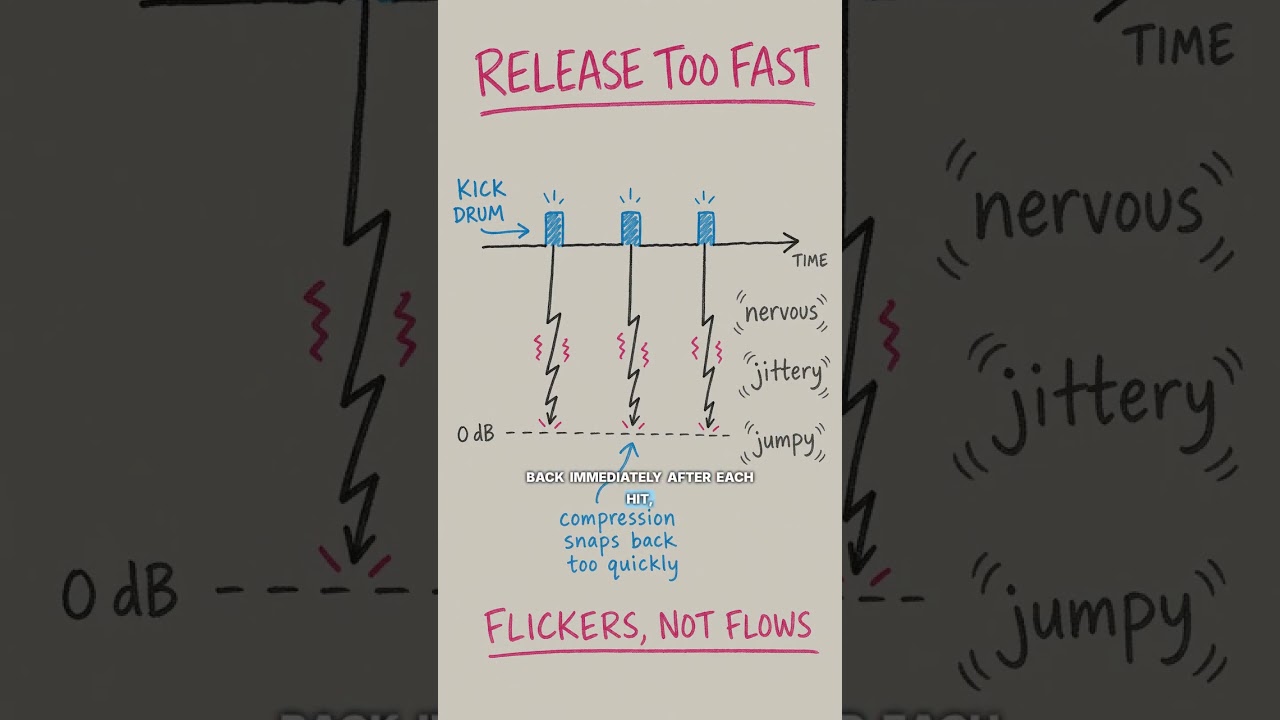
Your Release Time Is a Tempo Decision, Not a Feel Decision #musicproducer #musicproduction #typebeat
abletonppr
995 views•2026-06-01

Music Teacher reacts - Beauty and the Beast - Gabriel Henrique, Jade Salles
jennifersmusicpage
178 views•2026-06-03
Don’t be the fool
ijadamademusic
2K views•2026-05-31

くじら - いのちのパレヱド x G-Wiz - Teddy Bearを #マッシュアップ
jilow_j2u
564 views•2026-05-29

Vocalist Reacts To The Bass Gang 'THE SOUND OF SILENCE'
QofyReacts
569 views•2026-05-29

"Rome" by Shunned at a Funeral (Live Version, Full Song) #shunnedatafuneral
ShunnedataFuneral
885 views•2026-05-29

🚕 Taxi Amarillo - Proyecto Cumbia | Cumbia de Guitarra 🎸
Proyecto_Cumbia
284 views•2026-05-30


