Altdorfer’s shift to landscape was a brilliant strategic pivot that allowed sacred narratives to survive the Reformation by hiding them in plain sight. It demonstrates how aesthetic innovation is often a byproduct of navigating political and religious constraints.
Installieren Sie unsere Erweiterung an, um sofort in jedem Video zu suchen
This sacred 1500s painting tells a symbolic story | BBC TimestampHinzugefügt:
As landscape painting came off the walls, it turned its back on the bucolic dream world.
And it happened in a place which couldn't be more different from the glowing sunlit stone at the villas of the Venetto.
It was in the 1500s in the dark primeval forests of Bavaria in southern Germany that European landscape art really came into its own. Albert Aldorfer was a painter who'd spent his career depicting religious scenes, albeit one strangled in greenery. But the undergrowth began to take over until Aldorfer made nature itself by itself the whole story.
It may seem a bit over the top to describe this scrappy, tiny, sketchy little thing as constituting a revolution in art, but you know, that's pretty much what it is. Because with this little painting, the landscape suddenly happens. By which I mean landscape, the word stops being a description of background, of setting, and becomes the work of art itself.
What is that revolution? Well, what outdorfer has done is something extraordinary. He's removed from the picture, any semblance of a story, any kind of characters. Yes, there is one little fellow here which gives this watercolor painting its title, wood cutter. And if you look very, very closely, he's on lunch break. He's got a jug of something. It's the German world has got to be beer, I would think. And he's laid his axe down. And if you look really carefully, he's got a devastating pair of scarlet stockings on there, but he's not really the kind of character you expect when you see landscape as background there. The characters are full and frontal.
There is of course a heroic character in this painting, a monster, a giant. And it is the tree itself dwarfing the little figure sitting at its base.
And doesn't that tree remind you of someone else? Of the twisted torso of the crucified Christ on his wooden cross, arms outstretched.
What we've got here in effect is a disguised religious picture and I think there's a reason for the disguise. Al Dorfer is actually in a sticky position.
He was living in a Catholic town at the beginnings of the eruption that was the Protestant Reformation. He'd been involved in organizing town ceremonies and pilgrimages.
And part of the force of Protestantism was about the so-called idolatry of images.
With this painting, he neatly sidsteps the whole issue of brutal and bitter partisan religious conflict. We have religion implied by the body of the Christ and the tree rather than frontally represented.
This is a very stylish picture, but it is also very raw and rough and coarse.
It's almost at times as if he painted it with a pointed sharpened twig. There is a kind of slashed cut element to some of the details over which the paint drips and hangs when it describes these leaves.
This is a portable thing. It's not stuck in a church like an alterpiece. It's not stuck in a wall like a fresco. You can own this. You can carry it around. A new kind of art is born here. And outdoor knows that very well.
When outdoor used woodcuts to reproduce his paintings, the audience for landscape art dramatically increased.
And what his audiences were buying into were landscapes loaded with symbolism.
The sacred tree, the Gothic wood.
Mostly though, they were devoid of human beings.
Ähnliche Videos

Futurism: The Radical Art Revolution That Predicted the Modern World
HENITalks
154 views•2026-05-29

Jack Levine, Witches' Sabbath
smarthistory-art-history
471 views•2026-05-29

고가 중국도자기 경매
고가古家고도자기경매
203 views•2026-05-29

क्या भगवान शिव हारिती की नकल हैं? झूठे दावे का पर्दाफाश | हारिती बौद्ध देवी बनाम भगवान शिव
sanatansamiksha
1K views•2026-05-30

This is one of the biggest street art exhibitions in London but there’s a twist 👀 Danish
ExploringLondonCity
1K views•2026-05-30
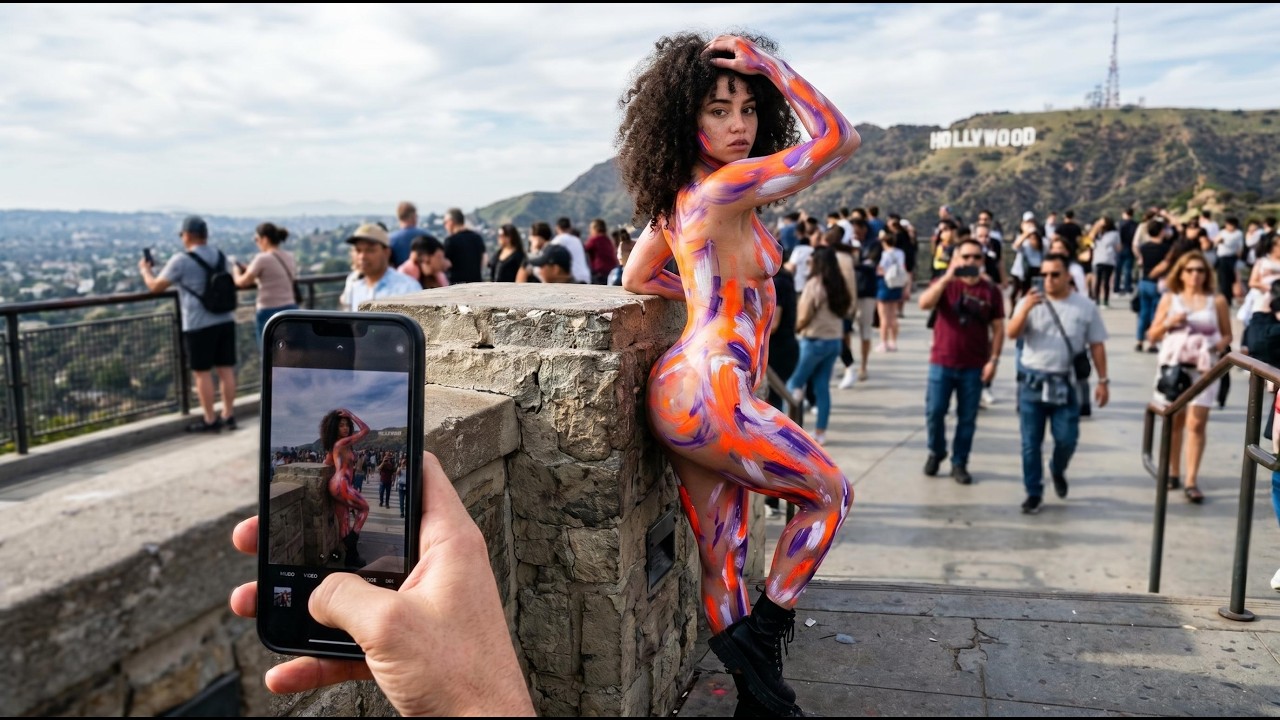
How Hollywood Body Art Changed the Way America Sees the Human Body Forever
Ink_and_Instinct
213 views•2026-06-02

Gudok Bull #4 #gudok #instruments #russia #russian #ancient #ancienthistory #sunoai #suno
aimechanicalbull
289 views•2026-05-29

Michelangelo Knew the Right Answer. They Ignored Him for 400 Years. | VERSO
VersoArt
123 views•2026-05-29



