Scientists using the James Webb Space Telescope discovered supermassive black holes existed just 500 million years after the Big Bang, far earlier than expected since black holes normally take over a billion years to grow that large. Researchers propose that dark matter, which makes up 85% of the universe, may have slowly decayed and released tiny bursts of energy. Even this minuscule energy—just a billionth trillionth of an AA battery per particle—could have supercharged massive hydrogen gas clouds in the early universe, triggering direct collapse where gas skips star formation and instantly becomes a black hole. This theory suggests dark matter may have helped create supermassive black holes much earlier than previously thought, potentially solving one of the biggest cosmic mysteries.
安装我们的扩展,即时搜索任意视频内容
Dark Matter May Have Created the First Supermassive Black Holes 😳 #space #universe #blackhole本站添加:
相关推荐

Spiral Galaxy NGC 3370 from Hubble | NASA APOD 2025-11-05 #Shorts
galaxygallery
938 views•2026-05-30

SOMETHING inside the SUN is CHANGING
RaysAstrophotography
1K views•2026-06-03

NOAA Warning! Massive Double Cannibal CME Impacting Earth: G4 Storm Watch!
worldnewsreporttoday
1K views•2026-06-04
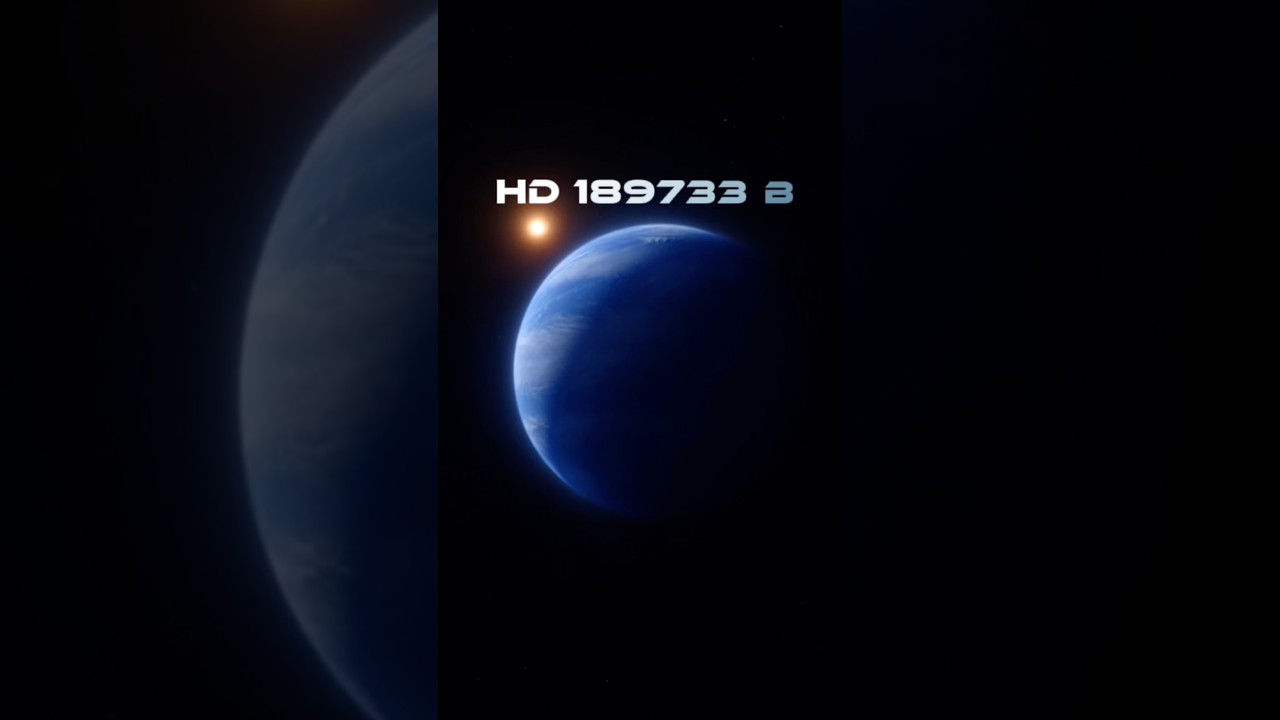
🌌 HD 189733 b | The Planet Where Glass Rains Sideways
EVENTHORIZONUK
3K views•2026-05-31

🎬 Title: Milky Way & Andromeda Collision: The Future of Our Galaxy 🌌 #astroph #askap
SulaimanKhanSulaimani
429 views•2026-06-01

Captured the Blue Moon (with a twist) 🌙✨ #space #bluemoon #telescope
realAstroExplorer
674 views•2026-06-01

10 Planet Where a Black Hole Replaces the Sun
cosmicexplorer-EN
147 views•2026-06-02

Is this a copy of our galaxy? Discover Galaxy M81!
UniverseDocumentaries-cc4mb
995 views•2026-05-31


