This moving story highlights how music serves as a profound neurological bridge, preserving emotional identity even as cognitive functions decline. It is a powerful reminder that the human spirit remains reachable through melody when words are lost.
Install our extension to search inside any video instantly.
Dad diagnosed with dementia at 51 reacts to going viral in emotional Take That video
Added:A father living with dementia after being diagnosed 5 years ago when he was just 51 has gone viral after his wife posted a video online of him enjoying a Take That concert and singing along.
A video of Gary Young reciting the lyrics to his favorite Take That song has been viewed over 2.3 million times on Tik Tok. Let's take a quick look. Yes. Don't close your eyes. Don't disappear. Do n't disappear. Yes. You and I, we can fly. and Gary, we just sang along, didn't we, Gary? Perfectly.
Yes.
Gary is now 56. He is with us with his wife Natasha. Um, it's great to see you both.
Greetings.
Thank you.
How much do you love Take That, Gary?
You like it, right? I love Take That.
You like to sing along.
Oh, I am.
Yes.
Yes. You were thrilled with that concert. I mean, you could just feel that joy.
Yes. Yes. And we all joined in. We just wanted this.
Yes.
2.3 million views and it's great to see you both enjoying the concert so much, isn't it?
Yes. What do you think was it about attending the concert that prompted him to remember the lyrics of the song? Oh, I feel like we've lost a lot of conversations, a lot of our Gary. I just feel like when music comes on, especially something like Take That, which he loves, it's like the Alzheimer's goes away and it brings Gary back and you just love it, don't you? And you know, he can't remember a lot of things, but when the music is playing, word for word, he remembers the whole song, which is magical. I know from my own mother, who has dementia, that when she sings, everything comes back, but she also seems to come alive and wants everyone to join in, and it's almost like "come on."
That's right. You told us : "Come sing with us." It was wonderful.
Yes.
What's your favorite Take That song, Gary?
What would it be?
Is this "Rule the world"?
Oh, "Rule the world." "Rule the world". Yes, it's his favorite.
Yes. "Rule the world".
It's hard for you as a family, isn't it?
Yes. Because you were young when you were diagnosed, right, Gary? You were only 51.
Yes.
Yes.
Yes. And you have little daughters, right?
Yes.
Yes. And they joined you this morning in the dressing room.
Yes. Yes.
They were in the studio, sitting in our seats, listening to the car, doing all that.
Yes. They go with you to...Yes, we've been to many concerts together. Yes. We took Gary to Alex Warren a month ago.
Oh, great.
Yes, he was on many.
So yes, we go to concerts whenever we can, but Take That is his favorite.
And do your daughters approve of Take That, or do they think it's a bit, well, you know?
No, they actually like Take That. Do they like it?
Old style.
No, no, no. They are delighted. Yes. They also like a lot of tunes from the 80s and 90s. So, no. No, they perceive it as completely normal.
How shocking was this diagnosis?
What did you say?
When did you find out about the diagnosis?
We knew something was wrong. Gary was a carpenter-entrepreneur, he could do anything. And suddenly he lost his self- confidence.
He had a hard time making a sandwich or a cup of coffee. We knew something was wrong. But because he was so young, I was constantly told that it couldn't be dementia, it had to be something else. So it took a lot of time and persistence with the doctors to get tested. It took about 18 months until I finally received a diagnosis, and although it was terrifying, I was relieved that I wasn't going crazy.
And what is the thing you and the girls love doing most with Gary right now?
Yes. What do you like to do, Gary? A. You like listening to music, don't you?
Oh, this music is the best.
Yes. If we're having a bad day or things are getting tough, we turn on some music and I feel like everything's okay. Or we drive in the car, turn on the music, and everything becomes fine. We are joined by Dr. Ramir from West Yorkshire. There are a few points here, aren't there, Dr. Ramirez? First, a diagnosis of dementia at 51 is incredibly early.
Yes, very early. And this is extremely rare. And it is important to understand why young people get dementia.
I think that's absolutely right.
You know, when young people come to us with memory problems, we have to think about many different causes, not just Alzheimer's.
And many, many referral pathways for patients with memory problems start at age 60. So I can't refer a person to our local memory clinic until they're 60.
Below that age, there's a different pathway, and it's much more difficult to research. Uh, but I think this needs to change for the better. And-and this is a good example of why we have to remain impartial when young people come to us with memory problems.
And Dr. Emma, what is it about music and singing that makes our brains seem able to keep doing it when normal memory and communication become much more difficult?
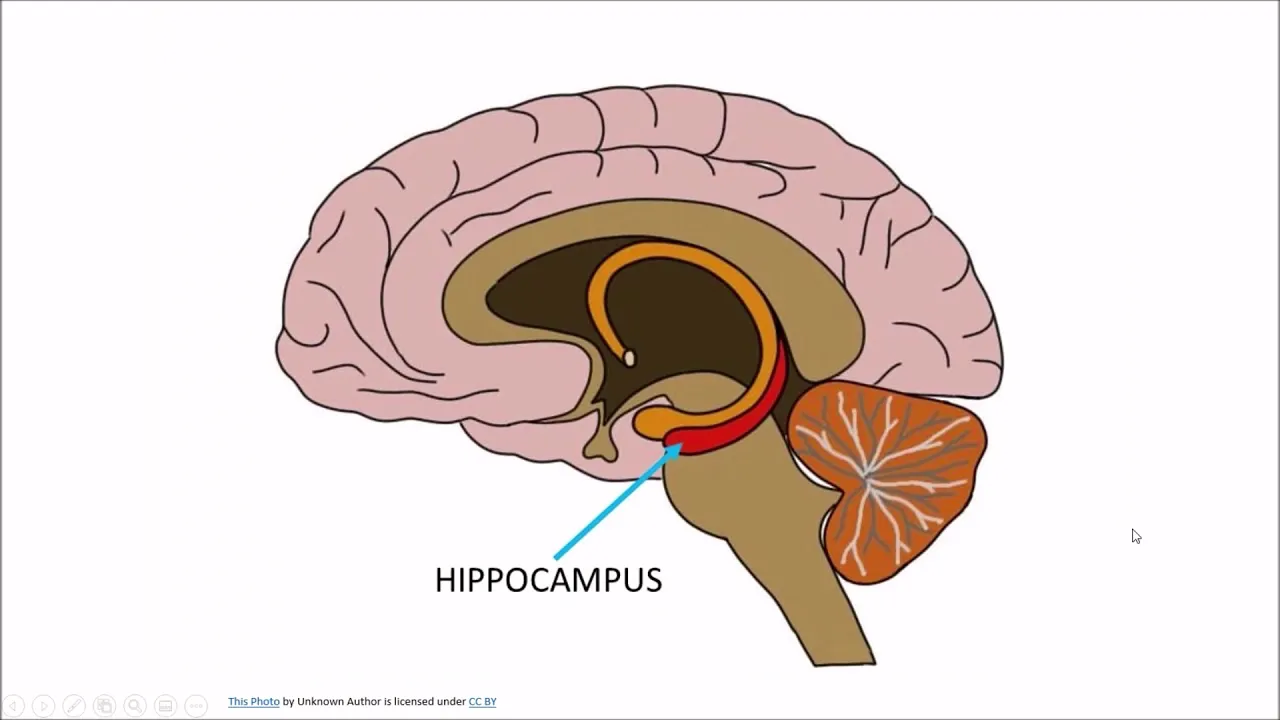
Yes. The most fascinating thing about music is that it activates different parts of your brain at the same time. So you process sound in the auditory area of your brain. You create memories in the hippocampus and add emotions in the amygdala. So all these processes happen simultaneously and work together. And often people stamp their feet or nod their heads to the music. So you also get this movement. Therefore, when it comes to Alzheimer's disease, it is the areas responsible for early memories or short-term memory that are often affected.
Whereas music is stored in other parts of the brain. Therefore, she stays there longer. So, people can recall old songs that they have associated with memories for much longer during the course of the disease.
Another thing is that it relieves tension during a conversation. It's hard to remember, for example, what you had for breakfast or answer questions when you're living with dementia.
But the lyrics are already in your head. So you're not using the same part of your brain. And, as just said, it helps with emotions.
We know that when people living with dementia listen to music, it can reduce their stress levels. This increases dopamine levels. So it doesn't slow down the progression of dementia, but it significantly improves the day of the person living with it. And it could change everything for them.
Oh, Dr. Amir, it was great talking to you about this.
This is so interesting, isn't it? Because you realize that with dementia you worry: are you losing the person who was your husband, your father, and then when the music plays, suddenly it all comes back. Yes, that's true. No, definitely not. Yes.
You know, it feels like we've lost so much already, but for me and the girls, going to concerts, listening to music, don't we feel like we're getting a piece of our Gary back?
Maybe we'll just listen to it, because it's such an incredibly moving song, right? I know.
Stuart, can we just listen to some music while we finish talking to Natasha and Gary? because you love Take That so much. You, Gary, and me, and who can blame you. Exactly.
Because your namesake Gary Barlow is an exceptional songwriter, right?
You love Gary Barlow.
Yes.
And he shared this too.
Really?
Yes.
He's a good person, right?
Yes.
Oh, I'm sure he's very proud that it makes you feel so good, Gary. Isn't it?
Sometimes.
Sometimes. Sometimes.
You know what? It was nice to meet you.
Oh, thank you.
Thank you very much, Gary. I really appreciate you coming. And Natasha, it's nice to see you.
Thank you very much.
And your wonderful daughters too. They were just wonderful here this morning.
Here they are. You can see them on the screen.
It's nice to see them.
Yes.
Hey girls, how are you? Did you like it?
Oh, they all...Yes. Are they looking at us, are they...Yes, here we are.
I thought they might have changed the channel for a minute. Well, have a nice day.
Related Videos
8:08
Neuroscience
What is neurodegeneration?
TheSheekeyScienceShow
3K views•2019-08-19
57:35
Neuroscience
IPL - Ruth Empson "Mind the Gap"
otagouniversity
251 views•2019-07-08
14:01
Neuroscience
How our body shapes our mind | Pancho Tolchinsky | TEDxNapoli
TEDx
2K views•2019-12-05
1:00:02
Neuroscience
Impact of Early Life Deprivation Danielle Stolzenberg Marcus Pembrey Bruce McEwen
uctv
4K views•2019-12-01
10:32
Neuroscience
β-Caryophyllene for Parkinson’s: Protecting Dopamine & Easing Symptoms
parkinsonsdiseaseeducation
6K views•2025-08-09
20:44
Neuroscience
New Insights from Inside the Brain with Rodrigo Braga, PhD
NUFeinbergMed
421 views•2025-04-14
9:57
Neuroscience
Highlights for dystonia • 2025 MDS Congress
movedisorder
145 views•2025-10-27
58:17
Neuroscience
Animal Welfare Synergy Series: Dr Tom Smulders on hippocampal neurogenesis
costactionlift
135 views•2025-07-14
Trending

13:38
Law
WOW! Judge TURNS THE TABLES on Trump in His OWN $10B LAWSUIT!!!
MeidasTouch
197K views•2026-07-23

13:25
Business
Playstation NO DISC/NO BUY Fight Is Over...
DavidJaffeGames
4K views•2026-07-23

22:40
Business
Steam and Xbox Just Dropped The Hammer On PlayStation
OhNoItsAlexx
9K views•2026-07-23

16:52
Anthropology
Americans Confused in Australia for 17 Minutes Straight
IWrocker
17K views•2026-07-23