This video brilliantly dismantles the illusion that we can reason our way out of trauma, emphasizing that healing is a physiological recalibration rather than a cognitive exercise. It offers a lucid, science-backed justification for why the body must be the primary site of recovery.
Install our extension to search inside any video instantly.
The Body Keeps the Score: Why Trauma Resists Reason – and How EMDR Helps
Added:Imagine sitting in a quiet room, entirely safe, but your heart is pounding, your muscles are locked, and your brain screams you will die.
Psychiatrist Bessel van der Kolk noticed this exact phenomenon while working with Vietnam veterans. They were miles away and decades removed from combat, yet they reacted to everyday stressors as if they were still on a battlefield.
These men possessed the desire and the courage to move on, yet their conscious minds had zero control over the physical panic sweeping through them.
Expecting a trauma survivor to decide to move on ignores the biological reality.
Trauma persists as a physical imprint on the body, operating independently of the conscious will.
Modern medicine often relies on a top-down approach, attempting to manage discrete symptoms like anxiety or depression through prescribed pills or cognitive talk therapy. This reliance on symptom management creates serious gaps in care. Standard diagnostic manuals often lack a category for chronic developmental trauma, meaning abused and neglected children are regularly mislabeled with ADHD or bipolar disorder. Rational discussion frequently fails to reach the deep survival-based panic circuits of a triggered brain.
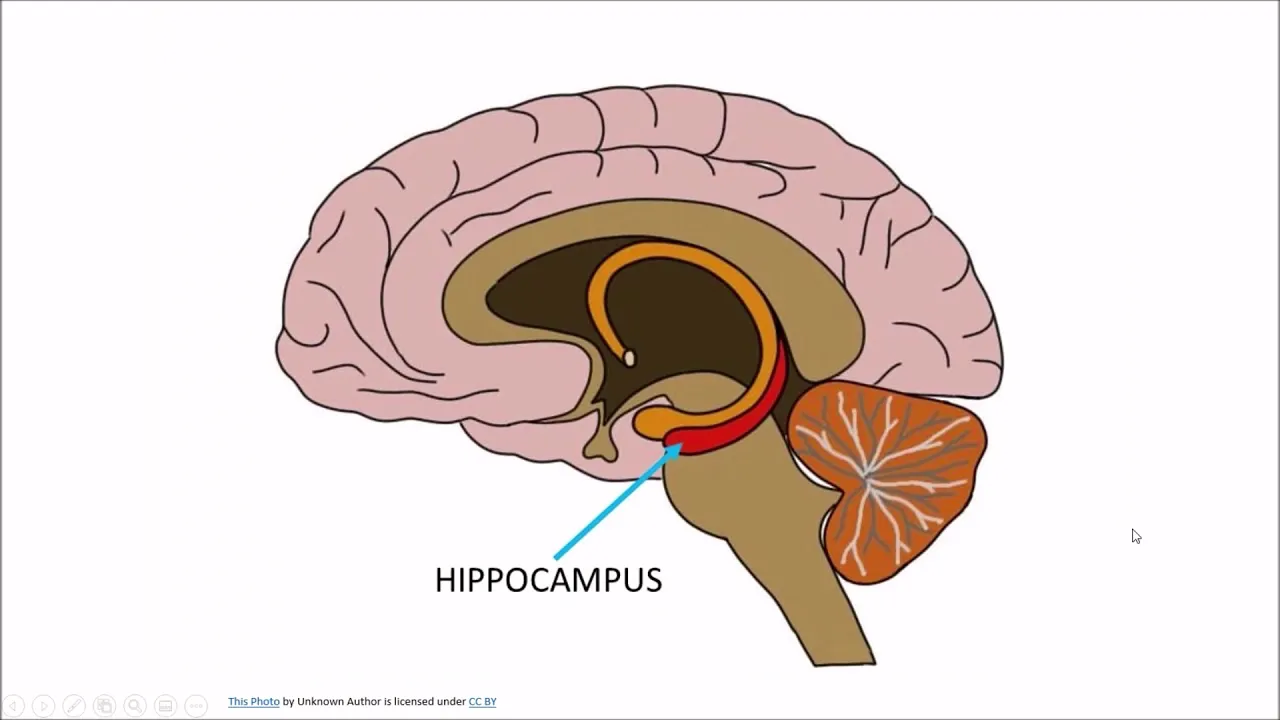
Logic is an ineffective tool for turning off a physiological alarm. Millions of survivors remain stranded by a medical system that treats a body-based survival problem with exclusively mind-based solutions. This brain cross-section shows where the disconnect happens, separating rational reasoning from ancient survival instincts. Behind your forehead is the prefrontal cortex, your rational watchtower keeping you grounded. Deeper inside lies the limbic system, housing the amygdala, your brain's automatic smoke detector for danger. Severe trauma physically reorganizes this architecture. The smoke detector becomes permanently hyperactive, while the watchtower loses its ability to intervene and assess the real level of threat. This shift causes chronic hyperarousal, where a slamming door or a stressful email triggers the exact same surge of stress hormones as a mortal attack. The survivor becomes biologically trapped in a state of primitive threat detection, making rational interventions physically inaccessible during moments of distress.
These medical scans provide definitive proof of this biological lockout. By placing trauma survivors inside an fMRI scanner while they relived their experiences, researchers captured the moment the brain's internal communication breaks down. As the patients relived their trauma, Broca's area, the brain's dedicated speech center, literally went dark.
Simultaneously, the visual cortex activated heavily. This shows that traumatic memory returns as raw sensation and fragmented imagery, rather than an organized story that can be put into words. Trauma dismantles the neurological capacity for language.
Because the body itself is keeping the score, talking alone cannot resolve the physiological imprint. Treating trauma requires a bottom-up approach. Since the problem lives in the nonverbal nervous system, we must address the physiology before the psychology can heal.
This starts with interoception, the practice of intentionally feeling and befriending physical sensations to build a sense of internal safety.
In a clinical context, trauma-sensitive yoga acts as a targeted medical intervention. It teaches a dysregulated nervous system how to tolerate bodily discomfort and re-establish safety without panicking. Other avenues like EMDR, rhythmic movement, and theater programs create new physical experiences of agency and collective belonging, bypassing the cognitive mind to reach the survival brain.
These evidence-based clinical tools provide the physiological recalibration required to soothe a hijacked nervous system.
The ultimate hope for recovery lies in neuroplasticity, the brain's proven ability to physically rewire its own structure in response to new experiences.
Consistent experiences of physical safety and agency help the brain update its alarm code, shifting the default state away from survival and toward self-mastery.
Recovery centers on achieving biological ownership over one's own body in the present moment. To finally allow a traumatic history to remain in the past, we must first heal the physical body that kept the score.
Related Videos
8:08
Neuroscience
What is neurodegeneration?
TheSheekeyScienceShow
3K views•2019-08-19
57:35
Neuroscience
IPL - Ruth Empson "Mind the Gap"
otagouniversity
251 views•2019-07-08
14:01
Neuroscience
How our body shapes our mind | Pancho Tolchinsky | TEDxNapoli
TEDx
2K views•2019-12-05

1:00:02
Neuroscience
Impact of Early Life Deprivation Danielle Stolzenberg Marcus Pembrey Bruce McEwen
uctv
4K views•2019-12-01
10:32
Neuroscience
β-Caryophyllene for Parkinson’s: Protecting Dopamine & Easing Symptoms
parkinsonsdiseaseeducation
6K views•2025-08-09
20:44
Neuroscience
New Insights from Inside the Brain with Rodrigo Braga, PhD
NUFeinbergMed
421 views•2025-04-14
9:57
Neuroscience
Highlights for dystonia • 2025 MDS Congress
movedisorder
145 views•2025-10-27
58:17
Neuroscience
Animal Welfare Synergy Series: Dr Tom Smulders on hippocampal neurogenesis
costactionlift
135 views•2025-07-14
Trending

13:25
Business
Playstation NO DISC/NO BUY Fight Is Over...
DavidJaffeGames
4K views•2026-07-23

22:40
Business
Steam and Xbox Just Dropped The Hammer On PlayStation
OhNoItsAlexx
9K views•2026-07-23

16:52
Anthropology
Americans Confused in Australia for 17 Minutes Straight
IWrocker
17K views•2026-07-23

20:36
Business
SuperBike Factory Has Gone... What's Next for the Motorcycle Industry?
thatbikersimon
11K views•2026-07-22