Ukraine has formed a coalition with 13 European nations and NATO representatives to develop a next-generation anti-ballistic missile defense system, addressing the critical shortage of Patriot interceptor missiles (costing $1 billion per battery and $4 million per missile) and Russia's escalating ballistic missile threat, which includes 19 types of missiles capable of traveling up to 18,000 kilometers. The coalition aims to create a cheaper European alternative to Patriot systems, with Fire Point developing a new interceptor expected to launch in 2027 at under $1 million per unit, while also working with European defense contractors to decouple from U.S. supply dependencies.
Install our extension to search inside any video instantly.
Ukraine and EUROPE Plan Something GIGANTIC Against RussiaAdded:
For years, Russia has been able to lord its ballistic missile advantage over Ukraine.
Those missiles have been crashing down onto Ukraine’s cities and infrastructure. But the tide is turning, and Putin’s ballistic advantage will soon be turned to dust. Ukraine and Europe have a plan. A gigantic plot to build an impenetrable shield that stops Russian missiles in their tracks and weakens Putin’s ambitions beyond repair. Protection is coming. But the real story may be that it’s protection by way of a coalition that Putin never expected to happen. During his May 12 address to his people, Ukrainian President Volodymyr Zelenskyy dropped the bombshell that Ukraine has officially formed a coalition with several European partners that is designed to directly tackle the ballistic missile threat that Russia poses. The news comes in the wake of a meeting held between national security advisors from all of the countries involved, and what will come from this coalition may be the single most important initiative that Ukraine has conducted alongside its European partners since Putin launched his invasion. “We are steadily advancing the issue of anti-ballistic capabilities production in Europe – we are forming an anti-ballistic coalition,” Zelensky declared during his address, adding, “Right now, we are closer to a result than ever before.” So, what does that really mean?
The meeting that Zelenskyy refers to took place in Kyiv and involved 13 of Ukraine’s partner nations, alongside representatives from the office of the NATO Secretary General. That last part is important. While there may be a little over a dozen partners who are working as part of the coalition right now, the fact that NATO sent representatives means that an organization that has 32 members is very interested in what Ukraine is cooking up.
The odds are that many members of Ukraine’s new coalition are NATO members themselves. And what they create together could end up being used by an organization that has a vested interest in weakening Russia as much as possible. As for which nations are set to take part specifically, Zelenskyy didn’t say. However, it may be telling that Zelenskyy followed up on his address by immediately jetting to Romania for a meeting of the Bucharest Nine. That loose organization meets semi-regularly to discuss how it can strengthen Ukraine’s defense. Romania is obviously a member, as are Latvia, Estonia, Poland, Slovakia, Hungary, Lithuania, Bulgaria, and the Czech Republic. Could this meeting of the nine have been scheduled so Ukraine can hold further discussions about its new ballistic missile defense project? Perhaps. Zelenskyy has only just landed in Romania at the time of this video’s creation, so we may know more by the time you see this.
One thing that we know for sure is that Ukraine has been putting partnerships into place that look like they’re geared toward creating the next generation of air defenses that will be needed for the ballistic missile shield that is intended to cover its territory, and that of any European nation that comes under threat from Putin. Fire Point, which is the manufacturer of the infamous Flamingo drone-cruise missile hybrid that has given Ukraine’s deep strike strategy new life, is at the forefront of many of these partnerships. The Kyiv Post reports that the company is actively working with European defense contractors to co-develop new air defenses. Those new defenses could change everything about Russia’s missile-laden long-range strategy. After all, they could result in a replacement for a vital yet expensive interceptor missile being created.
We don’t know a huge amount about what Fire Point is working on, as the company naturally wants to keep its work as secret as possible to limit the chances of Russia developing counters to what it creates alongside its partners. However, one of the company’s executives, Denys Shtilierman, has confirmed that work is underway on a new system that is expected to launch at some point in 2027, Reuters reports. The goal, that executive says, is simple: Produce a European alternative to the Patriot missile interceptor. “If we can decrease it to less than $1 million, it will be … a game changer in air defence solutions,” the executive said, adding, “We plan to intercept the first ballistic missile at the end of 2027.” For context, U.S.-made Patriot missiles are one of the most important parts of Ukraine’s layered air defenses, specifically because they can tackle Russia’s cruise and ballistic missiles. But one of the problems with Patriot interceptors is that they drain the bank accounts of any nations that buy them. According to the BBC, a single Patriot battery costs about $1 billion, and each missile launched by those batteries has a unit cost of about $4 million. Ukraine simply can’t afford that sort of outlay when Russia is launching missiles and drones into its territory on a near-daily basis. The price tag is a problem when relying on the Patriot. And there’s another problem that Ukraine hopes to overcome with its new ballistic missile defense coalition that we will get to later. Speaking of the U.S., it may yet have a role to play in Ukraine’s new anti-ballistic missile coalition. During his address, Zelenskyy made a mention of Ukraine coordinating with the U.S. on the subject of air defenses. What does that mean? Zelenskyy didn’t say. But it may be that the U.S. is watching and waiting with bated breath to see if there’s a possibility that Fire Point can develop a cheaper alternative to the Patriot. That would be valuable enough in its own right, but if that new missile is also compatible with existing Patriot systems, Ukraine could turn itself into a game-changer on the air defense front that is able to provide for far more than itself. One thing is for certain: The announcement of this coalition couldn’t have come at a better time for Ukraine.
In a May 11 report, RBC-Ukraine revealed that Ukraine is on the verge of running out of its Patriot missile interceptor stockpiles, as Russia continues to bombard the nation with ballistic and cruise missiles. Compounding the problem is that many of Ukraine’s allies are reluctant to transfer more of their missile stockpiles to Ukraine, even if Ukraine is willing to spend money to get those missiles. There are now only a handful of stocked Patriot batteries operating in Ukraine, and the PURL initiative, through which European nations can purchase weapons on Ukraine’s behalf from the U.S., isn’t providing enough of what Ukraine needs to guard its skies. The same outlet also reported that Putin is starting to once again ramp up his nuclear threats, all as he announces the expansion of Russia’s strategic forces. During a speech, Putin claimed that Russia had been forced to “think about ensuring strategic safety” after the U.S. decided to withdraw from the Anti-Ballistic Missile Treaty. That treaty relates specifically to the U.S. and Russia, but any rhetoric from Putin that suggests that he will look to increase Russia’s ballistic missile threat will inevitably spell bad news for Ukraine. The fact that Putin also mentioned Russia’s Oreshnik missile, which is a hypersonic ballistic missile that was last used against Ukraine in January, is another concern for Ukraine. Putin made it clear that this dangerous missile can be equipped with nuclear warheads.
That alone is enough to make Ukraine wary to the point where it needs every defense that it can muster to deal with what appears to be a version of Putin that is becoming more unhinged as his attempts to manipulate the world around him fail. Beyond Russian threats and rhetoric, Ukraine and its anti-ballistic missile coalition can also play a big role in disentangling one of the most important aspects of Ukrainian air defenses from the U.S. And that brings us right back to the second problem with the Patriots that we mentioned earlier. But a quick side note before we dig deeper – you’re watching The Military Show. If you haven’t subscribed yet, now’s the perfect time to hit the button so you catch more videos from our channel. So, the Patriots. What’s the real problem beyond the cost of America’s Patriot interceptor missiles? The problem can be summed up in three words: Operation Epic Fury. When the U.S. launched its war on Iran, it did so knowing that Iran was going to respond with drone and missile attacks, both against the U.S. warships stationed in the Persian Gulf region and against its Gulf neighbors. That’s precisely what Iran did, and Patriot air defense systems were America’s main defense against Iran’s aerial threat. According to The Independent, the Pennsylvania-based Foreign Policy Research Institute says that the U.S. alone used about 325 Patriot interceptor missiles during the first 96 hours of Operation Epic Fury. When you add the Gulf nations defending themselves into the mix, the number climbs much higher – 943 Patriot missiles fired off in four days. There will have been more Patriot missiles used in the weeks since those initial days of the operation, and that’s the big problem for Ukraine.
If the U.S. is burning through its Patriot missile stockpiles, Ukraine won’t be able to acquire any of the missiles that are absolutely vital to its air defenses. Zelenskyy has already highlighted the production bottleneck that is such a major issue. Ukraine’s President says that the U.S.
produces between 60 and 65 Patriot missiles per month, which adds up to a maximum of 780 per year, assuming Zelenskyy’s figures are accurate. Zelenskyy also claims that 803 Patriot missiles were used during the first day of Operation Epic Fury. Whether Ukraine’s President or the Foreign Policy Research Institute is correct doesn’t really matter. What does matter is that more than a year’s worth of Patriot production was burned through in a matter of days. The same report by The Independent points out that the U.S. has already diverted a sizable number of its Patriot missiles to the Middle East by March 20. And where did those missiles come from?
Predominantly from the U.S. bases in Europe that were relying on them to bolster their air defenses. Suddenly, European nations being wary of sending more Patriot missiles to Ukraine makes a lot more sense. They’ve already lost a huge number of missiles that were technically in their stockpiles, even if those missiles were owned by the U.S., and they can’t afford to weaken themselves further by helping Ukraine. Plus, this situation makes it clear why Ukraine has managed to get 13 European partners on board for its new anti-ballistic missile coalition, and why Fire Point is now working with European defense companies to make a Patriot alternative.
Europe wants to decouple from its reliance on U.S. air defenses as much as Ukraine does. And that can only mean bad things for Putin. It doesn’t look like the Patriot shortfall situation is going to remedy itself anytime soon. The U.S. government has awarded Lockheed Martin, which makes Patriot interceptors, a preliminary $4.7 billion contract to build more. But that only amounts to 1,175 missiles to be built, assuming the $4 million price tag the BBC reports is accurate. Even if Lockheed Martin is able to manufacture those missiles over the course of one year, it won’t be able to solve the immediate shortage that exists now, and it would essentially just be restocking the U.S. and perhaps making a few more missiles available for others. The U.S. is also delaying the delivery of Patriot systems and missiles that it has promised to its partners. On May 13, the news broke that the U.S. had informed Switzerland that the delivery of long-awaited Patriots would be delayed even further due to the war in Iran. Switzerland ordered those systems in 2022 with the expectation that they would be delivered between 2026 and 2028. That timeline had already slipped by about four or five years due to the Ukraine war, Alarabiya English reports, and it’s now slipping even further as the U.S. aims to keep its hands on as much Patriot hardware possible to support Operation Epic Fury and the rebuild that will come in the operation’s wake.
And not only that. The Swiss government says that the U.S. is asking for more money for its Patriot systems than it was when the deal was signed in 2022. America’s move has pushed Switzerland toward seeking out alternative suppliers, with systems developed by South Korea, France, Germany, and Israel being considered. It could well be that Switzerland ends up being a member of Ukraine’s new coalition, assuming it isn’t already. The point is made: Ukraine and many of its European partners can’t rely on a steady supply of Patriot systems and missiles anymore. An alternative is needed, and that’s precisely what the new 13-nation coalition looks set to deliver. Here’s what this means for the future, both in Ukraine and all of Europe. Putin is going to be p***ed.
It’s likely no coincidence that his nuclear and ballistic missile rhetoric has been ramping up at right around the same time as Ukraine announced its new coalition. What Putin now has to deal with is 13 nations working alongside Ukraine to counter the very threat that he is using to intimidate his enemies into submission. And make no mistake about it – Russia poses a large ballistic missile threat. According to the Arms Control Association, Russia has huge stockpiles of 19 different types of ballistic missiles, some of which have already slammed into Ukrainian territory. Russia’s use of Oreshnik has already been covered, and its Iskander missiles are far too common a sight in the Ukrainian skies. Some of these ballistic missiles are capable of traveling distances up to 18,000 kilometers, the association reports, which makes them dangerous to practically any country that gets on Russia’s bad side. Russia knows this, and it leans into the threat that its stockpile poses. In June 2025, The Kyiv Independent reported that Russia’s ballistic missile production rate had rocketed up by 66% during the previous 12 months, likely to ensure that Russia maintained its stockpiles to enable continued attacks against Ukraine. By that point, Ukraine’s military intelligence shared that Russia was building between 60 and 70 of its Iskander-M missiles per month, along with between 10 and 15 of its hypersonic Kinzhal missiles. It’s the lower ranges of those figures that lead to the 66% increase. If we take the higher ranges, Russia has actually bumped its ballistic missile production up by almost 89%. Russia is also building new types of ballistic missiles all the time. At least, it claims to be. On May 13, The Independent reported that Russia claims to have successfully tested a new type of nuclear-capable intercontinental ballistic missile, which Moscow says could enter use by the end of 2026. The commander of Russia’s Strategic Missile Forces, Sergei Karakayev, informed Putin of the successful test of a Sarmat missile the day before The Independent’s report. Of course, the natural grain of salt needs to be taken here. Russia may be claiming a successful test, but that claim is being made by a crony who tells Putin what he wants to hear because it’s in that crony’s best interests. Still, this doesn’t change the fact that Russia’s ballistic missile threat plays a huge role in Putin’s power posturing all over Europe. A coalition formed by Ukraine and including 13 nations to tackle that threat is a direct affront to Putin. Russia’s President also won’t be happy about what this coalition means on the symbolic front. So much of Putin’s rhetoric is designed to divide Europe. What Russia’s leader wants, more than anything, is for the nations that are supporting Ukraine to get bogged down in so much bureaucratic infighting and indecision that their work with Ukraine is undermined. When he hears about things like nations refusing to supply Patriot interceptor missiles to Ukraine, he starts to think that his plans are working. But when news breaks of a large coalition of partners all working alongside Ukraine on any initiative, never mind one designed to counter one of Russia’s biggest threats, he starts to panic. Symbolically, this coalition demonstrates a level of unity that Putin is trying to destroy. Even worse than that, it shows Putin that 13 other nations believe so intently in Ukraine’s future and sovereignty that they are willing to work alongside the country to develop an impenetrable ballistic missile shield that may take years to create. That alone sends a message to Putin: Ukraine will exist as a sovereign nation for a long time to come, and there’s nothing that Russia can do about it.
Adding to all of this is what it means for Ukraine to not only be an equal partner in such a coalition, but to appear to actively spearhead the initiative. That delivers an entirely different message to Putin, which is that Ukraine is completing its transformation from a nation that relied heavily on its partners to battle back against Russian aggression, and into one that can become a provider, as well as a recipient, of the sort of tech that destroys Russia’s ambitions.
The last few months alone have seen nations from all over the world turn to Ukraine to help them with their defense, or to work alongside Ukraine to create yet more impressive weapons. Qatar, Saudi Arabia, and the United Arab Emirates have all signed decade-long defense deals with Ukraine so they can get their hands on interceptor drone technology. Ukraine will be receiving fuel, money, and military weapons in return. The U.K. and Ukraine have agreed on a new drone partnership designed to help both nations get their hands on more of the low-cost remedy to Russia’s weapons.
And on May 12, Ukraine and Germany signed a letter of intent to launch Brave Germany, which seems to be an offshoot of Ukraine’s own Brave1 program. Under that agreement, Ukraine and Germany will work together on the development of all sorts of technologies, from uncrewed systems to lasers, artificial intelligence, and missile technology. Putin wants to divide and conquer, does he? It seems like he is achieving the precise opposite of that. Ukraine is turning itself into the glue that binds nations from all over the world together, and there can be no better situation for the country to be in right now. What these deals all tell us, along with the anti-ballistic missile coalition, is that Ukraine has become an indispensable defense partner to some of the strongest nations in Europe and the Gulf region. The latest coalition is just the tip of the iceberg. The impenetrable ballistic missile shield that will result is already gigantic enough. But Russia’s problem is only just beginning, as Ukraine is supplanting Russia as the trusted defense partner of nations all over the world. And all Putin can do is watch and hope that the new coalition doesn’t deliver results any time soon. But we’ve seen how fast Ukraine can work. We’re betting Putin’s hopes will be dashed far sooner than he thinks. Russia’s President can’t even rely on his puppets inside Europe to create the division that he needs. Toward the end of April, something massive happened in Hungary that has shifted the continental balance of power further out of Putin’s favor. Viktor Orbán is gone. Péter Magyar is in. You can find out why that matters so much to Putin if you watch our video. And if you enjoyed this video, remember to subscribe to The Military Show to see more of our analysis of Ukraine’s growth as a military nation.
Related Videos

US-Iran War LIVE: US Launches New Strikes On Iranian Military Site Near Bandar Abbas | WION Live
WION
6K views•2026-05-28

Guess Which Country Trump Is Threatening To Bomb Next! w/ Chris Hedges
thejimmydoreshow
5K views•2026-05-30
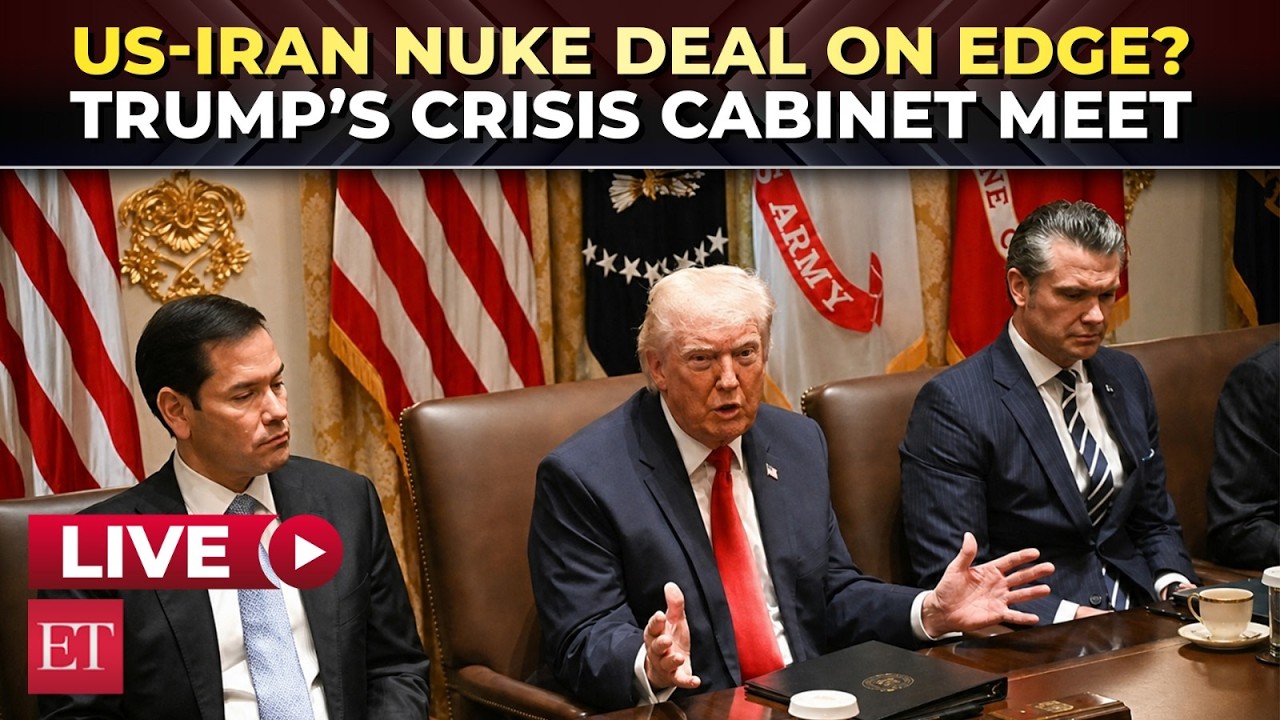
TRUMP LIVE | POTUS makes massive announcement on Iran nuke deal in high-stakes cabinet meeting
TheEconomicTimes
536 views•2026-05-28

The Silence Around Alex Coughlan | #80
RealEddieHobbs
2K views•2026-05-28

Did China Get to Marco Rubio?
ChinaUnscripted
1K views•2026-05-28

Sonko Is Now Speaker. But Who Are the Two Men Who Made His Return Possible?
djbwakali
11K views•2026-05-28

Why Was There No Mention of Israel or Gaza in The DNC's Autopsy Report
wearefindout
227 views•2026-05-29

Trump Just Got HUMILIATED... And It's Going VIRAL
harryjsisson
46K views•2026-05-29



