Frankish offers a clever way to solve the mystery of consciousness by simply defining it out of existence. It is a sophisticated intellectual exercise that mistakes a functional description for the actual experience of being alive.
Install our extension to search inside any video instantly.
Could Consciousness be an Illusion? - Keith Frankish
Added:Keith Frankish, welcome to the show.
>> Well, thank you for inviting me. It's a pleasure to be here. Alex, >> am I conscious? Keith, are you conscious? I'm a little confused about this and I have been for the past couple of years, and I'm hoping you can help me work it out.
>> Uh, I am conscious. You're conscious?
Yes. Um, but of course, um, we we need to sort out what that means. And that's really the whole >> the whole uh focus of my work is uh is on trying to get a grip on what we're talking about when we're talking about consciousness. So [gasps] yeah, I mean let's put it like this. You have experiences, you have pains, you uh you smell things, you see things, you hear things. Um these are what we call conscious experiences. Okay? They um you can tell me a lot about them. I have similar ones.
Uh yeah, they're perfectly real things that happen to us. The question is what is happening?
>> Okay, that's good. I I'm glad to hear you say that because you are perhaps the foremost defender of a view and consciousness or philosophy of mind known as illusionism.
And and given that it talks about the illusion of phenomenological experience, it leads a lot of people to think that the view means that consciousness itself is some kind of illusion, which sounds a bit self-defeating because of course to experience an illusion, you have to be experiencing something. And so typically when I've talked about the philosophy of mind with people and illusionism has come up without very much thought people have said it's kind of nonsense on the face of it and you were just saying before we started it's Galen Strawson isn't it that said that illusionism is perhaps like I can't remember the exact quote but like the worst idea that anyone has ever come up with or something like that. So maybe I thought it would be uh a bit more fair to have an illusionist on the show to, you know, defend defend his case.
>> Well, thank you for giving me the opportunity. Um, so let's let's I think uh what what uh Galen imagined I was saying was something like this that no one ever feels pain, no one never feels pleasure, no one ever has conscious sensations, um conscious perceptions. I'm not saying that. Of course, I'm not saying that. Um uh what I am saying is that I think people who under some people particularly some philosophers and people who thought about this quite a lot of uh have a mistaken view of what is happening when we have those those um when we have conscious experiences that consciousness isn't quite what we take it to be.
um and that perhaps we don't have the sort of insight into its nature that some people think we have. Some people think we can just sit and reflect on the nature of our own experience and from that deduce quite profound consequences about uh the fundamental nature of reality.
Now I think those people who think that have got a mistaken view of consciousness I think that mistaken view is due in part to a sort of illusion created by our introspective systems by the systems that monitor and model our own mental activity. Okay. So the illusion comes in in the you see an illusion isn't when you uh let's say take a stage illusion something's happening there on the stage when you see someone levitate being levitating okay something's really happening on the stage [snorts] it's just not what you think it is or not what you're tried uh you're uh invited to think it is [sighs] that's what I think about consciousness that something real and important significant is happening But you're invited perhaps by the nature of your introspective systems to misconceptualize it.
>> And it's that misconceptualization that lies at the basis of the the philosophical debates about consciousness.
>> Now for most people consciousness is immediately accessible as in I mean say for most people that's what they think.
They think that consciousness is just the thing which presents itself to you as it is directly. When I see something red, when I feel pain, I just, you know, someone pointed out to me that it's always red, isn't it? It's always the redness of red. It's never like the brownness of brown for some reason. I think that's an injustice. The oreness of orange. It just presents itself to you. And it seems as though even if that doesn't line up to something in the real world, even if the the external world is an illusion and it's all being created by you know being prodded by scientists in a lab somewhere that you are having this experience is real and because experience is sort of this subjective thing that you're just experiencing directly. No matter what the cause is, no matter how incorrect you could be about what is bringing that about, the experience itself is there. It's it's private. It's subjective. It's inner.
And if I understand you correctly, it's that that you think is an illusion.
This idea of a subjective private world.
>> That's that's that's getting pretty close to there's a lot to unpack in what you just said because I I you'll find philosophers um perhaps lay people saying the sort of thing you just said as if that's kind of completely innocent. Okay. as if there's no theoretical u framework being assumed there and I think there is. Let's just start with with with with a with with a term that often is smuggled in. Well, smuggled in that is often employed without much reflection. I what you said presented to you presented to me. What is this I? What are we referring to here? Well, I'll tell you what I mean when I speak of when I use the first person. I'm referring to this particular animal, this biological organism.
um that is the product of a certain um uh uh genetic makeup and uh has a certain developmental history and has been all sorts of experiences and is able to do the things it does in virtue of that of that of that history. Okay.
Uh it's a as far as I'm concerned it's a completely part of the natural world.
The eye that I'm talking about isn't something that's associated with this body or or distinct from the body but somehow the animal but somehow associated with it. It's not a product of the of the of the body. It just is this animal. That's what I mean by so when we say that things are presented to me I mean that in virtue of systems that compose this animal certain bits of information if you like are available to be used to control its processes and to control its um ultimately it's its speech.
So that's what I mean by me. Okay. So when I say something's presented to me, I mean systems inside this animal are doing things that have this effect the effect of acquainting me if you like with the with things around me or things inside me.
uh and I think it all depends on evolved mechanisms that have been um uh whose if you like whose uh whose plan has been designed by evolution or that have been tuned up through developmental experience and some of these are for detecting things in the world and some of them are for detecting things inside me but they're all designed by evolution they're all fallible they're all capable of misrepresentation uh so that's what I mean by by me by I presented to me now what's presented to me Well, let's start just at a pre theoretical level. I I it doesn't seem that an inner world is presented to me at all. It seems that an outer world is presented to me. Uh and just over in front of me there's a there's a kind of bookshelves all different colors, blue and red and quite a few of them are brown actually, purple up there and so on. And uh yeah, that's what's presented to me that they're the colors of those things. They're real, they're vivid, they're evocative.
But they all seem to be out there. None of them seem to be in my mind. That's what's presented to me pre- theoretically.
Okay. Now you may say, "Ah, yes, but now that you may say, "Yes, but you could be listening." Okay, fine. Maybe I could.
Then we But then we start to get into theorizing about what's happening in these anomalous cases. But that's where I start. Consciousness is being aware of the world around me and the world, the physical world inside me, the feeling in my stomach, the feeling of my heart.
perhaps the knowledge of certain things that are uh happening in my cognitive system. Let's use that trying to use that neutral term. Um so there that's I think where I start. All that is just as far as I'm concerned all that is just all everyday descriptions of this. I ask you what is your experience like and you start telling me what your experience is like about the world around you in your room and so yep very interesting and you might have spotted things I haven't spotted you know so um very interesting tells me and of course if you uh if you can maybe you can detect some things that I can't maybe you have sharper hearing maybe you your color vision is better than mine what have you so all very interesting and this all tells me about the nature of your experience and I can ask you lots and lots of questions about it but so far we haven't into a private world of something like mental qualities.
Uh how if you like I turn to the question how do we get from that pre theoretical position to this world of of of inner uh of mental qualities and to whom is that mental world presented?
>> Mhm. Okay. So that's interesting, right?
Because I said that, you know, it it seems like we have direct access to this like inner private experience, but you're quite right. The thing that we experience just on the surface is out there. Okay, that's fine. Then I want to say like, well, what is the thing out there that I'm experiencing?
Well, it's really difficult to put into words, right? And I think a lot of people will reach for a word like qualia um which is a sometimes helpful word uh word which is supposed to kind of get a grasp on like I said earlier like the redness of red the the feeling of the pain something separable from what might be described in atomic physics or you know mathematical language or whatever.
It's this kind of experiential bit. So, I kind of want to say that like, okay, maybe if that redness is is over there, the the red thing that I'm experiencing is is out in the world.
Like, it's still something that I'm like experiencing. There seems to be some kind of like connection. There's something going on in here which is like out there. I mean, I I kind of thought, you know, I I spoke to a to a a blind uh YouTuber recently on on this show, and he's spent his life blind since birth talking about what it's like to be blind. And I spent a long time trying to think about what it would be like if you sort of saw for the very first time. And I think one of the most confusing things I hadn't thought about this is like depth perception in that like, you know, the one thing that really baffles him is forget colors and stuff. He's like, "You're telling me that if something's close, it's big. And if something's further away, it gets smaller." Like, that makes absolutely no sense to me.
And I thought that if you if you suddenly opened your eyes, you'd notice that unlike having to reach out and touch, it's like over there, but over here at the same time, you're aware that it's far away, but at the same time, it's somehow simultaneously over here without having to be right next to it.
And it's it's that it's whatever the the the sort of thing that's gone from over there into here that I think people want to call the the sort of the visual experience. What is that thing? What is it >> that that's that's a really nice way of putting it? Um there's some contribution from me, okay, to this to what's happening here. Okay, I'm not just I'm not just ancient um philosophers, ancient philosophers tended to think that it was um that that the the qualities really were out there and that maybe that copies of them came off the surface and somehow hit my eye, but it was a copy of what was there.
Other views of projectivist that somehow eyes went out to those things and somehow did feel them. The point is we're getting into theory now. Another view is okay there is the color of the book which it turns out not to be the color as we ordinarily think of it. It is some sort of um uh uh uh reflectance profile of of of the the of the of the surface which can be characterized in in um uh in uh non-qualitative terms in terms of um uh the way that light is different wavelengths of light are reflected and absorbed. And then there's another kind of color that is just in my mind. The blue that I thought was out there is really in my mind.
And that's what people call qualia. But [clears throat] that's a theoretical move. Okay, we started with the colors being out there, relocating them into my mind. That's a theoretical move. It's not something that's given at the start that cannot possibly be dyed. It's a way of making sense of what's happening when you realize that colors look different to different people and so the variability of perception. But there are other ways. those ancient ways I mentioned. Um, but what your point about the blind person is very important because [sighs] [gasps] perception isn't just a matter of opening your eyes or your ears or whatever and just passively receiving stuff. It is a learn it's supposed learning. It requires all sorts of associations to build up the to to to create this kind. Let's talk about it as an interaction. That's how I want to talk. It's an interaction between me and and the thing there. And the nature of that interaction is determined partly by the nature of the thing out there and partly by my nature.
And my nature isn't just something that's just it's just colors just created. Bang. And I aware of it. No, it's a matter of my learning significance of things out there in the world. Let me tell you a little story.
Um I may not get the details right, but it's about um a patient who was studied by um a psychologist neuroscychologist.
Um but I'm not sure how you characterize I always call her a psychologist. say as many things as Nicholas Humphrey in the early 1970s patient called HD and she had been not blind right from birth but she'd been she'd gone blind quite early due to I think an infection that had damaged her cornea corneas and uh later in life I think I think perhaps in her 20ies she was she I think she was living in Iran she was given the opportunity to come to the have a corne corn corial graft that would hopefully restore her sight and she had the operation And she'd been looking forward to this hugely. The idea she she she'd read a lot of literature and such. The idea of how wonderful the world was going to be once she her eyes were open as it were like Mary coming out of her black and white womb. And the operation technically was a success, but she wasn't it wasn't the revelation she's expecting.
It was she was seeing things in the sense that she could detect them and respond to them but it didn't have any of the significance of the richness of the what we we talk about what experience is like didn't have any of that. It was quite an effort for her to classify things visually and they didn't delight her.
They didn't mean anything to her. It was just she had to go through this process of saying yes that's there and it's this shape or this color whatever and she actually was so distressing to her that she decided it was not worth it she put back on the blind the black glass of the sunglasses and went back to living >> as a blind person and my one possible explanation is the one that I f is that learning what it's like to see knowing what it's like if you like to see something is a process you have to learn and it's a matter of building up associations with different sorts of stimuli learning certain patterns of reaction to those stimuli. Those stimuli have effects on us. Okay. Psychological effects. I'd say they conjure up associations, memories, dispositions to react in various ways, including most basically the disposition to say that's red. Um, and we learn this from the moment that that we're born. It's even before we start learning it. And our sense that the world is infused with a richness and or what it's likeness is coming from us. We are as if you like projecting onto it the psychological significance that these things have for us. We aren't observing an inner private copy of that same color that was out there. We are if you like what we're tracking I think I'm I'm running ahead quite a lot here but what we're tracking when we talk about the color of the thing is the impact that that kind of stimulation makes on us. the global psychological impact what it means for us her HD didn't mean anything because she [snorts] had not hadn't had the chance to build up the neural circuits and the and and and to learn the associations and so on that would give it any meaning for her just saying just it just the idea that all the significance is packed into a simple pure quality that if it's not out there must be in here [clears throat] is it's just a very simplistic and I think that an interesting theory of what's really happening. I want you realize there's another way of thinking about this, of thinking it as an interaction where the redness is if it were you vibrating psychologically with that particular stimulation I think with and which we can carefully slowly uh methodically unpack and understand.
I think this is much more interesting.
This this opens up a whole vision. We're saying it's just a primitive color that somehow uh exists in my mind, can't be explained by science.
All we've done is just redescribe the problem, but now it's internal rather than external.
>> So, >> I crammed a lot in there, so you want to probably unpack it. Maybe [laughter] >> we'll get back to the show in just a moment, but first, where do you get your information from? Most of it these days comes from the internet. And while it's great that there are so many news sources to choose from, they all have one problem in common, and that's bias.
Media bias is, of course, something that will never disappear. But wouldn't it be great if there were a way for us to navigate this online bias, objectively comparing the way that different sources are reporting on the same stories? Well, that is exactly what today's sponsor, Ground News, allows you to do. Ground News aggregates thousands of local and international news outlets all in one place so you can compare reporting across the political spectrum. Try it out at ground.news/ alexoc. Did you see that the White House is hosting a 9-hour long prayer festival focusing on the alleged Christian roots of the United States? If you typically read exclusively right-leaning media, you probably didn't. Using ground news, I can see that of all the sources reporting on this story, only one of them leans to the right. And imbalances in coverage like this are why Ground News also has a dedicated blind spot tab, which specifically seeks out stories that you would otherwise miss based on the news that you normally read. So, cut through media bias and get a better grip of what's really going on by going to ground.news/ alexoc or by scanning the QR code that's on your screen. use my link to get 40% off their unlimited access Vantage plan.
And with that said, back to the show. I I want to help um [clears throat] I want to help give people a a grip and also get a grip myself on on like how you're interpreting the words that we're using. So when you say something like um >> when you say something like experience >> when you say we're having the experiences like we are or or awareness I think is the word you just used you know you are aware of certain things like this patient who's like >> aware of various things in the world >> it's missing some kind of qualitative aspect >> what is just awareness itself because if you ask a philosopher of mind you know what is awareness they often just say oh it's it's what it's likeness it's the redness of red which I presume you would want to resist. So what do you think awareness is?
>> I'm thinking of it in psychological terms. Well psycho psychological terms I mean terms of effects. Okay. Um so it's let's put it put it crudely. It's detecting something and being able to respond differentially to the thing you're detecting. having a sort of carving up selecting out certain stimuli that have certain significance and responding selectively to them in a whole range of ways in an open-ended range of ways. The fact that something's red, okay, that I detect something as being read, that can open up a whole range of different responses depending on the context. Okay, if it's a it's a stoplight and I'm driving, it will mean one thing. If it's a book, it might mean another thing. If it's a it'll a book created by Chairman Ma, it will mean something else. it's so on and so on and so forth. Uh it opens up a whole range of responses but that are se that are selective to that particular stimulus.
Okay. So it gives us a kind of uh it's an invitation to react in a certain way if you like that has been taken up by my perceptual systems.
>> That sounds to me extremely behavioral right. It it sounds to me like a behavioral account of what experience is, which is to say uh experience or awareness is either the reaction or a propensity for reaction to certain kinds of stimuli. Um like it sort of it is an invitation to like behave in a particular way in response to a certain sort of input. That that to me seems behavioral. It seems like the kind of thing that could apply certainly to plants, maybe to computers, um, possibly even sort of other things in the world. And it doesn't quite seem to me to capture the difference between, you know, a bike experiencing rust when it's left out in the rain and, you know, a a human experiencing redness. Do you know what I mean? It sounds behavioral.
>> Okay. A lot of things to say about that.
uh first uh this needs heavily qualifying in a it's behavior in the sense that it concentrates on the effects of stimulation. Okay. Now the actual observable overt behavioral effects are just the tip of the iceberg. Every bit of stimulation causes all kinds of micro adjustments within here. Okay. Micro adjustments to perception to perceptual set to attention. uh it uh triggers associations, lays down memories, forms um beliefs, all sorts of things are happening in here. Massive amounts of stuff. The stuff that you actually see on the outside is is is you may not see anything on the outside, but there still there's a massive amount of stuff going uh changed inside, but it's those certainly it's effectism if you like.
It's the significance of of stimulation lies in its effects. if some um and and look lots of stimuli don't have any effects on me. Magnetic u radiation around me doesn't because I don't have any means of detecting it.
Okay, doesn't have any effects on me.
I'm not conscious of it, you know. Um all sorts of stuff doesn't um more in some cases. Um um like radiation, you could stand in a nuclear reactor and you wouldn't detect it um till you started um bleeding. Um so first of all if you want if behaviorism is a pjorative term because it suggests oh it's only overt behavior we can say I would say something like functionalism it's a matter of what functions it it it enables the system to perform but those may be characterized at a very very fine level now take other creatures yes you may find certain so it's a matter of sensitivities activated sensitivities and the pattern of reactivity that is that is that is internal reactivity that is the stimulate by them. Yes, you might find something similar in implants.
That's not a problem as far as I'm concerned. Uh rust on a bicycle is quite different because there is no the bicycle can't do any that there's changes happening to the bicycle when it's rusting, but it can't do anything with that information. That information can't it's not it's not sensitive to that change and it's not using that change to modulate its responses to the world in any way. Uh if it was if it had a detector for um oncoming vehicles or something and it could do things and that would be a bit like it. And of course that would be a tiny tiny tiny sliver of the kind of complex sensitivity and reactivity that our that the 86 billion massively interconnected neurons in our head are capable of doing. But I'm I don't think there's a bright line. There very few bright lines in nature. It it does seem or at least to to like that that car you say with the detection system like um a self-driving car that detects a pedestrian and sort of has to decide so to speak whether to swerve left or swerve right. It sounds to me that this view opens the door to saying that it at least has some kind of like protoconsciousness. Bearing in mind that like it sounds a lot less dramatic when you realize that by consciousness you're not talking about this sort of weird private phenomenology and stuff like that. But the the words that you're using like awareness and consciousness and just effects reacting to inputs. It seems to me that a self-driving car just would be aware or conscious on on that view.
>> It it well we need to think about what we're doing with the word consciousness as well.
What what's the why do we why is this word so important to us? One reason it's important is it marks out boundaries of ethical concern and uh now some people think thought that uh only humans were properly conscious you know and that non-human animals weren't and this was a convenient view if you um if you don't care much about our human animals um so the word comes loaded with ethical import and I don't think that ethical import can be just read off the the psy psychology if you like. No, we need to think about where we're going to draw our ethical boundaries. This is a matter for us how much we care. It's not just read off the fact. There isn't some, you know, this there's some there's an inner light that's on in some creatures and off being others. And if it's off, you can do what you like to them. And if it's on, then they really matter. I think that's a simplistic anthropocentric view. And we need to look much more carefully at what is actually happening in these different kinds of of systems and ask ourselves how much we care about that. There is also one big difference between the self-driving car and us humans which is that we all not only respond to the world but we also respond to our responding to the world. We have introspective systems. We can monitor not it's not just that the world affects us but that how it affects us affects us. We can monitor our own reactions to the world, talk about them. So it has us we have another layer of of of awareness, self-awareness, which again I think of in just the same way, not as involving some mysterious private world, but just another layer of functional organization, which of course the self-driving car doesn't have. And you might think that's very important for for um ethical concern. But again, that doesn't just fall out of a description of the system. It's something we decide as a community what we care about. Um and we put pressure on each other to expand the boundaries or we draw the boundary in whatever way we think is um our lights suggest to us. [gasps] >> Yep.
>> Yeah. Okay. So I so I'm I'm understanding I think what what you're saying about like the the the significance of like human animal conscious consciousness which has something to do with introspection right which is that like it's as uh Josh Rasmusen I think once said there's a difference between noticing a tree and noticing that you've noticed a tree right and that's an important distinction >> um And in your your paper on illusionism, you make use of this term introspection. And that was one of the first things that confused me when I was trying to sort of learn about your worldview, which is that I thought I was being presented with this view that sort of consciousness is some kind of illusion, which I I know and hope we've roughly covered is is not what you're saying. But I thought to myself, if the illusion is being caused by introspection, surely that introspection is a form of conscious experience. Now you think consciousness exists, you just doesn't think it you just don't think it has this sort of qualitative private sort of dimension. But the same question can be asked, right? Like if if the illusion is being created by a misfiring of an introspective system, isn't the very act of introspection also qualitative and even more private because it goes sort of inwards and it's all about me? Like I I I kind of want to want to say that there seems like a not a circularity, whatever the opposite of a circle is, you know, it seems to be sort of self-defeating. So tell me why it's not.
>> Yeah. Yeah. Well, for exactly the same reason that I I just tell the same story about introspection that I told about perception. That per perceiving the world around us doesn't involve creating a sort of mental simulacum of it that then an inner eye observes. Um I I I tell this other story about being sensitive to stimuli and its stimulus present um uh triggering a distinctive pattern of internal reactivity that reflects the significance of that stimulus. Okay. Now then I say introspection exactly the same story.
It's that the stimuli here are internal let's say neural ones. Okay. They're patterns of activity within large scale patterns of activity within the brain and sensitive to those or selectively sensitive to certain aspects and the glo global aspects that are that it's useful for me to know about like whether I'm in a bad state whether something bad's happening to me and that then itself in uh triggers a distinctive pattern of reactivity to those. Uh so when I taste something let's say that's very bitter um the stimulus first one to stimul um evokes a certain complex pattern of reactivity in me. Introspective systems moni um monitor that model it categorize it and provoke a distinct evoke a distinct pattern of of higher level reactivity.
one of the most basic elements of which being to say, "Wow, that's bitter. Don't try it."
Um, so it's not that I sort of if I made the mistake that people think I make, then it would be a really a big howler because I'd be saying, "Look, there's no cartisian theater at the first level of perception, but there is one at the level of of introspection."
But now, I just said the same thing about introspection as I say about perception that it's a psychological process. I mean, we can tell all this in terms of representations, not representations that we're consciously aware but representations of things in the world that then uh uh play a particular functional role in the rest of the cognitive system. So it's all going to be a matter of sensitivities and reactions. First order, higher order, perhaps even second order, perhaps even um third order um so you know reactions to reactions to the reactions.
And the general idea here is that it's that what perception is doing is it's tuning me into the world and uh triggering patterns of reaction that are internal reaction that are appropriate.
What sec what introspection is doing is uh being sensitive to patterns of of of first order reactivity in my brain and triggering appropriate reactions. The particular use of this wood is in communication that I don't things don't just affect me. I can tell you how they affect me. I can remember how they affected me. I can reason about how I could go on to produce those patterns that I enjoyed, recreate them and avoid the ones that I didn't. So it enables a higher a reflective um awareness of our own uh experience if you like using experience in this deflationary term deflationary sense.
>> Okay. So maybe [clears throat] it would be helpful to think about um a philosophical zombie for a second. Uh of course >> philosophical zombies. Was it was it Charmers who came up with them? Was it someone else? I I feel like it was someone else who came up with it and then Charmers like popularized it.
>> Robert Kirk used the term in the early I think about 74. But it's been it's it's been knocking around. There's the imitation. I can't it's it's an idea that's been around a bit but Dave certainly boosted its um its salience in in the philosophical discourse.
>> So it's this idea that you could in principle say some >> um have a creature which kind of acts in exactly the same way as a human that reacts to the same stimuli in exactly the same way. Hey, you can imagine like some kind of almost like a robot which just, you know, when it puts its hand on a hot stove, it's just programmed to take its hand away and also to pull a facial expression and to go, "Ow, that really hurts." And to do everything that the normal human does. The only difference is that there's actually no interior experience. And I know you're going to resist that that language, right? But this is how it's characterized, right? There's no there's no experience going on. It's all essentially sort of fake. It's all just like a a mimicry of of human behavior.
Um you don't want to say that even we have this interior experience. We're just sort of um you know interacting with the with the sort of data as it comes in.
The question I have for you is like is there a difference on your view between a philosophical zombie who like doesn't have experience but does act behaviorally in the same way and a normal human being? Cuz it sounds to me like the theory of perception that you're proposing here is very behavioral. I know you wanted to say it's more about like effects than behavioral like behavioralism generally but it sounds to me very behavioral.
It's like there are inputs and we react to them and we can we can use those inputs to do one thing or another thing.
Um so can the philosophical zombie except there's no like qualia. So how do you make sense of this this comparison?
>> Well look let let's just unpack the philosophical zombie a little bit because the philosophical zombie isn't just acting like a human being. It's not just a clever faximile outward faximile of a human being. It's meant to be atom for atom an atom for atom duplicate of a human being. So when we talk about what's happening inside it, everything that happens physically inside here, you know, spatially inside here happens inside it. It's got a brain with 86 billion or whatever interconnected neurons and all the other stuff, gly cells and all the other stuff all interconnected in the way that mine are and working just as mine do. It's a very important it's not just uh it's not like an actor on stage just you know playing a part. It is doing the whole thing.
So when you talked about it not having anything inside inside spatially inside here everything's the same. That's stipulated by the definition of a philosophical zombie.
>> Uh so when you were using the word inside you meant inside in another sense. Okay. And I'd kind of like to know what that inside is that you're into because it's not a spatial one presumably. Let's come back to what the zombie can do. What's the zombie? Well, okay.
We go to a neuroscientist and we say, "What happens when someone smells coffee? What happens when they see uh brown, a lovely rich chocolatey brown?"
>> Um, and they start telling you this immensely complex story about how even at the retina there is already filtering significance happening. a lot of the of the of the incoming photons are just you know the activity is just uh ignored.
It's already filtering for significant patterns and things that starts at the retina. It continues through many many many many continually the brain is looking for significance and as soon as it finds a bit of significance it starts using it to modulate responses of various kinds to modulate to prime well attention for one thing. It starts directing attention to certain things.
It starts and then processing those things. It starts it's it's like a sponge [clears throat] drawing insignificance from the world and then trying to make use of it quickly to respond because yeah, it's got to get us you know the bank can't mess about you know life's life's moving quickly. It starts triggering all kinds of not necessarily responses but dispositions adjusting our expectations of what's going to happen next. This is a big thing and this is a central book part of predictive processing um and the free energy framework. It starts adjusting our alignment to the world our expectations of what is going to happen next. If you had to have one phrase from what the brain is doing it's trying to predict. It's trying to prepare for the next second next uh trying anticipate the future. It starts doing all this immediate this information way before it's end to what we might before we're aware of the information. Multiple channels are doing this. Bits of information are being extracted about lines, shapes, colors, edges. There's prim there's categorizations happening.
Um all sorts of different categorizations. Some of which get rejected straight away. It's a cat. No, it isn't a cat. It's just a tree.
Whatever. Uh some of these ones get boosted into greater um significance.
Some of them start uh become available through linguistic report. Some of them come available for decision-m. Some of them um trigger emotional responses, trigger memories. All of this characterized in in in psychological terms. All of this stuff happens. Uh and neuroscientists will could sit you down and talk to you for days about this and they would say and still we only know a fraction of it. Now all of that is happening in the zombie. Every bit of it. Okay. Everything that happens in here is happening in the zombie by definition. The neuroscience is going to tell the difference. psychologist could subject this zombie to the whole backtory of psychological tests that it can have for for awareness of stimulation and it would pass them all just as well as I would um my zombie.
What's it missing?
The thing now also it would do the introspective thing as well. It would be able to tell you. It would be able to tell you yes I can see that now. I couldn't see it a moment ago but when you just increase the when you just titrated that a little bit. Yeah, I could see it. No, I can't see that. That one's a little bit darker than that one.
Um, yes. No, I think the red light's a bit bigger. All the things that the the optition asks you when you go for an eye do all that perfectly just the same as I would. He would say that um that smell reminds me of my grandmother's garden.
Uh, you know, that's, you know, it reminds me of the last time I was there.
I do everything.
And it would tell you of course as well that it was phenomenally conscious because that is one of the uh effects of all this of all this self and yes I'm having an experience I'm conscious and you know what this conscious experience when I think about it I can't imagine how it could be how it could be physical do all of this this is accepted by people who by Thomas for instance calls it the paradox of phenomenal judgment his phenomen will be as convinced that it's conscious and that consciousness is a mystery as he is but something's missing supposedly.
That thing that's supposedly missing is what I say is illusory.
>> Right? So, so you would in doing so therefore just I suppose reject that there could be a philosophical zombie because if you build a philosophical zombie who's atom for atom the same as a human being and has no interior private experience that is just what you are.
interior private experience in this sense that isn't captured by any of the description of all the activity that that's going on in there because remember this interior practic remember that this interior private experience and again interior to what I want to ask not interior remember I said I am this organ I am this animal it's not interior to me the animal spatially >> so where is it interior to what to my soul I suspect that's I suspect that's hanging around in my background that there's this cartisian idea that I am not really an animal somewhere background but anyway I don't want to press that just now the point you got to remember that if there is this something extra it's not necessary for all of that other stuff to happen okay so it's not playing any role it's not essential to my saying things like oh well that one's slightly darker than that one and oh I I can just see the pattern of the light coming through the leaves it's so beautiful and it reminds me of my mother's garden and yada yada yada yada everything You ask me to describe my experience to report my phenomenology.
The zombie does all of that perfectly.
So the actual quality is plays no role in that. It's just a fifth wheel.
And my claim is that our talk of qualities is a kind of our pre theoretical clumsy uh way of describing the reality that's going on. It's just we can't just we can't pull it all apart. There's reactivity. It's too far far too complex, too multi-dimensional. We can't pull it apart. So, we say, "Oh, it's just what's it like to see that?" Well, it's what it feels like to taste strawberries or see taste see a lovely rich luscious brown. Um, can't tell you anymore. You can't. That doesn't mean that there is a a pure quality there that you are immediately detecting. It means instead of having direct revelatory access to pure qualities, you have indirect selective distorted access to immensely complex patterns of reactivity and we mistake one for the other. That's the illusion.
[gasps] >> Can you tell me about the motivations for this view in that I I'm going to ask you to be as honest as possible here in that most people like want to think that their view is is just thought out first principles. This is most plausible. But I don't know. Are there any like I'm trying to think if there are ways in for people like for for somebody to say, "Well, hey, look, have you ever wondered why this is such a mystery? Have you ever thought it's a bit strange that no one can define consciousness? Have you ever thought it's a bit odd that you know, like what are the kinds of like things that you might notice about the state of philosophy of mind or the conversations that people are having which can make you come along and say, "Well, hold on a second. Maybe this answers some of your questions." I I mean that in the sense that like when I speak to a pansychist, they might say, "Have you ever noticed that like no one can tell you what an electron is?" Have you ever noticed that science only talks about what things do rather than what they are? And then they say, "Look, here's a really good motivation to to take this seriously. Are there similar like contextual factors that would that would work here?"
>> Oh, this is a nice question. First of all, who knows what one's motivation? I mean, I don't think we're we have sound introspective access to all of our motivations, >> so who knows? I mean, why am I talking to you today? Uh, what role does vanity play in that? Uh, am I hoping that people will love me because they've seen me beyond here being being charmingly uh whatever? I don't know. I don't know.
So, there's a level at which our motivation I think when we talk about our motivations to a large extent we are fabricating a narrative based on on actual things that have happened to us.
um uh things that we've noticed, things that we felt, but we are creating a self story. And there are different self stories you can tell. Here's one that I could tell about this. Um I don't think humans are as special as um as uh going to say some of my opponents think they are. I don't think that uh just sitting in an armchair and reflecting on one's own experience gives one direct insight into the nature of reality. I just don't think we are that special the fundamental nature of reality. I think we are evolved biological organisms or uh who have capacities for self monitoring selfodeling. This gives us a certain picture of ourselves and which is probably very adaptive to have this simplified self-image and maybe even to think of ourselves as having a private inner world may be very useful but I I I don't think I don't think it's I don't think evol evolution wouldn't need to equip us with an insight into the fundamental nature of reality and I don't think the universe has been so kind as to just sort of make it pop out of the things evolution has given us. it just seems too arrogant to think that way. Another reason is that I suppose that it's a reason I've I'm not a Christian or religious person that in some ways I I'm kind of tempted by it. I I can see the attraction of these views. I have dwelt on the I and in my youth I did think quite a lot about religion. I have dwelt on the mysteries of consciousness. I have really tried sincerely to think myself into the mindset of people like um like Philip and I think I understand it. I think I understand it.
>> Philip Goff you >> um Philip Cough. Yes. Sorry. I um Philip Goth and Dave Charles and so Phil Phily um sorry he's a friend of both of us so we can we can do this. I I have I think thought myself into their mindset and indeed I can and and that's one reason why I don't want to say oh they're just wrong.
It's we should just eliminate all talk of this. No, I say it's real. It's compelling. It's vivid but it's an illusion. Um, and the one reason I do that is because I'm quite again this is this is my story is that I'm uh and one reason I I I I find it hard to adopt any sort of religious belief is that I'm I'm quite an anxious person and I'm anxious about selfdeception.
I'm anxious about believing stuff just because I'd like to believe it. There are I would dearly love to believe that I would see some of my lost loved ones again. Dearly love it. But I don't want false comfort. I want to try and live life, you know, with my eyes open. Um, try and deal with things as they are because I think in the end selfdeception lets you down.
>> Yeah. It can't do the it's it's a it's it's a it's a it's a it breaks the it's a crutch that breaks eventually. And I think the same goes uh for thinking about uh the the specialness of the human mind. The a third reason is that I absolutely [clears throat] love scientific explanation. I love finding out about well I don't do first order science myself but I love reading about how um uh about scientific discoveries about how we've unpicked the mechanisms of cellular metabolism. It's amazing stuff and stuff that's work that's being done on developmental biology. It's amazing and it's wondrous and it's wonderful. It's far more wonderful to me than the stories that you know that religions might tell. And I think there's a f fascinating story to tell about unpicking the nature of of consciousness and uh or whatever we we the consciousness in the sense for the fact that I that I believe and uh I I don't want people to stop there's a danger that philosophers are going to discourage people from trying to tell that story by saying well you can't do it it's a hard problem you've got to just leave it to metaphysical theorizing people sitting in their armchairs mulling this overs Um, no, let's get on with the work. Let's find out what's what's what's really happening. Um, but sometimes people say, well, sometimes people suggest that I haven't really had rich of conscious experience. Now, it's true that I haven't done psychedelic psychedelic drugs, but I do suffer from quite vivid migraines.
And if anything, they are more more I think perhaps more uh impactful than than perhaps they're certainly more unpleasant uh than psychedelic. I know what it's like to feel that you are part of the wall.
um uh that you've split into two that uh your senses have merged together in strange and uh and unarticulable ways.
I've had some pretty strange experiences.
>> Mhm.
>> Uh so the people who think that they convince me that I'm wrong by giving me a punch on the nose won't won't get far.
Um although they might make me um they might make me pretend to to to agree with them.
>> Yeah. I the the question of psychedelics is interesting because like the the kinds of experiences that people have when using them involve some quite strange things like the concept of an ego death and the conviction that consciousness is kind of everywhere and foundational and that the whole world is alive and whatnot. But particularly this idea of like the self, which so far you've been saying that I am just this sort of biological organism. I think that requires a little bit of investigation in that, you know, I don't feel like I'm the same thing as as my hand. Like I could I could probably cut off my hand and it would no longer be like a part of me. I kind of feel like I could like cut out my like parts of my brain and I'd still be like here. Um it's not clear to me where this biological sense of the self actually lies. And there are all kinds of problems in personal identity as to as to what that is as to, you know, as to what what counts as like continuity of one person, you know, what makes me the same person I was 10 years ago. And then also on top of that, given that lots of people just are convicted that they have experienced the death of the self and whatnot, I wonder if we just grant for a moment that the self is a is a dubious concept.
If it if it were a dubious concept, if the self sort of didn't exist and was an illusion, then like how would that affect your view? Because it seems like a lot of what you're saying relies on the idea that there is this you that is having experiences that is reacting to the world. It's you that's conscious.
When I touch a hot stove and move it away, it's not my hand that's conscious.
Cuz a pansychist could say what's going on there is like every little atom in my hand is, you know, going get out, get out, go away, go away. And like sort of cumulatively together that is that is felt as the the pain of of a hand or something. Whereas I think you have to say that that there is some kind of sort of central part of you. Maybe it's your central nervous system that like reacts to that. So, how much of your view like depends on the notion of there being a self which can have these reactive experiences.
>> Well, what I said was that I think I'm I'm an animal, a particular animal, an individual animal, a token animal, and the identity conditions for that animal uh um we can debate about that. I mean, certainly the this animal could lose a hand and still be the same animal. I mean, so you know, we can get into identity conditions for individual animals. Um, how much of you how much of me could you could you take? This is a really interesting question when you get to my age, by the way, because you find bits of yourself stopping working. Um, uh, it's you're a long way off yet, but give it 40 years and you will find that bits of yourself stop working. Uh, both the peripheral ones and the more central ones some days. So, [laughter] so you I'm afraid you will. Uh I I still feel I still feel it's me even though I go into the kitchen I think what did I come here for? I have no idea. So um there isn't a there isn't like you know there is self isn't a clear-cut concept. But the idea of this individual animal okay when does this individual animal let's distinguish two the individual animal then we'll say something about the self separately.
Individual animal when does it cease to exist? What if I, you know, if I got a serious uh form of dementia or something, would I still Yeah, there's no hard and fast line. When I actually die and they put me in the ground or um or, you know, burn whatever they gone then. All right. Um but basically, as long as long as as long as there's still a pulse, then in some sense, this animal is still around. Whatever. But it's not I there no bright lines. I don't like bright lines. That's it's it's not a there are very few bright lines in nature. They're they're looking for essences and definitions. This is a thing that philosophers are preoccupied with and it's it's a pointless endeavor.
Um what there are are words and how we choose to use them and concept. Now okay so that's this animal. Now the self I do think I want to say a bit more about the self. I most of the my views are very heavily influenced by those of Daniel Dennit and I do really like his idea that there is a sense in which we have a self as distinct from from the body. But it's a it's the sense of a fiction. It's a narrative that we that we animals, we human animals tell. We're very talkative. We um we love reporting stuff about ourselves. That's one thing that the self monitoring, selfing allows us to do. We don't just have experiences.
We recognize that we have them. We talk about them. We tell other people about them often obsessively and annoyingly.
Um and from this we construct a kind of narrative. I am the person to whom this happened and to whom that happened and who feels this and who likes this and doesn't like that and who wants this and what I we tell this and it's a selective one of course because we just um and you know you can get into the habit you can tell bad stories about yourself and get yourself into a really um um unfortunate state of affairs. Um some people uh respond to trauma it seems by constructing parallel stories to help them deal with it. Um so these I think this is this is one way of retaining self-t talk without the inflated metaphysics. That's essentially what Dan was doing all the time and Denn and it's what I'm trying to is to take these folk conceptions of things like free will, consciousness, intentionality, meaning um [snorts] uh the self say look as they stand they don't you can't really make them do the kind of really heavy metaphysical lifting you think they can or even scientific lifting but they're still useful. So let's just re uh re-engineer them a bit. Let's see what they're really doing for us. That they have a pragmatic value. Um notion of the self as a pride value in presenting yourself to other people and to yourself. Make keep a track of who you are and what you want. It's a useful story that you tell.
It's doesn't correspond to some thing associated with the body. Um but it's a useful notion. We say the same.
We can do the same with free will, with consciousness. We don't have to throw the notions out completely. we re-engineer them a bit uh in a way that makes them and I think this re-engineering is very important because it doesn't make the these concepts hostage to some dodgy science or potentially dodgy science or heavy duty metaphysics. If you think of ourselves as being free responsible agents is very very important. If you think of yourself as a passive victim of circumstance then you all sort of tr you think of sort of free and responsible if you think that freedom and responsibility depends on let's say you know physics being wrong or you know in some way I maybe does maybe it doesn't but if you think that it does then you're in the danger of losing it if if science turns out the wrong way. If you think that being conscious depends on making sense of the idea that quarks are conscious, then again you might sort of think, well maybe nothing maybe I'm not conscious then if if it would have to be the case that everything was conscious in order for me to be conscious. Let's just you know these these these concepts are important ones because they're important. Let's not make them do work that they can't do and may collapse under the strain of trying to do. M so >> Oh, I got a I got a bit um preachy there. Sorry. [laughter] >> It's good. We like that. We like that. I I I always find it find it great. I I was thinking when you said about free will, >> I was thinking about the sort of debates that Sam Harris and Dan Dennett would have and how despite despite talking about something like >> relatively sort of, you know, intellectual and highbrow, it it got quite sort of personal and excitable. It it happens sometimes and I think it's great. Um, the thing that I'm most interested in in what you just said, sorry, go ahead.
>> Yes. No, no, I was just just to that I think Sam said that that that Dan thought we were just puppets and Dan said, "Yes, in a sense we are puppets, but we're also puppets that can have have strings that can control their own strings. where we're puppets that um have the ability to control those the first strings with other strings which are then okay there's no ultimate puppet master but it's the ability to control your own strings at different levels of organization that gives you freedom.
It's a it's it's it's it's a a mechanism of autonomy and you should love these strings these deterministic mechanisms that allow you to exercise autonomy. Anyway, that's >> I just I just remember um yeah, Sam Harris saying, "I think it's fair to say that one could watch an entire season of Downtown Abbey on Ritalin and not detect a finer note of condescension than you manage for 20 pages running." You'd think that they were like talking about each other's wives or something, but no, they're talking about whether, you know, humans have agency over their own actions, which I think is fascinating.
>> The funny thing is that they they they they metaphysically they were pretty much on the same page. It was the moral that each of them drew from it that was different.
>> Yeah. And and so much of it might even just be linguistic that it it becomes kind of crazy. I think Sam has since, you know, not maybe if not apologized for that, at least sort of toned it down. I remember they had a conversation afterwards and and it kind of awkwardly addressed it. Um you know, a moment ago you said that philosophers are obsessed with trying to like categorize and that it's hopeless. I agree with this by the way in that like >> you know we want to precisely define what is the difference between a table and a chair uh what is the difference between a tiger and a lion what is a species you know if I I don't know if I if I lie down on my desk is it a is it a a bad or is it a good desk like and it's all a bit silly because quite clearly what we're just doing is taking you know this physical stuff and we're just arranging it in various ways and we're putting a label on it. Or we're looking at the natural world and we're seeing that the natural world sort of es and flows and sprouts out various bits and bobs and we sort of arbitrarily put like you know borders around them and and give those borders labels like species and things.
I I agree with that >> and I've talked about that a lot in the context of myology which is the study of of plants and halls. Now to me as a murological nihilist I just think that there are no sort of real categories.
There are no real like distinct objects except in so far as matter just pre-arr pre-existing matter just gets rearranged given a label and we call it a new thing. It's like matter and form right you give it a new form and we just decide that that's what a new thing is.
However, there is something that has to be there to be arranged in this way. So, the myological nihilist thinks that, you know, the table and the chair and the and the, you know, can of coke or whatever, they're all just like atoms or myological symbols as they call them, like arranged and given labels. But there must be something that's being arranged. There must be this myological simple, right? And I think that the motivation for like pansychism is to say, well, okay, maybe there's just sort of one type of stuff and all it is is just an arrangement of stuff. But I know that consciousness exists somewhere because when it gets arranged complexely enough in my brain, I'm having these experiences and awareness. And so, you know, as long as emergence doesn't exist, which is a thing in itself, they just say, look, I mean, there's only one type of stuff. You know, brains don't exist, tables don't exist, it's just arrangements and labels. But I know consciousness exists somewhere because it's here right now. Then then it must be there at the foundation. What I want to say is like or what I want to ask is like do do you have like a metaphysical view on when you said that philosophers trying to categorize stuff is a bit of a fruitless endeavor. The stuff that they are categorizing, the stuff that makes it all up. Do you have a strong view on what that is? Are are you a physicist?
Are you agnostic? Do you do you know what a what an electron is? You know, I I just wonder what you think. [snorts] >> I in so suppose we have uh a a science of of the fundamental reality.
It's it's it's it's basic physics.
That's our best attempt at it. And um I'm not a physicist. I'm whatever.
It's quantum the universal wave function. The uh super strings. I don't know. Uh, I've got no dog uh sort of dog in that stake in that game. Dog in that race. I don't know. Um, >> dog in the race.
>> Dog in that fight. That's >> Yeah. In that fight, whatever.
>> Sorry. I at some point I turn mythology.
>> At some point I turn into Alan Partridge and start using bad metaphors. Um, I don't know. I mean, I it could be little angels as I don't know. I have no idea.
I have no I It's not what in I'm work It interests me. I'm fascinated by but I've got no what I do think though is that just by sitting and reflecting on my own mind I don't get access to it. I think finding out about the fundamental nature of reality depend and I think it'd be incredibly arrogant to think that it's building enormous particle accelerators that are span boundaries of European countries to try and crack this problem that they're doing. But I think I can crack it just by sitting in my in my armchair and thinking about my own mind.
I think that I think maybe evolution has given us a sense of the of the um and it wouldn't be surprising if it did given us a sense of the uh the importance of our own self-conception given us way of modeling ourselves and our mental activity in a way that you know makes it seem really vivid and potent to us and you know we could and Nick Humphrey who I mentioned earlier has written a wonderful book about this soldust about why this idea of that we have a magical inner realm is is is is an adaptive one that it has all sorts of wonderful uh uh um uh functions um the idea not the reality.
So yeah, we've got this sense yeah I mean a lot of people have a sense a very powerful sense probably as powerful as the sense that they're acquainted with qualia that they're directly acquainted with God that they have direct immediate experience of God and that that's something they know with more certainty than anything else. Well that's interesting that they have that. It's an interesting psychological phenomenon.
it's interesting to study it and I wouldn't dream of you know being abusive to them or anything like that but I don't think we should trust it just because it's very powerful to them and similarly I the fact that you think oh look we don't know the fundamental nature of reality but maybe just by sitting and thinking about my own mind I can discover it just seems to me I don't mean to be rude but it just seems to me arrogant and and and incredibly anthropocentric I mean suppose you have a a base of aliens who haven't don't have the notion of of of of quality either because they are zombies or because they never subject to this illusion in the first place. And they're studying the fundamental nature of reality. And they learn that there is this species on this remote planet of soul three that think they found it simply by thinking about their own what it's like to look at to look at a brown surface. I think that this you know so so yes there's a possible but I the fundamental nature of reality [laughter] uh and I I don't think I'll get it by by by being by country. So, um I'm sorry >> that I I I feel like it's a bit I feel like it's a bit unfair as a comparison though because like you know I don't think anyone would claim that just by sort of introspection I could know that you know there are there are you know there's microbial life on Mars or something but the the facts that we're considering at least in so far as it comes to consciousness many people want to say that those are the kind of things that are in like looking inwardly in respect introspectively just closing your eyes, sat in your armchair is the equivalent of like looking at Mars. You're like looking at the thing that we want to know about. And intuitively, like let's address this cuz you're sort of pulling up this cartisian imagery of like Daycart sat in his robe by the fire at the beginning of the meditations just saying, "I'm just going to think my way into all of the positions that I already hold." and he has some sort of ideas and and he thinks there are certain things that I could know just by sitting around and thinking about it. It sounds to me like you disagree with him, but like >> I do.
>> How come? Like it seems, you know, like Day wants to say something like, you know, I know that I exist in some form because I couldn't possibly deny it. The act of denying it would would require my existence or at least my thinking. Uh and so I know that I must exist. I I think therefore I am. You know, if I were to doubt that I exist, doubting is a kind of thinking, which means that there is something doing the thinking.
Now, to me, that seems like the kind of thing that, yeah, fair enough. You can sit down, you can think about it, and you can know that, and you don't need to go and like, you know, observe a bunch of stuff in the world in order to figure it out.
>> So, what do you mean when you say that you you can't knowledge that way?
>> Okay. Well, there's lots of things to say about. I mean, there's there's first of all, there's a debate about what he was actually trying to do there. on one quite there's a case can be made that he was trying to just give himself license to overturn the whole Austadilian uh scholastic framework um and that it was a bit of a tactical move to really to facilitate the new science. Anyway, that's one thing but I mean it's it's it's often been pointed out that he wasn't entitled to the inference I exist because he hadn't really said what I what what what I denoted here. um what he should have said is at best thinking um uh exists.
>> And what is thinking? What does he mean by thinking? Does it involve having certain words being tokened in in a speech? What does it involve? What's thinking? What's he talking about? Um doubting what he was doing was writing words down on a page or perhaps uh uh uh articulating them to himself. What's that? Um could he have done that without language? um if not then he has then he can know that language exists maybe it it it's a very tempting sort of thing but look how removed it is from our ordinary basic cases what do you know I open my eyes I look around me and I know stuff okay I could be I could be in error right that's look at what if look at again start with what I think we are all biological organisms all our knowledge is dependent on mechanisms of some sort for tracking things noticing differences and responding to them.
Okay, that's I just I I don't see how else I can get knowledge but by some process like that. Okay, baring something by magic. Okay, and that goes for knowledge of my own mind. Whatever I say about my own mind, it must be the product of some sort of mechanism for tracking things that are occurring and generating responses to them. Uh now, okay, if you think you're an immaterial soul that is completely transparent to itself and doesn't need any sort of mechanism to know its own states, well, I suppose you could say that and that's the kind of conception that you need to make Decart's account work.
Well, okay. The point is there are no foundations here. We've got a whole load of beliefs. Some of them in uh some of them uh just common sense beliefs, some of them, you know, productive experience of the world um or reflection on ourselves. We've got a whole lot of scientific beliefs and we got to try and just find the best balance between all of these we can. The idea that you can establish some foundations like in a mathematical system where you can actually just start define your axioms and then build on that that doesn't work for knowledge of the natural world. And what's interesting is that daycart's uh thought experiment is kind of captivating. That is very interesting psychologically and I think that tells us a lot about how uh the self our self-conception about how the brain generates a conception of itself and it it own activity that is very very interesting psychologically it's very significant but the idea you can base a metaphysics on it you know >> I don't think we need a different metaphysics for us than we need for any other aspect of the of the natural world I don't think they're that special.
>> So, help me understand why I feel like I do have a very special inner world. And what I mean by that is it's not just that an external world presents itself to me and seems to have qualitative uh yeah components or properties >> but that like they kind of they kind of stay there like I I can close my eyes and it's it's still kind of all there in some sense. Um I have dreams I have I have weird sort of interior images. Um, I always ask people like all the time uh where the triangle is that I can see in my head. Like I I I offered um I think I offered like $50 to anyone who could like locate the triangle that I see in my head when I when I imagine it. And my friend Phil Halper just just went and interviewed like 15 of the leading materialists, you know, people like David Papa and and people like specifically asking them my question.
and he he thinks I owe him $50. I don't think that he's actually done it.
>> I I just want to get your take on this cuz I feel like it's a good question just to give people are probably sick of me asking it. Just for the record, ladies and gentlemen, I'm not just asking this >> because I I I sort of keep wanting to know the same answer. It's because I I feel like how you answer the question is a really interesting way of of like demonstrating what you think about consciousness. So, I close my eyes.
I think of a triangle. There it is. It's got properties. It's got three sides.
Some people say the triangle just doesn't exist. But like I can I can attribute properties to it. It doesn't have four sides. It's got interior angles adding up to 180°. You know, I I can't do that for things that don't exist. Things that don't exist don't have properties. So, there is a triangle. There it is. I can see it in my head. Where's the triangle?
>> Okay. Great. Good. Good question. Okay.
I don't actually have a copy here, but if I had a copy of um uh one of Arthur Kernand Doyle's works, I would open it and read about Sherlock Holmes smoking his pipe and then I would ask where is Sherlock Holmes's pipe? I could say lots of interesting things about Sherlock Holmes's pipe. Um I don't know if he describes that Mia Sha was it or whatever and that it's I could hat or whatever and I could well just Sherlock Holmes himself. I can say lots of things about Sherlock Holmes. It's true that Sherlock Holmes was a detective. It's true that he was skinny, wiry, and that he took cocaine and so on. It's not true that he was a, you know, 150 pound uh wrestler from Montana. Uh so I can say true things about Sherlock Holmes. False things about Sherlock Holmes. Um where is Sherlock Holmes? It's fiction. It lives in the world of fictions. It you can make true statements within the scope of some sort of fiction operator.
That's what I say about the triangle.
It's not anywhere, but you can say true things about it because it's a kind of construction. It's a sort of construction. It's it has the same status that your thoughts about Sherlock Holmes have about the Sherlock Holmes that you imagine.
>> It's not composed that >> you're driving like a representation like the idea that like um >> of course yeah >> that that what I'm sort of seeing in my head is a representation of a triangle rather than a triangle. Right.
>> But not not necessarily a represent not a representation made out of sort of things that are actually, you know, real lines that are really triangular. Just because when you think about Sherlock Holmes, you don't actually have to have little dabs of color to paint an internal picture of Sherlock Holmes. You just have what exactly how this works is a fascinating question. I I somehow your brain is using the resources that it has to represent the world around us to create representations of non-existent things and then react to them in a very similar way to the way you would react to the actual things. And the the the heft of this the the force of this comes from it triggering similar patterns of reaction.
Okay. So if you try and imagine uh it's quite hard to imagine smells actually but if I try and imagine the smell of my grandmother's uh the scent that of my grandmother's room or something as far as I can do it it will trigger a whole wave of emotional responses. Okay. And that's what gives it the heft that what it's likeness because it's moving me in the way that that smelled in not because it has some intangible spell qualia but because it has effects on me and that's why of course we read about chills because not just because we like this idea of entertaining non-existent things but because they entertain as they move as they puzzle as they intrigue us they spark all sorts of interesting trains of thought. Well, actually, I do it for the first reason.
I'm just interested in the the ontology of Sherlock Holmes. Like my my favorite question to ask people this week is um who created Sherlock Holmes >> because like who who who was it that created Sherlock Holmes?
>> Arthur Conand Doyle >> or was it Sherlock Holmes's parents?
Because it kind of depends on what you mean, right? Because within the fiction of the story, Sherlock Holmes was created by his parents. But of course there's another sense in which we want to say well he was created by Arthur Conan Doyle and the point is that you can sort of have logics within fictions right but the >> absolutely absolutely >> what what I think you're doing here is something that commonly happens in the philosophy of mind in my view which is that faced with a bit of a a bit of a mystery like this mysterious triangle that I can see or something or the concept of you know uh consciousness emerging from non-concious stuff is is another area where there's always comes up. People often don't quite explain it, but they give an example. They say, "Oh, but that's just the same as when this happens, but the other thing that they're comparing it to is just as mysterious and is actually just doing the same thing." So, what I mean to say is that like um when I talk about emergence, I say, "Oh, how can consciousness come from matter?" People say, "Oh, well, that's just that's just like how you know like heat comes from atoms vibrating." forgetting that heat, the interesting part about heat is itself an experience. So you're not actually explaining anything. You're just giving another example of the same problem. And I feel like the same thing's happening here, which is like, well, where's the triangle? And you say, well, it's in the same place that Sherlock Holmes is. And I'm like, yeah, like, and where and where is that?
Because of course, Sherlock Holmes is represented by the by the letters on on the on the book, right? But if no human ever existed, no no brain, no no sort of agents and just by some spontaneous atomic freak event, [snorts] you know, the one of one of the Sherlock Holmes novels just sort of popped into existence spontaneously in space.
Sherlock Holmes would not be there.
There'd be no representative content. It would just be a bunch of atoms and ink on a page, right? thing that makes that page represent Sherlock Holmes is that a mind is reading it and conjuring up an image in their head. And the question for me is like where where is that image? Like what what is that image? Is that image just the same thing as neural activity? Because if it is, then the answer to where it is is well, it's it's inside of your brain. You know what I mean?
I was this was that was going I was with you all the way until the last bit. Um yeah, sure. It's a it's a it's a me it's a mental construction. It's a mental representation. Um it's um and if and that mental representation is realized in a pattern of mental of of neural activity of some sort. Um yeah, but its significance lies in what it means for us. I mean if um if you tell somebody just the basics about jetlock hands imagine this tall guy with this funny hat and a pipe and things sort of you know they form some sort of image that's kind of nothing really it's just well okay you embed him in all the stories that are told about him and suddenly you have this rich narrative about you watch the Jeremy Brett series I think Jeremy Brett did a lot to create Sherlock Holmes actually I think it was a terrific anyway um it's embedded in all these rich uh narratives And it also triggers all your your um your memory well not memory so much as your um your thoughts about Victorian London and and the puzzle and it's an escapist world and you can fill it out in your mind and so all of what you're doing here is let's put it just in representation in terms of other ways of putting it.
uh you're putting on a rich body of representations that produce a rich range of of of effects on you that you like that you like to have you you know that you that that attract your attention and that uh produce all kinds of positive uh responses in you. Great.
Uh now where is Sherlock Holmes? Well, is the man himself, isn't anyone um what is there some sort of representation of a man uh that is created by interaction with the the words that um Conand wrote and I don't see there's any deep mystery here. I mean there's a t it's a it's one question too many to ask and where is Sherlock Holmes himself?
What we need to ask is how is the impression of Sherlock Holmes created and that's very much like how I want to think about conscience. one too many questions to ask but what really is you know the feel of conscious how is the sense of it let me put put it this way suppose maybe this will help went back to conscience so um suppose what happened in the brain was that you know this is the eye here okay so light hits the red hand and processing processing processing and all the reason and then at some point this processing produced this kind of inner image right that is then sort of there [laughter] present right now what happens with that inner image. Okay, somehow is it just aware of itself? I don't see how that could happen. What would have to happen in order for that image to mean anything?
Is for some sort of system to scan it, notice its features and then start processing that information again and producing all the downstream effects that that image tended to produce. Now suppose we cut out the middleman. We just have the processing process. It doesn't create the image, but it does produce all the downstream effects that the image would have produced. It's just as good. You don't need the image. You don't need an actual Sherlock Holmes.
You just need all the effects that an image of Sherlock Holmes would have had.
And you have a very vivid image of Sherlock Holmes if it's to mean anything to you. You've got to know it's no good having a sort of inner TV playing in a room and nobody there to watch it. You know, with the with the Sherlock Holmes stories on something's got to watch it and react to it. And if you can get all those reactions without the image on the TV screen, how would you know the difference? How would you tell whether you're undergoing an illusion of qualia or actual qualia? And my thought is, you know, if you're undergoing the illusion of qualia in this representational sense of all the effects that qualia would produce being produced in you, >> then you don't actually need the qualia.
And you know, AAM's razor, [laughter] uh, let's just suppose that what the brain is doing is tricking itself into thinking that it has qualia.
>> It's the simplest hypothesis. I I can accept in principle that like it might be possible somehow for me to be fooled into into sort of thinking I'm seeing something that's not like it seems to me the idea that you're getting at is like you know when I actually see a triangle that a real triangle in the world um my brain kind of reacts to it. It sort of scans it. It it it reacts to it in some kind of way. And all you need is for that reaction to occur. You don't need the triangle itself. And that's what's happening in my brain. Except it it it does seem to me like I have an interior screen. Like I can not everyone can sort of visualize images in their head, but I can I can like see the image. I can I can see what it looks like. And that seems to me more what I'm trying to get at is like intuitively I think for most people conscious experience is more than just a reaction to something. It this goes back to what we said earlier about like the behavioralism which I think is implicit in your view which I know you wouldn't want to characterize it this way but this is going this is sort of how it sounds and and potentially what it like leads to which is that like when you have these experiences be it of a triangle or let's take something more uh pressing like the the pain of a migraine that what you mean to say in saying I'm experiencing a migraine is just that I am like reacting to a certain kind of stimulus. I think intuitively, deeply intuitively for most people, when someone is in pain, there is more going on than just them like reacting to something or behaving in a particular way that there's something else going on, right? And I think the same thing is intuitively true with me in the triangle. I don't think that when I see that triangle in my head, I'm getting all the stuff that I would have got if I saw a triangle except for the triangle itself. I'm like, no, I I can see the I can see the triangle itself, you know, like I'm not just reacting to a stimulus.
I'm like conjuring up the stimulus. And in this case of pain, the stimulus is like there. I am I am reacting to it, but it's also like a real thing. You know what I mean?
>> I I I know what you mean. And I'm not denying that that's a a compelling way of describing it, but let me try and do a little bit to to to to unpick it.
>> Um, first of all, of course, with the imagining the triangle, I'm not just suggesting you're reacting to an external stimulus. The stimulus may be internal here. Okay? You may be reacting to your own internal um uh reacting to your own uh the the the stimulus may be internal. Okay? maybe due to some uh some strange activity occurring within the system itself. So you may be reacting um uh entirely to an internal stimulus through self monitoring. U let's let's go to the pain case because I I like to try this one on people. I'd be interested to see what you think. Okay. So let's take a migraine. Now I think everyone will agree that when you have a migraine there are all sorts of reactions occurring. Okay.
So for instance, what what's occurring?
Well, first of all, I I'm in a state that I don't like being in. Put it like that. Okay, that's a reaction. I'm reacting to the state by not want not liking it. Okay, so let's imagine that reaction. Let's imagine removing one by one all the reactions and finding out what's left because what's left will be the bit that you think is missed out by my story. Okay, so let's see what it is.
So let's imagine leaving out the not liking it. So someone says to me how you feeling and I said I I some strange is happening but I I don't mind it really.
Okay. And another thing that will be happening is I believe that I'm having a migraine. So are you having a migraine?
No I don't think so but something weird is happening. Okay. Um one other thing the migraine does it it seizes my attention. I cannot think of anything else but this thing and so so let's imagine that my tension is released and someone says are you free now to talk about that thing that I was asking you earlier I say yeah yeah fine yeah let's have a chat about it uh another thing is I'm aware of waves of nausea okay of course you're going to say nausea is a feeling but I will deal with that in exactly the same way as the other one you got to I'm allowed to do that I say do you want do feel as if you want to be sick. No, I'm fine. I don't want to be sick. But something strange is going on. Are you seeing strange lights and things? Now, of course, reporting that I'm seeing strange light or indeed believing that I'm seeing strange lights. These are effects. So, I say, "No, I'm not seeing anything strange. Not um no, no lights or anything like that." Uh yeah. Do you feel you want to lie down? No, I'm fine.
No, no, I'm okay. Remove remove. Does it remind you of any occasions in the past where any No, can't think I've ever had anything like this before. keep removing all the psychological reactions, the things that can be characterized in terms of what the brain is doing. So this pain is not having any effect, any psychological effects. It's not affecting my beliefs, my emotions, my desires. It's not detecting my attention. It's not conjuring up any memories. It's not altering my behavioral dispositions. I'm perfectly free to walk around chatting to you about whatever you like.
But this horrible thing that is the essence of a migraine and the thing that makes it really bad on a matter of moral concern is still there. I find it very hard to imagine that.
>> I I think that's really helpful actually. Like I I I I see what you're saying and I think that's a really helpful way of thinking about it. And the thesis is, you know, I'm saying that with [clears throat] something like pain, there is the qualia and then there is the reaction.
And you're saying that really there's only the reaction. And the way to sort of test this is if we take away all of the reactive stuff, if we take away all of the sort of psychological reactions, are we left with anything we could call the qualia or whatever? And it seems like no because you take away all of those things and and what are you left with? You're not even like aware that you're having a migraine.
>> You're not left with anything that's of any significance to you, any psychological significance. And and of course the the account of the reactions will be much richer than I've just given there. I've just sketched the surface.
But here here's the kicker.
>> And when we talk about the feel of the pain, we are gesturing at all that complex of reactivity that we can't easily articulate. We can't unpack it because there's no need to it. I you know if somebody says to you how you feeling I say well my attention's been captured by certain activities on the on my left temporal lobe. I also finding that I'm I'm disposition for kind of nausea and I'm not I nobody wants to hear all that. I say I'm in pain. Okay.
The idea though is that's a shorthand a convenient shorthand for all that's really happening. And I'm not suggesting you don't say you're in pain because you are and all that stuff is horrible. It's bad stuff. You don't need to happen to people, >> but you don't need to raify the pain over and above all that. I get the impression that a a a couple of those things that you're characterizing as purely sort of psychological effects are the pressure points on which someone's going to want to say no no no that is that is the qualia in that like okay so if you have a migraine one thing is that it distracts your attention >> okay that's may maybe we could call that an effect that itself is a bit complicated but okay another thing is that you know I'm I'm sort of seeing bright It's like, okay, well, yeah, that sounds like an effect, but at the same time, you're seeing the bright light, so it also seems like a kind of experience.
>> Certainly. Then it's like, okay, I'm I'm aware that I'm sort of nauseous. I'm like, okay, as you alluded to, uh, as you sort of preempted, I'm going to want to say, well, hold on. That that is that is your reaction to a feeling. you're sort of bundling together the feeling of nausea and sort of the the reaction to noticing that feeling and just calling it all an effect when actually you're starting to sort of smuggle out across the border the the qualia as you're as you're going along with these effects.
>> Okay. So what we've done then it's this is the objection is we've taken the the big pain qualia and we've broken it down into lots of subqualia. Okay. So instead of just being one indifferentiated pain qualia there's now the nausea qualia and the seeing lights qualia. I just do the same with those. I say okay let's take this let's take this nausea qualia then again uh let's say I've got this nausea qualia uh uh but again it's not having any effects on me. So somebody says do you feel that you might be sick and I say no not at all. Do you are you aware of any sort of griping and no no uh you know would do you need any any medicine to no I'm fine it has no effects on me.
doesn't induce me to sort of run to the bathroom and stick my head. You know, none of this is happening because these are all effects. So, so then maybe we need to break down the nausea qualia into the wanting to go to the to the bathroom qualia. What the point is at some point these reactions are going to sort of bottom out in things that don't even seem to have qual at all that are just like a beliefs or whatever they might be. that that the idea is that what we're doing with qualia talk is bundling together complexes of reaction of reactive dispositions that we are aware of in ourselves. And here's the kick here's the thing about this it has to be something like that for qualia talk to track anything that matters because if it's not tracking things that affect us if it's tracking something that doesn't have any effects on us [laughter] that can't matter at all. How could it matter if you say if you say look here this animal's in pain you say oh dear how what's consequence it's not having any effects it's playing around perfectly happily it's you know it's in horrible pain but you know it's it's low it's just having a lovely time doesn't matter then it's the people who who raify pain who treat it as something nonfunctional uh that are not taking consciousness seriously I'm taking it serious because I think it's part of this messy meaty browncoled biological world that we're I I agree with that except you know like of of course for qualia to mean anything it must have an effect on us and I I think I could just stipulate that like qualia necessarily does have behavioral effect on us but that those aren't the same thing cuz you said a moment ago like well you know like if I was sat there say I I I was feeling nausea but you know there were no effect like I didn't I didn't care about it. I didn't, you know, I didn't notice it. All this kind of stuff. Then, >> you know what's left? Well, I could just say, well, well, that's impossible. You can't have nausea without having those.
Not because they're the same thing, but because one like entails the other. You know, in the same way that I could say, I don't know, if I put like a if I put a big sort of metal object in a bathtub and displaced all the water and I told you that the that all the metal object was, the only all the metal object was was just the effect on the environment.
There was no metal object. There was just the effect on the environment.
Like, hold on. Now, of course, there's a metal blob. And I said, well, take take away all of the the effect. Imagine that no water was displaced. Imagine that there was no splashing sound. Imagine that you couldn't see the metal object because that would be an effect. Imagine that you couldn't hear it. Imagine you took all of that away. What would you be left with? You know, I'd be like, okay, in fairness, you couldn't have the metal object without all of those effects. But the metal object is still its own distinct thing that's causing the effects. And I want to say the same thing about Qualia.
>> Okay. Well, then then there's there is there is we can have a a terminological adjustment that will bring you perfectly into line with being because it doesn't matter that it's you know that what the metal's made of, right? Anything that's of that sort of I guess that sort of size will have the same sort of effect.
Um so let's define qualia as whatever it is that causes all this range of effects. Okay? Whatever it is, anything that causes those effects because it's the effects that matter. So you so a phenomenal realist says yeah what that causes them is some sort of weird thing that's inexplicable to science and is just a pure quality and that maybe part of fundamental to I say no it's a pattern of it's pattern of brain activity >> we just if if if we if we're defining qual in terms of their effects then I've warned because it's much more likely that it's something natural you know uh something that uh part of the the world that we already know about than that it's um requires some extension to that world especially if that requiring that extension would involve conflict with physics there's there's a there's an important move there that's being made firstly like I don't think we are defining qualia in terms of in terms of the effect I think I'm saying that qualia necessarily brings about effects without it being the same thing but you also you also made a quite controversial move there you said like you know um we have no reason to to suspect that whatever's causing these effects wouldn't be part of the world we already know. You know, why why would it, you know, why would we assume that it conflicts with with physics and and our sort of understanding of the material world? And you know, the pansychist or idealist is going to listen to that and say, well, hold on a second. The world that you know about is the world of conscious experience. the the world of atoms and material and physics is this sort of construction that we've placed upon our experiences of the world. The one that I know most directly is the qualitative experience. And so like yeah, you're quite right to say that Okam's razor, we'd better like assume that whatever's causing this is part of the world that I already understand.
Well, the world that I understand is a world of qualia. It's a world of experiences, a world of pain, and a world of migraines, you know.
>> Wow. Well, now let's go right back to the beginning where we started. The world that I know maturity is just this world around me that I open my eyes and there's stuff there. Now, this world of qualia, this internal world, this is a theoretical invention. It was invented pretty much around the time of the uh late 16th early 17th century when people realized that the colors couldn't really be out there in the world in the sense in which they seem to be. You have Galileo saying they've got to be somehow in the soul. Okay. Um I think Dennit once said that you know the problem of consciousness is the problem of what to do with colors when you realize they're not really in objects out there. This inner world is an invention of that period. Okay. Now it could be the truth.
I'm not saying it's it's because it's an invention. It's a um it's it's um [clears throat] it's it's inaccurate, but you can't just assume its accuracy.
>> Mhm.
>> Uh as an objection to any other rival theories. You can't just say no. All we really know about is this internal world. Now, people didn't used to think that before the scientific revolution.
They invented it as a way of dealing with these recalcitant things that didn't seem to fit into uh the picture into modern science. And they since they everybody pretty much believed in the soul. They thought oh you know we don't we don't know you know we want to get on with doing science but there were these recalcitrant things. Oh well we all have souls there must be in there. The problem really came into became a philosophical problem when people stopped believing in souls and they somehow had to put these the qualities back into the world back into the brain or somewhere back into the fundamental nature of reality. There's another alternative which is to start to not make that initial move and this I agree with with um with Philip about you shouldn't take the qualities out of the world. Of course they're they're not as it were just in the world. There's a contribution from us. Consciousness is an interaction with the world. And this is why it's not a suitable thing to be the fundamental step of the universe because it's an interaction between complex systems in interaction of the world with complex systems within it.
And it requires an immensely complex um psychological system to support it. It could it's not the right kind of thing to be. It's not a thing at all. It's an interaction. It's a process. And so yeah, you you can't just buy that 17th century conception of what we know for sure. No, I mean you can you can have it and you can argue that way if you want, but uh I don't think it's you can't use it as an objection to other ways of conceptualizing what's happening uh when we're >> an objection to to other ways of conceptualizing it. It's like when when you said that like well why would this why would we think that this would conflict with our sort of scientific understanding of the physical world and I'm kind of tempted to say well that itself is an invention of the scientific revolution the atomization of the world the mathematical like the mathematization of our understanding like that itself is a conceptual framework and again it's a great one you know makes a lot of sense could be totally accurate but it's like is there such thing as a as a pre theoretical like worldview.
>> No, no, no. Absolutely. Absolutely not.
They're competing. They're competing theoretical world. The question is which one is the more economical, the more productive?
>> The thing is I don't see that having this this cartesian conception of world does it. The question is does it give you any real predictive explanatory leverage on things and it doesn't in fact it just creates a host of problems and the only thing it gives you is it vindicates this intuition we have >> about ourselves.
Now if I say but maybe that intuition is just a product of a really compelling self-modeling activity on the part of the brain and it seems compelling because you know we are those brains that are modeling the ourselves and you know it's not like we're modeling a piece of the world that we can get other people to come and you know and and look at it with us. It's modeling itself.
Okay. So of course it would seem compelling to itself wouldn't it? Um now uh so one of the things it it all that the the phenomenal realist view the quality realist view does is vindicate this intuition. Now if that intuition can be explained in another way what other advantages do we have from from being cartisians.
Uh the advantages of not being cartisians are tremendous because we it opens up the n our own nature to scientific explanation to scientific understanding. It opens up our understanding. It first of all it removes these this epistemological object uh obstacle to understanding other minds. Other minds are not secret impenetrable subjectivities that we can never understand. There are complex patterns of re of sensitivity and reactivity located you know locuses of other of um helloi of sensitivity and reactivity located elsewhere in the world. If we map them carefully enough and this isn't just a matter of observing their behavior. If we map what's happening inside we can fully understand what's going on there and we can adapt our uh ethical views appropriately which I think would involve extending our our ethical concern gives us a handle on dealing with artificial intelligence. It gives us a handle. It integrates us fully into the natural world. It's the final step if you like in deanthropomorphizing our conception of the world. And that's wonderful. Evangelist, what do you get from the other perspective? You get the vindication of the intuition that I've got a special private world in here that no one else can know about.
>> I think I mean obviously it'll be up to the listener to decide what's more what's more plausible there. Um, >> I I suppose I wanted to because this was a a slight tangent from what we were talking about.
I just want to round it off this >> sort of thing about removing all of the behavioral aspects of of Aqualia and seeing what you're left with.
>> Mhm.
>> And one of the things you started with was that like well one effect of the migraine is that I don't like it.
>> And to me this is kind of like the definition of pain. I think I think pain can be essentially defined as an experience which is not wanted when experienced.
And to say that you not liking something is just an effect I think might be sort of to beg the question because in in my view when I don't like something I feel like that is a that is a qualitative experience. That's the thing that you're going to want to deny. But it seems to me intuitively that like when I don't like something, it's not just a case of me like rationally cognizing and going like that there's just some fact about the world. It's it's like it's a it's a feeling. You I feel something bad about about that particular thing. That's what it means to say I don't like it. Like I can't imagine somebody saying they don't like something honestly and having literally zero emotional investment in that thing. I I think that literally is impossible. And so that is that's the one you started with as well. It seems to be the most obvious example of of calling qualia an effect, removing the quote unquote effect and then saying, "Look, there's no qualia left." I was like, "Of course, because you've removed my dislike of something, which is like a a a powerfully experienced phenomenon right now." I I I I will I will let you say what you want to say about how well like pain uh not liking something is not a qualitative phenomenon and whatnot but at least the sort of initial helpfulness of the analogy which to someone who's on my side of the fence here might listen to that at first and go oh yeah that makes loads of sense actually what are you left with see how that is not as powerful when you realize that there are all of these issues with trying to figure out whether the thing you're removing actually counts as qualia Look, first of all, if I'm right, these sorts of objections are the are ones that people would push, okay? Because I'm talking about an illusion. Illusions are powerful things. This is a self-generated illusion, illusion that the brain is is creating in itself. So all these illusions, all these um responses would be the ones that would come to mind. They say, "No, it's so vivid. It's so potent." And it's just it's not a matter of my thinking about anything or processing anything. It's just a matter, you know, [laughter] and I understand that. That's why I like to talk about illusion rather than elimination. Okay? Cuz I illusions are real things. Illusions look what how how do magicians talk about illusions? They talk about them as effects about the creating an effect. And the whole complex backstage machinery which is often incredibly intricate and also kind of disappointing when you learn about it is designed to create a certain effect to create um to create certain uh responses in its audience.
So I'm suggesting the brain has created something like that. Now this about liking imagine look not liking something. I don't by not liking something. I don't mean just sitting around and sort of thinking do I like this? Do I not like it?
No. On the whole I don't mean that. I mean something much more um much more basic. I I have a long history of writing about different sort of levels of belief and levels of of um of desire.
And so what I'm talking about not liking something is it being a complex aversive state that involves all sort has all sorts of dimensions to it. So this stimula stimulus is one that's I mean at the most basic it might be producing uh aversive behavior and actually moving away from it but it's producing a lot more things than that. You know it's grabbing attention. It's it's uh It's triggering emotional responses which I'm going to deal with in the same way. It's uh and it's doing all this uh all much of this is going on under the surface as it you know you're not articulating all of these different things separately to yourself. It's put you into this whole aversive state which we describe as not liking. Okay, we're not using we when we try to describe the state we're in to ourselves or to others. We don't use a complex vocabulary of cognitive science, cognitive psychology or neuroscience. We don't have those resources and even if we did, they'll be too unwieldy. We say I don't like it. Okay? And we tend to conceptualize that as some sort of primitive feel, which is perfectly good way of conceptualizing it for the purposes of self-description um and uh communication. I'm just saying it breaks down into a set of effects. And if it didn't, then it wouldn't be it wouldn't be pain. Um the there's the idea that pain has to sort of come from the pain as it were a pain state can't be made out of things that can't be created by things that are not themselves painful is like saying that a mountain can't be made out of things that are not mountains. That's the whole point of how the world works that large scale things are constructed out of smaller scale things.
>> Um things that have you know a television is doesn't have to be constructed out of little televisions.
You know, that's how we can learn to make one, right? And a pain state doesn't have to be constructed out of little pains that are put together. It's constructed out of other stuff. We call the whole thing a pain. The mistake is to think that we are capturing something that that word is capturing something if you like irreducible uh undeconstructible >> which is a very helpful uh uh illusion. Illusions are wonderful things. We live through illusions. Um I mean the idea that colors are out there in the world is where we started. That's a very helpful illusion. If I mean if I were looking at my bookshelves and he said describe the colors of the books on my shelves and I said right well okay we'll start here. I'm having a sort of reddish qualia for that one I think reddish whatever. And the next I sort of brownish qualia. I think you see I don't want to tell you other books. You know, it's a helpful thing to as it were [laughter] see the and this is another thing. This is another part of my story that I haven't got into. The idea is that what we're actually monitoring here is our reactions to the things like this this complex internal sense that I was saying but that we are but that those representations are bound to in some way this is a nice cognitive science term bound to bound to our representations of the objects. So we see the object as evoking a certain reaction. So we don't just see the object neutally as oh I can recognize that it's red whatever but you know sort of mean it. We see it as red and as having all the significance that red things have for us. So we see the reactions in the world. The world is informed by our reactions to them.
That's what colors in the world. And this is why I kind of want it's a dynamic but I kind of want to push it back more on the outward in the outward.
We see the world as richly significant for us and it's significant because we're projecting our own reactions onto it and that's where consciousness is not it's not not in here it's it's this taking in all that this responding to all that >> does um >> so Galileo make a sorry go so >> um a moment ago you said that um you know pain is like like this thing we call pain doesn't need to be made up of little pains, right? Like a mountain doesn't need to be made up of little mountains.
I of course agree. I think that's interesting. Maybe what we call pain is just made up of things which are not pains, but are instead just, you know, sensory perceptions. They're just sort of reactive behavioral traits to certain inputs, would that be a case of emergence?
Because as far as I know, you're you're you're as as suspicious of the concept of emergence as I am. But when you say something like, you know, a mountain is made up of little mountains, I want to say, yeah, that's true. And yeah, I don't think that that counts as emergence. So when it comes to pain, it feels a bit more tempting to say that that's what you're sort of driving at.
>> No. Um, emergence is I I really wish we could get rid of this word of emergence because it suggests two distinct things like one emerging from the other, like a whale emerging from the ocean.
>> Mhm.
Now David Charmers usually distinguish between weak and strong emergence. Weak emergence is just that when you put all this stuff together in the right way, you get one of those. But it's perfectly intelligible how putting all that stuff together in that way gives you one of those. So the property of being a television weekly emerges from the assembly thinks you know oh god look we pour those things together and suddenly a television appear. Oh what amazing thing. No that's how we can design television. That's how we do it. We know that a television emerges from those components. Strong emergence is the idea that kind of unexpected stuff happens that you put these things together and somehow something fundamentally new appears in the world. It's not just an organization of those things doing what an organization of those things would naturally inevitably do. It's that plus something else happening. And a lot of people think that pain is a bit like that. That you know that it's the brain doing all its stuff and it has to do all this stuff for play. But then something else emerges. The actual quality, the feeling emerges as an extra thing. Now I don't believe that I don't think the strong emergence occurs anywhere.
But I'm happy to say in a sense that what we talking about as pain, the state that we refer to as pain is weakly emergent from all those processes of sensitivities and reactions. Put those all those together and you get pain. But there's nothing there's no hard problem of explaining it because it just is all those things hooked up in the right way.
just as a tele more problem of explaining pain than there is of explaining uh televisionness.
>> I feel like I could predict all of the things that a TV is doing minus the okay it's complicated cuz what about the image on the screen as we said earlier that only really makes sense if there's someone looking at the image. I'm talking about like a TV big TV and it's it's like pumping out electromagnetic waves into the into the air. Um, I feel like if if I had an understanding of the atomic makeup of that TV and various scientific facts about how electricity works and how light works and stuff that if you told me that I was going to take all of these atoms and arrange them in this way, I would predict and be able to predict that there would be light waves, photons coming out of a a screen. Whereas I feel like if I understood that a central nervous system or or or rather a sort of a reactive system causes hands to move away from hot stoves and that there's this thing called like memory that means that this organism is less likely to do the same thing again in the future and so on and so forth.
I don't think just given that information I would be able to predict or expect that when I put them all together there would be this ow there would be this like um what what what that there would be a a described illusion by the organism of a feeling of qualia of pain and I think the one important distinction between strong and weak emergence is given just the constituent parts would you be able to predict or expect a particular kind of effect. If the answer is yes, then it's only weak emergence. If the answer is no, then that's what strong emergence is. And I feel like you wouldn't predict the illusion of pain.
Well, um you you probably wouldn't because of the way we conceptualize pain, but I'm asking you to reconceptualize it in a way that makes this this this thing more tractable. Also, you you're trying to imagine something immensely complex.
You're trying to imagine the product of billions of years of of of evolution. I mean, you know just look at what an individual cell does it's immensely complex the you know now I think if I could well I couldn't do it because I don't have the knowledge but if we could take you know evolutionary biologists and neuroscientists and I get all the best ones in the world and start saying okay look here you are you're this thing and here's the sort of things that are happening within inside you and really walk you through this from let's say from the from the stimulation of the of the the the nosyceptors the skin also likely falling on the red and really take you through all we have are just caricatures of caricatures of caricatures the sort of thing when this debate is conducted in you know C fibers are firing it's a lot more than that it's not just C it's what the C fibers are doing and everything and it's more than C fibers anyway if they could really take you through that and you could really understand all of the effects that all these different mechanisms the cumulative effects of all these mechanisms upon you what they would how they would push you and pull you to respond in different ways and how this would all be internalized because it's not a matter of you're just moving your hands. This is there's an ent this this this this thing isn't particularly uh uh metaphysically significant. What's happening in here is much more significant. and how different different systems within here would be talking to each other and uh priming each other and prompting each other and how this would all then eventually be connected up to a conceptual system that would try to describe this and encapsulate it for its own use as well as for the use of others. I think if you could do that in complete detail and we're not remotely near doing it. I think you might go, "Yeah, I kind of that sort of makes sense." And I think we should be trying to do that instead of declaring, "Oh, it can't be. That couldn't possibly work. I can see right now it wouldn't. Uh let's suppose that uh everything's conscious cuz that's the only way I could be." It seems to me that is just a reg completely regressive attitude.
Okay, we've we've covered a lot of ground and we started by pointing out that illusionism in consciousness is not the view that consciousness is an illusion. It is that consciousness is being thought of in the wrong way by philosophers and there are certain aspects of conscious experience. That is to say qualia private inner experience all this kind of stuff which is illusory. That can sound a little bit confusing because people are like, "Well, what's the difference between consciousness and experience and qualia and whatnot?" Now that we've covered all of that, let's go right back to the beginning and ask the question. I love doing this. Let's ask the question that most interviewers probably start with, but I think it's more helpful to actually end with.
What is consciousness? And when you say that there is an illusion going on, what exactly is the illusion in the in the most sort of concise and and sort of summary fashion that you can that you can muster now that you don't have to do it in the context of beginning an interview knowing that no one knows what you're talking about yet?
>> I'm naturally cautious of sound bites because they will get quoted back to me.
What is consciousness? Um, let's say something like this. It's it's my vivid, vibrant, potent response to the world in all its dimensions and all its significance.
[snorts] It's it's being in the world and it's being aware of the world as packed with significance for me both as a creature and as an individual.
It's it's react. Yes. It's Yes, that'll do. It's being aware of the world in a way that makes it packed with significance for me. That makes it's not what this is like for me. It's what the world is like for me. It's okay. Consciousness is what makes the world like something for me. Makes it significant and it makes it significant because it's constituted by a whole set of responses to it. And is that something that I I know I asked about the illusion as well but just to just to clarify the illusion is that it is something separate from all those processes that it is something over and above that that it is an irreducibly private world that only I obviously it's it's my responses so I I know more about them than anybody else but it's not it's it the illusion is that it's something that belongs if you like to a different dimension of reality that it is not part of the shared public world that it is something that is only there for an eye that is itself very hard to get a grip on. I think it's that it ultimately I think it's it's a view that that builds in a sort of dual well it certainly builds in a kind of dualism and I think it ultimately builds in a a carteesian dualism. It's being richly alive in the world and sensitive to the world in virtue of all sorts of highly complex evolved processes, not in virtue of some magic that uh or some fundamental feature of reality that can't be explained in terms of of evolutionary processes.
So, was it I think that's great because it's it's careful, it's concise, and um it's somewhat illuminating. Except in so far as I'm interested in, like if that's all consciousness is, is that something that a computer can have does have? you know, AI, robots, that kind of I find it's kind of a boring question to ask about like AI consciousness. But I mean, in this context, I think it's specifically relevant, you know, like that all of the things that you're saying consciousness is these sort of reactions to the world, this like >> um vibrant significance that is not felt because there's no qualia but is kind of >> there uh is something that, you know, chat GBT could could do. And so when people ask you know, will Chhatg ever become conscious? Aren't you kind of committed to saying it already is it just doesn't feel like it's conscious?
>> Abs. Absolutely not. Because look, I'm talking about a vibrant multi-dimensional set of responses. Tact has this one line of one one kind of response, one dimension of response only. Well, first of all, it has only one thing that it's sensitive to. One kind of thing sensitive to text. Okay?
And it has one output, more text. Okay?
You might say it can do pictures of graphics. But anyway, listen. It's it it doesn't explore the world. It doesn't have sensors for it doesn't have its range of sensitivities to the world is about as impoverished as you can get.
It's sensitive to text input and it doesn't even go out looking for text input. It just waits till it comes and then it responds with more text input.
That's about as impublished as you could get. Okay? So, it's an amazingly complex text response, but it's still just one dimension. I'm talking about a rich sensitivity. And I'm talking about sensitivity that is tuned in to your individual developmental history. So that every red thing you have seen in your life or experienced in your life shapes your response to redness and shapes what it's like to see red things for you. First of all never sees never seen any red things only seeing text and the text doesn't have any long-term effect on it anyway. It's you know the model isn't updated with every you know those context window and then it's deleted. It's about as impoverished.
It's a very complex very complex thing, but it's very impoverished in terms of the dimensions of reactivity. Now, if we were to build things like, you know, art autonomous artif uh uh uh artificial beings that had all sorts of the kind of sensors they would need to survive and to uh and to operate autonomously. Then we start have to equip them the kind of stuff that evolution equipped us with.
We might also need to equip it with selfodeling the mechanism, self monitoring mechanism. And then we might start getting into the sort of territory where we would think that you know the word consciousness maybe would be appropriate to extend to it. But there would be no point where like some inner light came on >> uh and it bang now it's got this inner world that we never that's the wrong way of looking at it. We look at what it does look at what its capabilities are and say are is it similar enough to us to extend the word to it. That's what we're going to have to that's what we do with other animals.
>> That's what I mean. That's what I mean is that like you know >> for most people saying that AI has become conscious would be this like extremely grand sort of moment whereas for you it feels like you kind of go like yeah okay it's conscious now but like you know who cares like so what you know >> and also conscious conscious like what conscious like an ant is conscious conscious like a fish is conscious like I mean it's all anthropocentric we need to stop the anthrop anthropocentrism here >> you said it's it's super like it's about as impoverished as it gets Well, maybe maybe then chat GBT is just the most impoverished kind of consciousness. That that's what I mean is that if if all consciousness is is this I mean you said the word vibrant, but then you know vibrancy is is is relative and difficult to precisely define. And so like you know if you ask chat GPT it would be like yeah I'm I'm having a really vibrant conversation and it can it can uh not just produce images but you can send it images you can uh you can feed it sort of visual data and it could tell you like oh this is such a a vibrant regge that I see in this in this image and it's having all of those reactions and granted it is extremely limited compared to what a human brain is doing.
But my question is is that a difference in degree rather than kind? Is it just it okay it's conscious in the way you've defined it just like not very like much.
>> Well look I mean I this is really I think it's just a terminological question. I mean I don't think the word consciousness is well enough defined to to to look we're going to we let's I don't know this consciousness one and consciousness a million or something.
There's going to be many different dimensions of consciousness. Okay, we need to start thinking about this and mapping out different dimensions of reactivity that we have in different dimensions of self monitoring. This is the way to go to sort of break down this this this this just this this kind of really useless undifferentiated concept of consciousness as an inner light and start thinking about it as a complex of of of of um functions and seeing which you know and then measuring things.
Things will have different uh we can draw sort of what do you call it like spider diagrams of different uh uh patterns of of reactivity and we can do this for other animals. We can do it for us. We can do it for aliens. do that and which ones now to some bless christening them with with the title of consciousness that carries all sorts of other stuff with it about ethical concern about responsibility about all sorts of so we might want to think about you know we might we might need better ter I think we do need better terminology in this area um but the first thing to do is to stop thinking about it in a wrong way as a bright line that it's either on or off um there's either this private subjective will which we could never know about it, we never penetrate anyway. So stop think if even if even if flumn real would write it wouldn't make any difference to anything. That's the point. Um so we just stop thinking about it that way and start thinking about it in constructive terms of you know what exactly are the sensitivities and the active dispositions that this this thing has and how similar they are to ours. How different are they are they from ours?
To what extent do we want to extend our uh ethical concern to them? to what extent do we want to treat them as autonomous and how and responsible.
We've got to negotiate all this in the light of the facts that are publicly available to all of us because there's nothing hidden in the end. This is the positive message of this. In the end, it's just a matter of studying these things carefully enough. Study bats carefully enough and you'd know everything there is to know about bat consciousness. Uh let's do the work and then try and get a framework for negotiating this instead of is it conscious is that that's that is the most [snorts] fruitless question uh in this area. Uh that's uh looking for marks of consciousness as if consciousness is hidden and all you have are kind of responses that are somehow symptomatic of it but you can't be sure they are.
>> Sorry I'm rambling but no bright lines anywhere. That's the bottom line.
>> Well Keith Frankish, thank you for your time. I I'll put relevant links in the description your your um like essay on illusionism, links to further work, websites, all that kind of stuff if people are interested in more. Thanks for taking the time. I know it's it's a difficult thing to get into, especially when talking to an audience who perhaps have have never even like heard of this viewpoint before and are probably filled with misconceptions about sort of what it is and thinking you're saying that people people don't feel pain or that consciousness doesn't exist or something. I hope people at least know by the end of this that that's not what illusionism is. And perhaps it will take a bit more time for them to figure out whether or not they agree with what you're saying. But but thank you for your time today.
>> Thank you. And I hope if anyone does want to convince me by by creating some some some vivid experience in me, maybe they'll go for sending me chocolate rather than punching on the nose. Just just a thought. Thank you, Alex. You it was I enjoyed talking to you and you uh thank you for the the really um [snorts] uh uh helpful questions. You helped me uh articulate what I wanted to say and uh not all interviewers are good at that and you're very good at it. So, thank you. Well, thanks very much. That's nice to hear. If you enjoyed that, you should watch my previous episode with Annel Seth on why he thinks it's unlikely that AI will ever become conscious. You can watch it by clicking the link that's on your screen. To support the show and get early adree access to episodes, subscribe to my Substack at alexoconor.com.
Thanks for watching.
Related Videos
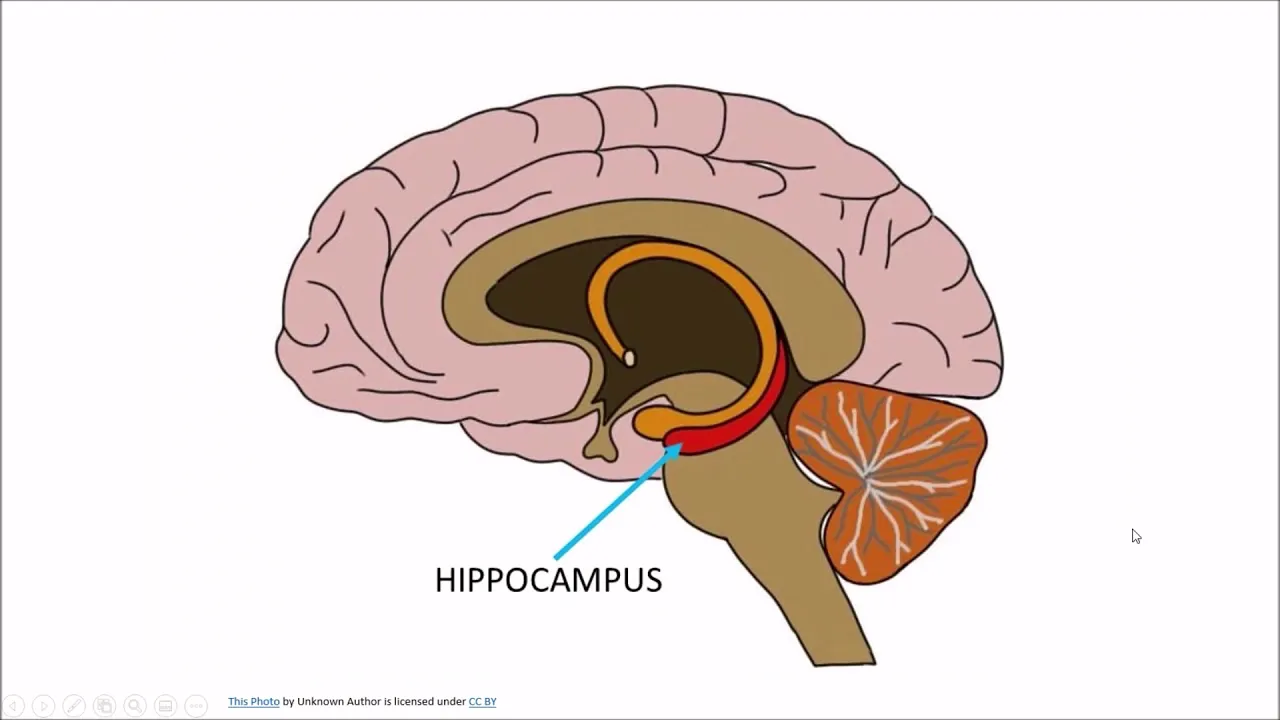
8:08
Neuroscience
What is neurodegeneration?
TheSheekeyScienceShow
3K views•2019-08-19
57:35
Neuroscience
IPL - Ruth Empson "Mind the Gap"
otagouniversity
251 views•2019-07-08

14:01
Neuroscience
How our body shapes our mind | Pancho Tolchinsky | TEDxNapoli
TEDx
2K views•2019-12-05
1:00:02
Neuroscience
Impact of Early Life Deprivation Danielle Stolzenberg Marcus Pembrey Bruce McEwen
uctv
4K views•2019-12-01
10:32
Neuroscience
β-Caryophyllene for Parkinson’s: Protecting Dopamine & Easing Symptoms
parkinsonsdiseaseeducation
6K views•2025-08-09

20:44
Neuroscience
New Insights from Inside the Brain with Rodrigo Braga, PhD
NUFeinbergMed
421 views•2025-04-14

9:57
Neuroscience
Highlights for dystonia • 2025 MDS Congress
movedisorder
145 views•2025-10-27

58:17
Neuroscience
Animal Welfare Synergy Series: Dr Tom Smulders on hippocampal neurogenesis
costactionlift
135 views•2025-07-14
Trending

13:25
Business
Playstation NO DISC/NO BUY Fight Is Over...
DavidJaffeGames
4K views•2026-07-23

22:40
Business
Steam and Xbox Just Dropped The Hammer On PlayStation
OhNoItsAlexx
9K views•2026-07-23

16:52
Anthropology
Americans Confused in Australia for 17 Minutes Straight
IWrocker
17K views•2026-07-23

20:36
Business
SuperBike Factory Has Gone... What's Next for the Motorcycle Industry?
thatbikersimon
11K views•2026-07-22