This sophisticated fusion of biological resilience and chemical engineering turns a common pest into a versatile, cross-domain asset. It is a brilliant yet haunting demonstration of how bio-hybrid robotics can conquer environments that still baffle traditional machines.
Install our extension to search inside any video instantly.
Scientists Made Diving Suits For ‘Cyborg’ Cockroaches And Now They’re Unstoppable
Added:Hello and welcome to the 7-Days-of-Science Roundup Show, your weekly recap of some of the most fascinating recent scientific discoveries. This week, scientists have designed diving suits for cyborg cockroaches, allowing them to move around for up to 3 hours underwater. A new study reveals that the earliest humans in the Americas were megaherbivore specialists that primarily hunted mammoths and giant ground sloths.
A space rescue mission is underway, and much more.
>> [music] [music] >> Starting off the news this week, we've got to talk about the cyborg cockroaches. Cyborg insects might sound like a joke, but they've actually become quite a fascinating area of research in recent years. These are hybrid systems that combine living insects with an electronic controller that enables a pilot to remotely induce their movements using the insect's own muscles. Cyborg insects are hoped to be used one day for complex tasks such as search and rescue operations or pipeline inspections. And they have an advantage over conventional robots because they use minimal power and are compact enough to enter small spaces. Cockroaches have apparently proven to be one of the most promising candidates for making cyborg robots as they're particularly resilient and apparently their movement is quite easy to control. However, the function of cyborg insects is limited by the physiological requirements of the host, and for terrestrial cockroaches, this makes underwater operation quite a challenge. But not anymore because this study reports on the success of a wearable diving suit for a cyborg cockroach, and that's a sentence I never thought I would say on this show. In fact, let me just read you a sentence from the abstract of this paper. By fitting a cockroach, which is a terrestrial species, into this diving suit, we allowed it to survive and operate in oxygen-deprived environments such as underwater, transforming it into an amphibious cyborg robot capable of operation across land and water. Isn't science just fantastic? Anyway, this miniature system comprises a flexible shell, a generator that utilizes a chemical reaction to slowly release oxygen, and oxygen delivery tubes that extend forward and attach to the spiracles through which the cockroach breathes. The suit enabled the cockroaches to keep respiring and moving about underwater for up to 3 hours. And the researchers say that the diving suit concept could even be extended to other systems based on different terrestrial insects. Truly an extraordinary new breakthrough in the world of cyborg insect research. We've got some very exciting prehistoric news next as a recent paper argues that the first modern humans to enter the Americas were megaherbivore specialists, meaning they were specializing in hunting enormous megafauna such as mammoths. There's been a lot of discussion in the past about the precise diets and associated behaviors of the earliest humans in the Americas with two main hypotheses competing. Some argued that early Americans were generalists, foraging on a wide range of food sources depending on the environment, whereas others favored the idea that they were specialized megafauna hunters, focusing on giant mammals with high fat and protein content. This new research evaluates both hypotheses in the context of early humans in eastern Beringia, in more southern regions of North America, and in South America, finding that the zooarcheological record strongly supports the idea that all three groups obtained most of their food from megaherbivores. In Beringia, they primarily hunted woolly mammoths. In more southern parts of North America, they hunted Colombian mammoths. And in South America, they hunted giant ground sloths and gomphotheres. This focus on megaherbivores likely facilitated the rapid spread of humans across both continents and their expansion into a variety of environments. Following the extinction of the megafauna, each group began diversifying by adapting to the other resources then available to them in these regions. A truly fascinating piece of research. Next up in the news this week, a remarkable paper has been published documenting an instance of extinct megafauna surviving until much more recently than we thought in New Guinea. It's generally thought that Australian and New Guinean megafauna, such as giant kangaroos, mostly died out by around 41,000 years ago. Some instances of species hanging on until about 22,000 years ago have been reported from the highlands of New Guinea, but this new research documents a far later instance of an extinct kangaroo surviving. A finger bone from a species called Protemnodon is described from a mid-Holocene archaeological deposit in a rock shelter in Papua New Guinea. This particular individual lived between 6,800 and just 5,300 years ago, and it's thought that its late survival was due to small human populations inhabiting this region. Additionally, this particular population of a once giant kangaroo species had apparently reduced in body size by this point, as the finger bone was relatively small compared to many of its more ancient relatives. So, it's a fascinating look at how varied the timing of certain megafaunal extinctions were in ancient Australia and New Guinea, and it shows that in some cases, we live even closer in time to certain species of these magnificent extinct animals than we realized. Also in the prehistoric news, a new species of Jurassic bird-like dinosaur has been discovered. Found in approximately 150 million-year-old rocks in southeastern China, it's been named Zhengyuanlong buyu. This is a particularly important new fossil for understanding how birds evolved, as it preserves the entire posterior part of the body, including a very long bony tail. Living birds, of course, only have very short bony tails capped with a fused mass called the pygostyle, which anchors the tail flight feathers.
Paleontologists have long been intrigued by how the reduction of the bony tail occurred. Zhengyuanlong was found to be one of the earliest diverging avialans, the lineage that includes all birds and their closest relatives, and it seems to have split off just after the iconic Archaeopteryx diverged. Zhengyuanlong reveals that one of the earliest steps in the evolution of modern bird tails was the reduction in the number of vertebrae forming the tail, as well as a shortening of each individual tail vertebra. This occurred before the final few vertebrae became fused into the pygostyle. Zhengyuanlong is also remarkably small for a prehistoric avialan without a pygostyle, demonstrating that such animals became much smaller even earlier in their evolution than previously thought, and that they were much more diverse in the Jurassic than expected. Also in the paleo news, a very interesting new paper has found that an extraordinary site of fossil preservation in Italy was formed by violent monsoon-driven storms in the Cretaceous. This 80-million-year-old site in northeastern preserves some amazingly complete hadrosaurid skeletons, alongside fossils of crocodylomorphs and a diverse array of other animals. This new study conducted a detailed geochemical analysis and ran paleoclimate simulations to determine how this incredible site of preservation may have formed, finding that the bodies were buried in a dynamic tidal flat ecosystem subject to monsoons that drove flooding events and tropical cyclones.
These violent storms delivered the carcasses to the site, along with large amounts of sediment and other debris.
When microbial activity quickly cemented the sediment, thereby enabling the preservation of the soft tissues of these extinct animals. Incredibly, the researchers were even able to observe evidence of individual storm and flood events, thanks to the exceptional resolution at which the site is preserved. So, another remarkable new study. This week we've had quite a curious rocket launch, a rescue mission to save a satellite that is falling out of orbit. The satellite in question is the Neil Gehrels Swift Observatory, a three telescope suite craft that was launched in 2004 with a planned two-year mission duration, but it is still in use today. It's built to study gamma-ray bursts, or GRBs, intense and incredibly energetic events that come from the most powerful explosions in the universe.
NASA still feel that Swift has more important data to gather. So, they commissioned Catalyst Space to build a rescue craft that can return it to a more stable orbit. There is still a bit of atmosphere up there in low Earth orbit. So, albeit very slowly, objects in low Earth orbit do slow down and fall back to Earth. Catalyst's rescue mission will attach to Swift and boost it a bit further up, giving it more speed to counteract the orbital decay it suffered for the last two decades or so. The rescue mission was packed inside Northrop Grumman's Pegasus XL rocket, which is an air-launched rocket launched from their Stargazer airplane, which flies up to 40,000 ft before dropping the rocket to make its way to space.
This allows for much cheaper and more efficient rocket design as it doesn't have to spend a lot of fuel trying to get through the thicker, lower parts of the Earth's atmosphere. Finally for the news this week, a study on AI by Oxford University's Internet Institute is to be presented at the International Conference on Machine Learning and has looked at the potential for large language models to influence public opinion on social media. The researchers instructed the AI model to turn written texts into social media posts and found that the large language models would change the position taken by the author of the original text, even when instructed not to change the original meaning of the text. Using modeling and computer-based simulations, the researchers then found that these small changes could spread throughout wider social media networks and, over time, affect even broader public opinion. The The expressed by the AI models were fairly similar with gun control and marijuana legislation being generally favored and atheism and the death penalty generally pushed against. The research highlights the fact that current regulatory frameworks are not equipped to cover this kind of issue. While some law making bodies have addressed the more serious misuses of AI, the researchers say they do not address the subtler ways in which AI can influence online narratives. The researchers also say that the bias is not just the AI model itself, but also the choices platforms make in integrating AI to their own systems. A fascinating study, although not yet a peer-reviewed journal paper, on the influence of such groundbreaking technology and how it interacts with what we once took for granted as uniquely human. Well, that's it for the news this week. I really hope you enjoyed learning about all that's happened in these last 7 days of science. You can follow 7 Days of Science on Instagram and also be sure to support us on Patreon if you enjoy what we do here. As always, a big thank you to our patrons including Andrew Cowan, Brain Weevil, Cang Yan, Chicky Chicky Chapa Chapa, Deonna Hernandez, Josh Srivastava, Ethan Wang, Gary Arrington, Giotto Ist, I Rage, Yury Zidevic, John French, John Purdy, Joseph Reed, Josh Lambert, Joshua Corey Peterson, Lena Lampkins, Lena Rose, Lou, Mark Neven, Mendicant Friar, Mike Pace, Ragnar Viking, Ralph Balzac, Robert Prepejic Jr., Robert Thomas, Sal Vanio, Sammy Petricus, Steve Bradshaw, Thomas F.
Conroy III, Thomas Hummel, Timothy N.
Tedrow, Tracy Merrifield, and Troy Schmidt. Thanks for watching and we'll see you in the next video.
Related Videos

1:08:04
Robotics
Setting up a curved screen with Immersive Calibration Pro 4 and multiple cameras (P3D v4)
FlyerOneZero
23K views•2019-07-21

1:01:27
Robotics
Robot Learning with Sparsity and Scarcity
allenai
379 views•2025-10-14

1:01:42
Robotics
Jorge Mendez-Mendez: Unlocking Lifelong Robot Learning With Modularity (2023-10-05)
umassmlfl
237 views•2024-01-06

2:16
Robotics
Northwestern’s MS in Robotics: Student Robotics Projects, 2023
NorthwesternEngineering
1K views•2024-05-31

11:14
Robotics
"Perfect" Turns: Turning by the Gyro - FIRST LEGO League (FLL) SPIKE Prime + EV3 RePlay Programming
ZacharyTrautwein
94K views•2020-10-02
1:01
Robotics
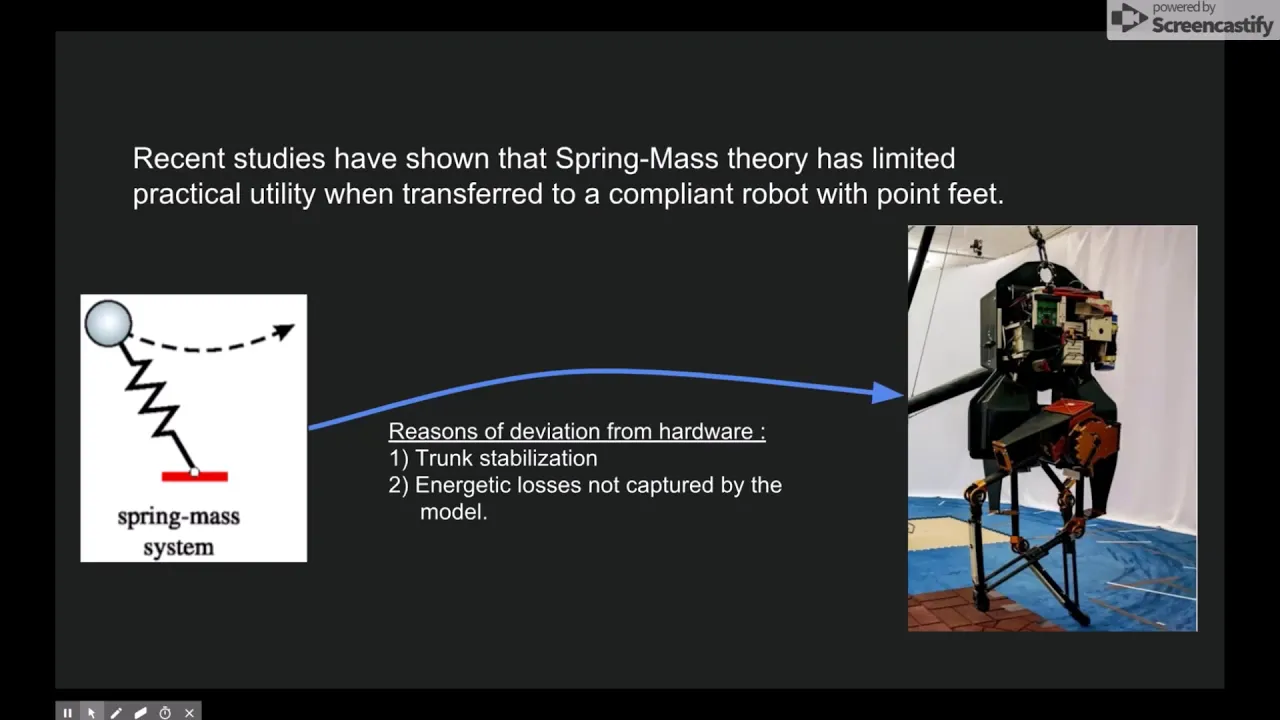
Gorkem Secer: TSLIP-based Deadbeat Running Control of Bipedal Robot ATRIAS
DynamicWalking-wv6qm
298 views•2018-06-22
4:10
Robotics
Self-Driving Cars Need Lessons On Human Drivers | Maddie About Science
skunkbear
26K views•2018-08-21

3:12
Robotics
Milrem Robotics’ THeMIS UGVs used in a live-fire manned-unmanned teaming exercise
MilremRobotics
99K views•2021-05-20
Trending

13:25
Business
Playstation NO DISC/NO BUY Fight Is Over...
DavidJaffeGames
4K views•2026-07-23

22:40
Business
Steam and Xbox Just Dropped The Hammer On PlayStation
OhNoItsAlexx
9K views•2026-07-23

16:52
Anthropology
Americans Confused in Australia for 17 Minutes Straight
IWrocker
17K views•2026-07-23

1:19:25
Biology
LIVE NOW! Cellular Structure and Functions | Complete Cell Biology Lecture | Anatomy & Physiology
MukhtarAliyu-t7m
387 views•2026-07-23