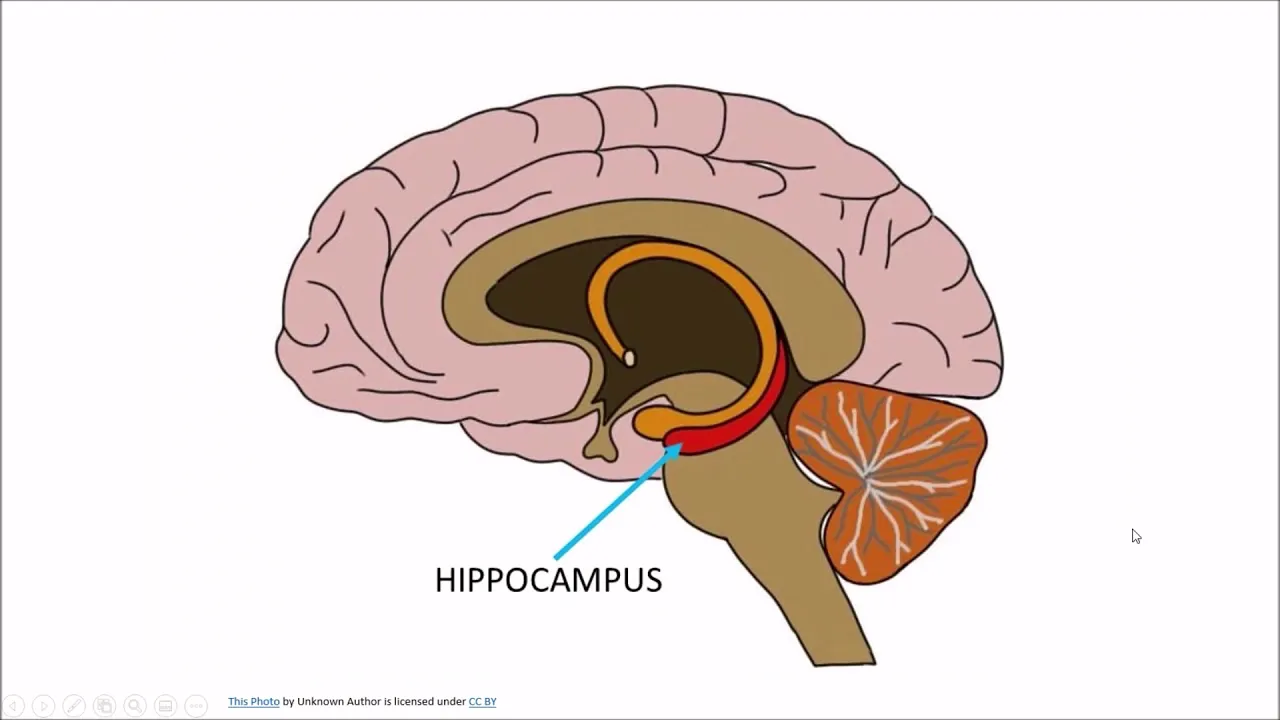
We cannot remember our first two years because our hippocampus, the brain region responsible for forming lasting memories, is still developing during infancy; rapid neurogenesis during this period overwrites existing neural connections, erasing memories before they can be permanently stored. This phenomenon, called infantile amnesia, is not a failure of memory but a feature of mammalian brain development, and the memories we do recall from childhood are often reconstructed from family stories and photographs rather than actual memories.
Install our extension to search inside any video instantly.
Why Can't You Remember Being a Baby?
Added:You have a first day. Everyone does. A first breath, a first cry, a first time your mother's face came into focus above you. You were there for all of it. So, why can't you remember any of it? Your brain was working. Your eyes were open.
Somewhere in your first 2 years of life, thousands of moments happened to you, and every single one of them is gone.
Not blurry, not faded, gone, as if they never existed at all. But, the real answer is far stranger than simply forgetting. Your brain wasn't failing to save those memories. It was choosing not to. Psychologists call this infantile amnesia. Sigmund Freud noticed it over a century ago and gave it its name, though his explanation for it turned out to be wrong. He thought your earliest memories were repressed, buried by the mind to protect you from something. Modern research tells a very different story.
Nothing is being hidden from you.
Nothing is being protected. The memories simply were never built to last. Here is the part that should stop you. Babies can remember things, short-term at least. A 3-month-old can recognize a mobile above their crib and kick their legs in excitement when they see it again days later.
Developmental psychologist Carolyn Rovee-Collier spent decades proving this with exactly that setup, tying a ribbon from an infant's ankle to a mobile, and watching the baby learn. Within minutes, that kicking made the mobile move. Weeks later, show that baby the same mobile, and the legs start kicking again before you've even touched the ribbon. So, the memory exists for a while. Then, it vanishes completely. Why would a brain build a memory only to erase it? The answer sits inside a part of your brain called the hippocampus. Think of it as a librarian. Its job is to take the raw experience of your day, tag it with time and place and detail, and file it away where you can find it again. The problem is that in infancy, this librarian hasn't finished setting up the library yet. The hippocampus is still growing new neurons at an extraordinary rate during your first years of life, and researcher Paul Frankland, working with Sheena Josselyn at the Hospital for Sick Children in Toronto, found something remarkable when they studied this in mice. The very process of building new brain cells so rapidly seems to overwrite the ones that came before. New neurons wire themselves into existing circuits. In doing so, they scramble the connections holding old memories in place. In other words, your brain wasn't too weak to remember your first years, it was too busy building itself to bother. There's a question every 4-year-old eventually asks their parents, usually without meaning to break their heart a little. "Do you remember when I was born?" And the honest answer, if you think about it carefully, is that nobody remembers their own birth. Not because it wasn't important, because the machinery for keeping memories permanent simply wasn't finished installing yet.
Developmental psychologist Patricia Bauer has spent her career studying exactly when that machinery does come online.
Her research tracked children's memories over months and years and found something almost poetic. The memories don't vanish all at once as we age past infancy. They fade gradually, like a photograph left in sunlight. And the ones that survived tend to be the ones tied to strong emotion, repetition, or a story someone kept retelling. This is part of why you might have a hazy memory from age 3, but it often turns out, when you check with a parent, that it isn't really your memory at all. It's a memory of being told the story so many times that your brain built a scene to go with it. That's an unsettling thought. How much of your childhood do you actually remember, and how much of it did you construct out of photographs and family retellings? Here's where it gets stranger still. Infantile amnesia is not unique to humans. Rats show it. Mice show it. Even monkeys show it. Every mammal studied so far, if it has a hippocampus that develops after birth, appears to lose its earliest memories in roughly the same way. This isn't a flaw specific to human parenting or human trauma. It's a feature baked into how mammalian brains grow, which raises the real question underneath all of this. If your earliest years are unremembered, were you even you back then?
Cognitive psychologist Nora Newcombe has argued that the self you think of as you is inseparable from autobiographical memory, the ability to place yourself inside a timeline of your own life. A baby has consciousness. A baby has emotion, hunger, comfort, fear. But, a baby does not yet have a self that can look backward and say, "That happened to me." That sense of a continuous me moving through time is something your brain had to build piece by piece, alongside language, alongside the hippocampus finishing its wiring, alongside the very first stories you were told about your own life. So, in a very real sense, you began twice. Once as a body breathing and reacting and learning, and a second time months or years later as a self who could finally hold on to the fact you existed yesterday and would still exist tomorrow.
Think about what this means for the version of you sitting here right now.
Every memory you have of last week, last year, the moment you're in this second is only possible because that second version of you eventually came online.
Your hippocampus finished enough of its wiring that experience stopped disappearing and started sticking. And it never really stops needing to stick.
The same neurons that were flooding your brain in infancy, overriding old connections as they arrived, are still being born inside your hippocampus today, just far more slowly. Your brain, right now, is quietly performing a smaller version of the same process that erased your first 2 years. It is deciding, moment-by-moment, what gets filed away and what gets allowed to fade, which means the memories you're making today are not guaranteed, either.
Somewhere in your brain, a librarian is still deciding what's worth keeping. So, tonight, when you try to picture your own first day and nothing comes, understand that this isn't a gap in you.
It's proof that you were being built.
The self that could remember hadn't arrived yet. And the strange comfort in that is this: You didn't lose those first years. You simply hadn't become the person who could hold on to them.
Related Videos
8:08
Neuroscience
What is neurodegeneration?
TheSheekeyScienceShow
3K views•2019-08-19
57:35
Neuroscience
IPL - Ruth Empson "Mind the Gap"
otagouniversity
251 views•2019-07-08
14:01
Neuroscience
How our body shapes our mind | Pancho Tolchinsky | TEDxNapoli
TEDx
2K views•2019-12-05
1:00:02
Neuroscience
Impact of Early Life Deprivation Danielle Stolzenberg Marcus Pembrey Bruce McEwen
uctv
4K views•2019-12-01
10:32
Neuroscience
β-Caryophyllene for Parkinson’s: Protecting Dopamine & Easing Symptoms
parkinsonsdiseaseeducation
6K views•2025-08-09
20:44
Neuroscience
New Insights from Inside the Brain with Rodrigo Braga, PhD
NUFeinbergMed
421 views•2025-04-14
9:57
Neuroscience
Highlights for dystonia • 2025 MDS Congress
movedisorder
145 views•2025-10-27
58:17
Neuroscience
Animal Welfare Synergy Series: Dr Tom Smulders on hippocampal neurogenesis
costactionlift
135 views•2025-07-14
Trending

13:38
Law
WOW! Judge TURNS THE TABLES on Trump in His OWN $10B LAWSUIT!!!
MeidasTouch
197K views•2026-07-23

13:25
Business
Playstation NO DISC/NO BUY Fight Is Over...
DavidJaffeGames
4K views•2026-07-23

22:40
Business
Steam and Xbox Just Dropped The Hammer On PlayStation
OhNoItsAlexx
9K views•2026-07-23

16:52
Anthropology
Americans Confused in Australia for 17 Minutes Straight
IWrocker
17K views•2026-07-23