This video brilliantly demystifies a common cognitive glitch by reframing it as a sophisticated biological error-correction system. It provides a sharp, evidence-based explanation that grounds a seemingly supernatural experience in solid neuroscience.
Install our extension to search inside any video instantly.
Trapping a Ghost in the Lab - The Déjà vu Experiment
Added:Science consciousness explained.
>> You walk into a room you've never visited, but as you cross the threshold, your brain insists you've done this exact thing before. [music] Every object and sound feels perfectly, impossibly familiar.
It is an incredibly common illusion.
Statistics suggest that between 60 and 70% of healthy people will experience the sensation at [music] least once in their lives.
Because the feeling is so sudden and vivid, popular culture frames it as a [music] glitch in reality, a past life regression, or a supernatural sixth sense.
For scientists, [music] the phenomenon is an ephemeral ghost. It is a subjective experience that vanishes the exact second you realize it is happening.
This unpredictability makes traditional [music] observational science nearly impossible.
Researchers cannot simply order a healthy subject to [music] experience the sensation on command.
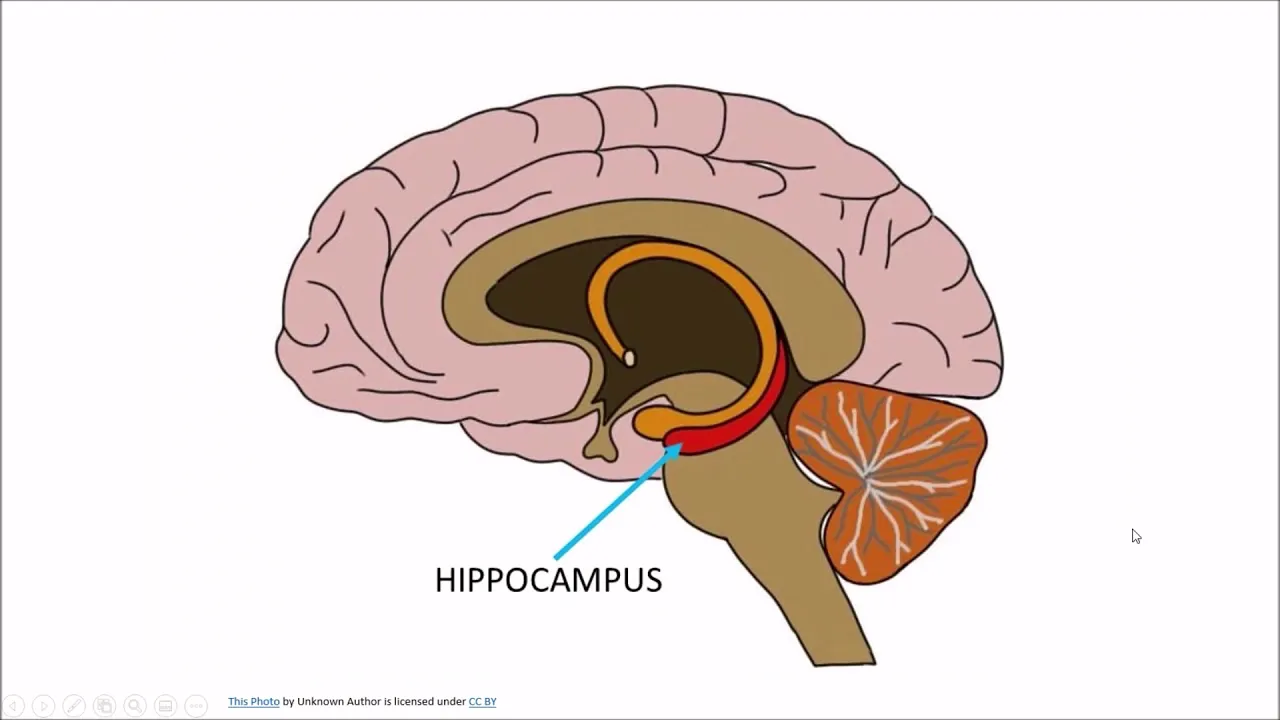
To understand if this is a true memory error >> [music] >> or a delayed neural transmission, scientists had to stop waiting for it to happen. They have to [music] figure out how to artificially manufacture the illusion in a controlled lab. The primary biological [music] suspect is a misfire between the hippocampus, which processes new information, and the temporal lobe, [music] which stores our memories.
To prove this, researchers needed a way to isolate the feeling [music] of familiarity from the actual retrieval of facts. In 1941, [music] Bannister and Zangwill used hypnosis to force subjects to forget images they had just seen. When shown the images [music] later, the subjects reported an artificial sense of paramnesia, a familiarity they couldn't explain.
Modern research at the University of Melbourne [music] expanded on this by testing the divided attention theory, which suggests the [music] brain absorbs subliminal details without our conscious awareness.
Professor Piers How showed [music] subjects slightly altered photographs to demonstrate that our visual memory processes [music] vastly more background data than we realize. We might sense a change we cannot actually describe.
Psychologist Akira O'Connor [music] took this further with railroad rush hour experiments. By using puzzle games [music] and post hypnotic suggestions, his team successfully confused the brain's recognition circuits in a clinical setting.
While these analog proved the brain could be tricked, they lacked the spatial immersion required to reliably trigger the full experience in a real world context.
The hologram theory suggests human memory relies heavily on spatial mapping. [music] Encountering just one familiar spatial cue, like a specific arrangement of tables and chairs, can trigger the recall of a completely different location that shared that same geometric anchor.
Researchers realized that to trap [music] the response perfectly, they needed to simulate entire immersive environments rather than showing subjects flat photographs.
Virtual reality simulations provided [music] the ultimate laboratory trap, giving scientists the ability to instantly alter physical variables in real time. These VR traps were designed to force the hippocampus and the temporal [music] lobe to fall out of sync by subtly altering exact spatial cues during a simulation. [music] By scaling up to completely immersive virtual simulations, experimental psychologists finally triggered the response on demand while the subject [music] remained inside a clinical scanner. Akira O'Connor's research team successfully recorded a manufactured episode live on an MRI scan, showing the temporal lobe wasn't the most active area.
>> [music] >> Instead, the brain's frontal regions lit up with intense activity.
These frontal regions [music] act as the brain's center for conflict resolution and logical fact checking.
This activity indicates that the brain is actively [music] catching a memory error, resolving the discrepancy between a false internal feeling and the objective visual reality, trapping the sensation in the lab proved that it is the brain's [music] biological antivirus software in action, resolving memory discrepancies the moment they are detected.
>> [music] [music] [music] [music]
Related Videos
8:08
Neuroscience
What is neurodegeneration?
TheSheekeyScienceShow
3K views•2019-08-19
57:35
Neuroscience
IPL - Ruth Empson "Mind the Gap"
otagouniversity
251 views•2019-07-08
14:01
Neuroscience
How our body shapes our mind | Pancho Tolchinsky | TEDxNapoli
TEDx
2K views•2019-12-05
1:00:02
Neuroscience
Impact of Early Life Deprivation Danielle Stolzenberg Marcus Pembrey Bruce McEwen
uctv
4K views•2019-12-01
10:32
Neuroscience
β-Caryophyllene for Parkinson’s: Protecting Dopamine & Easing Symptoms
parkinsonsdiseaseeducation
6K views•2025-08-09
20:44
Neuroscience
New Insights from Inside the Brain with Rodrigo Braga, PhD
NUFeinbergMed
421 views•2025-04-14
9:57
Neuroscience
Highlights for dystonia • 2025 MDS Congress
movedisorder
145 views•2025-10-27
58:17
Neuroscience
Animal Welfare Synergy Series: Dr Tom Smulders on hippocampal neurogenesis
costactionlift
135 views•2025-07-14
Trending

13:25
Business
Playstation NO DISC/NO BUY Fight Is Over...
DavidJaffeGames
4K views•2026-07-23

22:40
Business
Steam and Xbox Just Dropped The Hammer On PlayStation
OhNoItsAlexx
9K views•2026-07-23

16:52
Anthropology
Americans Confused in Australia for 17 Minutes Straight
IWrocker
17K views•2026-07-23

20:36
Business
SuperBike Factory Has Gone... What's Next for the Motorcycle Industry?
thatbikersimon
11K views•2026-07-22