A solid synthesis of cognitive science that replaces superficial "hacks" with the rigorous reality of neuroplasticity and biological discipline. It correctly identifies that true mental agility is earned through deliberate friction rather than passive consumption.
Install our extension to search inside any video instantly.
5 Habits Double Your Thinking Speed and Reflexes
Added:Imagine walking into a room and instantly recalling every detail.
Answering a question before others have even processed it.
Reading something once and remembering it a week later.
That is not a superpower.
That is a trained brain.
And the biology that makes it possible is available to everyone.
Your brain is not fixed. It is not a device you were handed at birth with a set speed and a set capacity.
It is living tissue that physically rebuilds itself in response to what you do every day. The right inputs grow new connections, insulate existing pathways, and make signals travel faster.
Faster thinking.
Sharper memory.
Quicker retrieval under pressure.
These are not personality traits.
They are measurable biological outcomes.
And they are trainable.
Here is what that training actually looks like. Here are five things science has shown repeatedly to build a faster and sharper brain.
The first is effortful retrieval, not rereading, not highlighting.
Retrieval.
Research by cognitive scientists Henry Roediger and Mark McDaniel at Washington University in St. Louis showed that students who tested themselves after learning, closing their notes and forcing recall from nothing, retained far more and retrieved it far faster than students who simply reviewed the same material again.
When you reread, you reactivate a pathway that is already warm.
When you retrieve from nothing, you force your brain to find the pathway from a cold start and rebuild it under effort.
That struggle is not failure. It is the training load.
The difficulty is the signal your brain needs to strengthen the circuit. The second is physical exercise.
Neuroscientist John Ratey at Harvard Medical School documented what happens to the brain after aerobic exercise.
The brain releases a molecule called BDNF, brain-derived neurotrophic factor, which acts like fertilizer for your neural circuits.
It promotes new synaptic connections and speeds up the rate at which your brain insulates and strengthens active pathways.
Students who exercised before a learning session showed faster encoding and sharper retrieval compared to those who did not. Even 20 minutes of brisk walking triggers a meaningful BDNF release. You are not just moving your body, you are priming your brain's construction machinery before the real work begins. The third is sleep.
Matthew Walker, a neuroscientist at the University of California, Berkeley, showed that during deep sleep, your brain replays the neural sequences it activated during the day faster and with greater precision.
Support cells called glial cells use this quiet window to lay down new myelin, the insulating sheath that makes signals travel up to 100 times faster along a circuit.
A pathway trained once during the day and then slept on consolidates faster than a pathway drilled 10 times without adequate sleep afterward.
Sleep is not a break from training.
Sleep is when the sharpness is actually built.
The fourth is interleaving. Most people study one subject until it feels easy, then move to the next.
Cognitive psychologist Robert Bjork at UCLA showed that this produces slower, more fragile learning than mixing topics within the same session.
When you switch subjects, your brain cannot continue running the same warm circuit.
It has to find the right pathway from a a start, identify the right pattern and reconnect.
That search process, the moment of not quite knowing before the brain locks in, is what triggers deeper encoding and faster future retrieval.
Students who interleaved their practice consistently outperformed blocked practice students on every delayed test, even when they felt less confident during the sessions themselves. The fifth is focused attention training.
Speed of thought depends not just on how well a pathway is built, but on how quickly your brain can route a signal to the right pathway in the first place.
Neuroscientist Michael Posner at the University of Oregon found that trained attention reduces the cognitive noise that precedes every mental act. When your attention system is sharp, signals reach the right circuits faster.
Focused attention practice, simply holding your awareness on one thing and returning when your mind drifts, has shown measurable improvements in processing speed after just eight weeks of 10-minute daily sessions. You are not relaxing the brain. You are training its routing system.
Here is the counterintuitive part. Every one of these five methods feels harder than the alternative.
Retrieval is harder than rereading.
Exercise is harder than sitting still.
Sleeping enough is harder than staying up late. Interleaving is harder than blocking.
Attention training is harder than distraction.
Bjork called this the desirable difficulties principle.
Your brain does not strengthen pathways it finds easy to run. It strengthens the ones it has to work to reach.
The difficulty is not the obstacle. The difficulty is the mechanism.
Your brain tomorrow is being shaped.
Related Videos
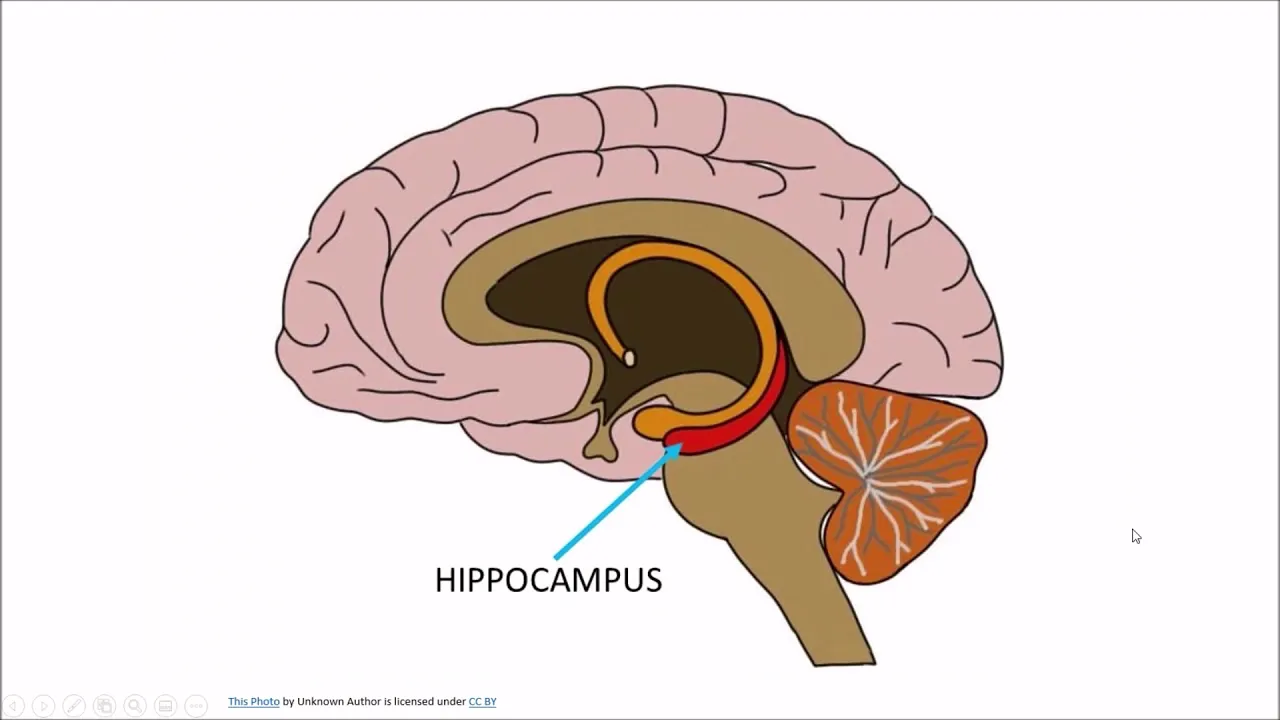
8:08
Neuroscience
What is neurodegeneration?
TheSheekeyScienceShow
3K views•2019-08-19

57:35
Neuroscience
IPL - Ruth Empson "Mind the Gap"
otagouniversity
251 views•2019-07-08

14:01
Neuroscience
How our body shapes our mind | Pancho Tolchinsky | TEDxNapoli
TEDx
2K views•2019-12-05

1:00:02
Neuroscience
Impact of Early Life Deprivation Danielle Stolzenberg Marcus Pembrey Bruce McEwen
uctv
4K views•2019-12-01
10:32
Neuroscience
β-Caryophyllene for Parkinson’s: Protecting Dopamine & Easing Symptoms
parkinsonsdiseaseeducation
6K views•2025-08-09

20:44
Neuroscience
New Insights from Inside the Brain with Rodrigo Braga, PhD
NUFeinbergMed
421 views•2025-04-14
9:57
Neuroscience
Highlights for dystonia • 2025 MDS Congress
movedisorder
145 views•2025-10-27

58:17
Neuroscience
Animal Welfare Synergy Series: Dr Tom Smulders on hippocampal neurogenesis
costactionlift
135 views•2025-07-14
Trending

13:25
Business
Playstation NO DISC/NO BUY Fight Is Over...
DavidJaffeGames
4K views•2026-07-23

22:40
Business
Steam and Xbox Just Dropped The Hammer On PlayStation
OhNoItsAlexx
9K views•2026-07-23

16:52
Anthropology
Americans Confused in Australia for 17 Minutes Straight
IWrocker
17K views•2026-07-23

20:36
Business
SuperBike Factory Has Gone... What's Next for the Motorcycle Industry?
thatbikersimon
11K views•2026-07-22