The video smartly packages fundamental lifestyle habits as "neuroscience," offering a grounded and actionable roadmap for cognitive longevity. It’s a refreshing shift that prioritizes biological discipline over the superficial allure of quick-fix biohacking.
Install our extension to search inside any video instantly.
How To Brainmaxx Using Neuroscience
Added:Your intelligence isn't fixed. As a matter of a fact, your brain is the most malleable organ you have. Most people run their brain at a fraction of their power, and here are the five ways to maximize your brain power. So, the first one is train at the edge. The brain only re-wires when it's under acute stress at a minimum. And what I want you to look at this as is like treat your brain like you would treat your body in the gym in the terms of there's, you know, problem solving and there's decision making and there's creativity and all of these different things. You know, that would be your legs, your back, your chest, you know, all of that stuff.
This we with the same concepts and matters in all of these things, I want you to push slightly out of your comfort zone to where it becomes uncomfortable.
Just to that point because obviously you're not trying to go and pick the biggest weight in the gym and try and lift that one. What you're trying to do is just make it enough to make you like definitely uncomfortable. That is where real learning will start to grow. So, the reason why we want to do this is because sharper thinking makes everything way easier. Like it makes life better. It makes [snorts] better logic, it has faster problem solving, and you are more creative across your entire life. And that compounds and that will benefit you in the long term. The second thing is to guard deep sleep. It locks in learning and clears brain waste. What happens is you have this process called glymphatic cleaning, which allows the toxins that get stored up in your brain throughout the day to get flushed out by these little jet washers. And the way this kind of works is in the in in your spine that goes connects up to your your skull.
You have these things called glial cells, and these glial cells need to shrink up to a certain point to allow cerebral spinal fluid to go into the brain and flush all the toxins out. When you don't do this, the proteins that get left in there can cause Alzheimer's and stuff like that. And also brain fog.
That is the normal driver behind it. So, if you scroll on your phone, I've got bad news for you. These glial cells don't really know how to shrink down to that point. Well, they can't, and so they don't, which means the cerebral spinal fluid doesn't get through, and then you don't have that glymphatic cleaning that you're looking for, and you do then get that brain fog, and you start moving towards Alzheimer's.
Obviously, it's not like a guarantee, but like you start moving there. That's what's heavily linked together is that protein that gets left there that doesn't get flushed out, that toxin. And it's really important to do this because your brain doesn't actually learn what it's supposed to be learning when you're doing it. It does it when you're asleep or when you're at deep rest. This is important because it allows you to understand how important it especially it's it happens mostly in REM sleep. REM sleep is dream sleep, rapid eye movement, and this is where your brain is actually connecting all these things together. During the day, yes, it's, you know, going, "Okay, we need to work on this and boost learning in this and this and this." And it's highlighting it with the acetylcholine, but the moment you actually go to sleep, what's happening is that you are actually doing the rewiring job. So, that's a important part. And the third thing is to move every single day.
I can't stress enough how important movement is because what happens is cardio and hard training, anything that boosts lactic acid will indirectly boost BDNF, brain-derived neurotrophic factor.
This is a protein that boosts neuroplasticity in your brain and allows you to learn quicker and faster, more rapidly. And the speed is really key when it comes to this. So, it allows you to grow new neurons, and exercise will literally build brain tissue. So, the bigger and the fluffier brain, the better. That's what we want.
That's what we're looking for. And moving daily does that. So, even if it's walking or cardio, whatever it is, the more that you get out of it, the more you will more BDNF will be, you know, produced, and the more neuroplasticity you'll get. So, if you're really trying to rewire your brain and you're not doing any physical exercise, you are putting yourself at a disadvantage. I know there's a quite a lot of people who are very concerned about their intellectual side of things, but they are not concerned about the fitness side of things cuz they think they're both apart. Well, they actually connect together very, very, very well. You know, just sports is another type of intelligence. It's the exact same concept, and it's extremely important to understand that these are heavily linked together. If you're not caring about one side, the other side will suffer. So, do understand that. And then once you've done this, you can you can start to notice that you'll you'll be able to learn things quicker and your brain will grow more rapidly because you are actually putting it in the situations that your body's supposed to be to be high functioning and high performing in in fitness and in, you know, using your brain cognition cognition stuff. So, number four is feed feed it wide and then rest. So, what I mean by this is read across different fields, look into loads of different things, and then step away.
This is really important because if you don't allow your mind to rest and run around basically with your one of the most uh effective things I find in NSDR, which is non-sleep deep rest, which is basically you lie on your back and you let your thoughts run free and let them do their thing.
What you might find is that your brain, you know, this is where you should let your mind just go everywhere. Your brain actually starts to tag all of these things that it needs to learn, and it's a very effective for quick learning. I see with a lot of people they want to work like six to eight hours straight, and that's not ideal for learning and real progression. That's not how it works. It's not how your brain wants to operate. And there's a reason why you want to stop after a while because your brain is telling you, "Okay, we need to stop now so we can, you know, [snorts] start to reconsolidate this information." Your brain's quite smart like that. If it tries to get you off the chair, there's a reason for it. Um So, this will happen What what happens with this is when you're bored, the ideas will start to connect together, and that's really important because then your ability to abstract, link things together, and link ideas together becomes much more profound, and you are able to sort of take advantage of that.
The thing is is that if you just keep doing this and not allowing your brain to rest, you're just It's like It's like just overtraining in the gym. I love comparing this to the gym cuz it works so well, and it makes so much sense. If you don't allow yourself to rest, you're just not going to gain that much muscle because you're not allowing it to actually consolidate. You're not allowing the muscles to actually rebuild. And understanding this concept will help you take a break. So, how do we action this?
When you do deep learning, let's say uh for peo- It's different for some people.
Some people it's 25 minutes, other people it's 45, other people can maybe stretch it to a bit over an hour, but I don't recommend any more than that.
Once you've done that, allow yourself to I would basically say around 20 minutes rest.
>> [snorts] >> I mean for if you're doing 25 minutes, then it's probably best to do around 5 or 10, but then incrementally increase it and kind of balance that ratio as the more time you spend on it. Uh and that will allow your brain to to relax into that. And then number five is protect your focus.
This is really important because the deeper you can get into the work, the more you're going to be able to get out of it. And when you're constantly task switching, constantly moving across the surface, you're not really learning that much because your brain needs to have that sustained attention on one thing to in order to understand it because you're just giving yourself way too much information at once, and your brain and your nervous system can't intake that information, which means it doesn't. So, it's important to understand that. And [snorts] this is why I also, you know, I'm very against scrolling. And scrolling's bad for your learning because it's lowering your attention span. And the lower your attention span is, the more you're likely to skim across information rather than going deep into it. And if you don't go deep into it, you don't understand it. This is a very, very common thing that I find with a lot of people that we are starting to remember things, but we don't actually understand things. So someone might be able to regurgitate you a complex subject but if you tell them to simplify it they can't.
That's proof that most people don't actually understand things, they just remember them. And that's very common is to perform that sort of intelligence that you still do know things just because you remembered it because you watched a TikTok video. So it's really really important to also know where you're getting your information from. Anyone can make that post online. So you know, to really look into that. That's another thing with TikTok. You know, I mean TikTok and Instagram, any short form content that's just constantly blasting things at you >> [snorts] >> is that anyone can make that content and also because there's so much information being thrown at you, you can't verify and validate every single piece of information. So you end up just blindly and blankly trusting it. It's one of the worst inventions that, you know, humanity's ever made and it's not just me saying that, Elon Musk said that as well. So, you know, take that into account. And it's the reason why intelligence is such a big thing to bring on is because, you know, [snorts] it will really help you start to compound and progress in your life and be able to take on new concepts and be able to start, you know, growing and growing and growing and growing. I mean, a lot of intelligence by the way is just openness.
You know, cognitive flexibility. This is These are some things I want to add on.
Cognitive flexibility in the sense that if someone tells you you're wrong and you realize you are, you adjust depending on how quickly you're able to just go, "Oh, okay, I'll adjust to that." is the people who actually grow, you know, intellectually rapidly is those people who are going, "Oh, that was me. That's on me. I was wrong. I will move forward from that." And being able to do that will give you over time way more knowledge than most people who aren't open. When you're looking at the personality test of OCEAN, you know, openness, conscientiousness, you know, extraversion and all agreeableness and neuroticism, openness, the higher it is, you know, it's it's correlated with intelligence and that's just being able to be like, "Oh, I'm open to new experiences. I'm also open to being wrong." That sort of thing.
Anyway, if you want to keep on boosting your intelligence and moving forward with this, I've got a school community and one-to-one coaching. Don't forget to like, subscribe, and also comment anything you want to see. I you know, I really enjoy making these videos, hence why I'm doing them five times a week.
So, yeah. I appreciate you coming around, and take care.
Related Videos
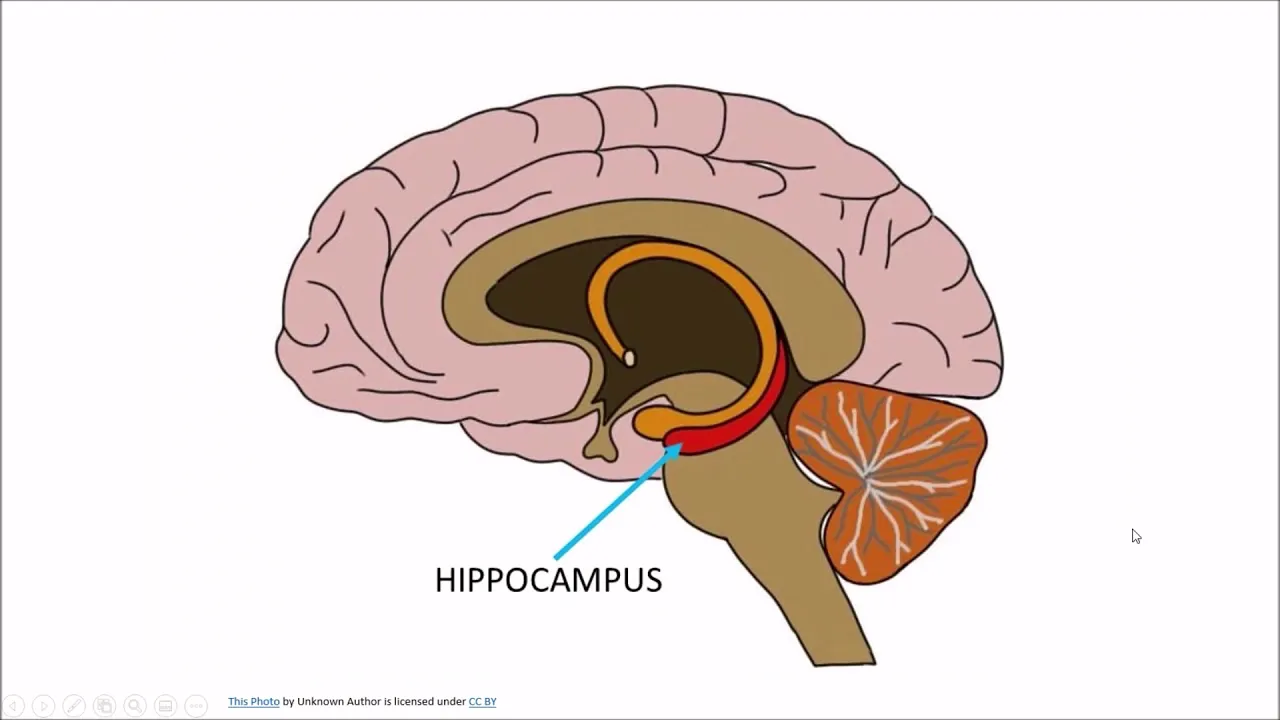
8:08
Neuroscience
What is neurodegeneration?
TheSheekeyScienceShow
3K views•2019-08-19

57:35
Neuroscience
IPL - Ruth Empson "Mind the Gap"
otagouniversity
251 views•2019-07-08

14:01
Neuroscience
How our body shapes our mind | Pancho Tolchinsky | TEDxNapoli
TEDx
2K views•2019-12-05

1:00:02
Neuroscience
Impact of Early Life Deprivation Danielle Stolzenberg Marcus Pembrey Bruce McEwen
uctv
4K views•2019-12-01
10:32
Neuroscience
β-Caryophyllene for Parkinson’s: Protecting Dopamine & Easing Symptoms
parkinsonsdiseaseeducation
6K views•2025-08-09
20:44
Neuroscience
New Insights from Inside the Brain with Rodrigo Braga, PhD
NUFeinbergMed
421 views•2025-04-14
9:57
Neuroscience
Highlights for dystonia • 2025 MDS Congress
movedisorder
145 views•2025-10-27
58:17
Neuroscience
Animal Welfare Synergy Series: Dr Tom Smulders on hippocampal neurogenesis
costactionlift
135 views•2025-07-14
Trending

13:38
Law
WOW! Judge TURNS THE TABLES on Trump in His OWN $10B LAWSUIT!!!
MeidasTouch
197K views•2026-07-23

13:25
Business
Playstation NO DISC/NO BUY Fight Is Over...
DavidJaffeGames
4K views•2026-07-23

22:40
Business
Steam and Xbox Just Dropped The Hammer On PlayStation
OhNoItsAlexx
9K views•2026-07-23

16:52
Anthropology
Americans Confused in Australia for 17 Minutes Straight
IWrocker
17K views•2026-07-23