Infantile amnesia—the inability to recall events from the first three years of life—is caused by three interconnected factors: the hippocampus, the brain structure responsible for forming memories, does not reach adult-like structure until around age 3-4; rapid neurogenesis (new neuron growth) in early childhood overwrites existing memories; and children lack the language and self-concept necessary to encode and retrieve memories. While babies do form implicit procedural memories (demonstrated by Rovee-Collier's mobile experiments), these cannot be consciously recalled or narrated as adults because the brain's memory-filing machinery and linguistic framework were not yet developed.
Install our extension to search inside any video instantly.
Why You Can't Remember Being a Baby (Infantile Amnesia Explained)
Added:A dark room, not empty, full actually, but you can't see anything in it.
Somewhere in that dark room is you, age one, learning to stand, falling, laughing at a sound nobody else in the house finds funny, tasting snow for the first time, and deciding immediately that it is a betrayal. You were there.
And yet, if I asked you right now to describe a single afternoon from your first 3 years of life, you couldn't. Not one. Not the sound of your mother's voice before you knew what words meant.
Not the first time you were truly bone deep afraid. Not the birthday where you smashed your hand into the cake before anyone gave you permission. This isn't because nothing happened. It's because of something scientists call infantile amnesia. And it is one of the strangest, best documented gaps in human memory.
Picture a narrator walking backward through their own life. Like rewinding a tape. 25 years old, 20, 15, 10, 6. And here the tape starts to flicker. Patchy.
A scene here. A smell there. Nothing whole. Four almost gone. Two static. One nothing at all. Not darkness, not even a sense that darkness is missing something, just an edge, a hard stop where you, as a rememberer of your own life, simply begins. Sigman Freud noticed this over a century ago and gave it its name in 1905. His explanation was that we repress our earliest years because they're tangled up with instincts and desires too disturbing for the conscious mind to keep around. It was a good story. It was also, as it turns out, wrong, or at least not the reason. Here's the story researchers tell instead. Picture the brain of a 2-year-old as a construction site.
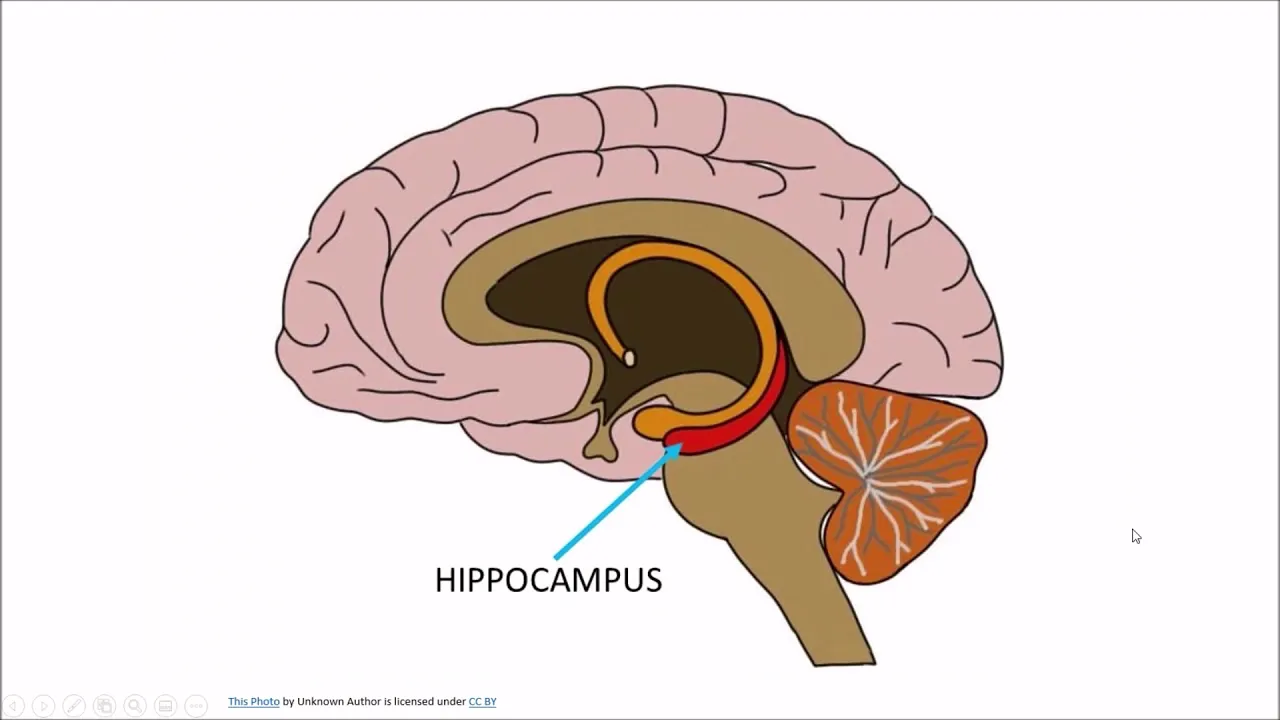
Cranes everywhere, steel beams going up and coming back down. One of the buildings under construction is the hippo campus. The structure that files experiences away as memories you can later revisit on purpose. In infancy, that building isn't finished.
Neuroscientist Lynn Natal and her colleagues showed that the hippocampus doesn't reach a workable adult-like structure until around 3 or 4 years old.
Before that, the machinery for filing a memory as this happened on this day to me simply isn't wired up yet. But here's the twist in the story. The part that makes it more interesting than the equipment wasn't there. Neuroscientist Paul Franklin ran an experiment on mice.
Mice that, like human infants, are born with brains still under construction.
His team found that the hippocampus of a young brain produces new neurons at an extraordinary rate. A process called neurogenesis. And every new neuron that gets wired in disturbs the ones already there, like a new tenant moving furniture into a room that already had someone living in it. The early brain isn't failing to save memories. It's saving them and then overwriting them over and over in the rush to grow. Now bring in a second character to this story. Language. Psychologist Katherine Nelson and later Carol Peterson studied how children talk about their pasts and found something almost poetic. A child can't yet tell herself the story of a memory until she has words for time, for self, for before and after. A toddler doesn't yet have yesterday. She doesn't yet have a stable eye to hang the memory on. Peterson's research with young children found that even when they could recount an event shortly after it happened, those same memories without language to anchor them, evaporated within a couple of years, as if a photograph had been taken, but with no name written on the back, so no one could later say who was in it. And here's the final gentlest part of the story. The memories may not be fully gone. Developmental psychologist Carolyn Roie Collier ran experiments with infants and mobiles. Hanging a mobile above a crib, tying a ribbon from the mobile to the baby's ankle, and watching the baby learn to kick to make it move.
Weeks later, with no ribbon at all, infants would kick the same way just from seeing the mobile again. Something was remembered. Not a story, not a scene, but a trace, implicit, wordless, procedural. Patricia Bower's later work with brain imaging found that infants do encode real episodic memories and can even recall them months on in behavior.
It's the ability to consciously retrieve and narrate them years later as an adult that seems to fail. So, the room isn't empty after all. It was never empty.
It's just built out of a kind of memory you don't have the right key to unlock anymore, filed by a brain that was still under construction in a language you hadn't learned yet, by a self that hadn't finished becoming a self.
Somewhere in you still is the sound of a voice before you knew what words were.
You just can't ask it to speak.
Related Videos
8:08
Neuroscience
What is neurodegeneration?
TheSheekeyScienceShow
3K views•2019-08-19
57:35
Neuroscience
IPL - Ruth Empson "Mind the Gap"
otagouniversity
251 views•2019-07-08
14:01
Neuroscience
How our body shapes our mind | Pancho Tolchinsky | TEDxNapoli
TEDx
2K views•2019-12-05
1:00:02
Neuroscience
Impact of Early Life Deprivation Danielle Stolzenberg Marcus Pembrey Bruce McEwen
uctv
4K views•2019-12-01
10:32
Neuroscience
β-Caryophyllene for Parkinson’s: Protecting Dopamine & Easing Symptoms
parkinsonsdiseaseeducation
6K views•2025-08-09
20:44
Neuroscience
New Insights from Inside the Brain with Rodrigo Braga, PhD
NUFeinbergMed
421 views•2025-04-14
9:57
Neuroscience
Highlights for dystonia • 2025 MDS Congress
movedisorder
145 views•2025-10-27
58:17
Neuroscience
Animal Welfare Synergy Series: Dr Tom Smulders on hippocampal neurogenesis
costactionlift
135 views•2025-07-14
Trending

13:38
Law
WOW! Judge TURNS THE TABLES on Trump in His OWN $10B LAWSUIT!!!
MeidasTouch
197K views•2026-07-23

13:25
Business
Playstation NO DISC/NO BUY Fight Is Over...
DavidJaffeGames
4K views•2026-07-23

22:40
Business
Steam and Xbox Just Dropped The Hammer On PlayStation
OhNoItsAlexx
9K views•2026-07-23

16:52
Anthropology
Americans Confused in Australia for 17 Minutes Straight
IWrocker
17K views•2026-07-23