The discussion sharply exposes the biological tax of modern pharmacology, where the price of emotional stability is often the dulling of creative friction. It is a sobering reminder that we cannot selectively numb our demons without also silencing our muses.
Install our extension to search inside any video instantly.
How Pills Affect the Creative Mind
Added:How do you feel about the pill?
>> [laughter] >> I wasn't I Have you read the Louise Perry book?
>> Uh yeah, about the birth control pill.
And part of it is sort of the social consequences of the sexual revolution.
There's a lot of Louise Perry stuff. I'm more interested in the the effect of hormonal birth control on how it affects attraction and relationships between men and women. And there's some very proactive provocative studies that show, for example, that women who go on hormonal birth control in adolescence and don't go off until after they're married are spontaneously not attracted to the men that they're married to when they go off for the first time.
>> your >> Because you're attracted to different men. If you don't ovulate, you're attract you're attracted to a certain kind of male during ovulation and during periods of non-ovulation. And that makes perfect sense for childbearing. You know, to get pregnant or to have a nurturer or whatever it happens to be.
>> What are they What are they suppressing Are they suppressing more alpha male?
>> Yeah, so if you when you're not ovulating, you're more >> term, alpha male, but you're more >> When you're when you're more attracted Women on average, once again, people's people's results vary.
>> Arthur, as a guy who's made a lot of money on stereotypes, shut your mouth.
>> [laughter] >> He's like, "Dude, yeah, but this is good. Listen, it made you a lot of money. It ends my career."
>> [laughter] >> Whatever. You This is that's the land acknowledgement of sociology. This is This is not for everybody. Most people >> Overlapping distributions of male and female attraction.
>> the bell curve, et cetera, et cetera.
>> So so what you find >> What are we talking about?
>> [laughter] >> We're talking about the pill.
>> What the pill?
>> So and so these are pretty interesting studies. Um They when you're when women are not ovulating, they're they're more interested in men who are less prototypically hypermasculine. And when they are ovulating, to men who are more prototypically masculine. And so what will happen is they start ovulating for the first time in years and years and years and years. They'll find they're attract they're married to somebody to whom they're not as attracted as they thought they were. It's a disconcerting thing when you want to get pregnant for the first time three or four years into your marriage.
>> Yeah.
>> It's what And And again, this shouldn't be shocking to anybody. If you mess with your hormones, there's going to be a price.
>> Yeah.
>> You know, there And And again, there are all kinds of good reasons to mess with your hormones. I mean, hormone replacement for postmenopausal women can be a miracle for a lot of people.
Hormone replacement therapy for some men can really change the quality of life in a very positive way. But, the truth is there's no lack of secondary consequences.
>> Well, yeah, it's the Thomas Sowell quote, there's no >> No free lunch.
>> There's no solutions, there's only trade-offs.
>> Exactly right.
>> Which is like >> Exactly right.
>> Nailed it.
>> Yeah.
>> All right. So, you do all these things.
You go to the gym, go to go to the church, you go to you shower.
>> You I shower every day.
>> You have a You have a protocol. You try to work your You try not to get on your phone.
>> Yeah.
>> And it's it's you're playing defense against yourself.
>> I'm [snorts] playing playing defense defense against my natural melancholy, against my natural melancholy, um which, you know, gets in the way of my life.
>> [gasps] >> Wait, wait, wait, wait, it's Isn't it making your life better? Or the melancholy's getting >> Well, yeah, I mean, and the truth is melancholics, it's funny because there's a I'm I'm a mad scientist, which means high negative affect.
High negative affect is actually implicated for a lot of people in ruminative sadness, and there's very provocative research about what ruminative sadness looks like physiologically.
That's involved >> You're looking at it.
>> [laughter] >> Rumination per se, many everything in your sciences is contested because it's such a new field.
>> I I wanted to mention that, the replication crisis. They they a lot of these studies that you go, "Oh, when you stand like Superman, you get confident."
They can't replicate the study, meaning they it worked once, but so >> So, I try to stay away from any research that hasn't been replicated. If it's too new, I don't generally write about it.
I don't generally talk about it in my column or write about it in my research because I want it to be I want it to be replicable, but still everything's legitimately contested, especially neuroscience because it's a new field.
30 years ago, almost no universities had neuroscience departments. And now they all do because this is the black box.
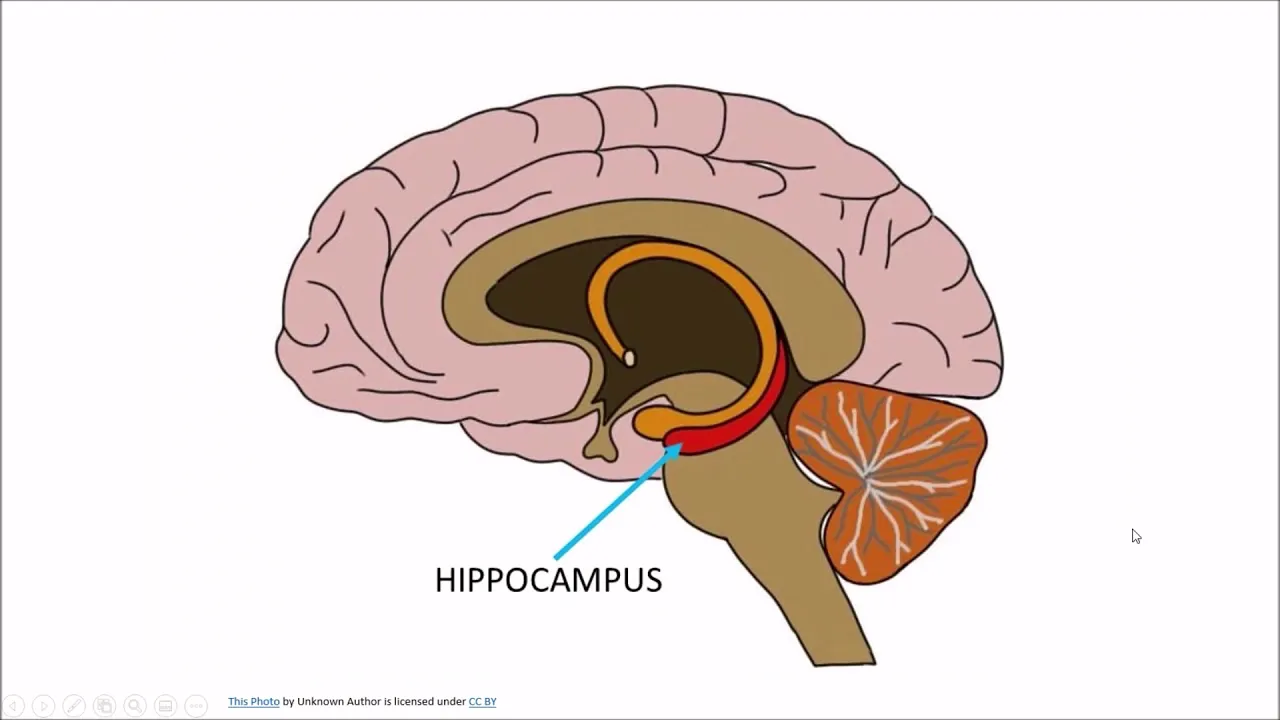
This is the thing that we really all want to understand. But it's still a black box. That said, rumination, which it involves, according to really pretty good and provocative research, a part of the brain called the ventral lateral prefrontal cortex, VLPFC for short.
And it's not just about ruminative sadness, which is probably evolved so that you can solve problems and don't make the same mistake twice.
>> Mhm.
>> Like uh >> Yeah.
>> I made a mistake. I'm so stupid.
>> Or you make it over and over and over and over.
>> Or you can get into a maladapted cycle, which is why when you when you when you raise serotonin in the synapse, it lowers activity, ruminative activity in the ventral lateral prefrontal cortex.
Here's the unintended secondary >> If you raise >> If you raise serotonin. So if you take a serotonin a selective serotonin reuptake inhibitor, Prozac, >> So what it >> is it frees it it leaves more serotonin in the synapse of the brain, and that's correlated with less activity in the ventral lateral prefrontal cortex, according to these a lot of these studies. I haven't seen it because I haven't done fMRI studies on this myself. I've just seen it in the research. Now, that's great because you're going to be less maladapted in your in your ruminative sadness. I'm so stupid. Nobody loves me, etc., etc. The problem is there's other kinds of rumination that it also appears to eradicate. For example, when you're falling in love, you're ruminating on the other person.
>> Mhm.
>> So this is why a lot of people on on on mood on mood adaptors on who are taking mood drugs, uh psychiatric drugs for for for depression, they say it's hard to fall in love. I don't know why. I don't know why I can't fall in love.
And that's because they can't ruminate on the other person.
People will often say when I'm taking a selective serotonin reuptake inhibitor, I feel less creative. Why? Because creativity is rumination. You know when you're preparing one of your Netflix specials and you're you're ruminating. You're using that part of your brain.
>> I wrote Chappelle Show on Zoloft.
>> Did you? Good.
>> Yeah.
>> Imagine how good it would have been if you weren't on Zoloft.
>> man, Arthur >> That thing would have been so much better.
>> [laughter] >> And >> have also been, you know, at suicide risk.
>> Um and I it's it's not consistent. I've written good great stuff on Zoloft and not >> And this is again none of this is an argument to not take your meds.
>> Yeah.
>> What this suggests is that these are these are marginal effects that people actually will experience. But they're once again, there's no free lunch. It's what it comes to.
>> I stopped ruminating from psychedelics, I believe.
>> It really helped your brain, huh?
>> Can't It's unbelievable.
>> Yeah, yeah.
>> But the the I stopped ruminating so I I ruminate so little now. It's like I don't have a personality.
>> So it Is it hurt your creativity?
>> I I don't know. I All I know is I used to I I my entire personality was a rumination.
The whole thing was a rumination. It might I don't know. I still write jokes.
So it's like >> You do write jokes. I hear new stuff from you.
>> the whole thing was a rumination. My whole and I'm it's it's fascinating that it's gone.
>> Right.
>> And and I wonder like I wonder >> There's another explanation too, by the way.
>> Go.
>> Age.
>> Okay.
>> So what you find is that people >> telling Dan Harris who's SLO.
>> Oh yeah, he's awesome. He's the most soulful atheist I've ever met.
>> I didn't we didn't even get that far.
>> I think that guy's fantastic.
>> He is great. And uh but I said I I think some of this stuff just dissolves.
>> Yeah, yeah. So neuroticism dramatically declines. So there's four there's five aspects of personality. There's openness to experience, conscientiousness, extroversion, agreeableness, and neuroticism. And they all change as you get older, mostly for the better. It's [clears throat] one of the reasons that people tend to have better better What goes up what goes down? So, openness to experience goes up and then goes down.
And so, in your mid-50s, you're almost at the age where you're going to see [clears throat] So, that's where that you get you get real racist in your 50s.
>> [laughter] >> Where you're less likely to want to ride a scooter.
Right? That's what Yeah. And And that'll stay kind of where it is. Some people are just naturally open to experience, but almost everybody has a decline in their openness to experience.
>> Yeah. So, you have you have more neophobia and less neophilia, right? Is what it comes down to. So, that's what And that's neither good nor bad.
>> I I'm joking about the racism thing, but I think there's something to it. I think there's >> to I don't want to hear your new newfangled political opinions.
>> Hey.
You should like and subscribe.
>> [laughter]
Related Videos
8:08
Neuroscience
What is neurodegeneration?
TheSheekeyScienceShow
3K views•2019-08-19
57:35
Neuroscience
IPL - Ruth Empson "Mind the Gap"
otagouniversity
251 views•2019-07-08

14:01
Neuroscience
How our body shapes our mind | Pancho Tolchinsky | TEDxNapoli
TEDx
2K views•2019-12-05
1:00:02
Neuroscience
Impact of Early Life Deprivation Danielle Stolzenberg Marcus Pembrey Bruce McEwen
uctv
4K views•2019-12-01
10:32
Neuroscience
β-Caryophyllene for Parkinson’s: Protecting Dopamine & Easing Symptoms
parkinsonsdiseaseeducation
6K views•2025-08-09
20:44
Neuroscience
New Insights from Inside the Brain with Rodrigo Braga, PhD
NUFeinbergMed
421 views•2025-04-14
9:57
Neuroscience
Highlights for dystonia • 2025 MDS Congress
movedisorder
145 views•2025-10-27
58:17
Neuroscience
Animal Welfare Synergy Series: Dr Tom Smulders on hippocampal neurogenesis
costactionlift
135 views•2025-07-14
Trending

13:25
Business
Playstation NO DISC/NO BUY Fight Is Over...
DavidJaffeGames
4K views•2026-07-23

22:40
Business
Steam and Xbox Just Dropped The Hammer On PlayStation
OhNoItsAlexx
9K views•2026-07-23

16:52
Anthropology
Americans Confused in Australia for 17 Minutes Straight
IWrocker
17K views•2026-07-23

20:36
Business
SuperBike Factory Has Gone... What's Next for the Motorcycle Industry?
thatbikersimon
11K views•2026-07-22