This video offers a sophisticated excuse for procrastination by rebranding a lack of discipline as a mystical journey into the shadow. It is a comforting narrative that risks replacing actual progress with self-indulgent introspection.
Install our extension to search inside any video instantly.
You're Not Lazy. You're Going Through the Shadow | Carl Jung
Added:Carl Jung's most unsettling insight is that the laziness we punish is often the shadow [music] pulling us underground.
He reads it as a movement of energy.
Libido, the psyche's own current withdrawing from the surface of a life and sinking inward towards something buried. Yung catches this at a table. At the Borgoldsley Clinic, he speaks a word and times the answer. Most come fast.
Then a certain word lands and [music] the person stalls, goes blank, cannot say why. Something underneath has seized the answer before it arrives.
You know the morning. You sat down to do the thing you've always been able to do and your hands would not move and something underneath you quietly collapsed. What you keep calling laziness is your own strength. Leaving the surface and going somewhere you cannot [music] follow. Every day you fight it, you lose a little more faith in yourself. You can spend years up here calling yourself weak while the descent runs your days. Or you can learn what it went down to reach because there is something at the bottom, something you buried on purpose, and it will [music] not stop until you carry it back up.
Some nights the screen is the wrong place for this. If you'd rather just listen, Surreal Mind is on Spotify now.
the words in the dark wherever you are.
Start with the morning because you know exactly the one. You sat down to do a thing that is not hard, a thing you have done a thousand times and you could not begin. Your will reached for the task and closed on nothing. You watched an hour disappear into the gap between deciding to start and starting. And the whole time a voice in you read out your charges.
lazy and weak and coming apart. You have gotten very good at prosecuting yourself and the frozen morning hands you all the evidence you think you need. Then look at what you did after that morning. You did not shrug and enjoy the rest. You panicked and then you went to war with yourself.
You bought the planner and set the alarms earlier and gave yourself the hard talk you have given a hundred times. and each fix held for about a day before the floor dropped out again. A truly lazy person does not do that because ease is the whole point of laziness. You have no ease anywhere in this. You are frightened and worn down from pushing against something that will not push back.
So the word is wrong. Whatever this is, it eats the fuel before the fuel ever reaches your hands. This is where it starts to change. Jung has a plain way of describing where the fuel goes. He says psychic energy is conserved the way physical energy is conserved. It moves.
It can withdraw from the outer tasks of a life and turn back inward, sinking toward the deeper layers of the psyche.
When it does, the surface goes still no matter how hard you flog it. Because the current that used to run your days is no longer up here. It went down. Sit with that because it rearranges everything.
The stillness on the surface says nothing about how much is left in you.
It marks the place where all of it went.
There is a man I want you to keep in mind while we go down because this is not an abstraction for him. Call him a man of 53 who was for 30 years the engine that cut out. His name was a byword for reliable output at his job and in his family. And if a thing needed doing, he did it early twice without being asked. About 8 months ago, the drive quietly went out of him.
Now he sits at the same desk he built his whole life at, and he produces nothing, and he has convicted himself privately and harshly of going soft. We will come back to him. Yung proves a piece of this at a table. At the Burg Heltzley, he sits patients down and times their answers to a long list of words. And he finds that a charged half-hidden cluster of feeling can reach up and sees a response before it forms.
So a person stalls on a single word and cannot say why. He calls such a cluster a complex, and he shows it has a will of its own and its own share of energy drawn off a person who cannot spare it.
Your frozen desk is that same seizure, no longer lasting a second, but running for months. Something charged and buried has its hand on your fuel line, and it will not let go until you go down and find out what it wants. This is the picture to hold for the rest of this. A life has a [music] surface, and it has a depth, and they share one supply of energy between them. When the depth calls that energy down, the surface goes dark. From up here, it looks like you stopped. Down there, you have never worked harder.
There is a reason to go all the way down and not stop part way. What the dark is quietly building down where you cannot see it yet is a self that can carry everything the old one buried.
Everything past this point is the story of how that self gets made. But if your energy went down a shaft, then the only real question left is what it went down to reach. It did not leave for no reason. It will not come back until the errand is done. And the thing waiting at the bottom is the exact thing you have spent your whole functional life making sure you never had to see.
To see why the frozen desk feels like a private disgrace instead of a symptom.
Look at what collapsed. A mask collapsed. Jung has a name for the face we build to meet the world. the polished, capable, agreeable version of ourselves we wear to be accepted and employed and loved. He calls it the persona.
For a great many people and maybe for you, the persona has one feature above all the others. It is useful. It gets things done. It is the one who can always be counted on. That was the whole of the man at the desk. 30 years of being the useful one until usefulness was the only self he could find when he reached for himself.
When the energy drains off the surface, that mask is the first thing to stop working. And because he had quietly fused himself to it, its failure did not feel to him like a mask slipping. It felt like the real man being exposed as a fraud. That is where the shame comes from for him and for you.
The only self you knew how to be has gone dark and you are afraid of whoever is standing behind it. The undone task is almost beside the point. [music] So you try to force the mask back on. You attack the surface with more discipline, more pressure, more contempt, as though the problem were a lazy animal that needs a sharper whip.
It does not work and it will never work.
And there is a precise reason. Jung is clear that a drop in psychic energy like this is not simply a fault to be scolded out of you. When the energy withdraws and sinks, it is doing work. The loness is the psyche pulling its resources off the surface because it needs them somewhere you cannot see. Whipping the surface harder does not send the energy back up. It only exhausts the one part of you still trying to obey. Force does something specific here. Every hour you spend hating yourself at the desk is an hour spent fighting the direction your own psyche is trying to move. You stand at the top of the shaft screaming at the surface to light back up while the whole reason it went dark is that the light is needed at the bottom.
Force is you at war with your own depths and your depths are patient. They always win because they are you. There is a cruelty inside this that keeps the trap closed. The more you believe the word lazy, the harder you push. The harder you push, the more depleted you get. The more depleted you get, the more the surface confirms the verdict you were afraid of. It is a closed loop and it runs [clears throat] on a single belief that a descent is a defect. None of this makes the pain a gift in disguise. This does not turn a hard, frightening season secretly wonderful. The frozen desk hurts. The lost days hurt. The fear that you will never come back hurts. What Jung offers has nothing to do with feeling good about it. He offers something stranger and better, a way to understand what the pain is for. So you stop stacking the second heavier pain of self-contempt on top of the first.
Because the word lazy does one genuinely destructive thing. It sends you looking in the wrong direction. fixed up here on the willpower and the systems when everything that matters has already gone down. You cannot fix a descent by renovating the floor it left through.
But if the energy went down on purpose, then you are left with the hardest question, the one the discipline books never ask, down toward what? What sits at the bottom of the shaft worth shutting off the entire surface of a life to reach? Jung has an answer and it frightens people more than they admit.
The descent you are in is old and it is not yours alone and that is the first thing that makes it bearable. Long before anyone had the word psychology, human beings kept telling the same story. A person is swallowed by the dark. They go down into the belly of the whale, under the sea, into the underworld, and they are gone for a while. And the world assumes they are lost. Yung recognizes that story everywhere because it maps something that actually happens inside a person.
He calls it the night sea journey. The hero is taken by the dark. Something down there needed the daylight self to come and get it. And the daylight self would never have gone on its own. That is what your frozen season is. A descent that follows an ancient shape. Whether you agreed to it or not, and no one agrees to it. You keep hunting for the decision that caused this. The moment you got weak, there was no such decision. The descent arrives. It arrives when the surface self has gone as far as it can go alone and the deeper psyche finally pulls the energy down because the time has come for the part of the work that cannot be done in daylight. And almost nothing about this shows on the surface. That is its particular loneliness. From the outside, a descent looks like a person who has simply stopped. And the people around you who love you will reach for the only word they have.
They will tell you to push through. They will suggest a routine. Every one of them is standing at the top of the shaft calling down. Certain the problem is that you will not climb. None of them can see that you are already working harder than you have worked in years in a direction that has no daylight in it.
Two things are true at once here. And this is where care matters. There is a real difference between this kind of meaningful descent and the flat grinding despair of a depression that has a person by the throat and will not let go. This video is not a diagnosis. Some darkness needs a doctor and reaching for one is part of taking the descent seriously. Keep that door open. What Yung adds sits alongside that care.
He gives you a reason not to treat every low season as nothing more than an illness to switch off. Because sometimes the leeness is the psyche doing exactly what it needs to do. And the worst move you can make is to spend the whole time clawing back to a surface you were meant to leave for a while.
That is a different story from the one you have been telling yourself. You thought you were malfunctioning. You are traveling. You have gone down into the oldest kind of dark there is on an errand your surface self does not understand yet. And the reason it frightens you is that it is meaningful.
And meaning at this depth [music] is not gentle.
The dark is doing more than taking down where you cannot watch it. It is assembling something out of what it finds. And you will not see what until you reach the bottom. The man at the desk cannot feel any of this yet. From inside it, there is no myth and no map.
There is only a weekday afternoon, a home office, a list he cannot start, and the growing certainty that the best of him is gone for good. He has no idea he is on a journey. To him, he is simply a machine that broke.
That is the cruelty of the descent. It does its most important work while convincing you that you are simply failing. Because there is something at the bottom of this. The descent is not a fall into empty space.
It has a destination. And the closer you get, the more you feel it. A presence in the dark you have spent your entire functional life keeping at arms length.
You built the whole surface. The usefulness, the schedule, the competent mask, partly to be sure you would never have to go down and meet it.
Now the energy that ran all of it has been repossessed and turned into a rope and it is lowering you straight toward the one thing you buried. But if there is something down there and if the whole descent is arranged to bring you to it, then you had better know what it is before you arrive.
Yung is more honest than the awakening videos promise. What waits at the bottom of the shaft is the half of you that you buried alive. What waits at the bottom is the thing this whole channel keeps circling.
The shape in the dark is you, not a monster wearing your face. The parts of you that you were never allowed to be.
Yung calls it the shadow, and he means something specific and unwelcome.
The shadow is everything real about you that did not fit the mask. The anger you learned to swallow because anger was not safe. The grief you never finished because there was no time to fall apart.
The wants that were too much. The needs that were inconvenient. The whole unlived life you filed away so the useful one could run the day. You did not destroy any of it. You buried it. It has been down here the entire time, keeping its full charge, waiting.
And almost no one expects the next part because the shadow is not only the ugly things. A person buries more than their worst. They bury whatever the surface could not afford to carry. And some of that is the most alive part of them. The nerve you were told was too much. The desire that embarrassed the people raising you. The grief that would have made you inconvenient to love. Yung is blunt that the shadow holds real gold in its dark folds. [music] strength and appetite and instinct waiting in the same hole as the shame.
You did not only exile your flaws down that shaft. You exiled a great deal of your fire. If you have spent years calling yourself lazy while the most alive part of you sat waiting at the bottom of that shaft, write this in the comments. I buried my fire and called it laziness. Say it once because naming what you buried is the first honest move you have made in a long time. Now you can see why the surface finally went dark.
Keeping that much of yourself underground takes enormous energy. For years you paid it without noticing.
Skimming the strength off the top of every day to hold the lid down. Then one morning the psyche made a different call. It stopped funding the surface. It took back all that energy and it spent the energy lowering you toward the thing you had spent your life avoiding. The frozen desk was the withdrawal notice.
This is the line the whole descent has been moving toward and I will not soften it. The shape at the bottom of the shaft is the half of you that you buried alive to keep the surface running. Your strength never left you. It is standing underneath you right now, holding up a lid you nailed down years ago. And it is done being ignored. Which means the way out runs opposite to everything you have tried.
You have been trying to get better by force and by light. Push harder. Think positive. Renovate the surface until the dark part has nowhere left to speak from. Yung is blunt about the light only cure.
Picturing figures of light leaves the dark part exactly where it is. The work runs the other way. A person becomes whole by making the darkness conscious by turning toward the buried thing in the dark and finally looking at it. That asks something narrow and it is easy to misread. It does not ask you to obey the shadow or act out every buried impulse or let the grief and the anger run your life from the basement.
That is only the surface losing control instead of holding it, which is no freedom at all. Making the darkness conscious is harder and quieter than that. Going down, sitting beside the half of you that you exiled and letting it be real. Letting yourself feel the grief you shelved.
Letting yourself know the anger you were never allowed. Letting the unlived want exist without arresting it the second it appears.
not performing it and not drowning in it. Knowing it, seeing it with open eyes so it no longer has to eat the light from underneath just to get your attention. Every frozen morning you spent hating yourself was your shadow ringing the only bell it had. It could not send you a memo. It could only take the energy back and pull you down again and again until you finally stopped fighting the disscent and asked what it wanted. The inertia was the messenger.
You kept shooting the messenger and wondering why the message came back louder. This is the turn the whole video has been descending toward. You are not being punished and you are not malfunctioning.
You need to be met by yourself in the one place you built your entire surface life to avoid. And the most hopeful thing here is that the way out runs down and then through in the exact direction you have refused to look. But meeting the buried half is only the start of the work. What comes next is the slow part no one can rush where the two halves of you begin gradually to become one thing.
Yung is clear about what that costs.
Therefore, he is also clear about the single mistake that sends people all the way back to the bottom. This is where anyone hoping for a lightning bolt gets disappointed and where the real work starts. You do not look at the shadow once, feel a rush of understanding, and wake up restored and productive with the whole thing behind you. That is the surface's fantasy of a shortcut. The same impatience that caused half the trouble. The actual work is slower and quieter, and it happens down in the dark where nothing photographs. Yung describes what that work is, and it is less a technique than a posture.
You hold both of you at once. The surface self that wants to function and the buried self that has been ignored.
Both present, neither one allowed to win by erasing the other. You keep holding that tension longer than is comfortable.
And out of the holding, something new is born that lived in neither half alone.
A footing that did not exist before. A way of standing that includes the buried half instead of standing on its neck.
Jung calls it the transcendent function.
Holding that tension is not dramatic.
It looks like a person sitting in a quiet room, letting a feeling stay in the body without fixing it, without narrating it into a story about how bad they are. It looks like doing a little less on purpose.
It looks like grief allowed to run its length instead of getting scheduled around. From outside, it still looks like nothing. That is the cost of the work.
The most important thing you will ever do looks to everyone watching like more of the same stalling. That is what the descent was building the entire time.
Not a return to who you were. Who you were is exactly what could not continue.
Because who you were required half of you to stay in a hole. What the dark builds is a larger container, one that can finally hold all of you. and it can only be built down here out of the very material you spent a life avoiding.
There is one mistake that sends people straight back to the bottom. The mistake is climbing out too early. The moment a little energy returns, the old surface self grabs it and sprints for normal, slams the mask back on and tries to pretend the whole thing was a bad patch.
And the psyche [music] every time pulls the energy back down because the errand is not finished because you met the shadow but you did not carry it. You visited it and ran.
The descent will repeat as many times as it takes. Not to punish you. It cannot leave half of you at the bottom of a shaft. And underneath your fear, neither can you. Carrying it up feels nothing like the awakening version promises.
This is the part that version lies about. You get heavier and more real at the same time. When you come back up over the ground line, you are slower than the self who went down.
You feel the grief you were finally willing to feel and some of it is grief you owe for the years you spent buried and you pay [music] it. You know the anger now and you carry it instead of leaking it into the people around you.
You are less available for the frantic usefulness that used to define you because a self carrying its whole weight cannot run as fast as a self that left half of itself behind. Only the mask reads that as a loss. Do not imagine you do this by force by white knuckling your way to the bottom on a schedule and hauling the shadow up like a chore. That is the surface's approach again and it fails the same way.
You do it the way you do anything true in the dark. You stop fighting the descent and you go down when it takes you down. You sit with what is there.
You feel it without performing it and without drowning in it.
When the energy comes to climb, you climb and you bring the weight with you and you do not sprint. The whole of the work is that done again and again gently until the two halves of you travel as one body.
But it is one thing to hear all this and another to live it. Especially if you have built an entire identity on being the one who never slows down. The engine that never cuts out.
Therefore, let me take you back to the man at the desk at the age when there is the most to lose by admitting the engine has stopped. What a life like his was built on was usefulness taken so far that it swallowed the man whole.
Everything that did not serve the output, the grief, the anger, the wants of his own got shoveled down the shaft to keep the machine clean. For 30 years the arrangement held.
Then the bill came due the way it always does as a surface that would not light up no matter how hard he pulled the switch. Today he does something he has not done in 8 months. He stops.
He does not reach for the planner or the alarm or the hard talk. For the first time, he sits still in the quiet. He has spent his life outr running. And instead of the collapse he feared, something comes up from underneath. An old grief he never had time for. Under it, an anger he was never allowed. Under that, faint and strange, a want that has nothing to do with being useful to anyone.
He acts on none of it. He lets it be there and he lets himself be the man who has it. And for the first time in 8 months, he does not call himself lazy.
The mercy hidden in the descent is that the buried half does not rot just because you ignored it for 30 years. It only waits. It is still yours, still charged, still able to be met the moment you finally stop fighting your way back to the [music] surface and let yourself go down. even late, even tired, even after a lifetime of being the one who never stops. When he meets it, something changes that no productivity system could have handed him. He becomes a person again, which he had not fully been since he was young.
He works eventually, but differently, at a pace that includes the weight he is now carrying. He says one true thing where he used to only deliver. He lets himself want something that is only his.
None of it looks impressive from outside. All of it is the whole man.
Finally up here in the daylight, carrying the half he buried, slower and heavier and real and worth more than 30 years of an engine that ran on a man kept half underground.
So once you have carried your own buried half back up, even once, even badly, you finally understand why the frozen desk was never your enemy. Grieve instead for the ones who spend a whole life making sure they never have to go down at all.
Yung finds this first at a table, timing the silence after a single word, watching a person stall on the one thing they cannot yet say. He takes that stall seriously rather than scolding it. and the whole of his work grows out of that choice.
He would have called your frozen season a descent. And he would have told you the only real danger is spending it up here, whipping a surface that went dark for a reason, while the thing you actually need waits at the bottom of a shaft you are too ashamed to climb into.
You know the morning. You know the deadness in your own hands and the voice that reads out your charges and the systems that hold for a day and fail.
And you know underneath all of it that there is something down there you have spent a long time not looking at. So the one thing to do is small because the turn is always small. The next time the surface goes dark and the word lazy rises up, do not reach for the whip.
Stop and get quiet.
Then ask the deadness a single honest question. What did you come up here to make me feel that I have been too busy to feel? There is nothing to fix tonight. All you have to do is stop calling the descent a defect. The dark does the rest. And if something in you went quiet just now in recognition, write this in the comments. Not lazy going down for the rest of me. Leave it where the next person will find it. the next person sitting at a dark desk hating themselves so they know which direction they are actually facing. And if the dark is more than a season, if it has teeth and will not lift, treat that seriously and reach for real help. Going down on purpose and drowning are not the same thing. And knowing the difference is part of the descent, too. Empaths aren't broken. They're alchemists in progress. The Alchemist's Path gives you drills, young-based [music] boundaries, and three exclusive chapter videos to turn overwhelm into clarity by Surreal Mind. 236 page downloadable ebook in stock. Begin now at the surrealmind.com.
Related Videos

0:39
Psychology
Inside Ronaldo’s Team Meeting
RonoSphereCR7
1K views•2026-04-17

7:25
Psychology
You Are Not So Smart: Chapter 4 Hindsight Bias, What is it?
TheBey8nD8
230 views•2019-09-15
49:35
Psychology
Sigmund Freud's Mind - Master Your Inner World (Your Unconcious Mind)
Ngaslife
1K views•2025-01-25
11:29
Psychology
What affects your mood?
RandyPaterson
602 views•2019-05-16

3:45
Psychology
Can you outsmart this logical fallacy? - Alex Gendler
TEDEd
2164K views•2019-11-25

1:02:21
Psychology
Understanding the Relationship between Fear of Falling and Mobility in Older Adults
fallpreventioncommunityofp3788
823 views•2019-04-08
54:04
Psychology
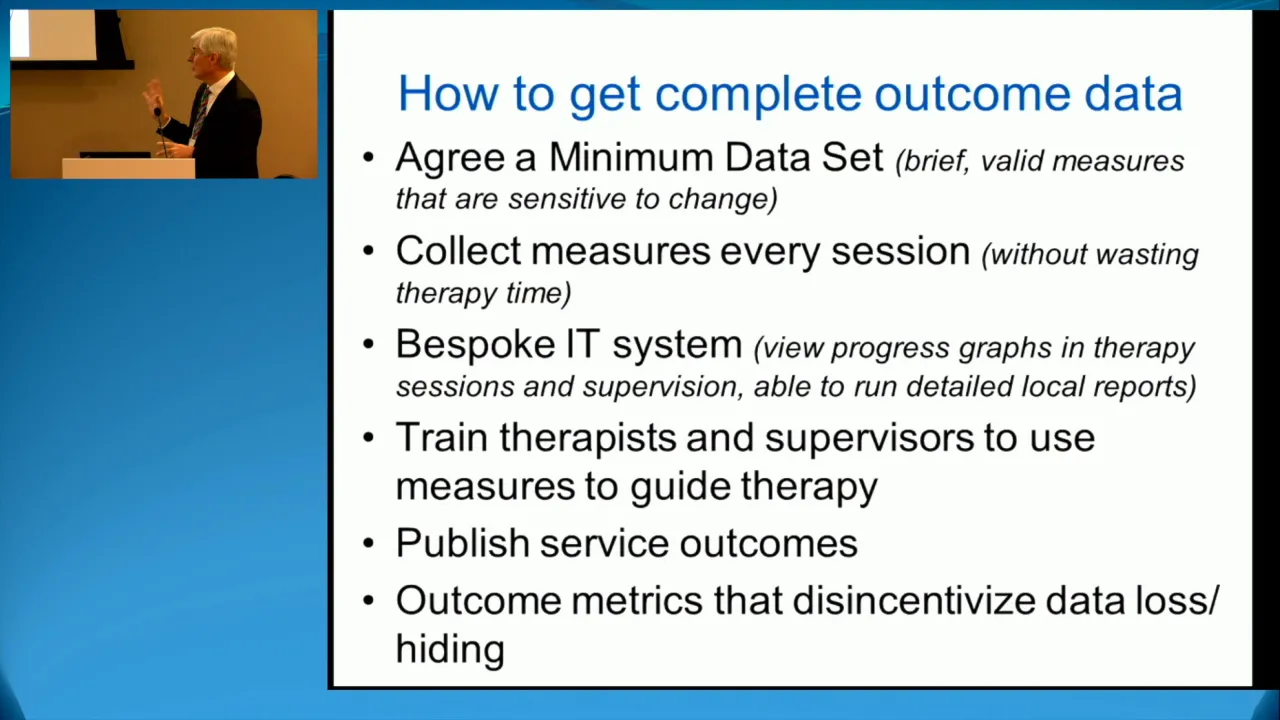
Measurement-based Care in Psychotherapy Workshop - Future of Psychotherapy Conference 2019
UofTPsych
243 views•2019-04-25

51:52
Psychology
Dr. Carol Tavris — Mistakes Were Made (But Not by Me)
skepticmagazine
14K views•2019-05-02
Trending

13:25
Business
Playstation NO DISC/NO BUY Fight Is Over...
DavidJaffeGames
4K views•2026-07-23

22:40
Business
Steam and Xbox Just Dropped The Hammer On PlayStation
OhNoItsAlexx
9K views•2026-07-23

16:52
Anthropology
Americans Confused in Australia for 17 Minutes Straight
IWrocker
17K views•2026-07-23

1:19:25
Biology
LIVE NOW! Cellular Structure and Functions | Complete Cell Biology Lecture | Anatomy & Physiology
MukhtarAliyu-t7m
387 views•2026-07-23