Breathing is controlled by specialized neurons in the brainstem, particularly the pre-Bötzinger complex, which generates the rhythmic pattern of breathing by activating the diaphragm and intercostal muscles. This neural control system is bidirectional: brain states (emotions, stress, cognitive load) influence breathing patterns, while breathing patterns in turn affect brain function through multiple pathways including olfactory signals, vagus nerve inputs, and direct projections to mood-regulating brain regions like the locus coeruleus. Physiological sighs (deep breaths occurring every 5 minutes) serve a critical function in maintaining lung health by preventing alveolar collapse, and deliberate breathing practices can modulate emotional states and cognitive performance.
How Breathing Shapes Mental & Physical Performance| Dr. Jack Feldman
Added:Thanks for joining me today. It's a pleasure to be here Andrew. Yeah, it's been a long time coming. You're my go-to source for all things respiration. I mean I breathe on my own, but when I want to understand how I breathe and how the brain and breathing interact, you're the person I call. Well, I'll do my best. As you know, there's a lot that we don't understand which still keeps me employed and engaged, but we do know a lot.
Why don't we start off by just talking about what's involved in generating breath? And if you would, could you comment on some of the mechanisms for rhythmic breathing versus non-rhythmic breathing?
Okay, so on the mechanical side, which is obvious to everyone, we want to have air flow in, inhale, and we need to have air flow out. And the reason we need to do this is because for body metabolism, we need oxygen. And when oxygen is utilized through the meta-aerobic metabolic process, we produce carbon dioxide. And so we have to get rid of the carbon dioxide that we produce. In particular, because the carbon dioxide affects the acid-base balance of the blood, the pH. And all living cells are very sensitive to what the pH value is. So your body is very interested in regulating that pH. So we have to have enough oxygen for our normal metabolism, and we have to get rid of the CO2 that we produce. So how do we generate this air flow? Well, the air comes into the lungs. We have to expand the lungs. And as the lungs expand, basically it's like a balloon that you would pull apart, the pressure inside that balloon drops, and the air will flow into the balloon. So we expand pull a pressure on put pressure on the lung to pull it apart, that lowers the pressure in the air sacs called alveoli, and air will flow in because pressure outside the body is higher than pressure inside the body when you're doing this expansion, when you're inhaling.
What produces that? Well, the principal muscle is a the diaphragm, which is sitting inside the body just below the lung, and when you want to inhale, you basically contract the diaphragm and it pulls it down, and as it pulls it down, it's inserting pressure forces on the lung, the lung wants to expand. At the same time, the rib cage is going to rotate up and out, and therefore expanding the the cavity, the thoracic cavity.
At the end of inspiration, under normal conditions when you're at rest, you just relax, and it's like pulling on a spring. You pull down a spring and you let go and it relaxes, so you inhale and you exhale.
Inhale, relax, and exhale. So, the exhale is passive? At rest, it's passive. We'll get into what happens when you need to increase the amount of air you're bringing in because your ventilation your metabolism goes up like during exercise.
Um now, the muscles themselves, skeletal muscles, don't do anything unless the nervous system tells them to do something.
And when the nervous system tells them to do something, they contract. So, there are specialized neurons in the spinal cord and then above the spinal cord, the region called the brain stem, which go to respiratory muscles, in particular for inspiration, the diaphragm and the external intercostal muscles in the rib cage, and they contract. So, these respiratory muscles, these inspiratory muscles, become active.
And they become active for a period of time, then they become silent, and when they become silent, the muscles then relax back to their original resting level.
Where does that activity in the these neurons that innovate the muscle, which are called motor neurons, where does that originate?
Well, this was a question that's been banding around for thousands of years, and when I was a beginning assistant professor, it was fairly high priority for me to try and figure that out because I wanted to understand where this rhythm of breathing was coming from, and you couldn't know where it was coming from until you knew where it was coming from.
And I I didn't phrase that properly. You couldn't understand how it was being done until you know where to look. So, we did a lot of experiments, which I can go into detail, and finally found there was a region in the brainstem. That's once again this region sort of above the spinal cord, which was critical for generating this rhythm. It's called the pre-Bötzinger complex, and we could talk about how that was named.
This small site, which contains in humans a few thousand neurons, it's located on either side, and works in tandem, and every breath begins with neurons in this region beginning to be active, and those neurons then connect ultimately to these motor neurons going to the diaphragm and to the external intercostals, causing them to be active and causing this inspiratory effort.
When the neurons in the pre-Bötzinger complex finish their burst of activity, then inspiration stops, and then you begin to exhale because of this passive uh recoil of the lung and rib cage. Could I uh just briefly interrupt you to ask a few quick questions before um we move uh forward in this very informative answer. And the the two questions are um is there anything known about the activation of the diaphragm and the intercostal muscles between the ribs as it relates to nose versus mouth breathing or are they activated uh in the equivalent way regardless of whether or not someone is breathing through their nose or mouth?
Uh I I don't think we fully have the answer to that. Clearly there are differences between nasal and mouth breathing.
Um at rest the tendency is to do nasal breathing because the air flows that are necessary for normal breathing are easily uh managed by passing through the nasal cavities. However, when your ventilation needs to increase like during exercise, you need to move more air. You do that through your mouth because the airways are much larger then and therefore you can move much more air. But at the level of the intercostals and the diaphragm, their contraction uh is not is almost uh agnostic to whether or not the nose and mouth are open. Okay, so there if I understand correctly, um there's no reason to suspect that there are particular perhaps even non-overlapping sets of neurons in pre-Bötzinger area of the brain stem that trigger nasal versus mouth inhales.
No.
I would say that there's it's not that the pre-Bötzinger complex is not concerned and cannot influence that, but it does not appear as if there's any uh uh modulation of whether or not it's where the air is coming from, whether it's coming through your nasal passages or through your mouth. Right.
Thank you. And then the other question I have is that these intercostal muscles between the ribs that move the the ribs up and out, if I understand correctly, and the diaphragm, uh, are those skeletal or as the Brits would say skeletal, um, muscles or smooth muscles? What type of muscle are we talking about here?
>> As as I said earlier, these are skeletal I didn't say they were skeletal muscles, but they're muscles that need neural input in order to move. You talked about smooth muscles, uh, they are specialized muscles like we have in the gut and in the heart. And these are muscles that are capable of actually contracting and relaxing on their own.
So, the heart beats. It doesn't need neural input in order to beat. It the neural inputs modulate the strength of it and the frequency, but they beat on their own. The skeletal muscles involved in breathing are need neural input. Now, there are smooth muscles that have an influence on breathing, and these are muscles that are lining the the airways.
And so, the airways have smooth muscle.
And when they become activated, the smooth muscle can contract or relax. And when they contract inappropriately is when you have problems breathing like in asthma.
Asthma is a condition where you get inappropriate constriction of the smooth muscles of the airways.
So, there's no reason to think that in asthma that the pre-Bötzinger or these other neuronal centers in the brain that can that activate breathing that they are involved or causal for for things like asthma.
As of now, I would say the preponderance of evidence is that it's not involved, but we've not really fully investigated that. Thank you. Sorry to break your flow, um, but I was terribly interested in knowing answers to those questions, and you provided them. So, thank you.
Um, now, remind me again where I was in my We were just landing in pre-Bötzinger and um we will return to the naming of pre-Bötzinger cuz it's a wonderful and important story really uh that I think people should uh be aware of. But yeah, maybe you could um march us through the brain centers that you've discovered uh and others have worked on as well that control breathing. Pre-Bötzinger as well as um related structures.
>> Okay. So, we when we discovered the pre-Bötzinger, we thought that it was the primary source of all rhythmic respiratory movements, both inspiration and expiration. Uh the idea notion of a single source is like day and night. It's like they're all coming they're all have the same origin that the Earth rotates and day follows night. And we thought that the pre-Bötzinger complex would be inhalation, exhalation.
Um and then in a series of experiments we uh did in the early part of 2000, we discovered that there seemed to be another region which was dominant in producing expiratory movements, that is the exhalation.
We had made a fundamental mistake through with the discovery of the pre-Bötzinger not taking into account that at rest expiratory muscle activity or exhalation is passive.
So, if that's the case, a group of neurons that might generate active expiration, that is to contract the expiratory muscles like the abdominal muscles or the internal intercostals, are just silent.
We just thought it wasn't there, it was coming from one place.
But we got evidence that in fact it may have been coming from another place. And following up on these experiments, we discovered that there was a second oscillator and that oscillator is involved in generating what we call active expiration. That is this active Wait, if I go shh. Yeah, or when you begin to exercise you have to go and actually move that air out this group of cells which is silent at rest suddenly becomes active to drive those muscles and it appears that it's an independent oscillator. When um maybe you could just clarify for people what an oscillator is. Okay, an an oscillator is something that goes in a cycle.
So, you can have a pendulum as an oscillator going back and forth. The earth is an oscillator because it goes around and it's day and night.
>> Some people's moods are oscillating.
Oscillating. And it depends how regular they are. You can have oscillators that are highly regular that are in a watch uh or you can have those that are sporadic or episodic.
Breathing is one of those oscillators that for life has to be working continuously 24/7. It starts in the late in the third trimester because it has to be working when you're born and basically works throughout life and if it stops, if there's no intervention beyond a few minutes, it will likely be fatal.
What is this a second oscillator called?
Well, we found it um in a region around the facial nucleus.
So, we initially uh when this region was initially identified it we thought it was involved in sensing carbon dioxide. It was what we call a central chemoreceptor. That is we want to keep carbon dioxide levels particularly in the brain at a relatively stable level because the brain is extraordinarily sensitive to changes in pH. If there's a big shift in carbon dioxide, there'll be a big shift in brain pH and that'll throw your brain, if I can use the technical term, out of whack.
And so you want to regulate that. And the way to regulate something in the brain is you have a sensor in the brain.
And others basically identified that the ventral surface of the brainstem, that is the part of the brainstem that's on this side, um was critical for that. And then we identified a structure that we um was near the trapezoid nucleus. It was not named in any of these neuroanatomical atlases. So we just picked a name out of a hat and we called it the retro-trapezoid nucleus.
>> I should clarify for people when we uh when um Jack is saying trapezoid, he doesn't mean the trapezoid muscles.
Trapezoid refers to the shape uh of this nucleus, this cluster of neurons. Um parafacial makes me think that this general area is involved in something related to mouth or face. Um is it an area rich with uh neurons controlling other parts of the face, eye blinks, nose twitches, um lip curls, lip smacks? If you go back in an evolutionary sense, then a lot of things that are hard to figure out begin to make sense when you look at the evolution of the nervous system.
When uh control of facial muscles, going back to more primitive creatures because they had to take things in their mouth for eating, so that we call that the the face sort of developed. The eyes were there, the mouth is there.
These nuclei, the motor that contain the motor neurons, a lot of the control systems for them developed in the immediate vicinity.
So if you think about the face, there's a lot of subnuclei around there that had various roles at various different times in evolution. and at one point in evolution the facial muscles were probably very important in moving fluid in and out of the mouth and moving air in and out of the mouth and so part of that of these many different sub nuclei now seems to be in mammals to be involved in the control of expiratory muscles. But we have to remember that mammals are very special when it comes to breathing because we're the only class of vertebrates that have a diaphragm.
If you look at amphibians and reptiles, they don't have a diaphragm and the way they breathe is not by actively inspiring and passively expiring. They breathe by actively expiring and passively inspiring because they don't have a powerful inspiratory muscle.
And somewhere along the line the diaphragm developed. And there were lots of theories about how it developed.
I don't think it's particularly clear.
There was a something you can find in alligators and lizards that could have turned into a muscle that was a diet the diaphragm.
The amazing thing about the diaphragm is that it's mechanically extremely efficient. And what do I mean by that?
Well, if you if you look at how oxygen gets from outside the body into the bloodstream the critical passage is across the membrane in the lung. It's called the alveolar capillary membrane.
The alveolus is part of the lung and the blood runs through capillaries which are these the smallest tubes in the circulatory system and at that point oxygen can go from the air-filled alveolus into the blood. Which is amazing.
I find that amazing. Even though it's just purely mechanical, the idea that we have these little sacs in our lungs, we inhale and the air goes in and literally the oxygen can pass into the bloodstream.
>> Passes into the bloodstream, but the the rate at which it passes will depend on the characteristics of the membrane, how what the distance is between the alveolus and the the blood vessel, the capillary, but it the key element is the surface area.
The bigger the surface area, the more oxygen that can pass through. It's entirely a passive process. There's no magic about making oxygen go in.
Now, how do you get a pack a large surface area in a small chest?
Well, you start out with one tube, which is the trachea. The trachea expands.
Now, you have two tubes.
Then you have four tubes and it keeps branching.
At some point at the end of those branches, you put a little bit of a little sphere, which is an alveolus.
And that determines what the surface area is going to bring be.
Now, you then have a mechanical problem. You have the surface area. You have to be able to pull it apart. So, imagine you have a little square of elastic membrane.
It doesn't take a lot of force to pull it apart. But now, if you increase it by 50 times, you need a lot more force to pull it apart. So, amphibians, who were breathing not by compressing the lungs and then just passively expanding it, weren't able to generate a lot of force.
So, they have relatively few branches.
So, if you look at the surface area that they pack in their lungs relative to their body size, it's not very impressive. Whereas, when you get to mammals, the amount of branching that you have is you have 4 to 500 million alveoli. How if we were to take those 4 to 5 million of uh 500 million. 4 to 5 4 to 5 100 million. 100 million, excuse me. Um and lay those out flat, what sort of surface area are we talking about?
>> About 70 square meters, which is about a third the size of a tennis court. Wow.
So, you have a membrane inside of you a third the size of a tennis court that you actually have to expand every breath. And you do that without exerting much of a You don't feel it. And that's because you have this amazing muscle, the diaphragm, which because of its positioning, just by moving 2/3 of an inch down, is able to expand that membrane enough to move air into the lungs.
>> Wow. Now, the the at rest the volume of air in your lungs is about 2 and 1/2 L.
Do we need to convert that to quarts?
No. All right, it's about 2 and 1/2 L.
When you take a breath, you're taking another 500 ml, or 1/2 L. That's the size, maybe a little of my fist.
So, you're increasing the volume by 20%.
But, you're you're doing that by pulling on this 70 square meter membrane. But, that's enough to bring enough fresh air into the lung to mix in with the air that's already there that the oxygen levels in your your bloodstream goes from a partial pressure of oxygen, which is 40 mm of mercury, to 100 mm of mercury. So, that's a huge increase in oxygen, and that's enough to sustain normal metabolism. So, we we have this amazing um mechanical advantage by having a diaphragm.
Do you think that the our brains are larger than that of other mammals in part because of the amount of oxygen that we have been able to bring into our system. I would say a key step in the ability to develop a large brain that has a continuous demand for oxygen is the diaphragm. Without a diaphragm, you're an amphibian.
And there And and there there's another solution to increasing oxygen uptake, which is the way birds breathe. But birds have other limitations, and they still can't get brains as big as uh mammals have. So, we we the The brain utilizes maybe 20% of all the oxygen that we intake. And it needs it continuously. You can't The brain doesn't want to be neglected. So, this puts certain demands on breathing system. In other words, you can't shut it down for a while. Which poses other issues. You're born, and you have to mature. You have the small body, you have a small lung, you have a very compliant rib cage, and now you have to develop into an adult, which has a stiffer rib cage. And so, there changes happening in your brain and your body.
We're breathing the neural control of breathing has to change on the fly. It's not like for things like vision um where you have the opportunity to sleep.
And while you're sleeping, the brain is capable of doing things that are not easy to do in during wakefulness, like the construction crew comes in during sleep. Uh breathing has been The change of breathing have been described as trying to build an airplane while it's while it's flying. Basically, what Jack is saying is that uh respiration science is more complex and hard working than vision science, which is a direct jab at me um that some of you might have missed, but I definitely did not miss. And I appreciate that you always take the opportunity, like a good New Yorker, to to you know, give me a good healthy intellectual jab.
A question related to diaphragmatic breathing versus non-diaphragmatic breathing.
Because the way you describe it, the diaphragm is always involved, but, you know, over the years, um whether it be for, you know, yoga class or a breathwork thing where you hear online that we should be breathing with our diaphragm, that rather than lifting our rib cage when we breathe and [snorts] our chest that it is healthier in air quotes or better somehow to have the belly expand when we inhale.
Uh I'm not aware of any particular studies that have really examined the direct health benefits of diaphragmatic versus non-diaphragmatic breathing, but if you don't mind commenting on anything you're aware of uh as it relates to diaphragmatic versus non-diaphragmatic breathing, whether or not people tend to be diaphragmatic breathers by default, etc., that would be um I think interesting to a number of people. Well, I think by default we are obligate diaphragm breathers.
I um there may be pathologies where the diaphragm is compromised and you have to use other muscles.
And that's a challenge.
Um it uh certainly at rest other muscles can take over.
But if you need to increase your ventilation, the diaphragm is very important. It would be hard to increase your ventilation otherwise. Do you pay attention to whether or not you are breathing in a manner where your belly uh goes out a little bit as you inhale?
Because I can do it both ways, right? I can inhale, bring my [snorts] belly in, or I can inhale, push my diaphragm and belly out. Um not the diaphragm [clears throat] out, but and that's interesting, right? Because it's a completely different muscle set for each uh each version.
Well, I in the in the context of things like breath practice, I'm a a bit a um agnostic about the effects of some of the different patterns of breathing.
Clearly, some are going to work through different mechanisms, and we can talk about that. But at certain level, for example, whether it's primarily diaphragm where you move your abdomen or not, I am agnostic about it. Uh I think that the changes that that breathing induces in emotion and cognition, I have different ideas about what the influence is, and I don't see that primarily as how which particular muscles you're choosing. But that just could be my own prejudice.
Okay.
Um we will we will return to that um as a general theme in a little bit. I I want to ask you about sighing. Uh one of the many great gifts that you've given us over the years uh is an understanding of these things that we call physiological sighs.
Um could you tell us about physiological sighs? What's known about them? What your particular interest in them is, and um what they're good for?
Uh a very interesting and important question.
So, everyone has a um sense of what a sigh is.
We certainly when we're emotional or emotional in some ways, we're stressed, we're particularly happy, >> [gasps] >> we'll take a we'll sigh.
It turns out that we're sighing all the time.
And uh when I would ask people who are not particularly knowledgeable, that haven't read my papers or James Nestor's book, or listened to your podcast, um they're usually off by two orders of magnitude about how frequently sigh on the low side. In other words, they say oh once an hour, you know, 10 times a day.
We sigh about every 5 minutes.
And I would encourage anyone who finds that to be a unbelievable fact is to lie down in a quiet room and just breathe normally.
Just relax. Just let go. And just pay attention to your breathing. And you'll find that every couple of minutes you're taking a deep breath.
And you can't stop it. You know, it it just it just happens. Now, why?
Well, we have to go back to the lung again.
The lung has these 500 million alveoli and they're very tiny.
They're 200 microns across.
So, they're really, really tiny.
And you can think of them as fluid-filled. They're fluid-lined. And the reason they're fluid-lined has to do with the um esoterica of the mechanics of that. It makes it a little easier to stretch them with this fluid line, which is called surfactant.
And surfactant is important during development. It is a determining factor in the when premature infants are born, if they have not do not have lung surfactant, it makes it much more challenging to take care of them than after they have lung surfactant, which is sometime, if I remember correctly, in the late second, early third trimester, which it appears.
In any case, it's fluid-lined. Now, think of a balloon that you would blow up. But now, before you blow it up, fill the balloon with water.
Squeeze all the water out. And now, hold when you squeeze all the water out, you notice the sides of the balloon stick to each other.
Why is that? Well, that's because water has what's called surface tension.
And when you have two surfaces of water together, they actually tend to stick to each other.
Now, when you try and blow that balloon up, you know that it or you'll notice if you've ever done it before that the balloon is a little harder to inflate than if we're dry on the inside. Why is that? Because you have to overcome that surface tension.
Well, your alveoli have a tendency to collapse.
There's 500 million of them. They're not collapsing at a very high rate, but it's a slow rate that's not trivial.
And when an alveolus collapses, it no longer can receive oxygen or take carbon dioxide out. It's sort of taken out of the equation.
Now, if you have 500 million of them and you lose 10, no big deal. But if they keep collapsing, you can lose a significant part of the surface area of your lung.
Now, a normal breath is not enough to pop them open.
But if you take a deep breath, it pops them open.
>> through nose or mouth? Okay.
>> matter. Or [snorts] >> It's just increased that lung volume cuz you're just pulling on the lungs.
They'll pop open every about every 5 minutes.
Um and so we're doing it every 5 minutes in order to maintain the health of our lung.
In the early days of mechanical ventilation, which was used to treat polio victims who had weakness of their respiratory muscles, they'd be put in these big steel tubes.
And the way they would work is that the pressure outside the body would drop.
That would put a expansion pressure on the the lungs excuse me, on the rib cage. The rib cage would expand, and then the lung would expand.
And then the pressure would go back to normal, and the lung and rib cage would go back to normal.
There was a This was great for getting ventilation, but there was a relatively high mortality rate.
It was a bit of a mystery and one solution was to just give bigger breaths.
They gave bigger breaths and the mortality rate dropped. And it wasn't until I think it was the 50s where they realized that they didn't have to increase every breath to be big.
What they needed to do is every so often they need to have one big breath.
So they have a couple of minutes of normal breaths and then one big breath just mimicking the physiological sigh.
And then the mortality rate dropped significantly. And if you see someone on a vent a ventilator in the hospital, if you watch every couple of minutes that you see the membrane move up and down. Every couple of minutes there'll be a super breath and that pops it open.
So there are these mechanisms for these physiological sighs.
So just like with the collapse of the lungs where you need a big uh pressure to pop it open, it's the same thing with the alveoli. You need a bigger pressure and a normal breath is not enough. So you have to take a big inhale.
And what nature has done is instead of requiring us to remember to do it, it does it automatically. And it does it about every 5 minutes. And one of the questions we wanted we asked is how is this happening? Why every 5 minutes? What's what's doing it? And we got into it through a back door.
Uh typical of the way a lot of science gets done. This is serendipitous uh uh event where you run across a paper and something clicks and you just you know, you you follow it up.
Sometimes you go down blind ends, but this turned out to be incredibly productive.
Uh one of the guys in my lab was reading a paper about stress and during stress, lots of things happen in the body, one of which is that the hypothalamus, which is very reactive to body state, releases peptides, which are specialized molecules, which then circulate throughout the brain and body, that particular effects usually to help deal with better with the stress.
And one class of the peptides that release are called bombesin-related peptides.
And he also realized, because he was a breathing guy, that when you stress, you sigh more.
So, we said, all right, maybe they're related.
Bombesin is relatively cheap to buy.
We said, let's buy some bombesin and throw it in the brain stem. Let's see what happens.
And you know, they One of the nice things about uh some experiments that we tried to design is to fail quickly.
So, here we had the idea we throw bombesin in and the bombesin did nothing no nothing, lost maybe $50 to buy the bombesin. But if it did something, it might be of some interest. So, we one afternoon, he did the experiment and he comes to me says, I won't quote exactly what he said, because that might need to be censored, but he said, look at this.
And it was in a rat. Rats sigh about every 2 minutes. They're smaller than we are and they need to sigh more often.
Their sigh rates from went from 20 to 30 per hour to 500 per hour when he put bombesin into the pre-Bötzinger complex.
>> Amazing.
And the way he did that is he took a very, very fine glass needle and anesthetize a rat and inserted that needle directly into the pre-Bötzinger complex. So, it wasn't a terminal delivery of the peptide, it was localized to the pre-Bötzinger, and the sigh rate went through the roof. And I would um add that that was an important experiment to deliver the bombesin directly to that site because one could have concluded that the injection of the bombesin increased sigh because it increased stress rather than directly increase sigh.
>> Yeah, and amongst hundreds of other possible interpretations. So, the precision here is very important, and that goes back to what I said at the very beginning. Knowing where this is happening allows you to do the proper investigations. If we didn't know where the inspiratory rhythm was originating, we never could have done this experiment. And so, then we then we did another experiment. We said, "Okay, what happens if we take the cells in the pre-Bötzinger that are responding to the peptides? So, neurons will respond to a peptide because they have specialized receptors for that peptide. And not every neuron expresses those receptors.
In the pre-Bötzinger complex, probably a few hundred out of thousands.
So, we used the technique we had used before.
And this is a technique uh developed by Doug Lappe down in San Diego, where you could take a peptide and conjugated with a molecule called saporin. Saporin is a plant-derived molecule, which is a cousin to ricin.
And many of your listeners may have heard of ricin. Ricin >> toxin. It It's very nasty. It's It A single, you know, stab with an umbrella will kill you, which is a something that supposedly happened to a Bulgarian diplomat by a Russian operative on a bridge in London. He got stabbed and the way ricin works is it goes inside a cell, crosses the cell membrane, goes inside the cell, kills the cell, then it goes to the next cell, and then the next cell, and then the next cell. It's um it's extremely uh dangerous. In fact, it's firstly impossible to work on in a lab in the United States. They won't let you touch it. Ricin.
>> we've worked with saparin many times.
Saparin is safe because it doesn't cross cell membranes. So, you get an injection of saparin, it won't do anything cuz it stays outside of cells.
>> Please, nobody do that. Even though it doesn't cross cell membranes, please nobody inject saparin whether or not you are a operative or otherwise. Thank you, Andrew, for protecting me there. Uh So, but what Doug Lappi figured out is that when a ligand binds to a receptor, that's when a molecule binds to its receptor, in many cases that receptor-ligand complex gets pulled inside the cell. So, it goes from the membrane of the cell inside the cell. So, like you can't go to the dance alone, but if you're coupled up, you get in the door.
>> That's right. So, what he figured out is he put saparin to the peptide, the peptide binds to its receptor, it gets internalized, and then when it's inside the cell, saparin does the same thing that ricin does.
It kills the cell. But then it can't go into the next cell. So, the only cells that get killed or the more polite term ablated are cells that express that receptor. So, if you have a big conglomeration of cells, you have a few thousand, and only 50 of them express that receptor, then you inject the saparin conjugated to the ligand, to to peptide, and only those 50 cells die.
So, we took bombesin conjugated to saporin and checked in the pre-Bötzinger complex of rats, and it took about a couple of days for the saporin to actually ablate cells. And what happened is that the mice started sighing less and less and Excuse me, the rats started sighing less and less and less and less, and essentially stopped sighing.
So, um your student or postdoc, was it, murdered these cells, and as a consequence, the sighing goes away.
Right. What was the consequence of eliminating sighing on the internal state or the behavior of the rats? Did they In other words, if one can't sigh, and generate physiological sighs, what is the consequence on state of mind? Uh do you would imagine that carbon dioxide would build up more readily or um to higher levels in the bloodstream, and that's the animals would be more stressed. That that's the kind of logical extension of the way we set it up.
>> Uh it was less benign than that.
When the animals got to the point where they weren't sighing, then and we did not uh determine this, but the presumption was that their lung function significantly deteriorated, and their physiol- their overall health deteriorated significantly, and we had to sacrifice them.
So, I can't tell you whether they were stressed or not, but their breathing got to be significantly um uh deteriorated that we sacrificed them at that point. Now, we don't know whether that is specifically related to the fact they didn't sigh, or that it's there was secondary damage due to the fact that some cells die. So, we never determined that. Now, after we did this study, to be candid, it wasn't a high priority for us to get this out the door and publish it.
So, it stayed on the shelf.
>> [snorts] >> And then I got a phone call from a graduate student at Stanford, Kevin Yackle, who starts asking me all these interesting questions about breathing.
And I'm happy to answer them, but at some point it concerned me because he was working for a renowned biochemist who worked on lung and Drosophila, fruit flies, uh Mark Krasnow.
>> Yeah, the next-door colleague.
>> Right. And I said, "Why are you asking me this?"
And he said, "I was an undergraduate UCLA and you gave a lecture in on my undergraduate class and I was curious about breathing ever since." So, that's one of those things which as a professor you love to hear, that actually is something you really affected the life of a student.
Well, you birthed a competitor, but you had only yourself to blame. No, I I don't look at that as a competitor. I I think that there's enough interesting things to go on. I know some of our neuroscience colleagues say, "You can work in my lab, but then when you leave my lab, you got to work on something different."
>> No one I ever trained with said that.
It's a It's open field. You want to work on something, you you hop in the mix.
And um but there there are people like that as neuroscience just like that. I never felt like that.
>> their breathing apparati are disrupted and it causes a brain dysfunction that leads to the behavior you just described. That's actually not true. Um Um But But in terms of the So, I I the uh before you we talk about the the beautiful story with with Yackle and Krasnow and Felt Lab, um I want to just make sure that I understand. So, if physiological sighs don't happen, basically breathing overall suffers.
Well, that that would go back to the observations in polio victims in these iron lungs where the principal deficit was there was no hyperinflation of the lungs and they many of them deteriorated and died.
Um and just to stay on this one more moment before we move to what you were about to describe.
We hear often that people will overdose on drugs of various kinds because they stop breathing.
So, barbiturates, alcohol combined with barbiturates is a common cause of death for drug users and um contraindications of drugs and these kinds of things. You hear all the time about celebrities dying because they combined alcohol with barbiturates.
Is there any evidence that the sighs that occur during sleep or during states of, you know, deep deep um uh relaxation um and and sedation that sighs recover the the brain because uh you could imagine that if the sighs don't happen as a consequence of some drug impacting these brain centers, that that could be one cause of basically asphyxiation and death.
If you look at the progression of any mammal to death, >> [snorts] >> you find that their breathing slows down and death through the quote natural causes. Their breathing slows down, it's will stop and then they'll gasp.
So, we have the phrase dying gasp.
>> [clears throat] >> Super large breaths.
Um They're often described as an attempt to auto resuscitate.
That is you take that super deep breath and that maybe it can kickstart the engine again.
We do not know the degree to such things as gasp are really sighs that are particularly large. And so, if you suppress the ability to gasp in an individual who is subject to an overdose, then whereas they might been able to re-arouse their breathing, if that's prevented, they don't get re-aroused. So, that is certainly a a possibility.
Um but this has not been investigated. I mean, one of the things that um interested in is in individuals who have um diseases which will affect pre-Bötzinger complex.
And there's there's data in Parkinson's disease and multiple system atrophy, which is another form of neurodegeneration, where there's loss of neurons in pre-Bötzinger.
And the question is, and it also may happen in ALS.
Sometimes referred to as Lou Gehrig's disease, amyotrophic lateral sclerosis.
These individuals often die during sleep.
We have an idea that we have not been able to get anyone to test is that patients with Parkinson's, patients with MLS, typically breathe normally during wakefulness.
The disturbances that they have in breathing is during sleep. So, Parkinson's patients at the end stages of of the disease often have significant disturbances in their sleep pattern, but not during wakefulness.
And we think that what could be happening is that the proximate cause of death is not heart failure, is that they become apneic, they stop breathing and don't resuscitate.
And that resuscitation may or may not be due to an explicit suppression of sighs, but to an overall suppression of the whole apparatus of the pre-Bötzinger complex.
Got it. Thank you.
So, Yackle calls you up. So, he calls us calls me up and he's great kid, super smart and he tells me about these these experiments that he's doing where he's looking in a database to try and find out what molecules are enriched in regions of the brain that are critical for breathing. So, we and others have mapped out these regions in the brain stem and he was looking in one of these databases to see what's enriched.
And I said, "That's great.
Would you be willing to sort of share work together?" He says, "No, my my advisor doesn't want me to do that."
So, I said, "Okay."
But, Kevin's a great kid and I enjoyed talking to him and he's a smart guy and you know, what I found uh in academia and is that the smartest people only want to hire people smarter than them and only want to and have the preference to interact with people smarter than them.
The at the faculty who are not at the highest level and at every institution there's a distribution. There are ones above the mean and those below the mean. Those who are below the mean are very threatened by that.
And uh I saw Kevin as like a shining light and I didn't care whether he was going to outcompete me because whatever he did was going to help me in the field. So, I would I did whatever I can to help to work with Kevin.
So, at one point, I got invited to give grand rounds in neurology at Stanford.
Turns out an undergraduate student who had worked with me was now head of the training program for neurologists at Stanford, and he invited me.
And at the end of my visit, I go to Mark Krasnow's office, and Kevin is there, and a post-doc Pong Li, who was also working on a project, was there.
And towards the end of the conversation, um they Mark says to me, "You know, we found this one molecule which is highly concentrated in an important region for breathing."
I said, "Well, that's great. What is it?"
And he says, "I can't tell you because we want to work on it."
So, of course I'm disappointed, but I realize that uh and then the ethic in some areas of science or the custom in some areas of science is that until you get a publication, you'll be relatively restricted in sharing the information.
>> going to have a chat when I get back.
>> [clears throat] >> Well, he may remember the story differently, but um I said, "Okay." And as I'm walking out the door, I remember these experiments I described to you about bombesin, and that was the only unusual molecule I was working in.
So, the reason I'm rushing out the door is I have a flight to catch. So, I stick my head in, and I said, "Is this molecule related to bombesin?"
And then I run off. I don't even wait for them to reply. I get to the airport.
Mark calls me, and he says, "Bombesin, the peptide we found is related to bombesin. What does it do?"
And I said, "I'm not telling."
>> [laughter] >> Oh my. I'm so glad I wasn't involved in this collaboration.
>> but but that was sort of a a tease cuz I said, well, let's work together on this.
And then we worked together on this.
>> dilemma at that point. You Yeah. Um so Kevin Yackle is spectacular. He has his own lab at UCSF. And the work that I'm familiar with from Kevin is is worth mentioning now or I'll ask you to to mention it, which is this reciprocal relationship between brain state or we could even say emotional state and breathing. And I'd love to get your thoughts on how breathing interacts with other things in the brain. You've beautifully described how breathing controls the lungs, the diaphragm, and the interactions between oxygen and carbon dioxide and so forth.
But as we know when we get stressed our breathing changes. When we're happy and relaxed, our breathing changes. But also if we change our breathing, we in some sense can adjust our internal state.
What is the relationship between brain state and breathing? And if you would, because I know you have a particular love of of one particular aspect of this, what is the relationship between brain rhythms, oscillations if you will, and breathing?
This is a topic which has really intrigued me over the past decade. I would say before that I was in my silo, just interested about how the rhythm of breathing is generated, and didn't really pay much attention to this other stuff.
For some reason I got interested in it.
Uh and I think it was triggered by an article in the New York Times about mindfulness.
Now, believe it or not, although I lived in California for 20 years at that time, I never heard of mindfulness.
It's staggering how isolated you can be from the real world. And I Googled it, and there was a mindfulness institute at UCLA.
And they were giving courses in meditation.
So I said, "Oh, this is great because I can now see whether or not the breathing part of meditation has anything to do with the purported effects of meditation." So I signed up for the course, and as I joked to you before, I had two goals. One was to see whether or not breathing had an effect, and the other was to levitate.
Because I grew up on all these kung fu things, and all the monks could levitate when they meditated. So why not?
Um You know, we have a mile in the lab. You can't do anything interesting if you're afraid of failing. And if I failed to levitate, well, at least I tried.
And I should tell you now, I still haven't done it yet, but I haven't given up yet. I haven't given up.
Um So I I took this course in mindfulness, and it became apparent to me that the breathing part was actually critical. It wasn't simply a distraction or a focus. It You know, they could have had you move your index finger to the same effect. But I really be believe that the breathing part was involved.
Now, I'm not an unbiased observer. So uh question is, how can I demonstrate that?
I didn't feel confident to do experiments in humans.
And I didn't feel I could design the right experiments in humans, but I felt maybe I can study this in rodents.
So we got this idea that we're going to teach rodents to meditate.
And you know, it that's laughable.
But we said, "But if But if we can, then we can actually study how this happens."
So, believe it or not, I was able to get a um sort of a starter grant and an R21 from NCCIH. That's the National Complementary uh Medicine Institute. A wonderful institute I should mention. Our government puts major tax dollars toward studies of things like meditation, breathwork, supplements, herbs, acupuncture. Uh this is I think not well known and it's an incredible thing that this that our government does that and I think it deserves a nod and more funding. Uh I I totally agree with you.
I think that it's the kind of thing that many of us, including many many scientists, thinks is too woo-woo and and unsubstantiated, but we're learning more and more. You know, we used to laugh at neuroimmunology that the nervous system didn't have anything to do with the immune system. And uh pain itself can influence your immune system. I mean, there are all these things that we're learning that we used to dismiss. And I think there's there's real nuggets to be learned here. So, they went out on a limb and they funded this particular project.
And now I'm going to leap ahead because for 3 years, we threw stuff up against the wall that didn't work.
And recently, we had a major breakthrough.
We found a protocol by which we can get mice to breathe slowly.
Awake mice to breathe slowly.
I won't tell you. Normally, they don't breathe slowly.
>> No, no. In other words, whatever their normal breath is, we could slow it down by a factor of 10.
And they're fine doing that. So, we could do that for We did that 30 minutes a day for 4 weeks.
Okay? Like a breath practice. Do they levitate?
We haven't measured that yet.
>> [laughter] >> I would say a priori, we haven't seen them floating to the top of their cage, but we haven't weighed them. Maybe they weigh less.
You know, they maybe, you know, levitation and is involved is graded and so maybe if you weigh less, it's sort of partial levitation. In any case, um We then tested them and we had control animals, mice, where we did a everything the same except the manipulation we made did not slow down their breathing.
So, but they went through everything else.
We then put them through a standard fear conditioning, which we did with my colleague Michael Fanselow, who's one of the real gurus of fear.
And we measured a standard test is to put uh mice in a condition where they're concerned they'll receive a shock and the response is that they freeze.
And the measure of how fearful they are is how long they freeze.
This is well validated and it's way above my pay grade to describe uh the validity of the test, but it's very valid.
The The control mice had a freezing time which was just the same as ordinary mice would have. The ones that went through our protocol froze much, much less.
A According to Michael, the degree to which they were showed less freezing was as much as if there was a major manipulation in the amygdala, which is a part of the brain that's important in fear processing.
It's a staggering change.
I don't know what we have now is the grant ran out of money, the post doc working on it left, and now we have to try and piece together everything and um but the data is spectacular. Well, I think it's um I'll just pause you for a moment there because I think that the you know, you're talking about a rodent study, but I think the the benefits of doing rodent studies that you can get deep into mechanism um and for people that um might think well, we've known that meditation has these benefits. Why do you need to get mechanistic science? I think that uh one thing that's important for people to remember is that first of all as many people as one might think uh are meditating out there or doing breathwork a far, far, far greater number of people are not. Right? I mean, there's a the majority of people don't take any time to do dedicated breathwork nor meditate. Um so, whatever can incentivize people would be uh wonderful. But, the other thing is that it's never really been clear to me just how much meditation is required for a real effect, meaning a practical effect. People say 30 minutes a day, 20 minutes a day, once a week, twice a week. Same thing with breathwork. Um finding minimum or effective thresholds for changing neural circuitry is what I think is the holy grail of all these uh practices. And that's only going to be determined by the sorts of mechanistic studies that you describe. So, I this is wonderful. I I do hope the work gets completed and um we can talk about ways that uh uh we can ensure that that happens, but um Well, let me let me add one thing to what you're saying, Andrew.
One of one of the uh issues, I think, for a lot of people is that there's a placebo effect. That is, in humans, they can respond to something even though the mechanism has nothing to do with what the the intervention is. And so, it's easy to say that the meditative response is a has a big component which is a placebo effect.
My mice don't believe in the placebo effect. And so, if we could show there's a bonafide effect in mice, it is convincing in ways that no matter how many human experiments you did, the control for the placebo effect is extremely difficult in humans, in mice it's it's a non-issue.
So, I think that that in of itself would be a enormous message to send.
Excellent, and indeed a better point.
I think a 30-minute a day meditation in these mice, if I understand correctly, the meditation we don't know what they're thinking about.
>> practice, so right, so it's breath practice. There because we don't they're presumably they're not thinking about their third eye center, lotus position, levitation, whatever it is. They're not instructed as to what to do, and if they were they probably wouldn't do it anyway. So, 30 minutes a day in which breathing is deliberately slowed or is slowed relative to their normal patterns of breathing. Got it.
What was the frequency of sighing during that 30 minutes?
Unclear.
>> know yet. Well, no, we have the data, we just we're analyzing the data. To be determined or to be announced at some point. So, uh so the fear centers are altered in some way that creates a shorter fear response to a foot shock.
Right. Um what are some other examples that you are aware of from work in your laboratory or work in other laboratories for that matter about interactions between breathing and brain state or emotional state?
>> So, this gets back to our prior conversation. I sort of went off on a tangent.
Um we we need I think we need to think separately of the effect of volitional changes of breathing on emotion versus the effect um um the the effect of brain state on breathing.
So, the effect of brain state on breathing, like when you're stressed, is an effect that presumably originating in higher centers, if I can use that term, affecting breathing.
It's the reciprocal is that when you change breathing, it affects your emotional state. I think I think of those two things as different. They may ultimately be tied together. So, there's a landmark paper published in the 50s where they stimulated in the amygdala of cats.
And depending where they stimulated, they got profound changes in breathing.
It's like every pattern of breathing you possibly imagine, they found a site in the amygdala which could produce that.
So, there's clearly a powerful descending effect coming from the the amygdala, which is a major site for processing emotion, fear, stress, and whatnot, that can affect breathing.
And clearly we have volitional control over breathing. So, we have profound effects there. Now, I should say about emotional control of breathing, I need to segue into talk about locked-in syndrome.
Locked-in syndrome is a devastating lesion that happens in a part of the brainstem where signals that controlled muscles are transmitted. So, the fibers coming from your motor cortex go down through this part of the the brainstem, which is called the ventral pons.
And if there's a stroke there, it can damage these pathways.
What happens in individuals who have syndrome is they lose all volitional movement except lateral movement of the eyes and maybe the ability to blink. The reason they're able to still blink and move their eyes is that those control centers are are rostral, closer to are not interrupted.
In other words, the the interruption is below that.
They continue to breathe because the centers for breathing don't require that volitional command. In any case, they're below that, so they're they're fine. So, these people continue to breathe. Normal intelligence, but they can't move. There's a great book called The Diving Bell and the Butterfly about a young man um who had this happens to and he describes his life.
And it's a real testament to human the human condition that he's does this.
It's a remarkable book. It's a short book. Did he write the book by blinking to his translator?
>> He He He did it by blinking to his caretaker.
Uh it's pretty amazing. And there was a movie which I've never seen with Javier Bardem as the protagonist. Uh but the book I highly recommend this uh to anyone to read. Um So, a colleague studying an individual had locked-in syndrome.
And they this patient breathed very robotically.
>> [snorts] >> Totally consistent, very regular. They gave the patient a low oxygen mixture to breathe, ventilation went up.
A CO2 mixture to breathe, ventilation went up. So, all the regulatory apparatus for breathing was there.
They asked the patient to hold his breath or to breathe faster, nothing happened.
Just The patient recognized the command, but couldn't change it. And all of a sudden, the patient's breathing changed considerably. And they said to the patient, "What happened?" They said, "You told a joke and I laughed."
And they went back. Whenever they told a joke that the patient found funny, the patient's breathing pattern changed.
And you know your breathing pattern when you laugh is you know, you inhale, you go ha ha ha ha, but it's also very distinctive. We have some neuroscience colleagues who will go unnamed who, if you heard them laugh 50 yards away, you know exactly who they are. Yeah, well, I'll I'm I'll name him. Eric Kendell for one has an inspiratory laugh. He's famous for a as opposed to a ha ha. Exactly. Exactly.
So, the it's very stereotype, but it it's maintained in these people who lose volitional control of breathing.
So, there's an emotive component controlling your breathing which has nothing to do with your mission of volitional control and it goes down through a different pathway cuz it's not disrupted by this locked-in syndrome.
If you look at motor control of the face, we have the volitional control of the face, but we also have motor control emotional control of the face which most of us can't control.
So, when we look at another person, we tend we're able to read a lot about what their their emotional state is and that's a lot about how primates communicate. Humans communicate. And you have people who are good deceivers.
Probably used car salesman.
Um poker players. Well, now poker players, you know, have tells, but many of them now wear, you know, dark glasses because a lot of the tells you blink or whatnot. Pupil size is a tell.
>> Pupil size, pupil size is a tell. Um which is an autonomic function, not a a a um skeletal muscle function, but we have these all these skeletal muscles which we're controlling which give us away.
I have the I've tried to get my imaging friends to image some of the great actors that we have in Los Angeles.
>> brain imagers? Brain imagers. I'm sorry.
No, that's all right. I mean I Yeah, brain imagers because I think when when I tell you ask you to smile, I could tell that you're not happy, that you're smiling because I asked you to smile. I think I think >> to crack a joke, but we're we're all friends, so you know. [laughter] No, I'm I'm not uh that that you know, when when you see a picture like at a birthday or what not, and say say cheese, you could tell that at least half of the people are not happy they're saying cheese.
Whereas a great actor, when when they're able to dissemble in the fact that they're sad or they're happy, you believe it, they're not faking it. It's like that's great acting.
And I don't think everyone could do that. I think that the individuals are able to do that have some connection to the parts of their emotive control system that the rest of us don't have.
Maybe they develop it through training, and maybe not, but I think that this can be imaged, so I would like to get one of these great actors in a imager and have them go through that, and then then get a normal person, and see whether or not they can emulate that. And I think you're going to find big differences in the way they control this emotive thing.
So, this emotive control of the the facial muscles, I think is in large part similar to emotive control of breathing.
So, there's that emotive control, and there's that volitional control, and they're different. They're they're different.
Now, the you asked me about the Yakel stuff. The Yakel paper had to do with ascending that the effect of breathing on emotion.
What Kevin found was that there was a population of neurons in the pre-Bötzinger complex that we're always looking to things that are projecting ultimately on motor neurons.
He found a population of cells that projected to locus coeruleus.
Locus coeruleus, excuse me, is one of those places in the brain that seem to go everywhere. It's like a sprinkler system. Exactly. Exactly.
And influence mood, and you know you've had podcasts about this. I mean it there's a lot of stuff going on with the amygdala. So, excuse me, the locus coeruleus. So, you get into the locus coeruleus, you can now spray information out throughout the entire brain. He found specific cells that projected from pre-Bötzinger to locus coeruleus.
And that these cells are inspiratory modulated.
Now, it's been known for a long time since the '60s that if you look in the locus coeruleus of cats when they're awake, you find many neurons that have respiratory modulation.
No one paid much attention to him. I mean, why why bother?
Not why bother paying attention, but why would the brain bother to have these inputs?
So, what Kevin did with um Lindsey Schuartz and Lishan Lozada is they killed ablated those cells going to locus coeruleus from pre-Bötzinger.
And the animals became calmer.
And their EEG levels changed in ways that are indicative that they became calmer. And as I recall, they didn't just become calmer, but they weren't really capable of high arousal states.
They were kind of flat. I I don't think we really pursued that in the paper.
Um and so, we'd have to ask Jordan Huguenard about that, but uh I >> He's on the other side of my lab, so we'll we'll ask him. But but nonetheless, um that beautifully illustrates how there's a bidirectional control, right? Of >> Well, that's emotion. Emotion Well, no, the the the two uh the two stories of the locked-in um syndrome plus the Yacoub paper shows that emotional states influence breathing and breathing influences emotional states.
Which but you mentioned inspiration which I always call inhalation but people will follow. No, no, it's fine.
Those are interchangeable. People can follow that.
There's some interesting papers from Sobel's group and from a number of other groups that as we inhale or right after we inhale >> [snorts] >> the brain is actually more alert and capable of storing information than during exhales which I find incredible but it also makes sense.
I'm able to see things far better when my eyes are open than when my eyelids are closed for that matter.
Um maybe. I I don't think that I mean Norman's work is great.
Um let me backtrack a bit because I'm I want people to understand that when we're talking about breathing affecting emotional cognitive state it's not simply coming from Prebutsingher.
There are there are at least Well, there's several other sites and let me sort of discuss I need to sort of go through that. One is olfaction.
So when you're breathing normal normal breathing you're inhaling and exhaling.
This is creating signals coming from the nasal mucosa that is going back into the olfactory bulb that's respiratory modulated. And the olfactory bulb has a profound influence and projections through many parts of the brain.
So this is signal arising from this rhythmic moving of air in and out of the nose that's going into the brain that has contained in it a respiratory modulation.
So that signal is there. The brain doesn't have to be using it but when it's you know discriminating odor and whatnot that's riding on a oscillation which is respiratory related.
Another potential source is the vagus nerve. The vagus nerve is a major nerve which is containing afferents from all of the viscera. Afferents just being A signals signals to yeah. A signals from the viscera. It also has signals coming from the brain stem down which are called efferents, but it's getting major signals from the lung, from the gut and this is going up into the brain stem. So, it's there.
There are very powerful receptors in the lung that are responding to the lung volume, the lung stretch.
>> Those are baroreceptors.
Uh sorry that uh it that well you we have a number of that like that like the piezo receptors of the of this year's Nobel Prize, yeah. Yeah. Yeah. So, they're responding to the expansion and relaxation of the lung. And so, if you record from the vagus nerve, you'll see that there's a huge respiratory modulation due to the mechanical changes in the lung. Now, why that is of interest is that for some forms of refractory depression electrical stimulation of the vagus nerve can provide tremendous relief.
Why this is the case still remains to be determined, but it's clear that signals in the vagus nerve, at least artificial signals in the vagus nerve can have a positive effect on reducing depression.
So, it's not a leap to think that under normal circumstances that that rhythm coming in from the vagus nerve is playing a role in normal processing.
Okay, let me let me continue.
Carbon dioxide and oxygen levels. Now, under normal circumstances, your oxygen levels are fine.
And unless you go to altitude, they don't really change very much, but your CO2 levels can change quite a bit with even a relatively small change in your overall breathing.
That's going to change your pH level.
Um, I have a colleague, Alicia Maret, who is working with patients who have who are anxious.
And many of them hyperventilate.
And as a result of that hyperventilation, their carbon dioxide levels are low.
And she has developed a therapeutic treatment where she trains these people to breathe slower and the breathe to restore their CO2 levels back to normal, and she gets relief in their anxiety.
So, CO2 levels, which are not going to affect brain function on a breath-by-breath level, although it does fluctuate breath-by-breath, but it's sort of a continuous background, can change. And if it's changed chronically, we know that highly elevated levels of CO2 can produce panic attacks.
Uh, and uh, we don't know the degree to that's gets exacerbated by people who get who have a panic attack, the degree to which their ambient CO2 levels are affecting their degree of discomfort. What about people who are um, tend to be too calm? Meaning that they're they're feeling sleepy, they they they're under breathing as opposed to over breathing.
Is there any uh, knowledge of what what the status of CO2 is in their system? I don't know, which doesn't mean there's no knowledge, but I'm unaware of unaware unaware, but that's blissfully unaware.
I have not looked at that literature, so I don't know. Well, I have a feeling I mean, most people um, or excuse me, most of the scientific literature around breathing in humans that I'm aware of relates to these stressed states because they're a little bit easier to study in the lab, whereas people feeling under stimulated or exhausted all the time, it's a it's a complicated thing to measure. I mean, you can do it, but it's it's not a straightforward >> is easy to measure. But in terms of the sort of the the measures for feeling fatigue, you know, they're in they're somewhat indirect. Whereas stress, we can we can get at pulse rates and HRV and things of that sort.
>> Well, I imagine that these these devices that we're all wearing will soon be able to measure Well, now they can measure oxygen levels, oxygen saturation, just amazing. Yeah.
Um but oxygen's, you know, will pretty much stay above 90% unless there's some pathology or you go to altitude. But CO2 levels vary quite a bit. And CO2 In fact, because they vary, your body is so sensitive, the controller breathing, like how much you breathe per minute, is determined in a very sensitive way by the CO2 level.
So, even a small change in your CO2 will have a significant effect on your ventilation. So, this is another thing that not only changes your ventilation, but affects your brain state.
Now, another thing that could affect breathing pra- how breathing practice can affect your emotional state is simply the descending command. Because breathing practice involves volitional control of your breathing, and therefore there's a signal that's originating somewhere in your motor cortex. That is not Of course, that's going to go down to pre-Bötzinger, but it's also going to send off collaterals to other places. Those collaterals could obviously influence your emotional state.
So, we have quite a few different potential sources. None of them there are exclusive.
There's an interesting paper which shows that if you block nasal breathing, you still see breathing related oscillations in the brain.
And this is where I think the the mechanism is occurring is that that these breathing related oscillations in the brain they are playing a role in signal processing. And maybe is should I talk a little bit about the role that oscillations may be playing in signal processing.
>> Definitely, but before you do, I I just want to um ask you a uh intermediate question. We've talked a lot about inhalation, inspiration, and exhalation.
Um what about breath holds? You know, in apnea, for instance, uh people are holding their breath, whether or not it's uh conscious or or or unconscious, they're holding their breath. Uh what's known about breath holds um in terms of how it might interact with brain state or oxygen CO2. And I'm particularly interested in how breath holds with lungs empty versus breath holds with lungs full might differ in terms of their impact on the brain. I'm not aware of any studies on this, uh looking at a mechanistic level, but I find it really interesting and even if there are no studies, uh I'd love it if you'd care to speculate. Well, one of the breath practices that intrigued me is where you basically hyperventilate for a minute and then hold your breath for as long as you can.
>> Tumo style, Wim Hof style, or we call it in the laboratory uh because frankly, before Tumo and before Wim, um there there it was referred to as cyclic hyperventilation. So, it's basically >> [sighs and gasps] >> right, followed by a breath hold. And that breath hold could be done with lungs full or lungs empty. So, I had a long talk with some colleagues about what they might think the underlying mechanisms are, particularly for the breath hold.
And there's certainly I I certainly envision that there's a component with respect to the presence or absence of that rhythmicity in your cortex which is having effect.
But the other thing with the hyperventilation, hypoventilation, or the apnea is your CO2 levels are going from low to high.
Anytime you're holding your breath.
Anytime you hold your breath. Okay? And those are going to have a profound influence. Now, I have to talk about episodic hypoxia.
Of course, there's a lot of work going on particularly with Gordon Mitchell the University of Florida is doing some extraordinary work on episodic hypoxia.
So, in the '80s, David Milhorn uh did some really intriguing work.
If I ask you to hold your breath to Excuse me. If I gave you a low oxygen mixture for a couple of minutes, your breathing level would go up. Of course, you'd have you wouldn't you want to have more oxygen.
>> Yeah.
No, you're starving for oxygen. Okay?
>> Um And for a couple of minutes, you'd go up, you could reach some steady state level.
Not so hypoxic that you can't reach an equilibrium. And then I do you room air again, your ventilation quickly relaxes back down to normal.
If on the other hand I gave you 3 minutes of hypoxia, 5 minutes of normoxia, 3 minutes of hypoxia, 5 minutes of normoxia, 3 minutes hypoxia, 5 minutes of normoxia.
>> Normoxia being normal air.
>> Normal normal air.
Your ventilation goes up, down, up, down, up, down, up, down.
After the last episode, your breathing comes down and doesn't continue to come down, but rises again and stays up for hours.
Okay?
This is well validated now.
This was originally done in owls, but in humans all the time. It seems to have profound benefit on motor function and cognitive function.
In what direction? Positive.
Positive. I've often toyed with the idea of getting a 5% an 8% oxygen Don't do this, listeners. Getting an 8% oxygen tank by my desk when I'm writing a grant and doing like in Blue Velvet and you know, going through the the episodic hypoxia to improve my cognitive function.
Cuz certainly it could use improvement when I'm writing grants. But you could do this without the the low oxygen. I mean, you could do this through breath work, presumably. It's hard to lower your oxygen enough.
Okay? We're going in the experimental studies, they typically use 8% oxygen.
It's hard to hold your breath long enough.
And there is another difference here.
That is what's happening to your CO2 levels. When you hold your breath, your oxygen levels are dropping, your CO2 levels are going up.
When you're doing episodic um hypoxia, your CO2 levels are going to stay pretty normal.
Cuz you're still breathing, it's just the oxygen levels are gone. So, unlike normal conditions which you described before where uh oxygen is relatively constant and CO2 is fluctuating depending on emotional state and activity and things of that sort, in episodic hypoxia, CO2 is relatively constant, but you're varying the oxygen level coming into the system quite a bit. I wouldn't say it's relatively I wouldn't say CO2 is relatively constant, but you're but it's not going to go in a direction which is going to be significantly far from normal. Okay. Whereas when you're holding your breath, you're going to become both hypoxic and hypercapnic at the same time. We should explain to people what hypoxic and hypercapnic are because we haven't done that.
>> a technical term for low levels of oxygen. Hyper or you could say hypoxic, low. Hyper is high, so hyperoxia, or hypocapnia, low CO2, or hypercapnia, high levels of CO2.
So, when you're in episodic hypoxia, if anything, you're going to become hypocapnic, not hypercapnic.
And that could have play an influence in this. One example that I re- I remember, and Gordon will have to forgive me if I'm misquoting this, is they had a patient who had a stroke and had weakness in ankle flexion.
That is Excuse me, ankle extension. To extend the ankle.
And so, they had the patient in a seat where they could measure ankle extension.
And then, they measured it, and then they exposed the patient to episodic hypoxia.
And they measured again the strength of the ankle extension went way up.
And so, Gordon is looking at this, they're looking at this now for spinal cord rehab.
And I imagine for all sorts of neuromuscular performance, it could be beneficial. Yeah, Gordon is looking into athletic performance. We have a project which we haven't been able to to push to the next level, to do golf.
So, we I I think >> Why golf? Cuz you cuz you love golf.
>> Well, it's it's because it's motor performance, coordination, so it's not simply running as fast as you can. It's coordination, it's concentration, it's a whole variety of things. And so, the idea would be to get a group of golfers and give them the placebo controls. They don't know whether they're breathing a gas mixture which is just normal air, or hypoxic gas mixture. Although, they may be able to figure it out based on the response.
Do it under controlled circumstances, that do it into net, measure their length of their drives, their dispersion, whatnot, and see what happens. Look, if we could find that this works for golfers, forget about cognitive function, we could sell this for unbelievable amounts of money. That sounds like a terrible idea. [laughter] Uh uh by the way, I'm not serious about selling it, but >> I I know you're joking. I mean, maybe people should know that you are joking by that. No, I think that anything that can improve cognitive and neuromuscular performance is going to be of interest for a wide range of both pathologic states like injury, TBI, etc. I mean, one of the most frequent questions I get is about recovery from from concussion or traumatic brain injury. A lot of people think sports, they think football, they think rugby, they think hockey, but if you look at the statistics on traumatic brain injury, most of it is construction workers, car crashes, bicycle accidents.
I mean, it the the sports part of it is a tiny, tiny miniscule fraction of the total amount of traumatic brain injury out there.
Um I think these protocols tested in the context of golf would be very interesting because of the constraints of the measures as you mentioned, and it could be exported to a number of things.
I want to just try and imagine whether or not there is any kind of breathing pattern or breath work, just to be direct about it, that even partially mimics what you described in terms of episodic like hypoxia. I've done a lot of two-mo Wim Hof cyclic hyperventilation type breathing before.
My lab studies this in humans, and um what we find is that if people do cyclic hyperventilation, so for about a minute, then exhale, hold their breath for 15 to 60 seconds, depending on what they can do, and just keep repeating that for about 5 minutes, it seems to me that it at least partially mimics the state that you're talking about because afterwards people report heightened levels of alertness, um lower levels of uh um kind of triggering uh due to stressful events.
They feel comfortable at a higher level of autonomic arousal, cognitive focus, a number of improvements that are pretty impressive that any practitioner of Wim Hof or Tummo will be familiar with.
Is that pattern of breathing even Can we say that it it maps to what you're describing in some general sense?
I Well, the the the expert in this would be Gordon Mitchell. I would say it moves in that direction, but it's not as extreme because I don't think you can get down to the levels of hypoxia that they do clinically.
Um I know that our pals at Our Breath Collective actually just bought a machine cuz you can buy a machine that does this. I see. And they bought it and they're going to do their own self-testing to see whether or not this has any effect on anything that they can measure. Of course, you have to be concerned about self-experimentation, but I um I applaud their curiosity in going after it. Hyperbaric chambers. I hear a lot nowadays about hyperbaric chambers. People are buying them and using them and uh What are your thoughts on hyperbaric chambers as it relates to any of the Hyper or hypo?
>> Hyperbaric chambers.
>> Okay, so you're not talking about altitude.
>> No.
Uh I don't really have much to say. I mean, uh your oxygen levels will probably go up a little bit and that could have a beneficial effect, but that's way outside my area of comfort. I think uh 2022 I think is going to be the year of two things I keep hearing a lot about, which is the deliberate use of high salt intake uh for performance, uh increasing blood volume, etc., and hyperbaric chambers seem to be catching on much in the same way that ice baths were in and saunas seem to be right now. But anyway, a prediction we can uh return to it some at some point. I want to ask you about um some of the studies that I've seen out there exploring how deliberately restricting one's breathing to nasal breathing can do things like improve memory. There's a couple papers in Journal of Neuroscience, which is a respectable journal in our field. Um one looking at olfactory memory, so that kind of made sense because you can smell things better through your nose than your mouth unless you're some sort of um you know, elk or something that where they can presumably they have some sense of smell in their mouth as well. But uh humans generally smell with their nose.
That wasn't terribly surprising, but there was a companion study that showed that the hippocampus, an area involved in in coding memories in one form or another, uh was more active, if you will, and uh memory and uh recall was better when people learned information while nasal breathing as opposed to mouth breathing.
Does that make sense uh from any mechanistic perspective?
Well, given that there are there's a major pathway going from the olfactory system into the brain and you cut that and and not one from any receptors in the mouth the degree of respiratory modulation you're going to see throughout the forebrain is going to be less with mouth breathing than nose breathing.
So, it it's certainly plausible.
Um Um I I I think there is there are a lot a lot of experiments that need to be done to distinguish between the two, that is the the nasal component and the non-nasal component of these breathing-related signals.
Uh there's a tendency sometimes when you have a strong effect to be exclusive.
And I think what's going on here is that there are many inputs that can have an effect. Now, whether they're partial that some effect this part of behavior and some effect that part of behavior remains to be investigated. There's certainly a strong olfactory component.
My interest is trying to follow the central component cuz we know that there's a strong central component in this. In fact, there's a strong central projection to the olfactory bulb. So, regardless of whether or not there's any air flowing in and out of the nose, there's a respiratory input into the olfactory bulb, which combines with the respiratory modulated signals coming from the sensory receptors. Interesting.
And as long as we are um poking around, uh forgive the pun, uh the nose, um what about one nostril versus the other nostril? I know it sounds a little crazy to imagine, but there have been theories in uh yoga traditions and others that breathing through one nostril somehow activate certain brain centers, maybe hemispherically one side of the brain versus the other, or that right nostril and left nostril breathing might um uh differ in terms of the levels of alertness or calmness they produce. I I'm not aware of any mechanistic data on that, but if there's anything uh worthwhile about right nostril versus left nostril breathing that you're aware of, I'd love to know. Well, it it's certainly plausible.
I don't know of any data demonstrating it except the anecdotal reports. Um the the As you know, the brain is highly lateralized.
And we have, you know, speech on one side and uh you know, a dominant hand that's on one side. And so, the notion that if you you have this huge signal coming from the olfactory system, and it to some degree it's lateralized, it's not perfectly symmetrical, that is, one side is not going evenly to both sides, then you can imagine that once the signal gets uh distributed in a way that's not uniform that the effectiveness or the response is going to be particular to the cortex in which uh either the signal still remains or the signal is removed from. I see.
Um what are some of the other features of our brain and body, be it blinking or eye movements or um ability to encode sounds or any features of the way that we function and move and perceive things that are coordinated with breathing in some interesting way.
Thank you for that question.
Uh almost everything.
So, we have for example on the autonomics side, we have respiratory sinus arrhythmia.
That is during expiration, the heart slows down.
Um your pupils oscillate with the respiratory cycle.
I don't know what the functional basis for that is, but they do oscillate with the respiratory cycle.
>> When we inhale, our pupils constrict presumably cuz there's an increase in in heart rate and sympathetic tone. I would think of constriction. I'm guessing as you relax the pupil will get and you exhale the pupil will get >> you're right, but I always get you know, I always get the valence of that >> Well, it's it's counterintuitive cuz people wouldn't think that when the pupils get um uh I mean, it depends. I mean, well, you can get very alert and aroused in that for stress or for good reasons um and the pupils get wider, but your visual field narrows and then the opposite is true. Anyway, I they I guess the idea is that the pupils are changing size and therefore the aperture, your visual window is changing in in coordination with breathing.
>> Okay. Your fear response changes with the respiratory cycle. Tell us more about that. Well, it's a paper by um Solano which I think showed rather clearly that if you show individuals um fearful faces that their we measured response [clears throat] of fearfulness changes between inspiration and expiration.
You know, I don't know why, but it does.
Your your um reaction time changes. So, you talk about blinking the reaction time changes between inspiration and expiration.
You know, if I ask you to punch something the time will change between inspiration and expiration. In fact, I don't know the degree to which martial artists exploit that. You know, you watch the breathing pattern and your your opponent will actually move slower during one cycle compared to the other. Meaning as they're in which direction? If they're exhaling, they can they can punch faster?
>> to say I I don't keep a table of which is which direction things move in cuz I'm out of the martial arts field now.
>> My vague understanding is that exhales on strikes is the more typical way to to do that. And so as people strike, they exhale.
In many martial >> as you you exhale, but there there are there are other components to striking because you want to stiffen your your rib cage, you want to make a Valsalva maneuver. So, that's you know, both an inspiration and an expiration.
It's at the same time. So, I don't I I don't I don't know enough about when you say during expiration, I would assume that when you make a strike, you actually sort of want to stiffen here which is a Valsalva-like maneuver. And often times they'll clinch their fist at the last moment because anyway, there's a a whole set of motor things there we we we can talk to some fighters. We we know people who know fighters. So we can ask them.
Interesting, what are some other things that are modulated by breathing?
You know, I think anything anyone looks at seems to have a breathing component because it's all over your brain.
And it's hard to imagine it not being affected. Now, whether it's incidental or um just background and doesn't really have any behavioral um advantage is possible. In other cases, it might have a behavioral advantage. I mean, the the the big this uh eye-opening thing for me probably a decade ago was digging into literature and and seeing how much of cortical activity and subcortical activity had a respiratory modulated component to it.
And I think a lot of my colleagues who are studying cortex are oblivious to this.
And um they they find I heard a talk the other day with a personal going name who find a lot of things correlated with um a particular movement.
And I think it all when I looked, I said, "Gee, that's a list of things that are respiratory modulated." And rather than it being correlated to the movement they were looking at, I think the movement they were looking at was modulated by breathing as was everything else. So, there wasn't that the movement itself was driving that correlation, it was that they were all correlated to something else which was the breathing movement. And whether or not that is a behaviorally relevant or behaviorally something you can exploit, I don't know.
I suspect you're right that breathing is if not the foundational driver of many if not all of these things that it's at least one of the foundational drivers.
>> the background. It's in the brain and um I oscillations play an important part in brain function and they vary in frequency from maybe 100 hertz uh down to Well, we can get to circadian and you know, sort of monthly cycles.
But breathing occupies a rather unusual place in all that because So, let me talk about what the what people think the oscillations are doing, particularly the faster ones.
They're important in coordinating signals across neurons.
Uh just like in a computer, a computer steps. So, computer knows when information is coming from another part of a computer that it was originated at a particular time.
And so that discrete step-by-step thing is important in computer control. Now, the brain is not a digital device. It's an analog device. But when I have a signal that I that's coming in my ear and my eye, which is Andrew Huberman speaking and I'm looking at his face, I see that as a whole, but the signal is coming into different parts of my brain.
How do I unify that? Well, my neurons are very sensitive to changes in signals arriving by fractions of a millisecond.
So, how do I sure that those signals coming in represent the same signal?
Well, if I have throughout my brain and oscillation and the signals ride on that oscillation, let's say the peak of the oscillation, I can then have a much better handle on the relative timing and say, "Those two signals came in at the same time. They may relate to the same object." And aha, I see you as one unified thing spouting, you know, talking.
And so these oscillations come in many different frequency ranges and are important in memory formation and all sorts of things.
I don't think people pay much attention to breathing because it's relatively slow to to this the range when you think about milliseconds. But we have important things that are thought to be important in cognitive function which are a few cycles per second to 20, 30, 40, 50 cycles per second.
Breathing in humans is maybe 0.2 cycles per second every 5 seconds. Although in rodents they're up to four per second which is pretty fast.
So but breathing has one thing which is special that is you can readily change it.
So the degree to which the brain is using that slow signal for anything if that becomes part of its normal signal processing you now change it that signal processing has to change.
And as that signal processing changes acutely there's a change. So you know, you asked about breath practice, how long do you have to do it? Well, a single breath will change your state.
You know, you're nervous you take a deep breath and it seems to help relax. Or you can sigh.
Call it what you will. Call it what you will. Uh it seems to work. Now it's not it doesn't have a permanent change but you know, when I'm getting up to bat or getting up to the first tee or getting to give a big talk or coming to do a podcast get a little bit anxious a deep breath or a few deep breaths are tremendously effective in calming one down. And so uh you can get a transient disruption, but on the other hand, let's take something like depression.
I think it's you can envision depression as activity sort of going around in a circuit.
And because it's continuous in the nervous system as signals keep repeating, they tend to get stronger.
And they get so strong, you can't break them.
So, you can imagine depression being a something going on and on and on, and you can't break it. And so, we have trouble when we get to certain levels of depression. I mean, all of us get depressed at some point, but if it's not continuous, it's not long-lasting, we're able to break it.
But if it's long-lasting and very deep, we can't break it. So, the question is, how do we break it?
Well, there are extreme measures to break it. We could do electroconvulsive shock.
We shock the whole brain. That's disrupting activity in the whole brain.
And when the circuit starts to get back together again, it's been disruptive. And we know that the brain, when signals get disrupted a little bit, we can weaken the connections. And weakening the connections, if it's that in the circuit involved in depression, we may get some relief. And electroconvulsive shock shock does work for relieving many kinds of depression.
That's pretty heroic.
Focal uh deep brain stimulation does the same thing, but more localized or transcranial stimulation. You're disrupting a network, and while it's getting back together, it may weaken some of the connections.
If breathing is playing some role in this circuit, and now, instead of doing like a, you know, a 1-second shock, I do 30 minutes of disruption by doing slow breathing or other breathing practice.
They those circuits begin to break down a little bit and I get some relief. And if I do continue to do it before the circuit can then build back up again, I gradually can wear that circuit down. I I sort of liken this I tell people it's like walking around on a dirt path. You build a rut. The rut gets so deep you can't get out of it. And what breathing is doing is sort of filling in the rut bit by bit to the point that you can climb out of that rut. And that is because breathing the breathing signal is playing some role in the way the circuit works and then when you disrupt it the circuit gets a little thrown off kilter and when as you know when this when circuits get thrown off the nervous system tries to adjust in some way or another and it turns out at least for breathing for some evolutionary reason or just by happenstance, it seems to improve our emotional function or cognitive function and you know, we're very fortunate that that's the case.
It's a terrific segue into what I want to ask you next and this is part of a set of questions I would want to make sure we touch on before we wrap up which is what do you do with all this knowledge in terms of a breathing practice?
You mentioned that one breath can shift your brain state and that itself can be powerful. I think that's absolutely true. You've also talked about 30-minute breath breath breath work practices which is 30 minutes of breath work is it pretty serious commitment um uh I think but it's doable. It's certainly a zero cost except for the time for in most cases.
What do you see out there in the landscape of breath work that's being done that you like um and why do you like it? Uh Uh What do you think you or what would you like to see more of in terms of exploration of breath work and what do you do?
Well, I'm a well of the new convert to breath work.
Through my own investigation of of it I became convinced that it's real and I'm basically a beginner in terms of my own practice.
And I like to keep things simple and I think I've discussed this with you before. I liken it to someone who's a couch potato who's told they got to begin to exercise. You don't go out and run a marathon.
So, you know, couch potato you say okay, get up and walk for 5 minutes and 10 minutes and then okay, now you're walking for a longer period you begin to run and then you reach a point you say well, gee, I'm interested in this sport and there may be particular kinds of practices that you can use that could be helpful in in optimizing performance of that sport.
I'm not there yet. I find I get tremendous benefit by relatively short periods between 5 and maybe 20 minutes of doing box breathing.
It's very simple to do.
I have a simple app which helps me keep the timing. Do you recall which app it is? Is it the apnea trainer? Is that the one?
>> Well, I was using calm for a long time but I let my subscription relapse and I have another one whose name I I don't remember but um it it's so it's very simple and it works for me. I'm now trying this two mole because I'm just curious and exploring it because of it may be acting for a different way and I want to see if I I I differently.
Um So, I don't I don't have a particular point of view. Now, I have friends and colleagues who are into, you know, particular styles like Wim Hof. And I think what he's doing is great and getting people who are interested.
I think the notion is that I would like to see more people exploring this.
And to some degree, as you point out, 30 minutes a day, some of the breath patterns that uh uh some of these thoughts like Wim Hof are a little intimidating to newbies.
And so, I would like to see something very simple that people What I tell my friends is, "Look, just try it 5 or 10 minutes. See if you feel better. Do it for a few days. If you don't like it, stop it. It doesn't cost anything." And invariably, they find that it's helpful.
I will often interrupt my day um to take 5 or 10 minutes. Like, if I find that I'm lagging, you know, there's a I think there's some pretty good data that your performance after lunch declines.
And so, very often, what I'll do after lunch, which I didn't do today, is take 5 or 10 minutes and just sort of breath practice. And and And lately, what that What does that breath practice look like? It's just box breathing for 5 or 10 minutes.
>> And your the duration of your inhales and holds and exhales and holds is set by the app. Is that right?
>> Well, I I do 5 seconds. So, 5 seconds inhale, 5 second hold, 5 second exhale, 5 5 second hold.
>> And sometimes, I'll do doubles.
I'll do 10 seconds.
Um just because I I I get bored, you know?
It's just I I feel like doing it. And it's it's um It's very It's very helpful. I mean, it um Now, that's not the only thing I do with respect to trying to maintain my sanity and my health.
>> No, I can imagine that there'd be a number of things. Although you seem because you seem very sane and very healthy, I in fact know that you are both those things.
>> Well, you suspect that I am.
>> but there's data.
A while back we had a conversation, casual conversation, but you said something that really stuck in my mind, which is that it might be that the specific pattern of breathwork that one does is not as important as experiencing transitions between states based on deliberate breathwork.
Or something to that extent, which I interpreted to mean that if I were to do box breathing with 5-second in, 5-second hold, 5-second exhale, 5-second hold for a couple of days, or maybe even a couple of minutes, and then switch to a 10 seconds, or then switch to Tummo, that there's something powerful perhaps in the in the transitions and realizing the relationship between different patterns of breathing in those transitions. Much in the same way that you can get onto into a one of these cars at amusement park that just goes at a constant rate and then stops. Very different than learning how to shift gears, you know, I used to drive a manual, I still can, so I'm thinking about a manual transmission, but even with an automatic transmission, you start to get a sense of how the vehicle behaves under different conditions. And I thought that was a beautiful seed for a potential breathwork practice that at least to my awareness nobody has really formalized, which is that you introduce some variability within the practice that's somewhat random in order to be able to sense the relationship between different speeds and depths of inhales, exhales, and holds, and so forth. And essentially it's like driving around the track, but with obstacles at different rates and braking and restarting and things of that sort.
That's how you learn how to drive. What do you think about that? And if you like it enough, can we call it the Feldman protocol?
>> Oh, please.
>> [laughter] >> You know, I was asked um in this BBC interview once why didn't I name it the Feldman complex instead of the prefrontal accomplish.
>> I already have a Feldman complex. Well, it sounds like a psychiatric disorder, but but um I I think the primary effect is this disruptive effect which I described. And but the particular responses may clearly vary depending on what that disruption is.
I don't know of any particular data which are some well-controlled experiments which can actually work through the different types of breathing patterns or simply with a box pattern just varying the durations. I mean, pranayama is sort of similar, but the the amount of time you spend going around the box is different. Um so, I I don't really have much to say about this. I mean, this is why we need better controlled experiments in humans.
And I think this is where being able to study it in rodents, where you can have a wide range of um perturbations while you're doing more invasive studies to really get down as to which regions are affected, how is the signal processing disrupted, which is still a hypothesis, but how it's disrupted could tell us a lot about, you know, maybe there's a resonant point at which there's an optimal effect when you take a particular breathing practice.
And then, when we talked about, you know, the the fact that different breathing practices could be affecting the outcome through different pathways.
You know, you have the olfactory pathway, you have a central pathway, you have a vagal pathway, you have a descending pathway, how different practices may um change the the summation of those things because all I think all those things are probably involved.
And we're just beginning to scratch the surface. And I I just hope that we can get serious neuroscientists and psychologists to do the right experiments to get at this because I think there's a lot of value to human health here.
I do, too. And uh it's one of the reasons my lab has shifted to these sorts of things in humans. I'm delighted that you're continuing to do the hardcore mechanistic work in mice and probably you'll do work in humans already uh as well if you're not already. And there are other groups uh Apple Lab at UCSF and a number of I'm starting to see some papers out there about respiration in humans a little bit some more brain imaging.
I can't help but ask about a somewhat unrelated topic, but it is um important in light of this conversation because you're here. And one of the things that I really enjoy about conversations with you uh as it relates to health and neuroscience and uh and so forth is that you you're one of the few colleagues I have who openly admits to uh exploring supplementation. I'm I'm a long-time uh supplement um uh fan. I think there are there's power in compounds both prescription, non-prescription, natural, synthesized.
Uh I don't use these haphazardly, but I think there are certainly power in in them. And one of the places where you and I converge is in terms of our interest in the nervous system and supplementation is uh is of a magnesium.
Now, I've talked at, you know, endlessly uh on the podcast and elsewhere about magnesium for sake of sleep and improving transit transitions to sleep and and so forth. But you have a uh somewhat different interest in magnesium as it relates to cognitive function and durability of cognitive function. Would you mind just sharing with us a little bit about what that interest is, where where it stems from, and because it's this because it's the Huberman Lab Podcast and we often talk about supplementation, what um what you do with that information.
>> Okay. So I need to disclose that I am a scientific advisor to a company called Neurocentrism which my graduate student Guosong Liu is CEO.
Um So that said, I can give you some background.
Guosong, uh although he when he was in my lab worked on breathing, had a deep interest in learning and memory. When he left my lab, he went to work for it with a renowned learning and memory guy at Stanford, Dick Tsien.
And when he um finished there, he was hired by Susumu Tonegawa at MIT.
Who also knows a thing or two about memory. I'm teasing. Susumu has a Nobel for his work on immunoglobulins, but then is a world-class memory researcher.
Yeah.
Um and more.
Um He's many things. And and Guosong had very curious, very bright guy, and he was interested in how signals between neurons get strengthened, which is called long-term potentiation or LTP.
And one of the the questions that arose was if I have inputs to a neuron, and I get LTP, is the LTP bigger if the signal is bigger or the noise is less?
So we can imagine that uh when we're listening to something, if it's louder, we can hear it better, or if there's less noise, we can hear it better. And he wanted to investigate this. So he did this in tissue culture of hip- hippocampal neurons.
And what he found was that if he lowered the background activity in all of the neurons, that the LTP he elicited got stronger. And the way he did that was increasing the level of magnesium in the bathing solution. This gets into some esoteric um electrophysiology, but basically there's a background level of noise in all neurons, and that part of it is regulated by the degree of magnesium in the extracellular bath.
>> And you mean ex- uh you mean electrical noise. Electrical noise. I'm sorry, electrical noise.
And if you in in what's called a physiological range, which is between.8 and 1.2 millimolar, which don't worry about the number.
>> remember the millimolar of the magnesium.
>> I'm always frightened that I get, you know, I say micro or femto or something I go off by several orders of magnitude, but um so, in that physiological range, there's a big difference in the amount of noise in a neuron between.8 and 1.2 millimolar.
So, Key played around with the magnesium, and he found out that when the magnesium was elevated, there was more LTP.
All right, that's an observation in a tissue culture.
>> Right. And I should just mention that more LTP essentially translates to more neuroplasticity, more rewiring of connections.
>> Okay.
in essence. So, he um tested this in mice.
And basically he offered them a um Uh he had control mice which got a normal diet and one that had one that rich in magnesium, and the ones that lived uh enriched with magnesium had higher cognitive function, uh, live longer, everything you'd want in some magic pill.
Those mice did that. And I actually mean rats.
Um, the problem was that you couldn't imagine taking this into humans because most magnesium salts don't passively get from the gut into the bloodstream into the brain. They pass via a what's called a transporter. Transporter is something in a membrane that grabs a uh, magnesium molecule or atom and pulls it into the other side. So, if you imagine you have magnesium in your gut, you have transporters that pull the magnesium into gut into the bloodstream.
Well, if you had taken normal magnesium supplement that you can buy at the pharmacy, it doesn't cross the gut very easily.
And if you would take enough of it to get it in your bloodstream, you start getting diarrhea.
So, it's not a a good way to go.
Or it is a good way to go.
Couldn't help myself.
>> [laughter] >> Uh, well said. Um, so, he worked with this brilliant chemist, female, and um, Fay looked at a whole range of magnesium compounds and he found the magnesium threonate was much more effective in crossing the the gut blood barrier.
Now, they didn't realize at the time, but threonate is a metabolite of vitamin C.
And there's a lots of threonate in your body. So, magnesium threonate would appear to be safe.
And maybe part of the role or the now with they believe it's part of the role of the threonate is that it supercharges the transporter to get the magnesium in. And remember, you need a transporter at the gut, into the brain, and into cells.
So, they gave magnesium threonate to mice uh who had um No, let me backtrack a bit.
They did a study in humans. They hired a um a company to do a test. It was a hands-off test.
That's one of these companies that gets hired by the big pharma to do their test for them.
And they got patients who had were diagnosed as mild cognitive decline. These are people who had cognitive disorder, which was age-inappropriate.
And the the metric that they use for determining how far off they were is Spearman's G factor, which is a me- generalized measure of intelligence that most psychologists accept.
And the biological age of the subjects was I think 51, and the cognitive age was 61 based on the Spearman G test. I should say, the Spearman G factor starts at a particular popu- level in the population at age 20 and declines about 1% a year.
So, sorry to say, we're not 20-year-olds anymore.
Um but when you get a number from that, you can put it on the curve and see whether it's your it's about your age or not. These people were about 10 years older according to that metric.
And long story short, after 3 months, this is a placebo-controlled double-blind study.
The people who were in the placebo arm improved 2 years.
Which is common for human studies cuz of the placebo effect.
The people who got the compound improved 8 years on average.
And some improved more than 8 years.
They didn't do any further diagnosis as to what caused the mild cognitive decline, but it was pretty it was extraordinarily impressive. So it moved their cognition closer to their biological age. Biological age.
Um Do you recall what the doses of magnesium 3 and 8 >> It's in the It's in the paper and it's basically what they have in the compound which is sold commercially. So the compound which is sold commercially is uh handled by a nutraceutical wholesaler who sells it to the retailers and they make whatever formulation they want.
Um but um it's it's a dosage which uh is my understanding is fairly tolerable.
I take half a dose.
The reason I take half a dose is that I had my magnesium blood magnesium measured.
And um it was low normal for my age.
I took half a dose it became high normal.
And I felt comfortable staying in the normal range.
Um but you know a lot of people are taking the full dose and uh and um for at my age I'm not looking to get smarter. I'm looking to decline more slowly.
And it's hard as you know it's hard for me to tell you whether or not it's effective or not. Well you remembered the millimolar of the magnesium in the solution and on the high and low end. So I would say uh it's not a well-controlled study uh when it's an N of one but uh it seems to be working. Uh when I when I've recommended it to my friends, academics, who were naturally by nature skeptical if not cynical.
And I insist that they try it.
They usually don't report a major change in their cognitive function, although sometimes they do report, "Well, I feel a little bit more alert and my move my physical movements are better." But many of them report they sleep better.
And and that makes sense. I think uh there's good evidence that three and eight can uh accelerate the transition into sleep and maybe even uh access to deeper uh modes of sleep uh for some people. There uh for many people actually uh a small percentage of people who take three and eight, including one of our um podcast staff uh here uh have stomach issues with it. They can't tolerate it. I would say um just anecdotally about 5% of people don't tolerate three and eight well. Stop taking it and then they're fine. It caused them diarrhea or something of that sort. Um but most people tolerate it well and most people report that it it vastly improves their sleep. And again, that's anecdotally. There are a few studies and there are more on the way. Um but this that's very interesting because I uh until you and I had the discussion about three and eight, I wasn't um aware of the uh cognitive enhancing effects.
But the story makes sense from a mechanistic perspective and it brings it you around to a a bigger and more important statement, which is that I so appreciate your attention to mechanism. I guess this stems from your early training as a physicist and the desire to get numbers and and to really uh parse things at a fine level. Um So, we've covered a lot today. I know there's much more that we could cover.
I'm going to insist on a part two at some point. But I really want to speak on behalf of a huge number of people and just thank you not just for your time and energy and attention to detail and accuracy and clarity around this topic today, but also what I should have said at the beginning, which is that, you know, you really are a a pioneer in this field of studying respiration and the mechanisms underlying respiration with modern tools for now for many decades, you know, and the field of neuroscience was one that was perfectly content to address issues like memory and vision and you know, sensation, perception, etc. But the the respiratory system was largely overlooked for a long time and you've just been steadily clipping away and clipping away and much because of the events of of uh related to COVID and a number of other things um and this huge interest in breathwork and brain states and wellness uh the field of respiration and interest in respiration has just exploded um So, I really want to extend a sincere thanks. It means a lot to me and I know to the audience of this podcast that someone with your depth and rigor in this area is both a scientist and a practitioner and that you would share this with us. So, thank you. Well, I I I want to thank you. This is a actually a great opportunity for me. I've been isolated in my silo for a long time and it's been a wonderful experience to communicate to people outside the silo having interest in this and I think that there's a lot that remains to be done and I enjoy speaking to people who have interest in this. I find the interest to be quite uh mind-boggling and uh it's quite wonderful that people are willing to uh in listen to things that can be quite esoteric at times, but it gets down to deep things about who we are and how we are going to live our lives. So, I appreciate the opportunity and I would be delighted to come back at any time.
Wonderful. We will absolutely do it.
Thanks again, Jack. I know.
Related Videos
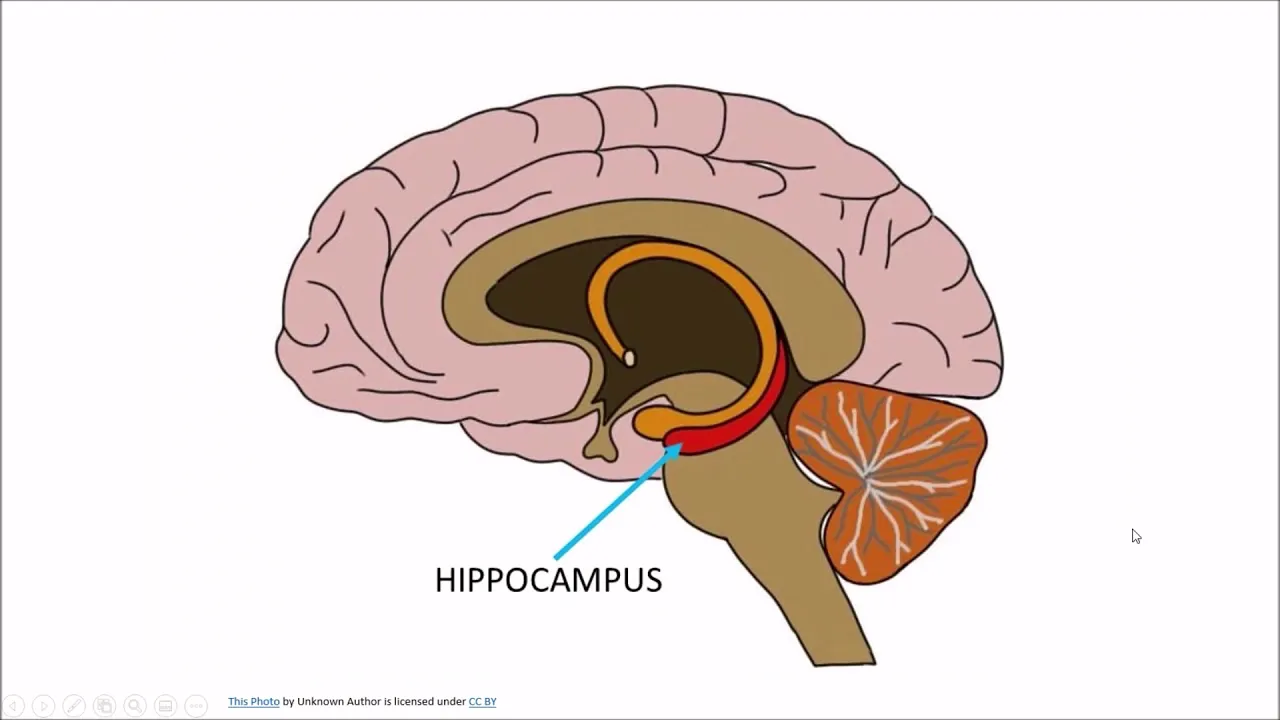
What is neurodegeneration?
TheSheekeyScienceShow
3K views•2019-08-19
IPL - Ruth Empson "Mind the Gap"
otagouniversity
251 views•2019-07-08

How our body shapes our mind | Pancho Tolchinsky | TEDxNapoli
TEDx
2K views•2019-12-05

Impact of Early Life Deprivation Danielle Stolzenberg Marcus Pembrey Bruce McEwen
uctv
4K views•2019-12-01
β-Caryophyllene for Parkinson’s: Protecting Dopamine & Easing Symptoms
parkinsonsdiseaseeducation
6K views•2025-08-09
New Insights from Inside the Brain with Rodrigo Braga, PhD
NUFeinbergMed
421 views•2025-04-14
Highlights for dystonia • 2025 MDS Congress
movedisorder
145 views•2025-10-27

Animal Welfare Synergy Series: Dr Tom Smulders on hippocampal neurogenesis
costactionlift
135 views•2025-07-14
Trending

WOW! Judge TURNS THE TABLES on Trump in His OWN $10B LAWSUIT!!!
MeidasTouch
197K views•2026-07-23

Playstation NO DISC/NO BUY Fight Is Over...
DavidJaffeGames
4K views•2026-07-23

Steam and Xbox Just Dropped The Hammer On PlayStation
OhNoItsAlexx
9K views•2026-07-23

Americans Confused in Australia for 17 Minutes Straight
IWrocker
17K views•2026-07-23