Americans experience significant cultural shocks when living in Europe, including differences in food (softer American bread vs. harder UK bread), transportation safety (cars yielding to pedestrians in Europe), measurement systems (metric vs. imperial), and daily convenience (European apartments lack air conditioning and dryers, requiring manual ventilation and outdoor clothes drying). These differences reflect deeper cultural values: American society prioritizes convenience while European society emphasizes functionality and pedestrian safety.
Install our extension to search inside any video instantly.
Americans CONFESS These Cultural SHOCKS In Europe Changed Them FOREVER!
Added:America bread versus UK bread.
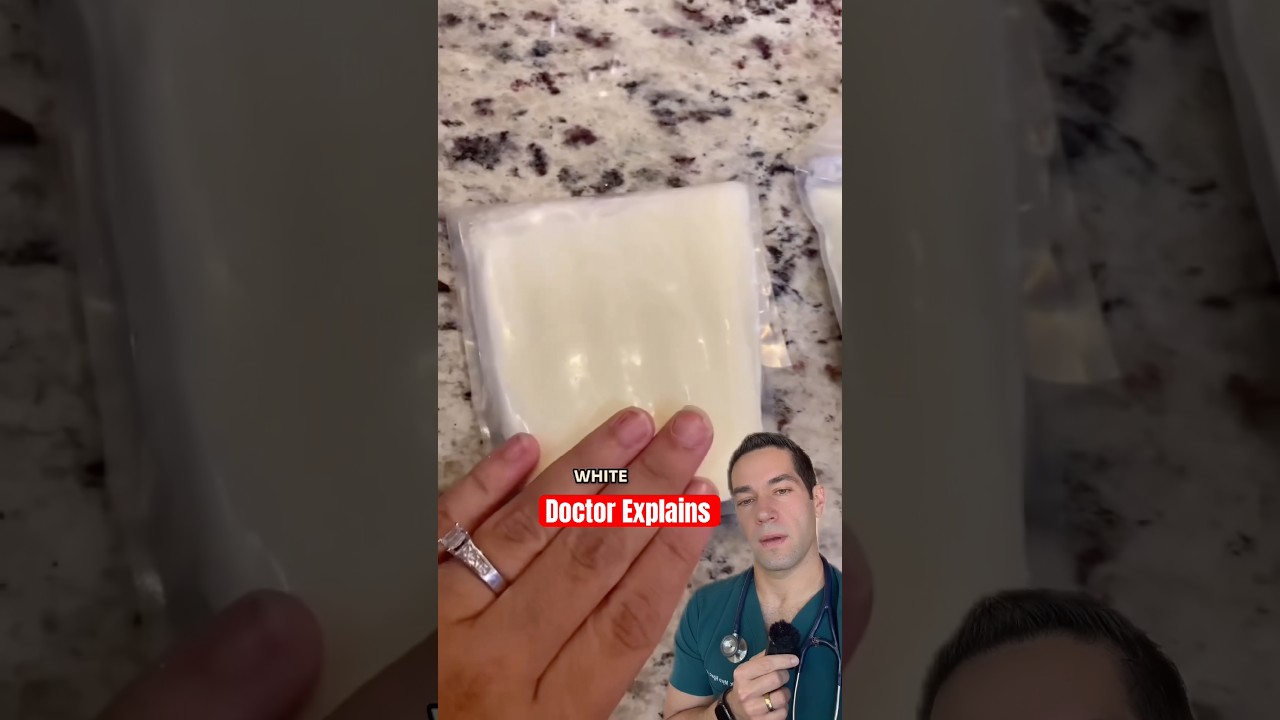
Supposedly, you're able to squeeze American bread and it just go right back to its form. So, let's put it to the test. Let's give it a go.
So, here's the UK bread and here's the American bread.
Look at that size difference.
So, this is so soft. You can see how soft it is and this is just so hard. So, here let's crumble the American bread and see if it will go right back to its form.
No way.
Look at that.
It literally bounced right back to where it was Well, just original. That's how it came out of the package. The UK bread.
Okay. That was nice. Nice and soft.
Ugh. Look how stiff it is. The UK bread.
Yeah, that's definitely going to go back.
See how stiff the American bread is compared to the UK bread?
That is so crazy.
This smells good.
Ugh.
Oh, that smells so different. Like this smells so much better than this.
That's crazy. Look at the difference of the crumbles. This is the UK bread. So much more fresh. Look at that all the breadcrumbs and then like hardly anything over here.
That's crazy. Look at that.
I would not be eating American bread if I were you. I don't want to move back to America. I know I'm going to have to eventually, but when I get back, I am making everything from scratch. I am not buying store-bought food. No way. No, thank you. I will make a garden and grow my own vegetables and everything.
Go to farmers markets or something cuz I cannot eat this stuff. I definitely have put years back onto my life moving here to the UK and eating outside of America.
>> We have been in the Netherlands for what, probably 6 weeks now? A little over a month now. And the hardest thing to get accustomed to, we are still struggling with like I I don't know, just like mentally understanding this is that cars yield to pedestrians, like more often than not.
So, when we come up to a crosswalk that doesn't have a light, we'll stop and wait. Or like when we're entering into like a parking lot, we'll stop and wait for a car like because that's what you do so you don't get a hit, but they're stopping and waiting for us and then looking at us like, "Why are you holding up the line?" And so then we're like panicking to hustle across.
And I don't know.
>> Why didn't anyone tell me that in the UK when someone asks if you're all right, they're not actually asking if you're all right. I moved from America to the Cotswolds about 3 weeks ago. And the first time someone asked me this question, I answered. I said, "Actually, I'm a little stressed. I have no idea where I'm going. I didn't know I had to bring my shopping bag, and I forgot my wallet." When apparently the correct response is, "Yeah, you." And you keep walking.
>> Here are five things that still shock me as an American that has been living in the UK for the last 6 years. Home edition. Number one is shower doors here. They're missing about a fourth of the door on the edge of it, and mine personally literally disaster in my bathroom every single time I take a shower.
>> I think that was the biggest culture shock for me when I moved, and even still now when I spend like a few weeks away. So, I'm back home now in London after spending a few months in New York.
And one of the things that I always find to be so interesting is how here I'm perceived as American first. And obviously there's a different context because of like the social and geographical context of America, it's a little different. But, it's just so interesting because when I think of my identity at home, there are so many layers before I even get to even conceptually being perceived as American. It's like I'm When I think about myself, I'm black. And then I think ethnically I'm Jamaican.
And then I will probably identify as being from New York, being from the Northeast. Like, there are so many layers before I get to even thinking about the fact that yes, nationality-wise I am American. But, here it's just like, "Oh, you're from America? Okay, cool. Like, you're American."
>> Folks, Americans living in Europe experience critical culture shocks, and most of them are coming out to document them. And some of them are interested in some are for the things that are that are happening in Europe, and some are against them. In this clip, we're going to continue watching these Americans talking about their experiences in Europe, then you'll provide your perspective. If you're new here, folks, please consider subscribing, liking, commenting, and sharing. Without much further ado, let's get into this video.
>> All right. So, I'm an American who recently moved from California all the way to Norway. And can somebody please explain to me why in the US we're the only country who does not use the metric system? Because I came to Norway, and I remember first people were telling me how cold it was. You know, they use Celsius. And I had no idea how much it was how how warm or cold it was. I had no idea. I had to use Fahrenheit. And then nobody knew what Fahrenheit was.
People It was hard for them to, you know, to convert it. And it's like everything in Europe is the metric system. Everyone in the world uses metric system. But, in even the time, right? In in Europe, there's the military time.
It's so weird why it's called military time, but everyone uses it. And even that I had trouble I still have trouble sometimes converting it into you into the normal time, you know? Because in Europe, it's 24-hour time. But, can somebody explain to me why we don't learn it in the US?
>> I could try answering this gentleman. In the US, the founding fathers made it possible for the American system not to be based on metric system and that's why a lot of Americans right now do not understand the metric system and the way it works. Although the military usually uses the metric system in all its operations because it's world standard.
So that's the difference. The founding fathers thought that it's good for the American society to just have a different measuring system compared to the metric system. And that's why the rest of the world is using metric system and the United States probably is not using it. But make no mistake, the military still uses the the metric system because it's more accurate compared to the system that we currently use in the country. Folks, this is just one of the major culture shocks that a lot of Americans experience while visiting countries outside the United States because they feel like, yeah, the measuring system, the timing, everything, even measuring of weight is totally different compared to what they experience in the United States.
>> Three culture shocks as an American living in Poland, apartment edition.
Number one, no air conditioning. I yes, the luxury of no AC. Instead, you're supposed to open these massive balcony doors and manually push the air in. And forget about just cranking them a little open. You either have to go fully open mode or suffer the consequences. Like who designed this system? Number two, light switches. Why are they outside the rooms? It's so inconvenient and confusing. I'm so used to going inside and turning them on. And don't get me started on the fact that the same switch also powers the washing machine. Like bro, what is this? Press the wrong button and you'll be doing laundry instead of actually lighting up the room. And finally, number three, no dryer. You want dry clothes? Well, too bad. You're going to have to wait three business days for them just to dry. By the way, take a look at these beautiful jingle bell undies my girlfriend got me for Christmas. Anyways, honestly, why not just install dryers in every apartment?
It's not that hard or complicated.
>> What this gentleman outlines, at least I will say that a lot of Americans will find them as a cultural shock because in the US we are used to convenience.
Everything must be made in a way that it ensures convenience for the rest of Americans, you know. So when you move to Europe and you are forced to iron your clothes outside so that the sun can dry them or just in the lines. I mean, it's a cultural shock for most Americans.
Even like the lack of AC in houses is a cultural shock for a lot of people within the United States and it's understandable because the American society is built on convenience, whereas in Europe probably is built for functionality among human beings functioning in a society in a normal way. But in the US also the weather system, just the way people are busy, the work schedule does not allow for people to just do things the normal way the way Europeans do. So convenience is a must in the I mean, the United States compared to what is happening in Europe.
>> It's the weirdest thing ever. Also teaching our 2 and 1/2 year old to, you know, like be safe when he's crossing the street. So we're teaching him like, "Okay, stop. Look for cars.
Look for bikes." And the cars are stopping and looking at us like, "What the hell? You stupid Americans.
Cross the damn road."
>> Among all the cultural shocks examined or outlined in these clips, I think I love this the most because the safety of individuals, the car stopping for a pedestrian to cross the road, that's the most important thing that's not in our society in the United States. So in Europe, congratulations for having such kind of a system whereby cars stop and pedestrians are the priority when crossing the road. That thing at least you'll be introduced in the United States. Anyway, folks up until this end, please tell me about culture shocks that you have experienced while traveling to Europe.
Related Videos
Before You Move to Rural Thailand, Watch This
Vortecks
2K views•2026-06-06

I Spent a Day Experiencing Filipino Culture 🇵🇭
im.mattguy
349 views•2026-06-11

Ancient Hadzabe Hunters in Action | Tracking Wildlife in the Forest
african-d8v
42K views•2026-06-10

INKOSI YA MAKHOSI M'MBELWA V SPEECH AT FUNERAL OF HIS MAJESTY MPEZENI IV| NGONI ZAMBIA & MALAWI
amtvmalawi
381 views•2026-06-09

Mount Everest Is Everything Wrong With Society
jamelakajamal
9K views•2026-06-06

this side of india 🇮🇳 #shorts
InsideIndia2.0-t2z
5K views•2026-06-08

Exploring Penglipuran Village: Bali’s Traditional Gem
balisundaram
346 views•2026-06-06
🛖 Zero nails, zero screws: the genius of the Kanak Hut! #KanakCulture
NewCaledoniaEN
161 views•2026-06-06