The gradient (slope) of a velocity-time graph represents acceleration, as it is calculated as the change in velocity (dependent variable) divided by the change in time (independent variable), which is the definition of acceleration.
拡張機能をインストールして、あらゆる動画内を即座に検索しましょう
Velocity-Time Graphs Explained (What Does the Gradient Represent?)追加:
how to evaluate something like this. The gradient represent on a velocity-time graph. Comment your answer below. What we got to understand with any straight line is the gradient is the change in the dependent variable and the independent variable. So, the independent variable is the top of the gradient and the bottom of it is going to be the dependent variable. So, in this case here, it's change in velocity over change in time. Now, by definition, that means it is acceleration cuz acceleration means change in velocity over a change in time. So, the gradient of this line here is going to be um acceleration.
関連おすすめ

Is dark matter real? - Why can't we find it? - physicist explains | Don Lincoln and Lex Fridman
LexClips
1K views•2026-05-30
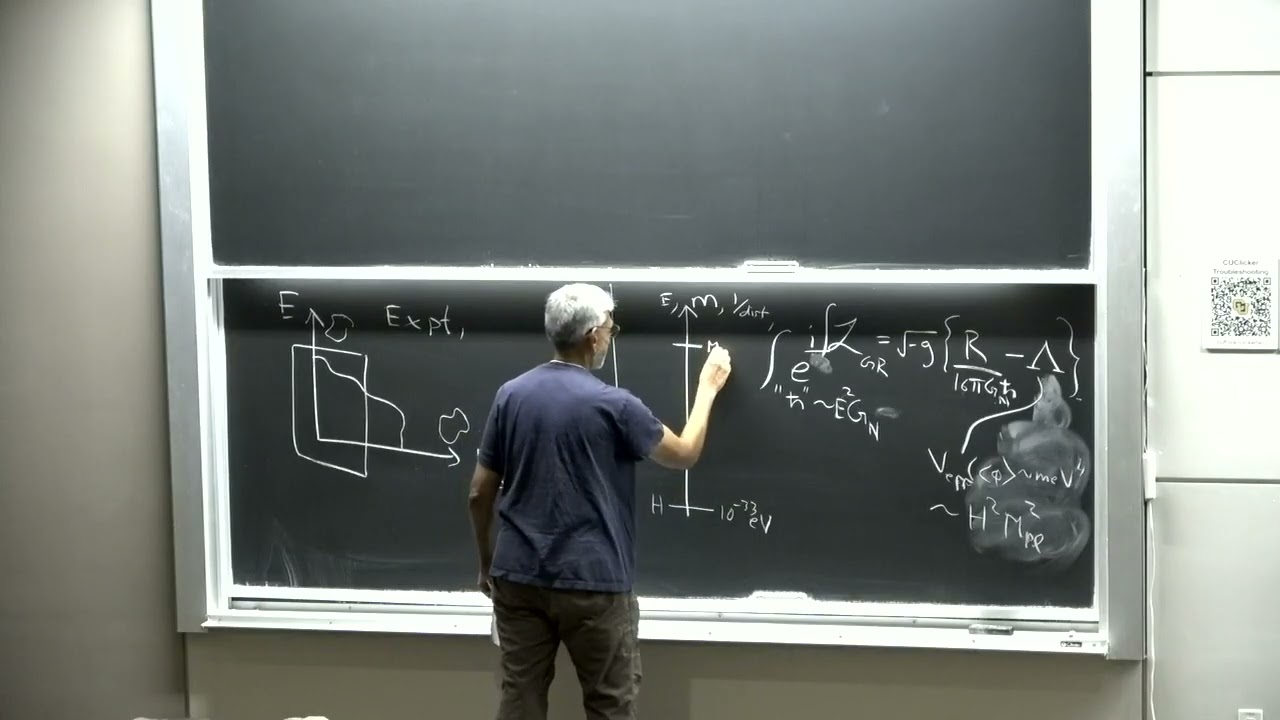
Raman Sundrum Lecture 1 on SUSY and BSM Physics in 2026
tasivideos4735
152 views•2026-06-03

Saptarshi Basu - Spectacular Voyage of Droplets: A Multiscale Journey to Extreme Flow Conditions
DAlembert-SU-CNRS
152 views•2026-06-02

A 6.0 Just Hit Hawaii — And It Came From The Wrong Place
TerraWatchHQ
115 views•2026-06-03

The Split-Second Mistake That Made Bouncing Bettys So Deadly
NoMansLandChannel
253 views•2026-06-02

Nobody Expected This Lava Reaction 🤯 #faits #facts
TendzDora
28K views•2026-05-30

The Difference In Charged And Neutral Particles
heavybrainspace
959 views•2026-05-29

The Silent Memory of Glass
UnchartedScienceworld
146 views•2026-05-30


