Cornell elegantly deconstructs the architecture of wonder, showing how technical precision in rhythm and harmony translates into a visceral sense of weightlessness. It is a brilliant testament to how music theory serves as the invisible engine of human emotion.
Instala nuestra extensión para buscar dentro de cualquier video al instante
Why This Mario Galaxy Theme Makes You FEEL Like You're FlyingAñadido:
Does it light something up deep down in your soul when you hear this?
Oh, right there.
Open up.
Check that out.
Oh yeah.
Okay, I just want to play the whole thing.
There is something about this that just makes you feel like you're flying. In this video, we're going to talk about why that is. And also, I'm going to show you how it's not the only place that this effect kind of happens. Flying, for some reason, seems to be a somewhat universal feeling. The way it's depicted in film scores and video game soundtracks is actually remarkably consistent. And later in this video, I'm going to show you a few other examples of how this effect really just h it speaks to you so deeply and it literally just feels like flying. So, let's take a look at Gusty Garden Galaxy and see what exactly is going on there.
Okay. Right in the beginning, that's like a classic Mario sound. We'll explain what that is in a second. But as soon as this melody comes in, it's already giving us this floating kind of flowy feel, right?
And there's a few alterations of notes that I think are really helping to make that feel that way.
back to the top only se second section.
Okay, we're going to we're going to break all that down in just a second.
So, I found this fantastic orchestration uh transcription on Musecore by the account Oatron. I'll put a link in the description below, but on this transcription, we can start to see some of the ways that we're getting a few of the different components that I think really make this feel like flying, right? And among those, we have at the very basis of it, and this is actually I I love this. I love this detail because it kind of ties the structure back into the Mario theme while also contributing to why this just feels like flying. And I want you to take a look at the acoustic guitar line. You'll notice we have the intro here, and then as soon as we get into um the main sort of buildup, the intro rather, the guitar starts strumming all these crazy patterns, right? I mean, p the rhythmically they're not that crazy, but it's quick, it's fast, right? And I think that this is a lot of what and look it it just keeps right on going as the uh as the melody comes in uh which is right here.
We have right and all the while the guitar is still going at this like how's it written here something like that. But it's a lot easier to do when you when you can go up and down. But um I think that that that's that's already what starts to give us that feeling of flying. And the reason for that is due to the fact that like anytime flying is depicted either in video games or or films, especially if it's in sort of a of a you know a positive feel like it's like a almost like a dream like oh imagine flying what would that feel like? What would being able to just step off the ground into the air like Superman? What would that feel like? Right? and and and that I think a lot of us sort of imagine this intense like but positive feel, right?
And so immediately in the guitar we get this really intense rhythmic stuff going on and that helps to set the stage of this forward motion has so much momentum and and that's really important. You know what I mean? Because like think about it whether it's eighth notes or 16th notes that that pulsing driving force is a big part of what almost like keeps us airborne. If the rhythm stops, the plane stalls. So, the intensity of this underlying rhythmic feel that really starts to give us this this powerful driving force, this momentum that just gets us it gets us airborne and it keeps us airborne. Now, once we're airborne, now we have to we have to feel the joy of being able to just soar through the sky, right? How are we going to do that? Well, we're going to do it. Uh we're going to step away from the score and we're going to take a look at this uh the chart which I wrote out here. I think the brilliance of this melody and chord structure. This is really what not only makes us feel like flying, but it is what locked this song into so many of our memories for life.
You know what I mean? And and like look at the excitement when it showed up in the last in the Super Mario movie and now the Super Mario Galaxy movie, right?
I mean, people were stoked to hear this theme. and why? What is it that's got us so it's stuck with everyone? It's it speaks to you so deep down in your soul.
And let's look at why that is. When I made the decision to support this channel by trying to not do any sponsorships and just make stuff for you guys, it's actually useful. One of the ways I started that was by making my better piano system. It's a course that'll start you from the very beginning. I'm super proud of it and there's a link in the description. You can check it out. It's actually on a a huge sale right now. But a lot of you were like, "Charles, that's really cool, but like I I already I already play. I'm looking for something a little simpler that I can just take and use myself. So, I set out to make exactly that. And boy, did it turn into something that I am so excited to announce. I am so happy to release cinematic piano riffs volume one and two. We're doing two at once here.
You can buy them separately or you can save like over 20% if you want to pick up both of them as a bundle. Now, here's what it is. I started by saying, "Let me write some cinematic ideas, you know, like what like what we hear in in our favorite video game soundtracks, movie scores, all that stuff." things ideas that you can that you can add to your vocabulary at the piano that'll help to start to inspire you to create your own things. They're great practice material.
I wrote them out in all 12 keys. But as I was doing it, I'm like, well, let me let me include the audio so you can hear it. But then it clicked and I went, "Well, wait a second. If why don't I just include audio that can be instantly looped in case you want to use it as something to build on if you want to compose, if you want to produce, if you want to make your own movie scores using cinematic piano riffs as as a bass. So, here's what it includes. It's sheet music in all 12 keys. I even included it in different formats, but if you want to pull it into Logic or Ableton or Qbase or FL Studio or whatever, I've got some stuff for you. There's MIDI files so you can edit every individual note of every single riff. And then there's audio files. Each volume has 1,200.
Here's why. Cuz I recorded every riff in every key. And then I used multiple different piano sounds depending on what vibe you might want. Check just check this out. This is a little sample I made just to show you some of the different things. Just I don't know. I just I love when the tools themselves almost start to inspire you to be like, "Oh, what could I create with this?" That's what cinematic piano riff is all about.
There's a link in the description. Take one minute and just watch this.
What do you think? I don't know. I've just I I I think this is just such a cool thing. I I hope you guys get a ton of use out of it. I wanted to make something super affordable and that's just fun fun to play around with. Use it use it in a DAW, practice them at the piano. I mean, there's so many things in there that you can do. The MIDI files, you can even drag them into into like uh one of those piano roll softwares that you can see the cascading notes, right?
It's all made for you guys. Once again, that's how I support the channel. That's how I try to, you know, I I don't want to take sponsorships. I'd rather just make things for you cuz I feel like it's way more relevant. It's way more useful.
So, if you enjoy the content on this channel and you'd like to support me, I so much appreciate that. There is a link in the description and I can't wait to see what you guys make with this stuff.
Anyways, okay, let's go back. So, we start off. We obviously have our classic Mario flat 6, flat 7, one walk up. This is a classic Mario sound. I mean, it's in the original theme.
And this is just one of the ways that Mahito Yokata and Kojicondo worked this this whole game soundtrack to feel like something new and also to be rooted in Mario's sound. Now, in the Mario world, this was actually the very first score that was fully live orchestra. But we open up with that Mario walk up to D flat. And then when we start our That's a really interesting phrase because it's almost got like a flamco vibe to it, right? That that whole classic guitar Spanish sound. Now, as we know, the original Mario theme had a lot of those like, you know, maybe more tropical, but like the the the Latin Latin American Afrouban type of roots to it in the styling and how it was written, how Koji Condo approached a lot of that music. So I think this is sort of, you know, it's it's again just like the opening few chords, this is also kind of linking it together with that.
But once we hit our A section, we're going to enter into this beautiful melody. This is partly what makes it so memorable because you want to talk about singable, memorable, and singable.
Listen to this.
How easy is that?
Incredibly simple melodic line, but beautiful, right?
Yeah. And now you'll notice a theme here.
That's like a call-in response, right?
Look at the structure of the melody. We have a half note tied to an eighth and then uh and 4 and 1. And then in bar 11, we also have half note tied to an eighth note and then and 4 and 1. But look at measure 15 and 4 and 1. And then again two measures later and 4 and 1 and then measure 19.
Look at what we're doing here. I mean, it's it's this is why you remember it.
This is why it's so lodged in your memory because it's so thematic. It's so repeated, but the notes change obviously each time. And I want you to look at how they change because this I think is what's really really beautiful about this melody.
We we have a a note that we start on and then we drop a half step and we kind of surround that note. We might look at that as sort of like an enclosure and then we go somewhere else. Now look at E flat minor at measure 11. We start on a note and then drop a half step and we enclose E flat the exact same way. Okay. However, this is an interesting sound because we're playing E flat minor. That D natural has just this I don't know how to describe it.
It's like this sweetness to it.
You know what I mean? It I don't know.
And and all of this is contributing to like our overall just positive. Like I there's something sentimental about all of this. And you can imagine if you were flying through the if you were soaring through the air, you would feel you would almost be choked up because of how beautiful everything is and how incredible the experience is. That's what this melody is giving us.
Now watch, we do the same thing. And now the harmony starts to come in and really just pull at our heartstrings. Watch this. A flat minor over B. Technically it would be C flat, but that's just confusing. So A flat minor. And look at our structure.
Same thing.
B flat 7. But because of the way the melody is, we naturally have this flat 13.
And I think we really want to hear that flat 9, too. So, if I was going to write that chord out in full, maybe I would call it B flat um oh, let's see. B flat 7 with a flat 9 and a flat 13. So, and then that brings us to the minor 2 chord.
And the same thing, half step down enclose the note we started on. And this is all the mileage right here. G flat minor 6.
Ah, and now we're going to go to the one. However, we're not going to resolve it because we're going to leave it on the five in the bass right there. So, we hear the one chord. It It sounds complete. It sounds like, okay, we're done. Except we're leaving it on the five there is another half step enclosure.
And here we go. There is our flat 6 flat 7. Now, section B starts to sound like it's going to repeat, but it doesn't.
Let's listen to what they do instead.
Check that out. And then, oh man, it just Oh, it tugs right at your heartstrings.
Okay. All right. All right. All right.
All right. It's It's so unbelievably good. Okay. So, at B, we're going to come in with what we think is going to be the same thing. It's We think it's just going to be the melody again. And it starts that way, but then we get a pedal tone. We're going to hang on to this D flat for a while.
That this change right here. I mean, you want to talk about what helps tie this into the galaxy feel.
It feels like flying. It feels like outer space. It It feels like all of it together, right?
But now we're going to really just yank at our heartstrings by playing Gflat minor 6 over D flat. We're going to hang on to this pedal tone.
A.
And we're still going to stick with our melodic structure, right?
And we go from that minor four chord to the one. And then we walk it down. And now we get our same thing.
Man, these cord these chords are they're just so they're so good. Same thing as before, but now we're going to finish up that whole section. And that brings us to what I might call the bridge.
Check the harp out and the snare drum.
Oh, we're going somewhere else. Are we going back?
We kind of go back, but it's a little different. Okay, let's look at that. So here at C, I absolutely love that. What an interesting motion. Okay, so we're in D flat major and we're going to drop a whole step.
So that's already not in the scale.
It would be a C, right? However, that flat 7, we've heard that before, but we've heard it in the context of, right? So we've heard the B except it's a B major.
Well, what happens when we make it minor coming from our D flat?
That is such a cool sound. It gives us Ah, man. I don't know. It's like that's why I think that's why if we combine those two chords, I think it might be frigian dominant.
Um, That's frigian and it's major creating the the do I think it's frigian dominant. Anyways, you guys don't care. So So I think that's why it just creates such a cool sound.
Very beautiful. And now we go.
This is almost like a full key change, right? I would Yeah.
But now we got to get back to our D flat area.
So now we're going to use our flat 6, flat 7. And that brings us back to our home base. But this D section is where we just you want to talk about if if you are feeling at all sentimental or at all like I don't know. It just it's such a positive, happy, flowy feel. But if we wanted to wrap it up and put an absolute bow on it, listen to this.
It's It's so simple and it's so beautiful.
So the first time we went D flat, just a root up to the third, climb up to the fourth.
That's really nice before going around.
Get our flat six, but go to the five.
The second time we're going to walk it down.
We still end up on G flat major, which, you know, that's where we ended up the first time. Only this time we're going downwards. And now we get this. This is like the big This is the big note, the big climax because we get that melody.
Ah.
Second time. Now we're going to walk it down.
Oh yeah.
It's the perfect recipe for feeling like you're flying and for sticking with you, for being so memorable, so easy to sing, so easy to hum in your head, you know?
But it's not the only time that this exact thing has been used. I want you to take a listen to this because when I heard this, I was like, whoa. Okay, listen to this.
same driving thing underneath flowing melody.
And here's the same chord.
Okay, that same chord we we saw in the second A section. I guess it's that that major two chord. It's the same thing. Listen to that again.
Here it comes. And we still even keep the root on the bottom. It's the same thing. What uh what key is this in there? C.
It's the same thing, just a half step down.
Here's another one. This is a little different, but it's the same function.
Okay, it's a little slower overall, but we still have that driving.
Right now, this one has a conflict in the middle of it, right? Which is when which is when Hiccup falls off and they have to figure the whole thing out. But listen to how it you're there's the driving 16th notes. And here we go. this big.
That one's hard to listen to without getting choked up, right? I mean, just what what a theme. I think the most interesting one is probably the John Williams, right? The the ET comparison because that that just blew my mind.
It's almost the same tempo and everything like that. I mean, you can really hear where these uh where these influences came from. And much like John Williams, Mahito Yokata wrote a melody that is easy to remember. It's easy to hum along, sing along, and you just it sticks with you. Once again, if you want to check out the brand new cinematic piano riffs, there's a link in the description down below. It's how I support the channel, and your support means a ton. Thank you so much for checking that out. Thank you so much for watching this video. We'll see you on Monday.
Videos Relacionados

HOW to VISUALIZE the FRETBOARD like a PRO/LEGEND
NassorTafari
273 views•2026-05-31
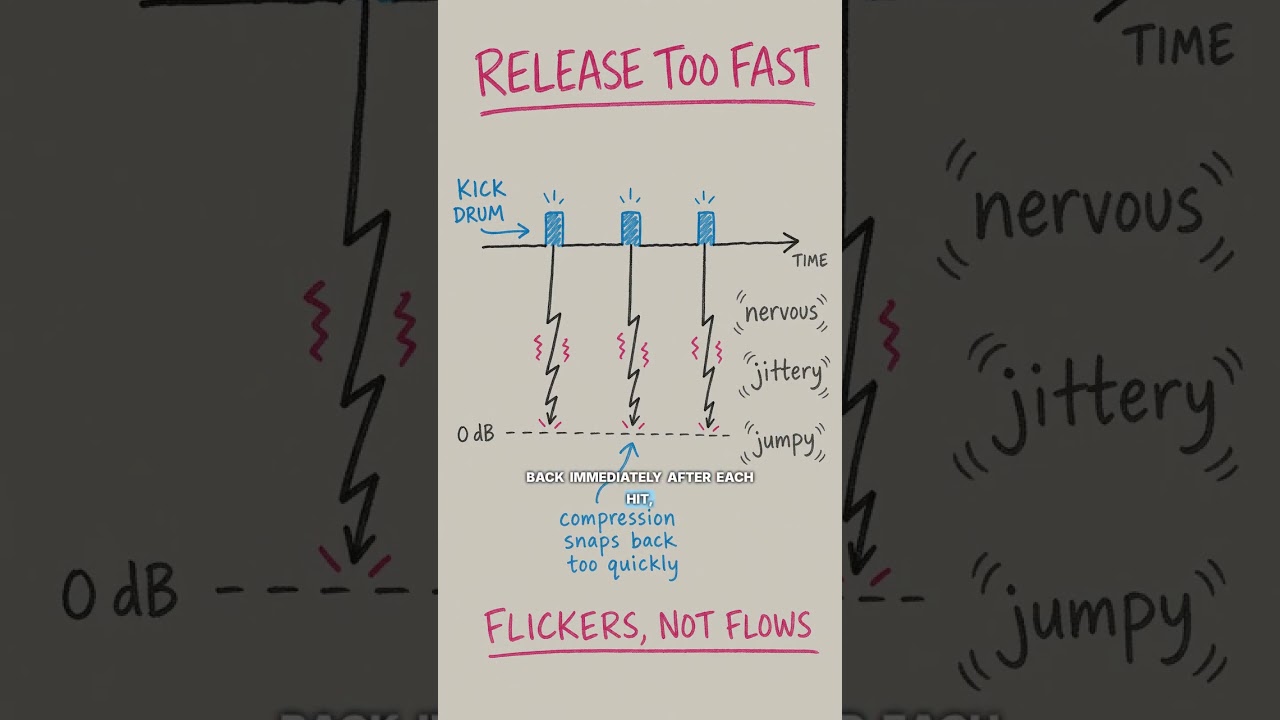
Your Release Time Is a Tempo Decision, Not a Feel Decision #musicproducer #musicproduction #typebeat
abletonppr
995 views•2026-06-01

Music Teacher reacts - Beauty and the Beast - Gabriel Henrique, Jade Salles
jennifersmusicpage
178 views•2026-06-03
Don’t be the fool
ijadamademusic
2K views•2026-05-31

くじら - いのちのパレヱド x G-Wiz - Teddy Bearを #マッシュアップ
jilow_j2u
564 views•2026-05-29

Vocalist Reacts To The Bass Gang 'THE SOUND OF SILENCE'
QofyReacts
569 views•2026-05-29

"Rome" by Shunned at a Funeral (Live Version, Full Song) #shunnedatafuneral
ShunnedataFuneral
885 views•2026-05-29

🚕 Taxi Amarillo - Proyecto Cumbia | Cumbia de Guitarra 🎸
Proyecto_Cumbia
284 views•2026-05-30


