An impressive feat of biomechanical engineering that successfully synchronizes machine intelligence with human gait. Yet, until battery density catches up with its ambitions, it remains a high-tech luxury rather than a practical necessity for serious explorers.
Install our extension to search inside any video instantly.
Vastnaut One: The Smartest Outdoor Exoskeleton YetAdded:
The world's first 4x4 exoskeleton. This is the Vast Note 1. And today we're going to take it for a spin. We're doing walks, hikes, going uphill and downhill, sprints, everything in the book to test this model and the engine behind it.
Stick around. Okay, so let's go ahead and put on the Vasnut one 4x4 exoskeleton. Since this is a bit different than traditional exoskeletons, it has additional knee supports. So, we're going to start with that. Let's do the left knee first. We pull the strap.
Go around.
Then second strap.
And finally, this piece goes underneath.
Then you tighten it with the Velcro. If these are too loose, now is the time to adjust them by just undoing the Velcro, tightening them some more, and reattaching.
Let's do the right knee as well. Top strap first.
Middle strap next.
And then bottom strap with the Velcro.
This I intentionally left loose. You can adjust it from both ends. So you pull it tight. And one trick, if you have super skinny legs like me, this can go underneath here to still catch the Velcro. Now we can get to the middle part which has width adjustment here. Since I'm a skinny boy, I'm just going to go with the minimum.
Tighten them on.
And after the position is correct, we attach it to the knee portion.
And finally, you take the battery and you just clip it into the back.
So, in order to turn it on, you simply press once and then hold.
Right after it turns on, you need to be still for 3 to 5 seconds for the IMU to calibrate and then it's going to be fine. To actually change the assist modes, you just press once on the button. Now we're in chill setting. And this is the best setting since I'm just going to go up a mild steep hill. I'm going to use chill setting and we're going to go right on this hill to see what kind of assist level it can provide. Let's go. I can feel a bit of an assist. I don't know if you can tell, but it's trying to push my legs forward starting from here and then from here it's doing this kind of motion for me. So it's basically assisting me in walking. This hill is not particularly steep, but it's still a challenge for somebody that's not in that good shape. So, this would be a perfect scenario to use the Vos not one 4x4 exoskeleton in chill setting to preserve some battery life, but also get a good hike in.
Honestly, this feels lighter than even walking on a flat surface. I would say this is maybe like a 10 degree incline and I don't even feel it. Like the exoskeleton is doing most of the work I'm doing just for regular walk which is amazing.
Now I'm actually going back down the same hill and it's intelligent enough to start opposing some resistance. So it's helping me go downhill and not do so much effort in stopping.
In this particular scenario, I feel tension here like it's actually trying to stop my knees from going too far forward, applying basically brake pressure instead of me trying to do it with my own knees, which is very smart.
So now we have a bit of a more challenging scenario. As you can see, this hill is much steeper than the previous one. But I switched the vest note one into vest setting, which is the highest power mode available for the moment. Future versions will also have a turbo mode. And I'm going to try to do a lightweight run up this hill. And I'll tell you my impressions after. Let's go.
So, this went surprisingly good. I felt a lot of assist coming from the exoskeleton, especially from this part here, just working together with the hip part to pull me forward. And I didn't really try to run per se, but this provided a lot of assist in the vest setting. So, it's super good if you're trying to do more of a involved hike without doing too much of an effort, if that makes sense. Let's test it in just regular walking. See how that does.
There is also a phone app for the Vast Note 1 where you can connect your device. After you put the top section on, you can use these straps to adjust how tight it sits to your body. And it's very nice that they thought about managing these with all these loops on the side or you can just clip them to make them stay out of the way and look super neat. Same on the other side. you find the section that actually fits best and just slide it in.
Very nice thought. So, I know you've seen exoskeletons before, but usually they are separated. It's either the knee portion or the hip section. This is the first one in the world that's actually 4x4. So, it provides the hip assist and the knee assist all in one device, giving you the most support and assist for long walks, hikes, sprints, or if you're just trying to work out. The impressive part of this is that the huge battery on the back provides up to 4.5 hours of battery life and up to 20 km of range depending on which mode you are using. To achieve this kind of range and stability, they're using what they call their vest synergy AI engine, which in my experience so far, it's been doing quite a good job of adapting to the different terrains, situations, and what kind of conditions I'm putting it in.
Also, I've been using this in >> chill setting >> for about 20 minutes and I can say the motors, all four of them are cool to the touch. They recommend if you're going to use, >> which is the highest mode available for the moment, to only use it in sections of 20 minutes to allow the motors to cool down. But if it's a chilly day like this with 10° outside, I think that's not going to be a problem. So, next I'm going to put it to some extreme test.
We're going to go up that steep hill there. For that, I'm going to put it in vest setting, which is going to provide the most assist available.
And we're going to start with a sprint here. And then going up the hill.
Let's say you're on a mountain and you run into a section where it's going very steep. Is this going to help? Let's see.
We're going to go up this part first.
Oh yeah, no problem. No problem.
So, we changed scenarios a bit. Now we're in this beautiful forest in Austria. Has a bit of an incline, some declines. Have a rocky road. And for the moment, the Vasnote 1 4x4 exoskeleton is doing amazing. I'm using the chill setting for the moment because this is just a regular hike. But we've been doing this for around an hour, let's say. And on my regular hikes around this time, I would like to take a break, maybe get something to eat, a snack. But so far, I don't feel the need to actually stop, catch my breath, or take a break. I can just keep going, which is super good. This is one of the intended use case scenarios of the Bassmot One.
Use it to assist you on hikes, go longer distances without getting tired so fast or so often. Don't need to take breaks.
And as I mentioned before, the battery life for 4 and 1/2 hours or 20 km is really going the extra mile. I'll show you later, but there's also an option to relocate the battery with a remote cable. So, instead of having it on your back, as you saw earlier, you can just have it in a side pocket, which is a pretty neat addition. I know I mentioned this before, but it still amazes me compared to other previous models that I tested, the motors being so silent.
before you could hear some motor wine, some worring noises, and maybe that made you feel a bit uncomfortable if there are other people around you that were walking or hiking. But with this, there's no issue. You can barely hear it if it's super quiet. And in a forest like this, we got a bunch of birds, the sound of rocks underneath our feet, so you can't even hear it. And when you had enough of a regular hike, you can turn it up and start actually doing some exercise by sprinting or running. So, let's do that now.
And what was super surprising from that run is that I don't feel tired at all.
I'm not out of breath. I don't need to stop, catch my breath. It provided a lot of assistance. Again, as I mentioned before, I felt it just pulling my legs forward and helping me with the run. And the Vast Synergy AI engine actually managed to adapt to my pace of running, not overly compensate, but there is the option in the phone app. If you feel like the assist is not enough, you can actually increase the body weight that is set in the app so that it will provide more assistance if you feel the need for that. This would be great for elderly people as well if they want to keep up pace with other younger relatives on long walks or maybe why not even hikes. This will provide the necessary assistance for them to actually keep up and enjoy their time with their family, which is amazing.
This would be a great gift for a loved one.
That's great. Another test I wanted to do is to see how fast the Vas not 1 actually could stop providing assistance when I actually wanted to stop running.
And in this case, it adapted perfectly to my pace. The moment I started lowering my speed, it lowered the amount of assistance provided. And when I wanted to stop, it actually stopped, which is good. So, we're back in the office. Let's go over the exoskeleton again since I didn't have time to show all the adjustments and everything while we're outdoors. First, you probably seen this in the video, but there's an unlock button here for the length of this piece, which can be adjusted with positive stops, and then you lock it back down.
On the back of it, again, we have the two flaps that push to the side so you can adjust width.
And on the knee piece, there is another latch that you just pull up and then you can extend the length of this piece.
Just push the latch back down. I also mentioned the remote cable for the battery. That's on purpose. If you want to wear a backpack while you're wearing the exoskeleton, a big battery here will interfere with your backpack. So the solution for that is this remote cable which in turn you can plug in instead of the battery right here.
And then you can use this cable to relocate the battery in your backpack in a pocket or anywhere that it's convenient. After spending a full day with the Vas not one exoskeleton it works. It did everything it promised, lowering the load on my back and my knees for the hikes, sprints, and uphill sections that we did. Since this is still an early prototype, I will not comment on the installation or wearing procedure as these are still to be finalized. Functionality was good. It behaved just as I expected. I never felt like I was not in control. For more details about the Vast Not 4x4 exoskeleton, check out the links in the video description. If you enjoyed the video, why not give it a thumbs up, subscribe to the channel, and I'll see you in the next
Related Videos
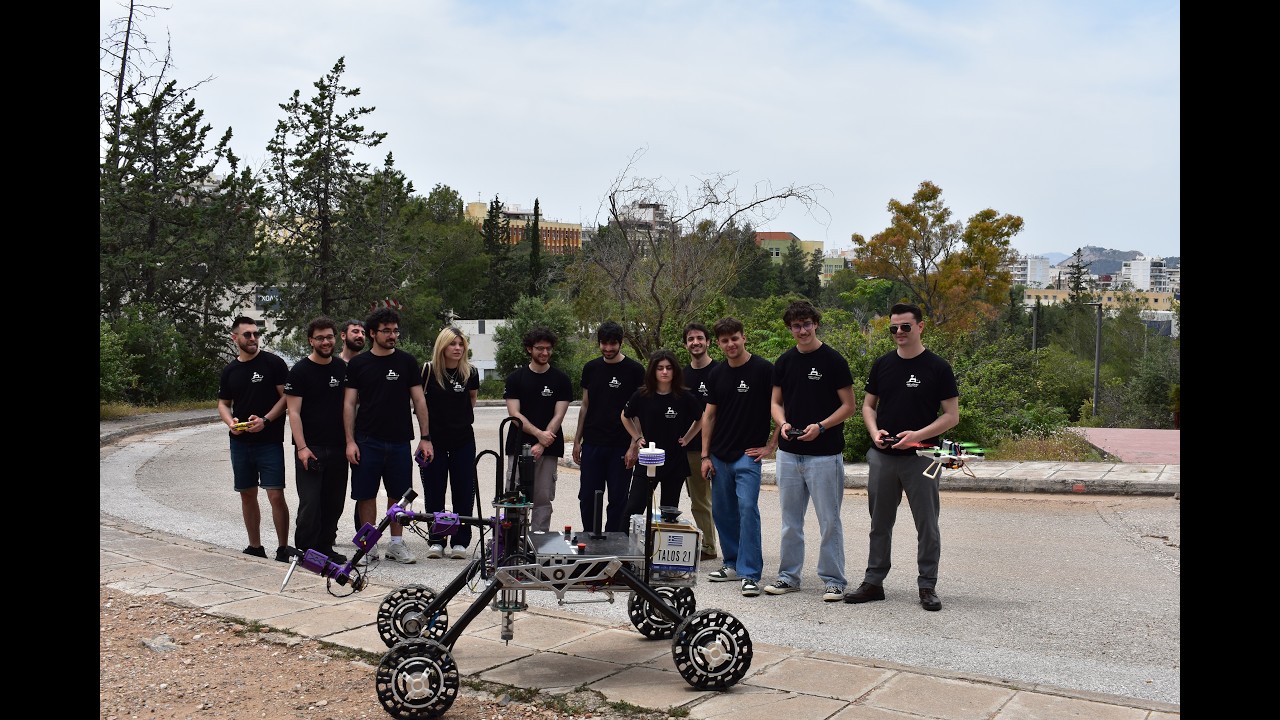
Beyond Robotics | European Rover Challenge 2026
beyondrobotics
189 views•2026-06-01

Beatbot Sora70: JetPulse Technology and AI obstacle avoidance and navigation!
DroidModderX
26K views•2026-06-02

Tesla FSD 14.3.3 Hits Phoenix Streets - FIRST LOOK
anthonystesla
114 views•2026-05-29

Elon Musk Just Revealed Fremont Line for Optimus Gen 3 Mass Production
TheAINexusOfficial
180 views•2026-05-30

人機一体「零式人機 ver.2」 子ども企画【おもしろ発見!モビリティー】 #乗り物 #automobile #robot #shorts
KyodoNews
1K views•2026-05-28

China’s New Luna AI Robot Looks Shockingly Human...
NextGenHumanoids
850 views•2026-05-28

Reachy Mini: the $300 open source robot you can actually hack — Andres Marafioti, Hugging Face
aiDotEngineer
662 views•2026-05-29

柔軟指×AI画像処理食品の仕分け作業システム!#柔軟指 #ロボット #自動化 #製造業をもっと盛り上げたい
KiQ_Robotics_Corp.
113 views•2026-05-28



