The video brilliantly illustrates that falling asleep is a nightly system crash where the "save" button is disabled long before the power actually cuts out. It is a concise breakdown of why our most frequent transition remains a permanent, biological blind spot in human memory.
Install our extension to search inside any video instantly.
Why Can’t You Remember Falling Asleep?
Added:Think about last night.
You got into bed, you lay down, you closed your eyes, and then you woke up this morning.
Somewhere in between those two moments, 8 hours vanished. Gone.
Not just forgotten, but completely absent. There's no foggy version of the night you have remember. There's no slow blur of memories getting hazier and hazier as the hours went on.
One moment you were lying there thinking about something, maybe something totally random, like why hot dogs come in packs of 10.
And then nothing. Cut to black. Morning.
And yet you have no memory of the actual moment it happened. You don't remember the last thought you had before your brain checked out. You don't remember your eyes getting heavy for the final time. You don't remember crossing that line between being awake and not.
Why?
This is one of those questions that sounds deceptively simple until you actually sit with it. You spend roughly a third of your entire life asleep, which means you fallen asleep tens of thousands of times. You'd think by now you'd at least have some clue what it feels like. And yet every single night it happens without a trace.
No goodbye, no warning, no last conscious thought you can actually hold on to.
Just gone.
The answer requires us to dig into some genuinely strange corners of neuroscience.
And once you understand what your brain is actually doing during those final minutes of wakefulness, the mystery doesn't get smaller. It gets weirder.
Let's start with what's physically happening in your brain as you fall asleep, because it is way more dramatic than most people realize.
Throughout the day, every waking hour, your brain is burning energy. And as a byproduct of all that energy consumption, it produces a chemical called adenosine.
Adenosine builds up slowly, continuously, from the moment you wake up, accumulating in your brain like a tab at at that you're not allowed to close until bedtime. The longer you're awake, the more adenosine piles up. And adenosine doesn't just sit there quietly. It actively inhibits the brain's arousal systems, pulling down the systems that keep you alert, gradually making you feel heavier, foggier, more desperate to lie down.
This is why you feel tired after a long day.
This is also, by the way, why caffeine works.
Coffee blocks adenosine receptors, so your brain can't read the you're exhausted signal.
You're not actually getting more energy from coffee, you're just temporarily preventing your brain from knowing how tired it is.
Which is a fun fact to think about when you're on your fourth cup of the day pretending you're fine.
Alongside the adenosine buildup, your circadian rhythm, your internal 24-hour clock, controlled by a tiny region of the hypothalamus called the suprachiasmatic nucleus, starts dialing down its alerting signals as night approaches.
The pineal gland releases melatonin.
Body temperature drops slightly.
The chemistry of your brain begins to shift, tipping the balance away from wakefulness and towards sleep.
And then, when conditions are right, a kind of neurological switch gets flipped.
Neurons in the ventrolateral preoptic nucleus, a small cluster of cells in the hypothalamus, start actively suppressing the systems that keep you awake.
They inhibit the arousal centers.
They quiet the signals pumping norepinephrine, serotonin, and histamine through your brain to maintain alertness.
The brain essentially talks itself off the ledge of wakefulness. And at some point during this chemical negotiation, something critical happens to your thalamus.
And this is where the memory piece starts to make sense.
Your thalamus is, under normal waking conditions, the relay station of your brain.
Everything you see, hear, feel, and sense passes through it on the way to your cortex.
The thalamus is the reason you can hear a noise and consciously register it.
It's why you can feel your sheets against your skin and know that's what you're feeling.
It's constantly routing information from the outside world to the thinking, perceiving, experiencing parts of your brain.
When you fall asleep, the thalamus essentially closes the gate.
A structure called the reticular thalamic nucleus starts inhibiting the thalamus' relay cells, progressively cutting off the flow of sensory information to the cortex. The outside world, your phone buzzing somewhere across the room, a car going by, the hum of an air conditioner, stops being forwarded upstairs.
Your cortex, the part of your brain responsible for conscious experience and memory formation, starts getting starved of input. And without input, it can't really form new memories in any coherent way. This is already most of the answer.
Right there. You can't remember falling asleep because the very process of falling asleep is one of your brain actively dismantling its own ability to record experience.
The thalamus stops relaying. The cortex goes quiet.
The encoding machinery for memory shuts down before you're even fully unconscious.
So, the last few minutes of wakefulness are spent in a brain that is progressively less and less capable of actually logging what's happening.
It's like trying to take a video on a phone whose battery is dying in real time.
The footage from the last few seconds is going to be corrupted or missing entirely. Not because nothing was happening, but because the recording equipment gave out. But, it gets stranger because your brain doesn't simply go quiet. There's a phase, probably the most underappreciated, scientifically fascinating, and genuinely surreal experience that every human goes through every single night called hypnagogia.
And most people have absolutely no idea it's happening to them.
Hypnagogia is the transitional state between wakefulness and sleep.
Stage one sleep, technically.
And during this window, which can last anywhere from a few seconds to several minutes, your brain is doing something deeply weird. The cortex isn't fully asleep. The thalamus is starting to close the gate, but hasn't shut it completely.
And in that liminal zone, the brain starts producing spontaneous, involuntary sensory experiences.
Hallucinations, essentially, though that word sounds more alarming than it needs to.
What do hypnagogic experiences look like?
Researchers who have woken people up during this phase report things like geometric shapes drifting across vision, sudden flashes of faces or places, the sound of a name being called or a fragment of music, and the most classic one, the sudden sensation of falling immediately followed by a violent whole-body jerk that snaps you back to alertness.
That jerk, called a hypnic jerk or sleep start, is experienced by an estimated 60 to 70% of people. You know the one.
You're drifting off and suddenly you're falling off a non-existent ledge and your entire body convulses and your partner wants to know what is wrong with you.
There's no definitive scientific consensus on exactly why hypnic jerks happen, though one popular theory suggests it's your brain misreading the muscle relaxation of sleep onset as a loss of balance and sending a quick emergency correction signal.
Whether that's true or not, the body's response is immediate and extremely undignified.
The visual association areas of the cortex remain active during this phase, generating vivid imagery without the anchoring input of actual vision.
The temporal lobes, involved in auditory processing, show heightened activity, which may explain why people sometimes hear words or sounds that aren't there.
But here's the critical thing. Most people wake up the next morning with zero memory of any of this. Not because it didn't happen.
It definitely happened, but because the brain's memory encoding systems were already being shut down when it was occurring.
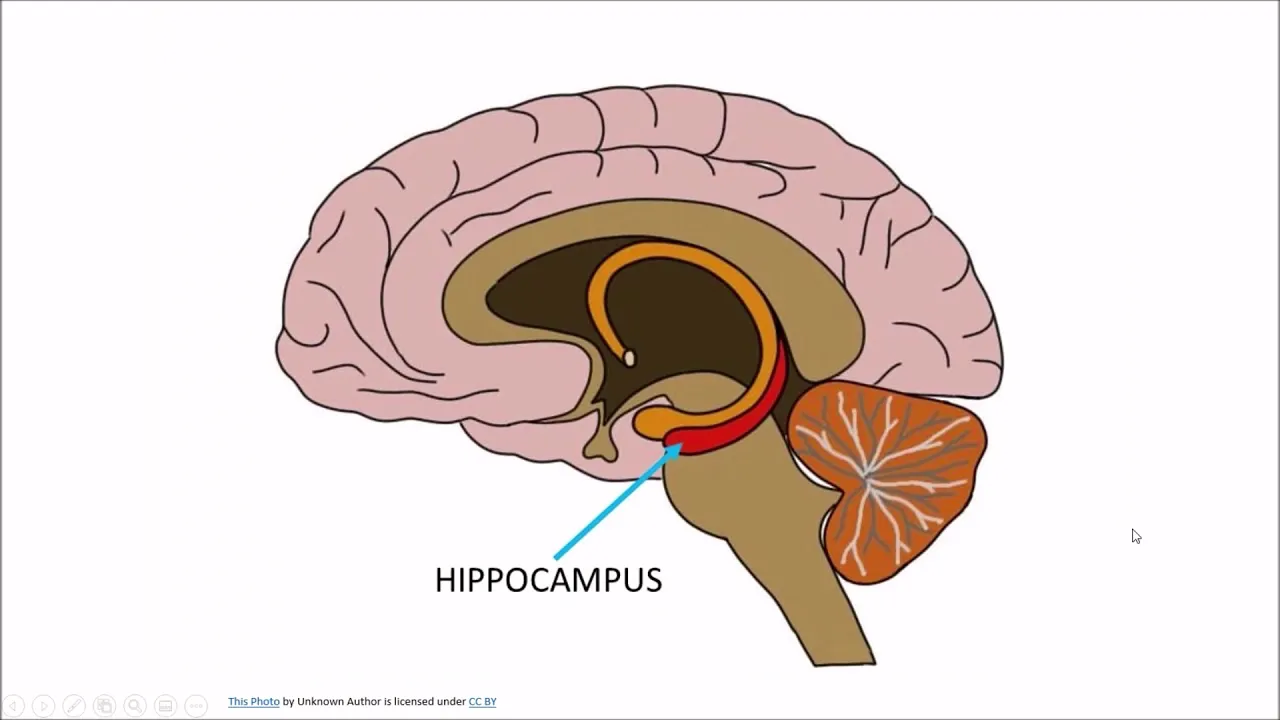
The hippocampus, the brain's primary structure for converting experiences into long-term memories, is in a transitional state during hypnagogia.
Some research suggests that N1 sleep, the hypnagogic stage, is actually associated with increased forgetting rather than memory formation. So, you lived through a genuine hallucination, possibly complete with geometric light shows and a dramatic false sensation of plummeting, and you remember none of it.
Every night, without exception.
Here's what makes this even harder to wrap your head around. The process isn't a clean, sharp line between awake and asleep. It's messy and gradual, and different parts of your brain don't all cross that threshold at the same time.
Sleep researchers describe the onset of sleep as a local phenomenon. Different regions of the cortex can slip into something resembling a sleep state while other regions are still showing waking activity. This is why, if you've ever caught yourself nodding off somewhere embarrassing, a lecture hall, a particularly long meeting, that one cousin's wedding, you sometimes have a vague impression of something happening just before you jolted awake. Your motor cortex might have been more alert than your prefrontal cortex.
Your auditory areas might have still been picking up sounds while your frontal regions had already vacated the premises. The result is that the exact moment of sleep onset, the moment that you'd need to remember in order to remember falling asleep, is genuinely not a single moment. It's a gradual region by region shutdown. By the time the regions responsible for memory formation and self-awareness are going offline, the regions responsible for recording that transition have already stopped working. The observer is the last thing to go, and it goes before it can write anything down. It's a bit like trying to film yourself going to sleep by holding the camera. Eventually, the hand holding the camera relaxes, the camera falls, and the last few frames are the ceiling spinning away as it hits the ground. Whatever happened in the final moments didn't get captured cleanly, and the camera definitely wasn't rolling when things finally went still.
Now, add to all of this the fact that sleep itself doesn't particularly want you to hold on to the experience of falling asleep.
Sleep is, among many other things, a memory consolidation process.
During the night, your brain selectively strengthens certain memories formed during the day while quietly discarding others.
It's doing maintenance, essentially.
Keeping what it thinks will be useful, pruning what it doesn't.
Research has shown that this process is highly selective. Sleep doesn't just blindly reinforce everything. It makes judgments about what's worth keeping.
The experience of transitioning into sleep itself, the dim, drowsy, fading final minutes of consciousness, is, from the brain's perspective, probably not high on the worth-keeping list. It contains no actionable information, no emotional significance, no survival-relevant content. It's just the feeling of lying in the dark, getting progressively hazier.
Your brain is a ruthlessly practical editor, and it has collectively decided, across the entire human species and every night of recorded history, that the experience of falling asleep is content that ends up on the cutting room floor.
Meanwhile, the hippocampus, which, remember, is key to forming new episodic memories, actually shows some interesting activity during the transition into sleep, including what researchers believe might be a kind of rapid memory processing.
But, these aren't memories being formed.
These might be recent memories being tagged, sorted, evaluated.
The hippocampus during sleep onset is the overnight editor going through the day's footage and deciding what makes it into the final cut. And the act of editing is not itself in the movie.
There's also a strange philosophical dimension to all of this that's worth sitting with for a moment. The fact that you can't remember falling asleep means there is a regular nightly gap in your subjective experience that you are completely unaware of.
You experience yourself as a continuous being living through one connected thread of consciousness from when you wake up to when you go to bed. But, that thread is broken every single night and you don't notice because the part of you that would notice is the same part of you that goes offline. You are not present for approximately 8 hours every 24, and you have no felt sense of that absence because feeling the absence of consciousness would itself require consciousness.
The ancient Greeks intuited something like this.
Aristotle described sleep as a state between living and not living.
The Greeks associated sleep with Hypnos, the god of sleep, and his twin brother Thanatos, the god of death.
Not because they thought sleep was dangerous, but because there was something philosophically troubling about the nightly suspension of the self.
You go to sleep, and in some meaningful sense, you stop.
And then something that claims to be you picks up where things left off in the morning with no direct memory of the gap.
We're generally fine with this because we wake up feeling like the same person, with our memories intact, our personality unchanged.
The continuity feels preserved even though there's a discontinuity baked into every night. But, the feeling of continuity and the fact of continuity are not quite the same thing. And the question of what exactly persists through sleep is one of those questions that sounds like philosophy homework until you've had too much caffeine.
Possibly borrowed from your future tired self.
And you're lying in bed at 2:00 a.m.
thinking about it.
So, why can't you remember falling asleep? Because your brain starts shutting down its own recording equipment before it goes fully offline.
The thalamus closes the gate on incoming sensory information, cutting off the data stream the cortex uses to build conscious experience and memory.
The hippocampus shifts away from encoding new long-term memories and begins its nightly maintenance work.
The prefrontal cortex, the region most responsible for self-awareness, for the sense of being a coherent self monitoring its own experience, is among the first regions to drop offline.
And by the time all of that is happening, there is no longer a version of you awake enough to notice any of it.
In between your last clear memory and the alarm going off, there was a whole transitional event. The closing of the thalamic gate, the hypnagogic hallucinations with their geometry and phantom sounds, probably at least one dramatic hypnic jerk, the slow cortical shutdown region by region, a full neurological performance happening without an audience because the audience is simultaneously the performer and the one falling asleep. Every night you essentially vanish.
And you're okay with it. Because you always come back.
The brain decided a long time ago that this was a reasonable trade. 8 hours of absence in exchange for a repaired, consolidated, functional version of yourself the next morning. Memory of the transition was not included in the deal.
And honestly, given how strange that transition actually is, given the geometric hallucinations and the phantom ledge you keep falling off, and the progressive regional shutdown of your own consciousness, maybe it's for the best that you don't remember it. You'd never get any sleep. Word count check.
Approximately 2,980 words. Below the 3,300 word minimum.
Expanding now.
Let's actually take a closer look at the hypnic jerk, because it deserves more attention than it gets, and because it's one of the best examples of your brain being completely unhinged in a way you've normalized. You're lying there, calm, getting drowsy.
Your muscles are beginning to relax, a process your brain is actively initiating as part of sleep preparation.
Heart rate is slowing, breathing is getting shallower, everything is going according to plan, and then your brain panics.
In one of the most spectacular examples of the brain catastrophically misreading a situation, some part of the transitioning nervous system interprets the sudden drop in muscle tension as evidence that the body is falling. Not lying down deliberately, actually falling. And so, it fires a rapid, uncontrolled emergency signal through the motor system telling every major muscle group to please catch yourself immediately. Hence, the jerk. Hence, the gasping. Hence, the extremely undignified flailing that has startled countless sleeping partners throughout all of human history.
One popular theory, as mentioned, is that this is a primitive reflex, a vestige from ancestors who slept in trees, where sudden muscular relaxation really would have been a problem, and a reflexive grip and grab response would have been genuinely useful. Whether that's accurate or not, the reflex clearly never got the memo that humans moved inside and started sleeping in beds on flat ground. It persists, it fires, and it makes you look absolutely ridiculous in front of anyone who happens to be watching. And here's the twist, even when the hypnic jerk wakes you up, even when you snap back to full awareness because your body just threw itself, you usually don't remember what was happening right before.
The hypnagogic state that preceded it, whatever images or sounds your brain was hallucinating in that strange twilight zone, has already been lost. The jerk wakes you up, you're briefly confused, maybe slightly embarrassed, and within a minute or two you're drifting off again.
Straight back into the same process you have absolutely no memory of going through moments before. The brain is doing the same thing over and over and storing none of it.
There's another angle to this that's worth exploring. What happens when people get woken up during different stages of sleep onset and are asked to report what they were experiencing.
Because sleep researchers have actually done this in labs for decades and the results are illuminating.
When you wake someone up during the early hypnagogic phase, the very beginning of stage one sleep, they often report fragmented, disconnected imagery.
Single images like a face, a color, a shape, with no narrative. Like a PowerPoint presentation built by someone who has never seen a PowerPoint presentation. No story, no continuity, just isolated visual fragments. A little deeper in and the reports become stranger. Scenes start to acquire more detail.
There might be a half-formed sense of place.
Sounds appear.
Sometimes there's a fleeting awareness of a logical structure.
Like the beginning of a dream plot.
But it dissolves almost immediately when the person is woken up.
Ask them to describe it 30 seconds later and it's already slipping away.
Ask them a minute later and it's gone completely.
This is the opposite of how we usually think about dreams.
With proper REM sleep dreams, the ones deeper in the night, there's at least a chance you'll remember them, especially if you wake up during or immediately after.
The hypnagogic experiences at sleep onset are so fragile, so loosely encoded, that they essentially exist only in the moment and then evaporate.
They are in some sense the least sticky memories the human brain ever produces, which is saying something given how bad we are at remembering things in general.
What this means is that you have a nightly experience that is psychedelic, bizarre, and entirely your own. And you will almost certainly carry zero evidence of it into the morning.
Night after night, your brain produces a private light show and then immediately destroys the tape. One more layer here and then we can tie this all together.
There's a concept in sleep science sometimes called sleep state misperception or paradoxical insomnia.
It describes people who are convinced they barely slept, who wake up certain they were awake for most of the night despite objective measurements from sleep labs showing they were asleep for perfectly normal amounts of time.
And while this sounds like the brain just being unreliable, which it very much is, it points at something important. Our subjective sense of being awake or asleep is genuinely not trustworthy.
Some people swear they heard every minute of the night ticking by. They insist they were conscious lying there unable to sleep. But the EEG, the brainwave measurement that objectively shows sleep stages, says otherwise.
They were in stage one, stage two, maybe even deeper while their subjective experience was one of continued wakefulness.
The brain can be in a measurable sleep state while still telling the conscious mind, or what's left of it, "We're definitely awake. This is fine. We're not asleep at all." Which means the question, "When did you fall asleep?"
may not even have a clean answer, not just philosophically, but neurologically. Because your brain's state and your brain's story about its state can come apart. The machinery can go into sleep mode while the little narrator in your head is still running its commentary, insisting it's awake.
Until presumably even the narrator quietly steps away from the microphone, and the commentary just stops.
And you don't notice because you're asleep. So, here's the complete picture. You can't remember falling asleep because it involves a cascading, overlapping series of processes that collectively destroy the conditions necessary for memory formation before you're even unconscious. Adenosine and melatonin and a cascade of neurochemistry tip the brain away from wakefulness.
The hypothalamus flips the arousal system toward off.
The thalamus closes the gate on sensory input, cutting off the data stream to the cortex.
The hippocampus shifts away from encoding new experiences.
The prefrontal cortex, the last, most executive part of you, the part that maintains self-awareness and monitors what's happening, powers down.
And somewhere in all of that, the part of you that could record the experience stops existing before the experience fully ends.
The hypnagogic hallucinations come and go unremembered. The hypnic jerk fires and fades. The brain waves slow from alert beta through relaxed alpha into drowsy theta.
And the transition happens without a witness. By the time you're fully asleep, every system that would have been needed to document the process of getting there has already been shut down. It's one of those things that seems like a flaw, a gap in the system, an inexplicable absence, but it's actually the system working exactly as designed.
Your brain isn't failing to capture the moment you fall asleep. It's prioritizing sleep over documentation.
And every morning, you pick up where you left off, feeling like a continuous self who simply went to sleep and woke up with no awareness of the nightly suspension of consciousness, the brief hallucinations, the memory wipe, or the regional shutdown and restart of your own experience. You fall asleep thousands of times in a life. You'll never remember a single one. And somehow that's completely fine.
Related Videos
8:08
Neuroscience
What is neurodegeneration?
TheSheekeyScienceShow
3K views•2019-08-19

57:35
Neuroscience
IPL - Ruth Empson "Mind the Gap"
otagouniversity
251 views•2019-07-08

14:01
Neuroscience
How our body shapes our mind | Pancho Tolchinsky | TEDxNapoli
TEDx
2K views•2019-12-05

1:00:02
Neuroscience
Impact of Early Life Deprivation Danielle Stolzenberg Marcus Pembrey Bruce McEwen
uctv
4K views•2019-12-01

10:32
Neuroscience
β-Caryophyllene for Parkinson’s: Protecting Dopamine & Easing Symptoms
parkinsonsdiseaseeducation
6K views•2025-08-09

20:44
Neuroscience
New Insights from Inside the Brain with Rodrigo Braga, PhD
NUFeinbergMed
421 views•2025-04-14
9:57
Neuroscience
Highlights for dystonia • 2025 MDS Congress
movedisorder
145 views•2025-10-27

58:17
Neuroscience
Animal Welfare Synergy Series: Dr Tom Smulders on hippocampal neurogenesis
costactionlift
135 views•2025-07-14
Trending

13:38
Law
WOW! Judge TURNS THE TABLES on Trump in His OWN $10B LAWSUIT!!!
MeidasTouch
197K views•2026-07-23

13:25
Business
Playstation NO DISC/NO BUY Fight Is Over...
DavidJaffeGames
4K views•2026-07-23

22:40
Business
Steam and Xbox Just Dropped The Hammer On PlayStation
OhNoItsAlexx
9K views•2026-07-23

16:52
Anthropology
Americans Confused in Australia for 17 Minutes Straight
IWrocker
17K views•2026-07-23