Walker masterfully simplifies complex neuroscience into a persuasive argument for sleep as a fundamental pillar of cognitive and emotional health. His insights effectively turn the mystery of dreaming into a practical guide for mental restoration and creativity.
Install our extension to search inside any video instantly.
The Science of Sleep, with Matt Walker
Added:There's the value of sleep as a restorative [music] force on our bodies. What is the value of dreaming?
>> Dreaming provides a form of [music] informationational alchemy. It's like group therapy for memories. Dream sleep gathers all of these sort of people and it forces you to speak to the [music] people at the back of the room that you don't think you've got any association with whatsoever. Because when you start to fuse things together that shouldn't normally go together, they cause a marked [music] advance in evolutionary fitness. That sounds like the basis of biological creativity. And so [music] that's one of the functions of dreaming.
>> Well, it would have to be, especially when you have associations [music] like a zebra in women's lingerie smoking a cigar while drinking a martini. Not that I had that dream. [laughter] >> Was it a friend?
>> This is Star Talk special edition, which means I got Gary O'Reilly here.
>> Hi, Neil.
>> All right. At Chuck. Nice, baby.
>> That's right. And we've been calling you Lord of Nice. Not just Lord Nice.
>> The Lord of Nice.
>> Lord of Nice. Very nice. So Gary, we're talking about sleep today, I'm I'm told.
Which is People spend like a third of their life doing just that.
>> I know. If you're lucky.
>> If you're lucky.
>> If you're lucky.
>> If you don't have kids, you spend a third.
>> There [laughter] you go. I I I mean, I sleep like absolute dog crap. So >> I don't know what that means, but >> But do you can you guess?
>> I haven't checked how much dog crap sleeps. So, what do you got for the show today?
>> All right. Sleep, as we've decided, it's inescapable part of our daily lives. Um, it's weird. It can transport us into a psychotic state. It can even leave us experiencing time dilation. Uh, it can heal us. It's um Anyway, the [clears throat] last time we had a sleep expert on, our audience were very, very impressed. And so it's been a couple of years in the making, but we have brought him back along with Neil, our audience's curiosity. So we're going to have some questions from our audience tagged on to our conversation.
>> Nice, nice, nice. Okay.
>> Yeah.
>> So let us introduce our returning champion, [laughter] sleep champion, our returning guest, Professor Matt Walker.
Matt, welcome back to Star Talk.
>> It's lovely to be back, gents. Thank you so much for having me.
>> Excellent. And we last we caught up with you, you were at UC Berkeley just tearing down the house and but you've got new digs. What's the latest with you?
>> I have I have shifted. I am now a professor of neuroscience and biomedical engineering at UT Dallas at the Center for Brain Health. And here I'm starting a new center for advanced brain performance and sleep innovation. So I thought I would try and mix it up a little bit. And uh >> Wait, wait, wait. advanced brain performance while you're sleeping or is that a separate thing from sleeping?
>> It's 24hour. So, we're going to try to augment the human brain both when we are wide awake as well as when we are sleeping.
>> Okay, now you're spooking me out here.
[laughter] >> Look at that.
>> The word augment, I think, is what spooks me a little bit.
>> He's going to make sleep zombies.
[laughter] >> Don't we have those already? Exactly.
>> Uh you you've also been a TED talker and And you've got the podcast, the Matt Walker podcast. You couldn't be a little more creative than that.
>> I know. It took years to come to that creative decision. [laughter] I mean, there was the the marketing, the the research dollar spent just to come up with that task, you know? I mean, it was I thought it was borderline genius.
There's so much going so much going on in that title, isn't there? Really, the depth of it, which which reflects my own personality. I am um I am desperately um shallow, but I have a very deep surface.
>> There you go.
>> Okay.
>> I'm desperately shallow with a deep surface.
>> See what he did that I like.
>> So So what we want to know is what you know it's been a couple of years. What's some new sleep research over those couple of years? And what a lingering question that I've just always had is why do we need sleep at all? Is it is it too early in the show to start off with that question? Well, you went there.
>> I did. I kind of went [laughter] there because I I think about aliens. If they visit us and then you say, "Excuse me, Mr. Alien. I have to lie down horizontally and go semicomaos for onethird of Earth's rotation. I'll be back to you." The alien might just look at you like, "What the hell is wrong with you?" And so, Could you reflect on this so that when the alien comes, >> I'll have an excuse?
>> [laughter] >> arguably the best question I've ever received in my entire career. Let me try. So I but I love the way that you frame it because imagine the birth of your first child and the doctor comes into the room. They say, "Congratulations, healthy baby girl.
Everything looks good. We've done all of the tests." And they're walking out the room and just before they exit, they turn around to you, maybe like the alien, and they say, "There is just one thing though. From this moment forward and for the rest of your child's entire life, they are going to lapse into a state of non-conciousness.
It's going to look like death. But don't worry, it's reversible. And whilst their body lies still, their mind will be filled with bizarre hallucinogenic experiences.
And we have absolutely no idea why this happens. Good luck. Take care. All the best. [laughter] >> Well, I my response would be, I'll have what the baby's having.
Yeah, sign me up for that. That [laughter] sounds really damn good.
>> But it's it's so perplexing because from a evolutionary perspective, sleep is the most idiotic of all behaviors. You're not finding a mate. You're not reproducing. You're not foraging for food. You're not caring for your young.
And you're vulnerable to predation. On any one of those five grounds, sleep should have been strongly selected against in the course of evolution unless it serves an absolutely vital set of functions. And 50 years ago to your question, we used to say, well, why do we sleep? And the best answer we had was we sleep to cure sleepiness, >> which is the idiotic equivalent of saying that we eat to cure hunger. No, you eat for all sorts of physiological reasons. Now 50 years later based on the wealth of the data we've had to upend the question and ask is there any major physiological system of your body or is there any operation of your mind that isn't wonderfully enhanced by sleep when you get it or demonstrabably impaired when you don't get enough and so far the answer seems to be no and we can dive into the different functions but I would say to your first part of the question what's kind of fresh and new or just amazing I would say two things. The first we've been looking at what we call genetic short sleepers. So these are people who based on the evidence can get away with as little as about 5 to 6 hours of sleep and show no impairment in their brain or their body. Whereas everyone else it's a nose dive like a dot into the ground in terms of functions.
>> I fear I may be one of those by the way Matt [laughter] because I'm completely content with five and a half hours of sleep. Yeah, but you can also sleep anywhere at any time.
>> That's true.
>> Yeah.
>> Ah, that's a that's a giveaway actually.
>> Don't keep describing because then he's going to have a word for it and I worry when anytime they have a word for something I do. [laughter] >> It's called a Tyson nap.
>> Keep going. Yeah, I was going to say we call it chronic uh sleep deprivation, but I mean if you can actually fall asleep rapidly almost anywhere.
Sometimes we wonder is there a lingering sleep debt somewhere in the system where you have such a pressure for sleep that literally you can sleep you know within a heartbeat that tends to warn bring a few sort of warning bells but but I mean most people like you Neil would say I wonder if I'm one of those sleepers just to put it in context statistically based on the evidence you're more likely to be struck by lightning in your lifetime than you are to be one of these genetic short sleepers the probability of which is is very small.
>> Have you been struck by lightning?
>> No, he didn't say both would happen to you. He's comparing two separate statistical.
>> Maybe that's the progression. You get struck by lightning and then you can't go to sleep anymore. [laughter] >> That's it.
>> It should that is not what the man said.
Okay, Matt, continue.
>> That that's what we call augment augmenting the human brain with a bolt of lightning.
>> And there's [clears throat] at least one movie on that phenomenon with uh John Travolta.
>> Yes. He's hit by lightning and he turns completely brilliant.
>> Get out.
>> And he can predict earthquakes and move stuff with his hands and things.
>> But we're actually just coming back. So we're doing a mini version of that.
We've actually developed um a a headband which inserts a small amount of voltage into the brain. And it's so small you typically don't feel it, but it has a measurable impact on your brain waves.
And what we've managed to do is create a stimulation um protocol where you just wear it for 10 minutes before bed and it's like a child on a swing. They're moving their feet and nothing happens. But if you start pushing them and giving them some momentum, at some point you can stop pushing them and they keep swinging. And that's what we're doing with the brain.
We're sort of singing in time with your electrical brain waves and we're amplifying those brain waves almost.
It's almost like um electrically fertilizing the soil on your prefrontal cortex so that when you go into sleep, you germinate more powerful deep slow brain waves. So it's it's quite far away from John Travolta's experience in terms of the voltage magnitude but not dissimilar. But coming back to the short sleepers, sorry I keep losing track.
>> What this tells us is something absolutely remarkable. Not just that this exists and there's a genetic um modification for it. But it means that somewhere along the way, mother nature has figured out how to zip file sleep.
she's been able to essentially compress eight >> down into six. And if we can start to find out the mechanisms and when digging into this now, we think you've got some good understanding as to how these genetic sort of mutants are able to accomplish this shorter sleep. What that means is that maybe think about you know a world of crisper and gene editing.
Could it be that at some point everyone selects to be a genetic short sleeper?
>> Let me ask you this Matt based on what you just said. Is it possible that that the genetic anomaly, this mutation, >> Stop calling me a mutation. [laughter] >> Is it possible that the mutant Ty the Tyson mutant? [laughter] >> The Tyson mutant gene.
>> You turned him into an X-Man. [laughter] >> Like the most obscure X-Man ever. Tyson, what's your power? WATCH.
I JUST slept eight hours. Okay. Um, okay.
>> I'm so cruel to you. I am so sorry, ma'am. I got no respect.
>> Okay.
>> Is it possible that when you find this anomaly that um you may not be able to make that a reality for every other person because sometimes genes are expressed in sets, not just one particular gene, especially when it comes to mutations like that.
>> Yeah. So the the nice thing is that we've been able to identify exactly which specific gene. In fact, there are actually right now there are four of these genetic shorts sleeping genes. If you want to select from the sort of catalog menu that I'm sure is going to be on offer anytime in the next 10 years, maybe go for what's called the DEC 2 gene, DEC2 gene. Um it's one of the shorter sleeping genes uh genetic mutations. Um, but yes, you don't have to run into that problem because of the selectivity and specificity of the gene identified. You can go right in there.
>> Are you serious?
>> I mean, I'm trying to listen. [laughter] >> Hey, Matt, this all I'm saying. I'mma email you offline. I need in on this.
[laughter] >> This I mean, do you know how much money you're sitting on?
>> Like, people people don't like you don't need stimulants. you don't need like you're actually getting what you need in the amount of time that you're supposed to get it. You just shorten what the brain the time the brain needs to regenerate for that coming day. That's insane.
>> Exactly. Isn't that amazing as a concept?
>> Yeah, absolutely. Do we take this to the nth degree and say, well, we can reprogram our brains to need no sleep at all.
>> Is that is this the sort of is that too far out or is that achievable?
>> That's too weird. It's interesting concept.
>> Would you want to stay up 24 hours a day, 7 days a week if you could? Now, believe me, I used to do meth, so I've done it. But thank you for laughing at that, Math, cuz these two are just as silent as church mouses right now.
[laughter] >> Tumble weed. I see them across the screen right now.
>> We're not laughing at your meth jokes, Chuck. I'm sorry.
>> He's in Texas now, so he gets to reference tumble weed. You see, that's how that works. [laughter] >> Um, but would I want to? I don't know.
There's something magical about the state of a deep sense of relaxation and restoration that I feel when I come out of deep sleep, but also dreaming. I would be so sad to lose the optionality of dreaming.
>> So, I don't think I would.
>> These days, we're used to getting things delivered on demand. Groceries, a new gadget, or the latest book, expanding your view of the universe. And now you can add T-Mobile 5G home internet to that list. Just order from T-Mobile and enjoy same day delivery with Door Dash.
And you can set it up yourself in about 15 minutes. No advanced engineering degree required. That means more time doing the things you actually enjoy like streaming a space documentary or going down a rabbit hole about exoplanets, asteroids, or whatever's pulling your curiosity. And those online explorations are a lot easier with the fastest 5G home internet. So, if you're moving into a new place or just ready to upgrade your connection to something a little more advanced, visit t-mobile.com/home internet to check availability and get your home internet delivered today. Same day delivery for most internet eligible customers. See if it's an option during checkout. fastest according to UCLA speed test intelligence data second half 2025.
All rights reserved.
>> Before we go to Q&A because with this is a this is Aquarius episode, right?
>> Yes, it is.
>> Yeah.
>> Yes, it is from our Patreon members from the Patreon people >> and because they you know they're thinking about sleep. So, uh there's the value of sleep as a restorative force on our bodies and minds perhaps. But then what is the value of dreaming?
And and is that any different from daydreaming?
>> Ooh, yes it is. Based on the architecture of the based on the patterns of brain activity, they're not quite the same thing. But to your first part of the question, what does dreaming do? And we have to be clear, what does dreaming do above and beyond the stage of sleep that it comes from? So we have two main types of sleep, non-REM sleep and REM sleep. And most dreaming comes from REM sleep or rapid eye movement sleep.
>> And it's not just whether you have REM sleep. REM sleep has a series of different physiological functions. But dreaming on top of REM sleep also has selective benefits. And there are at least two. The first is that dreaming provides a form of informationational alchemy which is that every morning when you wake up having gone through dreaming you wake up with a revised mindwide web of associations because it's during dreaming that we take all of the information that we've recently learned and we collide it with this back catalog of information that we've stored up across a lifetime and we don't start to make the obvious connections during dreaming. That is what we do when we're awake. Dreaming is biased towards building the more distant non-obvious associations.
>> So the whole thing is they say uh sleep on it.
>> Yeah.
>> Right.
>> That's where you get that phrase from.
Sleep on it.
>> Correct. How many times has someone ever said to you, you know, Neil, you should really stay awake on a problem.
>> Right.
>> No one tells you that. No one says that.
>> Tell you to sleep on a problem. And that's exactly one of the functions.
It's almost it's like group therapy for memories. Everyone gets a name badge and then Dream Sleep gathers all of these sort of people and it forces you to speak to the people at the back of the room that you don't think you've got any association with whatsoever. But when you do, you find it's a distant non-obvious connection >> because when you start to fuse things together that shouldn't normally go together, but when they do, they cause a marked advance in evolutionary fitness.
That sounds like the basis of biological creativity.
>> And so that's one of the functions of >> of dreaming. Well, it would have to be, especially when you have associations like a zebra and women's lingerie smoking a cigar while drinking a martini. How do you actually relate that to anything in your life?
>> Tell me that.
>> Not that I had that dream. [laughter] >> Was it a friend that had a friend that a friend of yours a friend of yours told you? [laughter] >> You know, there's there's very few sleep questions that have ever left me dumbfounded. [laughter] >> However, >> so let's get to the questions. We have a bunch of questions here with Matt's explanation about dreaming then to to take sleep out of our lives completely wouldn't make any sense at all would it?
>> No. Especially because and I mentioned there was a the second function is perhaps even more relevant to to that want of keeping it which is that dreaming provides a form of overnight therapy. Dreaming is emotional first aid and it's during dreaming at night when we take difficult sometimes painful experiences and dreaming acts like a nocturnal soothing balm and it just takes the sharp edges off those painful difficult um memories so that you come back the next day and you feel better about that experience.
>> I got one I tell you what happened to me the night of September 11th.
>> Yeah.
>> 2001. four blocks from the collapse of the towers. And so I have to get my family out.
>> I was going to say you were still you Go ahead.
>> No, no, it was it was it was it was traumatic. I I maintained composure, >> but it was traumatic. I had to get my two kids. One is 9 months old, one is four and a half. And I collect my wife in Midtown cuz we live downtown. And and we went up to my parents in Westchester, New York. Okay. Very safe distance from And they were running trains in one direction. Yeah. Yeah, >> they weren't taking people back in.
Okay, so the reason why I'm saying this is at the end of the day, >> I went to sleep and I woke up 11 hours later.
>> Wow.
>> And I I was astonished cuz it didn't feel like 11 hours, >> but I want I'm I'm echoing your point.
My brain had to process what the hell just happened.
>> Exactly. And that was more than a day's worth of content, I would I would say.
[clears throat] >> And so is it just the easy explanation here that my brain wasn't ready for me to wake up yet? It was still processing uh all this disparit content that didn't happen in a typical day.
>> We see this time and time again. Whether it's whether you're learning vast amounts of information that requires memory consolidation and the cementing of new information into the architecture of the brain or that you've had difficult emotional experiences, there is a selective drive and a demand from your brain and your body to get more sleep to see if it can reconcile the weight of the kind of burden of life that you've given it that prior day. And so it it fits exactly, I think, with with your experience. You know there's a beautiful an American entrepreneur E.
Joseph Kman had a wonderful phrase. He once said that the best bridge between despair and hope is a good night of sleep.
>> And I would say that in the past >> 20 years of studying uh sleep and mental health, we've not been able to discover a single psychiatric condition in which sleep is normal. And I think that tells me everything that I need to know about the intimate relationship between your sleep health, >> your body knows, >> your mental health.
>> You're saying your body knows.
>> That explains a lot about me. Thank you, Matt. [laughter] >> You're very welcome.
>> I'm understanding myself much better now.
>> A therapy session here.
>> Should we dive into send us the bill for that? Let's get some some Patreon questions.
>> Okay, Matt, sit up straight. Here we go.
Uh, Ronald, great name. Ronald Nigel Mc Williams >> from Selma, Alabama. Thank you for what you do. You're welcome. Thank you for being one of our Patreon uh group. Let's put the glass on. If the brain can generate a fully immersive reality during dreams without external input, what does that reveal about waking consciousness? Are dreams just neural noise? Or do they expose that what we call reality is always a controlled construction of the brain with sleep revealing the machinery more clearly?
>> That's quite a deep one. That's a big question.
>> Just just so I understand the question.
Is it that the brain is processing your awake state?
>> I was going to say your woke state, but that's that's got baggage today. Okay.
[laughter] >> Your awakened state >> and does your brain know that that is an objective reality versus what it dreams about? Is that is that where he's trying to get at?
>> I think what he's saying is that no, all of reality is a perception of our brain.
So when we go to sleep, >> does that kind of perceptive reality then just become neural noise or does it serve a purpose to reveal the machinery more clearly?
>> That was good. That was good. Great >> question. Wonderful synopsis. Um, I would say it what this question to me reveals is an uncomfortable truth about your dreams, which is that your brain can build an entire universe. So, space, time, faces, emotions, memory, narrative, coherent out of nothing.
>> There's no light hitting your eyes.
There's no sound. There's no world.
You're cut off from reality. But in the dark of this thing that we call our skull, it is manufacturing a fully convincing reality and it does it every single night. And that has an implication because if the brain can do it when essentially the doors are closed, what makes you so sure that what you experience when your eyes are open?
>> Don't mess with us like that now. Stop messing with us.
>> [laughter] >> I'm I'm I'm going to have to go further because the the reality is it actually isn't any different than that. So what we call reality right now is also a construction. It's a model that your brain is building behind your eyes. And the only difference is that the waking perception is it's almost like a controlled hallucination. One that's essentially tethered to time second by second by second. And that information is streaming from your senses. That's the only difference between your waking consciousness and your dreaming consc consciousness.
>> My name is Neo. [laughter] >> Yeah, you're you're coming in and out of the matrix there, just in case you didn't know.
>> Programs, hacking programs. Yes. Um but no I so it's a wonderful demonstration that I think there's there are these hard boundaries that we think of that are actually much more porous than we imagined that there's this thing called the dreaming state and the waking state.
They're very similar in some ways except that dreaming has a feature to it that really gives it away which is that you have no logical rational reasoning or control. And that's where you start to believe things which are not there. So you hallucinate. You are delusional. You get confused about time, place, and person. You're suffering from disorientation. And then how wonderful.
You wake up in the morning and you forget most if not all of that dream experience. So you're suffering from amnesia.
>> If you were to experience any one of those five things when you're awake, you would be seeking some psychological treatment. But for reasons that we now understand based on the patterns of brain activity when you go into dreaming, this seems to be a normal biological and psychological process.
And the principal reason that dreams are the way that they are is because the thing that makes us most human, which is called the prefrontal cortex. That part of the brain, unlike the rest of the brain, the brain lights up when you go into REM sleep. In fact, some parts of your brain are 30% more active than when you're awake, which is stunning, except for the prefrontal cortex that goes offline. So now you have these emotional centers, these um memory centers, the visual centers, the motoric centers of the brain. They're all active, but the kind of the prison guards, they've left the building and the prisoners are running a mock. And that's the beauty of dream sleep. There is no sort of CEO in control with top- down regulation.
There's no logical rational control.
>> The inmates are running the asylum.
>> Basically, they that's exactly what it is. And we believe that there's good utility to that. That's where you get kind of the loosey goosey everything starts to get connected together in these wacky strange ways. No wonder you can solve problems in your sleep in a way that you can't with this very rigid way of thinking that is the waking state. M >> wow that is >> now you've scared me that's [laughter] >> however that's >> so your dreams were the world's first psychologist first of all right >> they were exactly it is your therapist >> your therapist in a therapist >> inner therapist >> wow what you just said there Matt actually answered Aaron Ganon's question as well so Aaron thank you for your question so let's move on to Sam who says uh greetings Dr. Tyson Lord Nice Gary and Mr. Walker. My name is Sam and I'm writing to you from the home of Casey Jones, Jackson, Tennessee.
>> Is that right?
>> Ah, look at that. He says, "I recently read a study by Laura Lewis from the Boston University about uh cerebral spinal fluid washing the brain during sleep."
>> My question is, Dr. longer. Could the waves of cerebral spinal fluid that wash through the brain during sleep actually be generating the dream state rather than the other way around? And if so, what does that mean for what we think dreams are for? Thank you for your time and consideration. Live long and prosper. Well, thank you, Sam, you big nerd. Um, [laughter] >> all right. Well, I mean just just generally what is this cerebral spinal fluid and its relation to sleep because Sam has already read the study. We have not. So maybe if you start there uh we'll be able to unfold an answer.
>> Does it have any validity?
>> Well that's that that you know whatever you know about it does it have >> an immense amount of valid. I think it's one of the most stunning new discoveries in the field of sleep. It is we used to think that the brain didn't have its own cleansing system. The body did which is called the lymphatic system and we've known that for several centuries in fact >> but then a a scientist at the University of Rochester making Nedagard made an incredible discovery working in mice.
First she found that the brain does have a cleansing system. It's called the glimpmphatic system named after the cells that make it up called gleal cells. Oh, the second thing that she discovered is that this cleansing system which uses cerebral spinal fluid, this sort of it's almost like the WD40 of of the brain, it uses the cerebral sp terrible. So, it uses cerebral spinal fluid to essentially flush out all of the metabolic detritis that builds up during the waking day. And that was her second discovery. This lymphatic washing cycle is not switched on in high flow volume across the 24-hour period. It's only when you go into sleep and specifically deep sleep and this will come back to Sam's question. It's only when you go into deep sleep that this cleansing system kicks into high gear.
So it's good night sleep clean. It's a power cleanse for the brain. The final thing that she discovered which makes it really relevant for disease states is that two of the pieces of metabolic detritis that the lymphatic system cleanses when you go into deep sleep are beta amaloid and ta protein. These are the two underlying culprits of Alzheimer's disease. And it explained why for now over 10 years and we done some of these early studies, we were seeing a very strong relationship between people who were getting less than 6 hours of sleep across the lifespan and a marketkedly higher risk for developing Alzheimer's. But it was an association in search of a mechanistic causal answer. and she discovered it. And we've now actually developed a silent fMRI science MRI scanning uh protocol and we're having people sleep inside the MRI scanner and we can now see this pulsing cleansing system in real time.
>> Wow.
>> As people are sleeping in the scan, it's absolutely beautiful. But it actually comes back to Sam's question though, which is it turns out that dreaming comes from principally a different stage of sleep. It comes from rapid eye movement sleep. Whereas this lymphatic system happens during deep nonREM sleep.
So the two are disconnected.
>> But while we're here, cuz we keep referencing stages of sleep. I think it would be nice to have a baseline and you give us the actual stages of sleep and how many cycles would that happen throughout the night, these stages themselves. So, when everyone's head hits the pillow tonight, you're going to go on this incredible roller coaster ride in and out of different stages of sleep. And as I mentioned, we have two main types of sleep. NonREM sleep and REM sleep. Now, nonREM sleep has been further subdivided into four separate stages um unimaginatively called stages one through four [laughter] um increasing increasing in their depth. So stages three and four, that's that really deep restorative sleep. So what happens is that when you fall asleep, you go into the light stages of sleep and then you go down into the deeper stages of nonREM sleep and after about 70 or 80 minutes, you'll start to rise back up and you'll pop up and you'll have a short REM sleep period and then you go down again down into nonREM sleep and then up into REM sleep. And you do that on average about 90 minutes is each cycle's length. Damn. What changes however is the ratio of non-REM to REM within that 90inut cycle as you move across the night. And what I mean by that is in the first half of the night, the majority of those 90-minute cycles are comprised of lots of deep non-REM sleep and very little REM sleep. But as you push through to the second half of the night, that teeter totter balance that shifts and now more of that 90minut cycle is comprised of REM sleep, dreaming sleep, and very little deep sleep. And that's the reason if you've been woken up from a phone call at sort of 1:00 in the morning, you almost never remember a dream. But if it's late in the morning, sort of 5 6 7 in the morning and you get woken up, typically that's when you'll remember a dream because you're moving into the REM sleepri phase of your night of sleep.
Does that make some sense?
>> Absolutely.
>> So, by the way, I discovered these cycles when I was in college and I was studying my sleep cycles, right?
>> And so 90 minutes is a bang-on unit of time for me. If I if I don't have time to do five and a half hours, I can 90 minutes. I don't even need an alarm.
I go to sleep and come back out.
Correct. And I have several of these throughout the night which are hugely useful when you when youing the times of day where you got to get stuff done versus when you're going to go to sleep.
>> But I would say though to your point, Neil, I I love the fact that you you can almost get that quartzlike precision.
There is a bit of a a myth though that I say on average it's 90 minutes. It can be as little as 70 minutes and it can be as long as 120 minutes depending on who you're studying.
>> Got it. I'm not 120. If I If I wake up after 120, I'm groggy. But if I wake up after 90, I'm not.
>> Yeah. Perfect. Because you've gone down into the deep sleep.
>> I discover this empirically is my is my point. Yeah.
>> Yeah. You know how I did it? Did I Did I say this the last time? I don't know.
>> Are we going back to my meth? No, no, no. You don't. So what I did was I drank like, you know, half a gallon of water.
>> Oh, that's the Native American alarm clock.
>> And then I went to sleep and then throughout the night I woke up to go pee, >> but my body woke itself up to go pee.
And those were bang on to the cycles when I was when I'm in deep REM, it doesn't wake me up. So that's I I made note of those timings >> and then that's how I used to explain.
So that's just me. I don't know. I'm I'm I'm the one who was hit by lightning apparently.
>> Well, I've done the same thing. Um except um it's just my failing prostate.
>> Oh, [laughter] >> did you need to share?
>> No. What I love about it is you spoke a little bit about if I go past that 90minute mark and I then wake an hour and >> it doesn't work.
>> 45 minutes, it doesn't work.
>> It doesn't work >> because you've as you said, we've gone down to that other cycle. And when you come out of deep nonREM sleep, that's very unusual. Your brain never naturally does that. And what happens is that when you go into deep sleep, a large amount of cerebral space, particularly your frontal cortex and other areas, they all go power down.
>> And it's almost as though when you come out of deep non-REM sleep, you go, you try to go from the basement to the penthouse and you get stuck on the 13th floor and you get this groggginess. It's almost like a sleep hangover effect.
>> And it's it's just and it's what we call sleep inertia. And when you come out of deep sleep, it takes much longer for the brain like a classic car engine for example. It just needs time to gradually warm up temperature which uses I was just about to go you I love it you know sympathico [laughter] >> well so >> you and me Neil >> the value of this to me is often I take very early airplane flights so I got to leave home at 4 to catch a 6:00 plane if I'm up till midnight or something or if I'm working uh I can combine two one and a half hours that's 3 hours I'm not going to go to sleep at midnight and wake up at 4, >> right?
>> Because that's out of out of sync, >> right? So, I will stay up another hour >> so that I will wake up and correct and you'll come out of the cycle at the right time.
>> At the right time. And so, sometimes it's staying up another 15 minutes or 20 minutes or a half hour. And so, this is this works with precision. Thank you.
What's the term use? Quartz. Quartz precision. I love that.
>> It's like precision. But I would say that people sort of have this you've got to be a bit careful for these kind of gadgets that say I'll wake you up at the perfect moment because they all assume the average 90minute cycle. But the problem is no one is the average.
>> Well, I'm the average but >> literally well [laughter] except except the sublimely extraordinary but yet average.
[laughter] Okay.
>> Feel better now.
>> Next question.
>> All right. We got Kenny McFarland Mfarlain. uh to be really precious about pronunciation. Kenny's from Washington DC and thank you Kenny for sharing your own personal story here. Um we're going to get the thoughts of Matt. Uh as a kid I experienced a number of parasomnas, sleepwalking, sleep terrors, nightmare disorders, sleep paralysis.
>> Still some occur. Why do we grow out of these conditions? Why do some seem to go away and others continue to be consistent? Does our brain chemistry change and that allows for them to cease? Or better, what does experiencing parisomnas tell us about our brain chemistry? Uh, thanks for taking the question. You're welcome. And he cites himself as an all too lucid dreamer.
>> Ooh, wow.
>> So much going on in the question. Okay, I'll try and be efficient, but what Keny's describing are the parasomia. So these are parismas. These are things that happen sort of in and around sleep, but aren't quite sleep itself. So sleepwalking, sleepalking, night terrors. People often think that if someone is sleepwalking or they go over to the refrigerator, they open the door, they kind of have some that they must be dreaming and they're just acting out their dreams. That's actually not the case. When you have a sleepwalking or sleepalking event, sleep eating event, what's happening is that your brain is in the deepest stages of nonREM sleep.
And we can record it and we can see people walking around enacting these what seem like complex behaviors but the brain waves look like deep slow brainwave sleep. And what they're doing is simply acting out fairly routinized just simple kind of more sort of basic uh motor behaviors. And if you wake people up and typically you shouldn't you just sort of make sure that they're safe but just let them go through it.
But if you wake them up and you say, "What was going through your mind just before I woke you up?" And they'll say, "Nothing. My mind was blank." And the reason is because they were in deep dreamless sleep. They weren't having a dream.
>> So So going to the refrigerator is different from asking to start a game of chess, right? Well, you said that they they tend to do routine, you know, open the window.
>> Exactly. Something that repeatable.
>> Yes. Yeah, these are this is not sort of well some people have enacted things such as they get in their car and they actually drive and but most of this happens much lower down the sort of the food chain of of of basic behaviors.
>> However, sleep paralysis is something a little bit different and I will get to the Kenny's question as to why does it change as we get older? Why do we have less of these events? But sleep paralysis is a beautiful demonstration of how normally two things go lock step hand in hand which is that as we're waking up well let me go back. When you go into dream sleep your brain paralyzes your body so your mind can dream safely.
So every time you go into dreaming there's a signal sent down your spinal cord and it paralyzes all of the voluntary muscles. Not the involuntary ones that keep you breathing, but the voluntary muscles that you use to kind of reach over and grab a glass. All of those are paralyzed. But normally when we're waking up out of a dream, your consciousness as it's starting to return to you, as that's starting to come up, the paralysis is gradually released in perfect lock step so that you wake up and you can move and you can talk and you don't even think twice about it.
Sleep paralysis happens where your consciousness gets a little bit ahead of its skis and you're starting to wake up, but you've not been released from the paralysis. So, you can't move, you can't talk, but you're aware of your surroundings. And typically, this happens with a sense of something else or someone else being in the room. And it turns out that if you look at all of the characteristics of sleep paralysis, >> they often explain quite a large majority of so-called alien abductions.
Correct? Because when was the last time anyone here heard this news story? You know, they were saying, "Today in downtown Dallas, Jimmy was just whooshed away by aliens." You know, we were sitting around the board table and all of a sudden whoosh, Jimmy was gone. It never happens like that. It's usually at night when we're in bed. People described that the aliens injected them with a paralyzing agent. They couldn't move. They couldn't talk. They couldn't fight them off. This is classic sleep paralysis. And so this is one of the other features. It's not sleepwalking or sleepalking. It's a distinctly different sort of component of this broad collection of things that we call the parasomnas. Why do these things however change as we get older? Well, it turns out that the boundaries between sort of waking consciousness and these sleep events is quite porous when we're young.
And in part, it's because of the prefrontal cortex developing. The more that your prefrontal cortex develops, the more capable your brain is of creating hard boundaries between being awake and being asleep. But when we're younger, because of that prefrontal cortex not yet being fully matured, the states of being very much kind of awake and conscious versus being very much asleep and non-concious, they're a little bit more sort of free flowing.
And that's why you can have intrusions of essentially wakefulness into sleeping states and that's what we call parasomnas. Now, as we get older, we can still maintain some of these things. And I think Kenny is describing that he still has some of these things, too.
That's fine. It doesn't mean that there's anything necessarily wrong with you, as long as it's not causing safe issues.
>> It just means that your prefrontal cortex never developed, Kenny, [laughter] >> not saying that at all.
>> You have no executive function. Kenny, >> I'm sorry to tell you.
>> You're not medically trained enough to die. Matt just told you, >> Kenny. Kenny, you're fine. Kenny, you are absolutely golden. As long as as long as there's no safety concerns, you are a okay.
>> However, wouldn't it wouldn't it depend on how old Kenny is because uh from what I understand uh the prefrontal cortex and executive function is the very last thing to harden in the development of the brain.
>> It is and that's why essentially these things can even be extended into late teenage years. And I would say to Kenny's question too, I think he mentioned sort of is it something about the chemistry of the brain? It's not really the chemistry of the brain. It's the structural architecture of the brain that's changing. And that's why those episodes will start to dissipate the further into adulthood we go because of the structural development rather than the chemistry itself. By the way, stress and sleep deprivation, both of those marketkedly increase the probability of those parasomnia clustering events happening. Just as an FYI.
>> Interesting. Nope. That's lame.
>> [music] >> Mhm. Ready? Do you harbor questions about the universe, some longheld bit of cosmic curiosity [music] lingering within you, or questions about anything at all? [music] You can become a Patreon supporter of Star Talk. You have access to our exclusive question line on our website.
Those are where we draw our questions for [music] our cosmic. some of the most extreme objects in the universe. Star Talk is a work in progress where [music] we every month come up with some new way, some new idea, some new understanding of [music] how to bring the universe down to Earth and we could not do that without your [music] support. Thank you. And as always, keep looking up.
All right, here we go. This is Anna Ivinko and Anna says, "Hi, Dr. Tyson, Dr. Walker, Lord Nice, and Gary.
Greetings from Croatia. My name is uh Vinko and I have a question about the importance of sleep scheduling.
>> Ooh, >> I work as a doctor in the emergency medicine department and my shifts are as follows. 12 hours day shift 7A to 7P.
Night shift the next day, 7 to 7A and then one day of rest. Often I work two day shifts and then a night shift for two nights and then a day shift. How to preserve? How do I preserve my circadian rhythm and therefore my physical and mental health on this job? I really like my job, but I also want to live long.
Longtime fan and recent Patreon patron.
And yeah, so why don't you go ahead, Matt, and tell um Vinko that she is screwed. [laughter] >> Would you stop?
>> She needs a union. That's what she needs. You need sleep. You need a union, girl. [laughter] You don't need sleep.
>> Anna. Anna. Anna. Oh my goodness. Okay.
>> But first, start off. What is a circadian rhythm?
>> Circadian rhythm is simply a rhythm that lasts approximately one day. So circadia sort of essentially the circling of one day of time. So that's your circadian rhythm. We all have one and it's almost like this sinosoidal sort of wave where we are more awake throughout the day because we are a dial species and then our biology ramps down as we go throughout the night and then we step and repeat it. And you have a circadian rhythm. It's driven by a 24-hour clock in your brain and it just beats out that beautiful 24-hour rhythmic pattern.
>> Okay, briefly, I heard that they took people underground and and took away all their watches and had them just live their own understanding of day and night. And when they did this, they lived 25our days. They they didn't live a 24-hour day, none of them.
>> So that we might be fighting our own rhythms by staying with the sun. Do you are you familiar with that study or was it replicated? What was that about?
>> It is it's been one of the most replicated findings and rather than think of it that we're fighting our biology, it's simply that our biology has a little bit of sort of error margin in it and it simply needs the sun which has been the most consistent signal since the dawn of time for a rhythmic circadian rhythm. and it latches on to the sun and it the sun acts like a set of fingers on a wristwatch and it simply just kind of tweaks your 24-hour rhythm back to precisely 24 hours each and every day.
>> Okay? So, we're not fighting a 24-hour day. We the sun tunes us to it.
>> And without the sun, our circadian rhythm gets sloppy.
>> Gets a little reward.
>> It does. It runs on average for most people it runs about 24 hours and about 11 minutes. So with and it's different for different people but on average that's the So you drift forward in time by a little bit each and every day.
>> So we need a we need a leap rhythm.
>> Leap rhythm. [laughter] >> We need a leap rhythm.
>> Yeah. From what I understand blind people have a problem with this as well.
They can develop a problem with this as well.
>> They do depending on the nature of the blindness. If it's at the level of the retina, there are cells inside of your eye that whose principal job is not to construct vision. They have no interest in vision. All they simply are doing, they are light meters. And they are there to tell your brain is do you have light or do you have dark, >> right?
>> And if you lose those cells, your brain is never able to receive that signal of light. And you can start to have difficulties in your circadian rhythm.
But to come back to Anna's question with night shift work. Firstly, I I love the fact that Anna loves her work and that she wants a longer life. That's exactly the right instinct, of course, but I should probably be honest and trying to be practical at the same time. The hard truth is that rotating night shifts are tough on your circadium biology and there are health consequences that have been associated with it. In fact, the World Health Organization some years ago and they repeated this this mandate um just recently they classified any form of nighttime shift work as a probable carcinogen because of the relationship between a disruption of your sleep wake rhythms and the relationship with cancer. And that's not meant to frighten you. It's meant just for us to earn the respect for the risk that you take by giving us the opportunity that if I have an appendicitis at 3:00 a.m. in the morning, there's someone there to save my life, which is >> unbelievably incredible. So, firstly, thank you for that.
>> But because your body runs on that natural 24-hour um sort of cycle, when you fight your biology, you typically lose. And the way you know you've lost is disease and sickness.
>> Yeah.
>> And so what to do? What what can we sort of help here? There's probably a few things. The first I would say is that direction matters that if you are a shift worker and you have to do these rotating shifts, try to shift clockwise with the clock. So ra so do sort of a morning shift then an evening shift, then a night shift, then a morning shift. If you get the now and some people don't have this flexibility but if you are someone who is creating these shifts or you have the optionality try to shift forward in time and your biology is much harder to go in reverse.
The second thing I would say to Anna is be careful of your drive home. That is the most dangerous part of your shift.
And so if you can try and get a lift home, try and take public service, whatever it is, just try to be careful because a tired driver is based on the evidence not dissimilar to a drunk driver.
>> If you look at some of of the data, >> the next thing I would say is try to defend your daytime with as much nighttime nus signaling as possible.
What do I mean? When you get home, make sure that your home is blackout curtains. You are incon in darkness. Get the room cold because your body is expecting a temperature drop at night.
Eye mask, earplugs, and then try to take a little bit of melatonin about 2 to 3 hours before you expect to try to sleep during the day.
>> You can also take a hot bath or a shower about an hour before bed. Why would you do that? Your brain and your body need to drop their core temperature by about 1° Celsius, 2 to 3° Fahrenheit to fall asleep and stay asleep. It's the reason that you'll always find it easier to fall asleep in a room that's too cold than too hot. Cuz too cold, it's the right temperature direction. So why the hot bath or shower? You think, well, I get out the bath and I'm all kind of toasty and that's why I sleep well. It's the opposite that when you get into the hot bath or shower, it draws all of the blood from that's trapped at the core of your body out to the surface. It's almost like a a snake charmer that you're drawing the hot blood out. And when you get out of the bath, all of the heat that's trapped in the body is radiated out because it's been lifted to the surface and your core body temperature actually plummets. And that can help you because your body >> you're tricking your body into thinking that you're you're >> it's night time.
>> It's night time.
>> Yeah, >> exactly. So, I would say those are the things that you could try to do. Again, just be careful of the drive home and then make your home when you get home like a cave. Cold, dark, quiet.
>> So, Matt, real quick, I just want to say uh and because I think this is important from my own personal experience and maybe you can speak to it. I had a job where I had to get up at 3:00 in the morning and I was still doing comedy at night.
>> So, I wasn't getting any sleep.
>> Okay. And I I've been very open about the mental illness issues that I have and all I can say is what you just talked about. Anyone who suffers from mental illness of any kind uh whether it's depression, bipolarism or anything along the along those lines, the sleep is so very important. And I went into a very dark period because I just wasn't getting sleep. And uh so the sleep health that you just described is really important for those of you who suffer from mental uh mental health issues.
>> I want to salute that flag every single time you hoist it because sleep is it's not part of the equation. It is the foundation on which your mental health sits.
>> And there's there's almost you can't clean eat your way out of insufficient sleep. can't exercise your way out of insufficient sleep and trying to protect your sleep when you are you when you know you are vulnerable from a mental health context or if you know someone who is suffering from mental health conditions try to see if you can help stabilize someone's sleep. That means the circadian rhythm giving them bright lovely some exposure to daylight in the first 60 minutes when they wake up. That actually sets like an hourglass turned over a timer to instigate the release of a healthy dose of melatonin at night that can stabilize your sleep rhythms.
And then when it's nighttime digital detox, try to turn down almost all of the lights in the home. Try to disengage the mind. But I cannot just emphasize more than what you just said. It is such an essential ingredient and when it goes away, goodness, can we become vulnerable and we become vulnerable very quickly based on the studies that we've done.
>> Digital detox means put away the phone and the tablet.
>> Mhm.
>> That's right.
>> I'd rather die. [laughter] >> I'm sorry. I was channeling my children.
>> Time for a couple more. Get ready. John Geffin uh from Winwood PA. I have been fascinated by the recent discussions of consciousness in Star Talk. So what does our understanding of nom nonrem sleep tell us about consciousness? Can consciousness really turn off during sleep or might it continue throughout and just be blocked from our memory when we wake?
>> Oh, what a good question. So in other words, if you're asleep and you're not inmate of consciousness >> from everything that we can tell, you are absent consciousness. Meaning that [clears throat] if I wake you up from deep nonREM sleep and I say what was going through your mind, >> nothing nothing will come to mind. Wake you up out of light nonREM sleep, often you can have these sort of little mini dreams, sort of liing as it were. But when you go into REM sleep, that's full-blown dreaming. But there was a there was a beautiful kind of twist in that story which is well is it just simply that my memory is blocked? Now that actually is the case for most of us with REM sleep dreaming because as I mentioned earlier you have all of these fluid experiences and you typically forget a lot of your dreams but I don't know if that's true or not.
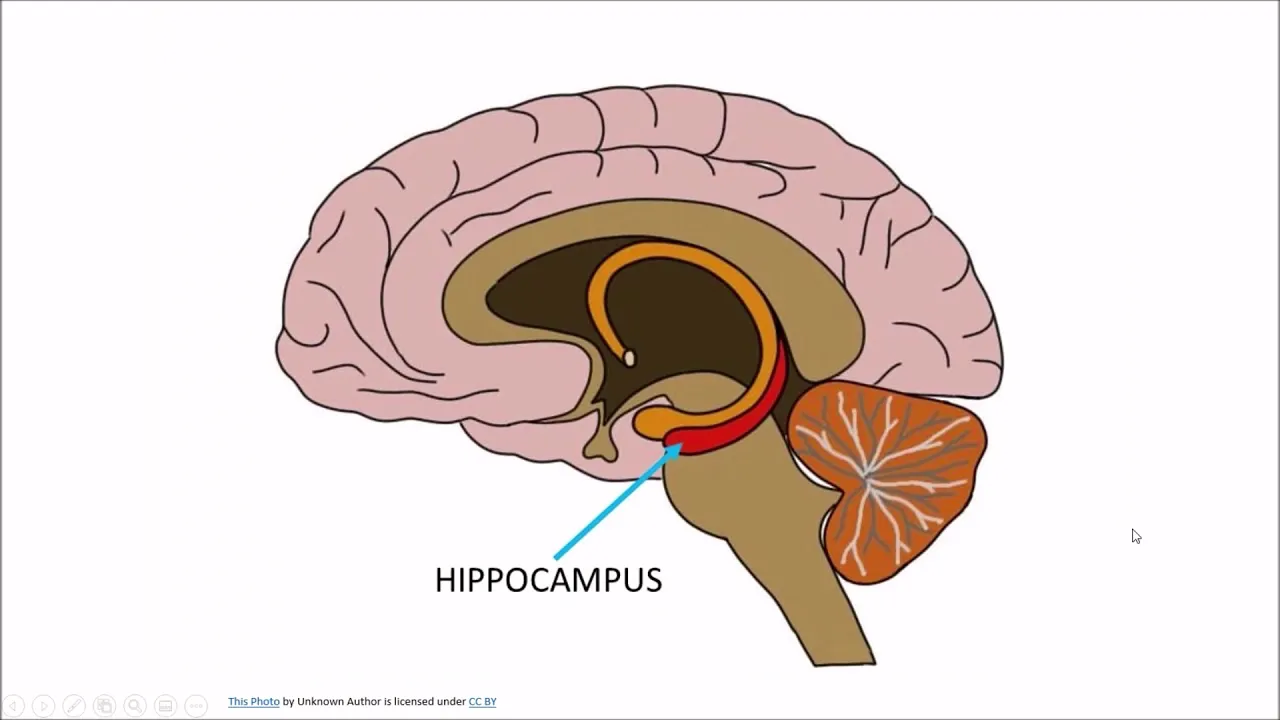
Yes. And we we think we understand why it is that dreams dissolve so quickly when you wake up. It comes back to the prefrontal cortex because it's your prefrontal cortex that is capturing all of the information and then sending it to another part of your brain called the hippocampus which sits on the either left and right side of your brain. And the hippocampus packages that those experiences as memories, but it needs the prefrontal cortex as a spotlight to direct those memories into the packets.
And if you don't have a pref prefrontal cortex that's active, which you don't when you're dreaming, it's very difficult, we believe, to package and send those memories into storage. I've got a wacky theory that we don't forget our dreams. In fact, I would argue we may remember every single one of our dreams. And it's the difference between what I call accessibility versus availability. How many times have you had that experience where you woke up and you think I I was dreaming. I know I was dreaming. And as hard the harder you try, the further you push it away and you just give up and then 2 days later you get into your car and you see maybe a pack of chewing gum and it it's a cue that all of a sudden unlocks that full dream memory from several days ago. What that tells me is that you your brain is storing the memory, but what you've lost at the moment of waking up is the IP address for that memory. So the memory has been stored and is available. It's just that you've lost the connection for its accessibility. So availability, accessibility, which means that if that's true that we can have these spontaneous cued recollections of dreams days later. What if we store all of our dreams and we know for a fact that there's a lot of information that sits below the radar of consciousness that is changing our human behavior and our decisions and our actions. What that leads to is a bit of a mind-bending possibility that all of our dreams are stored throughout our life and those dreams are constantly shaping and changing the decisions and the the beliefs and the thoughts that we have in our waking life and we're completely unaware of it.
>> Wow.
>> Yes. Wow.
>> That first of all that's just nuts.
[laughter] I mean I don't mean like nuts as in like you're a quack. I mean, it's nuts as in to think about >> No, many people have said that, but >> Yeah. But no, I'm saying it's nuts to think about the implications of what you just said, you know. Um, but it definitely works for creativity. I can speak to that personally because I have had dreams that I wake up and I'm like I can't remember and I know that they're like I wrote a joke or I something happened but then I'll be sitting down doing something completely unrelated at a different time and that dream will pop in my head and I'm LIKE A MAN THERE.
OH. AND I'm like oh that's the joke. And then I'll tell the joke and people be like you suck.
>> No I'm joking. I'm joking.
>> No. Yeah. But it's useful. It's useful is what I'm saying.
>> Yeah. And isn't that I mean, and I've there's a couple of experiments that I think I could design to try to to prove that that's the case. And then we could get into the whole world of okay, if you can understand where memories are stored during dreaming, could you start to manipulate those memories during the dream state itself? Can you alter memories or can you selectively decide which memories that your sleeping brain brings up and >> remembers and which it wants to selectively forget. We're starting to get to the stage now where we've developed experimental tools where almost like a playlist I can select what it is from your waking day that you decide to remember and what you lose.
The even deeper implication of what you just said is if that's the case, then maybe all memories are stored that way.
And if that is so and you're able to manipulate it, Alzheimer's patients, you would be able to find a way to raise their memories like the way we dust for fingerprints or something. You know, you'd be able to raise those memories and they wouldn't suffer the they might still have Alzheimer's, but they'll still be able to access the memories.
And the question is, is Alzheimer's a condition of of availability but impaired accessibility?
And the sad part is that because of the neural degeneration that happens particularly in the memory centers, we think that in fact those memories are no longer available at all.
>> Oh, >> so it's like a damaged It's like a corrupted file. It's like a corrupted file at that file there, but you can't get to it. Oh, that's a shame. Good idea. Tragic. I tried. I tried to help you people.
>> Can we take one more question, but we got to do it like in 30 seconds.
>> Rapid fire. Yep. Come on, Walker.
>> Um, okay. Brian Edair, uh, I was wondering how the astronauts on Arteimus 2 sleep on the shuttle, do they have any special procedures? And would we expect them to have different types of dreams or nightmares based on being in zero gravity in space? M >> thank you so much for they weren't on the shuttle just to just to clarify that >> Sophie Adair is aged 11. She's given a pass.
>> Okay. [laughter] Okay.
>> I got you.
>> By the way, great question Sophie.
>> It's [laughter] a great great question.
I think it's one of the best questions of of the night. How do astronauts sleep up there? I would say honestly with some difficulty and a lot of velcro. Because when you're on the space station, astronauts will actually climb into a sleeping bag that is strapped on the wall. And the reason is because so they don't drift around and start bumping into things. And there is no up or down.
And as a result, you actually because of that zero gravity, you don't need a pillow pressed against your head. So astronauts will actually describe sleeping almost like this sort of gentle floating experience. And some of them love it, some of them never get used to it. Um, but the real trouble maker is actually not the gravity or lack thereof. It's the sun. Because circling the Earth, the crew will actually see a sunrise and a sunset roughly every 90 minutes. So they will see 16 sunrises and sunsets every single day. Now, as we spoke about with your circadian rhythm, your brain carries this internal clock and it's carried it for 3 and a half million years, and it's been set to only one sunrise and one sunset every 24 hours. Not >> scrambles the brain is what you're saying.
>> Your clock gets shouted at 16 times a day in a completely unexpected manner.
So, astronauts will typically black out their windows. They'll wear eye masks and they will keep a very strict schedule that is sort of determined to make sure that they get timed light in accordance with when their biology is wanting it. And they will get timed darkness together with a little dose of melatonin to try to help convince their brains that it's nighttime when mission control says it is something different.
>> And of course, they only orbited Earth a few times before they did a trans lunar injection. Yeah. And headed to the moon, right? So then they're no longer orbiting Earth because now Earth is not blocking their view of the sun putting them into nighttime. And so they still have to think about a rhythm >> because now they're just floating in space towards the moon. Rather, >> they don't get any sunrise or sunset.
>> They don't get no sunrise or sunset.
Correct. Yeah. Well, I got to say though, that's probably better than 16.
>> Like I'd rather have no sun. Like can you imagine somebody saying to you like, "Let's take a romantic stroll on the beach and watch the sunset." And f that sunset. [laughter] You know how many sunsets I've seen? I don't give a damn about no sunset.
>> So, news flash, Christina Ko, one of the Artemis to astronauts, came back and said she had some of the best sleep she ever had in her life.
>> Oh, >> I'm just saying.
>> Well, that's kind of sad cuz you're not going back to space to [laughter] sleep.
>> Like, you're never going to find that here on Earth.
>> Well, here's a funny one. So tempropedic when they first came on the scene they marketed themselves as being the material under the seat of astronauts okay that go into space and you say wow I want to wear sleep on what the astronauts sleep on except when they're in zero G there is no pressure on a phone on the phone for the me there's no memory for the memory phone to remember >> exactly [laughter] >> yeah so it was a little it was a little spurious as I saw. [clears throat] >> Well, I hate to tell you I have a tempropedic mattress at home.
>> You do?
>> Yeah. So, in space there's no bed sores.
There's no Half the reason why you turn at night >> is to change the pressure on your body.
>> On your body. That's correct.
>> You're in zero G.
>> Yeah. There is no pressure. Just floating. Yeah, I think that there was a mention of, you know, what what about dreams and how would that change my we don't have actually good data on this, but my scientific hunch is that your dreams are probably not altered by anything to do with gravity. It's the emotion of being, you know, a tiny crew in a tin can thousands and thousands and thousands of miles from everyone that you love looking back at the whole Earth through a window. I'd wager that probably shows up somewhere in their dreams. And I would love to see the emotional kind of arc of acceptance of the the monumental nature of what I'm experiencing in this moment, what this means to me, and then the integration of all of that. Could you imagine what an absolute mind twisting?
>> I I like to imagine that they all wake up and go, I had a dream I was falling.
Really? I had that same dream.
[laughter] They all had the dream that they were falling. like, "Yeah, guess why?"
>> All right, >> Matt, we got to call it quits there.
It's been delight to have you back on.
>> Absolute pleasure.
>> And clearly our our fan base, our Patreon fan base agrees with me that you you you're taking us to places we don't typically go and special edition is all about the human condition.
>> Yeah.
>> And so, thanks for helping us gain some insight there.
>> It was lovely to chat, Jent, as always.
I suspect I will have some very interesting dreams tonight as a consequence of this.
>> And and we're going to find you on your podcast, eponomously named. Is that do I say that right? That's >> correct. The Matt Walker podcast. I presume you talk about sleep topics?
>> I do indeed.
>> And is there is there a website or a Twitter handle we can find you on?
>> You can just go to sleepdiplomat.com and if you want to find me on X, I am also there. sleepdat and on Instagram I am Dr. Matt Walker D R M- A TT T W A L K E R.
>> All right, we'll find you there. All right, dude. And any books you're writing?
>> Um my uh previous book uh Why We Sleep has been out for uh now some time. And I will simply say that there is a second one that apparently should be being written at this time. [laughter] >> Uhoh. [clears throat] >> Deadline. That one's going [laughter] to be called why we procrastinate.
>> The tagline will be um torper hibernation and what happens when you dream about going to Mars. Anyway, um that yeah, there is a second book uh soon to be arriving on.
>> No great piece of writing is ever finished. It only comes due.
>> Look at that.
>> Get me that t-shirt, please.
>> All right, Chuck.
>> Always a pleasure, baby. Always >> Gabri.
>> Hey Neil >> in the house. Neil deGrasse Tyson and another edition of Star Talk special edition. This one on sleep. Thanks for joining us. Until next time, keep looking up.
Related Videos
8:08
Neuroscience
What is neurodegeneration?
TheSheekeyScienceShow
3K views•2019-08-19
57:35
Neuroscience
IPL - Ruth Empson "Mind the Gap"
otagouniversity
251 views•2019-07-08

14:01
Neuroscience
How our body shapes our mind | Pancho Tolchinsky | TEDxNapoli
TEDx
2K views•2019-12-05

1:00:02
Neuroscience
Impact of Early Life Deprivation Danielle Stolzenberg Marcus Pembrey Bruce McEwen
uctv
4K views•2019-12-01
10:32
Neuroscience
β-Caryophyllene for Parkinson’s: Protecting Dopamine & Easing Symptoms
parkinsonsdiseaseeducation
6K views•2025-08-09
20:44
Neuroscience
New Insights from Inside the Brain with Rodrigo Braga, PhD
NUFeinbergMed
421 views•2025-04-14
9:57
Neuroscience
Highlights for dystonia • 2025 MDS Congress
movedisorder
145 views•2025-10-27

58:17
Neuroscience
Animal Welfare Synergy Series: Dr Tom Smulders on hippocampal neurogenesis
costactionlift
135 views•2025-07-14
Trending

13:25
Business
Playstation NO DISC/NO BUY Fight Is Over...
DavidJaffeGames
4K views•2026-07-23

22:40
Business
Steam and Xbox Just Dropped The Hammer On PlayStation
OhNoItsAlexx
9K views•2026-07-23

16:52
Anthropology
Americans Confused in Australia for 17 Minutes Straight
IWrocker
17K views•2026-07-23

20:36
Business
SuperBike Factory Has Gone... What's Next for the Motorcycle Industry?
thatbikersimon
11K views•2026-07-22