Many insects that appear harmless can cause severe pain or injury when touched, as they possess hidden defense mechanisms such as venomous spines, powerful stingers, or sharp beaks; examples include the puss caterpillar with its hidden venomous spines, the saddleback caterpillar with its warning coloration and painful spines, the velvet ant with its extremely painful sting, the tarantula hawk wasp with its intense but brief pain, the giant desert centipede with its venomous claws, and the wheel bug with its sharp beak for hunting.
Install our extension to search inside any video instantly.
Every Bug You Should NEVER Touch Explained in 8 MinutesAdded:
Puss caterpillar.
At first it does not look like something dangerous. It looks soft, quiet, and almost harmless, like a small piece of fur slowly crawling across a leaf or a tree branch. That is exactly why people make the mistake of touching it. The puss caterpillar is the larval stage of the southern flannel moth, and it is found mostly in warm areas of the southern United States, often on trees, shrubs, and garden plants. Its body is covered in long, thick hair, but the real danger is hidden underneath.
Beneath that soft-looking coat are venomous spines break into the skin when someone brushes against it. The caterpillar does not need to chase, bite, or attack. A simple touch is enough. The pain can start immediately and may feel sharp, burning, or deeply aching, sometimes spreading from the hand into the arm, shoulder, or chest.
In stronger reactions, people can also feel nausea, swelling, headaches, or a general sense of being sick, which makes this tiny creature much more serious than its appearance suggests. What makes the puss caterpillar especially dangerous is the contrast between what it looks like and what it can do. Many insects warn predators with bright colors, hard armor, or aggressive movement, but this one hides behind softness. It is the kind of creature a child might want to pick up, or an adult might accidentally touch while gardening, leaning against a tree, or moving branches by hand. The caterpillar is not trying to fight humans. It's venomous spines are a defense against birds and other predators, but that defense works the same way on human skin. In real life, most encounters happen by accident. And that is why it belongs in a video about bugs you should never touch. It teaches one of the most important rules in nature.
Harmless-looking does not mean safe.
Saddleback caterpillar.
The first thing people notice is the strange green patch on its back, shaped almost like a saddle placed over a brown body. It does not look like a normal caterpillar. It looks designed, almost artificial, with bright colors, sharp edges, and thick clusters of spines rising from its body. That strange appearance is not just decoration. The saddleback caterpillar uses its look as a warning, telling birds, small animals, and anything nearby that touching it is a mistake. It is usually found in parts of the Eastern United States, often feeding on leaves from trees, shrubs, and garden plants. Unlike the puss caterpillar, which hides its danger under soft hair, the saddleback caterpillar shows its weapons openly.
Its spines are connected to venom glands, and when they enter the skin, they can cause sudden pain, burning, redness, and swelling. The reaction can feel immediate because the defense is built for close contact. It is not a creature that needs to move fast or escape far. It simply makes itself painful enough that most predators learn not to try again. Its bright green color can make it easy to spot, but that same color can also attract curiosity.
Someone trimming plants, collecting leaves, or walking near low branches might notice it and want to get closer.
That is where the risk begins. The saddleback caterpillar is small, but its defensive system is highly effective. A light brush against the spines can be enough to leave it painful sting, and the discomfort may last for hours or longer, depending on the person. In nature, this defense helps the caterpillar survive until it becomes a moth. For humans, it is a reminder that unusual beauty in the wild often has a purpose. The saddle-shaped mark, the bright colors, and the spiny body are not random details. They are part of the warning.
Velvet ant.
The name makes it sound like an ant, but that is already misleading. The velvet ant is actually a wasp, and the females have no wings, so they run across the ground looking like large hairy ants with bright red, orange, black, or white markings. That strange look is part of what makes them so memorable. They move fast, they stand out against sand or dry soil, and their thick velvety body almost looks fake, but the warning is real. Those bright colors tell predators to stay away, and the female carries a powerful stinger that can deliver an extremely painful sting if handled. The nickname cow killer comes from that pain, not because it truly kills cows.
It is an exaggerated name, but it survived because sting is intense enough to make people remember it. This is not an insect that needs to look monstrous.
What makes the velvet ant different from many other bugs is how protected it is from almost every angle. Its body is tough, almost armored, which helps it survive attacks from predators. If something tries to bite it, the wasp can squeak, struggle, and defend itself with a sting. That combination makes it a very hard animal to kill or eat in the wild. For humans, the mistake usually happens when someone sees it walking across the ground and tries to pick it up, trap it, or touch it out of curiosity. It does not usually go looking for people, and it is not aggressive in the way a nest-defending wasp can be. But, if it is grabbed or pressed against the skin, the response is immediate. Its entire body is a warning system, bright color, tough armor, fast movement, and a sting that makes the nickname feel believable.
Tarantula hawk wasp.
In desert areas of the Americas, this wasp has one of the most intimidating hunting methods in the insect world. It is not called a tarantula hawk because it looks like a spider. It gets that name because it hunts tarantulas. With dark metallic blue or black bodies and bright orange wings, these wasps are easy to recognize, and their color already feels like a warning sign. But, the most disturbing part is not the way they look. A female tarantula hawk wasp can find a tarantula, attack it, sting it, and paralyze it without killing it.
Then, she drags the spider into a burrow and lays an egg on it, leaving the paralyzed tarantula as living food for the larva. For a human, the danger is not being hunted like a spider, but being stung after making the mistake of grabbing or disturbing one. The sting of the tarantula hawk wasp is famous because of how intense the pain can be.
It is often described as one of the most painful insect stings, but the strange part is that the worst pain usually does not last very long. That makes it different from bugs that cause swelling, rashes, or symptoms that keep spreading.
With this wasp, the main event is sudden, overwhelming pain. In nature, that kind of defense makes sense. A predator does not need to be poisoned for hours. It only needs to learn instantly that touching this wasp is a terrible idea. And because the wasp is usually solitary, it is not the kind of animal that attacks in a swarm. The risk comes from handling it, stepping too close, or trying to catch it because it looks unusual. Its bright wings, huge size, and calm movement can make it seem almost unreal. But this is exactly the kind of bug that should be left alone.
Giant desert centipede.
In the dry deserts and rocky areas of the southwestern United States and northern Mexico, this creature looks less like a normal bug and more like something built to make people step back. It has a long, flat body, many fast-moving legs, and colors that can be impossible to ignore, often with a dark or reddish head and yellow-orange legs.
Unlike a caterpillar that stays exposed on leaves, the giant desert centipede is usually hidden under rocks, logs, loose bark, or dark spaces where the ground stays cooler. That hidden lifestyle is part of the problem. It does not need bright fur or strange patterns to be memorable. Its whole body already looks like a warning. At the front of its body, it has modified legs that work like venom claws, used to grab prey and inject venom. In the wild, this helps it overpower insects, spiders, and even small vertebrates. The pain alone is enough reason to keep your hands away.
This is also why picking one up for a video, a photo, or curiosity is a bad idea. The centipede is flexible, quick, and hard to control once it starts moving.
Wheel bug.
This insect looks like something that should belong on a piece of dead bark, not on a garden plant. Its body is usually gray or brown, rough in texture, and shaped in a way that helps it disappear against tree trunks, branches, fences, and dry leaves. The detail that makes it stand out is the raised, gear-like crest on its back, almost like a small wheel built into its body.
That strange structure gives the wheel bug its name, but the more important feature is at the front, a long, sharp beak used for hunting. The wheel bug is an assassin bug, which means it feeds by stabbing other insects and injecting saliva that helps break down the prey from the inside. It's danger is quieter.
It blends in, waits, and uses patience as part of its hunting style. A person might find one on a porch, in a backyard, near a window screen, or on a plant and only notice it because of its strange shape.
Thanks for watching.
If you made it this far, you already know what to do.
Related Videos

Secrets of the Sea: The Ocean’s Most Powerful Creatures & Their Amazing Abilities! 🌊🦈
SwampyTales
3K views•2026-05-29

POV: You're a Shark. The Octopus Already Knows You're There.
tentacleeeee
297 views•2026-05-28

How Do You Know If You're Getting Enough Vitamin D?
DrPeterKan
765 views•2026-05-29

800+ New Species Discovered in the Pacific!
raizen05-j6k
295 views•2026-05-30

@CreatureCases - 🌊☀️ 🌈🦊 Kit & Sam’s Sunny Adventures! 💖🐝 | Best Friends in Action 🌴✨| Compilation
CreatureCases
1K views•2026-05-28

Bird Nest Monitoring | Hidden In Plain Sight!!
thegeordierambler4373
251 views•2026-05-30
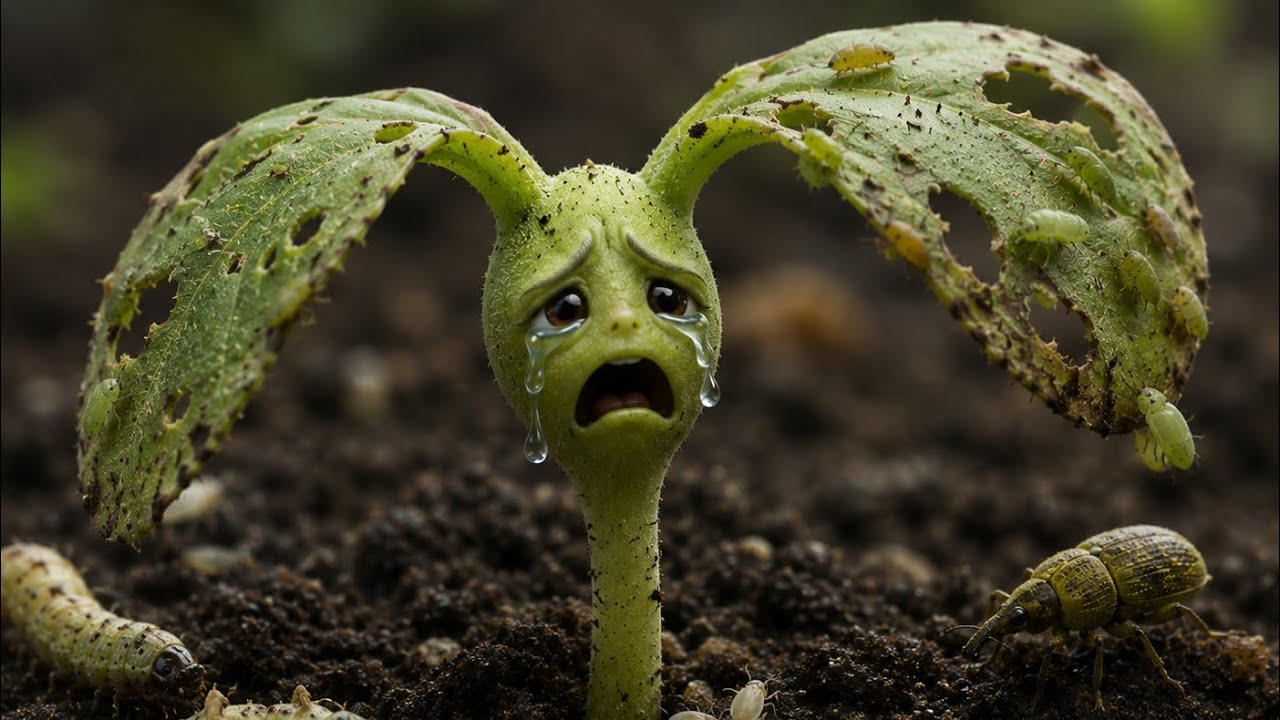
Seedling under seize #pest #plant_predators
Makeitsimple99
181 views•2026-06-01

When A Lonely Harpy Decides You're Her Mate
dreamaudiova
1K views•2026-05-30



