The black hole information paradox, which emerged from Hawking's discovery that black holes emit featureless radiation and seemingly destroy information, may be resolved by LIGO's detection of a faint echo after the GW190521 black hole merger, suggesting black holes preserve information through quantum structures like fuzzballs or firewalls rather than being cosmic shredders.
Install our extension to search inside any video instantly.
Black Hole Info Paradox: LIGO Signal That May Break
Added:What if a single gravitational wave signal could solve the black hole information paradox, the greatest mystery in modern physics? For decades, we believed black holes were cosmic shredders annihilating everything, even the information itself. Then, LIGO caught an impossible sound, a faint echo after a black hole merger. This ghostly whisper has thrown physics into a frenzy. It hints that black holes may not be destroyers, but vast cosmic archives, preserving every bit of what falls in. The paradox started in 1974 when Stephen Hawking applied quantum mechanics to black holes and discovered they emit radiation, slowly evaporating.
But, that radiation is featureless, like static noise. If a black hole completely vanishes, all the information about the matter that fell in, from star types to the pages of a book, would be erased.
This violates unitarity, a sacred rule of quantum mechanics that says information must always be conserved.
Resolving this conflict has been a holy grail. Many now think the event horizon is not an empty point of no return. In string theory, it could be a fuzzball of strings that stores information. Or, it might be a firewall that destroys infalling matter, but leaves an imprint.
These quantum structures would alter the ring down of a newly merged black hole.
Enter LIGO's GW190521.
After two black holes coalesced into a 150 solar mass giant, the ring down was followed by a faint delayed echo a signal that conventional black holes shouldn't produce. The echo's timing and frequency aligned with models of reflective horizons. Ashtekar's team found it with 3.6 sigma confidence, meaning there's only a 0.3% chance it's random noise. This isn't yet proof, but it's the strongest hint yet. So, what do you think? Is this echo the first whisper of quantum gravity, or just a cosmic mirage? Share your prediction in the comments below. If validated, this could solve the information paradox, proving that black holes preserve information in subtle gravitational echoes. It would be a revolution, confirming fuzzballs or firewalls. For now, LIGO remains cautious. The echo might be a noise artifact. But, with improved detectors coming online, we may soon hear the definitive answer. The universe is talking, we just need to listen. A single gravitational echo may hold the key to the universe's deepest secret. The information paradox, which has haunted physics for decades, could be unraveling before our ears. Black holes whisper their hidden memories through ripples in space-time. The cosmos is reaching out. Are we ready to decode its message? Thanks for watching.
Please subscribe to my YouTube channel for more interesting videos.
Related Videos
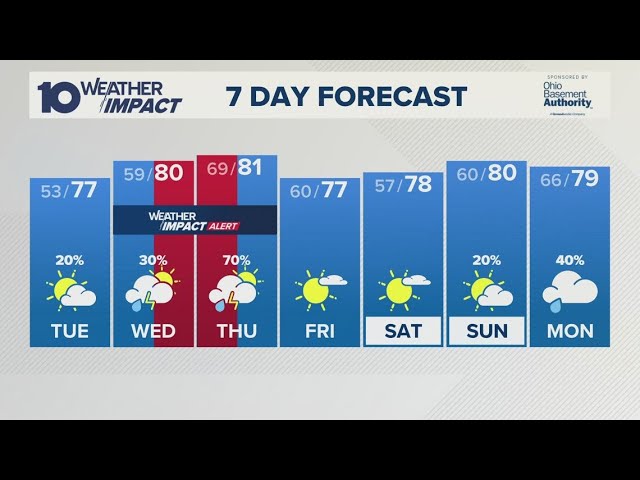
Monday evening forecast | June 15, 2026
WBNS
384 views•2026-06-15
Monday evening First Alert Weather with Darren Peck 6/15/2026
cbssf
662 views•2026-06-16

Clouds build up tonight as we track a storm threat for Thursday
NBC10Boston
2K views•2026-06-17

Just One magnetic field power, two light start with Armechar • Dc Armechar
DcArmechar7
14K views•2026-06-17

What a Massive Blue Iceberg Actually Looks Like?
QuickLearnGeography
100 views•2026-06-18

Chicago Morning News at 7 a.m. - Monday, Jun. 15, 2026
FOX32Chicago
942 views•2026-06-16

The Terrifying Physics of High Blood Pressure
fleshandwonder
1K views•2026-06-15
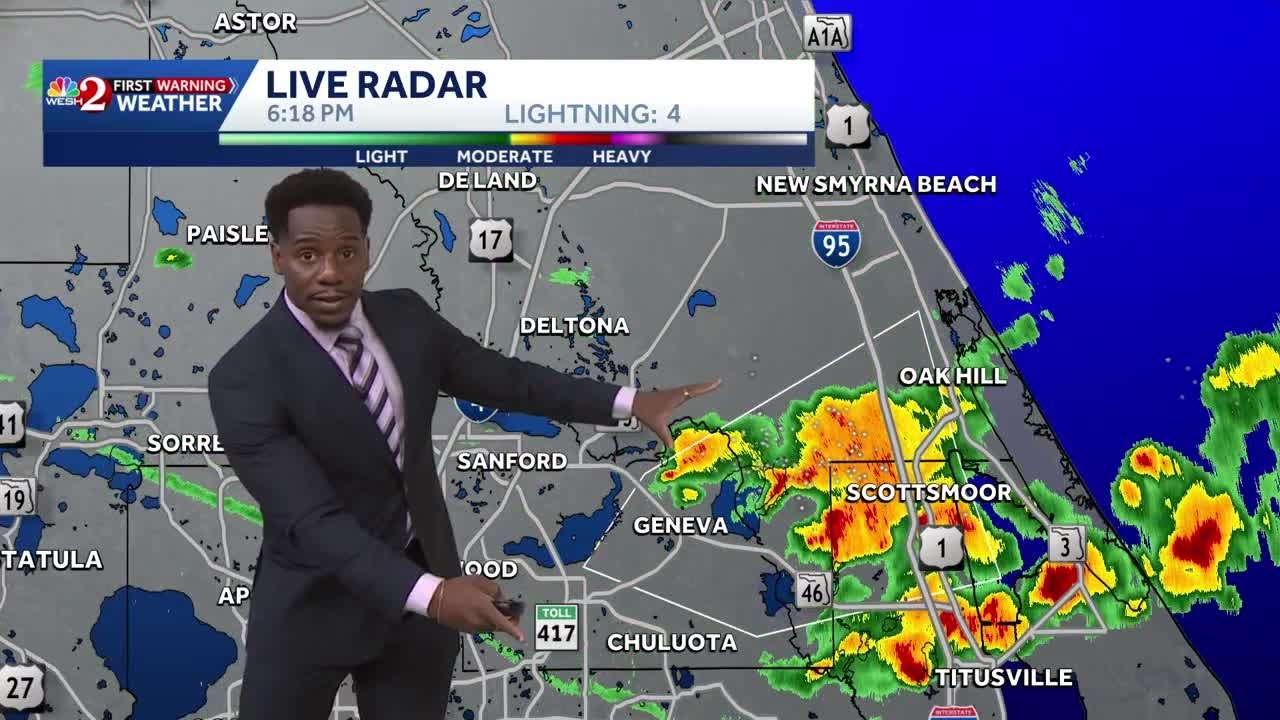
Strong And Severe Thunderstorms Surge Across Central Florida To Finish the Workweek | Stormy Week...
WESH
806 views•2026-06-19



