Infantile amnesia occurs because three critical brain systems—the hippocampus (memory formation), language (narrative structure), and sense of self (memory anchor)—were all still developing simultaneously during early childhood, meaning the brain lacked the machinery to encode and retrieve personal memories despite experiencing vivid details during this period.
Install our extension to search inside any video instantly.
Why You Remember Nothing Before Age 3 ?
Added:Think back as far as you can. Push past your first day of school. Push past birthday parties and family holidays.
What do you find? Nothing. A blank wall.
Just silence. You spent three entire years being alive. You laughed. You cried. You learned to walk, to talk, to recognize the faces of people who loved you. And your brain kept absolutely none of it. This is not a glitch. It is not amnesia. It is one of the strangest things about being human. And scientists have spent decades trying to understand why. It is called infantile amnesia. And the answer is not what you expect. For most of your life, you have probably assumed that your early memories simply faded. That they were there once like photographs left in the sun and time just bleached them out. That is a reasonable guess. It is also wrong.
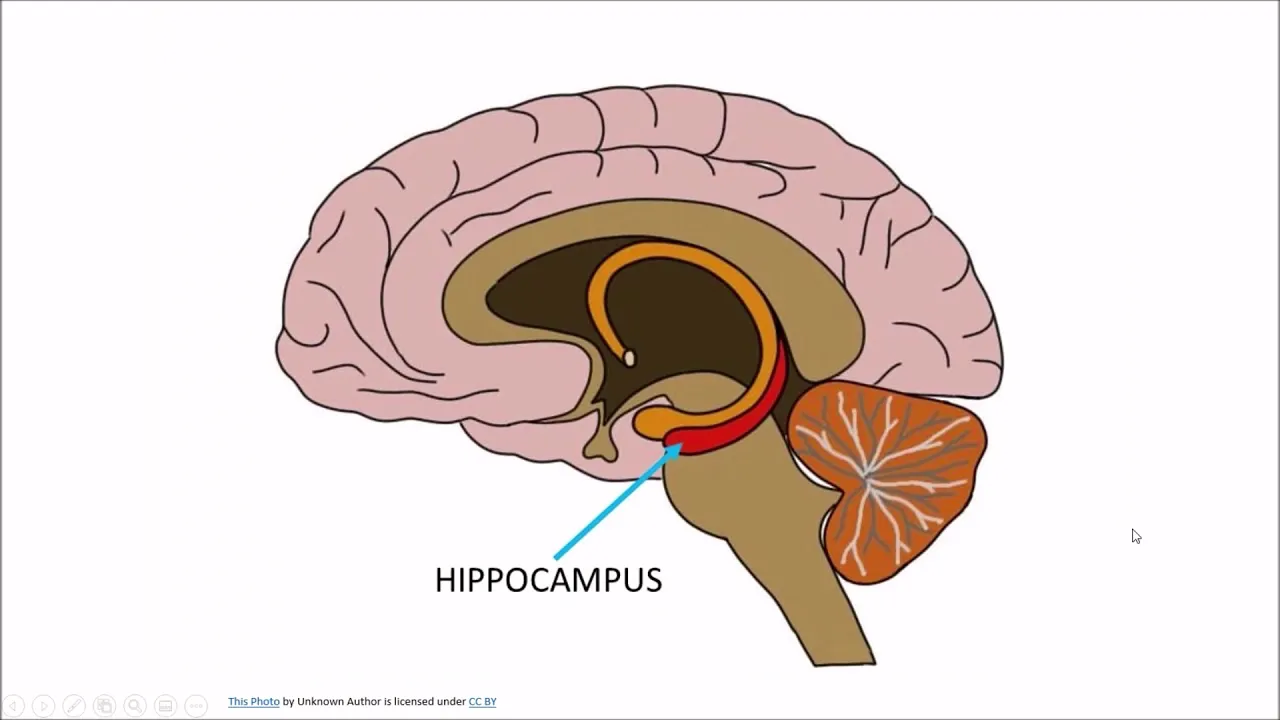
Sigman Freud was one of the first to study this seriously. He believed childhood memories were not lost but buried, repressed. Locked behind a door, the mind closes on purpose because early childhood is too raw, too overwhelming to look at directly. His theory was compelling. Modern neuroscience largely rejected it. The real answer starts with a part of your brain called the hippocampus. The hippocampus is your brain's memory forming engine. It takes your experiences and converts them into long-term memories. you can retrieve later. Without it, nothing sticks. You live in a permanent present, unable to record the past. And here is the critical detail. When you were born, your hippocampus was not finished. It was still under construction.
Neuroscientist Patricia Bower at Emory University has spent years researching early memory development. Her work shows that the hippocampus continues developing well into the first few years of life. The neurons are present, but the connections between them, the scaffolding that allows memories to be retrieved later, are not yet in place.
You were experiencing the world in vivid detail. Your brain simply did not have the wiring to save it. But that is only part of the story. There is a second layer. It involves language. Think about how you remember things now. You remember your first day at a new job not just as a blur of images but as a story.
You narrated it to yourself. You gave it structure with words, with cause and effect, with a beginning and an end.
Memory is not just storage. It is storytelling.
Before the age of two, you had almost no language. Before three, very little ability to form that internal narrative.
Psychologist Katherine Nelson at the City University of New York found that autobiographical memory is directly tied to language development. Without words, there is no story. Without a story, the memory has no frame to hold it. Your early experiences existed. They shaped you. They formed your emotional responses, your attachment patterns, your earliest sense of safety or threat in the world. But they could not be encoded as retrievable personal memories because the language system that makes that encoding possible was simply not ready. And there is a third factor, the self. To remember something as a personal memory, you need a sense of self to attach it to. You need to understand that you are a continuous being. That the you of yesterday is the same as the you of today. That understanding does not solidify until around 2 or 3 years of age. Psychologist Mark How at Lancaster University has shown that without a stable sense of self, memories have no anchor. They float. They dissolve. They never find a home. So, three separate systems were developing at once. The hippo campus building its connections, language giving memory structure, and the self-providing the anchor. Until all three were in place, nothing was being saved. Not because you were not there, but because the machinery to record being there had not yet come online.
Here is what makes this genuinely strange. The memories that shaped who you are most fundamentally formed during the most explosive period of learning in your entire life are the ones you will never access. You learned more between 0 and three than in any other three-year stretch of your life. language, emotion, trust, fear, the basic architecture of how you see the world and the people in it. All built in those years, all un retrievable. The experiences are not gone. They live deep in your nervous system. In the way you respond to a stranger's kindness, in the things that calm you or set you on edge, in patterns you cannot explain but cannot seem to change. The memories did not survive.
But their fingerprints are everywhere.
So the next time you reach back and find nothing before a certain point, understand what that silence really means. It is not absence. It is the signature of a brain that was building itself too fast to stop and take notes.
Thanks for watching. Subscribe for
Related Videos
8:08
Neuroscience
What is neurodegeneration?
TheSheekeyScienceShow
3K views•2019-08-19
57:35
Neuroscience
IPL - Ruth Empson "Mind the Gap"
otagouniversity
251 views•2019-07-08
14:01
Neuroscience
How our body shapes our mind | Pancho Tolchinsky | TEDxNapoli
TEDx
2K views•2019-12-05
1:00:02
Neuroscience
Impact of Early Life Deprivation Danielle Stolzenberg Marcus Pembrey Bruce McEwen
uctv
4K views•2019-12-01
10:32
Neuroscience
β-Caryophyllene for Parkinson’s: Protecting Dopamine & Easing Symptoms
parkinsonsdiseaseeducation
6K views•2025-08-09

20:44
Neuroscience
New Insights from Inside the Brain with Rodrigo Braga, PhD
NUFeinbergMed
421 views•2025-04-14
9:57
Neuroscience
Highlights for dystonia • 2025 MDS Congress
movedisorder
145 views•2025-10-27
58:17
Neuroscience
Animal Welfare Synergy Series: Dr Tom Smulders on hippocampal neurogenesis
costactionlift
135 views•2025-07-14
Trending

13:25
Business
Playstation NO DISC/NO BUY Fight Is Over...
DavidJaffeGames
4K views•2026-07-23

22:40
Business
Steam and Xbox Just Dropped The Hammer On PlayStation
OhNoItsAlexx
9K views•2026-07-23

16:52
Anthropology
Americans Confused in Australia for 17 Minutes Straight
IWrocker
17K views•2026-07-23

20:36
Business
SuperBike Factory Has Gone... What's Next for the Motorcycle Industry?
thatbikersimon
11K views•2026-07-22