The video brilliantly reframes an eerie sensation as a successful internal fact-check, proving that déjà vu is a sign of a healthy brain rather than a glitch. It’s a concise, evidence-based correction that values neurological clarity over mystical speculation.
Install our extension to search inside any video instantly.
Why Do You Get Deja Vu?
Added:You're walking into a coffee shop you have never been to before. It's a Tuesday. Nothing special is happening.
The barista calls out a name, the espresso machine hisses, someone laughs in the corner over by the window, and then, with no warning at all, the floor drops out from under your brain. You have been here before. You have stood in this exact spot, heard that exact laugh, watched that exact paper cup slide across that exact counter. Except you haven't. You have never set foot in this place in your entire life. It lasts maybe 3 seconds, then it's gone, and you're just standing there holding your wallet, mildly haunted, quietly wondering what on earth your own head is doing. This is the story of why you get déjà vu. Not a memory of a past life, not a glitch in the matrix, not your phone secretly filming your dreams and playing them back to you while you sleep. The real thing. The actual answer. Because here's what nobody tells you. That weird little shiver is not the sound of your brain breaking. It might be the sound of your brain working exactly the way it is supposed to. And once you understand what is really happening in those three strange seconds, you will never feel that shiver the same way again.
Because here's the thing nobody tells you. Déjà vu does not start with the past. It does not start with psychics or premonitions or some cosmic file you supposedly downloaded before you were born. It starts somewhere far stranger and far closer to home. It starts inside the ordinary everyday machinery of how you remember anything at all. And by the end of this, I promise you will never trust that warm little feeling of familiarity in quite the same way again.
Let's go. So, what is it actually? Well, before we get to that, we need to understand the thing itself, and the best place to start is with its name.
Most people treat déjà déjà like a warning light on a dashboard. A little stutter in the simulation. A sign that something, somewhere, has quietly gone wrong. But the name is almost embarrassingly literal. Déjà vu is French. It means simply already seen.
That's it. That is the entire mystery folded up neatly into two plain words.
Already seen. The term was coined by a French researcher named Émile Boirac in the 1870s. Boirac was a philos opher fascinated by the strange edges of the human mind. The messy, unexplained stuff that most respectable scientists of his era preferred to ignore. He gave this feeling a name precisely because it was so common, so universal, and so completely unexplained. And for a very long time, the explanations on offer were not exactly scientific. People blamed everything from past lives to prophecy to messages from beyond. Even Sigmund Freud took a swing at it, suggesting déjà vu was a buried wish or a repressed memory surfacing in disguise. One popular old idea claimed it happened because one half of your brain processed a scene a split second before the other. So the moment seemed to arrive twice, once as a faint echo.
It sounded neat. It mostly fell apart under closer inspection. The truth turned out to be stranger and far more revealing than any of them. And here is a number that tends to catch people off guard. Roughly two out of every three people report having experienced déjà vu at least once. That is not a rare neurological quirk reserved for a strange few. That is most of the people you have ever met. It is one of the most common weird experiences a human being can have, and almost nobody can tell you what it is. The driver who cut you off this morning, your dentist, your least favorite coworker, you. Now here is a stranger detail, and I need you to hold on to this one be because it comes back later and it matters. Déjà vu is most common in young people, roughly between 15 and 25 years old, and it slowly fades as you age. Stop and notice how backwards that is. The longer you live, the more places you visit, the more scenes you actually pile up in your memory, the less often you feel like you have seen one before. A 19-year-old who has barely left their hometown gets ambushed by déjà vu constantly. A 70-year-old who has genuinely circled the globe might go years without a single flicker of it. That is a clue, a big one. We will come back to it, but here's where it gets interesting and honestly where it gets difficult. How do you study a thing that flat-out refuses to be studied? Déjà vu is random. It is fleeting. It arrives uninvited, lasts a few seconds, and vanishes. You cannot schedule it. You cannot sit someone down in a laboratory, wire them up to a machine, and politely say, "All right, go ahead and have your déjà vu now. The cameras are rolling."
For more than a century, that was the wall every single researcher slammed into. The feeling was real. The feeling was everywhere. And the feeling was almost impossible to catch in the act.
So, eventually, scientists did something clever. If you cannot sit around waiting for déjà vu to strike on its own, then you build a machine that causes it on purpose.
That is more or less exactly what a cognitive psychologist named Anne Cleary set out to do at Colorado State University.
Cleary had a hunch about where the feeling really comes from, and it had absolutely nothing to do with the supernatural. Her idea is called the Gestalt familiarity hypothesis.
The word Gestalt just means the overall shape of something, the way all the separate pieces sit together as one whole.
And her theory goes like this.
Sometimes you walk into a brand new place and the arrangement of that place, the layout, the angle of the corners, the position of a doorway, the way the furniture is scattered around, secretly matches a place you have been before. A place you genuinely cannot remember.
Your brain quietly notices the match. It feels the familiarity rise up. But it cannot find the original memory because that memory is buried or faded or was never really stored on purpose in the first place.
So you get the feeling without the source.
The sense of knowing with nothing behind it that you can actually point to. To test this, Cleary turned to virtual reality.
She built digital scenes, a courtyard, a museum, a junkyard, and then later walked people through brand new scenes that were secretly constructed with the exact same spatial layout. Same skeleton, different skin.
Same arrangement, different decoration.
And sure enough, when someone stepped into a new scene that matched the hidden shape of an old one, they were far more likely to report that uncanny prickling sense that they had been there before.
Déjà vu, manufactured to order in a lab on demand.
And the people feeling it usually had no clue why. They could not point to the matching scene. They could not explain it. They just felt, somewhere deep in the gut, that they had stood there once already.
And Cleary noticed something else.
Something that explains one of the spookiest parts of the whole experience.
A lot of people, in the grip of déjà vu, also feel a strange certainty that they can predict what is about to happen next.
Like the moment is a rerun, so they must already know the ending.
So she tested it directly. She let people feel that wave of false familiarity, then asked them to predict which way the scene would turn next. And here is the punchline. They felt completely sure they knew.
They were no better than a coin flip.
The sense of prophecy was real. The prophecy itself was empty.
Which is a pretty good summary of déjà vu in general. The feeling is loud, the feeling is convincing, and the feeling is pointing at absolutely nothing.
There is a second version of this memory idea that fits right alongside it, mapped out in detail by a psychologist named Alan Brown, who wrote one of the most thorough reviews of déjà vu ever published. It is sometimes called the divided attention theory.
Picture yourself glancing at a room while you are distracted, half looking at your phone, half listening to a friend.
For a fraction of a second, your brain registers the room without you really paying attention to it.
Then a moment later, you look up properly and take it all in.
And because your brain already logged a faint unattended snapshot just half a second earlier, that fresh full look feels strangely old.
You are, in a tiny way, remembering something you saw less than a second ago and mistaking it for something ancient.
Both ideas point at the same beautiful truth about how you work.
You are constantly recording the shape of the world around you, far more of it than you will ever consciously notice.
And every so often, that quiet invisible recording reaches up and taps you on the shoulder.
Here's where déjà vu gets genuinely strange, because if all of that is right, if déjà vu is simply a buried memory waving at you from the back of the room, then why on earth does it feel so wrong? A normal memory feels warm, worn in, comfortable, like an old sweater.
Déjà vu does not feel like that at all.
It comes with a shiver, a flicker of unease, a sense that the moment is somehow too familiar, familiar in a way it has no business being.
If it were really just an ordinary old memory, it would feel like an ordinary old memory.
So, where does that eerie wrongness come from?
The answer comes from a researcher named Akira O'Connor at the University of St. Andrews in Scotland, and his finding turns the whole thing inside out.
O'Connor figured out a way to trigger deja vu in volunteers inside the lab, and then slid them into an fMRI scanner, a machine that watches which regions of the brain switch on moment to moment in real time.
Now, if deja vu were purely a memory, you would expect the memory centers of the brain to be glowing like a Christmas tree.
That is the obvious prediction.
That is not what happened.
The regions that lit up were not the memory areas at all. They were the frontal regions, the parts of your brain tied up in decision-making, in monitoring, in checking your own work, in resolving conflict. Sit with that for a second, because it quietly changes everything.
During deja vu, your brain is not remembering. Your brain is checking.
O'Connor's interpretation is that deja vu is the sound of your brain fact-checking itself live.
Here is the scene playing out inside your skull.
One part of your mind throws up a signal that says, "This is familiar. We have been here before."
But another part of your mind, the careful, slightly suspicious frontal cortex, knows full well that is not true. It pulls the records. It finds nothing. And it raises a flag. It says, "Hang on. That familiarity signal is false. There is no real memory backing it up."
And that conflict, that fast little internal argument between a false alarm and the part of you sharp enough to catch it, that is what deja vu actually is.
The wrongness is not a malfunction. The wrongness is the literal sensation of your brain catching a mistake as it happens.
Which means deja vu might not be a sign of a broken memory at all.
It might be a sign of a healthy one.
A memory system sharp enough to notice when it is being lied to.
And there is a second clue that deja vu is wired into the physical brain, not floating in some mystical fog.
It comes from medicine, from people living with a condition called temporal lobe epilepsy.
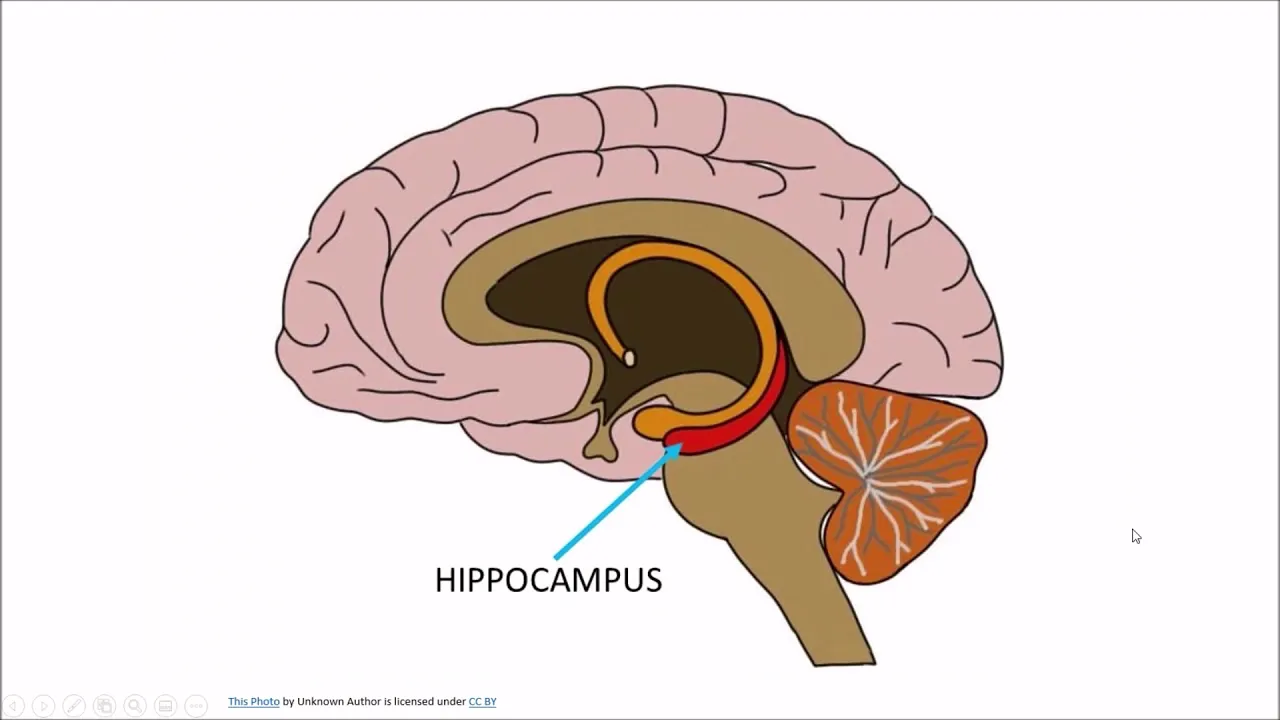
The temporal lobes are the regions sitting roughly behind your ears, and they are deeply involved in memory and in that exact feeling of familiarity.
For some people with epilepsy, a seizure begins right there.
And in the seconds before it hits, many of them are swamped by an intense, overwhelming wave of deja vu.
Not the gentle 3-second flicker you get in a coffee shop. A flood of it.
This link was explored decades ago by a pioneering neurosurgeon named Wilder Penfield, working in Montreal in the 1950s.
Penfield operated on epilepsy patients while they were fully awake, gently touching parts of their exposed brain with a small electrode to map out what each region did.
And when he stimulated certain spots in the temporal lobe, patients suddenly reported vivid rushes of familiarity and stray fragments of memory, summoned out of nowhere by a tiny pulse of electricity.
He could, in the most literal sense possible, reach into a living brain and switch the feeling on.
That tells you something important. Deja vu is not magic. It has an address. It lives in tissue you could physically touch.
And to really understand what that fact-checker does for you, it helps to meet the people whose fact-checker stopped working.
A memory researcher named Chris Moulin has studied a rare and unsettling condition sometimes called chronic déjà vu.
These are people, often older adults with certain kinds of memory damage, who feel déjà vu not for 3 seconds, but constantly, permanently, about everything.
Moulin described patients who refused to watch television or read the newspaper because they were utterly convinced they had already seen every program and read every article before.
One man insisted he could not possibly be examined by a doctor he had never met because he was certain he had already sat through that exact appointment.
Think about what that reveals.
In these people, the familiarity signal is stuck in the on position, and the fact checker that is supposed to override it has gone quiet.
So, the false alarm never gets corrected. The feeling is simply believed, and the result is a life where every single moment feels like a rerun.
That is what your déjà vu would become if the very system causing your unease ever stopped doing its job. The discomfort you feel during déjà vu is not the problem. The discomfort is the proof that the system is still protecting you. And if you want proof that this familiarity machinery can glitch in both directions, there is a mirror image of déjà vu, and you can trigger it on yourself right now. It is called jamais vu, which is French for never seen. It is the opposite feeling when something completely familiar suddenly turns strange and alien. Chris Moulin demonstrated it with a trick anyone can do. Take a common word, something like door, and write it over and over and over again. After 30 or 40 repetitions, something unsettling happens. The word stops looking like a word. It dissolves into a meaningless little shape, a random scribble that you cannot believe means anything at all.
That is your familiarity detector going briefly silent on something it knows perfectly well. Deja vu is that same dial spun the other way. Familiarity screaming where it does not belong. Same machine, two different malfunctions.
Both reminding you that the feeling of knowing is something your brain generates, not something the world hands you. So, let's pull all of it together because now, finally, we can answer the question you actually came here for. Why do you get deja vu? Here is the honest, modern, best guess answer built straight out of everything we just walked through. Deja vu is what happens when two of your brain's systems briefly disagree. On one side, you have a familiarity detector. It is constantly, automatically scanning your surroundings and comparing them against everything you have ever experienced. Anne Cleary showed us that this detector can be fooled by the hidden shape of a place, firing off a familiarity signal even when there is no conscious memory to justify it. On the other side, you have a fact checker, the frontal part of your brain that Akira O'Connor watched light up in the scanner. Its entire job is to catch errors, to lean in and ask, "Wait, is that actually true?" And deja vu is the precise instant those two systems crash into each other. The familiarity detector shouts, "We have been here before." The fact checker checks the records, finds nothing, and shouts straight back, "No, we absolutely have not." And you feel both signals at the very same time, certain that the moment is familiar, certain that it cannot possibly be. That impossible, overlapping double feeling, the warmth of recognition wrapped tightly around the cold of knowing it is false. That is deja vu. That is the whole thing. Now, go back to that detail I told you to hold on to. Remember how deja vu fades as you grow older? Look how neatly it clicks into place. A young brain is fast, sharp, and aggressive about fact-checking itself. It catches the mismatch instantly and flags it loudly.
An older brain, with decades more practice and a slightly gentler error monitoring habit, may simply let those small false alarms drift past without ever raising the flag. The feeling fades not because the glitches stop happening, but because your brain stops bothering to announce them. The déjà vu was never the malfunction. The déjà vu was the alarm, and the alarm just gets quieter with age. And this points at something far bigger than déjà vu, something that reaches all the way down into the nature of memory itself. We love to imagine memory as a recording, a video file tucked away somewhere in your skull that you simply press play on whenever you want it. But that is not how it works, not even close. And déjà vu is one of the cleanest proofs we have. Back in 1990, a psychiatrist named Herman Snow offered a comparison that has stuck around ever since. He suggested memory works less like a video and more like a hologram. The strange and wonderful thing about a hologram is that every tiny fragment of it secretly contains a blurry version of the entire image. Hand your brain one small piece, a smell, an angle, the shape of a room, the slant of afternoon light, and it will rush to rebuild the whole scene around that single fragment. Most of the time, this is a genuine superpower. It is how one bar of an old song can drop you straight back into a specific summer from 10 years ago. But every so often, the reconstruction misfires. A fragment of the present happens to sit just close enough to a fragment of the past that your brain rebuilds an entire sense of the whole and hands you a finished, polished feeling of having lived this exact moment once before.
Déjà vu, seen this way, is not a memory of an event at all.
It is your memory system caught in the middle of building, assembling a familiarity it has no real right to feel.
You are not remembering the past. You are watching your brain construct the present and briefly catching it in the act.
For all the things that make your mind feel like a sealed, reliable machine, the steady stream of thoughts, the sense that you are firmly in control, the quiet confidence that you always know what is real, déjà vu is a tiny crack of light slipping through the wall.
A 3-second reminder that underneath your smooth, ordinary experience, billions of cells are firing, checking, comparing, and every now and then arguing with each other about whether all of this has happened before.
It is not a glitch in the universe.
It is not a memory bleeding through from a past life.
It is not a message meant just for you.
It is not the universe skipping like a scratched record.
And it is not a warning that anything is wrong.
It is your own brain working hard, and for one strange moment, accidentally letting you overhear it think.
So, the next time you walk into a room you have never seen, and the floor drops out, and every cell in your body swears blind that you have stood in this exact spot before, don't reach for the supernatural. Just smile. You are not breaking. You are not broken.
You are watching the most complex object in the known universe double-check its own work in real time, with you sitting right there in the middle of it.
That little shiver is not a haunting. It is a brain that is paying attention. You have been here before.
You haven't. And somehow, impossibly, both of those things are true.
Related Videos
8:08
Neuroscience
What is neurodegeneration?
TheSheekeyScienceShow
3K views•2019-08-19
57:35
Neuroscience
IPL - Ruth Empson "Mind the Gap"
otagouniversity
251 views•2019-07-08
14:01
Neuroscience
How our body shapes our mind | Pancho Tolchinsky | TEDxNapoli
TEDx
2K views•2019-12-05

1:00:02
Neuroscience
Impact of Early Life Deprivation Danielle Stolzenberg Marcus Pembrey Bruce McEwen
uctv
4K views•2019-12-01
10:32
Neuroscience
β-Caryophyllene for Parkinson’s: Protecting Dopamine & Easing Symptoms
parkinsonsdiseaseeducation
6K views•2025-08-09

20:44
Neuroscience
New Insights from Inside the Brain with Rodrigo Braga, PhD
NUFeinbergMed
421 views•2025-04-14

9:57
Neuroscience
Highlights for dystonia • 2025 MDS Congress
movedisorder
145 views•2025-10-27

58:17
Neuroscience
Animal Welfare Synergy Series: Dr Tom Smulders on hippocampal neurogenesis
costactionlift
135 views•2025-07-14
Trending

9:05
Artificial Intelligence
2.4 BILLION Records Got Leaked...
DeepHumor
15K views•2026-07-22

13:25
Business
Playstation NO DISC/NO BUY Fight Is Over...
DavidJaffeGames
4K views•2026-07-23

19:32
Business
Should I buy a Sawmill?
essentialcraftsman
29K views•2026-07-22

16:52
Anthropology
Americans Confused in Australia for 17 Minutes Straight
IWrocker
17K views•2026-07-23