NASA's Dawn mission, launched in September 2007, was the first spacecraft to orbit two different bodies in the asteroid belt—Vesta and Ceres—using ion propulsion technology that provides continuous, fuel-efficient thrust. The mission discovered that Ceres, an icy dwarf planet, contains a salt water volcano, representing the first evidence of cryovolcanism in the solar system. The spacecraft was intentionally left in orbit around Ceres after completing its mission, marking a unique end to space exploration history.
Install our extension to search inside any video instantly.
NASA Finds Salt Water Volcano in the Asteroid Belt. Nobody Talk Is Talking About ItAdded:
Today, on Guess What I Found Out, NASA sent a spacecraft to two different worlds in the asteroid belt, and well, one of them turned out to have a volcano that erupts salt water, and the whole thing ended with the probe being intentionally stranded in orbit forever.
This is not a metaphor.
This actually happened.
In September 2007, NASA launched a spacecraft called Dawn, which is either a poetic name for a mission about the origins of our solar system, or, you know, the most on-the-nose branding in space exploration history.
Probably both.
Dawn's job was to travel billions of kilometers into the asteroid belt and visit two of its largest residents, a rocky planetary embryo called Vesta, and an icy dwarf planet called Ceres.
Not one world, two, back-to-back, using the same spacecraft, which, at the time, had never been done.
The secret weapon was ion propulsion.
Instead of a massive chemical rocket burn that either gets you somewhere fast or doesn't get you there at all, ion engines work by ionizing a gas, usually xenon, and accelerating it out the back at very high speed to produce a gentle, continuous thrust.
It's slow to start, but over months and years, it builds momentum in a way that would be impossibly fuel expensive with conventional rockets.
Dawn also got a boost from a Mars gravity assist early on, swinging past the red planet to redirect its trajectory without burning extra fuel.
It was efficient, patient, and frankly, a little smug about the whole thing.
Dawn arrived at Vesta in July 2011, becoming the first spacecraft ever to orbit a body in the main asteroid belt.
And Vesta, let me tell you,
Related Videos

NOAA Warning! Massive Double Cannibal CME Impacting Earth: G4 Storm Watch!
worldnewsreporttoday
1K views•2026-06-04
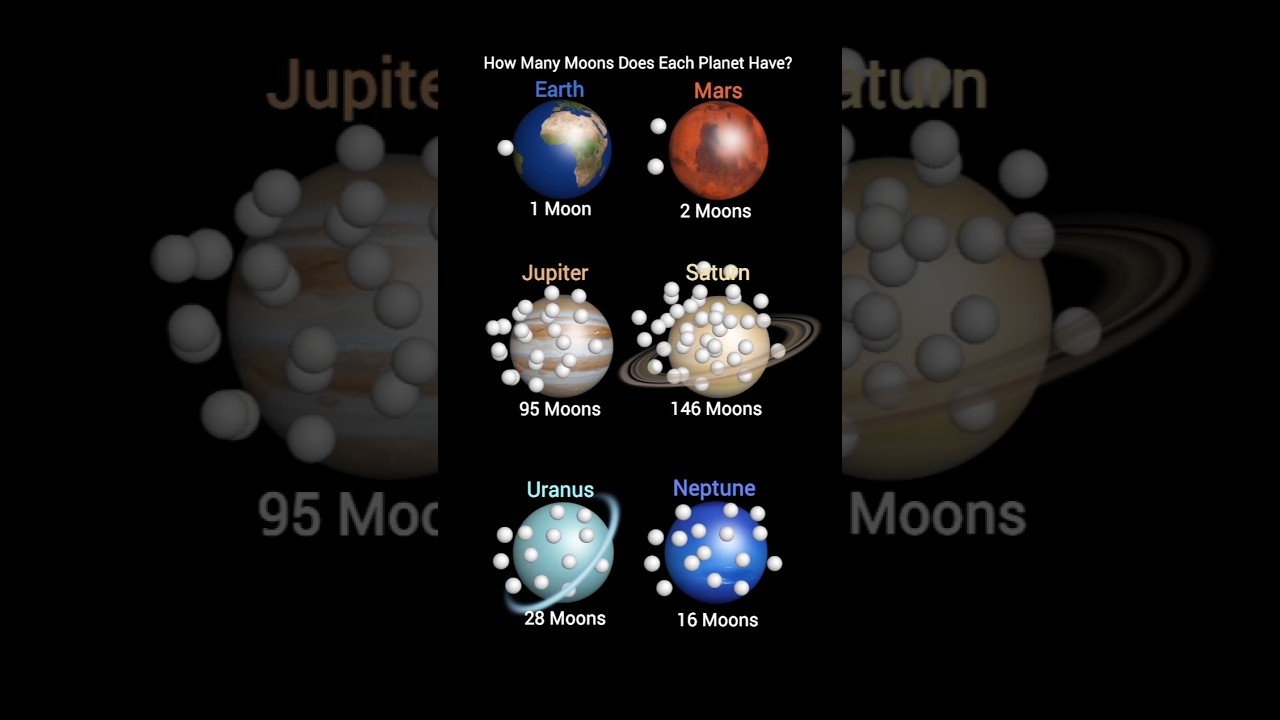
How Many Moons Does Each Planet Have?
ངངངངངང
88K views•2026-06-04

Nova Eruption — Stellar Astrophysics in 60 Seconds #Shorts
UnseelAstronomy
1K views•2026-06-07

How the Sun Pushes Space Weather Toward Earth
heavybrainspace
1K views•2026-06-04
NASA's bizarre discovery on an object from another star system #space #astronomy
InfiniteScienceLab
473 views•2026-06-05

The Scariest Thing NASA Has Ever Seen | The Cosmic Void Explained #Shorts #NASA #CosmicVoid
UnknownUniverseHub
104 views•2026-06-08

The Closest Planet To The Sun Has Ice #Shorts
FactReactor-d2q
2K views•2026-06-06
Star vanished without a supernova. Did it quietly become a black hole?#Space #Astronomy #BlackHole
astronova1784
301 views•2026-06-04