A classical nova is a thermonuclear runaway on the surface of an accreting white dwarf, where hydrogen-rich material from a companion star accumulates under degenerate conditions until the CNO cycle ignites explosively at 10 million Kelvin, causing the system to brighten by 8-15 magnitudes without destroying the white dwarf, which can then repeat the cycle over decades to centuries.
Install our extension to search inside any video instantly.
Nova Eruption — Stellar Astrophysics in 60 Seconds #ShortsAdded:
Imagine a star that overnight brightens by a factor of 100,000. No telescope yesterday, naked eye today. That is a nova eruption. And it has happened in our galaxy many times in the last century. Every classical nova hides a binary star. A white dwarf, the dense ember of a dead sunlike star, orbits a low mass companion. The white dwarf has no fuel of its own. The runaway will come from material it steals. The companion fills its robe. Hydrogen-rich gas spills through the inner lrangeian point L1 and falls onto the white dwarf, settling into an accretion disc that delivers it to the surface. Over thousands of years, hydrogen piles up on the white dwarf surface, compressed by ferocious surface gravity into electron degenerate matter. The layer grows toward 10 to the4 solar masses. A planet's worth of hydrogen pressed into a thin shell. When the base of the layer reaches 10 million Kelvin, the CNO cycle ignites. In ordinary gas, it would expand and cool. But degenerate matter cannot expand. Burning runs away exponentially, reaching a 100 million Kelvin in minutes. The optical light curve climbs by 8 to 15 magnitudes. A brightening of 10,000 to a million times. Peaks within a day or two, then declines. The faster the decline, the more massive the white dwarf. The burning envelope is ejected at a few hundred to a few thousand km/s, carrying away roughly the mass it took to ignite.
The white dwarf survives. Its surface still burns the residual hydrogen for months as a soft X-ray source. Then accretion resumes and the whole cycle can repeat. Recurrent novi like RSO fuchi and t corona borealis erupt every 10 to 100 years. TCB last erupted in 1946 and is forecast to brighten again around 2026. Nova versus supernova. A nova is a thin surface event. A supernova destroys the entire star. The energy ratio is a million. The ejected mass ratio 10,000. After a nova, the white dwarf is intact. After a supernova, nothing remains. But the open question hangs over the field. Does the white dwarf net gain mass over many cycles, slowly creeping toward the chandro limit and a type 1a supernova?
Or does each eruption excavate more than it accretes? The next great nova may help decide.
Related Videos

NOAA Warning! Massive Double Cannibal CME Impacting Earth: G4 Storm Watch!
worldnewsreporttoday
1K views•2026-06-04
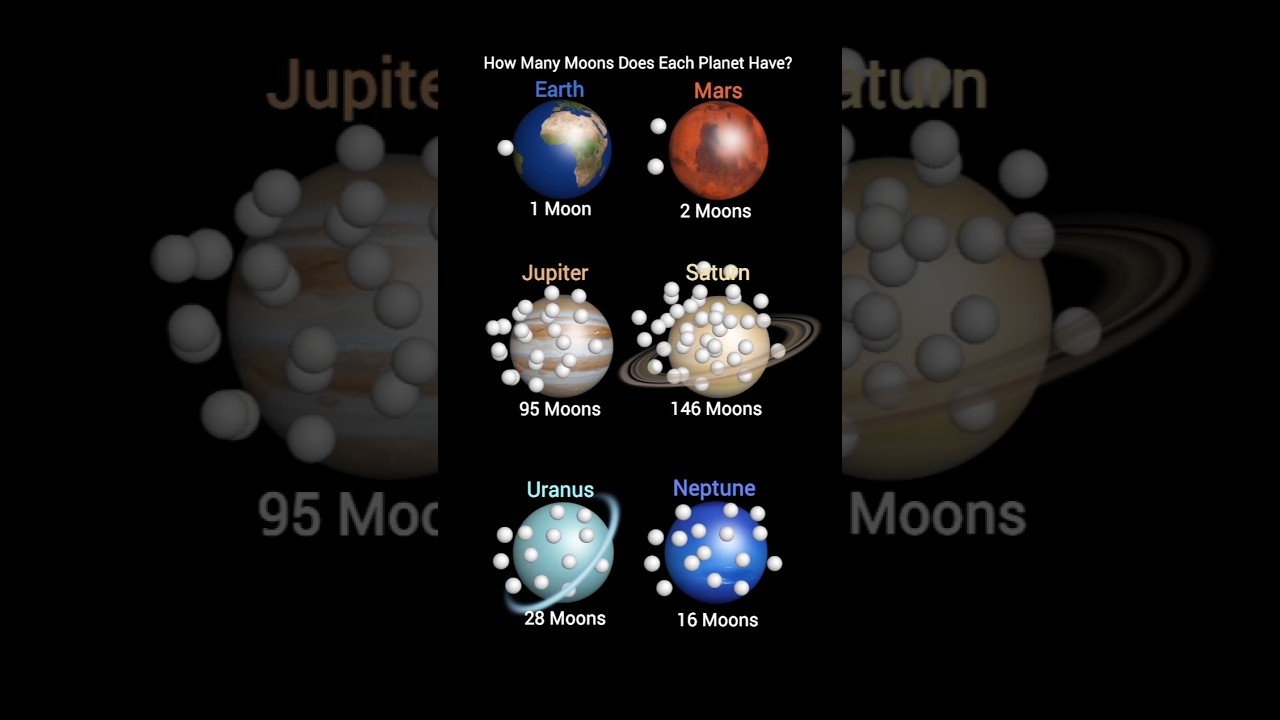
How Many Moons Does Each Planet Have?
ངངངངངང
88K views•2026-06-04

How the Sun Pushes Space Weather Toward Earth
heavybrainspace
1K views•2026-06-04
NASA's bizarre discovery on an object from another star system #space #astronomy
InfiniteScienceLab
473 views•2026-06-05

The Scariest Thing NASA Has Ever Seen | The Cosmic Void Explained #Shorts #NASA #CosmicVoid
UnknownUniverseHub
104 views•2026-06-08

The Closest Planet To The Sun Has Ice #Shorts
FactReactor-d2q
2K views•2026-06-06

NASA Finds Salt Water Volcano in the Asteroid Belt. Nobody Talk Is Talking About It
guess_what_i_found_out
1K views•2026-06-04
Star vanished without a supernova. Did it quietly become a black hole?#Space #Astronomy #BlackHole
astronova1784
301 views•2026-06-04