Environmental management practices, including poison devices, chemical spraying, and habitat interventions, often cause unintended harm to ecosystems by disrupting food webs, reducing biodiversity, and creating cumulative damage that spreads beyond intended targets, ultimately threatening the very systems they claim to protect.
Install our extension to search inside any video instantly.
Lethal Control: The Cost of Managing NatureAdded:
And you thought this was management.
They call it wildlife management, vegetation [music] management, forest management, pest management, land management, even atmospheric management.
The language is always the same, carefully chosen words designed to sound responsible, scientific, and necessary.
Management. But what if what we're witnessing is something else entirely?
What if the world that self has become a shield? One that hides the true cost being paid by the living world. Because when I look across the landscape today, I do not see management, I see the disappearance, I hear the silence. I see a slow unraveling that most people are too busy to notice until it reaches their own doorstep, and by then, the damage is already done.
The poison hiding in plain sight.
Recently, the government authorized the return of M-44 sodium cyanide devices on public lands. These devices are designed to kill predators. A bait [music] is placed, an animal pulls, a deadly dose of cyanide is released. Simple, efficient, managed. At least that's how it's described. But poison does not possess judgement. It does not distinguish between a coyote and a family dog. It does not recognize an endangered species. It does not understand the difference between a target and a mistake. The poison simply does what poison does, it kills.
And when we [music] place poison into an ecosystem, we are not interacting with isolated animals, we are interacting with an entire food web. Predators regulate prey, prey influences vegetation, vegetation influences insects, insects support birds, birds support ecosystems. Pull enough of those threads and eventually the fabric begins to tear.
Then there's glyphosate. Hundreds of millions of pounds applied across the American landscape year after year.
Sprayed onto crops, roadsides, [music] utility corridors, commercial forests, public lands, burn scars, waterways, and national forests. Entire regions have become dependent upon chemical intervention as a normal part of daily operations. Most people never even see it happen, but they live within it. They walk through it. They drive past it.
They breathe it.
Many stand at the edge of a field and believe they are inhaling the smell of fresh country air, the scent of summer, the scent of farmland, the scent of home. Yet modern agricultural landscapes are increasingly complex chemical environments involving herbicides, pesticides, fungicides, fertilizers, and countless other compounds moving through soil, water, and air.
The issue is not merely what lands where it was intended. The issue is what happens afterward. Wind moves, dust moves, water moves. Nature does not recognize property lines and once those substances enter a living system, they rarely remain confined to a single target. In Florida, residents began reporting something deeply disturbing.
Following aerial spraying operations near power line corridors, reports emerged of dead chickens, dead bees, dead wildlife. [music] Concerned residents demanded answers.
Local officials called for an investigation.
Whether every reported death can ultimately be traced to a specific operation is a question investigators must answer, but public reaction reveals something larger. People are beginning to recognize a pattern. Again and again, [music] interventions are presented as precise, controlled, necessary. Yet, the effects often appear far beyond the original target. The consequences spread, the damage [music] spreads, and trust disappears along with it. Perhaps the most disturbing changes are not the things that we see. They are the things we no longer see. Across North America, bird populations have declined dramatically within a single human lifetime. Billions of birds are gone.
[music] Not someday, not in theory, just gone.
Grassland birds, shorebirds, aerial insect eaters, species that once filled the skies and wetlands.
>> [music] >> The disappearance didn't happen all at once. It happened gradually, one missing flock, one empty nest, one silent morning at a time. Most people never notice because the decline rarely arrives with a headline. It arrives quietly.
There was a time when long summer drives required [music] cleaning the windshield every time you stopped for fuel. Anyone old enough remembers it. Bugs everywhere, moths, beetles, mayflies, dragonflies, lightning bugs, butterflies. The front of the vehicle became a record of life moving through the air. Today, many people notice something different. The windshield stays cleaner longer. The skies feel emptier. [music] The evenings feel quieter. Scientists continue debating exact numbers from region to region, but one thing is difficult to ignore.
And insects are not a minor detail in the story of life. They pollinate crops, feed birds, feed fish, recycle nutrients. They support the entire [music] ecosystem. They are the foundation upon which countless other species depend. The consequences do not stop with the insects. The effects ripple outward through everything.
Nature rarely leaves an empty space.
When healthy ecosystems weaken, something else moves in. Across many regions, invasive species continue to expand. Invasive plants, invasive insects, invasive pathogens, even pioneer ticks are spreading into new territory.
Pioneer mosquitoes thriving in altered environments. Diseases appearing in places where they rarely were seen before.
Many of the species that support a healthy ecosystem are in decline.
Meanwhile, many of the organisms best adapted to disruption flourish. The system becomes less stable, less diverse, less resilient, and more hostile to the very species trying to live within it, >> [music] >> including us. And then there are the forests. And some of those forests are treated as studies. Entire stands weakened by glyphosate and drought, disease, insects, wildfire, and repeated disturbances.
What once seemed permanent now appears fragile. [music] Millions of acres have been lost. Others are being chemically treated, logged, burned, [music] replanted, or managed according to increasingly intensive strategies. Large sections of public land become inaccessible, closed, restricted, controlled. The public is told it's for restoration, for safety, [music] for management. Yet, fewer people are allowed to witness what is happening inside these landscapes. The forest becomes part of the project. The public becomes the spectator. And now we arrive at the sky itself. For decades, humanity modified the ground, then the forest, then the rivers, [music] and then the oceans. Now serious operations exist to modify incoming sunlight and alter atmospheric processes. The justification is always familiar. The intervention is necessary. The experts [music] are in control. The risks are manageable. Yet sunlight is not a trivial component of life. Life flourished beneath it. Plants depend upon it. Pollinators depend upon [music] it. Wildlife depends upon it. Human biology depends upon it. Sleep cycles, hormonal regulation, vitamin D [music] production, your mood, your energy, your circadian rhythms. The atmosphere is not simply weather. It is part of the biological operating system of all life on Earth.
Any effort to alter our sunlight deserves scrutiny and protest [music] equal to the scale of its consequences.
The bigger picture, the cyanide devices, the herbicides, the pesticides, the aerial spraying, the forest treatments, the habitat loss, the invasive species, the disappearing insects, the declining birds, the dying forests, the atmospheric interventions, each issue is typically discussed as though it exists in isolation, but wildlife does not experience them separately, and neither do we.
The birds experience all of them. A forest experiences all of them. An ecosystem experiences all of them. Layer upon layer, pressure upon pressure, year after year, decade after decade, until the cumulative effect becomes impossible to ignore.
Perhaps that is the most important question of all. At what point does management become something else? At what point do endless interventions cease to be stewardship and become domination? At what point do we stop asking whether a program achieved its intended goal and start asking what was the cost along the way? Because when I look around today, I see a world being increasingly managed and destroyed.
I see fewer birds, fewer insects, weaker forests, more chemicals, more restrictions, more interventions, and less of the living world that once seemed abundant. Maybe the greatest warning sign isn't any single poison, spray operation, or policy. Maybe it's the growing silence itself. [music] The silence of missing wings, the silence of missing insects, the silence of forests that no longer feel alive.
The silence that settles over a landscape long before most people realize something has been lost.
And once the silence arrives, bringing life back is far more difficult than managing its decline. [music] Okay, skywatchers. Stay aware, be prepared, and until next time, keep looking up.
>> [music] [music]
Related Videos

Taking $10,000 Cash To Green the Driest Barrio in Bolivia
LeafofLifeEarth
528 views•2026-05-29
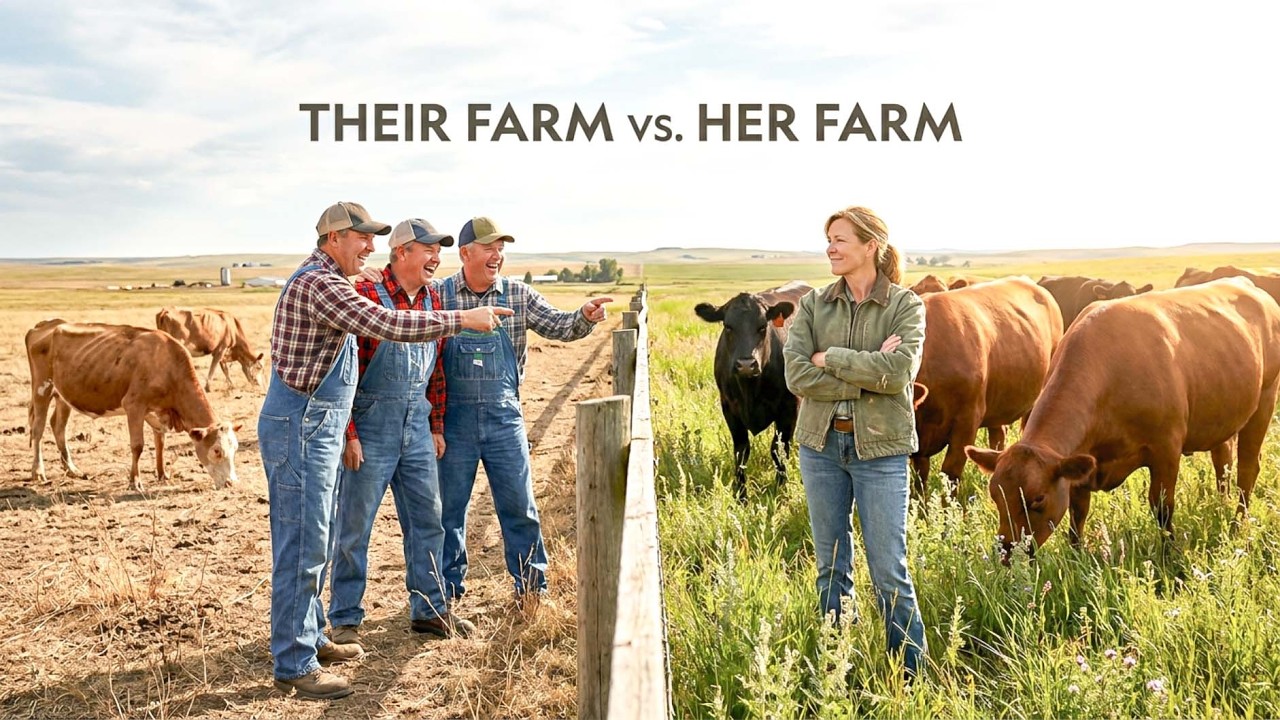
They Laughed When She Let the Weeds Grow Between the Fences — Then Her Cattle Outweighed Every Herd
BackroadHarvest
117 views•2026-05-28

Mozambique RELEASES AFRICA'S MOST DANGEROUS ANIMAL - After 2 Months, The Results Shock Scientists
SimpleDiscovery24
541 views•2026-05-29

Cute Seals Spotted On Remote UK Island | Our Tiny Islands
Channel4OnTour
141 views•2026-05-29

The Bay Poisoned by Mercury #shorts
harmedino
289 views•2026-06-01

Calgary Flood Watch Day 4 🚨 Bow River Not Expected to Peak Until Tomorrow
RealtorDhirYYC
103 views•2026-06-01

This Jamaican Pond Has A Deadly Reputation
MyEyesAreYours-i3s
656 views•2026-05-28

You must see this..My narrowboat journey continues to the end of the Bridgewater canal..#945
NarrowboatWill
2K views•2026-06-03



