General anesthesia does not induce sleep but rather disrupts the communication and integration between brain regions, effectively cutting the neural connections that create the unified sense of self; unlike sleep where the brain remains active and responsive, anesthesia creates a state where consciousness is completely switched off, and patients report no passage of time during the procedure, raising philosophical questions about whether the same 'you' that wakes up is truly continuous with the person who went under.
Install our extension to search inside any video instantly.
Where Does 'You' Go When You're Put Under Anesthesia?
Added:In a moment, someone slides a needle into your arm and pushes a cold, clear liquid. They ask you to count down from 10. You get to seven, and then you stop.
Not sleep. Not a nap. You stop existing.
For the next 4 hours, a team cuts into your body, moves your organs, saws through bone, and you are not there for a single second of it. No dreams, no darkness, no sense of time passing. Then your eyes open and four hours are simply gone like someone cut a piece out of your life and you never felt the scissors. Millions of people do this every single day and treat it like nothing. But here's what nobody says out loud. We still don't fully know how it works. Anesthesia is one of the most common things in all of medicine. And the question of where you actually go for those hours is still one of the biggest open mysteries in science. So let's walk into that dark together and find out exactly what we do know.
Because the honest answer is stranger than sleep. And by the end, it's going to be stranger than death. First, let's kill the biggest myth because it's hiding how strange this really is. We say someone is going to sleep because we're about to chemically switch off your consciousness is a rough thing to hear right before surgery. But sleep and anesthesia are not cousins. They're closer to opposites. When you sleep, your brain is busy cycling through stages, spinning up dreams, filing away memories, staying alert enough to snap you awake if someone shouts your name across the house. Under anesthesia, none of that happens. You cannot be woken, not by noise, not by your own name, not by a scalpel. On the monitors, a deeply anesthetized brain doesn't look like a sleeping one at all. It drifts toward the slow, silent, flattened patterns doctors associate with a coma. And at high enough doses, it edges toward the flatline we link with death. That's the part that never makes the consent form.
Anesthesia walks you right up to the border of not existing and holds you there on purpose so a surgeon can work to understand where you go. You first have to know what you are. Right now, your sense of being one single person, seeing, hearing, remembering, and feeling all at once, all bound together is built from something almost unbelievable. Billions of brain cells constantly talking to each other. Your vision talks to your memory. Your hearing talks to your emotions. Your sense of your own body talks to your sense of time. That non-stop lightning fast conversation roaring across your whole brain at once is what many scientists believe consciousness actually is. Not a soul sitting in one little room behind your eyes. A conversation. And here's the genuinely disturbing part. The drug does not switch your brain cells off. Look at the cells and most of them are still firing.
What the drug does, this is what researchers at places like the University of Michigan watch happen when they scan a person going under, is cut the lines between them. Picture a huge city at night and someone quietly snips the phone lines one by one by one. Every building still has its lights on. Nobody can call anyone. And the conversation that was you just loses signal and falls silent. And the instant that network can no longer pull its scattered pieces into one hole. The thing you call you doesn't dim down slowly like a sunset, it cuts out like a switch. Now really sit with what people report from deep anesthesia because it is not darkness. Darkness is still something. Darkness is a you sitting there experiencing black. This is the absence of even that a gap with no inside to it. People wake up and say it felt like no time passed at all. They were counting backwards from 10. And the very next instant, they're in the recovery room, groggy, being told it's over. The hours in between didn't feel long. They didn't feel short. They didn't feel like anything because there was no them there to feel them. And there is only one other stretch of time anyone has ever described in exactly those words. The time before you were born. Here's where it gets genuinely unsettling and where medicine itself had to admit something uncomfortable. For decades, a quiet horror hid underneath every operation. What if a drug could freeze your body and wipe your memory but not fully switch off the part of you that feels? It has a clinical name, anesthesia awareness, and in rare cases, it is real. There are documented patients who woke during surgery, unable to move a single finger because a second completely separate drug had paralyzed every muscle in their body, aware of the surgeons talking over them, and unable to make a sound to tell anyone. To everyone in that room, they looked perfectly peaceful. Now, how rare is it really? Older estimates put it around one or two in a thousand. But when doctors ran the huge national audits and counted only the cases patients actually came forward to report, it turned out to be far rarer than that, closer to one in 19,000. And modern brain monitoring has pushed it lower still. But its very existence proves something profound about you. Consciousness, movement, and memory are three separate switches.
Anesthesia has to find all three and flip them correctly every time. The fact that it almost always does, that is the real quiet miracle you never think about. And that raises a question that should bother you more than it does. If you're switched off and you can't move and you won't remember. How does anyone in that room actually know how far under you are? For most of history, they didn't. Not really. They watched your heart rate, your blood pressure, the flicker of an eyelid, and they made skilled, careful guesses. Too little drug and you drift up toward that awareness nightmare. Too much and you slide toward the flatline for real. So the whole art of anesthesia is a person standing at a dial holding you in a razor thin band between still here and gone forever for hours. Today they have machines that read your brain waves and print a single number for how deep your consciousness has sunk. An actual meter for the light inside you. Sit with how strange that is. We built a device whose only job is to measure how much of you is currently switched on. And it works well enough that we trust it with millions of lives a year. But even that number can't answer the real question.
It can tell the surgeon the conversation has gone quiet. It cannot tell anyone where the conversation went. Now, the question science still cannot answer.
The one I promised you at the start, the one that's going to follow you around a little after this video. When the conversation goes completely silent and then hours later it reboots, how do you actually know it's the same conversation? The original you was, in the most literal sense, switched all the way off. What wakes up is a brain reassembled from the same parts, holding the same memories, and completely, unshakably convinced that it is continuous with the person who counted down from 10. But there is no test, none, that can prove the light that came back on is the same light that went out.
Maybe it is. Or maybe every single time you go under, the old you quietly ends in the dark. And a perfect copy loaded with all your memories and certain it's you wakes up to finish living your life.
There is no experiment anywhere that could tell those two stories apart. This is what your brain does for a living. It edits you out of your own life and never once sends you the notification. And if that doesn't unsettle you enough, the exact same logic quietly applies to the gap between falling asleep and waking up every single night. So the next time someone tells you anesthesia just puts you to sleep, you'll know it does something far stranger than sleep. It doesn't turn your mind down. It severs the connections that make you one person, dissolves the conversation that is you, and parks you right at the border of non-existence. And then through a process the best scientists on earth still can't fully explain, it lets all the pieces quietly find each other again in the dark. You count to seven and you come back from the closest thing to nothing a living person can ever touch. So I have to ask you, have you ever been put under? What's the last thing you remember before it went? And what did that gap feel like from the inside? Tell me below.
Related Videos
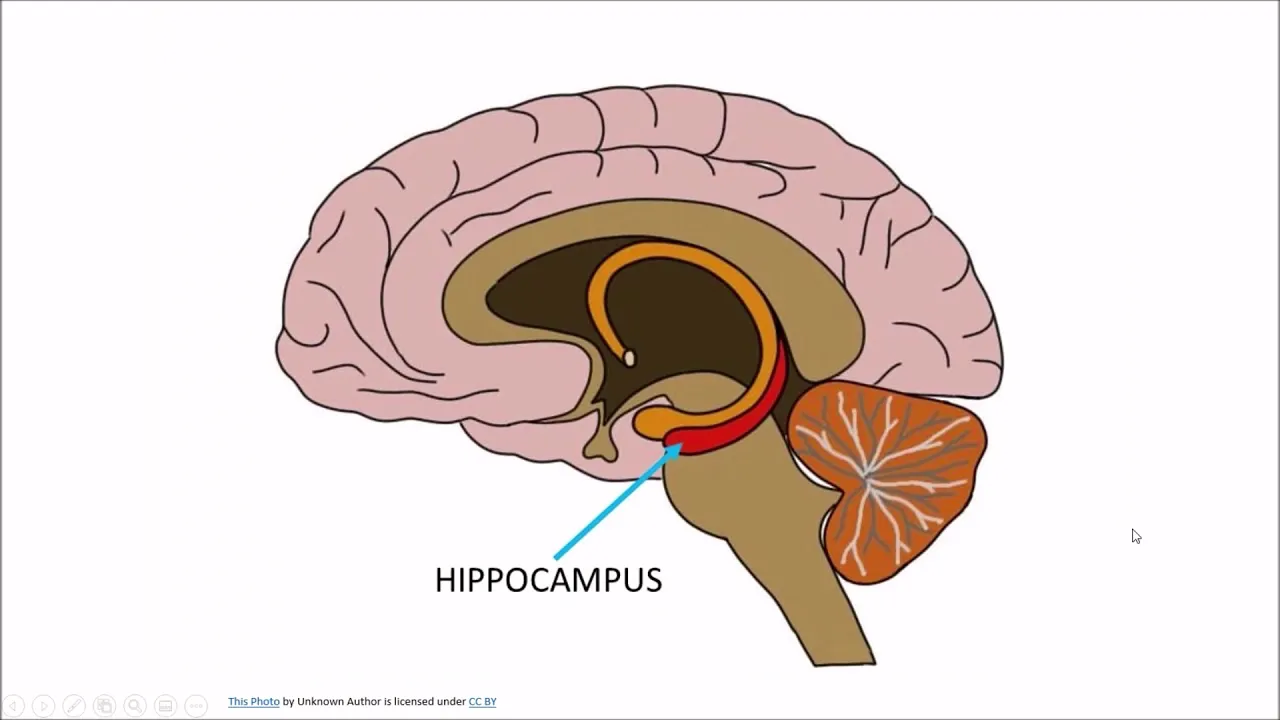
8:08
Neuroscience
What is neurodegeneration?
TheSheekeyScienceShow
3K views•2019-08-19
57:35
Neuroscience
IPL - Ruth Empson "Mind the Gap"
otagouniversity
251 views•2019-07-08

14:01
Neuroscience
How our body shapes our mind | Pancho Tolchinsky | TEDxNapoli
TEDx
2K views•2019-12-05

1:00:02
Neuroscience
Impact of Early Life Deprivation Danielle Stolzenberg Marcus Pembrey Bruce McEwen
uctv
4K views•2019-12-01
10:32
Neuroscience
β-Caryophyllene for Parkinson’s: Protecting Dopamine & Easing Symptoms
parkinsonsdiseaseeducation
6K views•2025-08-09

20:44
Neuroscience
New Insights from Inside the Brain with Rodrigo Braga, PhD
NUFeinbergMed
421 views•2025-04-14
9:57
Neuroscience
Highlights for dystonia • 2025 MDS Congress
movedisorder
145 views•2025-10-27
58:17
Neuroscience
Animal Welfare Synergy Series: Dr Tom Smulders on hippocampal neurogenesis
costactionlift
135 views•2025-07-14
Trending

32:49
Engineering
we're almost finished the house (ep.125)
JennaPhipps
347K views•2026-07-22

21:29
Astronomy
We Finally Know Where Saturn’s Rings Came From
astrumspace
79K views•2026-07-22

12:13
Business
BIG BET: Cathie Wood goes ALL IN on Elon Musk
FoxBusiness
89K views•2026-07-22

13:55
History
MIC DROP: Smithsonian Director Called Out For Woke Propaganda
TheAmalaEkpunobi
37K views•2026-07-23