Rhodes masterfully demonstrates how Art Deco’s geometric rigor bridges the gap between modern design and ancient myth. It is a rare, insightful look at how architectural language dictates the emotional scale of a fictional world.
Install our extension to search inside any video instantly.
Demons in Dry PlacesAdded:
That was MY kill!
Okay, that animatic was by Tail by Frank. He came to me and asked if he could animate the fight scene from episode 3 just for the love of the game. And man, it is so fun. It's so cool to see his interpretation of the events and set to motion like this. I don't even know what to say. That's not true. I'll say this hints at the potential of this material in a way that few other mediums can.
I even got to do a little bit of voice acting here as the Warthog, although pitched down and muffled behind a mask. It's hard to describe just how inspiring and invigorating I find work like this. So, to Tail by Frame, thank you very much. You'll find a link to his Instagram in the description of this video. He's just building up his channel, so give him a follow. Okay, on to the illustrations. Demons in Dry Places. A while back, I made a video specifically about this location, the Dry Places. If you haven't seen that, think of them like the anti-dolivian back rooms. They're an aspect of creation that was not meant for humans to tread. One of my favorite metaphors is that these are part of the necessary infrastructure of the universe, like shipping yards, refineries, steel mills, the unders sides of overpasses, places that are necessary to keep things running, but are not good places for us to be. However, through the gift of secret knowledge the Watchers have given humanity, they are able to access these places, seeking more knowledge of their own. In this image, a psychonaut has come seeking wisdom, and he's prostrated himself before a tortured Nephilim spirit, otherwise known as a demon. While some parts of the dry places are vast, others are cramped and claustrophobic. The checkerboard pattern may seem almost anacronistic, meaning out of its time. But this pattern is ancient. I'm using it as a visual shortorthhand in the dry places for a few reasons. First, I picture it as the only way that the human mind can comprehend some fundamental mathematical principles of the universe. Like they don't really look like this.
This is just what happens when run through the human mind. Second, it's a visual language that's common in a couple places. One is in the reports of people who use pharmarmacia to travel to these places in the modern day. They often come back reporting high contrast geometrical patterns. The other is in the preferred motif of the Freemasons. Both of these groups in their own way seek the hidden knowledge of the universe. Both have fixated on these types of patterns. Therefore, it's a good visual hook to start with. This will be the second image from a coliseum in this series. It feels like a long time ago now, but I've already drawn the shipwright in this location. Here, I thought I'd take a different vantage point. Now, we're inside one of the gates through which the creatures are inflicted on the victims. In this case, a relatively small carnotaurus. In the earlier illustration, the shipwright in Bastion had dispatched a number of dinosaurs and serpents, so I wanted to mix things up. In the last video, I drew a Nephilim gladiator celebrating victory over a great white ape. That was a lot of fun, and I did say eventually in the story, the shipwright will face them himself. This is just an aftermath, but it's also a great way to hold myself accountable in the future, almost like an idea bookmark for later. So, here the shipwright and Bastion have taken out three of them, and it's time for whoever runs this show to up the ante. Part of the intention of this series is to explore the inescapable danger of this world. And so, in an effort to increase the overall feeling of danger in this world, I added some splatter around the dragon's mouth to make it look like this is not its first time in the arena today. Reaction shots are incredibly important. They help to give everything scale.
I've been drawing a number of dangerous scenarios throughout this series. I thought it would be good to cut back to the shipwright's wife as she and her sons hold down the fort while they're away.
The terrifying world they live in has necessitated that she become quite proficient with a range of weapons. Normally with her sons around, a small band of invaders like this wouldn't get so close.
But there are very few of them, and they were taking care of invaders elsewhere. Therefore, everyone must be proficient with weaponry. The perils at home are a heavy reminder to Nama of the dangers her husband is facing during his last mission. By the way, a quick interjection.
If you want to be a part of helping projects like this get out there into the wider world, consider following me on Patreon, where we're slowly gathering a collection of rambunctious and rowdy storytellers, or just like, subscribe, share, the usual social media stuff. Okay, interjection over. Sharpeyed long-term viewers of this project may have noticed that this is the very first image of the exterior of the Shipwrites project, which you may be excited to hear has made me realize that it's time to tackle this subject. I need to design Noah's Ark. So, that will happen in the very near future. For now, it's hidden in silhouette. Cheap, I know, but it's not ready yet.
We just get a hint. During the world building portion of this series, it would have been all too easy to stay trapped in that stage forever and ever and ever, designing every little thing. But, I wanted to get to the story. However, every now and then, due to flashbacks and cutaways, there are some things that I just need to design. This one will be mandatory. Now, back to the story. The shipwright awakes from his all too familiar nightmare. In the previous panel, he had a vision of the flood reaching his home valley. He's been having dreams like this for nearly a century, and they never get any easier. His faithful companion, Bastion, is familiar with these episodes, and he was getting up before the shipwright woke up. The next panel requires that I spend a little bit more time with architecture. One of the best and most frustrating aspects of creating sequential art is that it requires you to draw stuff that you wouldn't otherwise have drawn.
It is very stretching. For this next panel, I want there to be the ruins of a town or city that have been overgrown. In order to do that, I need buildings. I hinted at using art deco as a foundation for the design language. It's one thing to say it, it's another one to actually do it. So, for this location, I went and did some research. I found some references that I thought hit the right tone, and I tried to simply sketch them out to get a feel for them. What this really did was help me break down a few principles. There's a strong sense of verticality, very tall shapes, but also lines that reinforce that verticality and draw the eye upwards.
It's like a reaching for the heavens kind of design language. Very aspirational. Second, one of the reasons I think art deco works so well is that it's a kind of neocclassical style. It's trying to capture the best of Greek and Roman architecture, but in a modern context. One way that manifests is the visual language of steps, almost like a ziggurod or temple. So, I'm referencing back in time to people who are referencing even further back in time to find a visual language that I can use for even further back in time. I made a quick sketch and took it about as far as I could in this format and then made the move into Blender. At this point, I'm not making anything fancy. This is like a foam core model. You can take the best 2D sketch ever, and when you translate it into 3D, you'll find problems you didn't know existed. So, it's really good to look at it in this format. Once I had taken my 2D sketch into a rough 3D model, it meant that I had a little 3D pallet of parts. So, I decided to start mixing and matching them. I think it's a good stress test. If these pieces are versatile and they can be used to make different silhouettes in different contexts, then they're worth keeping around. I built some other structures. I built a mansion with a couple wings. And then I stacked them very high and tried to create a very large palace or temple. Once I had a small collection of buildings, I blocked in the landscape according to the thumbnail sketch. Nothing too crazy here. These are just a loose outline. And I'm not going to be very particular about my inking stage. I just want to have a convincing sense of depth and scale. So, using my 3D model as a sketch layer, I drew in the overgrowth and extra details and could begin the inking process. Images like this feel like they're going to be overwhelming. To sell an establishing shot like this requires loads of detail. But, as I often say, step by step, bit by bit, it ends up coming together and often sooner than you'd think. Thankfully, this is a lot of fun to do. You get to have fun as a set designer, set dresser, prop maker, and really one of the best parts is just imagining what it would be like to walk through this place, drawing the sorts of things you might expect to see, and just trying to follow the general logic of what would be the most likely. Where would things be overgrown? How would these buildings relate to each other? And the shot itself ends up being somewhat simple.
But hopefully, for those who like doing that sort of thing, looking at the details is rewarding.
It's waiting there to be discovered for people who want to take the time. I think that's an important ingredient when you're trying to build a world that's believable, that's able to invite readers to sink into it for a while. Well, thank you very much for watching. We'll see you next time.
Related Videos

Futurism: The Radical Art Revolution That Predicted the Modern World
HENITalks
154 views•2026-05-29

Jack Levine, Witches' Sabbath
smarthistory-art-history
471 views•2026-05-29

고가 중국도자기 경매
고가古家고도자기경매
203 views•2026-05-29

क्या भगवान शिव हारिती की नकल हैं? झूठे दावे का पर्दाफाश | हारिती बौद्ध देवी बनाम भगवान शिव
sanatansamiksha
1K views•2026-05-30

This is one of the biggest street art exhibitions in London but there’s a twist 👀 Danish
ExploringLondonCity
1K views•2026-05-30
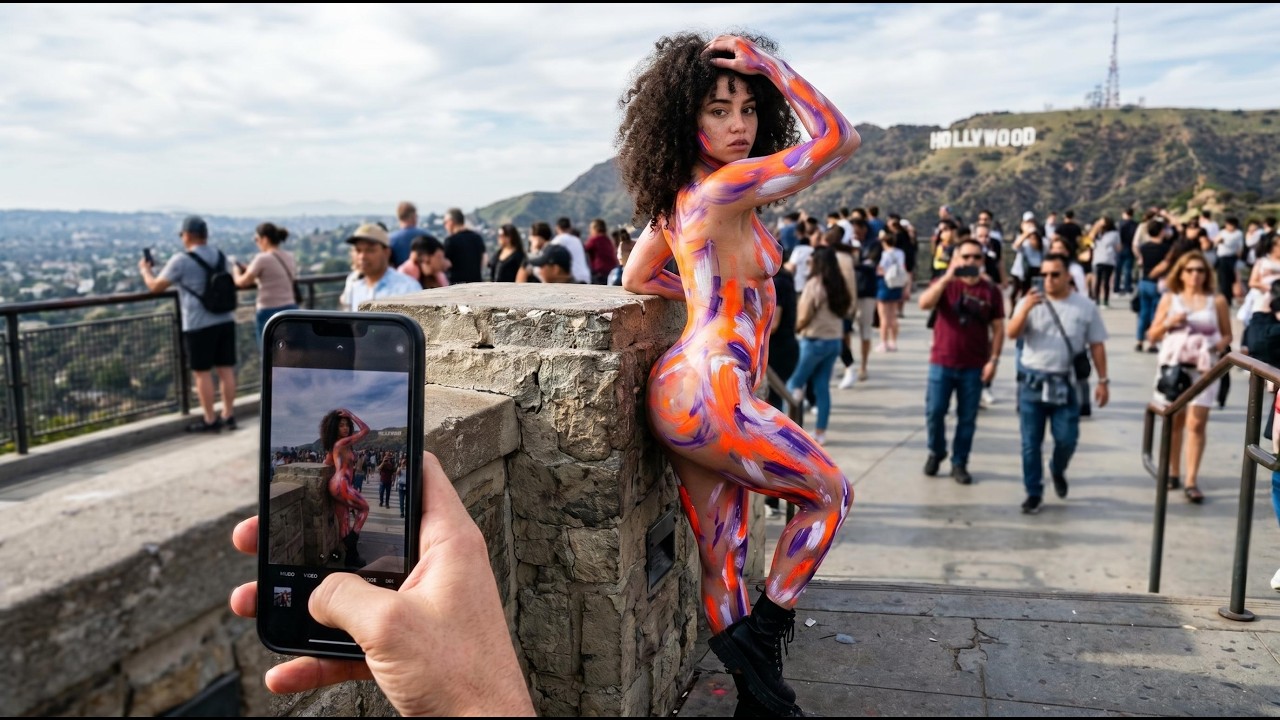
How Hollywood Body Art Changed the Way America Sees the Human Body Forever
Ink_and_Instinct
213 views•2026-06-02

Gudok Bull #4 #gudok #instruments #russia #russian #ancient #ancienthistory #sunoai #suno
aimechanicalbull
289 views•2026-05-29

Michelangelo Knew the Right Answer. They Ignored Him for 400 Years. | VERSO
VersoArt
123 views•2026-05-29



