Dr. Sinclair provides a necessary neurological framework that moves beyond the cliché of memory loss to address the visceral, often overlooked realities of cognitive decay. This is a profound shift from merely managing symptoms to understanding the biological tragedy of a fragmenting self.
Install our extension to search inside any video instantly.
7 Dementia Changes That Blindside Families
Added:If you've recently begun caring for someone with dementia, chances are you spent a lot of time reading about memory loss. You'll hear about forgetting names, misplacing keys, repeating questions, getting lost. Those are the changes everyone talks about. But after nearly two decades as a neuropsychologist, I can tell you that those aren't usually the changes that catch families off guard. The changes that truly blindside care partners are often the ones no one prepared them for.
The moment your loved one insists nothing is wrong despite you seeing a lot of red flags. The moment they become overwhelmed by a busy restaurant. The moment they stop attending activities they once loved. The moment they seem like a different person emotionally.
Those are the moments families often tell me, "I wish someone warned me sooner." So today, I want to walk you through seven dementia changes that catch you by surprise. Not to scare you, but to prepare you. Because when you understand what's happening inside the brain, these changes become far less confusing. And when things make more sense, things are easier to manage. Hi, for those of you new here, I'm Dr. Sinclair, a neuropsychologist, dementia care specialist, and founder of the Confident Caregiver Academy, where I teach loving care partners like yourself how to care for your person with dementia and themselves. Let's jump on in. First, I want you to imagine an iceberg. Most people think dementia is the part that you can see above the water, memory problems, forgetting appointments, repeating questions, etc. But memory is only the tip of the iceberg. Beneath the surface are all the brain changes caregivers rarely hear about. Changes in judgment, emotional regulation, changes in awareness, and processing, changes in sensory filtering. Those hidden changes are often what create the biggest challenges. Let's start with one of the biggest surprises. First change, they may stop realizing they're having problems. This is one of the hardest changes for families to understand because from your perspective, the difficulties seem obvious. They're forgetting appointments, misplacing medications, they're getting lost. But when you bring it up, they say things like, "I'm fine. I don't need your help.
You're worrying too much." Many caregivers assume they're simply in denial, and sometimes that's true, but often something else is happening. The brain is losing the ability to accurately evaluate itself, and this is called anosognosia, and it means the awareness system itself is changing. I often explain to my families that this isn't primarily a memory problem or a denial problem. It's a problem involving the brain's frontal networks, the areas responsible for self-monitoring and insight. Think of these areas as the brain's internal quality control department. They're constantly comparing what we think we're doing with what's actually happening. As those networks become damaged, that internal checker becomes less reliable. So your loved one may genuinely believe they're functioning normally because the brain can no longer accurately recognize its own weaknesses. That changes everything because you stop asking, "Why won't they admit there's a problem?" and you can start asking, "How do I help someone who can't even fully see that there's a problem?" That's a much more productive question. Second change, everyday noise suddenly becomes exhausting. A caregiver told me once, "We went to our favorite restaurant, and halfway through dinner my husband suddenly became angry and wanted to leave. Nothing happened, Dr. Sinclair." Or so she thought. What she didn't realize was that his brain had been working overtime. The conversations, the music, the clattering dishes, the waiter asking questions, people walking by. Healthy brains constantly filter out background information so we can focus on what's important, but dementia often affects the brain's attentional networks.
Instead of hearing your voice while everything else fades to the background, every sound competes for attention at the same time. Imagine trying to have a conversation while every radio station is playing simultaneously. That's what it's like for a dementia-affected brain.
By the end of the meal, their brain has essentially been running a marathon.
This is why quieter environments often lead to calmer behavior, not because they want to be antisocial, but because their brain has become overwhelmed, easily overwhelmed. Quick pause, care partners. If you're learning something new, then please go ahead and like and subscribe to this channel. That small action tells YouTube to share this with other caregivers who may also be struggling. Thank you. Now, let's move on. Third change, they may stop starting things.
This is one of the most misunderstood symptoms. Families often tell me, "They just sit there. They've become so lazy.
They don't want to do anything anymore."
But often the issue isn't motivation, it's initiation. In neuropsychology, we often call this impaired executive functioning. Executive functions are largely managed by the frontal lobes, the brain's CEO. This network helps us plan, organize, sequence, and most importantly, get started. Initiation.
Think about your car.
The engine runs perfectly once it's started. The problem is getting it started. The dementia brain can work in the same way. The person may still enjoy the walk, the puzzle, the music, the visit. They simply can't generate that first step on their own. Initiation.
That's why gentle prompts often work far better than criticism. Fourth change, emotions may change before memory becomes severe. Many families prepare for forgetting. Very few prepare for fear, anxiety, irritability, or suspicion. One reason this happens is because different brain regions play different roles and degrade at different rates. The deeper emotional centers of the brain help us detect threats and generate emotional responses. Normally, the frontal lobes help to regulate those systems. Think of it as the brakes on those systems. As dementia affects those frontal regions, those brakes become less effective. So, emotions that once stayed small can suddenly become very big. Your loved one is not trying to overreact. Their brain is becoming less able to regulate those emotions. When you understand that, their reactions become much easier to interpret with compassion. We're not saying that bad behavior is okay. I'm giving you this knowledge again to arm you, to prepare you. Fifth change, pain doesn't always look like pain. This one surprises almost everyone. If someone with dementia develops pain, they may not tell you. Instead, you may notice more agitation, more pacing, more refusals from them, more confusion, more aggression. And here's why. Dementia can affect a person's ability to interpret what's happening inside their own body.
And it can impair how they communicate it. They may know something feels wrong without recognizing it as pain or without being able to explain where it hurts. So, instead of communicating distress with words, the brain communicates distress through behavior.
That's why whenever I see a sudden change in behavior, one of my very first question is always going to be what else could be going on? Could they be having an infection? Could it be constipation, pain, dehydration? Never assume every new behavior is simply dementia progression. Next change, sleep changes can affect everything. Poor sleep doesn't just make someone tired, it reduces the brain's reserve. In neuropsychology, we often talk about something called cognitive reserve.
Think of reserve as the brain's backup battery. On a good day, that reserve helps someone compensate for the damage caused by dementia. But, poor sleep, illness, dehydration, medication changes, even a stressful day can drain that reserve very quickly. Suddenly, memory looks worse, patience decreases, confusion increases. Families often think, "Oh, no, we've now progressed to a different stage." And sometimes you have, but sometimes what you're seeing is a brain that temporarily has less reserve to compensate. That's why someone can have very good days and very difficult days without the disease itself changing overnight. Final change, they may feel different long before they stop remembering you. This may be the hardest change of all. Families often tell me they're still here, but they don't seem like themselves anymore. Many people assume personality lives in one part of the brain. It doesn't.
Personality is really the result of multiple brain networks working together. Memory, emotion, empathy, social judgment, language, motivation, executive functioning. As dementia gradually affects these different networks, your loved one may still recognize your face, but they may express affection differently, respond differently, laugh differently, react differently, connect differently. That's why caregivers often feel they're grieving someone who's still physically sitting right in front of them, but they're not the same person. If you've experienced these changes, you're not imagining it, and you're certainly not alone. Please feel free to share the changes that you're witnessing in your person with dementia, and let's come together and support each other. As we wrap up, I want to bring us back to that iceberg. I hope you now realize that memory is only the tip of the iceberg when it comes to dementia-related changes. Underneath the surface are countless brain changes that influence how someone thinks, feels, communicates, and experiences the world. Most families are told to expect memory loss. Very few are prepared for everything else, which is exactly why I created Caregiver Academy. Because understanding these hidden brain changes is only the first step. Learning how to respond to them is what brings about confidence. If you'd like help navigating this journey, then go ahead and schedule a call with me below. I'll see you in the next one.
Bye.
Related Videos
8:08
Neuroscience
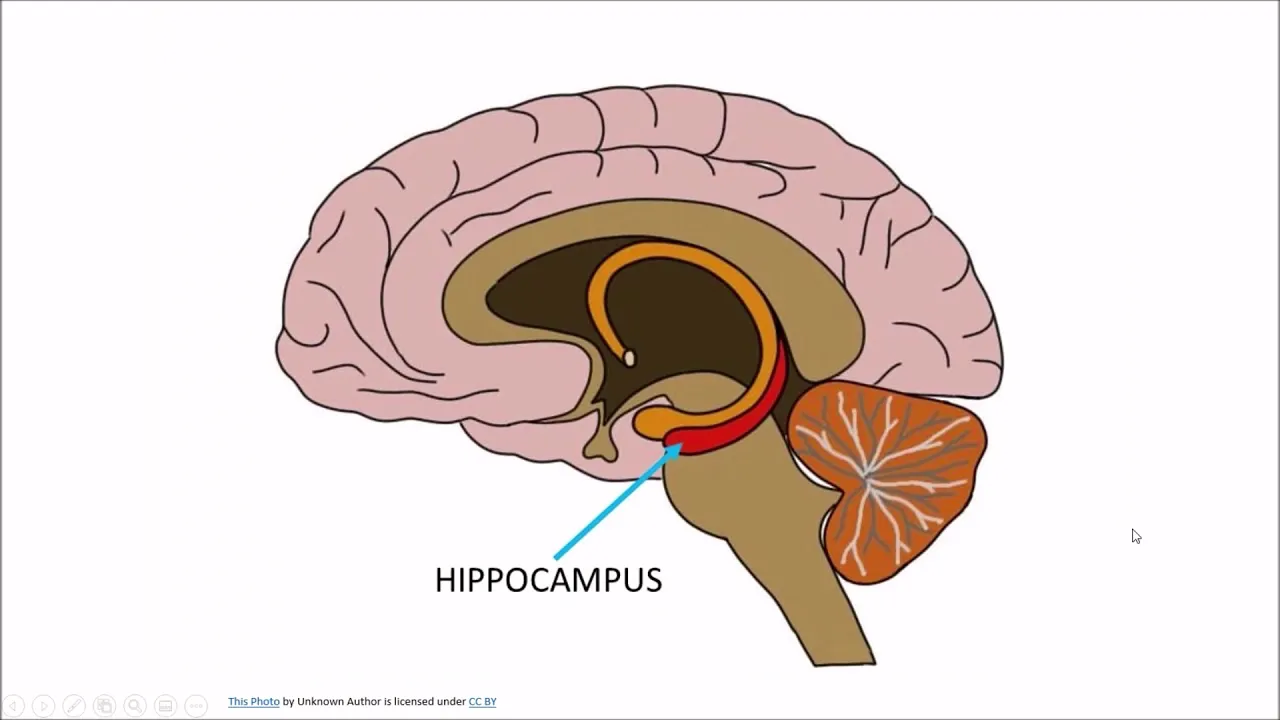
What is neurodegeneration?
TheSheekeyScienceShow
3K views•2019-08-19
57:35
Neuroscience
IPL - Ruth Empson "Mind the Gap"
otagouniversity
251 views•2019-07-08
14:01
Neuroscience
How our body shapes our mind | Pancho Tolchinsky | TEDxNapoli
TEDx
2K views•2019-12-05

1:00:02
Neuroscience
Impact of Early Life Deprivation Danielle Stolzenberg Marcus Pembrey Bruce McEwen
uctv
4K views•2019-12-01
10:32
Neuroscience
β-Caryophyllene for Parkinson’s: Protecting Dopamine & Easing Symptoms
parkinsonsdiseaseeducation
6K views•2025-08-09

20:44
Neuroscience
New Insights from Inside the Brain with Rodrigo Braga, PhD
NUFeinbergMed
421 views•2025-04-14
9:57
Neuroscience
Highlights for dystonia • 2025 MDS Congress
movedisorder
145 views•2025-10-27
58:17
Neuroscience
Animal Welfare Synergy Series: Dr Tom Smulders on hippocampal neurogenesis
costactionlift
135 views•2025-07-14
Trending

9:05
Artificial Intelligence
2.4 BILLION Records Got Leaked...
DeepHumor
15K views•2026-07-22

13:25
Business
Playstation NO DISC/NO BUY Fight Is Over...
DavidJaffeGames
4K views•2026-07-23
19:32
Business
Should I buy a Sawmill?
essentialcraftsman
29K views•2026-07-22

16:52
Anthropology
Americans Confused in Australia for 17 Minutes Straight
IWrocker
17K views•2026-07-23