This video teaches a systematic method for building all three main types of 7th chords (major 7, dominant 7, and minor 7) from a single major triad shape using two small moves: first add the root note and bring it down by a half step to create a major 7th chord, then move the top note down another half step to create a dominant 7th chord, and finally move the middle note down by a half step to create a minor 7th chord. This exercise is practiced through all 12 keys using the circle of fifths to develop muscle memory and ear training for recognizing the distinct sounds of each chord type.
Install our extension to search inside any video instantly.
This One Exercise Teaches You Every 7th Chord
Added:Mastering seventh chords is absolutely essential if you want to play jazz piano. Simply understanding them is not enough. You need a repeatable practice method that you can use until you have that muscle memory completely locked in.
So, let's do it. Let's practice them together. The only thing you really need to know before doing this are your major triads in every key. And I'm going to show you a neat little trick to quickly construct major seven, dominant seven, and minor seven chords, which are the only three you should really be focusing on to start with.
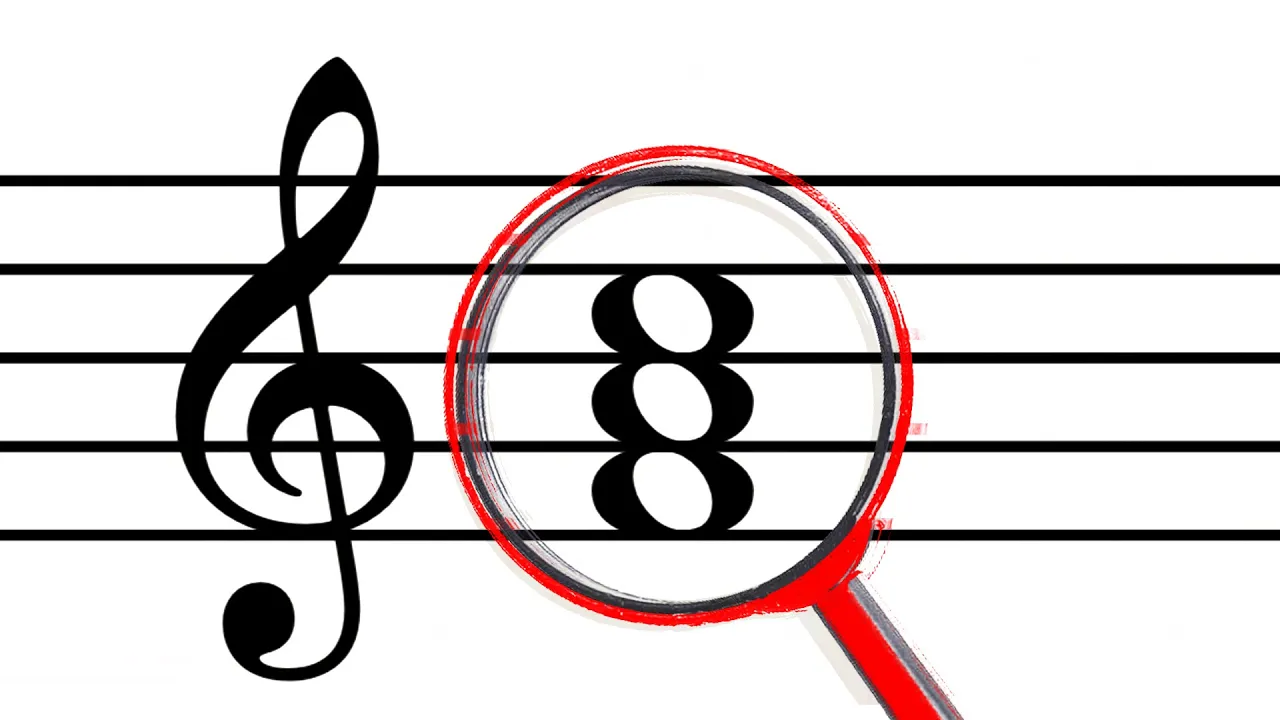
So, a quick 1-minute lesson, and then we'll practice them together. In the key of C, play a major triad.
>> [music] >> And you want to use your first, second, and third fingers for this.
From here, add the root note up at the top, but bring it down by a half step.
And this gives us a C major seven.
And this process works for working out any major chord, any major seven chord in any key. That's going to be the starting point for this exercise.
Try it out in a few keys. D major.
There's the triad.
Add the root note at the top.
Bring it down by a half step.
That gives us D major seven.
In B, B major triad, add the root note, bring it down a half step.
>> [music] >> B major seven.
Last one in A flat. A flat major triad, add the root note, bring it down a half step.
A flat major seven.
>> [music] >> So, that right there gives you a solid system to quickly work out any major 7th chord. Now, for the actual exercise we're going to practice together.
Starting in C, work out a C major 7, which we've just done.
And try to just play the major 7th chord straight away if possible. But, if you need to, you can go through that process with the root [music] and half step.
So, play a major 7.
We're going to hold this for four beats.
>> [snorts] >> And after that, we're going to move the top note down by another half step.
This gives us a C dominant 7.
We're going to hold this >> [music] >> for another four beats.
And finally, bring this middle note, the one your second finger is on, down by a half step.
This gives us a C minor 7.
And as you hold each chord, you can even say the name of it out loud. And also notice the different character and sound that each one gives.
C major 7.
C dominant 7.
>> [music] >> C minor 7.
Once we've done this in C, we're going to repeat it in every key, going around the circle of fifths, which basically just means move it up a fifth each time.
So, from here, the next position would be in G.
G triad [music] with the root down a half step to quickly give us G major 7.
>> [snorts] >> And then from here, we move [music] the top note down a half step again to give us C dominant 7.
And then we move this middle note down a half step to give us a C A G minor 7.
And then again in D. So, D major 7, D dominant 7, D minor [music] 7, and so on.
We're going to practice this entire exercise together along to a backing track. To get the most out of this lesson, make sure you download the free workbook, which has the notation written out for the full exercise as well as the backing track, which we're just [music] about to use. You can download these now using the link in the video description, and it's completely [music] free. Okay, so let's jump into it. Try and follow along the best you can, starting with a C major 7.
Bring the top note down.
C dominant 7.
>> [music] >> Middle note down.
C minor 7.
We've got a bit [music] of time to think about the next chord.
G major 7.
G dominant 7.
>> [music] >> G minor 7.
Coming up is a D major 7.
>> [music] >> Bring the top note down.
D dominant [music] 7. Middle note down.
D minor 7.
Let's just keep going.
A major 7 next. [music] A dominant 7.
A minor 7. [music] Next is an E major 7.
>> [music] >> E dominant 7.
E minor 7.
>> [music] >> And you'll start to really get the hang of this process.
>> [music] >> B major 7 that was I missed.
B dominant 7.
B minor 7. [music] Next is an G flat major 7.
To [music] a G flat dominant 7.
To a G flat minor 7. [music] Next, D flat major 7.
D flat dominant 7.
D flat [music] minor 7.
Next is an A flat major 7.
>> [music] >> A flat dominant 7.
>> [music] >> A flat minor 7.
Next is E flat major.
>> [music] >> E flat dominant.
E flat minor.
>> [music] >> Then we've got a B flat major 7.
>> [music] >> B flat dominant 7.
B flat minor [music] 7.
And then we've just got one more. F major 7.
>> [music] >> F dominant 7.
F minor 7.
And that brings us all the way back. So, let's do it [music] one more time. C major 7. I'm not going to say the name of each chord for this time. [music] Just try and try and get into it, get familiar with that that little pattern that we talked about.
>> [music] [music] >> Next is in D.
>> [music] >> Next is A.
>> [music] [music] >> Next is E. And if you have to, you can just play the triad, root note, work it out, and then carry on.
Um, >> [music] >> and you'll get quicker and quicker at working out that first major chord as you do this.
>> [music] >> Next is B.
>> [music] [music] >> And it doesn't really matter which octave you're on particularly, >> [music] >> whether you play it down here or up here.
It doesn't make [music] much difference.
The key is just to get that muscle memory in your fingers >> [music] >> and get all these chord types and different chords familiar in your hands and in your ears.
>> [music] [music] [music] >> Next is E flat.
>> [music] >> Next [music] is B flat.
>> [music] >> And we've just got one more after this [music] in F.
>> [music] >> And that right there is a really powerful exercise, which is going to get all of those seventh chords under your fingers, >> [music] >> train you to quickly find any seventh chord in any key, and also train your ears to get familiar with the sound for each different chord type, which is really important.
Feel free to skip back and practice along with me as many times as you want.
And if you'd rather do it on your own, then make sure to download that free backing track and workbook to help you [music] out. Link is in the description.
Thank you so much for watching, and if you enjoyed this video, I think you'll also enjoy this one where I teach you my method for practicing and remembering chords forever.
Related Videos

0:30
Music Theory
We Turned to War - Epic Orchestral Metal - For Broken Bonds and Final Battles
WaveEchoes-universe
226 views•2026-04-21

56:17
Music Theory
Speaking of Music David Hush
RoyalSocNSW
132 views•2020-04-28
13:08
Music Theory
How to Identify Chords Written on Sheet Music
LessonsOnTheWeb
202K views•2016-10-28

9:05
Music Theory
Essential II-7 V7 I Lines/Progressions you must know
JazzDuets
24K views•2021-04-06

28:55
Music Theory
Barry Cooper speaks for Beethoven 10th Symphony
tommyvichev
10K views•2011-10-08

3:40
Music Theory
THEME & VARIATIONS
ecai
820 views•2020-05-17

3:34
Music Theory
MUS 2702 - 03 - Elided and Overlapping Phrases
bfuhrman
268 views•2019-08-02

3:44
Music Theory
Gloria - Act 1 for Alto
Whatchdis1
3K views•2013-02-07
Trending

14:27
Medicine
Independent Autopsy Proved Nolan Wells Was Hanged!!
taylorhousepublishing7785
27K views•2026-07-24

8:41
Environmental Science
Flash Drought in Europe...
WeathermanEurope
36K views•2026-07-24

9:36
Film Analysis
Nobody Respected The Penguin | The Batman (2004)
SerumLake
12K views•2026-07-24

22:02
Business
And Now He Is Coming For More
TheFinePrintYT
12K views•2026-07-24