Dr. Hazra provides a rigorous and practical framework for integrating deep learning with wearable tech to tackle early Alzheimer's detection. This session is a masterclass in translating complex biomedical signal processing into actionable healthcare solutions.
Install our extension to search inside any video instantly.
Day 5 -Session 1
Added:this session and Mr. Novin Roy assistant professor of CSC department is the chairperson for speaker for this session Dr. Krono Hzasa is the head of the department of electronics and communication engineering at Narula Institute of Technology Kolkata. Dr. Hazra has over 17 years of teaching experience and research experience. Also, he earned his PhD degree from NIT Dapur in the field of biomedical signal processing.
He has several research areas such as medical signal processing, machine learning, deep learning, engineers of and healthcare analytics.
He has published numerous research paper in reputated international journal and conferences. He has also authored off many book and chapters and hold several patent also. He has the member of IST EI and I research excellence has also been recognized with the best paper award at the international conference. We are truly honored to have such an accomplished acade academician and researchers with us today. Without taking much more of your valuable time, I warmly welcome Dr. Ponu Hazasad and invite him to deliver his valuable talk with us. Sir, this session all of yours.
Please sir, >> thank you madam for your nice introduction.
Let me share my screen.
s uh you can uh start your session. Uh yes, >> I'm trying to share my screen.
>> Okay, sir.
I'm logging out.
>> Okay. Okay. Okay.
Dear participants, please wait for few more time. Our uh speaker will be uh joined shortly.
Is it there?
>> Yes, sir.
I think it is fine.
>> Yes sir. Yes sir. Absolutely.
>> Okay.
So thank you again madam for your nice introduction. So sorry for some technical glitch.
>> Okay. No problem sir. No problem. It is our honor that you you are with us.
So today uh I will discuss something about the neurodeenerative diseases and then we go for the some systems intelligent healthcare systems how it can be monitored because monitoring is necessary diseases will be there and it is there from uh very early days also but it's uh monitoring is necessary nowadays what is there in the current field that uh trying to uh solve something after getting affected by the disease by the person but if we start monitoring regarding this uh any kind of disease I'm concentrating on the neurodeenerative disease so it will be better for the health and which will serve the society better also so I'm going for the next uh first we have to know what is neurody degenerative disease. Think is that neurodeenerative disease basically when a disease affected before that certain neurons stop working and that uh disease stop working occurs due to some other electrochemicals or we may say some other proteins because of I'm coming to that uh part detail in the later And that uh causes some disorders in the nerve cells.
Okay.
So thing is that so because of that u proteins which will uh disturb the neurons.
So neurons are very sensitive. So because of that protein they will stop work and if that neurons are stop working what will happen they will getting damaged and once upon a time it will be done like uh suppose some cricketers some footballers and those are the sports persons they will do practice every day almost every day few hours why they do because if they do not do practice performance will degrade and suppose uh for a one week for a uh 10 uh or 15 days they will not do practice the performance will degrade and if it will continue once upon a time it will be deteriorated and it will be very bad. So like that when the neurons start communicate uh stop communication between them between the cells okay do we they think that they will no work so they start to stop to perform working and once upon a time the cells will die because in this in this way the persons will getting affected by the disease.
So this is basically neurodeenerative disease. If I say what is that? Because of some external influence neurons stop working and as that influence getting increased. So it will progress that is progressive neural dem damages will start and once upon a time certain cognitive decline will appear and that will effectively result into the dementia.
So this is the basic things of neurodeenerative disease that means when disease neurons will stop working.
So I'm coming to some common neurodeenerative disease.
These are Alzheimer disease, Parkinson's disease, hunking disease and amotropic lateral cellularities.
So all fours are very important disase because in in in view of the world health and if I go with personal life first two disease are very serious Alzheimer disease this is because of memory loss confusions these are the things but the main culprit behind this are that proteins or the damage of the livers.
The symptoms with the Parkinson disease are the trauma, stiffness, stiffness in the muscles also.
So balance problem. These are also the symptoms of that Parkinson disease.
These two are very serious disease which is generated basically from the brain cells.
because of the tastiness of the brain cells it is generated.
Huntington's disease. This is also the brain disease which affect the uncontrollable movements, mood changes, difficulty in coordination with other and senioris which is basically the symptoms with the mass weakness.
Among these four, all four are very serious disease. But among these four, first two are most important to take care of. And if we go with only the 10 related disease which is mostly affect the society also as well as the family patterns that is eligible.
So I will not go with the all disease.
I'm just discuss here regarding the one neurodeenerative disease which is disease.
Parkinson disease, Huntington's disease and cerosis we will not discuss today here. If there is any scope we will discuss later on.
So I have said that this all are due to the neuron.
How it is affected? We know this is basically neurons are our transmitter like uh in communication field it is like a trans receiver system. That is it is also having one neuron will act as a transmitter another neuron will act as a receiver. Suppose here in this figure it is having working as a transmitter and the next one working as a receiver and that junction to which the information or signal is transmitted is known as sinax. This gap gap portion where is some connectivity is there with two neurons and that within that gap certain potential is generated potential barrier is there which is known as the action potential. Basically our our neurons or our body is can be considered or can be viewed as a circuit also. So here also it is acts as a circuit where this gap having a action potential. Action potential means something barrier is there. So that barrier has to be crossed by the previous neurons information that only after that the information can be transmitted to the next neuron.
So what are what is the signal here?
signal is the electrochemical signal.
Basically if we go with the communication system so suppose I am talking with one person who who is uh located at Mumbai. So we'll talk about phone. So my uh speak signal or v signal is acts as a information signal. So here here the electrochemicals of body of the brain is acts as a information signal which will be transmitted from the previous neuron to the next neuron. But the thing is that that information has to be that amount of energy so that this barrier which is exist at the sinapse in that gap can cross that mean that amount of energy is needed.
But the thing is that if certain protein extra protein is deposited in that gap so it will increase the potential failure more. So for a electrochemical signal it is quite uh difficult to cross that barrier and go to the next neuron.
If you draw analogy with our communication system what I am talking about suppose I am talking one person who is located to Mumbai. So I am talking over the phone by signal is goes to him or her but that is not go in the direct way. So that is go through some modulation process and modulation means as because of our voice signal energy or the this energy is very or we can say the frequency is very less that cannot have the capability to reach directly to the Mumbai. So we have to take the technique of modulation. modulation that is some energetic signal which is known as a carrier signal which will carry that low energy signal. So here there is no that kind of in the brain there is no that kind of carer signal is exist and externally it is quite impossible to impose within the brain the extra signal of high energy that is high frequency signal which will be the dangerous for the brain also or the body also. So it is quite impossible. So which signal exist within the brain that only has to be transmitted. So uh that signal which I am telling about the electrochemical signal which is known as the neurotransmitter also. So that have not so much energy. So that we can cross the extra barrier only which having the action potential normal barrier that can be crossed by that the electrochemical signal but due to the deposition of the protein if the extra barrier will be created. So that will not be communicated. So what will happen? So next neuron we will not get any information from the preier. So what will be done by the next neuron? So for a long day if that neuron will not get any information from the previous neuron so it will start to stop working and after a long day it will damage and effectively it will die. So because of that the problem is generated within the brain.
Now I'm telling about I today I will discuss only on the disease which is the important neurodeenerative disease.
So here the problem is with the difficulty in remembering thinking or taking some decision.
It is very disturbing to uh a person to do some daily activity or recall something in the recent past event which will be irritating for any person also.
So we have uh three kinds of dementia.
One is Alzheimer disease. Another is mild cognitive impairment. I'm coming to Alzheimer disease and mild cognitive impairment. And there is another one vascular dementia which is uh again occurred due to the deposition of the protein. Basically deposition of the protein means when it will done when the sufficient amount of oxygen flow in the brain will reduce.
that will the main cause and another is dementia with Louis bodies which is caused due to the uncontrollable blood pressure and uh uncontrollable uh temperature like that. So because of that this type of dementia may cause but the thing is that vascular dementia and dementia with the body is not so much dangerous. It is it is quite uh normal.
It may happen uh with maximum number of uh people but it will not affect or which will not result as a dementia as Alzheimer disease or dementia also but my cognitive impairment will converted into the Alzheimer disease later and when it will be affected it is known as the Alzheimer disease.
The thing is that why we do detection of Alzheimer disease or we can say what we will uh go for studying with the neurodeenerative.
So among all these kinds of neurodeenerative disease Alzheimer is Hello.
Hello any problem?
>> No issue sir you continue sir.
So uh this alg basically ranked as the seventh ranked as seventh for uh the cause of death worldwide but other neurodeenerative disease is not ranked before that and it is not also ranked within 20 also. And another thing some uh studies has also been uh revealed that by 2050 the affected number of youth will by this disease will be 135 almost 135 million which is very alarming for the for the uh worldwide for the healthare system and uh it can only be controlled If the disease can be uh considered or disease can be detected in the early stage and it can possible through some phase and through some memory test also that's why it's detection is necessary and another thing I can say uh it affect the family and society also largely because if we if we consider one example suppose uh uh one pupil is interacting with another one and uh which who is having the Alzheimer disease uh you cannot recall suppose discussing is going on uh with another type of disease and one person who is affected with the disease he is uh conver communicating that uh with some doctor's name uh under uh under whom he go through the treatment and he suggesting someone the name of the doctor but he cannot be able to recall the doctor's name. So what is the situation the person to whom he is suggesting he or she is suggesting he's not getting the relevant information and who is trying to recalling the name he is not be able to and he or she is getting irritated. This is a small scale. Another thing when it will go for the severe strains. So it is it needs to take care of that person. So caregiver is necessary from the family and when it uh consider into the large scale the society. So if for the society also the that kind of it will needs to taken care. So what will effect the effect is effect is that people and society will not get the important information instead of that they will have to be engaged for their take caring.
It will be disturbing situation and if in a family this kind of patients are there for a long time taking care of him or her will be quite difficult.
So it's better to go for the monitoring and at the early stage.
So I'm what I am telling in the first slide the causes causes is two proteins beta ami flake and neuroplitic tangles both are protein. So here in the picture you can see these are the these are the flakes amaloid proteins and interestingly that I'm coming to the data that amalate proteins will deposited on the neuron here you can see on the neuron it is deposited gradually the interesting thing is that that deposition will be influenced by another group which is named as ApoE protein apo liop protein apo protein that protein is the influencer it that it apo will influence deposit the amiate beta protein onto the neighbor.
Now initially when it is depos start to deposited no problem it will just affected uh it will just affected like that person will uh can we will forot something forot some recent events that can be tolerated but wait it will when it will be go to the se it cannot be tolerated or it can be bearable also.
Now another thing the neuroiability tangles what is that? So here the green color which is showing the neuropi proteins of the tow proteins. This is also protein that neuro fibrated tangles formation will be done by the tow protein and this green color shows the normal tow protein that blue color shows the abnormal that is misfold to protein.
When this misfa protein will be generated and that will be generated within the twisted fiber within the neuron within the neuron there are some twisted fibers the red colors or the brownish color here it's showing the twisted fiber so when this blue color mispol protein will be generated with the twisted fiber so what will happen that tangles will be generated so because of that tangle generation that twisted fiber will stop working as it flows it will stop working. So because of that also the communication will be stopped from one neuron to other neuron.
And already I have said that uh amalate beta protein is the main responsible protein to stop communication from one neighbor to other.
So because of that and as it progress so the brain volume start to shrink. Why start to shrink? Because when the neuron start to stop working so it will gradually one by one neuron will die as one by one neuron will die so overall the volume of the brain internally will string start to shrink. So this is the main cause of putting beta protein and the neurop protein neuropiability angles are not protein. This is generated due to the tow protein.
This tow protein it will be generated.
Basically the responsible proteins are betaide and the tow proteins are the responsible protein generally but there are huge number of proteins are there almost uh 2,000 proteins are there out of almost 10 to 20 proteins are responsible from the research it is uh it is revealed that 10 to 20 proteins are responsible but most responsible are these two but nowadays is going on that other some proteins are also parallelly respon responsible for these type of diseases.
So another cause may call as that those who have the hypertension and diabetes these are all these are also the reason of doing the enzyme symptoms generally divided in three stages what I have already mentioned that is early stage that means uh forgot about the some recent events and inability to recall all the recent events also. Uh this is known as the episodic me this is known as episodic memory loss. Basically episodic memory loss is not so severe uh which can be managed.
But when we enter into the progressive stage what will be the symptom?
difficulty in decision making and difficulty in expressing the thoughts or the plans he or she have done. So this is severe stage and what happened in this stage confusion regarding the time place that means he or she cannot recall which place he or she was there half an hour before or one day before like that.
So it will be the dangerous one and some behavioral changes will also be done.
Mood swing will will be there for the common for the common people uh who who those who have the affected in the progressive stage of the disease or progressive stage is basically known as the MCI mild cognitive impairment which is later stage getting converted into the disease held.
uh let it means that they have a disease that means the uh person affected by the disease. So there is the problem with the previous problems that is recalling of the event difficulty in the expressing thoughts. With that another most important problem will be introduced that is motor difficulties that is movement problem will be generated with that patent also. With that there will be aggression will increase aggression will increase within the with within the uh patient. So which will be very disturbing for any family for any people those who are surroundings with whom. So basically there are the three symptoms early stage, progressive stage and the late stage treatment there is no treatment is there but no cure is there obviously till late only symptoms or only the progression can be managed or progression can be sorted out. This is the treatment only and that can be done by some medication physical therapy and supportive care also.
care means who is the caregiver or the uh concerned family person or the relatives they will talk such a way that he will not go get into the aggression or we will get some relaxations also like that but it is not possible by all the time for by all the relatives all the family person so who is closely taking care of him or her so he can also be he can al can only do these things so And another thing special expertise is also sometimes needed but whatever it may be that can be controlled and that can be slowed down the progression can be slow down but if the uh detection will not be done and care will not be taken so uh it will progress very rapidly. So that's why the data shows that by 2050 it will be 135 but uh it may cross also in some studies it is also having shown that 150 million. So which is not uh not at all less number of patients or less number of people will be getting affected. So that's why concentration is present on that disease. That's why I'm discussing today. Uh compared to Park Parkinson disease also uh it is not ranked as a seventh uh cause of death and it is not having so much people will be affected. Till date affected people is there but which is almost if you compare with the disease it is the percentage in percentage almost 40% less than the dis basically as per the clinicians said that the disease occur in the older age that is 60 and 60 above or the 65 but no its symptoms or its Introdu in the disease introduces within the people in the early stage in the 40 like the age of 40 or 35 it is started but as it is no symptoms will appear so it cannot be uh detected or it can be to be recognized uh but uh some for some people it is not for some people those who are getting affected in the age of 60 and 65 they are start to introduce this disease at the age of 40 or 45. This is actually known as the young onset of the disease.
So why we are talking about the early detection of this disease? Because if we uh start to detect at the age of 45 or at age of 50. So it is quite easy to go through some therapy, go through some monitoring, go through some treatments so that we can uh slow down the progress and ultimately in some cases it has been observed that uh through some uh therapy and through some uh technique that ultimate affection of the disease can be restricted.
So that's why uh the it's important and age is not only the uh 60 or 65 it is actually started before that within 45 or 40.
So if the family people can uh monitor this. So it can be family people means system can be uh system has to be generated till that type of system is not uh there but people are trying to uh generate or create this type of system so that family people can also monitor uh delay what is there that is you have to go for hospital or go for some clinic or go to some uh expert so that uh after uh several sitting things it can be detected non-invasive invasively it can be detected easily but uh that invasive process it's not uh so much comfortable and in some cases it is not uh so much less expensive it is very expensive also so it's monitoring through some other process is needed I'm coming to that so what I'm telling before so this is the brain anatomy for the normal brain and the disease and the left side what is showing It is the normal brain. You can see the cortex. Cortex means what we have the skull below the skull. This cortex is there. It is the largest part of the brain.
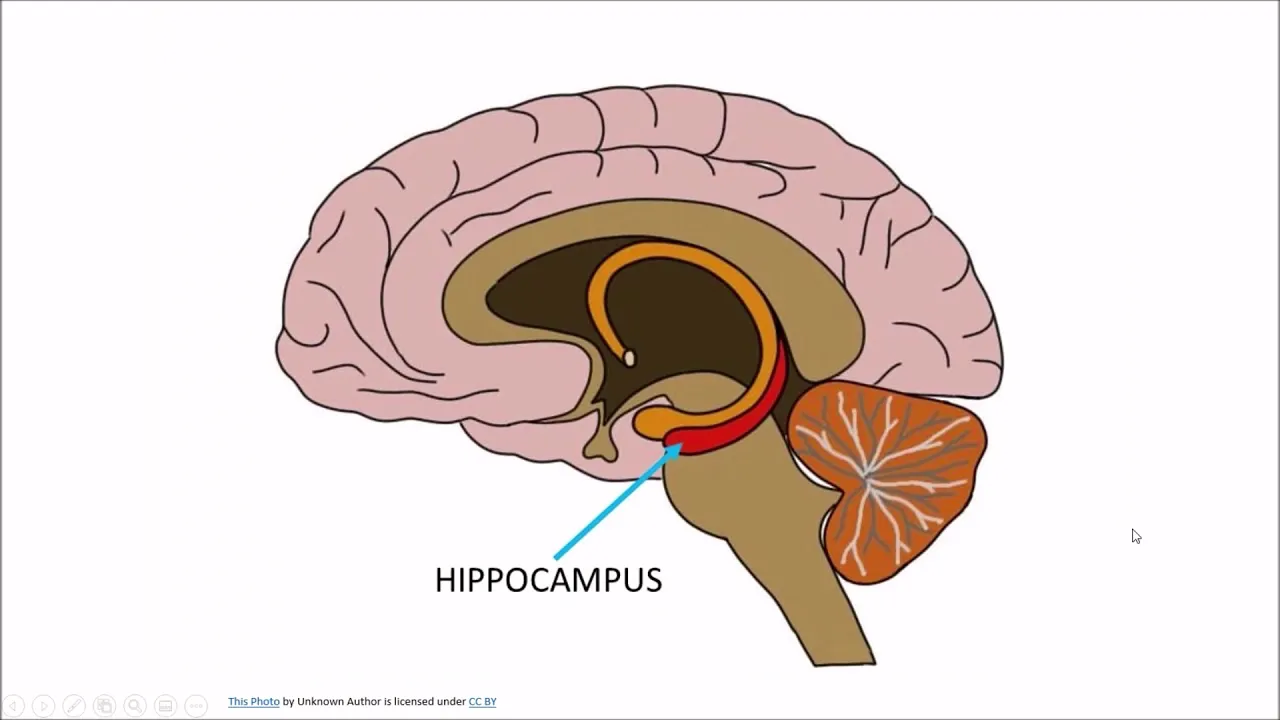
So it's th it is thick also here you can see and there is a white matter which is healthy. But when we coming to the right hand side it is the disease brain. In the disease brain we can see the cortex part is becoming thinner and uh white matter ventricles. So here you can see that in right hand side ventricle size is in the normal that is very le very small but uh when it is affected ventricles is enlarged and you can see also another portion hippocmpus that is also getting shr. So hippocmpass is very uh important here for that. First I'm coming to that overall brain size from the picture is also it is clear overall brain side is decreasing.
So volume brain volume. So what is the reason? The reason is that due to the eight of the neurons in the brain because of that the brain sides start to shrink and ventricle sides obviously if the neurons will be disregical size will be enlarged. So these are the these are the uh parameters where from where we can detect the disease from the early stage if we monitor And as we have we all know the we our brain is divided in four parts frontal occipital uh temporal and the partial lo. So the temporal and occipital is the main responsible region of the brain to detect the alena disease and uh out of that temporal is very important because in the temporal region hippocmpass present temporal region means almost to the side of side by side of the ears two years and uh occipital is the back part. So hypocmpus is exist within the uh temporal lobe. So this region identification of this region is also important.
So now coming to one system because we are considering we are talking about some system has to be generated or has to be implemented.
So I'm talking about that system. So this is one model known as masset model multiscale attention residual network model which can be given to the system for the detection and then for monitoring. I'm coming to the monitoring part later on. So first I'm uh going through the detection model. So this model what we'll do this green first green the top left corner green slide basically it is showing that it is actually the layer for den noising and for the den noising or filtering basically it will do the remove the Okay. So it is uh doing the dinoing and it is basically improve the uh image structure. So here the input is the images. Which images? MRI images. But again I'm telling about that MRI images are not uh MRI doing the MRI is not so easy because it is expensive very expensive and and its availability is not also uh there in all remote areas also we are concerned about the remote areas and as it is expensive is not be bearable by uh remote village person sometimes.
So I have the input are the MRI images and then uh after denoising this given to the convolution layer. These VA blocks are the convolution layer. There are two convolution layer having 64 number of channels. What is done in the convolution layer?
We have used T + 3 convolution. So suppose we have the input image like that and with that we are applying one card or filter. So which filter will do the convolution with the original image.
So I'm taking one sample from here from the original image and we have applied this.
So if we do the convolution so we'll get one value of reduced size. So what is that actually significant is that so uh to know the more important features or to learn the regarding the more more important features of the images. So that's why we do the convolution in this way. So if you go in the previous so in the right hand side which is known as the shortening path shortening path means it is encoding layer and the uh right hand side enlarge path means it is decoding that means here we will do the convolution in the right hand side we do the deconvolution.
convolution we will do because of learning of better learning regarding the features or better learning of the different parameters of the images. So here uh it is like that we just do the simple convolution the multiplication and addition so we get uh this uh value and if we use stride of one so all these uh fields will be uh filled out of the output. So this is the process how how we do the three cost three converation.
Stride means shifting of kernel by one.
If we do the shifting of the kernel by two it is stride two. So in this way we get the output that depends on purely on the users or uh we can see the bit for the beta learning. After that we have used the max pooling of 2 +2 to just uh reduce the maps into the half or you can say reduce the feature map as we use the 2 +2 it will reduce to the half of the picture with respect to the previous output. So max pooling what it will do if we apply the kernel of 2 +2 so with that 2 +2 matrix the maximum value will be extracted at the output. So here you can see in the first block is 1 1 5 6 or six will be extracted at the output. In the next block 2 4 7 8. So eight will be extracted in the next block 3 2 1 2 3 is the maximum three and the next block four is the output. Four is the maximum.
So four will be accept the output.
So here 64 number of channels then we increase the number of channels to 128.
256 to then uh 512 for the better learning and the deepest learning.
Now here after doing that when we come to the 10 through4 number of channels then we start to deconvolution.
When you start to deconvolution so here that dark red color is known as a deconvolution.
In deconvolution what we will do suppose we have this type of input for 2 + 2 0 1 2 3 what we have received here 6 84 we can use that also here. So 0 1 2 3. So we will take another terminal of 2 + 3 2 + 2. So after doing the con deconvolution of this in uh we'll get the output. So how we'll do the deconvolution? So each element of the cardinal will be multiplied with the input. So when zero will be multiplied with this input. So all element will be zero. So that's why first one is you need all zero. Then we use one stride and then again we multiply by next element which is one to the input. We get the 0 1 2 3. Then we use another stride in the downward. Then we multiply by two we get 02 46 in this way and the finally you get 03 69 and after getting this if all these four if we do the over overlapping and sum uh summation so we'll get the output after doing overlapping and doing the summation overlapping and summation means when the two samples we will overlap that will be added so after doing this we'll get this type of output so that we can get the deconvolution so that we can get the original image original image again. We can reconstruct the orinal image and from that oral image we can do the we can take the decision for the detection the process. So here uh these are the uh I have already mentioned you can uh ding noising uh noise and filtering layer then convolution then this dark green block is used as the max pooling layer then again convolution number of channel is important thing is that skip within these blocks we have used the residual network also what is the uh new thing here within that convolution we have used restnet residual network and as well as attention model also ECN so I'm coming to that part later on this two residual network and the uh and the what I said attention ECN that's attent attention model important thing skipping skipping is the main characteristics of the residual connection so by this what will happen no information will be lost from the input to the output because of convolution and deconvolution. So that's why skipping is done. Another thing skipping is done for the residual network so that uh so that gradient vanishing gradient problem will not appear. That means uh if you start to doing the feedback from the output to the input. So each time comparing with that some gradient will be generated and some when it will go to almost zero due to the large value of the denominator. So it will be vanished so that information will be lost. So to overcome this vanishing gradient problem skip connections is used basically to keep all this information intact up to the output.
So already I have mentioned these things.
So that is also mentioned encoder is used and attention is used within that blocks. So this is the encoder part. It is used within the convolution block.
There uh input is taken and then 7 + 7 convolution is done with 64 channels with two stride. I'm not uh I'm not repeating that convolution and stride again. I mentioned then it is go through the 3 + 3 max cooling layer. In the previously we have used 2 + 2 max cooling layer. Here we have used 3 + 3.
So output will be the 3 + 3 it's type two. Then it is given to the four convolutional blocks and first convolution block is having three previously repeated three times. Second four times. Third 23 times again the last one three times. This all things is done for the deepest learning only for the features and to give the attention on the main or important features only.
So what here it is done 1 + one convolution is done with the 64 channels to take the important regions or the important parts of the brain and then sequolation used for the max pooling and then again it is used 1 + 1 with the number high increased number of channels and that identity X this is the slip connection slip connection is input will be again given to the output So that the data learning will be done for the next block also. So then it is go through the average pooling and fully connected layer of four layers as because here we have used four detections disease mild cognitive impairment and very mild cognitive impairment and the helipath four classes are there. So that's why fully connected four layer will be used here.
So and another thing is attention module. Attention module here we have used the efficient channel attention module within that uh model where input is taken from the previous convolution layer and input having the dimension of channel height and width number of channel height and width. Number of channel will depend on the number of kernel is used here. Then we use global average pooling. EAP global average pooling. So global average pooling is used for the better or the important feature selections. What it will do? It will convert each uh kernel into a single value so that it will form a one-dimensional vector and of length the channel that is if we use the 12 channel or the 64 channel so it is having a one dimensional vector of 64.
So then again one dimensional 1D converation is done here. The next is a pin blocks. Here one con convolutional one convolution has been done. The reason is that here to find out the relationship between the neighboring channel from the single channel the most important feature will be extracted. It is fine. Then it is compared with the neighboring channels.
Out of the neighboring channels which one is the important? Then it goes through the sigmoid function. Sigmoid activation function and then it is included. Why sigmoid activation function is used? To calculate the importance of the channels from 0 to one actually to calculate the weights of the channel. Then then that weights will be multiplied by the input again. So that finally the input finally the most important features from the input will be extracted then it will be given to the next block of the convolution also in this way most important region and the most important feature will be located that's why we have used the ECNET attention model so what is done unit structure is done within that unit structure HDL block is uh used because to getting uh to overcome the missing gradient problem and then to detect the most important region of the brain which is responsible for the disease we have the attention model can be used.
This is the summary input the 2D slice input will be taken and then it will be trained with some activation function then max pooling will be done then output will be taken and output will be compared.
compared means the predicted output will be compared with the actual output and can a loss will be calculated using the cross entropy and then again it will be it given to the input for the better learning. So after full learning so test will be done and the prediction will be done with the same process. The thing is that here we have used the cross entropy loss function to calculate the loss or to calculate the difference between the actual and predicted value. So we have used this cross entropy loss because it is actually cross entropy loss function is actually calculate the difference between the two probability distributions of actual output and the predicted output. So that's why cross entropy loss is used and this is more suitable for the multiple class detection. So that's why it is used. So here these are the two formula which are which can be used for the calculus calculation if we use the binary class.
So that can be used where y is the actual output y car is the predicted and when it will be multiclass this formula can be used which is given in the right hand side.
So now this is one kind where the MRI is used as MRI images is used as the input.
Now the thing is that I have mentioned MRI is expensive and it is not uh also all the time comfortable for the patient. So it is better to go in another less expensive way and it will be comfortable for the patients also that is speed based techniques speed based computational techniques. What are the things there are some important features within the speech which can be detected which can be stored. What are the features?
These six are the features. First is BNT SF code. What is that? Bstone naming test short form. What is Boston naming test uh uh Boston naming test is there.
Suppose one uh person one one candidate is there which is who is affected by the disease or going to be affected and another expert is there.
So what will do the expert? expert will show 10 uh or 10 to 15 uh names by written and then after that he or she will be asked to recall the names. It is better to go with the 10 names. If it is 15 it will be problematic uh for any person also. So it is better to go with 10 number of uh names after showing it will be it will not be uh listen it will be it has to be shown the names after showing uh the patient or the person will be asked to recall based on the recording the score will be given. The thing is that how score will be given? If the all 10 names will be said by said sequentially by that patient or by the person so it will be high score that mean he or she do not have any that tendency of disease affected.
It is okay but uh the names are told by the person but it is not sequential. All 10 names will be told by the person but it is not sequential. So it is it is also good but uh it is quite uh quite alarming that he or she has to be monitored. But one thing out of 10 names suppose six names can be told by that person four names cannot be done and that six names also be uh recalled arbitrarily. So it is very very alarming and it may be scored as the affecting or disease.
Another test Monta Montreal cognitive assessment. These are or all speech based assessment. It is a it is a 30 point uh test where patients or the testing person has to be draw some clocks. It is actually clock drawing test. Uh another test is also there. I'm coming to the first clock test. So first it will be observed the circle is perfectly drawn or not.
The values in the clock are uh written correctly in the correct order or not.
Then one time will be asked by suppose 11:10 and he or she has to be shown by two hands the 11 10 position is it uh done correctly or not. So based on that the score will be given out of 30 and if this score is less than 26 so it will be poor performance and it is having the uh LCI that is mild cognitive impairment.
which will be converted later on may be converted later in the early disase. But if it is the score is greater than 26 there is no problem. It is hopeful. And another test can be done in the same uh method that is uh four five names arbitrarily uh told to him or her which is which is not related. related not related means uh some bank's names then some books name then some dis will be told to him and then he is asked he or she is asked to be recalling if that recalling is in the same sequence as per the experts that is good but if it is not that and it is also that if it is only one or two can be recalled it will be no score below 26 Six that means NCI will be there within that. Another test whistler memory test. This is basically storytelling test.
That means one story short story will be uh listen to him or her and then immediately after stopping he him or he or she will be asked to recall the story and it will follow that he or she is giving the proper keywords of the stories and sequentially events that one story is consisting of many number of events. So the events are uh recalled sequentially or not or any events is missing or not based on that test is done and same thing in the second one which is baseline memory logical test memory two same thing is done but there the patient will be asked that to recall the story after 20 to 30 minutes.
So it is for the testing of the memory how he or she can be recalled for a long time gap also.
Another one HVLTR form three it is also having proof that is HVTR means optin server learning test. What will be done? Yeah. 12 listed items will be shown to the patients and after that your C will be asked three times to recall. Three times immediately after showing your C will be asked for recall and that scope will be given three times.
Based on that based on that the score will be done and which is the next one HBR delayed because that is same will be done 12 items will be shown and three stop will be given but after showing two 20 to 30 minutes gap will be there after that your she will be asked to recall based on that score will be given. So depending on that score of the different uh people or the different people healthy, unhealthy, MCI affected the data will be generated that based on that data based using that data and using certain uh deep learning models prediction can be done also which is very less expensive and which can be done in any position and which can be done in remote areas also from remote locations. One people expert is uh not in that same position also that for that uh situation can also be that this type of test can be done. So it is much more effective than the MRI images will be used as the uh input.
So another thing uh some datas will be always available uh in the publicly available. So these are basically the clinical data. So based on the clinical data here some education level socioeconomic status because obviously Alzheimer disease is very much depend on socioeconomic status also. But in some data has also been shown that for the poor countries the Alzheimer disease uh affected people is very high. So socioeconomic status is very important.
Minmental score of examination volume of the brain at the scaling factor. So something education level, socioeconomic status these are not particularly relevant to the pure patients that depends on the overall situation of the society. Uh depending on that uh some food habits may also be changed. So that is also responsible and minimal score uh mini mental score of examination means depending on that surrounding that family person that friends that is also responsible. So these type of datas are available based on that data some uh important thing uh came to the came as the output. So it has been observed that the male candidates having higher number of male candidates having the dementia or we can say the Alzheimer disease but female candidates is less compared to the male candidate which is having almost 53 53.3% less. It is very good symbol.
And if you go with the next thing here another data from that publicly available data uh it has been observed that male first table is of male candidate and second table is of female candidate.
So for male candidate it has been observed that asma disease generally occurred in the age of minimum age of 56 but where for the female candidate it is at 61. It is a good symbol and which is matched with the with these things the less number of female candidates will be affected by this disease neurodeenerative disease or we can say the dementia but another thing is not good for the female candidates. Here in the upper table we have seen MCI. NCI means my cognitive that is before Alzheimer deg before with mild symptoms which is at 56 but CMCI means converted to MCI that is which is known as Alzheimer disease also CMCI means converted to mild cognitive that means which is actually Alzheimer disease. So if you consider below one as the alzheimer disease. So from MCI to alzheimer disease converting age is for the male candidate 56 to 61. So it is a long time. So it is a long gap. So the practitioner or the credentials can get chance to slow down the uh or progress of the degrees. But here for the female candidates MCI happens in the same age with the male candidate 56 but the conversion time is very faster 56 to 59.
So the conversion rate that means once one clate is getting affected by the NCI that is mild symptoms. So there is a high chance to go to the conver converting to the exam. But for the male candidate there is a less.
So this is the one thing and if you go with the brain volume so one new factor is there which is known as adlas scaling factor. What is that? We have the overall volume of the brain which is the skull and another is below that below that layer which is cortex.
So if the cortex is getting string and if we multiply with some factor with some uh constant factor with that volume of the cortex and to come back to the original volume of the overall volume of the brain. So if that value or the factor is high so that factor high means original volume of the brain inner volume of the brain is less that means it is shrink shrink means neurons damage or die that means Alzheimer disease or the neurodeenerative disease is will be occurred shortly and scaling factor means that overall volume and the cortex volume difference.
That means the inner volume cortex we if we multiply the inner volume cortex by some factor value to get back the original volume. So when this factor value will be less is good when the factor value will be high if bad it is indicating the neurodeenerative.
So this is the main thing here. So the picture the orange one where what is showing that the skin factor is five for the people is having the energy that is which is indicating by the one and the blue one it is the less value that is fact that is less that means not having the dementia or non So here I have discussed two kinds of input using that input the detection is possible. One is MRI images of the patent another thing is that the speech instead with that MRI speech is very very very comfortable and and attractive because of because it is less expense and it is used for remote areas. Instead of that instead of that some drop is there main drawback is that we think that continuous monitoring is not possible but actually to detect the Alzheimer disease or neurodeenerative disease from the earlier stage continuous monitoring is necessary that's why this kind of wearable device is necessary or wearable device has to be implemented What is that? We can use wearable cap or we can use any headbands.
What is that wearable cap or headbands having different electrodes to measure the e EEG signal electrophologies is very much related with the EEG signals.
How that when the communication will be stopped by the neurons or the neuron will be getting damaged the signal the brain signal will capture the damages gradually.
So this uh type of signal is very important where we have used some sensor which is IM sensors which consisting of accelerometer and gyroscope which can also monitor the movement or the motions of the candidate which will also monitor the or capture the data of heart rate or HRV and temperature and light sensor is not important. Basically important is that Egles and the movement that is the controlled by the accelerator motor and gyroscope. After capturing the data, it will be given to the that data will be captured or uh collected by the module data acquisition module.
which may be done by any uh microcontroller or um Raspberry Pi and then after that that captured data or the collected data will be processed that is uh pre-processing of that data to remove the noise to remove the unwanted data to overcome with the data which is having null data or uh to normalize the data The signal processing will be done here. Then FFT will be given FFT will be done on that data.
Then it will be given to that AI model or we can say that it will be given to the model. It may be deep learning model. It may be machine learning model.
Here we employed that masset model what I have discussed earlier. uh that model there can is employed and after that depending on that data that model will detect the risk that is high, low, moderate whatever it may be and that information will be uploaded to the cloud and with the cloud the one apps will be there which will be installed in the Android mobile where that Android mobile will be connected with the data and from the mobile that notifications will come or the output or the result will show for monitoring is the data easy data is good or showing some uh alarm or uh the sleep disturbance is there or any uh movement uh problem is there all things will be shown in the apps based on that uh information or based on the notification it will monitor but and that notification will be communicated through uh email or WhatsApp to the caregivers as well as the practitioners so that the depending on the continuous monitoring if there is some alarming thing is there with risk level based on easy data of the movement so that can be monitored and that can be triggered. So in this way one wearable device can continuously monitor the patients those may getting affected in near future with the alzen disease or any kind of neurodeenerative disease that is very important.
up to that I'm uh trying to uh show you how the intelligence system can be implemented based on the data and based on the uh deep learning models.
Thank you for your concentration.
Thank you.
Thank you sir uh for your uh informative and available speech for us.
I forward the session to our chairperson.
Please uh promo uh ask few questions on the behalf of the participants.
Hello.
First of all uh find out the specific problem which will serve the society so that AI can be applied in anywhere but uh for a good uh project or good AI healthare system. So first I have to identify the problem then uh try to uh learn regarding uh different uh hardware systems like uh sensors which sensor will be suitable for that but because all sensors are not suitable for all purposes and another thing uh which model will be work better or it needs to be uh modify something as per the requirement. This is main thing.
Main thing deal with some hardware components which are related with that problem.
Before that fix or find out the correct problem which will serve the society.
Biggest challenge is data availability of the data.
Can I leave?
>> Yes, sir. Yes, sir, you can.
Related Videos
8:08
Neuroscience
What is neurodegeneration?
TheSheekeyScienceShow
3K views•2019-08-19

57:35
Neuroscience
IPL - Ruth Empson "Mind the Gap"
otagouniversity
251 views•2019-07-08
14:01
Neuroscience
How our body shapes our mind | Pancho Tolchinsky | TEDxNapoli
TEDx
2K views•2019-12-05
1:00:02
Neuroscience
Impact of Early Life Deprivation Danielle Stolzenberg Marcus Pembrey Bruce McEwen
uctv
4K views•2019-12-01
10:32
Neuroscience
β-Caryophyllene for Parkinson’s: Protecting Dopamine & Easing Symptoms
parkinsonsdiseaseeducation
6K views•2025-08-09
20:44
Neuroscience
New Insights from Inside the Brain with Rodrigo Braga, PhD
NUFeinbergMed
421 views•2025-04-14
9:57
Neuroscience
Highlights for dystonia • 2025 MDS Congress
movedisorder
145 views•2025-10-27
58:17
Neuroscience
Animal Welfare Synergy Series: Dr Tom Smulders on hippocampal neurogenesis
costactionlift
135 views•2025-07-14
Trending

13:38
Law
WOW! Judge TURNS THE TABLES on Trump in His OWN $10B LAWSUIT!!!
MeidasTouch
197K views•2026-07-23

13:25
Business
Playstation NO DISC/NO BUY Fight Is Over...
DavidJaffeGames
4K views•2026-07-23

22:40
Business
Steam and Xbox Just Dropped The Hammer On PlayStation
OhNoItsAlexx
9K views•2026-07-23

16:52
Anthropology
Americans Confused in Australia for 17 Minutes Straight
IWrocker
17K views•2026-07-23