A clear and visually engaging breakdown of the inherent geometric trade-offs in cartography. It successfully demystifies why every flat map is a necessary distortion of our spherical reality.
Installez notre extension pour rechercher instantanément dans n'importe quelle vidéo
Why Greenland Looks So Big on MapsAjouté :
Have you ever wondered why Greenland, an island off the coast of Canada, appears roughly the same size as South America?
Well, in this episode of Weird Borders, I'm going to explain why, and the basic answer is that you have been lied to your entire life. You see, because the Earth is a sphere, when you try to make a map on a flat piece of paper, especially if it becomes rectangular, you have to distort the planet quite a bit. We call these flat approximations of the spherical Earth a map projection, the most common of which, and the one you're probably most useful being the Mercator projection, where you can see Greenland about the same size as Africa.
The Mercator projection was made for a very specific purpose, and it is very good for that purpose. You see, all of these straight lines are either straight east-west or straight north-south, making it incredibly good for sailors.
They can just navigate using a compass.
However, because the Earth is a sphere, as you go further away from the equator, either north or south, the Mercator projection is going to make things look bigger than they actually are. Mercator projection distortion happens more as you head towards the north or south pole, which is why Antarctica appears absolutely huge, but Greenland is very far north, making its distortion incredibly large as well. If we go ahead and bring Greenland down to the equator, you can see that it's not that big. It's actually roughly the size of the Democratic Republic of the Congo. Now, Greenland is still the world's largest island, easily double the size of Madagascar, the next largest. Comparing Greenland to Australia, though, you can see that, well, Australia is a lot larger, which is why it's often considered its own continent. While the distortion of Greenland is nothing more than a funny geographical oddity, the distortion of countries in the north, especially Europe, is a bit of a problem. Let's take an example of Germany. Now, when you look at countries down here by the equator in Africa, Nigeria appears to be about the same size as Germany. But as we bring Germany further south, you can see it getting smaller and smaller, ending up roughly half the size of Nigeria. Likewise, if we bring the rather modest-sized Democratic Republic of the Congo north to Europe, you can see it grow and grow until it's roughly the same size as all of Western Europe. The Mercator projection really plays with the human mind, because we think of things that are larger as more important, making South America and Africa seem less important as a result. As you can see here, Russia and Canada fit inside of Africa, even though, thanks to Mercator, you would never think that possible. But hope is not lost, because there are other maps that are more accurate at displaying how big things are. Now, this map may look weird. That's just because you're not used to it. This is called a Gall-Peters projection, and it preserves the size of countries, although it does a bit distort the shape. Another great map that is my favorite projection is this, the Waterman butterfly, which basically peels the Earth like an orange, and then shows us how it would look. The Mercator projection is great if you were a 16th-century sailor, but in today's modern age, there's absolutely no need for it. Using something like the Gall-Peters projection is much better. If you're a fan of The West Wing, then you know that we could also just flip the Earth upside down and have south point up. Or you could just avoid all of this kerfuffle and just use a globe. In the next episode of Weird Borders, I'm going to explain how Brexit made the UK-Ireland border a paradox, so follow if you'd like to see that. Thanks for watching.
Vidéos Similaires

Spiral Galaxy NGC 3370 from Hubble | NASA APOD 2025-11-05 #Shorts
galaxygallery
938 views•2026-05-30

SOMETHING inside the SUN is CHANGING
RaysAstrophotography
1K views•2026-06-03

NOAA Warning! Massive Double Cannibal CME Impacting Earth: G4 Storm Watch!
worldnewsreporttoday
1K views•2026-06-04
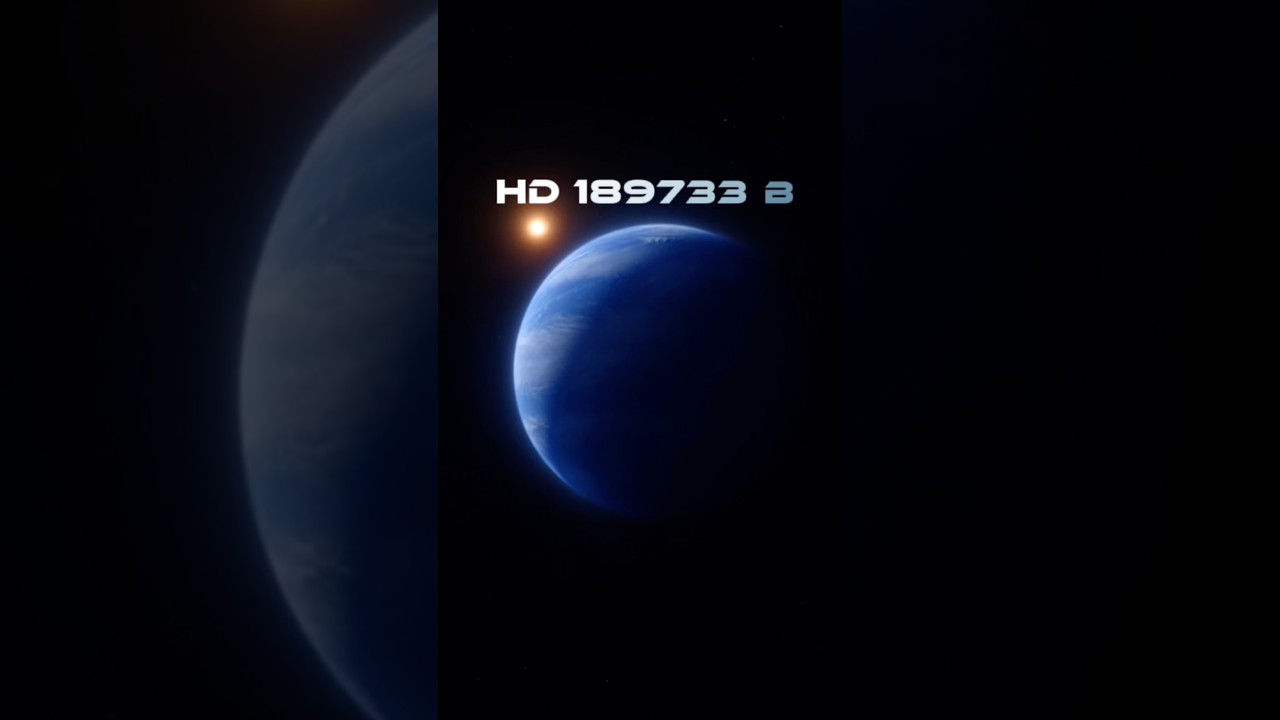
🌌 HD 189733 b | The Planet Where Glass Rains Sideways
EVENTHORIZONUK
3K views•2026-05-31

🎬 Title: Milky Way & Andromeda Collision: The Future of Our Galaxy 🌌 #astroph #askap
SulaimanKhanSulaimani
429 views•2026-06-01

Captured the Blue Moon (with a twist) 🌙✨ #space #bluemoon #telescope
realAstroExplorer
674 views•2026-06-01

10 Planet Where a Black Hole Replaces the Sun
cosmicexplorer-EN
147 views•2026-06-02

Is this a copy of our galaxy? Discover Galaxy M81!
UniverseDocumentaries-cc4mb
995 views•2026-05-31


