Impact craters on Mars are giant scars formed when space rocks, asteroids, and meteorites strike the planet's surface at extremely high speeds; because Mars has a thin atmosphere that cannot burn up incoming space rocks like Earth's atmosphere does, these craters are preserved and serve as time capsules revealing the planet's geological history, with notable examples including Jezero Crater (where NASA's Perseverance rover searches for signs of alien life), Gale Crater (a 96-mile wide basin with a central mountain), and Hellas Planitia (one of the largest impact craters in the solar system, so deep that Mount Everest could fit inside it).
安装我们的扩展,即时搜索任意视频内容
Touring Mars' Wildest Craters本站添加:
Ever wonder why Mars looks like a cosmic punching bag?
Those massive bowls aren't volcanoes.
They're impact craters, and they hold the wildest secrets of the red planet.
So, what are they?
Craters are giant scars formed when space rocks, asteroids, and meteorites slam into the surface at tens of thousands of miles [music] per hour.
Because Mars has a super thin atmosphere, it can't burn these space rocks up like Earth does.
And Mars has some famous ones. First, Jezero Crater, an ancient dried-up lake bed where NASA's Perseverance rover is currently hunting for signs of alien life.
Then there's Gale Crater, a massive 96-mi wide basin with a literal mountain sitting right in the middle of it.
And look at Hellas Planitia. It's one of the largest impact craters in the entire solar system.
It's so deep, Mount Everest could [music] easily sit inside it.
Every crater is a time capsule into [music] Mars's past.
Which planet should we explore next? Let me know below, and hit that subscribe button for more space secrets.
相关推荐

Spiral Galaxy NGC 3370 from Hubble | NASA APOD 2025-11-05 #Shorts
galaxygallery
938 views•2026-05-30

SOMETHING inside the SUN is CHANGING
RaysAstrophotography
1K views•2026-06-03

NOAA Warning! Massive Double Cannibal CME Impacting Earth: G4 Storm Watch!
worldnewsreporttoday
1K views•2026-06-04
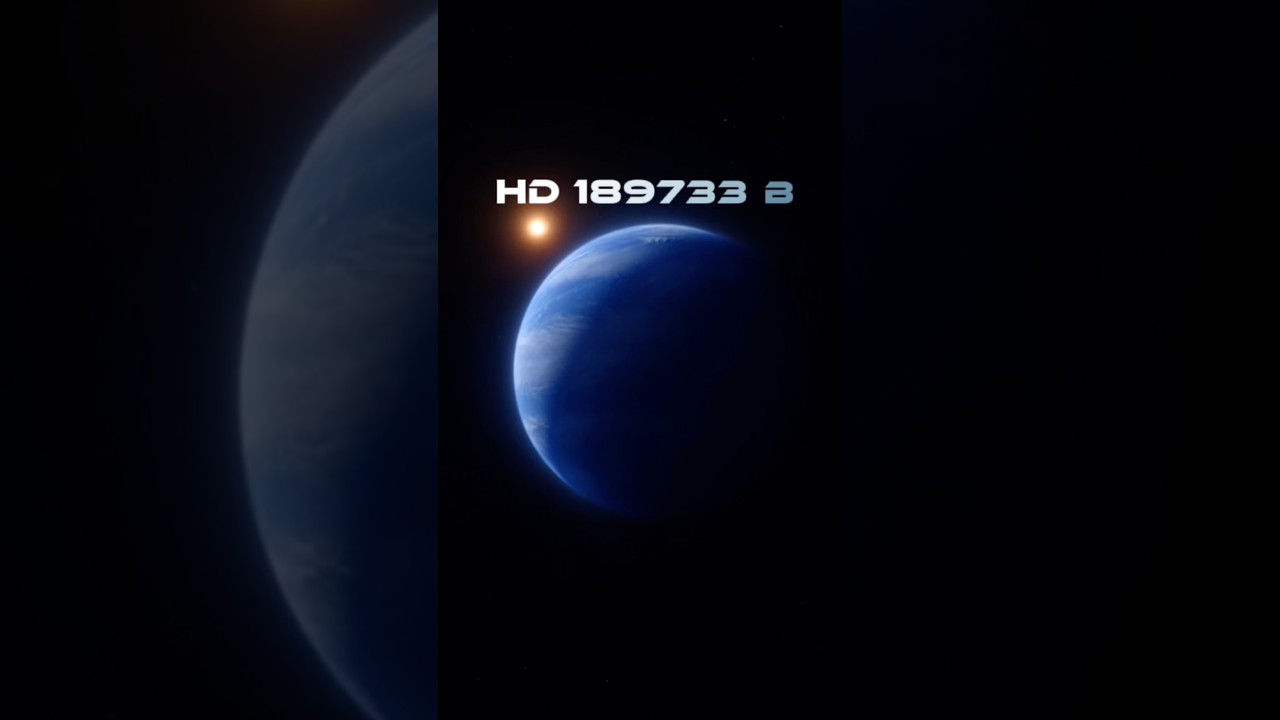
🌌 HD 189733 b | The Planet Where Glass Rains Sideways
EVENTHORIZONUK
3K views•2026-05-31

🎬 Title: Milky Way & Andromeda Collision: The Future of Our Galaxy 🌌 #astroph #askap
SulaimanKhanSulaimani
429 views•2026-06-01

Captured the Blue Moon (with a twist) 🌙✨ #space #bluemoon #telescope
realAstroExplorer
674 views•2026-06-01

10 Planet Where a Black Hole Replaces the Sun
cosmicexplorer-EN
147 views•2026-06-02

Is this a copy of our galaxy? Discover Galaxy M81!
UniverseDocumentaries-cc4mb
995 views•2026-05-31


