A masterful blend of lunar geology and human sentiment that gives scientific discovery a soul. It reminds us that our exploration of the cosmos is, at its heart, a deeply personal endeavor.
Instala nuestra extensión para buscar dentro de cualquier video al instante
Carroll Crater ExplainedAñadido:
You've probably heard about Carol Crater by now, named by the Artemis 2 crew in honor of Commander Reid Wiseman's late wife. A number of years ago, we started this journey and we lost a loved one.
There's a feature in a really neat place on the moon and we would like to call it Carol.
And you spell that C A R R O L L Integrity and Carol Crater, loud and clear. Thank you.
Let's dig into what we know about this crater and how you can see it. It's a lunar impact crater that sits on the boundary between the near and far side of the moon. It's described as sitting at a very bright [music] spot and it's bright because it sits within the debris field of a nearby crater called [music] Glushko. Here's how that works. When a space rock slams into the moon, it blasts fresh material up from underground. Rock that's never been exposed to the harsh environment of space before. Over billions of years, the lunar surface slowly darkens from solar and tiny micrometeorite impacts. But that freshly excavated material, it's bright, like really bright. Glushko is a relatively young crater with what are called rays. Essentially, long streaks [music] of that fresh bright debris that found out for hundreds of miles in every direction. Carol Crater sits right in the middle of that debris field, which is why it catches the light the way it does. And because Carol sits right on the boundary between the near and far side of the moon, you can actually see it from Earth with a backyard telescope.
[music] So, the next time there's a full moon, know that bright spot right over there?
That's Carol.
Videos Relacionados

Spiral Galaxy NGC 3370 from Hubble | NASA APOD 2025-11-05 #Shorts
galaxygallery
938 views•2026-05-30

SOMETHING inside the SUN is CHANGING
RaysAstrophotography
1K views•2026-06-03

NOAA Warning! Massive Double Cannibal CME Impacting Earth: G4 Storm Watch!
worldnewsreporttoday
1K views•2026-06-04
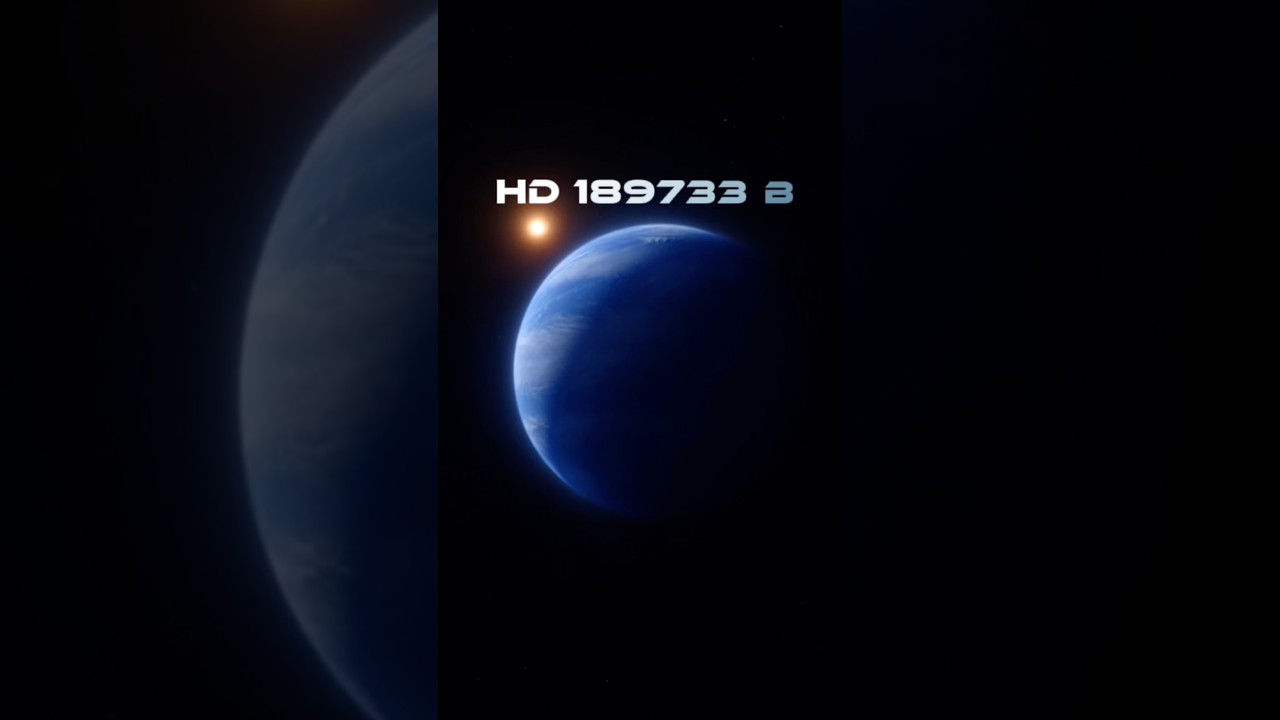
🌌 HD 189733 b | The Planet Where Glass Rains Sideways
EVENTHORIZONUK
3K views•2026-05-31

🎬 Title: Milky Way & Andromeda Collision: The Future of Our Galaxy 🌌 #astroph #askap
SulaimanKhanSulaimani
429 views•2026-06-01

Captured the Blue Moon (with a twist) 🌙✨ #space #bluemoon #telescope
realAstroExplorer
674 views•2026-06-01

10 Planet Where a Black Hole Replaces the Sun
cosmicexplorer-EN
147 views•2026-06-02

Is this a copy of our galaxy? Discover Galaxy M81!
UniverseDocumentaries-cc4mb
995 views•2026-05-31


