The brain operates at multiple levels of organization, and understanding how it works requires examining the algorithmic level between implementation (neurons, synapses) and behavior. The brain uses a fundamental learning algorithm called temporal difference learning, where it predicts rewards from actions and updates its value function based on actual outcomes. This same algorithm powers AI systems like AlphaGo. The brain has two major learning systems: cognitive learning (cortical, explicit thinking) and procedural learning (subcortical, automatic skill execution). Effective learning requires both systems working together, with practice-based procedural learning being essential for mastering skills like tennis or mathematics. Sleep spindles during non-REM sleep play a crucial role in memory consolidation, and exercise can enhance this process. Understanding these principles allows for more efficient learning strategies and better comprehension of how the brain processes information.
How to Learn Faster Using Neuroscience & AI | Dr. Terry Sejnowski
Added:Dr. Terry Seowski, welcome. Great to be here. We go way back and I'm a huge huge fan of your work because you've worked on a great many different things in the field of neuroscience. You're considered by many a computational neuroscience. So you bring mathematical models to an understanding of the brain and neural networks. And we're also going to talk about AI today. And we're going to make it accessible for everybody, biologist or no, math background or no. To kick things off, I want to understand something.
I understand a bit about the parts list of the brain. And most listeners of this podcast will understand a little bit of the parts list of the brain, even if they've never heard an episode of this podcast before, because they understand there are cells. Those cells are neurons. Those neurons connect to one another in very specific ways that allow us to see, to hear, to think, etc. But I've come to the belief that even if we know the parts list, it doesn't really inform us how the brain works. Right?
This is the big question. How does the brain work? What is consciousness? All of this stuff.
So where and how does an understanding of how neurons talk to one another start to give us a real understanding about like how the brain works? Like what is this piece of meat in our heads? Because it can't just be, okay, the hippocampus remembers stuff and the, you know, the visual cortex perceives stuff. When you sit back and you remove the math from the mental conversation, if that's possible for you, how do you think about quote unquote how the brain works? Like at a very basic level, what is this piece of meat in our heads really trying to accomplish from let's just say the time when we first wake up in the morning and we're a little groggy till we make it to that first cup of coffee or water or maybe even just to urinate first thing in the morning. What is going on in there? What a great question. And um you you know the I have a uh Pat Churchill and I uh wrote a book computational brain and in it there's this levels diagram uh and it it at levels of investigation at different spatial scales from the molecular at the very bottom to uh synapses and neurons circuits neural circuits uh how they're connected with each other and then brain areas in the cortex and then the the whole central nervous system span 10 orders of magnitude you know 10th to the tenth in spatial scale. So you know where is consciousness in all of that. So uh there are two approaches that neuroscientists have taken uh I shouldn't say neuroscientists I should say that scientists have taken uh and the one you describe which is you know let's look at all the parts that's the bottomup approach you know take it apart and just reductionist approach and you make a lot of progress you can figure out you know how things are connected and and understand how development works how neurons connect but it's very difficult to really make progress because uh you quickly you get lost in the forest.
Now the other approach which has been successful um but at the end unsatisfying is the top-down approach and and this is the approach that psychologists have taken looking at behavior and trying to understand you know the the the the laws of behavior.
ices the behaviorists uh but you know even people in AI were trying to do it top down to write programs that could replicate uh human behavior intelligent behavior and I have to say that both of those approaches you know bottom up or top down have really not gotten to the core of answering any of those questions the big questions but there's a whole new approach now that is emerging in both neuroscience and AI at exactly the same time at this moment in history. It's really quite remarkable.
So there's an intermediate level between the implementation level at the bottom how you implement some particular uh mechanism uh [clears throat] and the the the actual behavior of the whole system.
It's called the algorithmic level. It's in between.
>> So algorithms are like recipes. They're like, you know, when you bake a cake, you have to have uh ingredients and you have to say h how the order in which they're put together and how long and you know, if you if you if you get it wrong, you know, it doesn't work. You know, the the it's just a mess.
Now, it turns out that we're discovering algorithms. We've made a lot of progress with understanding the algorithms that are used in neural circuits. And this uh speaks to the computational level of of how to understand you know the function of the neural circuit. But uh I'm going to give you one example of an algorithm which uh is is one we worked on back in the 1990s when um Peter Dean and Reed Monigu were postocs in the lab and it had to do with a part of the brain below the cortex called the basil ganglia which is responsible for learning sequences of actions in order to achieve some goal. For example, if you want to play tennis, you know, you have to be able to coordinate many muscles and a whole sequence of actions has to be made if you want to be able to serve accurately and you have to practice, practice, practice. Well, what's going on there is that the basil ganglia basically is taking over from the cortex and producing actions that get better and better and better and better. And that's true not just of the the muscles but it's also true of thinking. If you want to become good in any area, if you want to become a good uh financeier, if you want to get become a good doctor or a neuroscientist, right, you you you have to be uh practicing practicing practicing in terms of uh understanding what uh you know what what's uh the details of the profession and what works, what doesn't work and so forth.
And and it turns out that this basal ganglia interacts with the cortex not just in the back which is the action part but also with the prefrontal cortex which is the thinking part. Can I ask you a question about this briefly? The basil ganglia as I understand are involved in the um organization of two major types of behaviors. Go meaning to actually perform a behavior. But the basil ganglia also instruct no go. Don't don't engage in that behavior. and learning a an expert golf swing or even a basic golf swing or tennis racket swing involves both of those things go and no go. Given what you just said which is that the basil ganglia are also involved in generating thoughts of particular kinds.
I wonder therefore if it's also involved in suppression of thoughts of particular kinds. I mean, you don't want your surgeon cutting into um, you know, a particular uh, region and just thinking about their motor behaviors, what to do and what not to do. They presumably need to think about what to think about, but also what to not think about. You don't want that um, surgeon thinking about how their kid was a brat that morning and um, and they're frustrated because the two things interact. So, is there go no-go in terms of action and learning and is there go no-go in terms of thinking? Well, I I mentioned the prefrontal cortex and that part the loop with the basil ganglia that is one of the last to mature in uh you know early adulthood. And you know what the problem is that for adolescence it's not the no-go part [laughter] for for you know planning and actions isn't quite there yet. And so often it doesn't kick in to to prevent you from doing things that are not in your best interest. So yes, absolutely right. But one of the things though is that learning is involved and and this is really some a problem that we cracked uh first theoretically in the 90s and then experimentally later uh by recording from neurons and also brain imaging in humans. So it turns out we know the algorithm that is used in the brain for how to learn sequences of actions to achieve a goal. Uh and and it's of the simplest possible algorithm you can imagine. It's simply to predict the next reward you're going to get if I if I do an action. Will I will it be uh give me something of value? And uh and you learn every time you try something whether you got the amount of reward you expected or less. You use that to update the synapses, synaptic plasticity, so that the next time you'll have a better chance of getting a a better reward, and you build up what's called a value function. And so the cortex now over your lifetime is building up a lot of knowledge about, you know, things that are good for you, things that are bad for you. Like you go to a restaurant, you order something. How do you know what's good for you? Right? You you've had lots of meals in a lot of places.
And now that is part of your value function.
This is the same algorithm that was used by Alph Go. This is the program that DeepMind built. This is an AI program that beat the world go champion. And Go is the most complex game that humans have ever uh played, you know, on on a a regular basis.
>> Far more complex than chess as I understand.
>> Yeah, that's right. So, uh go is to chess with chess is to something like ch checkers. You know, in other words, the level of difficulty is another, you know, way off above it because you have to think in terms of of of of battles going on all over the place at the same time and the order in which you put the pieces down are going to affect what's going to happen in the future.
So this value function is super interesting and I wonder whether and I think you answered this but I wonder whether this value function is implemented over long periods of time.
So you talked about the value function in terms of learning a motor skill.
Let's say swinging a tennis racket to do a a perfect tennis serve or or even just a decent tennis serve. When somebody goes back to the court, let's say on the weekend, once a month over the course of years, are they able to tap into that same value function every time they go back even though there's been a lot of intervening time and learning? That's question number one. And then the other question is do you think that this value function is also being played out in more complex scenarios not just motor learning such as let's say a domain of life that for many people involves some um trial and error. It would be like human relationships. We learn how to be friends with people. Uh we learn how to be a good sibling. Uh we learn how to be a good romantic partner. Right?
>> We get some things right. We get some things wrong. So it's the same value function being implemented. We're paying attention to what was rewarding, but what I didn't hear you say also was what was punishing. So, are we only paying attention to what is rewarding or we're also integrating punishment? And we don't get an electric shock when we get the serve wrong, but we can be frustrated.
>> What you identified is um some a very uh important feature uh which is that rewards. Uh by the way, you know, every time you do something, you're updating this value function every time. and and it accumulates. And the answer to your first question, the answer is that it's always going to be there. It doesn't matter. It's it's a very permanent part of your experience and who you are. And um and interestingly, and and the behaviorists knew this back in the 1950s that uh you can get there two ways of trial and error. You know, small rewards are are good because you're constantly coming closer and closer to getting the uh the what you're seeking, better tennis player or being able to make a friend.
But the negative punishment is much more effective. One trial learning.
You don't need to have you know hundred trials to you know what you need you know when you're training a rat to to do some task with small food rewards but if you if you just shock the rat boy that rat doesn't forget that >> yeah one really bad relationship will [laughter] have you have you learning certain things forever >> and this is also PTSD post-traumatic stress disorder is is another good example of that that can screw you up for the rest of your life >> so so but the other thing and and you you pointed out something really important which is that a large part of the prefrontal cortex is devoted to social interactions. And this is how humans, you know, when you come into the world, you don't know what language you're going to be speaking. You don't know what the cultural values are that you're that you're going to have to be able to become a member of this society and things that are expected of you. All of that has to become through experience through building this value function. So this is and this is something we discovered in the 20th century and and now it's going into AI. It's called reinforcement learning in AI. It's a it's a form of procedural learning as opposed to the cognitive level where you think and you do things. Cognitive thinking is much less efficient. Uh because you have to go step by step with procedural learning. Uh it's automatic.
Can you give me an example of procedural learning in the context of um a comparison to cognitive learning? Like is there an example of >> perhaps like how to make a decent cup of coffee using uh you know purely knowledgebased learning versus procedural learning.
Okay. Um where procedural learning wins and I I I can imagine one but you're the true expert here. Well, you know, no, you know, a lot of examples, but uh my my let's just since we've been talking about tennis, can you imagine learning how to play tennis through a book?
Reading a book. That's so funny. On the plane back from Nashville yesterday, the guy sitting across the aisle from me was reading a book about um uh maybe he was working on his pilot's license or something. And and I I looked over and couldn't help but notice these diagrams of the of the plane flying. And I thought, I'm just so glad that this guy is a passenger [laughter] and not and not a pilot. And then I thought about how the pilots learned. And presumably it was a combination of practical learning and textbook learning. I mean, when you scuba dive, this is true. I I'm scuba dive certified. And when you get your certification, you you learn your dive tables and you learn why you have to wait between dives, etc., and gas exchange and a number of things. But there's really no way to simulate what it is to take your mask off underwater, put it back on, and then, you know, blow the water out of your mask like that.
You just have to do that in a pool. And you actually have to do it when you need to for it to really get drilled in.
>> Yes. You you you you uh it's really essential for things that uh have to be executed quickly and and uh expertly to to get that, you know, really down pat so you don't have to think. Uh and this happens in school, right? In other words, you you you you have classroom lessons where you're given explicit instruction, but then you go do homework. That's procedural learning.
You do problems, you solve problems, and and you know, I'm I'm a PhD physicist.
So, so I I I went through all the classes, you know, in theoretical physics and um it was really the problems that really were the core of becoming a good physicist. You know, you can memorize the equations, but that doesn't mean you understand how to use the equations. I think it's worth highlighting something. A lot of times on this podcast, we talk about what I call protocols. It would be, you know, like get some morning sunlight in your eyes to stimulate your super chaos nucleus by way of your retinal gangling cells. Audiences of this podcast will recognize those terms. It's basically get sunlight in your eyes in the morning and set your circadian clock.
>> That's right.
>> And you can hear that a trillion times.
>> But I do believe that there's some value to both knowing what the protocol is, the underlying mechanisms. There are these things in your eye that you know encode the sunrise qualities of light etc. and then send them to your brain etc etc. But then once we link knowledge, pure knowledge to a practice, I do believe that the two things merge someplace in a way that um let's say reinforces both the knowledge and the practice. So these things are not necessarily separate. They bridge. In other words, doing your theoretical physics uh problem sets reinforces the examples that you learned in lecture and in your textbooks >> and vice versa. So this is a battle that's going on right now in schools.
Uh you're you know what you've just said is absolutely right. You need both. We have two major learning systems. We have a cognitive learning system which is cortical. We have a procedural learning system which is subcortical basil ganglia.
And the two go hand in hand. if you want to become good at anything that the two are going to help each other. And what's going on right now in schools in California at least is that they're trying to get rid of the procedural.
>> That's ridiculous.
>> They don't want students to practice because it it's it's going to be uh you know you're stressing them that you don't want them to be to feel that you know that they're having difficulty. So, but we can but it can do >> for those listening. I'm covering my eyes because [laughter] I mean this would this would be like saying um goodness there's so many examples like here's a textbook on swimming and then you're you're going to go out to the ocean someday and you will have never actually swam, >> right?
>> And now you're expected to be able to survive, let alone swim. Well, >> it's crazy. It's crazy. But I'll tell you, uh, Barbara Oakley, um, has, uh, and I have a a MOO, massive open online course on learning how to learn, and it helps students. We aimed it at students, but it actually has been taken by four million people in 200 countries, ages 10 to 90.
>> What is this called?
>> Learning how to learn.
>> Is it uh, is there a payw wall?
>> No, it's free. Completely free.
>> Amazing. And uh and you know, I get incredible, you know, feedback uh you know, fan letters almost every day.
>> Well, you're about to get a few more.
Okay. I did an episode on learning how to learn, and my understanding of the research is that we need to test ourselves on the material. The testing is not just a form of evaluation. It is a form of of identifying the the errors that help us then compensate for the errors and learn, but it but it's it's very procedural. It's not about just listening and regurgitating.
>> You you're you know you've put your finger on it which is that and this is what we teach the students is that you have to uh there there the way the brain works right is is not it doesn't memorize things like a computer but you you have to it has to be active learning. You have to actively engage.
In fact, um, when you're you're trying to solve a problem on your own, right?
This is where you're really learning by trial and error and that's procedural system. But if someone tells you what the right answer is, you know, you know, that's just something that is a fact that it gets stored away somewhere, but it's not going to automatically come up if you actually are faced with something that's not exactly the same problem, but it's similar. And by the way, this is the key to AI completely uh essential for the s recent success of of these uh large language models, you know, that the public now is beginning to use is that they're they're not parrots. They just they're not they just don't memorize with the with the data that they've taken in.
They have to generalize. That means to be able to do well on new things that come in that are similar to the old things that you've seen but allow you to solve new problems. That's the key to the brain that the brain is really really good at generalizing. In fact, in many cases you only need one example to generalize like going to a restaurant for the first time. There are number of new interactions, right? There might be a host or a hostess. You sit down at these tables you've never sat at.
somebody asks you questions, you read it. Okay, maybe it's a QR code these days, but um >> forever after you understand the process of going into a restaurant. Doesn't matter what the genre of food happens to be or what city, sitting inside or outside, you can pretty much work it out. Sit at the counter, sit outside, sit at the table. It's that there are a number of key action steps that I think pretty much translate to everywhere unless you go to some super high-end thing or some super low-end thing where it's a buffet or whatever. You know, you can start to fill in the blanks here. If I understand correctly, there's a an action function that's learned >> from the knowledge and the experience.
>> Exactly.
>> And then where is that action function stored? Is it in one location in the brain or is it kind of an emergent property of multiple brain areas?
>> So that you're right at the cusp here of uh where we are in neuroscience right now. We don't know the answer to that question. In the past, it had been thought that uh you know the the cortex had uh were like uh countries on uh uh that each of which each part of the cortex was dedicated to one function, right? Uh you know there's and and interestingly you record for the neurons and it certainly looks that way, right?
In other words, the there's a visual cortex in the back and there's a whole series of areas and then there's the auditory cortex in the here in the middle and then the prefrontal cortex for social interaction and and so it looked really clearcut that it's modular and now we're facing is by uh we have a new way to record from neurons you optically we can record from tens of thousands from dozens of areas simultaneously and what we're discovering ing is that if you want to do any task, you're engaging not just the area that you might think, you know, has the input coming in, say the visual system, but the visual system is getting input from the motor system, >> right? In fact, you know, there's more input coming from the motor system than from the eye.
>> Really?
>> Yes. Yeah. and Churchillin at UCLA has shown that in in the mouse uh this is so now we're looking at global interactions between all these areas and that's where real uh complex cognitive behaviors emerge is from those interactions and now we have the tools for the first time to actually be able to see them in real time and and we're we're doing that now um first on uh mice and monkeys but uh we now can do this in humans So I'm been collaborating with a group at Mass General Hospital to record from people with epilepsy and and they have to have an operation of for people who are drug resistant to be able to uh take out find out where it starts in the cortex you know and and where it is initiated where the seizure starts and then to go in you have to go in and record simultaneously from a lot of parts of the cortex for weeks until you find out where it is and then you go in and you try to uh take it out and and often that helps very very invasive but for two weeks we have access to all those neurons in that cortex that are being you know recorded from constantly and so I've used I started out because I was interested in sleep and I wanted to understand what happens in in the cortex of a human during sleep but then we be realized that you know you can also figure you know people who have these the debil abilitating problems with seizures. You know, they're there for two weeks and they have nothing to do. So, they just love the fact that scientists are interested in helping them and and you know, teaching them things and finding out where in the cortex uh things are happening when they learn something.
This is a gold mine. It's it's uh unbelievable. And I I've I've learned things from humans that could I could have never gotten from any other species.
>> Amazing. Obviously, language is one of them, but there are other things in sleep that uh we've we discovered having to do with traveling waves. There are circular traveling ways that go on during sleep, which is astonishing.
Nobody ever really uh saw that before.
But uh >> if you were to ascribe one or two major functions to these traveling waves, what do you think they are accomplishing for us in sleep? And by the way, are they associated with deep sleep, slow wave sleep or with rapid eye movement sleep or both? This is uh this is uh nonREM sleep. This is a jargon, but this is uh during uh uh intermediate >> Mhm.
>> transition states.
>> Transition state.
>> Okay. Our audience will probably be keep they they've heard a lot about slowwave sleep from me and Matt Walker from Rapid Light slowwave sleep. Yeah.
>> And so what do these traveling waves accomplish for us?
>> Okay. So in the case of the they're called sleep spindles. They last the waves last for about u a second or two.
um and and they travel, like I say, in a circle around the cortex. And it's known that these spindles are important for consolidating experiences you've had during the day into your long-term memory storage.
>> So, so it's a very important function.
And if if if you take out see it's the hippocampus that is is is is replaying the experiences. It's a part of the brain is very important for long-term memory. If you don't have a hippocampus, you can't learn new things.
>> Uh that is to say, you can't remember what you did the yesterday or for that matter even an hour earlier. But the hippocampus plays back your experiences, causes the sleep spindles now to need that into the cortex. And and it you it's important you do that right because you don't want to overwrite the existing knowledge you have. you just want to basically incorporate the new experience into your existing knowledge base in an efficient way that uh that doesn't interfere with what you already know. So that's an example of of a very important function that these traveling ways have.
As I recall, there are one or two things that one can do in order to ensure that one gets sufficient sleep spindles at night and thereby incorporate this new knowledge. This was from the episode that we did with Gina Poe from UCLA, I believe, and others, including Matt Walker. My recollection is that the number one thing is to make sure you get enough sleep at night so you experience enough of these spindles. And we're all familiar with the um cognitive challenges, including memory challenges and learning challenges associated with >> lack of sleep, insufficient sleep. But the other was that um there was some interesting relationship between daytime exercise and nighttime prevalence of sleep spindles. Are you familiar with that literature?
>> Oh yes.
>> No, this is a this is is a fascinating literature uh and it's all pointing the same direction which is that you know we always neglect to uh appreciate the importance of sleep. I mean obviously you're refreshed when you wake up but there's a lot of things happen. It's not that your brain turns off. It's that it goes into a completely different state and and memory consolidation is just one of those things that happens when you're fall asleep and of course you you know there's dreams and so forth. We don't fully appreciate or understand exactly how all the different sleep stages are are uh work together. But uh exercise is a particularly important part of of of getting uh the motor uh system u u tuned up and and that it's thought that the uh this the REM rapid eye movement sleep may be involved in that. So that that's a that's yet another part of the sleep uh stages you go through. You go back and forth between um dream sleep and the slow sleep, back and forth, back and forth during the night. And then at the when you wake up, you're in the in the the REM stage, more and more REM, more and more REM. But, you know, that's all observation, but we, you know, as a scientist, what you want to do is perturb the system and and see if you can maybe if you had more sleep spindles, maybe you'd be able to remember things better. So it turns out Sarah Bednik who was at UC Irvine did this fantastic experiment. So it turns out there's a drug called Zulpidum >> which um is is goes by the the name ambient. You may have some experience with that if >> I've never taken it but um I'm I'm aware of what it is. People use it as a sleep aid.
>> That's right. It it's it's it a lot of people take it in order to sleep. Okay.
Uh well it turns out that it causes uh more sleep spindles. Really? Yeah. It it doubles the number of sleep spindles if you you know if you take the drug uh you take the drug uh after you've done the learning, right?
You do the learning at night and then you take the drug and you have twice as many spindles. You wake up in the morning, you can remember twice as much from what you learned >> and the memories are stable over time.
It's it's like it's in there.
>> Yeah. No, it it's it it consolidates it.
I mean, that's the point is is >> what's the downside of ambient?
>> Okay, here's the downside. Okay, so people who take the drug, say if you're going uh to Europe and you take it and then you sleep really soundly, but often you you find yourself in the hotel room and you completely have no clue, you have no memory of how you got there. I've had that experience without ambient or any other drugs where I am very badly jetlagged.
>> Yes.
>> And I wake up and for a few seconds but what feels like eternity I have no idea where I am. It's terrifying.
>> That well that that's another uh problem that you have with jet lag. Jet lag really screws things up. But this is something where it could be an hour. You know you you you took the train or you you took a taxi or something and you're so here here now this seems crazy. How could it be a a a way to improve learning and recall on one hand and then forgetfulness on the other hand? Well, it turns out what's important is [laughter] [gasps] um that when you take the drug, right?
Uh, in other words, it helps consolidate experiences you've had in the past before you took the drug, but it will wipe out experiences you have in the future after you take the drug, right?
[laughter] You steal.
>> Sorry, I'm not laughing. It must be a terrifying experience, but I'm laughing because, you know, there's some beautiful pharmarmacology and indeed some um wonderfully useful uh pharmaceuticals out there. uh you know some people may cringe to hear me say that but there are some very useful drugs out there that save lives and help people deal with symptoms etc. Um side effects are always a concern but this particular drug profile ambient uh that is um seems to reveal something perhaps even more important than the discussion about spindles or ambient or even sleep which is that you got to pay the piper somehow as they say.
>> That's right.
>> That you tweak one thing in the brain something else. uh something else goes.
You you you don't get anything for free.
>> That's a a true I think that this is something that uh is true not just of drugs for the brain but steroids for the body, right?
>> Sure. Yeah. I mean steroids um even lowd dose testosterone therapy which is very popular nowadays um will give people more vigor etc. But it is introducing a sort of um second puberty and puberty is perhaps the most rapid phase of aging >> of the entire lifespan. Same thing with people take growth hormone would be probably a better example because certainly those therapies can be beneficial to people but growth hormone gives people more vigor but it accelerates aging. Look at the quality of skin that people have when they take growth hormone. It it looks more aged.
They physically change. And I'm not for or against these things. It's highly individual. But I completely agree with you. I I would also venture that um with the growing interest in um so-called neutropics and people taking things like modafanil not just for narcolepsy daytime sleepiness but also to enhance cognitive function.
>> Okay, maybe they can get away with doing that every once in a while for a a deadline task or something. But >> my experience is that people who obsess over the use of pharmarmacology to achieve certain brain states pay in some other way.
>> Absolutely. whether or not stimulants or sedatives or sleep drugs and that behaviors will always prevail. Behaviors will always prevail as tools.
>> Yeah. And and uh the one of the things about the way the body evolved is that it's it's it really has to balance a lot of things. And so with drugs, you're basically unbalancing it somehow. Mhm.
>> And and and the consequence is as you point out is that you know what what in order to make uh one part better, one part of your body or you you sacrifice something else somewhere else. And as long as we're talking about brain states and um connectivity across areas um I want to ask a particular question then I want to return to this issue about how best to learn especially in kids but also in adulthood. Um, I've become very interested in and spent a lot of time with the literature and some guests on the topic of psychedelics. Um, let's leave the discussion about LSD aside because do you know why there aren't many studies of LSD? This is kind of a fun one. No one is expected to know the answer.
>> It's against the law, I think.
>> Oh, but there's so is psilocybin or MDMA and there are lots of studies going on about this.
>> Yeah, it's changed. But when I was growing up, you know, as you know, it was against the law, >> right? So that what I learned is that the that there are far fewer clinical trials exploring the use of LSD as a therapeutic because with the exception of Switzerland, none of the researchers are willing to stay in the laboratory as long as it takes for the subject to get through an LSD journey whereas psilocybin tends to be a shorter a shorter experience. Okay, >> let's talk about psilocybin for a moment. My read of the data on psilocybin is is that it's still open to question, but that some of the clinical trials show pretty significant recovery from major depression is pretty impressive. But if we just set that aside and say okay more needs to be worked out for safety. What is very clear from the brain imaging studies that sort of before and after resting state task related etc is that you get more resting state global connectivity more areas talking to more areas than was the case prior to the use of the psychedelic and given the similarity of the psychedelic journey and here specifically talking about psilocybin to things like rapid eye movement sleep and things of that sort I have a very simple question do you think that there's any real benefit to increasing brainwide connectivity? To me, it seems a little bit haphazard. And yet, the clinical data are promising if nothing else. Promising. And so, is what we're seeking in life as we acquire new knowledge, as we learn tennis or golf or, you know, take up singing or what have you. As we go from childhood into the late stages of our life, that whole transition is what we're doing increasing connectivity and communication between different brain areas. Is that what the human experience is really about? Or is it that we're getting more modular? We're getting more segregated in terms of this area talking to this area in this particular way. Um, feel free to explore this in any way that feels meaningful or to say pass if it's not a good question.
>> No, it's a great question. I mean you have all these great questions and we don't have complete answers yet but uh specifically with regard to connectivity um if you look at what happens in an infant's brain during the first two years there's a tremendous amount of new synapses being formed. This is your area by the way you know about this and I do >> but then you prune them right there.
Then the second phase is that you overabundant synapses and now what you'd want to do is to prune them. Why would you want to do that? Well, you know, synapses are expensive. It's talk takes a lot of uh of energy to activate all of the neurons and the synapses especially uh because there's the turnover of the neurotransmitter.
And so what you want to do is to uh reduce the amount of energy and only use those synapses that have been proven to be the most important. Right now unfortunately as you get older you you the pruning slows down but doesn't go away. [laughter] So the cortex thins and and so forth. So I think it's goes in the opposite direction. And I think that as you get older, you you you're losing connectivity, >> but you you retain, interestingly, you retain the old memories. The old memories are are really rock solid because they were put in when you were young.
>> Yeah. The foundation >> the foundation upon which everything else is built. Uh but but it's not totally uh one way in in the sense that even as an adult, as you know, you can learn new things. Maybe not as quickly.
By the way, uh this is one of the things that surprised me. So Barbara and I have, you know, looked at uh the people who, you know, really were benefited the most. It turns out that the peak of the demographic is 25 to 35.
>> And Barbara >> Oakley Oakley, yeah, she's she's she's really the mastermind. She's a fabulous uh educator and uh background in engineering.
But what's going on? So it turns out we we aimed our uh uh our our MOO at kids in high school and college because that's their business. They go every day and they go into work and they have to learn, right? That's their business. But in fact, very few uh of of the students who are actually uh you know they weren't taking the why should they? They they spent all day in the class, right?
Why do they want to take another class?
>> So this is the your um the the learning to learn class.
>> Learning how to learn. Okay. So you did this with Barbara?
>> So we did this I did with Barbara and now 25 to 35 we have this huge peak huge.
>> So what's going on? Here's what's going on. It's very interesting. So you're 25, you've gone to college. Half the people, by the way, who take the course went to college, right? So this it's not like, you know, filling in for college. This is like topping it off. [gasps] But you're in the workforce. You have to learn new skill. May maybe you have mortgage. Maybe you have children, right? you can't afford to to go go off and and and and take a course in or get another degree. So, you take a MOO and you discover, you know, I'm not quite as agile as I used to be in terms of learning. But it turns out with our course, you can boost your learning and so that even though you you're not as your your brain is isn't learning as quickly, you can do it more efficiently.
>> This is amazing. I I want to take this course. Um, I will take this course.
What um what sort of time commitment is the course? You already pointed out that it's zero cost, which is amazing.
>> Yeah. Yeah. Okay. So, uh it it's bite-sized videos lasting about 10 minutes each and there's about 50 or 60 over a course of one month.
>> And are you tested or you self test?
>> Yeah, there there are tests, there are quizzes, there are tests at the end and there are uh forums where you can go and talk to other students if you have questions. We have TAs.
>> No, it's >> and anyone can do this. anyone in the world. In fact, we have people in India, housewives who say, "Thank you. Thank you. Thank you." Because I could have never had learned about how to how to be a better learner. And I wish I had known this when I was going to school.
>> Why do more people not know about this learning to learn course? Although you, as people know, if I get really excited about it or about anything, I'm I'm never going to shut up about it. But I'm going to take the course first because I want to understand the gut.
>> You you'll enjoy it. Uh I we we have like 98% approval which is phenomenal.
It's it's sticky lot.
>> Is it is it math vocabulary?
>> No math. No voc. It's not we're not teaching anything specific. We're not teach we're not trying to give you knowledge. We're trying to tell you how to acquire knowledge and how to do that.
How to how to deal with exam anxiety for example or how to how to uh you know we all procrastinate right? We we put things off. Well >> no no I'm kidding. We all procrastinate.
>> How to avoid that? We we we teach you how to avoid that. Fantastic. Okay. I'm going to skip back a little bit now with the intention of of double clicking on this learning to learn thing. You pointed out that in particular in California, but elsewhere as well, um there isn't as much procedural practicebased learning anymore. Um I'm going to play devil's advocate here. Uh, and I'm going to point out that this is not what I actually believe, but you know, when I was growing up, you had to do your times tables and your division and, you know, and then your fractions and your exponents and, you know, and you they build on one another. Um, and then at some point, you know, you take courses where you might need like a graphing calculator to some people be like, what [laughter] what is this? But the point being that there were a number of things that you had to learn to implement functions and and you learn you learn by doing. You learn by doing.
Um likewise in in physics class we you know we were attaching things to strings and for macrome mechanics and and learning that stuff. Okay. Um and learning from the chalkboard uh lectures.
I can see the value of both certainly.
And you explained that the brain needs both to really understand knowledge and how to implement and back and forth. But nowadays, you know, you'll hear the argument, well, why should somebody learn how to read a paper map unless it's the only thing available because you have Google Maps or if they want to do a calculation, they just put it into the top bar function on the internet and boom, out comes the answer. So, there is a world where certain skills are no longer required. And one could argue that the brain space and activity and time and energy in particular could be devoted to learning new forms of knowledge that are going to be more practical in the school and workforce going forward. So how do we reconcile these things? I mean, I'm of the belief that the brain is doing math, and you and I agree. It's electrical signals and chemical signals, and it's doing math, and it's running algorithms. I think you convinced us of that. Um, certainly. But how are we to discern what we need to learn versus what we don't need to learn in terms of building a brain that's capable of learning the maximum number of things or even enough things so that we can go into this very uncertain future because as far as you know and I know, there's no neither of us have a crystal ball. So what is essential to learn? And for those of us that didn't learn certain things in our formal education, what should we learn how to learn?
>> Well, uh this is uh generational.
Okay.
So technologies provide us with tools. You mentioned the calculator, right?
Uh well, a calculator didn't eliminate uh you know the education you need to get in math, but it made certain things easier. It's it made it possible for you to do more things and more accurately.
However, interestingly, uh students in my class often uh come up with answers that are off by, you know, eight orders of magnitude and that if that's a huge amount, right? It's clear that they didn't key in the calculator properly, but they didn't recognize that it was it was a very far was it completely way off the beam because they didn't have a good feeling for the numbers. They don't have a good sense of, you know, exactly how big it should have been, you know, order of magnitude basic, you know, understanding. So there it's it's kind of a there there's a the benefit is that you can do things faster, better, but then you also lose some of your intuition if if you don't have the procedural system in place.
>> I'm thinking about a kid that wants to be a musician who uses AI to write a song about a bad breakup that then is kind of recovered when they find new love. And I'm guessing that you could do this today and get a pretty good song out of AI, but would you call that kid a songwriter or a musician? On the face of it, yeah, the AI is helping.
And then you'd say, well, that's not the same as sitting down with a guitar and trying out different chords and and feeling the intonation in their voice.
But I'm guessing that for people that were on the electric guitar, they were criticizing people on the acoustic guitar, you know? So, we have this generational thing where we look back and say, "That's not the real thing. you need to get the so what are the key fundamentals is really a critical question.
>> Okay. So the I'm going to come back to that because this is how the way you put it at the beginning had to do with uh whether your how your brain is allocating resources. Okay. So when you're younger you can take in things your brain is more malleable. For example uh how good are you on social media? I well I do all my own Instagram and Twitter and those accounts have grown in proportion to the amount of time I've been doing it. So yeah, I would say pretty good. I mean I'm I I'm not the biggest account on social media, but for a Science Health account, we we're doing okay. Um thanks to the audience.
>> Well Well, this speaks well the fact that you've uh managed to u break, you know, to go beyond the generation gap because >> I can type [clears throat] with my thumbs, Terry.
>> Okay, there you [laughter] go. That's a manual skill. new new uh new phenomenon in human evolution.
>> I I couldn't believe it. I saw people doing that and now I can do it too. But uh but the thing is that if you learn how to do that early in life, you're much more uh good at it. You you can you move your thumbs much more quickly.
Also, uh you can have many more, you know, tweets going and not what are they called? No, they're not called tweets on X. I think they still call them tweets because you can't it's hard to verb the the the letter X. Elon didn't think of that one. I like X because it's cool.
It's kind of punk and it's got black black uh kind of format and it fits with kind of the the the the you know the engineer like black X, you know, and this kind of thing. But yeah, we'll still call them tweets.
>> Well, okay, we'll call them tweets.
Okay, that's that's good. But, you know, I I I walk across campus and I see everybody like half the people are are tweeting or you know, they're they're doing something with their cell phone.
They're they're I mean, it's unbelievable. You have beautiful sunsets at the Sulk Institute. We'll put a link to one of them. I mean, it is it is truly spectacular, awe inspiring to see a sunset at the Sulk Institute.
>> Every day is different.
>> And everyone's on their phones these days. Sad.
>> And and you they're looking down at their phone and they're walking along even people who are skateboarding.
Unbelievable. I mean, you know, it's amazing what the human being can do, you know, when they've learned get into something. But what happens is the younger generation picks up whatever technology it is and the brain gets really good at it. and you pick can pick it up later, but you're not quite as agile, not quite as uh maybe obsessive.
It fatigues me. I will point this out that doing so doing anything on my phone feels fatiguing in a way that reading a a paper book or even just writing on a laptop or a desktop computer is fundamentally different. I can do that for many hours. If I'm on social media for more than few minutes, I can literally feel the energy draining out of my body.
>> Interesting. I would I could do um sprints or deadlifts for hours and not feel the kind of fatigue that I feel from doing social media.
>> So, you know, this is fascinating. I' I'd like to know what's going on in your brain. Why why is it that and also I'd like to know from younger people whether they have the same I think not. I think my guess is that they don't feel fatigued because they got into this early enough. Uh, and this is actually uh a very very uh I I think that it has a lot to do with the foundation you put into your brain. In other words, things that you that you've get you learn when you're really young are foundational and they make things easier, some things easier.
>> Yeah. I spent a lot of time in my room as a kid either playing with Legos or action figures or building fish tanks or reading about fish. I would I tended to read about things and then do a lot of procedural based uh activities. You know, I would read skateboard magazines and skateboard. I I was never one to really just watch a sport and not play it. So that you know, bridging across these things. So social media to me feels like an energy sync. But of course, I love the opportunity to be able to teach to people and learn from people at such scale. But at an energetic level, I I feel like I don't have a foundation for it. It's like I'm trying to like you like jerryrig my cognition into doing something that it wasn't designed to do.
>> Well, well, there you go. And it's because you don't have the foundation.
You didn't do it when you were younger and now you have to sort of use the the cognitive powers to do a lot of what was being done now in a younger person procedurally.
I'm going to tell you something which is going to help all of your listeners. my book uh chatp and the future of AI. I went through and I looked at other people's experiences with chatp. I just wanted to know what what people were thinking and what and I came across it was an article on I think it was the New York Times of a technical writer who decided she would spend one month using it to help her write things her articles and she said that when she started out you know at the end of the day she was drained completely drained and it was like you know working on a machine you know like a tractor or something you know you struggling struggling struggling to get it to And then she started said, "Well, wait a second. You know what? If I treat it like a human being, what if I'm polite instead of, you know, being curt?"
She said, "Suddenly, I started getting better answers by by being polite and, you know, back and forth away with a human, you So saying, could you please give me information about so and so?
>> Please, I'm really having trouble. No, you know that answer you gave me was fabulous is exactly I was looking for and you know now I need you to go on to the next part and help me with that too.
In other words, the way you talk to a human, right? If an assistant that >> or is it that she was talking to the AI to chat GPT it sounds like in this case in the way that her brain was familiar with asking questions to a human? In other words, can the So, is the AI learning her and therefore giving her the sorts of answers that are more fasile for her to to integrate with?
>> I I think it's both. I the first of all, the chat GDP is mirroring your the way you treat it, it will mirror that back.
You you treat it like a machine, it will treat you like a machine. Okay? Because that's that's what it's good at. But here's the surprise. surprises. She said, "Once I re once I started treating it like a human, at the end of the day, I wasn't fatigued anymore."
Why? Well, it turns out that all your life, you inter you interact with humans in a certain way and your brain is wired to do that and it doesn't take any effort. And so by treating the chat GDP as if it were a human, you're taking advantage of all the brain circuits in your brain. Th this is incredible and I'll tell you why. Because I think many people, not just me, but many people really enjoy social media. Um, learn from it. I mean, yesterday I learned a few things that I thought were just fascinating about how we perceive our own um, identity according to whether or not we're filtering it through the responses of others or whether or not we take a couple minutes and really just sit and think about how we actually feel about ourselves. Very interesting ideas about locusts of of self-perception and things like that. I also looked at a really cool video of a baby raccoon popping bubbles while standing on its hind limbs and that was really cool and social media could provide me both those things within a series of minutes and I was thinking to myself this is crazy right the raccoon is kind of trivial but it it delighted me and that's not trivial >> so >> but here's the question could it be that one of the detrimental aspects of social media is that if we're complimenting one another or if we are giving hearts or we're giving thumbs downs or we're in an argument with somebody or we're doing a clapback or they're clapping back on us as it or dunking as it's called on on X on um that it isn't necessarily the way that we learned to argue. It's not necessarily the way that we learn to engage in healthy dispute. And so as a consequence, it feels like, and this is my experience, that certain online interactions feel really good and others feel like they kind of great on me like because there's almost like an action step that isn't allowed. Like you can't fully explain yourself or understand the other person, >> right?
>> And I am somebody who, you know, believes in the in the power of real facetof face dialogue or at least on the phone dialogue, right?
>> And I feel the same way about text messaging. I hate text messaging. When text messaging first came out, I remember thinking, I was not a kid that passed notes in class. This feels like passing notes in class. In fact, this whole text messaging thing is beneath me. That's how I felt. And over the years, of course, I became a text messenger. And it's very useful for certain things. Be there in five minutes, running a few minutes late. In my case, that's a common one. Um, but I think this notion of what grates on us and as it relates to whether or not it matches our our childhood developed template of how our brain works is really key because it touches on something that I definitely want to talk about today that I know you've worked on quite a bit, which is this concept of energy. What we're talking about here is energy. Not woo biology, woo science, wellness energy.
We're talking about we only have a finite amount of energy.
>> And years ago, the great Ben Barers sadly passed away, our former colleague and uh my uh posttock adviser came to me one day in the hallway and he stopped me and he said he called me Andy like you do and he said, "Andy, how come we get so so such a rundown of energy as we get older? Why are we more why am I more tired today than I was 10 years ago?" I was like, "I don't know. How are you sleeping?" He's like, "I'm sleeping fine." Ben never slept much in the first place, but he had a ton of energy. And I thought to myself, I don't know, like what is this energy thing that we're talking about? I want to make sure that we close the hatch on on this notion of a a template neural system that then you either find experiences invigorating or depleting. I want I want to make sure we close the hatch on that, but I want to make sure that we relate it at some point to this idea of of energy. And why is it that with each passing year of our life, we we seem to have less of it?
You know, you ask these great questions and I wish that I had great answers.
>> Well, so far you so far you really do have great answers. They're certainly novel to me in the sense that I've not heard answers of this sort.
>> Um, so there's a tremendous amount of learning for me today and I know for the audience. So, so but let's say you're somebody is 20 years old versus 50 years old versus >> what should they do? I mean, we need to integrate with the modern world. We also need to relate across generations.
>> Oh yeah. No, this is true. This is >> people aren't retiring as much. they're living longer, [laughter] birth rates are down, but we have to get all get along as they say.
>> So, you know, it it is interesting and I think it's true that uh we all as we get older uh have have less of the you know the vigor vigor if I could use a somewhat different word from energy. Um we'll come back to that. U but I think there are some who manage to keep an active life. Here's something that again in in our MOO we really emphasize.
>> Could you explain a MOO? I think most people won't know what a what a moo is just for their sake.
>> Okay, this is uh they've been around for about actually started at Stanford uh Andrew Ing >> uh and Daphne Coler. So they have a company called Corsera and what what happens is that you get professors and in fact anybody who has knowledge uh or you know professional expertise to give lectures that are available to anybody in the world who have access to the internet and and uh you know it could there's like probably tens of thousands now any any specialty history uh science music you know you name it there there's somebody who's done you know who's an expert on that wants to tell because they're excited about what they're doing. Okay. So, so you know what what what we wanted to do was to help people with learning.
And so part of the problem is that it gets more difficult. It takes more effort as as you get older.
>> It depletes your vigor more. If we're going to stay with this language of energy and vigor.
>> Yeah. Yeah. That's right. So, let's actually use the word energy. As you know in the cell there is a physical power plant called the mitochondrian which is supplying us with uh ATP which is the coin of the realm for the cell to be able to operate all of its machinery.
Right? So and so one of the things that happens when when you get older is that your mitochondrial run down.
>> You have fewer of them and they're less efficient.
>> They're they That's right. They're less efficient and and actually drugs can do that to you too. They can they can harm mitochondria or >> recreational drugs?
>> No, the drugs you take for illness. I'm not sure about uh recreational drugs, but uh I know I know it's a case that there are a lot of drugs that uh people take because they have to. But uh but but the other thing and and this is something this that's the bad news.
Here's the good news. The good news is that you can replenish your energy by exercise.
That exercise is the best drug you could ever take. It's the cheapest drug you could ever take that can help every organ in your body. It it helps obviously your heart. It helps your brain. It it it rejuvenates your brain.
It helps your immune system. Every single organ system in the body benefits from regular exercise. I run on the beach every day at the Sulkq Institute.
I can I and I also at the it's on a messa 340 foot above the the so I go down every day and then I I climb up the cliff.
>> Yeah, those steps down to Blacks Beach are are they're a good workout.
>> They are. They are. They And so this is some this is something has kept me active and it's and I do hiking. I went hiking in the Alps this uh in last fall.
So this is uh in September. So this this is I think something that people really ought to realize is that you know it's like uh putting away you know reserves of energy for you know when you get older the more you put away the better off you are. Here's something else.
Okay. Now this is jumping now to Alzheimer's.
So uh a study that was done in China many many years ago when I first came to u uh La Hoya San Diego um I heard this from the the was the head of the Alzheimer's program he had done a study in China on onset and he he they went and they had three populations they had peasants who had almost no education then they had another group that had high school education and they were people who were you know had advanced education. So, it turns out that the onset of Alzheimer's was earlier for the people who had no education and it was the latest for the people who had the most education. Now, this is interesting, isn't it? Because it's it's and presumably the genes aren't that different, right? I mean, they're all Chinese. So, one possibility and and obviously we don't really know why, but one possibility is that the more you exercise your brain with education, the more reserve you have later in life.
I I believe in the notion, and I don't have a better word for it, maybe you do, or a phrase for it, is of kind of a cognitive um velocity. You know, I sometimes will play with this. I'll I'll read slowly or I'll see where my default pace of reading is at a given time of day. And then I'll intentionally try and read a little bit faster while also trying to retain the knowledge I'm reading.
>> Right?
>> So, I'm not just reading the words. I'm I'm trying to absorb the information.
And you can feel the energetic demand of that. And then and then I'll play with it. I'll kind of back off a little bit and then I'll go forward and I try and find the sweet spot where I'm not reading at the pace that is reflexive but just a little bit quicker while also trying to retain the information. And I learned this um when I had a lot of catching up to do at one phase of my educational career. Fortunately, it was pretty early and I was able to catch up on most things. You know, occasionally things slip through and I have to go back and learn how to learn, you know.
Um, and if I get anything wrong on the internet, they sure as heck point it out and then we go back and learn. And guess what? I never forget that because punish punishment, social punishment is a great signal.
>> So, thank you all um for uh keeping me uh learning. But I picked that up from my experience of trying to get good at things like skateboarding or soccer when I was younger. There's a certain um thing that happens when skateboarding, that was my sport growing up, where it's actually easier to learn something going faster. You know, most kids try and learn how to ollie and kick flip standing in the in the living room on the carpet. That's the worst way to learn how to do it. It's all easier going a bit faster than you're comfortable. It's also the case that if you're not paying attention, you can get hurt. It's also the case that if you pay too much cognitive attention, you can't perform the motor movements. Right? So there's this sweet spot that eventually I was able to translate into an understanding of when I sit down to read a paper or a news article or even listen to a podcast, there's a pace of the person's voice and then I'll adjust the the rate of the audio where I have to engage cognitively and I know I'm in a mode of retaining the information and learning. Whereas if I just go with my reflexive pace, it's rare that I'm in that perfect zone. So I I point this out because perhaps it will be useful to people. I don't know if it's incorporated into your learning how to learn course, but I do think that there is something which I call kind of cognitive velocity which is ideal for learning versus kind of leisurely scrolling. And this is why I think that social media is detrimental. I think that we train our brain basically to be slow, passive and multicontext cycling through. And unless something is very high salience, it kind of makes us kind of fat and lazy. Forgive the language, but I'm going to be blunt here. Fat and lazy cognitively unless we make it a point to also engage learning. Right.
>> And my guess is it's tapping into this mitochondrial system.
>> Uh very likely. Uh that's one part of it. Uh by the way uh you know the the way that you've adjusted the speed is very interesting because it it turns out that uh stress you know everybody thinks oh stress is bad but no it turns out stress that is transient you know that is only for a limited amount of time that you control is good for you is good for your brain it's good for your body I run intervals on the beach just the way that you do cognitive intervals when you're reading in other words I run I run like hell for about 10 seconds and then I, you know, I I go to a jog and I run like hell for another 10 seconds.
And it's pushing your body into into that extra gear that helps the muscles.
The muscles need to know that this is what they've got to put out. And that's where you gain u uh you know, muscle mass, not not from just doing the same running pace every day.
>> Well, your intellectual and physical vigor is undeniable. Um I've known you a long time. You've always had a slight forward center of mass in your uh intellect and even the speed at which you walk, Terry, dare I say. Okay.
>> You're for a Californian, you're a quick walker.
>> Okay.
>> Yeah. So, uh that's a compliment, by the way. Um East Coasters know what I'm talking about. And Californians would be like, you know, um why not slow down?
The reason to not slow down too much for too long is that these mitochondrial systems, the energy of the brain and body, as you point out, are very linked.
And I do think that below a certain threshold, it makes it very hard to come back, just like below a certain threshold, it's hard to exercise um without getting very depleted or even injured. That we need to maintain this.
So perhaps now would be a good time to close the hatch on this issue of um how to teach young people. Everyone should take this learning tolearn course as a free resource. Amazing. Um as it relates to AI do you think that young people and older people now I'm 49 so put myself in the older bracket should be learning how to use AI. they are already learning how to use AI and uh again it's just like uh at new technology comes along who picks it up first it's the younger people and it's it's astonishing uh you know they they're using it a lot more than I am you know I use it uh almost every day but uh I know a lot of students who basically and by the way it's alert it's like any other tool it's a tool uh you you need how to know how to use it >> where do you suggest people start so Um I have started using clawed AI.
>> Okay, >> this was um suggested to me by somebody expert in AI as an alternative to chat GPT. I don't have anything against chat GPT, but I'll tell you I really like the um aesthetic of Claude AI. It's a bit of a softer beige aesthetic. It feels kind of Appleike. I like the Apple brand and it gives me answers. Maybe it's the font, maybe it's the feel, maybe this goes back to the example you used earlier where I like clawed AI and I'm a big fan of it and they don't pay me to say this. I haveve never met them. I have no relationship to them except that it gives me answers in a bulletointed format that feels very aesthetically easy to transfer that information into my brain or onto a page.
>> Right?
>> So I like claw AI use chat GPT. How should people start to explore AI um for sake of getting smarter, learning knowledge, just for the sake of knowledge, having fun with it? What's the best way to do that?
>> Well, I think exactly what you did, which is uh there's there's now dozens and dozens of different uh chat bots out there and and different people will uh feel comfortable with one or the other.
Chat GDP is the first. So that's why it's kind of taken over a lot of the u cognitive space, right? It's it's become like Kleenex, right? [laughter] That that word that was why I used it as the first word in my new book because it's iconic. But uh but but some of them um I have to say that for example, there are some that are really much better math than others.
>> Uh there are >> such as >> Google's Gemini recently did some fine-tuning with uh what's called uh you know chain of of reasoning. In other words, when you reason, you go through a sequence of steps. And when you solve a math problem, you go through a sequence of partial of steps of doing, you know, fitting first finding out what's missing and then adding that.
And it went from 20% correct to 80, right? Uh on on those problems. And as people hear that, they probably think, well, that means 20% wrong still. Could you imagine any human or panel of humans behind a wall where if you asked it a question and then another question and another question that it would give you back better than 80% accurate information in a matter of seconds? So I think we are uh uh being uh perhaps a little bit uh unfair to compare these large language models to the best humans rather than the average human. Right. As you said, most people couldn't pass the LSAT, the law test to get into law school or MCAT, the test to get into medical school and chat GPT has.
Is there a world now where we take the existing AI LLMs, these computers basically that can learn like a collection of human brains and send that somehow into the future, right? Give them an imagined future.
Okay. Could we give them outcome A and outcome B and let them forage into future states that we are not yet able to get to and then harness that knowledge and explore the two different outcomes? I think that's perhaps the the better question in some sense um because we can't travel back in time but we can perhaps travel into the future with AI if you provide it different scenarios and you say unlike a panel of people panel of experts medical experts or um space travel experts or um sea travel experts you can't say hey you know what don't sleep tonight um you're just going to work for the next 48 hours. In fact, you're going to work for the next 3 weeks or 3 months. Um and you know what?
You're not going to do anything else.
You're not going to pay attention to your health. You're not going to do anything else. But you can take a large language model and you can say just forage for knowledge under the following different scenarios and then have that fleet of large language models come back and give us the information like I don't know tomorrow.
>> Okay. So, I've lived through this myself. Back in the 1980s, I was just starting my career and I was one of the pioneers in developing learning algorithms for neural network models. Jeff Hinton and I collaborated together on something called the Buzzer machine and he actually won a Nobel Prize for this just this year.
>> Yeah, he he's one of my best friends.
>> Uh, you know, brilliant and and he he welldeserved it for not just the Boss machine but all the work he's done since then on um machine learning. and then uh back propagation and so forth. But uh back then we Jeff and I had this view of the future.
AI was dominated by symbol processing, rules, logic, right? Writing computer programs for every problem you need a different computer program and it was very uh you know human resource intensive to write programs. So that it was very very uh slowgoing and they never actually got there. They never wrote a program for vision for example even though the computer vision computer community really worked hard for a long time. But you know we had this view of the future. We had this view that uh that the nature has solved these problems and is existence proof that you can solve the vision problem. Look every animal can see even insects right come on uh well figure out let's figure out how they did it. Maybe we can help by following up uh when on nature we can actually again going back to algorithms I was telling you.
>> Mh.
>> And so in the case of the brain what makes it different from a digital computer? Digital computers basically can run any program but a fly brain for example only runs the program that it's a special purpose hardware allows it to run.
>> Not much neuroplasticity. There's enough there, just enough, you know, habituation and so forth, uh, so that it can survive. And this is >> survive 24 hours. I'm not trying to be disparaging to the fly biologist, but when I think of neuroplasticity, I think of the magnificent neuroplasticity of the human brain to customize to a world of experience. You know, when I think about a fly, I think about a really cool set of neural circuits that um that work really well to avoid getting swatted, to eating, and to reproducing. and not a whole lot else. They don't really build technology. They might have interesting relationships, but who knows? Who cares?
It's just sort of like, it's not that it doesn't matter. It's just a question of the lack of plasticity makes them kind of a meh species.
>> Okay, I can see I've pressed your button here.
>> No, no, no, no. I love fly biology. They taught us about algorithms for direction selectivity and the visual system. Oh, no, no. I I love the Drosophila biology.
I just think that the lack of neuroplasticity it reveals a certain um like key limitation and the reason we're the curators of the earth is because we have so much plasticity.
>> Of course. Of course. Uh but you have to take you know one step at a time. Nature first has to be able to create creatures that can survive and then you know their brains get bigger as the uh environment gets more complex and you know here we are. But uh but the the the the the key is that it turns out that certain algorithms in the fly brain are present in our brain like conditioning, >> classical conditioning. You can classicalally condition a fly in terms of you know training it to to uh when you give it a reward it will produce the same action right this is like conditioned behavior and that algorithm that I told you about that is in your value function right temporal difference learning that algorithm is in the fly brain it's in your brain >> so we we can learn about learning from from many species >> I was just having a little fun poking at the fly biologist I actually think has done it a great deal as has honeybee biology ology. Uh for instance, if you if you give caffeine >> to uh uh bees on particular flowers, they'll actually um try and pollinate those flowers more because they actually like the feeling of of being caffeinated. There's a bad pun about a buzz here, but I'm not going to make that pun because everyone's done it before. Um >> no, I I I fully absorb and agree with the the value of studying more simpler organisms to find the algorithms, >> right? That's where we are right now. uh but uh now to go just go into the future. Now I'm telling the story about what we where we were we were predicting the future. We were saying this is an alternative to traditional uh AI. We were not taken seriously. Everybody was experts said no no write programs right programs. They were getting all the resources the grants the jobs and we were just like the little furry mammals under the feet of these dinosaurs right in retrospect.
>> I love [laughter] the analogy. But but here's >> but the dinosaurs died off.
>> This is this is but the point I'm making is that it's possible for our brain to make these extrapolations into the future. Why not AI versions of brains? Why not? I I I think it's your idea is a great one.
>> Yeah. I I mean the reason I'm excited about AI and increasingly so across the course of this conversation is because there are very few opportunities to forge information at such large scale and around the circadian clock. I mean, if there's one thing that we are truly a slave to as humans is the circadian biology, >> right?
>> You got to sleep sooner or later. And even if you don't, your cognition really waxes and waines across the circadian cycle. And if you don't, you're going to die early. We know this. Computers can work, work, work. Uh, sure, you got to power them. There's the cooling thing.
There are a bunch of things related to that, but that's that's tractable. So, computers can work, work, work. And the idea that they can provide a portal into the future and that they can just bring it back so we can take a look see. I'm not saying we have to implement their their advice, but to be able to send a panel of diverse, computationally diverse, experientially diverse AI experts into the future and bring us back a panel of potential routes to take to me is so exciting. Um maybe a good example would be um like treatments for schizophrenia. This is an area that I I want to make certain that we talk about.
You know, I grew up learning as a neuroscience student that schizophrenia was somehow a a disruption of the dopamine system because if you give neuralptic drugs that block dopamine receptors that you get some improvement in the in the motor symptoms and some of the hallucinations, etc. You now also have people who say, "No, that's not really the basis of schizophrenia. I'd love your thoughts." And you have incredible work from people like Chris Palmer at Harvard and we even have a department at Stanford now uh focusing we even have people at Stanford now focusing on what Chris really founded as a field which is metabolic psychiatry.
The idea that who could imagine I'm being sarcastic here what you eat impacts your mitochondria. How you exercise impacts your mitochondria.
Mitochondria impacts brain function. And lo and behold metabolic health of the brain and body impacts schizophrenia symptoms. and he's looked at ways that people can use ketogenic diet, maybe not to cure, but to treat and in some cases maybe even cure schizophrenia. So, here we are at this place where we still don't have a quote unquote cure for schizophrenia, but you could send LLMs into the future and start to forge the most likely all of the data in those fields. probably could do that in an hour, plus come up with a bunch of hypothesized different um positive and negative result clinical trials that don't even exist yet. 10,000 subjects in Scandinavia who, you know, go on ketogenic diet, who have a certain level of um uh susceptibility of schizophrenia based on what we know from twin studies, things that never ever ever would be possible to do in an afternoon, maybe even in a year. there is isn't funding there isn't and boom get the answers back and let them present us those answers and then you say well it's it's artificial but so are human brains coming up with these experiments so to me I'm starting to realize that >> it's not that we have to implement everything that AI tells us or offers us >> it sure as hell gives us a great window into what might be happening or is likely to happen >> specifically for schizophrenia I'm pretty sure that if we had these large language models 20 years ago, we would have known back then that ketamine would have been a really good drug to try to help these people.
>> Tell us about the relationship between ketamine and schizophrenia.
>> Okay.
>> Um because I think a lot of people and maybe you could define schizophrenia even though most people think about people hearing voices and psychosis like there's there's a bit more to it um that maybe we just you know bring out the context. So uh one of the things now that we know see the problem is that if you look at the end point that doesn't tell you what started the problem it started during early in development you know schizophrenia is something that uh is appears when you know late adolescence early adulthood but it actually is already a problem uh genetic problem from the get-go. So what is the concordance in identical twins?
Meaning if you have one identical twin if you have if you have identical twins in the womb, right? And one is destined to be right full-blown schizophrenic.
Okay, what's the probability the other >> So here's here's here's the experiment.
Okay, this is very very been replicated many many times in mice, I should say.
>> Oh no, actually it it okay, let me start with a human. Okay, so ketamine is was for a long time and it still is a party drug. Special K.
I've never taken it, but this is what I hear. I don't know. It's a dissociative anesthetic, right? But I'll tell you what happens because I've I've talked to these, you know, people who have done this.
>> You take ketamine, sub anesthetic, by the way. It's an anesthetic. It's given to children. Uh it's a pretty good anesthetic and it's also used in veterary medicine. But in any case, you give it you give it to um you take, you know, young adults. Here's what they experience. They experience out-of- body experience. you know, they they they have this wonderful feeling of energy and they're very, you know, it's a it's a high, but it's a very unusual high.
Now, you know, if if if they just go and have one experience, but if they have two, like they they party two days in a row, a lot of them come into the emergency room. And here's what the what the symptoms are.
full-blown psychosis. Full-blown. We're talking about, you know, indistinguishable from a schizophrenic break.
>> So, auditory hallucinations.
>> Yeah. Auditory hallucinations, you know, paranoia, very very advanced. You know, you'd say that my god, this this person here is is really is gone, you know, in in has become a schizophrenic and this is really uh like you say, the symptoms are the same. However, if if you isolate them for a couple days, they'll come back, right? [clears throat] So, so it means that schizophrenia can induce uh I mean sorry, ketamine can induce a form of schizophrenia psychosis temporarily, not permanently fortunately. Okay, so what does it attack? Okay, and there's another literature on this. It turns out that it binds to a a form of receptor a glutamate receptor called NMDA receptors which are very important by way for learning and memory. But we know the target and we also know what the uh the acute outcome is that it it reduces the strength of the inhibitory circuit. The the inter neurons that use inhibitory transmitters get the the the enzyme that creates the inhibitory transmitter is downregulated. And what does that do? It means that there's more excitation. And what does that mean when there's more excitation? It means that there's more activity in the cortex and there's actually much more vigor and and you you you start becoming crazy, right? If it's too much activity. So this is interesting. So this is this is telling us I think that we should be thinking about uh and now there's a whole field now in psychiatry that has to do with uh you know the glutamate hypothesis for the the the the first uh where where the actual uh um imbalance first occurs. It's an imbalance between the excitatory inhibitory systems that are in the cortex are keep you in balance >> and NMDA and methylaspartate receptors are glutamate receptors. They're one one class of >> that's one class. That's right. Okay. So now here is a hypothesis for why ketamine might be good for depression.
People are taking it now who are depressed, right? So here you have a drug that causes overexitation and here you have a person who's underexited.
>> Depression is associated with lower excitatory activity in some parts of the cortex.
>> Well, if you titrate it, you can come back into balance, right? So you what you do is you fight depression with schizophrenia, [laughter] a touch of schizophrenia. Now you you know you have to keep giving I think once every three weeks they have to have a you know a new dose of ketamine but it's helped an enormous number of people with very very severe you know clinical depression. So so as we learn more about the mechanisms underlying some of these disorders the better we are going to be at extrapolating and and coming up with some solutions at least to prevent it from getting worse. By the way, I'm pretty sure that the large language models could have figured this out, you know, long ago.
>> So, in an attempt to understand how we might be able to leverage these large language models now, how would we have used these large language models long ago? Let's say you had 2024 AI technology in 19, let's have fun here, um, 1998, the year that I started graduate school, right? At that time it was like the dopamine hypothesis of schizophrenia was in every textbook. There was a little bit about glutamate perhaps but you know um it was all about dopamine. So how would the large language models have discovered this? Ketamine was known as a drug. Ketamine by the way is very similar to PCP fencyine which also binds the NMDA receptor. Um, so how would >> this is also a partly drug >> which is also yeah not one I recommend nor ketamine uh frankly I don't I don't recommend any recreational drugs but I'm not a recreational drug guy but um what would those large language models do if they so you've got 2024 technology placed into 1998 they're foraging for existing knowledge but then are they able to make predictions like hey this stuff is going to turn out to be wrong or Hey, okay. You know, you know, this is all very very speculative. Uh, and really, uh, we can begin actually to see this happening now. Uh, so I have a colleague at the Sulk Institute, Rusty Gage, >> very uh, distinguished neuroscientist, and he was he was one of the he he discovered that there are new neurons being born in the hippocampus, right?
which is something in adults which is something that in a textbook says that doesn't happen right so >> that was around 1998 that he did that >> that's right and I actually have a paper with him where we tested LTP long-term potentiation of for actually the effects of exercise on [laughter] neurogenesis >> exercise increases neurogenesis >> it it increases the the the the cells that increases neurogenesis and also this the uh the cells that are active are become part of the circuit more cells become integrated.
>> And this is true in humans as well, right?
>> Yeah. We and there it was some cancer drug that was given that you know that they showed that it was uh there are new cells that were able that they were able to later in postmortem to actually see that they were born in the adult. Okay.
So here we are okay in 1998 and the question is uh can you can can you jump can you jump into the future? Okay. So Rusty, we were at, you know, had to we happened to talk about this issue about, you know, he's using uh these large language models now for his research. I said, "Oh, wow. How do you use it?" And he said, "We use it as an idea pump." What what do you mean idea pump? Well, we, you know, we give it all of the experiments that we've done and uh and we have it, you know, the the literature, its access to the literature and so forth and we ask it for ideas for new experiments.
>> Oh, I love it. I love it. Uh I was on a plane where I sat next to a guy that worked at works at Google and he he's one of the um main people there in terms of voice to to text um and texttovoice uh software. And he showed me something.
I'll provide a link to it because it's another one of these open resource things. Um, and I'm not super techy. I'm not like the I don't get an F in technology. I don't get an A+. I'm kind of in the middle. So, I think I'm pretty representative of the average listener for this podcast presumably. What he showed me is that you can take um you open up this website and you can take PDFs or you take um URLs, so websites uh website addresses, and you just place them in the margin. You literally just drag and drop them there. And then you can ask questions and the AI will generate answers that are based on the content of whatever you put into this margin, those PDFs, those websites. And the cool thing is it references them so you know which one which article it came from, >> right? and and then you can start asking it more sophisticated questions like in the two examples of um the effects of a drug, one being very strong and one being very weak, which of these papers do you think is more rigorous based on, you know, subject number, but also kind of the strength of the findings? You know, a pretty vague thing. Strength of findings is pretty vague, right? Anyone that argues those are weak findings, those aren't enough subjects. Well, we know a hell of a lot about human memory from one patient HM.
So strength of findings when people is a subjective thing, >> right?
>> You really have to be an expert in a field to understand strength of findings and even then. And what's amazing is it starts giving back answers like well if you're concerned about number of subjects this paper but that's a pretty obvious one which one had more subjects but it can start >> critiquing the statistics that they used in these papers in very sophisticated ways >> and explain back to you why certain papers may not be interesting and others are more interesting and it starts to weight the evidence.
>> Oh my god. And then you say, well, with that weighted evidence, can you hypothesize what would happen if? And so I've done a little bit of this where it starts trying to predict the future based on, you know, 10 papers that you gave it five minutes ago.
>> Amazing. I don't think any uh professor could do that except in their very specific area of interest and if they were already familiar with the papers and it would take them many hours if not days to read all those papers in detail >> and they they might not actually come up with the same answers. Right.
>> Right. Yeah. So so this is so actually this is something that um is happening in medicine by the way uh for doctors who are using AI as an assistant. This is this is really interesting. So uh and this is dermatology was a paper in nature. Uh you know skin lesions there's several thou 2,000 skin lesions and some of them are are you know cancerous and others are benign.
>> And so in any case they they tested the expert doctors and then they tested an AI and they were do both doing about you know 90%.
Right? However, if you let the doctor use the AI, it boosts the doctor to 98%.
>> 98% accuracy.
>> Yes. And what's going on there? It's very interesting. So, it turns out that although the they got the same 90%, they had different expertise that the uh AI had access to more data and so it could look at the lesions that were rare that the doctor may never have seen. Okay?
But the doctor has more in-depth knowledge of the most common ones that he's seen over and over again and knows the subtleties and so forth. But so putting them together, it makes so much sense that they're going to improve if they work together. And I think that now what you're saying is that using AI as a tool for discovery uh with the you know the expert who's interpreting and and and looking at the arguments the the statistical arguments and also uh looking at the paper maybe in a new way. Maybe that's the future of science. Maybe that's what's going to happen. Everybody everybody's worried about oh AI is going to replace us. is going to be much better than we are at everything and and humans are obsolete.
Nothing could be further from the case.
Our strengths and weaknesses are different and we by working together it's going to strengthen it's [clears throat] uh you know both you know what we do and what AI does uh and it's it's it's going to be a partnership. It's not going to be adversarial. It's going to be a partnership. Would you say that's the case for things like understanding or discovering um treatments for neurologic illness um for um avoiding you know large scale catastrophes like can it predict um macro movements? Uh let me give a an example. Um here in Los Angeles there's occasionally an accident on the freeway. Um, you have a lot of cameras over freeways nowadays. Um, you have cameras in cars. You can imagine all of the data being sent in in real time. And you could probably, um, predict accidents pretty easily. I mean, these are just moving objects, right, at a specific rate, who's driving halfhazardly. But you could also potentially, um, signal takeover of the brakes or the steering wheel of a car and prevent accidents. I mean, certain cars already do that, but could you essentially eliminate Well, let's do something even more important. Let's eliminate traffic.
[laughter] I don't know if you can do that, but um because that's a funnel problem, but um could you could you predict um physical events in the world into the future?
>> Okay, this has already been done not for traffic, but for hurricanes.
So you you know as you know the weather is extremely difficult to predict and except here in California where it's always going to be sunny here [laughter] but now uh what they've done is uh to feed a lot of previous uh data from previous hurricanes and also uh simulations of hurricanes. You can simulate them in a in a supercomput. It takes days and weeks. So, it's not very useful for actually accurately predicting where it's going to hit Florida. But they what they did was after training up the AI on all of this data, it was able to predict with much better accuracy exactly where in Florida it is going to make landfall. And it it does that in on your laptop in 10 minutes.
>> Incredible. So, I something just clicked for me and it's probably obvious to you and to most people, but I I think this is true. I think what I'm about to say is true. At the beginning of our conversation, we were talking about the acquisition of knowledge versus the implementation of knowledge. Just learning facts versus learning how to implement those facts in the form of physical action or cognitive action.
Right? Math problem is cognitive action, physical action. Okay?
AI can do both knowledge acquisition, it can learn facts, long lists of facts and combinations of facts, but presumably it can also run a lot of problem sets and solve a lot of problem sets. I don't think except with some crude still to me examples of robotics that it's very good at action yet, but it will probably get there at some point. Robots are getting better, but they're not they're not doing what we're doing yet. But it seems to me that as long as they can acquire knowledge and then solve different problem sets, different iterations of combinations of knowledge, that basically they are in a position to take any data about prior events or current events and make pretty darn good predictions about the future and run those back to us quickly enough >> and to themselves quickly enough that they could play out the different itation.
And so I'm thinking, you know, one of the problems that seems to have really vexed neuroscientists and the field of medicine and the general public has been like the increase in the um at least diagnosis of autism.
I've heard so many different hypotheses over the years. I think we're still pretty much in the fog on this one.
um could could AI start to come up with um new and and um potential solutions and and treatments if they're necessary, but maybe get to the heart of this this problem.
>> It might and it it depends on the data you have. It depends on the complexity of the disease. Um but it will happen. In other words, uh we will use those tools at the best we can because obviously this if if you can make any progress at all and and jump into the future, wow, that would save lives. That would help so many people out there. I mean I I really think the promise here is so great >> that even though there are flaws and there are regulatory problems, we just we really really have to really push and and we have to do that in a way that is um going to help people uh you know in terms of u making their jobs better and and uh helping them uh solve problems that otherwise they would have had difficulty with and so forth. and it's beginning to happen, but you know, it's uh these are early days. So, we're at a stage right now with AI that is similar to what happened after the first flight of the Wright brothers. You know, in other words, >> it's that significant >> the the the achievement that the Wright brothers made was to get off the ground 10 feet and to to power forward with a human being 100 feet. Right? That was it. That was the first flight.
And it took an enormous amount of improvements. The the most difficult thing that had to be solved was control.
How do you control it? How do you make it go in the direction you want it to go? Uh and shades of what's happening now in AI is that you know we are off the ground. We we're not going very far yet, but who knows where it will take us into the future.
Let's talk about Parkinson's disease. a depletion of dopamine neurons that leads to difficulty in smooth movement generation um and also some cognitive and mood based um [clears throat] dysfunction um tell us about your work on Parkinson's and and what what did you learn so uh as as you point out Parkinson's is first a degenerative disease it's it's very interesting because the dopamine cells are in a particular part of the brain the brain stem and and they are the ones that are responsible for procedural learning. I told you before about temporal difference. It's dopamine cells and uh it's a very powerful way for the it's a global signal. It's called a neurom modulator because it modulates all the other signals taking place you know throughout the cortex and also it's uh very important for uh learning uh uh sequences of actions uh you know that produce um survival for survival and um but the the problem is that uh with certain uh environmental insults you know especially you know, uh, toxins like pesticides, uh, those neurons are very vulnerable and when they die, you get all of the symptoms that you just described. Uh, that these the people who have lost those cells, uh, actually before the treatment, you know, L-dopa, which is a dopamine precursor, they actually were, um, became, right? They didn't move. They were still alive, but they just didn't move at all.
You know, they they they Yes. Locked in.
It's called >> Yeah. It's tragic. Tragic. So, when the when the first uh trials of of of L-dopa were were given to them, it was magical because suddenly they started talking again. So, I mean, this is amazing.
Amazing. I'm curious when they started talking again, did they report that their brain state during the lockedin phase yes was slow velocity? Like was it sort of like a dreamlike state or they felt like they were in a nap or were they in there like screaming to get out?
>> Because their physical velocity obviously was zero. Um they're locked in after all. And I've long wondered when coming back from a run or from waking up from a great night's sleep, when I shift into my, you know, waking state whether or not physical velocity and cognitive velocity are linked.
>> Okay, that's a wonderful observation or a question. You know, I'll bet you know the answer. Okay, here's here's something that is really uh amazing. I think it's it was uh discovered interestingly when you know they they tend to move slowly as you said but to them cognitively they they think they're moving fast now it's not because they can't move fast because you can say well can you move faster and they move normal right but to them they think they're moving at you know super velocities >> so it's a set point issue >> so it's a set point issue yes it's all about set points that's what what's really going on and and and the set point gets further and further down. You know that now now they they without moving at all, they think they're moving, right? I mean, this is what's going on. By the way, you can ask them, you know, what was it like? You know, we were talking to you and you didn't respond.
>> Oh, I didn't feel like it. [laughter] [gasps] >> The brain confabulates an answer.
>> They have well they they they confabulated it because they didn't have enough energy or they they couldn't initiate they couldn't initiate actions.
That's one of the things that they have trouble with with movements, you know, starting a movement.
>> Yeah. As you can tell, I'm fascinated by this notion of cognitive velocity. And again, there may be a better or more accurate or official uh um language for for it, but I feel like it it encompasses so much of what we try to do when we learn. And the fact that during sleep you have these very um vivid dreams during rapid eye movement, sleep.
So, cognitive velocity is very fast.
time perception is different than in slow slowwave sleep dreams. And um I really think there's something to it as a as a um at least one metric that relates to brain state. Yes.
>> I've long thought that we know so much more about brain states during sleep than we do about wakeful brain states.
Like we talk about focus, motivated flow. I mean the these are not scientific terms. I'm not I'm not being disparaging of them. They're pretty much all we've got um until we come up with something better. But like we're biologists and neuroscientists and computational neuroscientists in your case and and we're like trying to figure out like like what brain state are we in right now, our cognitive velocity is is a you know a certain value. But >> I think the more that people think about this >> um you know I'll venture to say that the more that they think a little bit about their cognitive velocity at different times of day start to notice that there's a tends to be a few times of day. For me it tends to be early to late midm morning. Um, and then again in the evening after a little bit of trough and energy that boy that hour and a half each like that's the time to get real work done >> because I can I can I can mentally sprint >> far at those times, >> right?
>> But there are other times of day >> when I don't care how much caffeine I drink. I don't care unless it's a stressful event that I need to meet the demands of that stress. you c I just can't I can't get to that faster pace while I'm also engaging. You can read faster, you can listen, but you you're not using the information. You're not storing the information.
>> That's right.
>> What times a day for you are are >> No, I I I get most done in the morning.
And then you're right later uh after uh uh dinner >> uh is is also different though. I think in the morning uh I'm I'm better at creative stuff and then I think that in the evening I'm better at actually just cranking it out, you know.
>> Interesting. Um given the relationship between uh body temperature and circadian rhythm, right, >> I would like to run an experiment that um relates uh core body temperature to cognitive velocity. You know, I've actually noticed this is something that is just purely subjective, but the temperature at the salt inside the building is kept 75.
It's like, you know, it's rock solid.
But in the afternoon, I feel a little chilly.
>> Mhm.
>> It's probably my, you know, internal >> Sure.
>> You know, >> temperature Yeah. is probably going down >> and that may correspond to the loss of energy. you know, the amount of the ability for the brain and everything else. By the way, you know, this is Q10.
This is a jargon. Every single enzyme in in your every cell can go at different rates depending on the temperature, right?
>> And so, yeah. So, if the body temperature is doing this, then all the cells are doing this too, right? So, this is uh it's an explanation. I'm not sure if it's the right one, but >> yeah. uh Craig Heler, my colleague at Stanford in the biology department has beautifully described how the uh enzyatic uh control over pyuvate I believe it is controls u muscular failure that local muscular failure you know when people are like trying to move some resistance has everything to do with the temperature the local temperature >> wow >> that shuts down certain enzyatic processes that don't allow the muscles to contract the same way you know he knows the details and he covered them on this podcast I'm forgetting the details.
He started to go, "Wow, like these enzymes are so beautifully controlled by temperature." And of course, his laboratory is focused on ways to bypass those temperature um or to change temperature locally in order to bypass those limitations and and have shown them again and again. It's it's just incredible. Yeah, I don't I here we're speculating about what it would mean for cognitive velocity, but I think um it's such a different world to think about the underlying biology as opposed to just thinking about like a drug. You know, you increase dopamine and norepinephrine and and epinephrine, the so-called catakolamines, and you're going to increase energy focus and alertness, but you're going to pay the price. You're going to have a trough in energy focus and alertness that's proportional to how much greater it was when you took the drug.
>> Boy, amphetamines are a good example.
Boy, you know that you you're going a mile a minute when you're taking the drug. Of course, you know, you it's it's it's from what I understand that that's your impression. And the reality is you don't actually accomplish that much more.
>> Have any LLMs, so AI been used to um answer this really pressing question of what is going to be the consequence on cognition for these young brains that have been weaned um while taking rolin, aderall, vivance and other stimulants because we have a we have you know millions of of kids that have been raised.
>> We've done this experiment on our our you know a whole cadre a whole generation and you know I I really would like to know the answer. you're you're I I wonder if anybody's studying that.
>> That's really a great question because we we gave them speed effectively, you know, the drug that causes uh the brain to be activated. But uh but by the way, but but you know the the the you know there's the consequence is that you know when it wears off you have no energy, right?
>> Right. You're just completely spent.
Yeah. That's it.
>> That's the pit.
>> That's the pit. And so and and but that's why you take more of it. You see, that's the problem is it's it's a spiral.
>> Um, I love how today you're making it so very clear how computation, how math and computers and AI now are really shaping the way that we think about these biological problems, which are also psychological problems, which are also daily challenges. I also love that we touched on mitochondria and how to replenish mitochondria. I want to make sure that we talk about a couple of things that I know are in the back of people's minds. no pun intended here.
Um, which are consciousness and free will. Normally I don't like to talk about these things, not because they're sensitive, but because I find the discussions around them typically to be more philosophical than neurobiological and they tend to be pretty circular. And so you get people like Kevin Mitchell um, who is a real I think he has a book about free will. He believes in free will. Um, you've got people like Robert Seapolski who wrote the book Determined He doesn't believe in free will. How do you feel about free will? And is it even a discussion that we should be having?
Well, if you go back 500 years, you know, the Middle Ages, the the the concept didn't exist or at least not in the way we use it because everybody it was it was the the way that we that humans felt about the, you know, the world and how it worked and and and it its impact on them was that it's all fate. They have this concept of fate, which is that there's nothing you can you can do that that something is is going to happen to you because of the what's going on in the the gods up above or whatever it is, right? You get you attribute it to the to the physical forces around you that caused it, not not to your own free will, not to something that you did that caused you to this to happen to you, right? So, so I think that it it these words that by the way that we use free will, consciousness, intelligence, understanding, they're weasel words because you can't pin them down. There is no definition of consciousness that everybody agrees on. And it's tough it's tough to solve a problem, a scientific problem if you don't have a definition that you can agree on.
And uh and you know there's this big controversy about whether these large language models understand language or not right the way we do and uh and and what what it really is revealing is we don't understand what understanding is we literally we don't have a really good argument or measure you know that you could measure someone's understanding and then apply it to chat GDP and see whether it's the same. it it probably isn't exactly the same, but maybe there's some continuum here we're talking about, right? Um, you know, the way I look at it, uh, you know, it's as if an alien suddenly landed on Earth and started talking to us in English, right?
And the only thing we could be sure of it was that it's not human. I met some people that I wondered about their uh terrestrial origins.
>> Okay. Okay. Well, okay. Now, there's a big diversity amongst humans, too.
You're right about that.
>> Yeah. Yeah. Yeah. Certain colleagues of ours at UCSD years ago, uh, one in particular in the physics department, who I absolutely adore as a human being, um, just had such an unusual pattern of speech, of behavior, totally appropriate behavior, but just unusual. in the middle of a faculty meeting would just kind of turn to me and start talking while the other person was presenting and I was like maybe not now and they'd go and he would say oh okay but in any other domain you'd say he was very socially adept and so you know that there's certain people that just kind of discard with convention and you kind of want to like is he an alien it's kind of cool in a in a cool way like you know he's one of my again a friend and somebody I really delight in >> it's true it's true you know no every not everybody uh has adopted the same social conventions. Uh, you know, it could be a touch of autism.
>> I mean, yeah, >> that's a problem that I mean, in [clears throat] other words, there are very high functioning autistic people out there.
>> Well, he's brilliant >> and and often they are, you know, it's u there are high people who are brilliant that with autism. Uh, but but you know, >> could you build an LLM that was more um uh on one end of the spectrum versus the other to see what kind of information they foraged? paper. I reviewed a paper >> seemed like it would be a a a really important thing to do >> that it's been done. Okay. There was a paper that I reviewed where they they they took the LM and they fine-tuned it with different data from people with different disorders, you know, the autism and so forth. Um and um sociopaths, you know, not scary, >> but you want to know the answer.
>> No. No. and and they got they got these LLMs to behave just like those people who have these disorders. You can get them to behave that way. Yes. Could you do um political leaning and values?
>> I haven't seen that. But uh it's pretty clear that to me at least that that if if you can do sociopathy, you can probably do any [laughter] political belief, you know.
>> But you could also view all this as um you could take benevolent tracks. You could also say um hyper creative uh um sensitive to um uh uh emotional tone of voices and find out what kind of information that person bring uh excuse me that LLM okay brings back versus somebody who is very oriented towards just the content of people's words as opposed to what what you know because among people you find this you know if you've ever left a party with a significant other and sometimes someone will say I've had this experience with like did you see that interaction between so and so I'm like no what are you talking about like did you hear them like no not at all I didn't hear I heard the words but I did not pick up on what you were picking up on >> and it was clear that there's two very different experiences of the same content based purely on a on a difference in interpretation of the tonality >> okay there's a lot of information that you as you point out which has to do with uh the tone the uh in spatial expressions uh you know there's a tremendous amount of information that is is passed not just with words but with all the other parts the visual input and so forth and some people are good at picking that up and others are not. There's a tremendous variability between individuals and you know that's that's biology is all about diversity and it's all about you know needing a gene pool that's very diverse so that you can evolve and and uh uh survive catastrophic changes that uh occur in a climate for example. But uh wouldn't it be wonderful if we could create a LLM that could understand what the those differences are.
>> Now just think about it, right?
>> That could truly diverse LLM that integrated all those differences.
>> Yeah. But here's how what you'd have to do. What you'd have to do is to train it up on data from a bunch of individuals, human individuals.
>> Now, one of the things about these LLMs is that they don't have a single persona.
They can adopt any persona. You have to tell it what what you're expecting from >> or ask it in a way that works for you and you'll get back a certain person. If if you if you if like I once gave it an abstract from a paper very technical computational paper and I said you are a neuroscientist and I want you to explain this abstract to a 10-year-old.
>> It it did it in in a way that I could never have done it. It really simplified it.
>> It some of the subtleties were not in it but it explained you know what plasticity was and explain what a syninnapse is and you know iting it did that. It's almost like a qualifying exam for a graduate student. I saw something today on X, formerly known as Twitter, that blew my mind that I wanted your thoughts on that is very appropriate to what you're saying right now, which is someone was asking questions of an LLM on ChatGpt or maybe one of these other uh Anthropic or Claude or something like that. Uh I probably misused those names.
one of the the the AI um uh online sites. And somewhere in the middle of its answers, the LLM decided to just take a break and start looking at pictures of landscapes in Yusede. like the LLM was was doing what a what a what a maybe cognitive cognitively fatigued person or what any kind of online person online would do which was to like take a break and look at a couple pictures of something they you know maybe they're thinking about going camping there or something and then get back to whatever task we hear about hallucinations in AI that some that it can imagine things that aren't there just like a human brain but um that blew my mind >> I haven't encountered that but you know Isn't it fascinating? Uh, you know, that that's a sign of of a real generative internal model. Uh, if if it's See, here's the thing that um really the thing that most distinguishes I think an LLM from a human is that you know if if you if if you go into a room quiet room and just sit there without any sensory stimulation, your brain keeps thinking, right? In other words, you you think about >> [laughter and gasps] >> what you want to do, you know, planning ahead or something that happened to you during the day, right? Your brain is always generating internally.
You know, after talking to you, one of these large language models just goes blank.
>> There is no self uh continuous self-generated thoughts. And yet we know self-generated thought and in particular brain activity during sleep as you illustrated earlier with the example of sleep spindles and rapid eye movement sleep are absolutely critical for um shaping the knowledge that we were experienced during the day. So yes, so these LLMs are not quite where we are at yet. I mean they they can um outperform us in certain things like go um but how soon will we have LLMs AI that is with um self-generated internal activity?
we're we're getting closer. Um and and so this is something I'm working on myself actually uh trying to understand how that's done in our own brains was generating continual uh brain activity that leads to you know planning and things that we don't know what the answer to that is yet in neuroscience. It it it and by the way, you go to a lecture and you you hear the words one after the next over an hour and you see the slides one after the next. At the end, you ask a question, right? Just let's think about what you just did. Somehow you're able to integrate all that information over the hour and and then use your long-term memory then to come up with some insight or some issue that you want that. How does your brain remember all that information?
Working memory, traditional working memory that neuroscientists study only if you're a few seconds, right? Or maybe a telephone number or something. But we're talking about long-term working memory. We don't understand how that is done. And LLMs actually large language models can do something. It's called in context learning and and it's a really it was a great surprise because there is no plasticity. The thing learns at the beginning you train it up on data and then all it does after that is to inference. You know fast loop of activity one word after the next right that that's what happens with no learning. no learning. But it's been noticed that as you continue your dialogue, it seems to get better at things. How could that be? How could it be in context learning, even though there's no plasticity? That's a mystery. We don't know the answer to that question yet.
But we also don't know what the answer it is what what the answer is for humans either.
>> Right.
Could I ask you a few questions about you and as it relates to science and your trajectory? Um, building off of what you were just saying, do you have a practice of meditation or um eyes closed, sensory input reduced or shut down um to drive your thinking in a particular way or are you you know at your computer talking to your students and postocs and sprinting on the beach? you know, no, it's funny you mentioned that because I get my best ideas uh not sprinting on the beach, but you know, just u either walking or jogging.
>> Uh and it's it's wonderful. I don't know. I think, you know, serotonin goes up. It's another neurom modulator. I think that that stimulates ideas and thoughts and so inevitably I come back to the my office and I can't remember any of those great ideas. [laughter] >> What do you do about that? Well, now I take notes.
>> Okay. Voice memos.
>> Yeah.
>> Uhhuh.
>> And uh and some of them pan out. You know, there's no doubt about it that that you're put into a situation uh it it is a form of meditation. You know, if you're running >> uh in steady pace, nothing distracting about, you know, the beach.
>> Or do you listen to music or podcasts or >> No, I I never listen to anything except except my my own thoughts. So, there's a a former guest on this podcast um who she happens to be triple degreeed from Harvard, but she's more in the um kind of like personal coach space, but very very high level and impressive mind, impressive human all around. And she has this um concept of wordlessness that um can be used to accomplish a number of different things. But this idea that allowing oneself or or creating conditions for oneself to enter states throughout the day or maybe once a day of very minimal sensory input, no lecture, no podcast, no book, no music, nothing and allowing the brain to just kind of um idle and go a little bit uh nonlinear, if you will, >> right? where we're not constructing thoughts or paying attention to anyone else's thoughts through those media venues um in any kind of structured way as a source of great ideas and creativity.
>> It it's been studied psychologists call it mind wandering.
>> Mind wandering.
>> Yeah. It it's it is a significant literature and it it's uh often when you have an aha mo moment when >> you know your mind is wandering and it's it's thinking nonlinearly uh in the sense of not following a sequence that is logical you know hopping from thing to thing often that's when you get a a great idea uh with just letting your mind wander yeah and that happens to me >> I I wonder whether Social media and just texting and phones in general have eliminated a lot of the you know walks to the car after work where one would normally not be on a call or in communication with anyone or anything. I used to do experiments where I was, you know, like pipe heading and running am you know aminoistochemistry and it was very relaxing and I could think while I was doing because I knew the procedures and then you know you had to pay attention to certain things write them down but but I would often feel like wow I'm both working and relaxing and thinking of things and then I I would listen to music sometimes.
>> Okay. So we have a whole session uh you know a clip in learning how to learn about exactly this phenomenon. Here's here's what we tell our students right is that you know if you're having trouble with some concept or you know you don't understand something you're beating your head against the wall don't stop. Stop just go off and do something.
Go off and and clean the dishes. go off and, you know, walk around the block.
And inevitably what happens is when you come back, your your mind is clear and you figure out what to do. And and that's one of the best pieces of advice that anybody could get because, you know, we don't nobody has told us how the brain works, right? We we we we you some people are really good at intuiting uh because they've experienced maybe uh and and and and but everybody I Okay, the other thing is everybody I know who's really uh made important contributions and I'll bet you're one of them.
Uh you know you were struggling with some problem at night and you go to bed and you wake up in the morning. Ah that's the solution. that's what I should do right >> first thing in the morning when I wake up is when >> I I'm almost bombarded with >> um I wouldn't say insight and not always meaningful insight but certainly >> what was unclear becomes immediately clear on >> waking that's the thing that is so amazing about sleep and and and and you can see people who know this can can count on it in other words the key is to think about it before you go to sleep [laughter] [gasps] right your brain works on during the sleep period, right? And so, you know, don't watch TV because then who knows what your brain's going to [laughter] work on. [gasps] >> You know, use, you know, use the time before you fall asleep to think about something that is bothering you or maybe something that, you know, you're trying to understand. Maybe uh, you know, a paper that you you read the paper and say, "Oh, you know, I'm I'm tired. I'm going to go to sleep." You wake up in the morning and say, "Oh, I know what's going on in that paper." Yeah. I mean, that's what happens. You can use, you know, once you know something about how the brain works, you can take advantage of that.
>> Do you pay attention to your dreams? Do you record them?
>> No. No. Okay. So, here's the problem.
dreams seem so uh iconic and and a lot of people you know somehow attribute things to them but it it it there has never been any good theory or any good understanding first of all why we dream we still I mean it's still not completely clear I mean there are some ideas but or uh what trig why this particular dream is this is does that have some significance for you and the only thing that I know uh that might explain a little bit is that uh you know the dreams are often very visual uh you know rapid eye movement sleep so that there's something happening that the the actually it's interesting all the neurom modulators are downregulated during sleep and then during REM sleep the acetyloline comes up right so that's a very powerful neurom modulator it's important for attention for example but it doesn't come up in the prefrontal cortex which means that the circuits in the prefrontal cortex that are interpreting what the sensory input coming in uh are not turned on. So any of these whatever happens in your visual cortex is not being monitored [laughter] anymore.
>> So you get bizarre things you know that you start floating and you know things happen to you and you know it's it's not anchored anymore and so but that does still doesn't explain why right why you have that period. It's important because if you block it, and there are some sleeping pills that do block it, you know, it really does cause problems with uh you know, normal cognitive function.
>> Cannabis as well, people who um come off cannabis um experience a tremendous REM rebound >> and lots of dreaming uh in the t, you know, the days and weeks and months after um cannabis. Um >> Wow.
>> With I don't want to call it withdrawal because that has a different meaning.
No, no, it's it's it's a it's a imbalance that was caused of you know because the the brain adjusted to the you know the endockinabonoid levels >> and now uh it it's got to go back and it takes time but it's interesting isn't interesting it affects dreams I I think that may be a clue maybe >> very very common uh phenomenon um I'm told I'm not a cannabis user but uh no judgment there I just am not um it's actually a uh a book I read years ago when I was in college. So, a lot long time ago um by Alan Hobson who was out at Harvard who um Oh, cool. So, I never met him. Um but he had this interesting idea that dreams in particular rapid eye movement dreams were so very similar to the experience that one has on certain psychedelics LSD lurgic acid diiathmide or psilocybin and that perhaps dreams are revealing the unconscious mind you know and not saying this any psychological terms you know that you know when we're asleep our conscious mind can't control thought and action in the same way obviously and kind It's sort of a recession of the waterline, you know, so we're getting more of the the uh unconscious processing revealed.
>> You know, that's an interesting hypothesis. How would you test it?
>> Uh probably have to put someone in a scanner, have them go to sleep, put them in the scanner on a um psilocybin journey, this kind of thing. Um you know that it's tough. I mean, any of these observational studies, of course, we both know are deficient in the sense that what you'd really like to do is control the neural activity. That's right.
>> You'd like to get in there and tickle the neurons over here and see how the brain changes. And you'd love to get real-time subjective report. This is the problem with sleep and dreaming is people, you can wake people up and ask them what they were just dreaming about, but you can't really know what they're dreaming about in real time.
>> It's true. Yeah, it's true. By the way, you know, there are two kinds of dreams.
>> Very interesting. Uh so if you wake someone up during REM sleep, you you get very vivid uh changing dreams are always they're always different and changing. But if you wake someone up during slowwave sleep, you often get a dream report, but it's a kind of dream that keeps repeating over and over again every night. And it's a very heavy emotional content. Interesting. That's in in slowwave sleep.
>> Yeah. Because I've had a few dreams over and over and over throughout my life. So those would be in slowwave sleep. Yeah, probably slow way sleep. Yeah, >> fascinating. Um, as a neuroscientist who's computationally oriented, but really you incorporate the biology so well into your work. So, that's one of the reasons you're you this luminary of your field and who's also now really excited about AI.
What are you most excited about now?
Like if you had, and you know, of course this isn't the case, but if you had like 24 more months to just pour yourself into something and then you had to hand the keys to your lab over to someone else, what would you go all in on?
>> Well, so the NIH has something called the Pioneer Award, and what they're looking for are big ideas that could have a huge impact, right?
So, I put one in recently and and and here's the the the the title is um uh temporal context in brains and transformers >> and in brains and transforms >> transformers >> formers >> AI right the the the key to uh chat GTP is the fact there's this new architecture it's a deep learning architecture feed forward network but it's called a transformer and it has certain parts in it that are are unique is one called self attention and and and it's it's it's a way of doing what is called temporal context.
Uh it what it does is it connects words that are far apart. You give it a sequence of words and it it can tell you the association. Like if I you use the word this and then you have to figure out in the last sentence what did it refer to?
Well, there's three or four nouns it could have referred to, but from context, you can figure out which one it does. And you can learn that association.
>> Could um could I just play with another example to make sure I understand this correctly? Um I've seen these word bubble charts like if we were to say piano, you'd say keys, you'd say music, you'd say seat, you and then, you know, it kind of builds out a word cloud of association. And then over here we'd say um >> I don't know, I'm thinking about the Sans say sunset Stonehenge. anyone that looks up there's this phenomenon salge kind of >> then you start building out a word cloud over there these are disperate things >> except I've been to a classical music concert at the sulk institute >> symphony of salt >> twice so they're not completely non-over overlapping and so you start getting associations at a distance and eventually they bridge together is this what you're referring to >> yes I think that that's uh an example but uh it turns out that every word is ambiguous it has like three four meanings And so you have to figure that out from context and and there. So in other words, there there are words that live together >> and and uh that come up often and you can learn that from just by you know predicting the next word in a sentence.
That's how a transformer is trained. You give it a bunch of words and it keeps predicting the next word in a sentence.
>> Like in my email now it tries to predict the next word. Exactly. And it's it's mostly right part of the time.
>> Okay. Well, but that's because it's a very primitive version of this algorithm.
What happen is if you treat if you train it up on enough, it not not only can it answer the next word, it it it build internally builds up a semantic representation in the same way you describe the words that are related to each other having you know associations.
Uh it can figure that out and it has representations inside this very large network with trillions of of parameters.
unbelievable how big they had gotten. Uh and the uh th those those associations now form an internal model of the meaning of the sentence. Literally, it it it it it's been this is something that now we we've probed these transformers and so we we pretty much are are pretty confident and that means that it's forming an internal model of the outside world. in this case a bunch of words and that's how it's able to actually respond to you in a way that is sensible that makes sense and actually is interesting and so forth. Uh and it's all the self attention I'm talking about. So in any case, my pioneer proposal is to figure out how does the brain do self attention, right? It it's got to do it somehow.
And I'll give you a little hint.
Basil ganglia. [laughter] It's in the basil ganglia.
>> That's my hypothesis. Well, we'll see. I mean, you know with I've I'll be working with experimental people.
uh uh I've worked with John Reynolds for example who studies uh primate visual cortex and we've looked at traveling waves there and and uh there are other people that uh have looked at um in primates and the you know and so now these traveling waves I think are also a part of the the you know the puzzle pieces of the puzzle that are going to give us a much better view of how the the cortex is organized and how it interacts with the basil ganglia.
I've already we've already been there, but we're we we still, you know, neuroscientists have studied each one of these parts of the brain independently and now we have to start thinking about putting the pieces of the puzzle together, right? Trying to get all the things that we know about these areas and see how they work together in a computational way. And that's really where I want to go.
>> I love it. And I do hope they decide to fund your Pioneer Award. I do too.
>> Yeah. And should they make the bad decision not to, you know, maybe we'll figure out another way to get it get the work done. And certainly you will. Um Terry, I I want to thank you um first of all for coming here today, taking time out of your busy cognitive and running and teaching and research schedule to share your knowledge with us and also for the incredible work that you're doing on public education and teaching the public I should say giving the public resources to learn how to learn better at zero cost. So, we will certainly provide links to learning how to learn and your book and to these other incredible resources that you've shared. And you've also given us a ton of practical tools today related to exercise mitochondria and some of the things that you do, which of course are just your versions of what you do, but that certainly certainly are going to be of value to people including me in our cognitive and physical pursuits and frankly just longevity. I mean this this is uh not lost on me and those listening that uh your vigor is as I mentioned earlier undeniable and it's been such a pleasure over the years to just see the amount of focus and energy and enthusiasm that you bring to your work and to observe that it not only hasn't slowed but you're picking up velocity.
So thank you so much for educating us today. I I know I speak on behalf of myself and many many people listening and watching. This is a real gift uh a real incredible experience to learn from you. So, thank you so much.
>> Well, thank you. And I have to say that I've been blessed over the years with wonderful students and wonderful colleagues and I count you among them who really I've learned a lot from.
>> Thank you.
>> But you know we're we're you know science is a social activity.
and and we learn from each other and we all make mistakes. Uh but we learn from our mistakes and that's the beauty of science is that we can make progress.
Now you know your career has been remarkable too because you have affected and influenced more people than anybody else I know personally [laughter] with with uh the knowledge that you are uh uh broadcasting through your interviews but also you know just in terms of your interests uh really I'm I'm really impressed with what you've done and and I want you to keep you know at it because uh we we need people like you um we uh we need u scientists who can actually express and reach the public. If we if we don't do that, everything we do is behind closed doors, right? Nothing gets out. And and so you're you're one of the the best of of the breed in terms of being able to uh explain things in a clear way that gets through to more people than anybody else I know.
>> Well, thank you. I'm very honored to hear that. It's a labor of love for me and um and I'll take those words in and I I really appreciate it. Uh, it's an honor and a privilege to sit with you today and please come back again.
>> I would be love to. I would love to.
Yeah.
>> All right. Thank you, Terry.
>> You're welcome.
Related Videos
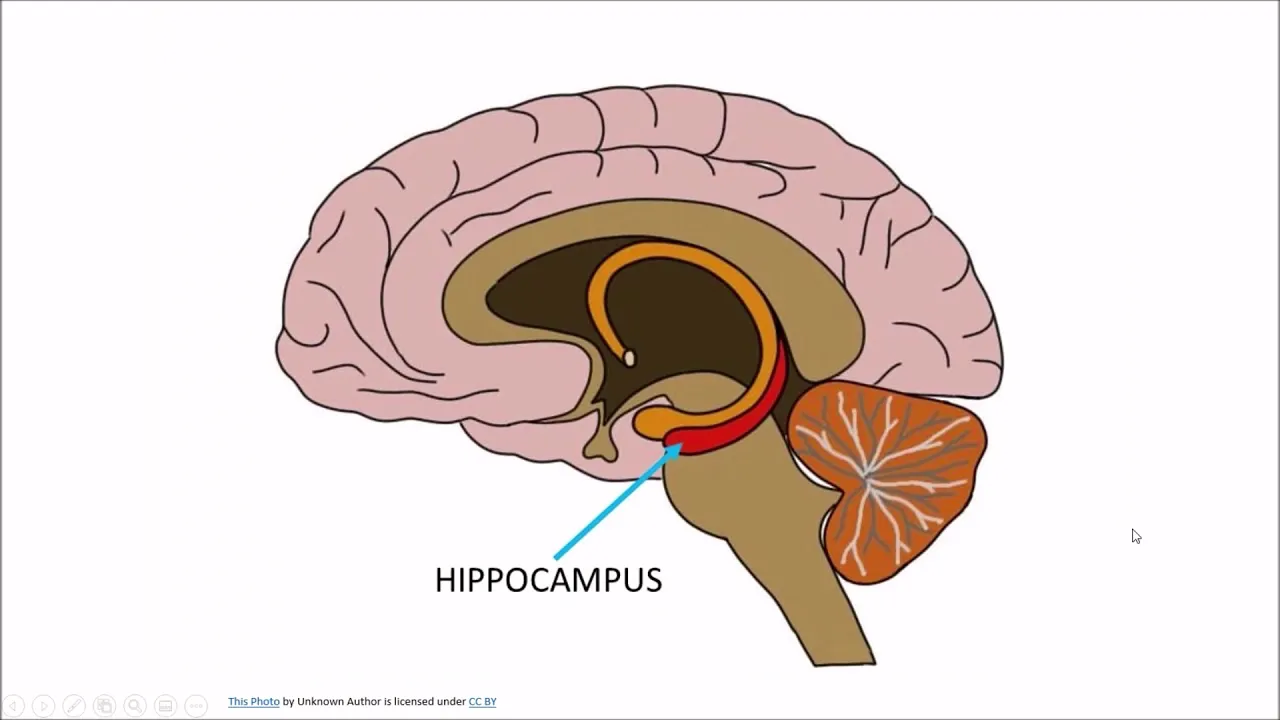
What is neurodegeneration?
TheSheekeyScienceShow
3K views•2019-08-19
IPL - Ruth Empson "Mind the Gap"
otagouniversity
251 views•2019-07-08
How our body shapes our mind | Pancho Tolchinsky | TEDxNapoli
TEDx
2K views•2019-12-05
Impact of Early Life Deprivation Danielle Stolzenberg Marcus Pembrey Bruce McEwen
uctv
4K views•2019-12-01
β-Caryophyllene for Parkinson’s: Protecting Dopamine & Easing Symptoms
parkinsonsdiseaseeducation
6K views•2025-08-09
New Insights from Inside the Brain with Rodrigo Braga, PhD
NUFeinbergMed
421 views•2025-04-14
Highlights for dystonia • 2025 MDS Congress
movedisorder
145 views•2025-10-27
Animal Welfare Synergy Series: Dr Tom Smulders on hippocampal neurogenesis
costactionlift
135 views•2025-07-14
Trending
we're almost finished the house (ep.125)
JennaPhipps
347K views•2026-07-22

We Finally Know Where Saturn’s Rings Came From
astrumspace
79K views•2026-07-22

BIG BET: Cathie Wood goes ALL IN on Elon Musk
FoxBusiness
89K views•2026-07-22

MIC DROP: Smithsonian Director Called Out For Woke Propaganda
TheAmalaEkpunobi
37K views•2026-07-23