A sharp synthesis of neuroscience and history that highlights the cognitive cost of outsourcing our internal compass to digital tools. It serves as a timely reminder that while GPS guides our steps, it may be shrinking the very brain structures that once mapped the world.
Install our extension to search inside any video instantly.
Why Did Ancient Humans Never Get Lost?
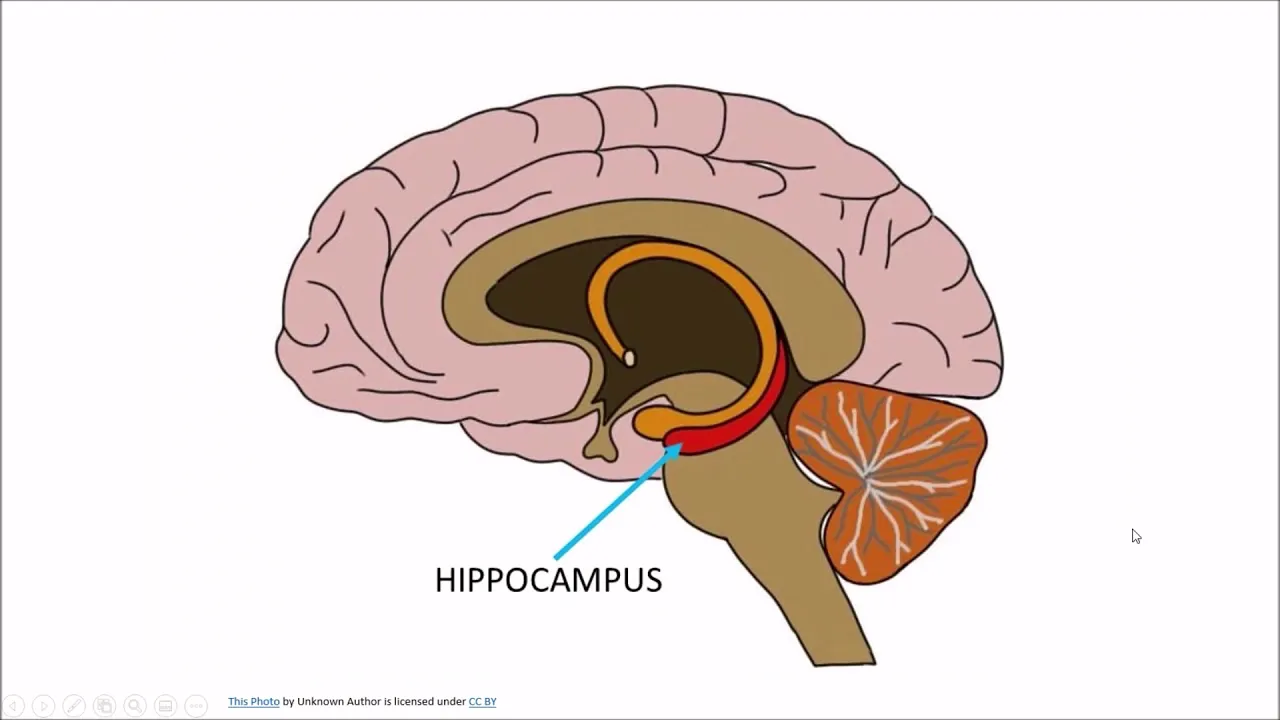
Added:You're waist-deep in an ocean that has no edges. It's 1,000 BC. The sun went down hours ago. There's no coastline behind you. There's no lighthouse ahead of you. There's no compass in your hand, no map on your lap, no glowing blue dot telling you you are here. There's just you, a wooden canoe barely wider than your shoulders, a few thousand miles of open Pacific in every direction, and a sky full of stars that to you are not decoration. They're a machine. And you are reading them the way you'd read a face. And here's the part that should break your brain a little. You are not lost. You have never been lost. You know exactly where you are, exactly where you're going, and roughly how many more nights of darkness stand between you and an island you have never seen and cannot yet imagine. This is the story of how ancient humans navigated a planet without a single instrument, no GPS, no compass, no printed map, and how they did it not by luck, not by wandering, but by turning the entire world, the stars, the swells, the wind, the birds, the color of the water into one enormous living map that they carried inside their own heads. And here's the thing nobody tells you. The reason they never got lost isn't that they were braver than us, or tougher than us, or that they simply had no choice. It's that the human brain is quite literally a navigation device. You are walking around right now with a piece of biological hardware so precise, so ancient, and so specialized that a scientist won a Nobel Prize just for figuring out how one small part of it works. And most of us have completely forgotten how to use it. So, let's rebuild the map from the ground up, and I promise you, by the end, you are going to look at getting lost, that little moment of panic when the map app spins, very, very differently. Let's start with the brain, because before you can navigate an ocean, you need to know where you are in a room. And it turns out your brain solved that problem a very long time ago. In 1971, a scientist named John O'Keefe, working at University College London, was recording the activity of individual neurons in the brains of rats as they moved around a simple enclosure. And he found something genuinely strange. Certain neurons in a region called the hippocampus, a curled seahorse-shaped structure deep in the brain, would fire only when the animal was one specific location. Move to a different spot, a different neuron fired. Move back, the first one lit up again. O'Keefe called them place cells. And what he had discovered was that the brain doesn't just see a room, it builds a map of it, an internal cellular map where individual neurons stand in for individual places. But here's where it gets interesting. A map of places isn't enough. A map needs a grid. It needs coordinates. And in 2005, a husband and wife team in Norway, May-Britt Moser and Edvard Moser, found exactly that. In a neighboring region called the entorhinal cortex, they discovered neurons that fire in a repeating hexagonal pattern as an animal moves through space, like invisible graph paper laid across the floor of the world. They called them grid cells. And together, place cells and grid cells form something astonishing, a coordinate system, a biological GPS. In 2014, O'Keefe and the Mosers shared the Nobel Prize in Physiology or Medicine for exactly this.
For discovering, as the committee put it, the brain's inner GPS. Sit with that for a second. Before any human being ever drew a line on a piece of animal skin, before anyone carved a landmark into stone, we were already carrying a positioning system in our skulls. Not a metaphor, an actual physical, mappable, coordinate-generating system made of neurons. It was there in your ancestors 50,000 years ago. It's there in you right now, humming away as you sit perfectly still. The hardware was never the problem. The hardware was always incredible. So, the question becomes, what did our ancestors feed into that hardware? Because a GPS is only as good as the signals it receives. And this is where ancient navigation goes from impressive to genuinely jaw-droppingly insane. Come back to the Pacific.
Because the greatest navigators in human history were not the Europeans with their astrolabes and their sextants.
They were the peoples of the Pacific, the Polynesians, the Micronesians, the Melanesians, who colonized the largest ocean on Earth, an area covering nearly a third of the planet's surface, in canoes, using nothing but their senses and a body of memorized knowledge passed down through generations. They reached Hawaii. They reached New Zealand. They reached Easter Island, one of the most remote inhabited places on the planet, a speck of land more than 2,000 km from the nearest neighbor. And they did it centuries before Europeans could reliably sail out of sight of land without panicking. How? Start with the stars. A Pacific navigator uses what's often called a star compass, not a physical object, but a mental model. As the Earth turns, stars rise on the eastern horizon and set on the western horizon at fixed points. And each star traces the same arc night after night, year after year. A navigator memorizes dozens, sometimes hundreds, of these rising and setting points and uses the sequence of stars climbing out of the sea to hold a heading through the night.
When one star rises too high to be useful, another takes its place along the same bearing. It's a compass made of the sky itself, and it never needs batteries. But, and here's the thing nobody tells you, the stars are the easy part. The stars only work at night and only when the sky is clear. What do you do at noon? What do you do in a storm?
Under a solid ceiling of cloud for three days straight? This is where it gets almost unbelievable because a master navigator reads the ocean itself. The Pacific is crossed by long steady swells generated by distant persistent weather systems. Swells that hold their direction for hundreds of miles. A trained navigator can feel these swells through the hull of the canoe, through their own body. Distinguishing multiple overlapping swell patterns at once. Some navigators reportedly learn to read them best while lying down in the canoe, feeling the subtle rhythm of the boat pitching and rolling using their own spine as an instrument. They knew when a swell bent around an unseen island revealing land that was still far over the horizon. And then there's a technique so elegant it took Western anthropologists years to even understand it. In parts of Micronesia, navigators used a system often called etak. Here's the idea. You can't feel yourself moving on the open ocean. There are no landmarks. The boat feels still. The water slides by. So instead of imagining yourself moving toward your destination, the navigator holds the canoe still in his mind and imagines the islands moving. A reference island off to the side is pictured sliding backward past the canoe star point by star point. And by tracking how far that invisible island has moved against the star compass, the navigator always knows how far along the voyage he is. It's a frame of reference so counterintuitive that it essentially inverts the entire problem of motion. And it worked. Add to that the birds. Certain species like the white tern and the noddy sleep on land and fish at sea. So at dawn they fly out from an island and at dusk they fly back. Spot a flock of them heading home in the evening and they'll point you straight at land you cannot yet see, sometimes from 50 km out. Add the clouds, which pile up and change color over islands, sometimes catching a faint green tint from a lagoon below. Add the color of the water, the pattern of drifting debris, the behavior of dolphins. Every single one of these is a data point, and the navigator is fusing all of them continuously in real time into one coherent answer to one question, where am I? Now, for a long time Western scholars simply refused to believe this was possible. They assumed Polynesians must have reached these islands by accident, blown off course, drifting, getting lucky. And here's where the story gets a hero. In 1976, a group called the Polynesian Voyaging Society built a traditional double-hulled voyaging canoe named Hōkūleʻa and set out to sail from Hawaii to Tahiti over 4,000 km using no instruments at all. The problem was the traditional navigational knowledge had nearly died out in Hawaii itself. So, they turned to a man named Mau Piailug, a master navigator from the tiny island of Satawal in Micronesia, one of the last people alive who had been trained in the old way from childhood. Mau guided that canoe across thousands of miles of open ocean and made landfall in Tahiti. No compass, no GPS, no sextant, just the knowledge in his head. And in doing so, he didn't just prove the skeptics wrong, he helped ignite a cultural revival of traditional navigation that continues to this day with navigators like Nainoa Thompson carrying it forward. The scientific record here isn't guesswork, either.
Much of what the outside world understands about these systems comes from people who went and learned them firsthand. The physician and sailor David Lewis documented Pacific navigation in his landmark 1972 book We, the Navigators, sailing with traditional navigators and recording their methods.
The anthropologist Thomas Gladwin lived among the navigators of Puluwat Atoll and described their training in his 1970 book East is a big bird. These weren't legends. They were living, working systems of applied knowledge. Arguably, some of the most sophisticated feats of cognition our species has ever pulled off. But, here's the thing. The Pacific is spectacular, but it's not the whole story. Because this ability, this refusal to be lost, shows up again and again all over the world in wildly different environments using wildly different methods, which tells you something profound. This isn't a quirk of one culture. This is a human capacity. Go to the other end of the Earth. Go to the Arctic. For the Inuit and other Arctic peoples, the challenge is almost the opposite of the Pacific.
Instead of a featureless ocean, you have a featureless expanse of snow and ice, flat, white, blinding, and constantly shifting. And for much of the year in the polar night, you don't even have the sun. So, how do you cross hundreds of kilometers of this and come home? You read the snow. Specifically, you read the snowdrifts. Prevailing winds carve the snow into consistent, elongated ridges, and an experienced traveler can read the shape and orientation of these drifts. In Inuktitut, one term for them is akullirait, like a compass needle frozen into the ground. You read the wind on your face. You read the stars when they're out. You read the subtle undulations of the land beneath the snow. Researchers like Claudio Aporta, who has spent years documenting Inuit wayfinding, have described how travelers hold vast, detailed mental maps of routes. Routes defined not by lines on paper, but by sequences of remembered places, conditions, and cues passed down and constantly updated through experience. And then, there's Australia, home to the oldest continuous cultures on Earth. Aboriginal Australians developed something often described in English as songlines, also called dreaming tracks. These are paths across the land, sometimes stretching for hundreds or even thousands of kilometers that are encoded in song, story, and ceremony. The lyrics of a song describe the landmarks along a route in order, a rock here, a water hole there, a bend in a ridge, so that a person who knows the song can navigate terrain they have never physically walked simply by following the sequence the song lays out. The map, in other words, is the music, knowledge, direction, law, and memory all bound together in a form you can carry across a continent inside your own voice. It's a navigation system, an oral library, and a cultural archive all at once. And here's where it gets interesting because this connects straight back to the neuroscience.
Remember those place cells and grid cells? Modern memory research keeps circling back to a very old technique, the method of loci or the memory palace, where you memorize information by mentally placing it along a familiar route or through the rooms of a familiar building. Champion memorizers still use it today. And why does it work so absurdly well? Because it hijacks your brain's navigation system, the most powerful, most ancient memory machinery you have. Songlines do exactly this at continental scale. Your ancestors weren't just using their spatial brains to find their way. They were using the way as a way to remember everything else. Location and memory in the human brain are practically the same thing.
So, now we have to ask the deeper question. Why are we so good at this?
Why did evolution build us a Nobel Prize winning positioning system in the first place? And the answer is almost uncomfortably simple because for the overwhelming majority of human existence, getting lost meant dying. For hundreds of thousands of years, our ancestors were foragers and hunters who had to range far from home, tracking game, following seasonal food, finding water, chasing resources across enormous territories, and then find their way back every single day. There was no room for error. A hunter who couldn't retrace his steps didn't get a second chance.
Natural selection, over immense stretches of time, ruthlessly favored the brains that could hold a map. The people who navigated survived. The people who survived are us. You are the descendant of an unbroken chain of individuals, not one of whom got permanently, fatally lost before they had children. Every ancestor you have ever had, all the way back, found their way home. And there's a technique underneath all of this so fundamental that we share a version of it with insects, with birds, with mammals across the animal kingdom. It's called dead reckoning, or path integration. Here's the idea. Even with your eyes closed, if you keep track of every direction you turn and every step you take, you can continuously calculate your position relative to your starting point, and therefore always know the direction straight back home. Desert ants do this in blistering heat, wandering a chaotic search path, and then, the moment they find food, turning and running in a near-perfect straight line back to their nest. And your brain does it, too.
Quietly, all the time. Those grid cells, those place cells, that hexagonal graph paper laid across the world, that is, in part, the machinery of path integration.
It's why you can walk through your dark house at night and reach the bathroom without turning on a light. You are dead reckoning. You are using the exact same deep system your ancestors used to cross deserts and oceans. You just call it knowing where the bathroom is. So, here's the uncomfortable twist. The reason ancient humans never got lost, and the reason we get lost so easily, isn't about the brain changing. The hardware is still there. It's still yours. It's the same equipment that guided a canoe to Tahiti and a hunter home across the ice. The difference is that we've outsourced it. There's a growing body of research, including work from scientists studying how GPS use affects the brain, suggesting that when we follow turn-by-turn directions, the hippocampus, that ancient mapping structure, essentially goes quiet. We stop building the map. We stop firing the place cells. We let the phone do the one thing our species spent hundreds of thousands of years perfecting. And a muscle you never use is a muscle you slowly lose. Which brings us back to that canoe, waist-deep in an ocean with no edges, reading a sky like a face, feeling the swells through your spine, holding an entire world inside your head, and never, for one moment, lost.
But here's the thing. Everything I've just described, the star compass, the songlines, the snowdrifts, the inner GPs made of grid cells, all of it depends on cues from the world outside. Stars you can see, swells you can feel, snow you can read. And yet there are hints, scattered and controversial and genuinely strange, that the human ability to orient may go deeper still, down to a sense we may not even know we have. Scientists have long known that some animals, birds, sea turtles, certain fish can detect the Earth's magnetic field and use it to navigate across the entire planet. And in recent years, a handful of researchers, including a well-known geophysicist at Caltech, have begun testing whether the human brain, too, quietly responds to magnetic fields. Whether buried somewhere in our own heads is a faint, forgotten compass we've never learned to feel. And if that's true, if the reason our ancestors never got lost isn't just what they learned, but something they were born able to sense, then the oldest navigation system on Earth might not be in the stars, or the ocean, or even in the memory. It might be a needle spinning silently inside all of us. And that is a story most people have never heard.
Related Videos
8:08
Neuroscience
What is neurodegeneration?
TheSheekeyScienceShow
3K views•2019-08-19

57:35
Neuroscience
IPL - Ruth Empson "Mind the Gap"
otagouniversity
251 views•2019-07-08

14:01
Neuroscience
How our body shapes our mind | Pancho Tolchinsky | TEDxNapoli
TEDx
2K views•2019-12-05
1:00:02
Neuroscience
Impact of Early Life Deprivation Danielle Stolzenberg Marcus Pembrey Bruce McEwen
uctv
4K views•2019-12-01

10:32
Neuroscience
β-Caryophyllene for Parkinson’s: Protecting Dopamine & Easing Symptoms
parkinsonsdiseaseeducation
6K views•2025-08-09

20:44
Neuroscience
New Insights from Inside the Brain with Rodrigo Braga, PhD
NUFeinbergMed
421 views•2025-04-14

9:57
Neuroscience
Highlights for dystonia • 2025 MDS Congress
movedisorder
145 views•2025-10-27

58:17
Neuroscience
Animal Welfare Synergy Series: Dr Tom Smulders on hippocampal neurogenesis
costactionlift
135 views•2025-07-14
Trending

13:25
Business
Playstation NO DISC/NO BUY Fight Is Over...
DavidJaffeGames
4K views•2026-07-23

22:40
Business
Steam and Xbox Just Dropped The Hammer On PlayStation
OhNoItsAlexx
9K views•2026-07-23

16:52
Anthropology
Americans Confused in Australia for 17 Minutes Straight
IWrocker
17K views•2026-07-23

20:36
Business
SuperBike Factory Has Gone... What's Next for the Motorcycle Industry?
thatbikersimon
11K views•2026-07-22