Diplomatic agreements with hostile regimes remain fragile because a signed document cannot change an ideology; real peace requires the people themselves to choose a different future, as demonstrated by Iran's history of signing agreements while continuing hostile actions.
Install our extension to search inside any video instantly.
Host SHOCKED as Mike Pompeo Reveals What's About To Happen in Iran!
Added:president says, you know, he's not going to strike tonight, which is what his true social says. I think the regime knows that the risk to car and is really the lifeline for the regime. I think he understands that the risk to car and their economic well-being um is going to force them to a place where they will either capitulate um by agreement and acknowledging that the United States needs to do the necessary to get the uh enriched material out of the country and prevent them from getting a nuclear weapon or that we'll do it we'll we'll essentially take it out of the cold dead hands of the leaders. What exactly is going on in Iran and what are our pathways forward? Check out this great clip over here with Mike Pompeo, former Secretary of State. We'll watch it together and then we'll talk about it.
But first, hit that subscribe button over there in the corner. We'd love to stay in touch. Check this out.
>> What's your reaction now uh when we were on the cusp of this third round of bombings that President Trump says he's cancelling those and that he believes there's a meaningful deal.
>> Well, Martha, good afternoon. It's great to be with you. Uh I I still believe it's going to take significant kinetic action to bring the Iranians to to heal in a way that delivers on the outcome. I hope I'm wrong. I hope there's an arrangement that the Iranians have not only agreed to a deal, which Martha, you and I both know, a piece of paper's largely worthless when it comes to the Islamic Republic uh and the IRGC. Um but I hope he's got a set of arrangements there that can do exactly what it has been described uh which is to get the straight of Hermuz open and make sure that Iran never gets a chance to have a nuclear weapon. Uh that that remains to be seen. I I think there were two key points in his true social. One was the blockade's going to stay in place. That is a powerful powerful force against the regime. He's ded them hundreds of millions of dollars uh each and every week. Uh and then second he said look we we're going to make sure that we get this in a place that's executable and verifiable. If we can achieve all of that and the bombing that took place over the last 48 hours convince the regime to capitulate all all to the good. But there's still many unanswered questions about precisely how this will uh evolve. And second, I do want to see what the Gulf Arab states actually have contributed to this. This will tr turn out to be a very important element of the United States being able to achieve its objectives as well.
>> Absolutely. You used a word there that is so important in the study of war that you know better than any of us.
Capitulation.
So the question is, has Iran capitulated? Is the knowledge that 100 million barrels got out, 200 ships, that there is a secretive effort that's been underway and successful to get oil out of Iran. Number two, which was just mentioned by by the general, uh this quote from Scott Besson, which I think probably got quite a bit of an attention. He said, "The Iranian regime will lose the zero gum the zero sum game it's playing. Any damage it inflicts on our allies in the Gulf will be paid for with funds extracted from Iranian accounts that are offshore. Any tolls paid to the Persian Gulf Strait Authority will be offset by funds extracted from their accounts. I think this is an idea that's going to um land not very well with Iran and I think it makes a ton of sense. What do you think, >> Martha? I think those are both huge steps forward in putting even more pressure on what is clearly a weakened and fractured uh set of leaders right inside of Iran. It's always been a question about like who is it we're actually negotiating with. Um I think what Secretary Besson uh has said and what President Trump has done is making that even u more difficult for the leadership inside of Iran. You know, I'm I'm mindful too. I remember when we were prepared to take a strike against Iran in the president's first term, he canceled it a handful of hours before.
Um, but it wasn't but a few days later, we were right back at it. When the Iranian regime reiged on its commitment to make sure that we protected American lives, we followed through with a strike on General Sulammani. So, while the president says, you know, he's not going to strike tonight, which is what his true social says, I think the regime knows that the risk to car uh and is really the lifeline for the regime. I think he understands that the risk to car and their economic well-being um is going to force them to a place where they will either capitulate um by agreement and acknowledging that the United States needs to do the necessary to get the uh enriched material out of the country and prevent them from getting a nuclear weapon or that we'll do it we'll we'll essentially take it out of the cold dead hands of the leaders.
>> So they've lost a lot. We know that they've lost um you know all of their major equipment for their navy, for their ships, all of that. But they keep sort of harassing in the straight and I think that you know the president's statement that he was ready to take Car Island. He said you know I've always wanted it. There was push back and obviously this is the debate that goes on in terms of decisionm but you know if we were to take Car Island and the subtitle in this reporting is president says US will assume control of Thrron's energy markets and they've seen what happened in Venezuela. Do you think that was one of the pieces that if this turns out well may have been crucial?
>> Undoubtedly, Martha, the the regime knows that the lifeline, the ability to continue to pay their the besiege to continue to purchase weapons uh depends on car. The capacity CarGus used to move their their energy uh in into the Gulf.
Uh to lose that, to lose control of that, and they know the United States could take it if we were uh determined to do so. And President Trump chose to take that action. I I think that undoubtedly is in their calculus in a way that wasn't there just 48 or 72 hours ago.
>> What we're watching right now, we're getting a reminder of one of the oldest lessons in foreign policy. A signed agreement and a lasting peace are not always the same thing. President Trump announced that a deal with Iran is closed and reports suggest that a framework had been drafted that would extend the ceasefire and reopen the straight of Formuz and then begin another round of negotiations over Iran's nuclear program. But almost immediately, Iranian officials pushed back. According to reports cited by Axius, Iranian representatives said that there is no final decision that has been made and that agreement is still waiting for approval. And that really tells you everything that you need to know about where things stand because the real question isn't whether a document can be signed. The real question is whether the regime in Thyron can be trusted to keep its word. History matters. For decades, Iran's rulers have signed agreements.
They've made promises. They've accepted concessions. And then they've continued supporting terror groups and funding regional instability and pursuing military capabilities that threaten their neighbors. That's not a partisan statement. That is simply a historical fact. So to be fair, President Trump clearly still wants a deal. He has he's repeatedly signaled that he'd prefer diplomacy over another round of military escalation. In fact, reports indicate that he even urged restraint from American allies while negotiations continued. And that instinct is understandable. Every American should prefer a peaceful solution if a peaceful solution is actually possible. War is expensive. War is dangerous. War creates uncertainty for families and businesses and the entire world. But diplomacy only works when both sides want the same outcome. And that's where the challenge remains. The Iranian leadership wants sanctions relief. America wants security. Israel wants security. The free world wants security. Those goals don't automatically point in the same direction. So what happens next? Well, there's really only a few possibilities.
The first is that a deal gets signed in the coming days. That rem that still remains possible. Negotiators appear closer than they have uh closer than they've been in months. Uh the second possibility is that negotiations collapse once again because Iran refuses to accept key conditions. The third possibility is something in between. A temporary agreement that buys time but leaves the underlying problem unresolved. Personally, I think that the fundamental issue is bigger than any individual agreement. The issue is the nature of the regime itself. As long as the government is built around hostility towards America and hostility towards Israel and hostility towards the freedoms that define Western civilization, every agreement is going to remain fragile. A piece of paper can't change an ideology. A signature cannot create trust. A ceasefire can't guarantee peace. Real peace comes when people choose a different future.
But here's why I remain hopeful. The Iranian people are not the regime. And millions of Iranians have already demonstrated courage and resilience and a desire for greater freedom. Many of them want exactly what ordinary Americans want.
chance to raise a family, build businesses, worship freely, chance to live without fear. That desire for freedom is stronger than any dictator, stronger than any missile, stronger than any regime. America's greatest strength has never been its weapons. Its greatest strength has always been its belief that human beings are created for liberty and dignity. That idea defeated kings. It defeated fascism. It defeated Soviet communism. and one day it will outlast every regime that stands against it. So yes, let's hope for a deal perhaps depending on what's in it. Let's pray for peace. Let's support every honest effort to prevent another war. But let's also remember this. Peace isn't merely the absence of conflict. Peace is the presence of freedom, truth, and human dignity. And when those values finally take root in places where fear has ruled for generations, that won't just be the end of a war, it will be the beginning of a new chapter for an entire people.
And history teaches us something p powerful and beautiful. Freedom may be delayed. Freedom may be challenged, but freedom has a habit of always winning in the end. If you like this content overall, hit that subscribe button over there in the corner. We'd love to stay in touch. Take care.
Related Videos

The Belfast Atrocity
TheStateOfPolitics1
9K views•2026-06-10

The Weeknight 6/10/26 | 🅼🆂🅽🅱️🅲 Breaking News Today June 10, 2026
kk3-y9z
3K views•2026-06-10

Downham Market full town council 09/06/26
downhammarkettowncouncil1441
103 views•2026-06-10
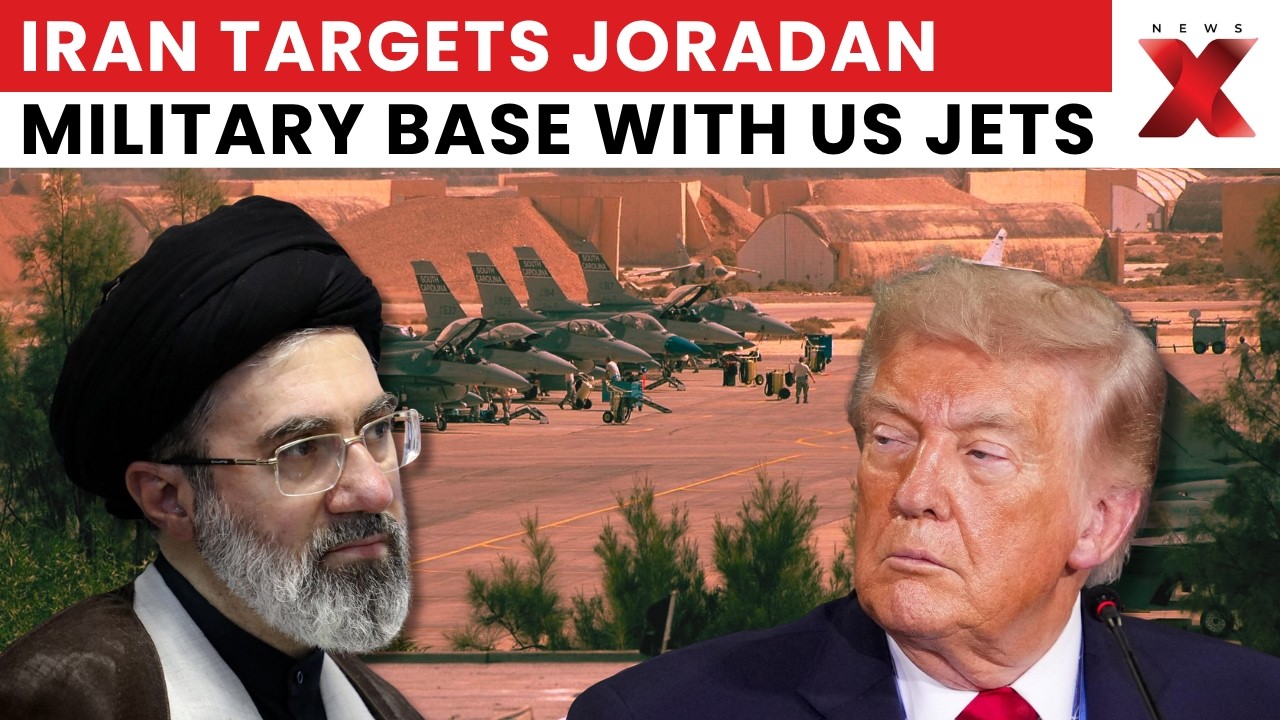
Iran-US Conflict: Iran Claims Strike on Jordan Base Housing US F-35 Fighter Jets | NewsX
newsxlive
509 views•2026-06-10

Tinubu strategy has driven APC into crisis - Accord presidential candidate | Daily Politics
TrustTVNews
539 views•2026-06-09

A Father’s Duty: Why I’m Running for Texas | Andrew Turner
TurnerforHD-59
3K views•2026-06-09

'Eggs Hurled At My Car': Madan Mitra's Allegation Triggers Political Debate | Latest News | ET Now
ETNow
567 views•2026-06-07

Trump Unleashed Hell After Iran Crossed the Line
realidademilitartv_en
126 views•2026-06-07