Doig masterfully transforms the personal experience of migration into a universal visual language, shifting the focus from the artist’s ego to the viewer’s place in the world. His work serves as a profound reminder that painting is not a tool for social engineering, but a vital medium for navigating the complexities of identity and memory.
安装我们的扩展,即时搜索任意视频内容
Artist Peter Doig: Paintings That Negotiate the World本站添加:
I like the, um, the, uh, the singleness of being a painter. I like the fact that you did it on your own. That really, um, I don't know, attracted me and, um, suited my being, I think. Um, not having to ask others what to do or being told what to do.
Um, totally your own responsibility.
I like this, um, this solo pursuit.
>> [music] [music] [music] >> I didn't really decide, [music] um, that painting was, um, a way of life really until, um, I went to art school.
Um, I went to art school with the idea of finding out what I wanted to pursue.
I could have gone in different directions, I think.
But But once I started, I discovered that I was more interested in in the lives of artists and the work that they made rather than other things.
Um, specifically painters.
And it has to be said, uh, painters who made, um, etchings.
I think etching is what really drew me into painting cuz I was a much I took to etching much quicker than I did to painting. I mean, it's a it's a it's Of course, it's uh you get results far quicker making etchings than you do making paintings. Um But nonetheless, etching and printmaking led me into the pursuit of painting. Um And I think um once you >> [snorts] >> once you feel like you've made one painting that somehow um I don't know.
You're not embarrassed by.
Or you don't feel you feel like you could show it to other people and uh it opens up conversation.
>> [sighs] >> Then I think it becomes it starts to become exciting.
Um I'm not I've never been um one for what in this country's called like the hard one image school London style painting.
Although I admire, of course, some of the great that within that group. But um I was um from quite early on, I was interested in making paintings that um in a way spoke to I guess I hoped spoke to my generation really.
At certain times in my life, different artists have been very important.
Um I think early on, I was attracted to you know, the likes of Francis Bacon, um David Hockney even, one of my neighbors in um Canada who I used to paint you know, he used to have me painting his house, painting his windows and stuff. He had a big lithograph um by David Hockney of a very very modern looking man in a sort of Yves Saint Laurent suit and uh I'd never seen art like that before really, like kind of it it it was so sort of clean and um almost slick um and yet I thought it was very a very bold thing to have made, you know. It's it seemed so contemporary.
Um I mean Bacon was very different.
Very obviously very visceral. I never I never really wanted to make art like either, but I think they were two sort of um artists that sort of drew me in from quite an early age.
That's before I left Canada. I had no interest in Canadian art when I was living in Canada.
It was so ubiquitous.
Um I remember I had a conversation with um the writer Karl Ove Knausgård and he said exactly the same thing about Munch when he was growing up.
And then lat- late laterally he became very very interested in Munch and maybe made the best exhibition of Munch's I've ever seen, but um you know, it was the same with me. I think when you're young, you sort of you kind of rebel against the ubiquitous, you know, the art that you see and on calendars and postage stamps and national art, you know.
Um so um yeah, I mean that was And then I think when I arrived in London, I was suddenly exposed to so many artists and so much art. I hadn't I hadn't really seen um much art before I came to London. I mean much art live as it were in museums and I you know, I didn't come from a museum going family or everything I saw I kind of saw either by myself or with uh my friends who were also interested.
So, um you know, it you know, rapid rapidly became introduced to art.
Um painting, I mean.
I don't think I knew who Bonnard was until I was about 19, you know I mean it was it wasn't like I had this sort of vocabulary when I arrived at art school.
I I I the vocabulary um started when I was at art school, which I think was actually very useful.
I went through phases at art school where I became really interested in I don't know, um mediums outside of painting. I mean, we were introduced to um like in the early '80s to the what they call the picture generation, you know, Cindy Sherman and early Richard Prince and um that group of artists who were sort of breaking in New York, but you know, didn't really have much presence over here, it has to be said, but I found the um the things they were depicting fascinating and um and uh you know, felt very very modern in a way, very very now.
Um again, I didn't want to I didn't feel the need to copy or it's a sort of in a way work in similar ways. I was making quite clumsy paintings, but nevertheless um that was the type of art that I found exciting.
>> [music] [music] >> I think the starting a painting [music] is always um the most difficult thing. Um you know, it does this idea warrant um further investigation? Does this idea warrant um the time it's going to take to you know, resolve it? Um will I get, you know, will I get bored of it? Um will I want to abandon, you know, will I want to abandon it? I think that's one of the reasons why there's such a long time frame to finish some of the paintings because you know, I I I I stop and um because I get stuck or I lose maybe I lose interest or lose faith.
And then I'll see it again and I'll go back. I mean, quite a number of the paintings that I've made over the years have taken you know, um have a big time span because of that.
Um but I guess um what it what's exciting me at at that point in time or if I'm thinking about something from the past that uh I remember would that make a would that make a painting? Um I take I usually use um some sort of photographic source.
Usually just to trigger my my memory. Um and then I use a mixture of um you know, drawing, invention, and um yeah, the photograph to to build up a scenario.
Pretty much every painting I've made is is a reflection on a memory. Seeing someone leaning against a loud speaker wearing a certain outfit, certain color of clothes um within nature for instance um seeing a girl roller skating in a park.
I mean the roller skating paintings they all came from seeing a girl roller skating in a park in a crowd in Central Park in 1986. It was a long time ago.
um and uh I started making drawings of this this particular skater then and I you know continued up until recently. And then you know the scenario changes. Then you might put this figure into another type of scene.
It may be um the title might become important um painting because it refers to an episode in your life.
It can be cryptic. Not everyone will get the uh the reference.
um the the lion paintings for instance um they have a kind of strong >> [clears throat] >> narrative element.
And they're very um important to me for personal reasons and also uh for reasons beyond that like a reflection on um on a place place being treated at.
And um the symbols in the paintings the symbol of the lion is is was an important one for me and um I realized that it's uh a symbol that's not to be taken lightly and it does a huge amount of dignity attached to it within the culture.
It's almost like a Christ-like figure.
>> [clears throat] >> So, you know, it's it's I'm not saying it's a taboo, um but I was very very aware of what I was playing with really.
And it was that was a challenge.
>> [music] >> I do think paintings [music] um can reflect uh travel and uh migration personal migration um and uh question it as well.
I think the questioning quality is really important. Um Like why why is one place like this and not like that and uh I think the advantage of having lived within um different societies and different um very different cultures uh is uh has been um I think useful for me for me as a painter, and also useful as a personal sort of negotiate the world. Of course, I there's many parts of the world I haven't been to or don't really understand, but I understand, I think, much more than if I'd remain in one place.
And hopefully that's reflected in in my work as well.
The work which is in the Louisiana Museum, Music of the Future.
It was one of the paintings I first um made or or started, rather, when I moved to Trinidad in 2002.
As a background, I'd lived there as a child um up until the age of 7 and 1/2. Then I was spent my other years in other childhood and teenage years in Canada before coming to London.
So, when I went back to Trinidad in 2002, I hadn't actually been there for over 30 years.
And by the time I realized that I wanted to to live there and work there, I also felt a little bit nervous about um being overexcited by the place as as a subject.
I wanted to sort of you know, um keep a distance in a way from everything around me that was, you know, very inspiring, I guess.
So, when I traveled there, I knew I was going to set up studio, I brought images with me.
Images that I found in London in a in a junk shop. Um mainly old postcards.
They actually were old hand-painted um Indian postcards, probably from the like the 1950s.
The reason why I chose them is they reminded me of of Trinidad, even though they weren't.
Some of them actually um depicted scenes that I'd already wanted to make paintings of.
Uh a painting called um Stag, Pelican Stag.
Um that had a kind of a narrative, a a story to it.
And I tried to draw it from my imagination. I could never really do it justice.
I found a postcard that had a a figure dragging a a a net along a a a beach. And to me that was the perfect stand-in for the the character I was trying to depict from my memory but couldn't quite get right.
That was one example, but Music of the Future was another. It was um actually a a scene from uh a place in Kerala called Ooty.
And the house in the painting was called Ooty Boat House. It It must have been a sort of recreational place where families went or people went to spend their time off or whatever and promenade and um it resonated with me cuz it reminded me of um the central space in Port of Spain, which is called the Savannah.
The Savannah is a space um where people do similar things. They They walk around it, they run around it, they as they say in Trinidad, they lime, which means they sort of relax and talk and drink and eat stuff and gather. It's a very very important space for for the city.
It's never uh you're you're not allowed to build on it. Um it's like the lungs of the city in a way.
But also um a lot of music's played there. Um bad things happen there at night sometimes if you're unlucky. Um you can get into trouble there.
But nevertheless, it's it's kind of the center.
Uh and it's it's nature.
And um I think when I arrived Well, I remember when I arrived in Trinidad that I was very much taken by the sound of the city. Very very different sound to a city like London.
Two times a day you get incredible chorus of birds.
When the birds are flying back in the evening before dusk, there's an like a cacophony of sort of bird sounds and you see them flying and really really hear them.
That mixed in, specially at, you know, um pre-carnival time, the sound of the steel drum.
Because within the neighborhoods and up into the hills, there's lots of what they call um pan yards, steel pan yards, is where the they the rehearsals happen.
And the rehearsals go on until late late late at night until the sometimes 3:00 or 4:00 in the morning.
And you hear the sound which is, you know, it's it's a very very beautiful sound.
And it's so much connected with um Trinidad and its history and um trouble and strife and all that.
Everyone relates to it.
And um Yes, the title refers to the steel drum.
But, the painting in a way um I hope refers to the experience of of of of being within this environment, but also being you know, an outsider as well, looking at it and and absorbing it in the way that I I was.
>> [music] >> I think all artists have a relation to color in their own way and they're attracted to certain tubes of paint or certain pigments. Um I know that I am and it's um it's difficult in a way sometimes to break away from your colors.
Um I don't know. I guess my colors were certain types of blues and greens and um oranges and I don't know.
Um But yeah, I mean this painting has got a lot of color in it. Um And um it was meant to be a painting of night.
Um and color in a way sort of illuminate was was used to illuminate. Um the scene and sort of I suppose it's not an impressionist painting but it takes something from certain impressionist paintings maybe.
Um In my case um sometimes I find that the color is maybe a little bit too um overt and that, you know, a different type of painter would be more subtle um within the subject uh in their use of of color.
I don't think I'm a colorist like you know, the great Matisses of the world. Um But it's more it it it's not uh conceptual or um scientific or it's it's more um trial and error.
It's like how how does it how does a color operate?
Um there's not always a reference in in reality. Um the color has to the color has to suit the painting.
>> [music] [music] [music] [music] [music] [music] >> Painting in um you know, 2000 and well, in in the time that I've been painting, say from 19 80s, early 80s to now, to 2026, you know, there's a lot to look back on to feed off.
And if if you're making paintings that are somewhat figurative, um somewhat narrative, it doesn't mean that they can't also be abstract and feed off um that whole world of painting.
I mean, that's the the privilege of making paintings now.
It's also the difficulty as well, because there's almost too much information.
Brian Eno, the musician was and painter, actually, was here the other night um playing music at the at the House of Music exhibition.
And the last thing he said, which I thought was a great thing to say is, uh, he talked about nostalgia and how many people are nostalgic about music and how it was so much better in the day and back in the day and, um, you know, he played a lot of music from his past, what from going back to when he was 9 years old.
But at the very end he said that he thought that now was the best time that ever been for making music, really.
Because of what was available.
And that really, um, um, spoke to me because I believe it's same with painting, really.
Of course you have to know what you want to paint and, uh, and what and how to how to negotiate past with the present.
Um, but I think that's always been the case with painting. What I think you could say the same thing probably like in 1900.
I don't think paintings can, um, or a painting can change the world. Uh, but I do think a painting can, um, you know, it can situate situate [clears throat] you within the world, you the viewer. I think you you know, it's important to think about the viewer, not just yourself, the artist. Um, if you think about painting too much, you probably stop because there's, you know, you can't really justify, um, what it is what what it's importance is.
Um, same with music, really.
And music has got no no visuals, except for those that appear in your own head.
I think painting in a way, um, has no words, except for those that you you you make in your head of or thoughts or associations.
That's what's unique about it, maybe.
Um, I think that, uh, a photograph for me is I mean although I love photography but it's almost too actual.
Painting is it kind of it has that ability to sort of dissolve and disappear and then resolidify.
Even a painting, you know, I could say this that about a a face by Manet or I know elements of a Rothko painting, you know, the same have the same sort of qualities in a way that I I find very mysterious and attractive.
相关推荐

Futurism: The Radical Art Revolution That Predicted the Modern World
HENITalks
154 views•2026-05-29

Jack Levine, Witches' Sabbath
smarthistory-art-history
471 views•2026-05-29

고가 중국도자기 경매
고가古家고도자기경매
203 views•2026-05-29

क्या भगवान शिव हारिती की नकल हैं? झूठे दावे का पर्दाफाश | हारिती बौद्ध देवी बनाम भगवान शिव
sanatansamiksha
1K views•2026-05-30

This is one of the biggest street art exhibitions in London but there’s a twist 👀 Danish
ExploringLondonCity
1K views•2026-05-30
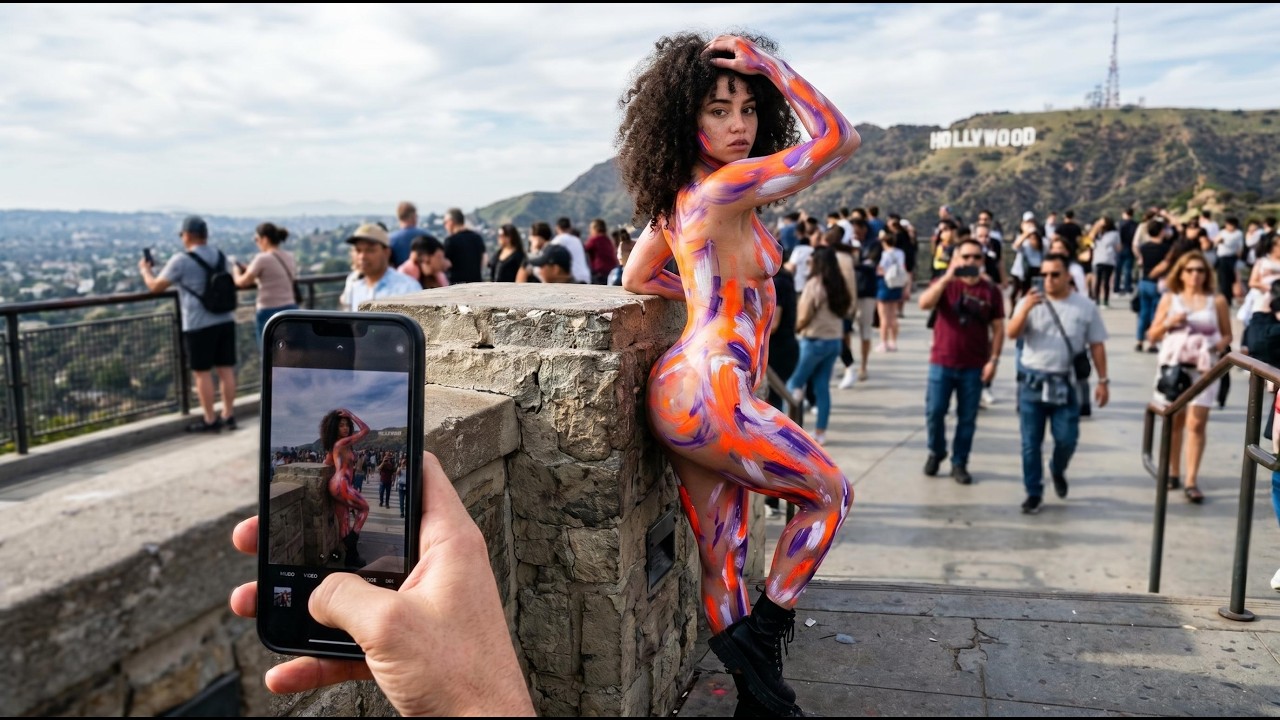
How Hollywood Body Art Changed the Way America Sees the Human Body Forever
Ink_and_Instinct
213 views•2026-06-02

Gudok Bull #4 #gudok #instruments #russia #russian #ancient #ancienthistory #sunoai #suno
aimechanicalbull
289 views•2026-05-29

Michelangelo Knew the Right Answer. They Ignored Him for 400 Years. | VERSO
VersoArt
123 views•2026-05-29



