The James Webb Space Telescope's infrared data reveals that Uranus's Mu ring (blue, composed of water ice particles from moon Mab) and Nu ring (red, composed of dust and carbon-rich compounds from hidden moonlets) are opposites, indicating that Uranus's ring system serves as a cosmic breadcrumb trail revealing more undiscovered moons than the currently known 29.
Installez notre extension pour rechercher instantanément dans n'importe quelle vidéo
SPACE NEWS! May 20th 2026 - What Uranus’s Rings Reveal About Its Hidden Moons #spacenews #spaceAjouté :
Hello everyone. This is Look into Space and Science. And Uranus is often overshadowed by Saturn's famous rings, but it its own ring system is currently serving as a cosmic breadcrumb trail leading us to undiscovered worlds. Now, unlike Saturn's bright icy bands, Uranus's rings were so faint, they weren't even seen until 1977. However, new infrared data from the James Webb Space Telescope has revealed that the two outermost rings, the Mu and the Nu rings, are the complete opposites. The Mu ring is a vibrant blue composed of tiny water ice particles that have been traced back to a small mysterious moon called Mab. This makes it a twin to Saturn's E ring, suggesting that Mab might be squirting ice into space much like the geysers of Enceladus. Now, the red-tinted Nu ring, on the other hand, tells us a much grittier story. Its reddish hue comes from a mix of dust and carbon-rich organic compounds, which astronomers believe is being sputtered off a group of small hidden moonlets.
Now, while we currently know of 29 moons orbiting the ice giant, the unique composition of this ring practically guarantees that there are more undiscovered moons hiding in the dark.
By decoding the light from these rings, we aren't just seeing dust and ice. We are actually looking at the fingerprints of a Shakespearean moon system that is far more active and crowded than we ever imagined. So, with that, I hope you guys have a great day and a great night.
Vidéos Similaires

Spiral Galaxy NGC 3370 from Hubble | NASA APOD 2025-11-05 #Shorts
galaxygallery
938 views•2026-05-30

SOMETHING inside the SUN is CHANGING
RaysAstrophotography
1K views•2026-06-03

NOAA Warning! Massive Double Cannibal CME Impacting Earth: G4 Storm Watch!
worldnewsreporttoday
1K views•2026-06-04
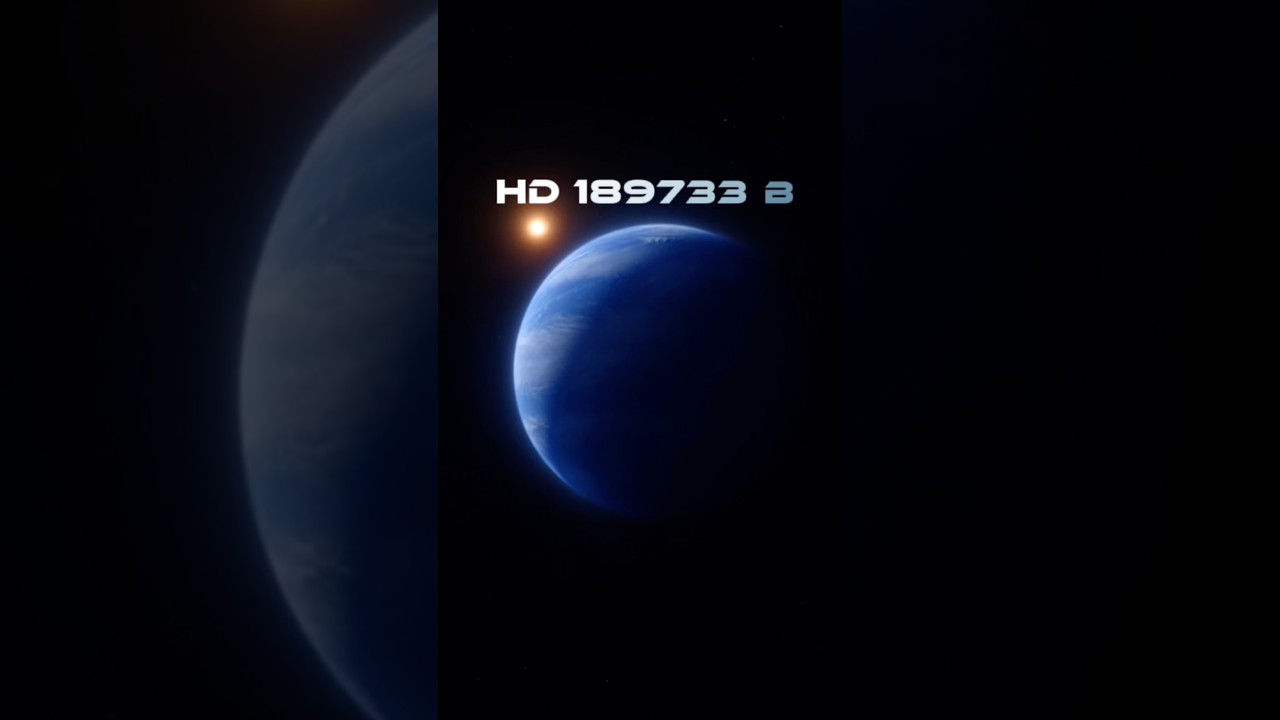
🌌 HD 189733 b | The Planet Where Glass Rains Sideways
EVENTHORIZONUK
3K views•2026-05-31

Captured the Blue Moon (with a twist) 🌙✨ #space #bluemoon #telescope
realAstroExplorer
674 views•2026-06-01

10 Planet Where a Black Hole Replaces the Sun
cosmicexplorer-EN
147 views•2026-06-02

Is this a copy of our galaxy? Discover Galaxy M81!
UniverseDocumentaries-cc4mb
995 views•2026-05-31

There May Be A Giant Hole In The Universe... And We Might Be Inside It | The Cosmic Ledger Entry 015
TheCosmicLedger
145 views•2026-05-31


