The video masterfully reframes biological neurogenesis as an existential erasure, proving that your adult consciousness is essentially a squatter in a mind that evicted its original tenant. It is a chillingly lucid reminder that we are all the biological successors of a stranger we can never truly meet.
Install our extension to search inside any video instantly.
Why You Can't Remember Being a Baby
Added:Look at a photo of yourself as a one-year-old. You probably think you're looking at a younger version of you, and that you've simply forgotten those early years.
But biologically… that’s not true.
Your brain didn't just misplace those memories. It actively formatted the hard drive. The baby in that picture? It isn't you. It’s a completely different entity whose mind was physically disassembled and overwritten so that your current consciousness could exist.
This is why you can’t remember being a baby.
Chapter One - The Stranger in the Album You’ve probably heard the myth that the human body physically replaces itself every seven years. But like a lot of the internet’s favorite and oft-repeated pop science, it’s only half the real truth. While cells like your skin and gut cells - incidentally, the ones most exposed to harsh sunlight and powerful acid - will replenish every few weeks. So, you’ll keep plenty of your baby cells until you drop dead. For example, only about 40% of the cells in your heart will cycle throughout your life, the rest are here for the long haul.
But your memories?
They aren’t nearly as durable.
You can’t remember being the baby in a photo, but the scary thing is seeing that photo will make you think you remember it. In a process that scientists call Infantile or childhood amnesia, a series of complex - but not mysterious - processes wipe that mental state clean. In their place is a big, murky void that’s vulnerable to modern day information impressing upon it.
The fact is, the baby you in the album is completely alien to the modern day you. So alien, that someone could show you a photo of a different baby and you’d start to believe that it was you.
Little by little, the old memories are shoved into the paper shredder and replaced by a new one.
When does it stop being the old you?
It’s such a disturbing question that philosophers have two different models for this: The Ship of Theseus and The Sorites Paradox.
In the first, if, over a number of decades, you slowly replace each part of a ship in repairs until none of the original parts remain, you’re left to wonder: Is it the same ship? In the second, you need to consider a pile of sand: How many grains of sand do you have to remove before it stops being a pile? Or in our case, how many memories inside that baby brain need to fade before the baby fades, too?
Are you real? Have you always been you? Or, scientifically, were you the second tenant waiting in the wings during infant brain development, ready to move in?
Chapter Two - The Hardware Illusion The first thing you need to understand is that it’s not because babies are working with weak hardware. In fact, the exact opposite is true.
A baby’s brain is actually a high-performance Ferrari compared to the busted down Honda Civic of a brain most of us are working with by middle-age.
As an adult, your brain makes up only 2% of your overall body mass. Before you’re born, it’s over 10 times that, 25% just before birth. And even after birth, the brain still accounts for an impressive 10% of the baby’s body mass. And for the first 3 months of your life, your brain will continue to grow by 1% per day in a period of incomparably rapid brain development. The infant brain is a powerful data sponge, with an astonishing 50% more synaptic connections than an adult brain. If you had the kind of brain that you had as a baby as an adult, imagine how quickly you could pick up new skills, learn new languages, and develop your personality.
The neuroplasticity is unparalleled.
More than a million neural connections are created every second in the infant brain, and this process exacts an insane metabolic cost. 60% of a baby’s energy goes directly to the development of their brain. Even at 3 years old, your brain will be twice as active as the brain of an adult. When you look at it through this lens, the average baby or toddler is a crawling, babbling supercomputer before they can even recite their ABCs. Clearly, you don’t lose all your baby memories just because your baby brain is an inherently weak piece of hardware.
But the wholesale deletion of your infant self isn’t a bug in the system, it’s a feature.
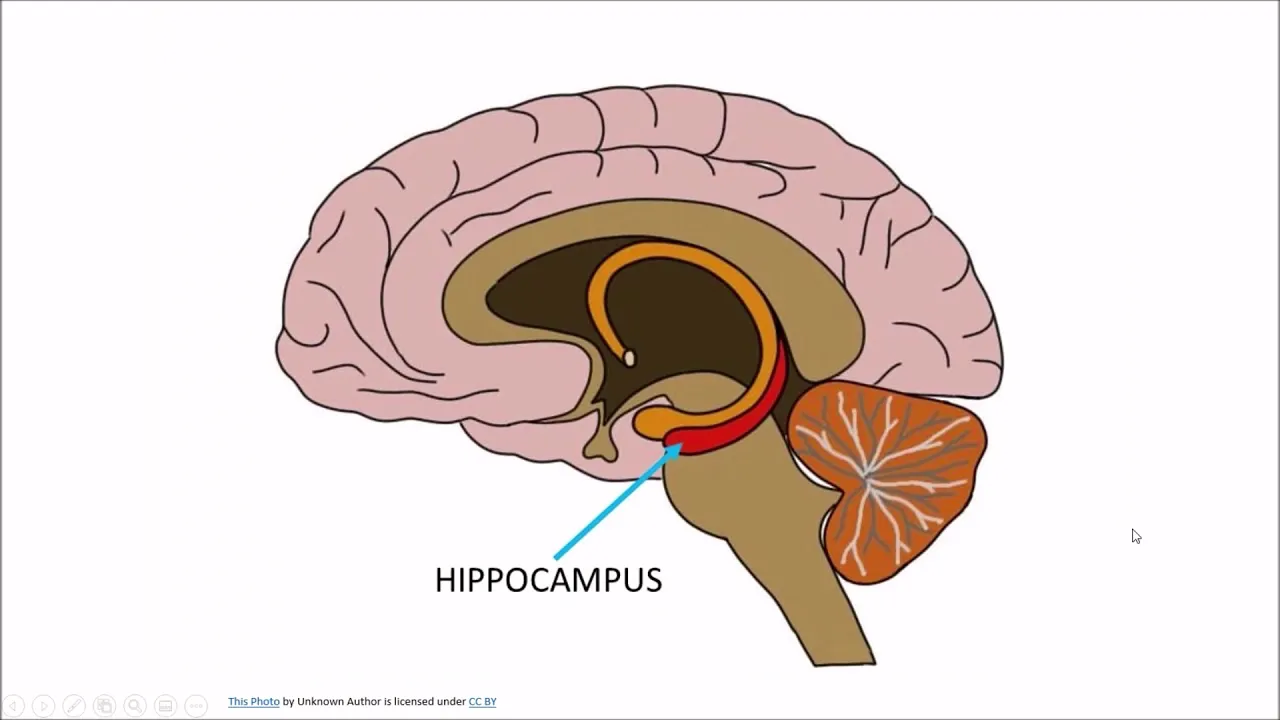
The infant brain has no problem encoding short term memories. But when it comes to long term memories, there’s a structural bottleneck built into a vital part of your brain: The Hippocampus. It’s a small part of your limbic system that organizes your memories by picking which short term memories to encode deeply as long term memories. As the authoritative study on the matter puts it, “during infancy, when hippocampal neurogenesis levels are high and freshly generated memories tend to be rapidly forgotten.”
Basically, out with the old, and in with the new.
And when that old is out, it’s out forever. But that’s not the only process that seems deadset on annihilating your childhood self. It turns out, the very growth of your brain might just be the ultimate nail in the coffin… Chapter Three - The Hard Drive Format The 2014 research of Paul W Frankland and Sheena A Josselyn into the nature of neurogenesis - that’s the creation of new neural tissue - has completely altered our view on how the brain assassinates itself in order to be reborn. They call it a “Clearance Mechanism”.
It’s a way to prevent the brain from clogging itself up with junk data, like passwords for accounts you no longer use, old lottery numbers, and what you had for breakfast 3 years ago to the day. Keeping all that stuff in your brain would likely feel more like a curse than a superpower.
The particular Clearance Mechanism that Frankland and Josselyn identified has everything to do with how new cells are generated in the subgranular zone of the dentate gyrus. That’s where they first multiply before later joining up to the circuitry of the hippocampus. This is what happens when you’re having new experiences and, in the process, creating new memories.
Imagine you had a box full of plastic balls, kind of like the ones you’d find in a ballpit.
Then we give you a new ball, and tell you that we want you to move it to the bottom of the box… Without moving any of the other balls in the process. Impossible, right?
That’s exactly how the new cells created in the subgranular zone of the dentate gyrus interfere with the structure of the hippocampus.
You can’t add something new to a closed system without fundamentally altering what’s already in there. To quote the study’s results, “as new cells integrate into the hippocampus they necessarily remodel existing circuitry.
This remodeling may degrade memories already stored in those circuits.”
It’s not just adding to the circuits, it’s scrambling them.
The more you learn, the less you know.
The process of growing up, when viewed in light of these findings, is almost like upgrading a system’s RAM while the computer is still running. It’s a violent incursion that upsets the established order and rips through the mental architecture that’s already there. This research is an insane paradigm shift for a huge number of reasons, like analyzing the way that established and new memories interact. It also shows that by targeting specific parts of the brain, we may find new avenues of treatment for memory-eroding disorders like amnesia and dementia.
It also continues carrying a disturbing pattern: The “You” that exists as a baby seems utterly doomed by fate due to processes inherent in your body and brain as you grow up. And the insane thing is, we’re still only scratching the surface of just how many natural processes in the body seem to be pitching in on this conspiracy against your own mind.
Chapter Four - The Synaptic Massacre The human brain is like real estate: Space is always a factor.
The size of your skull will always limit the physical size of your brain.
The physical size of your brain will in turn always limit the number of synaptic connections possible within it. Like I said earlier, when you're an infant, your brain is an absolute sponge for all of life’s data around you. In that time you’ll pick up a lot of valuable information, from language to knowing you shouldn’t touch a hot stove.
Inevitably, like someone who clicks the download link on every file they see on the internet, your brain is also going to vacuum up a lot of junk, which can range from useless to actively dangerous. That is why, when a person begins to hit puberty, their mind and memories undergo a violent period of culling known as “Synaptic Pruning”, which, in practice, means an insane massacre of countless memories. And if you’re watching this and aged between 12 and 30, it’s happening to you right now. You’re right there in the liminal space between the death of who you were and the becoming of who you’ll be.
And what synapses will be pruned depends entirely on each individual person, too. Think of it as the principle of “use it or lose it”, where the synaptic connections that you use most over this period - the memories of people and places you see most often, the skills you use most and so on. - will strengthen. The connections that are underused wither away and die.
You’ll receive plenty of benefits from the synaptic pruning process, from increased focus to clearer memory to better sensory processing. But for the “previous tenant” of your body, this is basically the fulfilment of armageddon.
You hit your absolute peak level of synapses at around age 3, and between then and 10 years old, you’ll see an absolutely insane 50% of your extra synapses completely wiped out.
It’s like a city wiping out half its roads and bridges to reduce congestion on the others. The fascinating but tragic part of all this is that you’ll never actually truly know what you lost.
But even if you could get over the neurological hurdle to understand all this, there’s another locked door behind this one, and this is purely a psychological one… Chapter Five - The Mirror and the Ghost When do you actually start thinking of yourself as You?
It sounds like the kind of question that people at a party would start asking each other at around 2 AM, after a few too many. But it’s actually a question that psychologists have pondered in depth for decades. They’ve even devised a brilliant test to investigate: The MSR, or “Mirror Self-Recognition”, test.
In 1970, psychologist Gordon Gallup Jr. had a bright idea that a human or any other animal’s degree of self-awareness could be measured by their ability to recognize their reflection as themself, and not as another animal. The specific variant for human babies is mostly known as “The Rouge Test”, where rouge makeup is used to draw a dot somewhere on the child’s skin that they couldn’t see. Usually in places like their forehead. If the baby saw the red dot in their reflection and immediately reached for their own forehead rather than for the mirror itself, it was a reasonably strong sign that they had a degree of self-conception.
But here’s the interesting part.
In the first 12 months of their life, for the most part, babies almost uniformly fail the mirror test. They do not see the strange little bald drooling creature in the mirror and think, “That’s me”, because their sense of “Me” has not, in any real way, solidified. They instead, in the earliest iterations of human studies, saw their reflection in the mirror as a “social playmate.” It’s only between 20 and 24 months that recognition rose above 65%, so before that, almost half of infants were simply seeing strangers in the mirror.
How can you store memories of the self without even knowing what the self really is? It leaves babies with the need to find a different way to contextualise memory, but our main way of doing that doesn’t exactly become pre-coded, either.
Chapter Six - The Language Lock One of the many items in the human toolkit that have given us dominance over planet Earth is our ability to communicate with verbal and written language. Our vocabulary, in many ways, is our way of drawing the borders of our imagination.
So, what does this mean for the brain before we develop language?
If feeling and sensation are the gooey organs of memory, then language is the skeleton that holds it all together. Before language, this so-called “pre-verbal” or “somatic” memory is encoded in pure sensation. But as children gain language skills in their first 2 to 3 years of age, their way of encoding memory radically changes to use language as a kind of mental storage medium.
And when the medium changes, the message is lost. A 2002 study by Gabrielle Simcock and Harlene Hayne tried to discover whether children acquiring new vocabulary gave them the power to describe pre-verbal memories. The results of their test still feel incredibly shocking today: “By the time of the test, children of all ages had acquired most of the vocabulary necessary to describe the target event. Despite this, they did not translate preverbal aspects of their memory into language during the test. In no instance did a child verbally report information about the event that was not part of his or her productive vocabulary at the time of encoding.
We conclude that language development plays a pivotal role in childhood amnesia.”
In other words, as soon as you’re able to say, “Bye bye, baby”, that’s exactly what you should be saying to all your memories before that time. But whenever you learn strange and distressing information like this, you might find yourself looking for exceptions. Like, what happens to the memories of people who can remember pretty much everything?
Chapter Seven - The HSAM Paradox Sometimes, memory can be a curse.
Picture the most embarrassing moment of your life. Imagine being able to recall that moment with absolute vivid clarity for the rest of your life. Such is the struggle of people with Highly Superior Autobiographical Memory, or HSAM. This means that a person with this condition can flawlessly remember everything that happened to them specifically.
This condition is exceedingly rare, with only around 60 people ever being successfully diagnosed. Research is still ongoing, but currently the best guess as to why it affects people is a larger temporal lobe, for memory processing, and a bigger caudate nucleus, which plays a role in learning. And the existence of a condition like this raises a fascinating question: Even among people who supposedly have perfect recall, why can so many of them still not remember their earliest years as a baby?
For the most part, these hyper-realistic memories begin in late childhood. This means that even when you have hyper memory ability, you still can’t escape the infant memory guillotine that is childhood amnesia. It’s simply a natural and inevitable part of life.
But it feels impossible to accept this as an absolute without asking another question: What’s the evolutionary benefit of throwing our earliest years in the garbage?
Chapter Eight - The Stability-Plasticity Dilemma It’s clear the brain as an organ is always changing, evolving, adapting to the era of life it’s serving. And as your life progresses, simply put, you need a different type of brain. In your earliest years, nothing is more important than neuroplasticity. Your mind is like a soft, wet ball of clay, and every day, the information it takes in begins to shape it. As you grow up, you get a better sense of your path in life, and your experiences mold that clay into something specific. Let’s say, for the sake of argument, that the ball of clay that is your brain gets molded into a cup.
But even in the shape of a cup, you shouldn’t pour hot coffee into wet clay. So, what do you do? You put that cup into a kiln and bake it into its shape. In this moment, the cup loses plasticity - the ability to be anything - and instead gains stability.
It’s just one thing now, but it’s a lot better at being that one thing than it was before.
Much the same process happens to your brain.
It loses the chance to exist in the world of potential, but in exchange, it gets to be something, which is valuable in a global community of social creatures.
When you’ve thoroughly learned to walk and talk, your brain needs to throw out the walking and talking manuals to make room for the more complex demands of existence. But just because all of this is erased doesn’t mean that there’s no lingering traces in the foggy world of your adult mind.
Chapter Nine - The Ghost in the Machine Of the many processes working in the brain at any one time, only a few of them are actually conscious. Most are running on a kind of background tab, even things that aren’t physical reflexes but learned skills like walking and talking. These are called “procedural memories”, and they’re part of the larger subcategory of “implicit memories.”
This is the living legacy of your brain’s previous occupant, actions and reactions rooted in your own deep history, things you do without really understanding why.
You’re nervous around dogs for no reason, but it was probably because a German Shepherd barked in your face before you were 1 year old. You grow up having vaguely positive feelings about your mother before you even really knew her, because of the bond you built before you were yourself. The smoke is there, but the fire has long gone out. And all you can do is ask: Where did it all go?
Chapter Ten - The New Tenant All of this ultimately proves the frightening truth we were hinting at at the start of the video: You - which is to say, the blob of ever-changing memories and flaring synapses that decides by committee that it’s “You” - has always, in a sense, been you… You just need to knock a few years off your age to get a truly accurate picture.
The first tenant of the fixer-upper you call your body, the one who learned to walk, who said this body’s first words, who saw its first sunrise and sunset, is little more than a data ghost now.
A faint impression that appears in the back of your mind when you look at old photos, or get told cute stories of your early years by your parents. They gave you everything, and you killed them all just by coming into existence.
So the next time you’re looking at your reflection in a mirror, take a moment to remember that this reflection has never just been yours. Maybe whisper a little “thank you” to the person who kept it warm for you for those first few years. Perhaps, if there’s something after this, you’ll someday get to meet them.
Want to know more about the terrifying fragility of the human memory? Now check out “A Man Went in for a Root Canal and Lost His Memory Forever”, or watch this instead!
Related Videos
8:08
Neuroscience
What is neurodegeneration?
TheSheekeyScienceShow
3K views•2019-08-19
57:35
Neuroscience
IPL - Ruth Empson "Mind the Gap"
otagouniversity
251 views•2019-07-08
14:01
Neuroscience
How our body shapes our mind | Pancho Tolchinsky | TEDxNapoli
TEDx
2K views•2019-12-05
1:00:02
Neuroscience
Impact of Early Life Deprivation Danielle Stolzenberg Marcus Pembrey Bruce McEwen
uctv
4K views•2019-12-01
10:32
Neuroscience
β-Caryophyllene for Parkinson’s: Protecting Dopamine & Easing Symptoms
parkinsonsdiseaseeducation
6K views•2025-08-09
20:44
Neuroscience
New Insights from Inside the Brain with Rodrigo Braga, PhD
NUFeinbergMed
421 views•2025-04-14
9:57
Neuroscience
Highlights for dystonia • 2025 MDS Congress
movedisorder
145 views•2025-10-27
58:17
Neuroscience
Animal Welfare Synergy Series: Dr Tom Smulders on hippocampal neurogenesis
costactionlift
135 views•2025-07-14
Trending

13:38
Law
WOW! Judge TURNS THE TABLES on Trump in His OWN $10B LAWSUIT!!!
MeidasTouch
197K views•2026-07-23

13:25
Business
Playstation NO DISC/NO BUY Fight Is Over...
DavidJaffeGames
4K views•2026-07-23

22:40
Business
Steam and Xbox Just Dropped The Hammer On PlayStation
OhNoItsAlexx
9K views•2026-07-23

16:52
Anthropology
Americans Confused in Australia for 17 Minutes Straight
IWrocker
17K views•2026-07-23