Brain health is significantly influenced by lifestyle choices including diet, exercise, sleep, and social media use, with research showing that obesity correlates with reduced brain size and function; SPECT brain imaging provides a valuable tool for understanding brain function and identifying root causes of mental health issues, moving beyond symptom-based treatment to address underlying brain health.
Install our extension to search inside any video instantly.
Dr. Daniel Amen on brain health, SPECT scans, and lifestyle tips | The Conversation With Pat Harvey
Added:One piece of [music] brain health advice, what would it be?
>> Ask yourself that question every day. Is what I'm doing good for my brain or bad for it?
And does [music] it make the world better?
>> My guest [music] today is Dr. Daniel Amen, a renowned psychiatrist who has even helped us here in more ways than you can ever imagine. So, Dr. Amen, thank you so much for being with us this afternoon.
>> It's what a joy to be with you.
>> You know, and you've just brought so much joy to us here just because of your calm demeanor and just some of the things that we've been talking about off camera, but I want to tell our viewers more about you.
You have nearly a dozen clinics nationwide, more than 40 books, a podcast, and a major social media presence. So, we're going to dive into all of that, but first I want to start with you. I know you were born in Encino.
So, tell me a little bit about Dr. Daniel Amen growing up.
>> So, I'm one of seven.
>> Seven kids.
>> Catholic Lebanese family, and I'm third, which sort of was irrelevant. I have an older sister, an older brother, four younger sisters.
And in large Lebanese family, the oldest boy goes into the business. My dad owned a chain of grocery stores. He's actually chairman of the board of Unified Grocers, which is a $4 billion company. So, he came from Flint, Michigan, poor, during the Great Depression, and is really the embodiment of the American dream.
>> It sounds like it.
But you didn't go into what your dad did.
>> No. Because I was second, which man, see Prince Harry called his book spare. I would call mine total freedom.
And 1972, I turned 18, Vietnam was still raging. I became an infantry medic where my love of medicine was born. But about a year into it I realized I didn't really like being shot [snorts] at. So I got myself retrained as an x-ray technician and developed a passion for medical imaging. Our professors used to say, "How do you know unless you look?"
And I loved that and that becomes a major theme in my life. 1975 I get out of the army. I go to Orange Coast College for a year. I'm on the speech and debate team. I was actually the California state champion for peace oratory. So in 1976 I was arguing for a two-state solution to the Israeli-Palestinian problem because I'm like you know, there's almost 2 million people there and they should be able to vote and have their own country.
It really taught me how to deal with complex issues in a thoughtful, compassionate way. What >> brought you to psychiatry though? Was there someone that really inspired you to go into that?
>> So then I went to Vanguard University and then I went to medical school at Oral Roberts University and I wanted to go there cuz I wanted to learn medicine in the context of my faith. And I loved it, but when I was a second year medical student someone I loved, cared deeply about tried to kill herself and I took her to see a wonderful psychiatrist and I came to realize if Dr. Wallace who treated her helped her, it wouldn't just help her.
That it would help me. And ultimately it would help her children and even her grandchildren as they would be shaped by someone who was happier and more stable.
So 1979 I fell in love with psychiatry and I've loved it every day since. But, I fell in love with the only medical specialty that never looks at the organ it treats. And back then, remember my x-ray days, how do you know unless you look? I was arguing, well, we should be looking at the brain. And they go, that's the future. And I'm >> Why do you think they put that off?
>> wanting to wait.
And I'm like, no, we should look at it now.
>> Why would they suggest wait, that's the future?
>> Because they didn't have tools in 1979 to look at how the brain functions. But, by the late '80s with quantitative EEG, looking at the electrical activity in the brain, and what I got fell in love with, brain SPECT imaging, looks at blood flow and activity, we had the tools. But, it's such a radical departure from how psychiatrists make their money by talking to people, diagnosing them, giving them medication. When you look at the brain, it literally changes every kind of doctor you are. It's not mental illness, it's brain problems. Get your brain healthy and your mind will follow.
But, training programs, we're training people that way and they're like, oh, you're an outlier. And I didn't like that. And we kept doing it. And 1992, I stopped taking insurance, uh because it just drove me crazy. They would always fight with me.
But, we have built the world's largest database of brain scans related to behavior, almost 300,000 on people from 155 countries because our best referral source is our patients.
>> Now, it's speaking of your pre- your patients, you have millions of followers, millions.
What do you think resonates with them or with most people about your approach to brain health?
>> I think they think it makes sense and they feel better and they get tangible actionable things that give them a better memory, that give them better focus, that give them better relationships. I mean, simple things. Like I talked about the rule of 12. So, I was taking my wife to Paris for her 50th birthday and I just noticed that sometimes when we would travel, something would go wrong and it would ruin half the day. And so, I said, "Sweetheart, 12 things are going to go wrong cuz we're going for 2 weeks. 12 things are going to go wrong. Let's just promise ourselves we're not going to act like we're four >> [laughter] >> until the 12th thing goes wrong. And then we totally can yell, scream, completely have a bad day." And she liked that. And three things went wrong.
Nobody was upset the whole trip. I came home, posted about the rule of 12 and it got 10 million views. And my patients love it because it empowers them to not have to give in to the 4-year-old inside of them. When something goes wrong, they have a tantrum.
>> All right. And that makes that makes perfect sense. So, that's another reason why people follow your your social media page with all of the work that you've done.
Do you find that in today's society we have more brain health issues, I'm going to describe it that way.
Um or is it that we're just being we're just able to identify them now because you can as you know you can talk to anybody you can read so many different publications the newspapers social media for goodness sakes a lot of people are suffering from anxiety depression ADHD and other issues that we don't I don't remember talking about as much before.
>> Well when we were growing up they still had the issues but you were labeled as lazy or willful um but to your point there's way more brain and mental health problems than there's ever been there was a study from the CDC 57% of teenage girls report being persistently sad 32% have thought of killing themselves think about that that was nothing when we were growing up 23% have planned it and 13% have tried it >> Think about these numbers it's really awful >> It is.
>> and part of it is cell phones part of it is social media part of it is the news focused on negativity part of it's the political divide um and part of it is COVID because the infection itself the virus causes an inflammatory bomb to go off in your brain and that increases your risk of anxiety and depression but if you're a teenage girl and you're scrolling they just banned social media in Britain they banned it in Australia there's legislation in Canada to ban it I'm a fan of this because constantly comparing yourself to other people in a negative way it just ruins our sense of self >> the more likes that you get on social media from posting different things that gives them that does do something to your brain, right?
>> It absolutely. And they're dopamine destroyers because every time you see that cute little cat video or you see that joke, it's like But then you keep searching for it and you dump dopamine. So dopamine is a neurotransmitter in the brain that helps you focus, that brings you joy, that gives you motivation. But if that's too much, that's what addictions do, you wear out your pleasure centers and pretty soon you just feel flat. And then you go get an antidepressant that suppresses your emotions and then you end up on a GLP-1 drug that stops the food noise in your head but decreases your joy.
>> Okay, you've just mentioned a couple of medications there, which is my next question to you.
Do you believe that most of these brain health issues should be treated with medication?
Where are we going wrong?
>> So what happens is you go to your family doctor or you go to your gynecologist or you go to your internist or your nurse practitioner, you tell them you're sad, you're anxious and you can't sleep. And rather than go, let's talk about your life and what's going on, let's talk about your exercise and your diet, they have a 10-minute block to see you.
What can you do in that time? You can write a prescription and make a follow-up appointment. I think that's just insane because think think about this, a woman who's 45, she's anxious, she's depressed, she can't sleep. The doctor goes, well, let me give you an SSRI, let me give you a benzo to calm you down and a little Ambien for your sleep. As opposed to your 45 progesterone hormone goes low 10 years before you go into menopause. Why don't we measure it and give you 100 mg of progesterone? So, progesterone is a medicine so much more helpful. You have to look for the root cause, for the [snorts] root lousy diet, the root not exercising, the root you can't manage your mind because you drink at night to turn it off rather than learn how to make friends with it.
One fun technique I give to all my patients is give your mind a name.
When you give your mind a name, you gain psychological distance from the chatter in your head. So, growing up in the San Fernando Valley, >> [snorts] >> when I was 16, I had a pet raccoon. Her name was Hermes. It's a long story.
Anyways, my mind is named Hermes. And whenever it starts bothering me, I'm like, you're going in the cage. Or now I'll put her on her back metaphorically and just tickle her. It's like you just don't have to believe the dumb things your brain creates.
It's so important. So, whenever you feel sad or mad or nervous or out of control, write down what you're thinking.
And then [snorts] just go, is that true?
Journal, we should have taught 7-year-olds this.
>> All right. Now, you just said something there that this is something that kids in school You know, I've heard the expression, "Oh, if more pre-teenagers or teenagers had therapy, they grow into more manageable adults." You shook your head.
>> Well, if they had me as a therapist or they had good therapists. This therapy, I just heard the vice president say he doesn't like therapy.
He says, you know, I didn't like going to talk about my problems. It was too self-referential. And I'm thinking to myself, you had a bad therapist because a good therapist is going to teach you skills on how to manage your mind.
They're going to teach you the rule of 12. We do an exercise with all of my patients called the one-page miracle. On one piece of paper, I want you to write down what you want. Relationships, work, money, physical, emotional, spiritual health. Let's write it all down.
And then I just want you to ask yourself, what does it fit? Does my behavior fit the goals I want for myself? So it's not telling you what you should want.
>> Mhm.
>> I've been doing this a long time.
Most everybody wants good things. They want close relationships. They want meaningful work. They want security with their resources. They want to be trim.
They want to be strong. They want to be happy. They want to be purposeful.
>> How do we change, you know, all of the things that we talked about just now. We talked about kids being more depressed.
We talked about COVID and how it affected people. A lot of people became isolated, paranoid. They went down Can I use the word rabbit hole? They went down quite a few. And they came out some of them totally different people.
So, how do you reach that many people in society and say, "Hey, you know, either maybe you can't see a therapist. I don't know. Or maybe you should. But there should be other instruction on how to make >> a national health better.
I'm working with Dr. Oz and Secretary Kennedy on creating a national brain health revolution. We need that as part of the decade of brain health. Stop calling people mental. Nobody wants it.
It shames people. Everybody wants a better brain. So, what if mental health is really brain health? And then we need to teach people to just ask these simple questions. Is it true?
Is what I'm doing good for my brain or bad for it? And does it make the world better? We have this program.
I didn't tell you before. It's called the Amen Whole 4. So, it's now in 100 faith-based organizations because we realize we're in a whole 4 crisis. We're sicker than we've ever been. Half the population is diabetic or pre-diabetic.
75% of us are overweight. I published three studies on 33,000 people. As your weight goes up, the size and function of your brain goes down. This is a very bad thing in a society that is now obese.
>> That's the first I've heard of this.
>> This. So, there's 35 studies. I published three of them showing as your weight goes up, the size and function of your brain goes down.
>> Well, what happens when you lose the weight? Does your brain gain it? Really?
>> As long as you keep it off. And I know GLP-1 drugs are helping a lot of people.
You got to get the habits right. Right?
I mean, it's good to turn off the noise.
But ultimately, you don't want to be on these drugs for the rest of your life.
So, you need to get your habits right.
And one of the things I always say is do you love food that loves you back? Cuz you're in a relationship with food. And I don't know if you've ever been in a bad relationship. I have. I'm not doing it anymore. I'm married to my best friend and I'm for certain not doing it with food. So I look at it, do I love it and does it love me?
So we have to be smarter and too often, you know, I love basketball and we just had the NBA finals and when you watch the commercials, they're all terrible for your brain. So it's online gambling which is more addictive than ever before. It's beer, so it's alcohol and then it's Taco Bell or Carl's Jr's or whatever fast food.
We are being bombarded in one of my books, The End of Mental Illness, I have this writing device. I said, if I was an evil ruler and I wanted to create mental illness, well, what would I do? Well, I'd basically create the commercials.
I'd create American society that looks up to athlete alcohol brands and diminishes people who don't want to drink. You know, alcohol's the only thing where if you say you don't want to do it. It's the only drug where if you say you don't want to do it, people question, and well, why don't you want to do it? Like something's the matter with you.
>> Right, Suzy, oh, just one.
You know, you you we talk about um you mentioned um Robert Kennedy and Dr. Oz. So I have to I have to, you know, there's been a lot of talk and a lot of discussion, a lot of people are not um they don't quite like the views of uh Robert Kennedy.
I'm going to ask you, you're not saying don't take medication.
It sounds like you're saying let's see what the problem is first, treat it with other wellness um resources, if you can. Food, diet, exercise, working with your brain. And if that doesn't work, then maybe you do need medication.
>> We've never had a health and human service secretary that was willing to push against the status quo. And I don't agree with Bobby Kennedy on everything, but I love the fact that we can have this discussion. And medicine's not the enemy. It's the indiscriminate use of medicine that is the problem. I think medicine only treatment is terrible treatment. It's You need to get your diet right. You need to exercise. You need to learn not to believe every dumb thing you think. But if you're still depressed, medication can be part of the answer.
The problem is so many people are using it as the answer. And 25% of the American adult population is on psychiatric drugs. That's not okay. It's a huge win for the pharmaceutical industry. It's a huge loss for our society.
>> And you're saying part of the reason, too, is they don't do brain scans that would get to the root of the problem that they need to treat.
>> So, in 1991, I went to a lecture at my hospital on brain SPECT imaging. That's the study we do at Amen Clinics. The doctor that gave the lecture said this is a tool to give psychiatrists more information to help their patients. It didn't say this is the tool that does everything, but it gave me more information. And you know the most beautiful thing it did? It decreased shame.
That people went, "Oh, my brain's hurting, and that's why I'm irritable."
Or, "My brain is um being poisoned by mold, for example, and that's why I have brain fog. So, it's not me. It's what happened to me. And then, cuz you know the one thing that predicts outcome the best is if my patients do what I ask them to do. Compliance. The scans, people wanted a better brain. See, nobody with bipolar disorder wants to be bipolar.
>> Right.
>> Like, they don't believe it. They don't want it. They feel ashamed of it. But everybody wants a better brain. So, what if mental health is brain health? And what the scans for me did is it decreased stigma, increased compliance, and now I have a map. So, you've heard it said a picture's worth a thousand words, but a map is worth a thousand pictures. A map tells you where you are.
This is what I'm dealing with. And it gives you direction on how to get to where you want to go.
And I love I have thousands of before and after scans, like 4 months later, 6 months later, a year later, that I make people's brains better. And I did the big NFL study when the NFL was sort of lying about traumatic brain injury in football, high levels of damage. Stop lying. I was a consultant on the movie Concussion. I was actually written into the script because Peter Land Landesman, who wrote it, said, "Oh, you offer hope." But then I got written out of the script uh because it wasn't a hope story. It was, you know, Dr. Omalu versus the NFL story.
80% of my brain-damaged NFL players get better when we put them on a rehabilitation program. So, the messaging about CTE, chronic traumatic encephalopathy, I'm not at happy with it. Because it means, "Oh, this is chronic, progressive, and untreatable." And that's a lie. And I have 400 NFL play Like cool players like Freddy Dryer.
>> to perpetuate a lie, though? Why would that continue? I mean, let's go through like the medical industry. Generally, it's they can't find out what happened until the person is gone.
>> Right.
>> Then they want to take their brain and examine it.
>> This year, uh a very famous textbook, it's called Diagnostic Imaging Brain 2025, said you can use brain SPECT imaging, what I do, to diagnose CTE in living people. I was like, so excited. Uh And more and more people are taking my work, and they're like, "This is smart."
>> So, is that something that you see that will happen in the very near future?
You've just talked about things that you say are proven to work, at least certainly to explain, to pinpoint what is wrong with a person's brain.
>> So, even the American Psychiatric Association, and I've And I'm a distinguished fellow of them, but I've been at war with them for 30 years. Cuz they're like, "You shouldn't image." And in May of this year, they came out and said, "You should image. We need to study biomarkers."
And I'm very excited. I met with the head of the American Psychiatric Association, Marketa Wills. She's the CEO. And uh she said four words I'll never forget. She said, "You were just early." And I don't know what it is about me that I You know, cuz I've gone through all sorts of your charlatan, your snake oil salesman. And I'm like, "My patients get better, and I don't work for you. I work for my patients.
>> Let me ask you this. People Well, you read unless you know somebody personally that is going through some situations. You hear doctors tell them, "Well, you should get on this early. If you start feeling like you're psychotic, then you should jump on this right away. If the longer you wait, the worse the problem will be." You say what? Never too late?
>> Well, I think the question is, "Well, why are you psychotic?" You know, people go, "Oh, you hear voices. You have schizophrenia." It's like, "No, you might have a temporal lobe problem." Or it could be a cultural problem, or it could be a spiritual problem. You have to understand why. When someone says, "Oh, I have schizophrenia." They go, "Oh, well, it's inherited." Except nobody else in their family has it. And about 4% of people with schizophrenia have an underlying infection. So, shouldn't we check rather than go, "You have schizophrenia. You have to take this antipsychotic medication for the rest of your life."
And you know what MD stands for? It stands for minor deity. It's like, "Well, how the heck do you know that?" I have my favorite case is Adriana, 16 years old, beautiful, normal, smart, goes to Yosemite on vacation. Um and when they get to their cabin, they're surrounded by six deer. Now, they think it's a magical moment. 10 days later, Adriana starts to hallucinate. She becomes paranoid. She becomes aggressive. She's hospitalized. A doctor trained at Stanford said she has paranoid schizophrenia. She's got to be on this medicine for the rest of her life. Her mother, Deb, is like, "Absolutely not."
Brings her to our clinic in Northern California. Her brain's on fire. It's not a typical schizophrenic brain. Why?
We tested her, she had Lyme disease. So, which comes from a deer tick. On an antibiotic, she got her brain back. And then for a decade, every day at lunch, I got a text from her mother, "How can I pray for you today?"
And her uncle, who had schizophrenia, also had Lyme. And Lyme is an infection that often causes psychosis. So, shouldn't we at least look at the brain, test for these things, rather than think, "Oh, based on your symptoms, you have a lifelong mental illness.
Take this medication." And I'm just not a pharmaceutical rep. I mean, I'll use medication and I'm really pretty good at with them, but it's never the first and only thing I think of.
>> And when it comes to brain disorders, if you will, generally it's well, if that doesn't work, we'll we'll try another drug.
And sometimes even the diagnosis is, "Well, maybe it's not that. It might be this. It's not schizophrenia, maybe it's bipolar disease.
Maybe it's some other dis- disorder, OCD, major depressive disorder." It seems like it's almost a guessing game.
But you're saying >> It is a guessing game.
>> With a brain scan, that would give you more pinpointed knowledge as to what >> So, I wrote a column one >> One day, >> I mean, one of the things you go, "Hey Daniel, what's the single most important thing you've learned from 300,000 scans?"
Mild traumatic brain injury ruins people's lives and nobody knows it because nobody's looking at the brain.
And I used to write a column in the local newspaper and I wrote about one of my patients who had a brain injury who later killed himself. And um And as I wrote about it, I got a call, I'm in the office at night, from this mother who's weeping because her son who had a bike accident had killed himself the month before. So, I stayed late at the office. She came to see me and she had no idea about the connection between traumatic brain injury and suicide. And it's like we need to protect our brains.
So, I'm not a huge fan of letting your kids hit soccer balls with your head.
Brain is soft, skull is hard. Skull has sharp bony ridges. I'm not a huge fan of letting your kids play tackle football.
Ooh, we have to >> That affects a lot of people.
>> protect their brain.
And they go, "Oh, but they want to play." I'm like, "Well, if they wanted to do cocaine, would you get them a drug The damage in the brain is the same." is my experience and I've scanned thousands of cocaine addicts and thousands of people who played football. It's not a brain-healthy sport.
>> Oh, okay. Well, we can't tell everybody that's listening to this broadcast that, "Oh, yeah, you're going to have a brain injury because you play football because you play soccer." However, not everyone >> Well, love your brain. And it's like, "Oh, but they want to do it." It's like not >> Wearing helmets?
>> So, helmets protect you against skull fractures. They do not protect you from brain damage because the brain, which is soft, most people don't know that. It's about the consistency of soft butter, tofu, custard, somewhere between egg whites and Jell-O. And it's housed in a really hard skull that has sharp bony ridges. And it's not anchored, it floats in water. And so, even helmet-to-helmet inside your skull, your brain is doing that.
>> Brain scans cost, insurance doesn't cover most brain scans. If that's the case, they would probably have them in psychiatric hospitals or in psychiatric offices, which they do not.
You do, of course. So, what is another solution? Because we were talking about children, and I asked you about kids that get diagnosed with ADHD, and you said, "Well, some are over medicated, some don't need to be medicated at all." But if you start educating children at an early age to do >> But I But I also said some kids need medicine, and their parents think they're being helpful by not giving the medicine. So, I wrote a book called Healing ADD, and it's important to know if they have it, will natural solutions solve it? But you know the problem with ADD? Is you get it from your mother or father. And so, if you actually try to get the ADD parent to feed the child consistently, to get them exercise and sunlight consistency, it's hard because they haven't organized themselves. So, ADD is very heritable, it runs in families. It's so heritable, if I see an ADD child and I don't see it in mom or dad, I begin to see if they look like each other cuz maybe they got switched at birth. I mean, it's that heritable.
And so, many adults who have ADD children have ADD themselves that has never been treated.
>> You also talked about introducing children in schools, teaching them about brain health. Things that you just talked about here, breathing, exercise, eating right. I mean, I know that that sounds, you know, that's such a utopia.
But isn't that very important? Does that actually prevent some of these problems that we're talking about?
>> So, we have a course in high school that's called Brain Thrive by 25.
Decreases So, it's a 24-hour course, 12 weeks of lectures, 12 weeks of labs. We teach kids to love and care for their brain. You know, this is good for my brain, this is bad for my brain.
We had an independent group study it.
Decreased drug, alcohol, and tobacco use. Decreased depression and improved self-esteem.
Um I'm friends with Paul Simon, the songwriter, and I love his song Kodachrome that starts with when I think back on all the crap I learned in high school, it's a wonder I can think at all. I developed that course after my ninth-grade daughter came home wanting help with quadratic equations, and I couldn't think of one time in my adult life I'd use quadratic equations. And I'm like, why don't they teach you practical things like brain health? And uh I worked with the Newport-Mesa School District and created Brain Thrive by 25, and now it's all over the world.
>> All right. Well, that's that's And that's I don't want to call it simple, but but in a way it is, right?
>> love your brain.
>> And start early.
>> If people knew my brain controls everything I do, how I think, how I feel, how I act, how I get along with other people. When my brain works right, I work right. These things help it, and these things hurt it.
Children are smart. They're just They're exposed to Taco Bell. They're exposed to social media. They're exposed to marijuana's innocuous. Psilocybin's the new one.
It's like, oh, well, mushrooms. Now kids are having mushroom parties.
And that's true.
And that's not a good It's It's not I've seen this party so many times before. Benzos, alcohol, opiates, marijuana.
We are clearly not better as a society because marijuana dispensaries are everywhere.
>> Wow, okay. This has been really really interesting listening to you. You just really spelled out things that if people followed more often >> [snorts] >> we'd probably be better in society. Is that Do I sound like a utopic You know, I know it's not just a one answer cures all type of thing, but at the same time >> on the decade of brain health. I would just want everybody asking themselves that question. What I'm doing now is good for my brain or bad for it and does it make the world better? Because ultimately it's not about you.
It's about generations of you and every day you're modeling health or you're modeling illness for the people you love. And the really crazy thing, have you heard of epigenetics? So epigenetics means our habits turn on or off certain genes making illness more or less likely in us but in our babies and grandbabies. So when a little girl is born, she's born with all of the eggs she'll ever have and so her habits turn on or off those genes making illness more or less likely in her but also in her babies and grandbabies. And teenage girls need to know their habits matter and it's not just about them.
>> Wow, this is such a wealth of information actually um beside the brain scan itself. So for people that I can't I wish I could have a brain scan but I can't afford to have a brain scan.
There are things they can do before even reaching that point. That's what it sounds like to me.
>> So many things. And that's why I've written 40 books. Change your brain, change your life was my big best-seller.
Um if they go to brainhealthassessment.com, we have a free questionnaire that they can take and learn about the health of their brain. And also, well, what brain type are you? Are you balanced? Are you spontaneous? Are you persistent? Are you cautious? Are you sensitive? And then, oh, this is my type. What are the things I can do to be better?
>> What do you do to keep your brain health on the right >> my brain.
I look at it. So, I've scanned it 11 times. And I go in a hyperbaric chamber.
I love them. I find them very helpful.
>> But you don't like cold plunges.
>> I don't like cold plunges because I don't love suffering.
And I don't want to have a heart arrhythmia.
Think for me, I mean, it's such a shock.
I'm not a fan. Um I like red light therapy.
>> Mhm.
>> I like eating right. I like exercising.
>> You do all those things.
>> I do all those things. And you know what? We are we are our habits.
>> Mhm.
>> Right? What you do is what you will do.
And so, you want to be very careful with the things you do. And I have about 50 tiny habits. You know, those smallest thing you can do that'll make the biggest difference. Like the rule of 12 that we talked about. That's a tiny habit.
>> All right. We're going to make sure that we have that on our website. I just wanted to get you talking about what you do every day to really take care of yourself. And I know you like saunas.
You mentioned that. Okay. Doctor, before I let you go, I want to pick your brain with some rapid-fire questions if I can.
One brain health habit everyone should start today.
>> Today is going to be a great day. Start the day with it and then book ended with what went well. Put yourself to bed reviewing your day, but only from the point of what did you love about today?
>> Okay. One daily non-negotiable in your own routine.
>> Walking.
>> All right. One overrated health trend and one that's underrated.
>> So, cold plunges I think are overrated.
Uh and underrated are saunas. People who take the most saunas have the lowest incidence of Alzheimer's disease.
>> Now, if you could give every teenager one piece of brain health advice, what would it be?
>> Ask yourself that question every day. Is what I'm doing good for my brain or bad for it?
And does it make the world better?
>> Very positive. Fill in the blank. A decade from now, we'll look back and realize >> we should have looked at the brain.
>> [laughter] >> I appreciate your conversation today.
And we want to thank you for watching the [music] conversation with Pat Harvey. Make sure to check our YouTube page and we're also on Spotify.
Related Videos
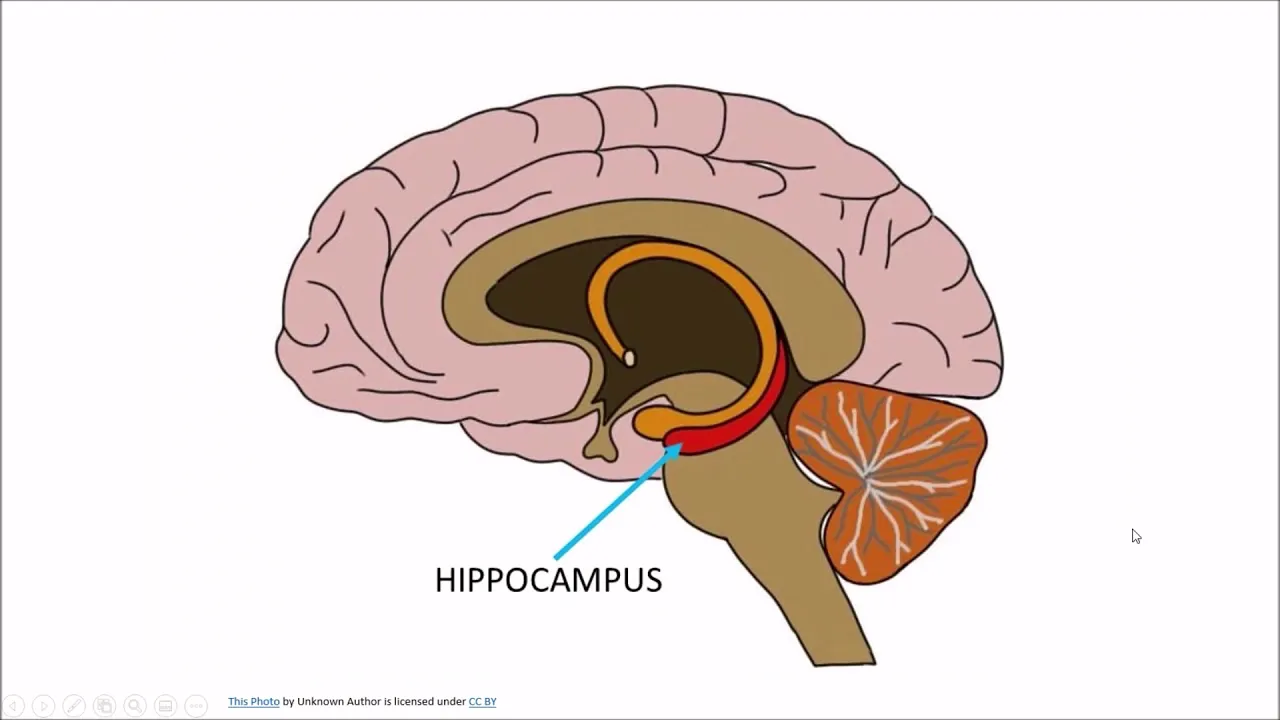
8:08
Neuroscience
What is neurodegeneration?
TheSheekeyScienceShow
3K views•2019-08-19
57:35
Neuroscience
IPL - Ruth Empson "Mind the Gap"
otagouniversity
251 views•2019-07-08
14:01
Neuroscience
How our body shapes our mind | Pancho Tolchinsky | TEDxNapoli
TEDx
2K views•2019-12-05

1:00:02
Neuroscience
Impact of Early Life Deprivation Danielle Stolzenberg Marcus Pembrey Bruce McEwen
uctv
4K views•2019-12-01
10:32
Neuroscience
β-Caryophyllene for Parkinson’s: Protecting Dopamine & Easing Symptoms
parkinsonsdiseaseeducation
6K views•2025-08-09
20:44
Neuroscience
New Insights from Inside the Brain with Rodrigo Braga, PhD
NUFeinbergMed
421 views•2025-04-14
9:57
Neuroscience
Highlights for dystonia • 2025 MDS Congress
movedisorder
145 views•2025-10-27
58:17
Neuroscience
Animal Welfare Synergy Series: Dr Tom Smulders on hippocampal neurogenesis
costactionlift
135 views•2025-07-14
Trending

13:38
Law
WOW! Judge TURNS THE TABLES on Trump in His OWN $10B LAWSUIT!!!
MeidasTouch
197K views•2026-07-23

13:25
Business
Playstation NO DISC/NO BUY Fight Is Over...
DavidJaffeGames
4K views•2026-07-23

22:40
Business
Steam and Xbox Just Dropped The Hammer On PlayStation
OhNoItsAlexx
9K views•2026-07-23

16:52
Anthropology
Americans Confused in Australia for 17 Minutes Straight
IWrocker
17K views•2026-07-23