Sachdeva masterfully exposes how AI-driven convenience erodes the "productive struggle" essential for deep learning and long-term retention. Her "Thinking First" framework is a crucial intervention to ensure technology augments human intelligence rather than replacing it.
Install our extension to search inside any video instantly.
UB2026 | Nidhi Sachdeva | Memory Paradox in the Age of AI
Added:Welcome everyone to this next session.
Uh I'm introducing our speaker, Dr. Neeti Sachdeva.
She's a leading scientist and researcher in the science of learning, specializing in the intersection of educational technology and evidence-informed learning design.
Her work spans a wide range of contexts, including teacher education, post-secondary instruction, continuing professional education, and health education and patient literacy.
She teaches online learning and microlearning from a cognitive science perspective at the Ontario Institute for Studies in Education at the University of Toronto.
A recognized expert in translating educational research into practical classroom strategies, Dr. Sachdeva co-authors the globally read Science of Learning newsletter and currently serves as chair of the Research & Toronto Conference. Please join me in welcoming her to the stage.
>> [applause] >> Okay.
Good afternoon, everyone.
I hope you can hear me. Can you give me a thumbs up?
Okay, great. Cuz I've never really presented this way, so before I start, this calls for a selfie.
Cuz I've never presented like this, so So, we're going to take a selfie, everybody.
Thumbs up for me, please.
Thank you. Okay, just for just for memory.
Don't worry, I won't post it anywhere. I just want to see it. Okay, perfect. So, hi, everyone. Thank you so much for being here. I know you have 100 sessions that you could be in right now. Uh seven of them are actually happening right here, but um you're here, so thank you for attending my session. Um and I'll try to make this one worth your time.
I'm Nidhi Sachdeva and I teach and research at the Ontario Institute for Studies in Education. You will hear me say OISE uh because that's what everybody calls it and so we're going to call it OISE.
And I spend most of my days thinking about one specific question. And it's the question that I want to spend the next hour with you on today. And the question is what happens to learning when AI starts doing the thinking for us?
Right? And that's fair. And that's it.
That's really a big part of the talk.
That's the talk. Everything else is just evidence. So, let's begin.
So, here's what we're going to be doing.
We're going to have five moves. We'll start with a paradox.
Um and something genuinely strange happening in cognitive science right now. That's my area of research and understanding and I spend a lot of time doing that. Then we'll go inside the brain a bit and we're going to try to understand how it actually learns.
Which is probably different from what most of us think it to be the case. It's actually very counterintuitive.
Um and then we'll look at what happens when we offload that learning to a tool. And then the good news would be we'll look at why effort is really the lesson. Why do we need to talk about that? And it's not the obstacle. And we'll close with practical ways to use AI as a partner instead of a substitute. That's what I'm here to share with you today. And that's the path. So, stay with me and let's walk on this journey together.
So, I want to start with something that's been sitting with me for months. You may have already seen this. Not so long ago, someone started this viral trend on um you know, the internet, the world of everything that we see these days, asking ChatGPT this question that you can see on the screen.
I'll let you folks read it for a second.
And the question goes, "If you were the devil, how would you destroy the next generation without them even knowing it?" Solid question.
What do you think the ChatGPT's responses will be? I'll share some samples of the responses that began happening.
I won't read them. I'll let you read them for yourselves.
Right?
Oh, yeah. Yeah. Yeah.
"I'd watch their minds rot slowly, sweetly, silently." ChatGPT.
Um yeah.
Now, here's a really important quote.
This is from Jonathan Haidt.
He's a social psychologist, also just recently did the commencement speech at NYU.
And he was running a thought experiment, and he asked, you know, if you wanted to do that, and he he did this as well.
And basically he said this quote, and he said, "If I were to think through this as a thought experiment, imagining the devil here in a metaphorical sense, the most effective way to destroy the next generation without them even realizing it would be through slow, invisible corrosion."
So, Jonathan Haidt is not actually talking just about AI here. He's talking about something bigger and deeper.
About what happens when we slowly, invisibly hand over the things that make us humans.
And I want to hold that frame as we go through the next hour with you.
Not because AI is the devil. That is not why I'm here to say. That is not the point.
And it isn't. It isn't.
But, because the costs of how we use it can be invisible until they aren't.
Okay?
I'm going to next slide is actually a bit of a short trailer from an old movie. When we tested it, it played, so I really hope it plays. I just want you folks to watch the short trailer. I won't tell you much about it right now, but when you watched it, we'll have a little brief, you know, talk not talk.
I'll just say a few words about that.
Okay, let's try this.
>> At the [music] dawn of the 21st century, the army began a top secret experiment.
>> Meet Joe Bowers, our first subject for the human hibernation experiment. As you know, this is highly [music] classified.
However, if successful, we believe humans can be stored indefinitely.
[music] >> However, the trial run was prone to human error.
>> See you in a year.
>> And Joe slept slightly longer than expected.
Half a millennium to be exact. From Mike Judge, creator of Office Space and Beavis and Butt-Head.
>> OH MY GOD!
>> [screaming] >> IF YOU WERE THE SMARTEST person in the world >> This one goes in your mouth.
This one goes in your butt.
>> Yeah, in a second.
This one This one goes in your mouth.
>> And we're stuck with the dumbest [music] people in history.
>> If you have one bucket that holds two gallons and another bucket that holds five gallons, how many buckets do you have?
>> Two.
>> What would you do?
>> Excuse me. Um I'm actually supposed to be getting out of prison.
>> You're in the wrong line.
>> I'm the smartest guy in the world? Says who?
>> The IQ test you took in prison.
>> [music] >> You got the highest score in history.
You're even smarter than President Camacho.
>> In the year 2505 >> We've got this guy. He's going to fix everything.
>> So you smart, huh? The ordinary will be considered extraordinary.
>> I thought you here would be bigger.
>> Idiocracy.
>> For the smartest guy in the world, you're pretty dumb sometimes.
>> Anyway, this is a movie that came out I think 2006 or 2007. Give me a thumbs up if you remember watching it.
And give me a thumbs up if you've been thinking about it recently.
And I didn't make much of that movie. A student back in the day told me it was like maybe you should watch it, but this is about, you know, 15-16 years ago and I watched the movie. I put my headphones on by the way because the clapping was too much for me and I couldn't actually focus on my own voice, so this is better. Um so I watched it and at that point it was just a funny movie, not really well made also. It's okay. I wouldn't give it like a lot of, you know, grade rates or something, but it it was entertaining. But lately, I keep thinking about this and this this thought is that are we going to go that path? And and I just played the trailer just as a reminder that someone thought about this back in the day and I just thought if it didn't really land as well as I wanted to, at least it's a funny trailer. My favorite piece is the how many buckets you have.
That was a hard question. Anyway, so thank you for watching that with me.
Okay, so here's the paradox. So let's talk about the paradox.
It comes from a paper written in 2025 by Barbara Oakley, who I have the honor of calling a dear friend and she's also a distinguished professor of engineering at Oakland University. Incredible. So Barbara Oakley and colleagues wrote a paper called the memory paradox. I highly recommend if you just find it, it's open access, you can read it at some point. The paper is called the memory paradox. And the line is this, the more AI thinks for us, the less we think for ourselves. And now that sounds obvious when you say it out loud, right?
But the reason it's a paradox is this.
We celebrate AI for saving us the cognitive effort.
And that's the whole pitch. That's a big part of the pitch. Save time, boost productivity, let AI handle it.
Now, that sounds obvious when you say it like that, right? And that's the point.
The scary part is that the pitch, save time, boost productivity, do less, is also true.
AI does save the effort. But, and this is the part not many people would want to market and speak publicly about.
Effort is not the obstacle to learning.
Effort is learning. It is necessary for learning. And we're going to come back to that idea in a few minutes. For now, I just want you to hold this paradox in your mind that if AI thinks more for us, then what do we do?
So, for most of the 20th century, something remarkable was happening to human intelligence. Across the developed world, IQ scores were rising. Not by a little, but by three points per decade.
Three points per decade.
What that means is we noticed that, you know, our grandparents were measurably less and and then they were less IQ IQ smart.
They were great They were very smart, but just on the IQ test than the parents who were then less smarter than our generation for that matter.
But over the century, roughly 30 points, and that is not a small number.
And this progression of IQ scores getting higher is called the Flynn effect.
It's named after the researcher who first documented that IQ scores are getting higher.
And the explanation was pretty reasonable. We started to build better schools, we had better nutrition, we had more abstract thinking demanding you know, demanded by modern life. So we were getting smarter on those IQ tests on average generation after generation.
And that was a story for about a hundred years.
And then And then it reversed. It's called the reversal of Flynn effect.
So around the mid-70s, the kids born after 1975, that trend started to flatten. And then in country after country, especially in the developed world, it started to go down.
Norway had the cleanest data. Minus seven IQ points per generation.
Minus seven, we were experiencing plus three. Seven, that is a generational landslide.
Same pattern we experienced in Denmark, the UK, France, the Netherlands, Finland.
Everywhere. If it wasn't going down, it was plateauing. Now the caveat.
I'm not saying that IQ is the best instrument.
IQ tests tests are a blunt instrument.
They don't measure everything, I get it, but they do measure something and that something had been falling for 30 years in wealthy countries.
And that's something that we need to think about, right? And we didn't really know exactly why that was happening.
So the first thing researchers asked was this, "Hey, could this be genetic?
Demographic?
Or are we just measuring different populations now?" All fair questions.
And what they found was that the answer was no.
And we know this that it is no because of this finding right here that you see on the screen.
The decline shows up inside the family.
Younger siblings are scoring lower than their older siblings in certain studies.
Same parents, same household, same genes, same neighborhood.
So, what changed? Whatever changed definitely was not genetic.
It changed in the environment.
Within a single childhood.
Hold on to that thought because the next slide shows us a bit of the hypothesis.
So, here's the hypothesis at the heart of the memory paradox paper. When tools think for us, brains practice less.
It's not that the calculators made us stupid or not being able to think. It's not that the internet rotted our minds.
It's much more actually boring than that and much more troubling at the same time.
It's that the brain is a use it or lose it organ.
And generation by generation, we have been outsourcing in the name of productivity, efficiency, more and more of the cognitive work that it is built to do.
That the brain is supposed to do.
When we don't use it, then we lose it.
That reversal of the Flynn effect that I talked about tracks almost perfectly with calculators in the '70s, computers in the '80s, the internet in the '90s and the 2000, smartphones around the same time, and now generative AI.
Well, I understand that correlation is not causation.
But, the timing is pretty hard to ignore, right?
So, now to understand why this matters.
So, we've been seeing reversal of Flynn effect. Some researchers have even said that we Are we the last smartest generation?
That's why I wanted to play that clip. I hope not.
Um so, now I think what we want to understand is that the reversal of Flynn effect is happening.
So, unpacking it to understand why this actually really matters to us, let's try to understand how we learn and try to get inside the brain a bit.
There we go.
So, Barbara Oakley and colleagues, they define the paradox in this way.
The more we offload knowledge to external aids, the less we exercise and develop our own cognitive capacities.
Cognitive offloading, I'm going to unpack that term for you all. Cognitive offloading is the term that is the act of delegating thinking to tools, giving us immediate ease, but long-term fragility.
Students today often know where to find information, but they don't know what it means or how it connects with the wider picture.
And this is what Barbara Oakley and folks are calling that they are building pointers in their brains, but not what cognitive scientists would say schemas or some people might like to call it schemata.
What are schemas? Schemas are actually really powerful, super powerful things. Schemas are the mental frameworks with which our brain thinks and makes decisions all the time.
They help us make sense of the world.
Magnus Carlsen, grandmaster chess player, he wins the championships because he has schemas and mental models. Without those schemas, he'd be a novice chess player like me and definitely not a grandmaster. When learners rely too heavily on AI for recall, they lose the retrieval struggle that strengthens memory and error detection that sharpens our reasoning.
So, in short, AI doesn't make us forgetful.
it It makes us unpracticed at remembering.
We have no reason to do that.
It makes us unpracticed at remembering.
So, here's the part one. How the brain actually learns. So, stay with me. I won't make it too too detailed, but I think it really helps to understand and I'll share some examples that would make you feel like, "Yes, that makes sense.
I've done this." So, I want to spend a few minutes here because I think for most of us, myself including, until I started getting deeper into the literature, having a model of how learning happens was either not present or was just wrong.
Even the things I was doing as a student to study for exams, I was doing wrong because I was applying ineffective study strategies because I didn't understand how the brain actually works and what the place of the effort is as a learner.
And once you see the right model, then the question of AI starts to get a little bit more clearer for us.
So, our brain has two memory systems, right? They're separate. They use different structures. They work very very differently. First, we have what we call as the declarative memory. Think of declarative as you have to declare everything to it. And this is what most of us are thinking with and we think of it as learning.
It includes things like facts, concepts, things you can consciously recall and say out loud.
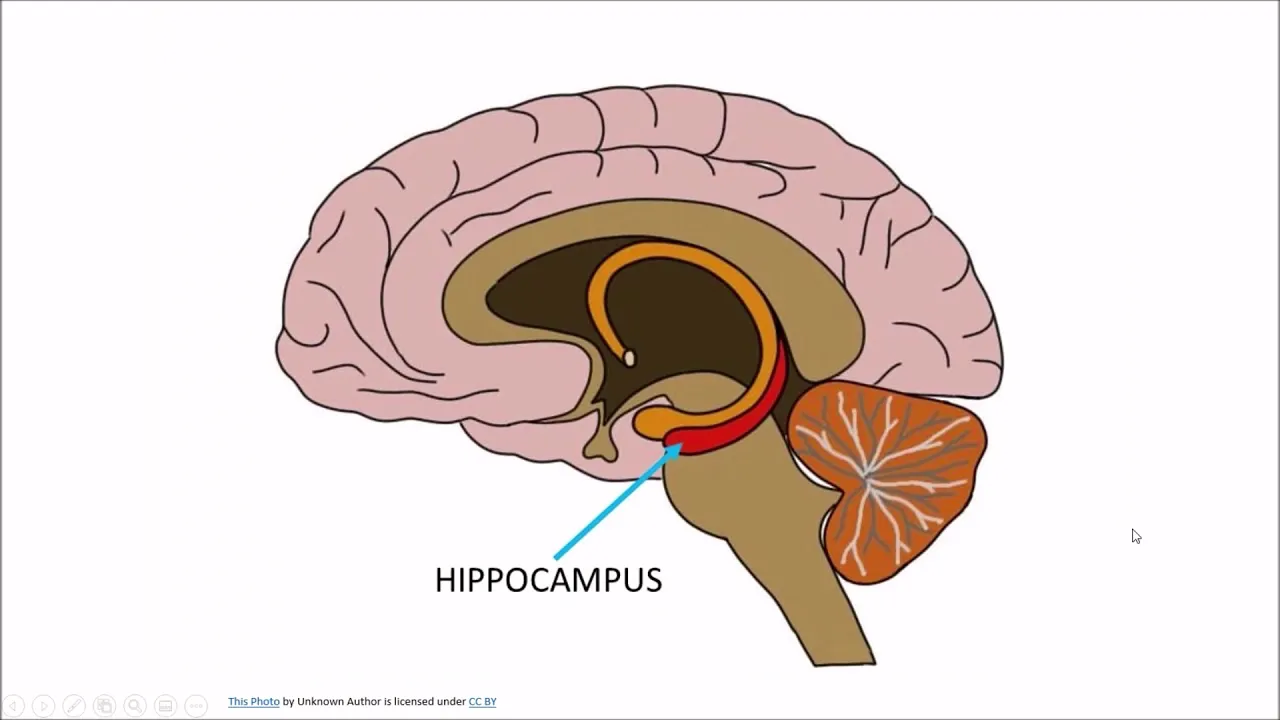
It's managed by the part of the brain called the hippocampus.
And it's actually pretty fast. It's really fast. You can hear a fact once and then can remember it. What's the capital of Canada? Ottawa. Right? Or what's 7 * 8? 56.
Right? Yes, I'm just kidding.
The trade-off is that pulling it back out, pulling it back out from the memory feels like a slower process cuz it requires a bit of struggle.
And it's effortful.
Because you have to think about it.
You have to think about it. You have to pull it out from somewhere. It's living in the long-term memory, if it is there.
Now, the other system, on the other hand, is called a procedural memory. And this particular system is for skills, habits, routines, things like driving a car, riding a bicycle. You don't have to think about it. You just do it. Speaking your native language, mental arithmetic.
If you've practiced it, then you know it.
What's interesting about the procedural memory is that this system is slow to build. Try recalling the first time you learned how to drive.
It was very slow, effortful. We're paying attention to every single move, looking left, looking right. I remember I didn't want to listen to the radio.
Well, my story was also a bit different.
I learned to drive in Delhi, and then it's really hard to learn to drive in Canada after that.
Anyway, I failed the test once, so. And then I passed. Anyways, but it's it's it's slow to build.
But what it does But once it's built, it's automatic. It's kind of like what we call autopilot, right? Um it needs repetition.
But once it's there, it's yours, and it's automatic. It runs without you, and it lives mainly in the part of the brain called basal ganglia. Now, here's the punch line.
Knowledge moves from one system to the other. It's not just that it's staying something in declarative memory, and then something else is staying in procedural memory. It's talking to each other. Some things move from the declarative memory to procedural memory, which is how I could uh do a whole bunch of things that I'm doing at home. It's how I drive some most of the times. It's how um you're riding your bike. It's how you're swimming, because you had to learn it first, but then it became automatic.
Right? You learn a fact consciously, you practice it. This is how we read, by the way. Reading was really hard initially.
It was declarative. Ah, ba, ca. And then we know. And now we just look at the words and we just read them.
Right? You learn a fact, you practice it, it's conscious, it's effortful, it takes time. What you do is you retrieve it again and again from your brain and eventually it sinks down and it goes into your long-term memory. It moves from declarative memory, which was effortful, to your long-term memory, to your procedural memory. Right? From this idea that I know this fact, you move to it is a part with which I think now.
It's automatic. It's your schema.
Right? I was just walking up the stage and the person who introduced me, Anahita, was wearing a headphone and her headphone was um blinking. And immediately the person who has a schema said to the the person, "Oh, no, no, we need to change those headphones cuz the battery is about to die." That's a schema. I You and I couldn't do that. We wouldn't know, right? So, that's really, really important. Now, this transition is not just a nice thing. This transition from declarative memory to procedural memory is what builds expertise.
Something that as humanity we truly love and need. We celebrate it.
That transition is what fluency is. And that transition is exactly what AI helps us or makes us skip.
So, couple of technical terms here. One I've already used, the schema or schemata. There's another term called engrams. So, I'm going to be using it, so I just want to make sure that you understand this term. So, when something gets stored in our brain, um it kind of leaves a physical trace in our brain. It builds like a uh um a circuit, basically.
It's a pattern of strengthened connections between neurons, right?
Neuroscientists, not cognitive scientists, neuroscientists, the ones talk about brain actually, cognitive science is a bit different, they call this particular memory trace that gets built engram.
And the famous line you might have heard is that neurons that fire together wire together, right? Now, that's basically it. Memory is actually a real physical thing happening in the brain. It's not just imaginary. It is physical, something happens in our organ called brain. It is a literal change in the wiring of our brain when we learn something. And that change only happens when those neurons fire.
If they don't fire, they don't get made. Meaning that only happens when you, when we do the cognitive work, essential cognitive work, which is thinking.
The other term I want to talk about is schemata. I've already explained it, so just briefly I'm going to mention that again.
We build schemata through repeated effort, retrieval. Retrieval is pulling things out of your memory without having it in front of you. That actually strengthens how well we know something.
And that is called schema or schemata or schemas. It's a mental framework as I said, and it's the way our brain organizes related knowledge so that new information has somewhere to be stored.
We know a dog is a dog because we have bunch of mental frameworks about it.
It's um soft, it's loyal, it's loving, it's fluffy, depending on the dog, right? But then we also know that a dog is not a squirrel. How do we know that?
It's different schemas we have stored.
We also then build these schemas and turn them into mental models. How do we know what we need to do when you walk into the uh the supermarket? We just know we need to go and get the trolley. We need to do this and we grab. But, you know, when we go to a brand new grocery store, it feels really confusing. I don't know what's where. You're missing the mental models of that particular one. So, the schemas then turn your those mental frameworks into mental models with which we think and solve problems.
They're really, really important.
They are actually the architecture of expertise.
And what's important to know is that they're only built through practice.
It's the only way to build them.
It's how, as I said, Magnus Carlsen became chess master.
Uh missed opportunity if I didn't say uh Lewis Hamilton became, you know, seven-time world champion. They just know what to do when the cars are moving at 300 km an hour, right? This is how Roger Federer plays. There's a lot of schemas and mental models stored, immediate responses. As I said, we celebrate expertise.
Now, why that matters.
What happens is if the learners depend on AI to perform that processing, that move from declarative memory to procedural memory, which we need to make things automatic, to be able to do and perform certain this certain way, and if we actually skip, let's say, retrieval, we also then risk not letting those skills become automatic or fluent, then there is no neural circuitry that would be built. That engram that I was talking about, that physical memory trace, will just not get built in our brain, which we really need, which is what makes us, right? So, that's extremely important to understand that it's not just a nicety for us that things need to move from declarative memory to procedural memory so we could do that.
It is who we are, gives you the schemas, gives you the mental model to know. Even again, coming over here, we just know we need to go to registration, we need to do this, we need to do that. There's a lot of processing you're doing with dependent on those schemas and mental models and engrams that are stored in our brain.
So, now, this is a maybe, but the most important maybe this is might be the most important slide in my talk.
Uh what I want to talk about is that there is a difference between two things that look the same, but they aren't.
So, on the left is knowing where to find something.
That's a pointer, right?
A bookmark, so to say, in your head. You know where it is, you can look up on Wikipedia or ChatGPT, or you can Google it, and they can explain it to you. Or you can you know, maybe your friend Sarah, or Nidhi, for example, knows this and is good at it.
Now, that's a pointer.
But here's the thing about the pointers.
It builds no neural circuitry.
Because it's not yours, someone else gave it to you.
None, right? It doesn't activate the same systems that actually help us understand the concept, make make that understanding, build that understanding.
And on the right, we have knowing the thing itself. So, knowing where to find it is not the same as knowing the thing itself. That is the schema.
The information is integrated into your circuits. It's yours. It's connected to other things you know. Brain doesn't store information like in drawers.
It's interconnected. Knowing one thing helps you understand the other thing that you didn't even know. That's the beauty of expertise. We know what to do even when we don't know what to do. How powerful is that? That is a beautiful idea.
Right? That's built on expertise of what we are able to do in our lives.
So, that's important. It's It's now ready to transfer to new learning situations. So, a pointer says, "I can get this."
But the schema says, "I can think with this."
And these two states, what's interesting is that it actually feel similar.
There's a bit of an illusion. When you can find something and you can read something, we feel we know it.
I test this all the time with my kids. I teach them something or I explain it to them, and they say, "I know how to do it." And I'm like, "Okay, then show me how to do it." And then they start doing it, and then the steps fall apart. And that's nothing wrong. It's just practice hasn't happened. The move from the declarative memory to procedural memory hasn't happened. Right?
They're not the same things. Knowing where to find versus knowing about it.
One of them is a pointer.
That is what AI is really, and it's really good at it. Right?
And it does it fast, instantly, by the millions.
And I think this line captures for me something really important here.
Learners can use information, but what good is it if they can't think with it?
Because it never becomes part of their neural circuitry. And that word circuitry, as I said, matters because thinking isn't a vague metaphor.
It's a physical process happening in our brain. And if you never run that process, you never build a structure that lets you do it well the next time.
So, using is not the same, as I said, as understanding.
Here's a question. And you don't have to answer it to me. You could just be honest, or we could do some kind of poll.
Let's see.
How often do you use AI to avoid mental effort that you could do yourself? Um the joke here is we could do a digital um uh survey and we'll use our digits, hand digits. I'm just kidding. You don't really need to answer it. It was just more as as a joke. The the question would be daily, weekly, rarely, never. I don't think that actually matters. Don't worry about it because there is no right answer how often we use it. I mean, I use it daily and I'm not going to stand here and tell you not to use it either.
That's exactly the point. That is not what I'm here to do. The question I want us to sit with, grapple with, and think about is what mental effort specifically are we trading away?
Because some of it is fine, but some of it is not fine to trade away. That's for us to protect. That's what I'm here to tell you. And that's what part two is about.
The cost of cognitive offloading.
Nothing comes for free. We can do the cognitive offloading. It makes our work faster. A lot of stuff happens.
But there is a cost and I think it's really important to understand. And especially this is a perfect venue for that. We've been going through some phenomenal sessions, just such a range of sessions. But to understand what the cost of all of that is, then we can make an informed choice for ourselves and for the future generation.
So we're going to look at what specifically gets traded. And some of it is exactly what we want to trade away.
Things like the routines, sometimes the boring, the automatable things. And some of it is the very thing that builds the brain for us to do the integrative work and interesting work and solve problems that we don't even know exist yet.
That's the beauty.
So I think to understand how we got here is an important moment.
So, there has been this shift going on and AI is not the only thing we want to stand here and just be like, "Oh, it's all because of AI this cognitive offloading is happening." No, we've been doing it slowly, slowly, slowly for a while. So, I think that is really a good to understand that. So, back in the 1950s, schools actually emphasized memorization, lots of drill practice, effortful learning. Some of it was a bit excessive. I mean, I grew up in India, it was a lot of that quite normal for me.
And I'm not here trying to say that, "Oh, we need to romanticize the rote memorization or drills again." But, the foundation is important. It's the foundation that I care about, right? We need to build a foundation in our head.
It needs to belong to us. And then we got to the 1980s, we had calculators coming in and then teachers or educators would say, "You know what? Why do we need to memorize multiplication tables?"
Um, lots and lots of schools don't emphasize memorizing multiplication tables or math facts for that matter for kids right now.
Um, because they have a calculator. Why do you need to do that? Again, it's reasonable on the surface, though there is a really good case to be made that if a kid punches in 8 * 6 and it but they accidentally punch in 8 * 5 and the answer is 40, they thought they punched in 8 * 6 and they'll take that answer, right? How do they know it's wrong?
Because they don't have it have it committed to their long-term memory. Or if it's a bigger number, two-digit number, they know it needs to end in an eight, but it ended in a zero. You can only catch that error if you have that in your memory, right? So, again, there was some logic to following that, but reasonable on the surface. And then came the 2000s, right? So, we've been moving along this cognitive offloading little by little.
The internet, right? Why memorize anything when you can just look it up, when you can just Google it? Again, reasonable. We are trying to save time and do more with that time, right? And of course, now we are looking right in the eyes of generative AI and the question is not why memorize, the question is why think about it.
And that's a really scary question, by the way. You need to think about it. And why think about it when you can prompt it, right?
What happened was that each leap we made, it saved effort, absolutely.
Each leap we made also saved us from learning.
That's the cost.
That's the trade, and we made it without asking what is it that we're giving up?
So, what specifically gets traded?
I'm going to talk about three really big items. There's more, but I'm going to talk about the three big items. One is we, as the human race, ends up with shallow schemata, shallow schemas.
When learners offload too soon, they never do the integration work that makes us experts in that particular scope of work that we're doing.
The new idea doesn't connect to prior knowledge. That moment of ah, I get it, doesn't happen.
It just sits there as an isolated fact.
And that is not how brain stores knowledge. It stores it in a very complex web of mental frameworks.
So, they appear to know it, but the knowledge doesn't transfer to a new context. If I stood here and asked anybody, "What's the definition of learning?" People have slightly so different variations, but almost always the variation is to be able to do something with what we learned. That transfer is really essential. But it doesn't happen.
Number two, we don't develop procedural fluency.
Remember that transition we talked about from declarative memory to procedural memory?
It can't happen if you're not doing that essential step called retrieval, practice, reflection, thinking.
So, the learner stuck stay stuck in so to say a slow conscious recall. It doesn't become automatic that they could do something with it quickly. They become information users, but not thinkers.
And the third trade-off is that and this is the most insidious one is this this illusion that I briefly mentioned earlier, illusion of knowing.
AI gives you fluent, polished, confident-sounding answers and cognitive fluency tricks you.
Tricks us all. It feels like understanding. It's kind of like when you see a text and you highlight the whole thing, you think you know it all, but you don't because then you have to test yourself to see how much do I actually have committed to my long-term memory.
What your brain says is, "Yes, this makes sense to me. Yeah, that makes sense. Yeah, I'm reading it." When really what we've done is we read something that made sense to us, but we didn't really process it.
So, that's a bit of an illusion of understanding and learning.
Reading something that makes sense is not the same as being able to think with it when you need it the next time.
But what's interesting is that it actually feels the same in the moment when you have something in front of you.
So, that's why the illusion.
Now, this isn't just theoretical. The studies are coming in coming in fast and the pattern is quite consistent. I'm going to talk about three studies here. The first one is from Yale and Monash. It was I think last year.
They were college students who were writing essays, okay?
Um group that wrote the essays with ChatGPT produced higher quality essays.
There's no doubt about that and there's no surprise to it. They were higher rated. They were better organized and here's the interesting thing. When they were tested on the material later, barely any learning gains happened. The ability for the brain to actually retrieve something was seen to be much lower than the students who did not use ChatGPT. That makes sense though, right? Because it hadn't been committed to our long-term memory. They wrote better essays, but remembered less.
And the researchers actually gave this idea a name. I'm going to talk about it again in a few slides later. It's called metacognitive laziness.
Metacognitive laziness. I'm going to come back to that. I believe I have a slide on that.
The second study I want to talk about is from Morton.
And this is also recent. Could be last year or 2024. There were high school students learning math with I think it was the fourth version of ChatGPT.
The students who had ChatGPT as a tutor, they outperformed the other groups during practice sessions.
I actually wrote about this particular study as well on my Substack. Uh but when the AI was taken away for the final exam, that particular group that practiced ChatGPT wasn't just doing the answer.
They were actually technically using it as a tutor or working with it. When they did the final exam, their scores collapsed. The peers who actually experienced the struggle trying to do the questions themselves during practice sessions without AI did a lot better on the final exams. The AI group had not learned better, but they had performed better. So, this is the other thing we need to understand. Performance is not the same thing as learning.
Learning is durable, long-term, recreatable, transferable, recallable.
Performance is an immediate moment. But the question is can we keep on doing that? Performance gets immediately done, but that's a very short-term success.
Right?
The third study is from MIT.
Also last year. There are very lots of recent studies coming out. What they did was they put in um EEG caps on people writing uh with with or without ChatGPT.
And then the AI users showed weaker connectivity in brain regions tied to focus and memory. So, this was a different kind of study. It didn't have a recall component at the end, but they were actually testing for what parts of the brain was were firing up. Um and then later on after the EEG sort of firing up of the brain component was done, they also did check for recall after it and they noticed that the students who used AI had trouble recalling their own work afterwards.
What's interesting is that it's a very similar pattern in every study.
AI does improve the output. There is no doubt about it. But it weakens the learner.
I think that's a moment just to pause and think about that.
It's us, the learners.
And our kids perhaps, if you have kids we're talking about. You, me.
It improves the output, but it weakens the learner. That's a massive cost.
That's a really big cost.
It's kind of like having a treadmill, turning it on, and just watching it rather than exercising, right? It's like, "But I turned it on. It did do the kilometers."
I didn't really get any cardio out of it.
So, here's that word that I was talking about. So, again, this whole notion, there is a name for it which the researchers have given it in the literature now. And it came from Yale's study as far as I know. It's called metacognitive laziness. And what's really interesting is that it's kind of like a Uh, it sounds clinically, you know, it sounds clinical, but but but it really what matters is the meaning. The meaning is quite human and it is quite uncomfortable because we have the word laziness attached to it. What it does what it says is that letting the AI do the thinking even when we are the ones who need to learn.
Right?
If you haven't already done it, take a moment, write this phrase down either mentally or you could take a picture.
What's really important about this phrase is that when you take it back to your team or whoever you work with, having a name for something and understanding what is it that we're all experiencing, then you start to notice it everywhere.
Then you can't unsee it.
And that helps in our work because then we could do something about it, right?
Um, you can notice that I teach university students, undergrad and master level students as well.
Once you see this, then you can notice it in your students, the metacognitive laziness, and then you know what's happening. Then that is on me to modify my assessments, for example, my assignments for that matter, right? How can I bring back the metacognitive component, the thinking component, the cognitive effort? That onus then is on me as the professor, as the teacher.
We start to have them build them in our everyday habits as well.
Just this idea of using GPS. I get out of my house and GPS always tells me to take the right and take another right and then take another right to get to the street. I could just take a left. It saves me 3 minutes and I see that, but every single time.
But what my point is, if I just followed it because it knows better, maybe it knows the traffic, but in this case I really do know there is no traffic, it's my residential street, right? That idea, I'm trying to catch it. I don't want to be metacognitively lazy, Niddy. So, I'm going to try to make that decision myself. Just sharing as an example with you.
Okay. So, now here's the part that worries me the most. It's not just the offloading that that happens, but that it self-reinforces.
AI convenience leads to reduced effort.
Reduced effort leads to weaker memory and weaker schema.
Weaker memory makes the next task feel harder.
So, then you reach for AI again. It's a trap.
It's a trap. And the loop tightens consistently for us, for our brains.
There were researchers named Risko and Gilbert. They documented this idea back in 2016 before generative AI was even a thing or anybody was researching it or talking about it the way we do now.
They called it self-reinforcing cycle of cognitive offloading. We have evidence we have evidence that the more we offload, the more we feel that we need to do. The more we offload, the more we need to offload, and the more things become harder for us.
And this is why this matters now, not in 10 years, but today.
Because a loop is forming for an entire generation of learners while we're still figuring out how to respond.
So, enough doom.
Let's go to the part three, which is a little bit more positive, I would say.
Because I want to flip the conversation now. Because the answer to all of this, and this is really important, is not to ban AI or to say AI is a villain or that's not the point. Genie's out of the bottle.
The answer is to understand what learning needs and how we can use AI to work around that or work with that and amplify that.
Right? AI can be a really awesome partner that way.
So, I want to talk about that. But first, I want to have this discussion around why effort is not the enemy of learning. It's a very old phrase we often say, "No pain, no gain." Right?
Working out works like that. Any practice works like that.
Effort is the lesson. Effort is really necessary.
And I want to show you from a neuroscience perspective.
So, this is how learning actually fires in the brain. Let's say you're learning something, you expect one thing, but something different happens. And that mismatch is actually really cool, really great. It's a surprise moment for the brain. Right? It's like a little moment.
And that triggers the brain.
And when you experience that surprise, that mismatch, you tried something, it didn't work, it's like, "Oh."
That surprise actually fires dopamine in our brain. And we know dopamine is amazing, and I'm not talking about the addiction kind here. This is the dopamine that makes us do things and feel good. It is the brain's learning signal.
It says, "Hey, Niddy, something's different happened. Pay attention.
Something didn't match. You need to look at it. Update your model." It's kind of like my brain's doing that, right? That dopamine spike tags the neurons. It literally actually puts a little tag on them.
That just gets fired. Um and this is what the neuroscientists will call an eligibility trace. A little flag. Think of it like a little um sensor or something that it just gets in. And basically, it says that you need to strengthen this connection. There's something really important about it. You need to encode it. You need to store it.
You need to build this into your mental framework. You're going to need this.
Remember this.
And that's how memory forms. Surprise, dopamine, memory.
We need that surprise. We need that to happen to us. But if we remove that surprise completely, then there won't be a dopamine spike in our brain.
No eligibility traces will get fired and attached to the neurons, and hence no memory. No friction, no reinforcement, no durable learning.
So now look what AI would actually do to that change. Surprise, dopamine, memory.
You ask AI a question, it gives you a perfect answer. It looks perfect at least in the moment. It's polished, it seems very confident, it's also very fluent.
You did not get your surprise.
Right? You didn't get any friction. No expectation got violated. No prediction error happened. No dopamine got sort of produced, and no tag for memory. And what do we do? We move on. We got the illusion that we know it. Make sense, I read it, make sense.
And we move on feeling smart.
Feeling I know this. Your brain truly though has not learned anything.
And that is the mechanism. This is why every study shows that AI users perform better, but learn less. And I'm again using the two words that are quite often used as synonyms, but they are not.
They're not the same in cognitive science, they're not the same in any concept you think about it. Learning is more durable, long term. Performance is short term. Right? AI users can perform well, but better, but learn less. It's not mysterious. We're literally bypassing the chemistry that turns an experience into memory.
You know, I remember a lot more moments when I didn't take a picture of that moment because I actually paid attention. Taking the picture gives me an illusion that I actually now have a record of it.
But then I forget it and then I look at the picture sometimes on the digital frame and I'm like, "Where was this?" You know? It's like paying attention in the moment is exactly what I'm going to be doing to build those memory traces.
So, what we want to talk about is that we want to reframe the idea of difficulty, right?
I want you to take this with you.
Difficulty is not the enemy. It the whole reason something feels hard is because the learning machinery is engaged. The hippocampus is straining. I remember when I used to teach German, um some of my students when I would teach a new grammar, the student would say, "I feel like there's like engines revving in my brain cuz I'm thinking about the grammatical structure." And And that's what That was happening. It was the hippocampus like shooting dec- declaring every single one of those things that they are learning.
Right? The dopamine system is working.
The prediction errors are firing. The brain's doing things. And that feeling, that friction of not quite getting it, that's the signal that learning is actually happening.
It's not the failure of learning. It's actually the success of learning. We're trying. We're doing something. The brain's working on it. It takes time.
Um I love the work of Robert uh Bjork and Elizabeth Bjork at UCLA.
And they talk about this concept called desirable difficulties. I think it's a beautiful alliteration. It's a great idea in cognitive science. Now, these are conditions of learning that make the task in the moment a little bit challenging, but it is what leads to learning.
These are difficulties that you think that you want to remove. And this is why when students read something and they highlight and they think they know it.
But what they should really be doing is that put the concept the pages aside, the text aside, try to recall from brain. That actually hurts. Right?
That's harder. That desirable difficulty is going to build a memory trace.
You know, when the eyes roll back, right? That's it. That's desirable difficulty. But if we remove that challenge of condition of learning, then learning collapses.
And this is why a tutor who gives you the answer too quickly is kind of doing a disservice. And it's why an AI that gives you the perfect answer almost immediately within seconds is doing you a bigger disservice.
But I think it's a valid question to ask how much difficulty is good amount of difficulty. Not too much.
Not too little. There's actually a number. It's really cool. So in 2019, Robert Wilson and colleagues at Princeton University, they ran the math on this idea. Um and across human learners and machine learning systems, and what they found was that learning is most efficient at about 85% success rate.
What that means is failing roughly one out of six attempts.
Meaning one out of six attempts should fail. That keeps you going.
Then you want to do more. A lot of the gaming industry uses this idea.
If you always succeed, it's so boring you don't want to play that game. But just a little, the 85%.
It's This is a published paper in um either the journal Science or Nature, one of the two.
Um now, below that anything that would be too easy. There's nothing for the brain to update on. Above that, it's too much struggle, too hard.
Working memory gets overloaded, gets flooded, and the system shuts down. I don't want to do this.
But right at 85%, you're making just enough errors to keep the prediction error system firing. I mean, even in Mario, my kids like to play that, and there's some characters that are called the easy ones for the people who need that a little bit more comfort. The ones who can do it cuz they need that challenge. Like there's there's a lot of monetization of this 85% idea, and we should really be using it in learning.
But right at 85%, you're just making enough errors to keep the prediction error system firing, and that's the sweet spot. That's where the neural growth happens. And this is a useful number to design around.
So, this idea, learning is most efficient when we're at the edge of failure, but not going to fail.
Right? Right at the edge. Not in failure, not far from it, right at the edge. Most of what AI does, most of what well-meaning instructional design does, is move learners away from that edge.
We make things smoother, easier, frictionless, but it comes at a massive cost for long-term learning.
What if our job is to keep learners at the edge and use AI to keep them right there, instead of pulling them away?
So, that brings me to part four.
And this is probably one of the important parts that you came for. How do we do it? If everything we've said is right, there's lots of evidence for that, by the way, if the danger is offloading, then the lesson should be effort. Bring back the effort. Bring back the cognitive effort.
Right?
Then, what does that look like for us to work with AI, though? Right? What does that look like? And the frame I want to offer you is that we want to use AI as a cognitive partner, not as a substitute, as a cognitive partner, as a thinking partner.
Offload the routine, absolutely, but protect the thinking. Protect the thinking.
Here's a big question.
So, look at the distinction over here on the two sides. Same AI, two different completely two completely different outcomes. The variable isn't the tool here. It's what the user brings to it.
So, if you look at the amplifier version on the left, the person on the left, they have strong internal schemas, schemas, mental frameworks. They do have them already.
They know the domain, their field. So, when AI gives them an output, they can evaluate it. They could do something with it. They notice when it's wrong.
They refine the prompt. They use AI to extend their thinking, push it further, test the edges. AI makes them more capable.
But, the substitute version, the box on the right, that individual, they're still building their schemas. They don't have them yet.
They don't have the internal structure to evaluate the output.
The AI sounds confident, so they trust it. That's risky.
They make AI They mistake AI fluency for their own.
They skip the effortful retrieval. They learn less, but they feel more confident.
Same tool, similar prompt, two different cognitive futures. And this is why blanket policies won't work.
The question isn't should students use AI? Should people use AI at work or not?
Or at universities or not? The question is, what foundation do they have when they reach for it? And our job as educators, as designers, as leaders, as policy makers, is to truly understand and make sure that the foundation is not compromised. They have the foundation first and then they will be way smarter as AI becomes their cognitive thinking partner. Not feeding them, but working with them.
So, how do we do that practically? And here's some examples. So, instead of AI writing the answer, have learners predict first, then compare to the AI's answer. The prediction creates the prediction error.
The comparison teaches them.
Instead of AI summarizing a text, have learners critique or refine AI's summary. Now, they're they are the editor. They have to think. They have to actually understand the source to spot what the AI missed. And they actually would want to do a better job and then research more. It's like, "I'm sure it got something wrong. I'm going to look at more, right?" Same thing, but we're doing it differently. Instead of AI explaining the concept, have learners visualize it.
Ask them to teach it back to AI.
The Feynman technique. If you can't explain it, you don't understand it so well. I use this on my kids all the time. AI can be a willing student. AI will do whatever we want it to, at least for now.
Instead of AI giving the feedback, have learners justify their reasoning out loud first before AI ever weighs in.
They have to commit. Then AI can stress test. Now, notice the pattern. Every flip puts the cognitive work back in the human first.
AI moves from the lead role to the supporting role.
If the learner is the one whose brain gets exercised, then the learner is the one that's going to learn.
Right? Treadmill.
I'm going to give you a practical a real example that I did in my own teaching.
Because the abstract version is only useful if you can see it in practice.
So, I teach Master of Education students at uh the Ontario Institute for Studies in Education. Oops, I promised I would say OISE. So, at OISE, one of the assignments my colleague and I we redesigned and we called it explain it to me.
So, the students don't um read AI's explanations. They are given a question and now they have to produce their explanations and AI bot acts as the learner.
AI is not supposed to give the answer.
It was built on a platform that was developed and to ask, "What do you mean by that?" It does these kind of prompts. It does these kind of questions. And it would say things like, "I don't follow. Can you explain that again? Can you give me another example? Can you unpack it?"
To push for precision and connection and clarity.
The assignment isn't done when the student has an answer. It's done when their explanation holds up about 12 or so rounds, depending on the question.
What's really fascinating is when students have been telling me for the last two semesters we've done this assignment is that the part This is the part I love is that they say, "By the fifth or sixth turn, I started noticing cuz I got them to write a reflection."
Um they said, "I started noticing the gaps in my own thinking and then I realized that oh, I needed to unpack it differently." This was not in the AI's responses. They start saying to themselves, "Oh, I actually don't know this too well. So, then I'll go back to the material for the week." And then they read it again. It's like, "Oh, yeah, this example. That makes sense." And so, that was really amazing. And that's gold coming from students. It's what every educator wants. That's the prediction error firing in real time.
Three things happen here: retrieval, refinement, and reflection. All three, every single time. And they loved the assignment.
And AI is the catalyst, but the brain is doing the work in the students.
So, I want you to to do something for about 30 40 seconds and it'll feel really awkward, but I guess it's quiet anyway other than the class. In your own work, in your own role, I want you to think whatever it is, where is thinking quietly diminishing for you? You don't have to tell me that.
You don't have to tell anyone, but you want to think about that.
Where do you use AI? Where is something you need you used to do the work yourself, that effort yourself, that's starting to fade. You know it.
Because that's something else is being done by something else. Don't share it.
Just notice for your own self. And I want you to be specific about it. Be very specific.
And I want you to hold that in mind.
Because I want to show you what I see across hundreds of educators and leaders I've talked to. It's It's powerful.
I want you to think about that for for a few more moments.
And be specific. Where is your thinking quietly diminishing and something else is doing that thinking that you truly truly enjoyed doing?
Hold that thought and keep that with you and continue working on it.
So, these are the patterns I almost quite often see.
You'll recognize them. When AI handles your reflections and journaling, what fades is sense making, synthesis.
Long-term, you lose the practice of narrating your own experience, practicing. Like, that's that's who we are. When AI handles your emails and messages, that what fades is tone judgment, word choice, long-term you lose your voice.
You sound like someone else.
When AI handles your lesson plans, what fades is pedagogical reasoning. Why this activity in this order right now for this learner?
Long-term surface, depth, we lose that.
Research summaries, comprehension and filtering fades.
Long-term, we have a weakened literacy.
Decision tools, personal reasoning fades. In the long-term, we lose our gets our agency gets reduced.
Feedback drafts diagnostic thinking about learner fades.
Long-term loss, feedback gets generic.
Sounds exactly the same all the time.
It means nothing at the end.
I've been taking the time to give my students audio feedback.
I literally just record myself and I upload the file within the learning management system and they have really, really come through with that. They've loved it. They felt like you were sitting right there and telling me, but and I have my ums and uhs and and that's okay. It's about 1 or 2 minutes depending on the assignment.
And it's not generic. It feels like I'm specifically talking about certain aspects of the work.
Notice these aren't time saving being abused.
These are real human capacities that erode that will erode with disuse.
And we don't notice that until we won't notice it until we need them again next time and all the tools are not present for us. What are we going to do then?
The shift I'm advocating for is small in language but big in effect.
I call it thinking first design.
So before the default mode might be for most AI use right now, AI generates, the learner consumes, AI drafts a reflection, AI summarizes the reading.
AI proposes the answer. The learner's job is to read. No.
What I'm support suggesting is that the learner thinks first. AI can sharpen.
The learner drafts a reflection first.
AI could refine it. The learner summarizes the meeting. AI could extend the conversation further. The learner predicts the answer. AI can compare.
Same AI, same task, reverse the order.
Bring back the thinking to the cognitive part for the human.
Now, the learner's brain is the engine.
And AI is the polish.
This works in the classroom. It works in team meetings. It works in your own personal use of AI.
Give it a try this week. And you might already be doing that.
So, these are the four principles that I'd like to briefly talk about.
One, embrace difficulty and effort. Try to aim for that 85% zone.
Productive struggle or desirable difficulty, my chosen word, not frustration. The discomfort is the signal that learning is happening. Two, internalize the foundations. Don't skip the foundations. That is what we will be think schemas. Remember, meaning making of the world. Some things have to live in our head before you can think with them. Multiplication tables, vocabulary, core concepts in our fields. AI on top of internalized knowledge, that's a powerful situation to be in. That's what makes us really awesome. AI replacing internalized knowledge, that makes it a substitute.
Three, practice unaided.
Mental math sometimes, sometimes handwriting, uh take notes. You could do it on your iPad as well, but doing that rather than just taking the pictures of the slides. Reasoning without the co-pilot before. Try that sometimes. The way pilots still train manual flying even though auto pilots exist and have existed for a long, long time.
Four, use AI as a supplement. AI to prompt you, AI to critique you, AI to push back.
The student still does the thinking. If you do nothing else from this talk, design your own AI use around these four principles. Then design your teams, then your students or whoever you work with.
Use AI to think better, not to think less.
Better and less are not the same thing.
Sometimes they look the same in the moment when the answer comes back fast and polished, but over time, over a career, over an education, over a life, they're very, very different.
And remember this, the division of labor I'd argue for. AI can store information, it can retrieve, it can restructure, it can restate, it can compose. It is extraordinary at that. There is no doubt and it's only getting better.
We should use that power of it, but only humans can transform information into understanding. That transformation can only happen in our brains. It requires effort, it requires retrieval, it requires understanding that we will be wrong sometimes and we update and we notice it and then we calibrate. AI doesn't understand. It just generates plausible text.
And there is a difference in that. And as long as we keep that distinction sharp, we can use AI without losing ourselves. We can use AI without losing losing ourselves.
And that moment we forget the distinction, that's when we're going to get into trouble.
So, what will you protect? Effort, curiosity, struggle, thinking, or something else?
And that's your prompt to take away.
And what I would say is that try writing that sentence at some point during this conference or during the week if you want. And don't just say generic stuff like I want to protect critical thinking. That actually means very little. That would be a slogan. Be specific. Name the kind of mental to work in your role for your people, with your people that you believe is worth protecting.
Things I've heard from groups when I've asked this question are things like, "I'll protect retrieval before prompting. I'll protect writing before asking. I'll protect time for thinking out aloud before feedback." Things like that.
Take your sentence, share that with your team, with your families, and make it that design constraint.
Um I do have a slide for questions, but I think we're pretty We have a few minutes, so I'm happy to take, but I'll be around if anybody has any questions, but I just want to go to this last slide because I truly, truly believe this. Let's protect the thinking. It really is what makes us who we are, and continue using AI. I'm not here to say that it's a bad thing. It's actually really powerful, really useful, but what makes us us is really important for us to protect. And if you'd like to stay connected, um that particular uh QR code will take you to a sub stack that I actually wrote about the importance of knowledge in the age of AI. And then, of course, uh it would be great to stay connected on LinkedIn as well. Share your thoughts with me how you're protecting what you are protecting. Thank you.
>> [applause]
Related Videos
8:08
Neuroscience
What is neurodegeneration?
TheSheekeyScienceShow
3K views•2019-08-19
57:35
Neuroscience
IPL - Ruth Empson "Mind the Gap"
otagouniversity
251 views•2019-07-08
14:01
Neuroscience
How our body shapes our mind | Pancho Tolchinsky | TEDxNapoli
TEDx
2K views•2019-12-05
1:00:02
Neuroscience
Impact of Early Life Deprivation Danielle Stolzenberg Marcus Pembrey Bruce McEwen
uctv
4K views•2019-12-01
10:32
Neuroscience
β-Caryophyllene for Parkinson’s: Protecting Dopamine & Easing Symptoms
parkinsonsdiseaseeducation
6K views•2025-08-09
20:44
Neuroscience
New Insights from Inside the Brain with Rodrigo Braga, PhD
NUFeinbergMed
421 views•2025-04-14
9:57
Neuroscience
Highlights for dystonia • 2025 MDS Congress
movedisorder
145 views•2025-10-27
58:17
Neuroscience
Animal Welfare Synergy Series: Dr Tom Smulders on hippocampal neurogenesis
costactionlift
135 views•2025-07-14
Trending

13:38
Law
WOW! Judge TURNS THE TABLES on Trump in His OWN $10B LAWSUIT!!!
MeidasTouch
197K views•2026-07-23

13:25
Business
Playstation NO DISC/NO BUY Fight Is Over...
DavidJaffeGames
4K views•2026-07-23

22:40
Business
Steam and Xbox Just Dropped The Hammer On PlayStation
OhNoItsAlexx
9K views•2026-07-23

16:52
Anthropology
Americans Confused in Australia for 17 Minutes Straight
IWrocker
17K views•2026-07-23