The 2021 second impeachment of President Trump, where 10 Republicans voted to impeach him for incitement of insurrection, represents the most bipartisan congressional accountability action in American history, but the simultaneous deployment of both impeachment and the 25th Amendment mechanisms—both of which failed to remove him—reveals that constitutional accountability tools have structural limits when strong partisan alignment prevents reaching the supermajority thresholds required for conviction or removal.
Install our extension to search inside any video instantly.
Capitol GOES NUCLEAR as Congress SEALS Trump REMOVAL in Historic Vote!!Added:
On this vote, the ayes are 232, the nays are 197.
The resolution is adopted without objection. The motion to reconsider is laid upon the table.
>> It has passed. The gavel has fallen. 232 yes votes for the impeachment of Donald John Trump.
Just extraordinary has happened twice now to President Trump. Only president American history to be impeached twice just 7 days, less than 7 days now left in his term. We haven't heard much from the president today. We should be hearing from him at some point later today. He's under some pressure to say more, to speak out against the violence and lower the possibilities that he faces in Lindsey Davis natural conviction in the Senate.
>> You know, and historically it's interesting to note that between the first and second impeachments in our country's history, we're talking about a span of 130 years. And now between the third and the fourth, just 13 months.
>> What's good people? Dr. John podcast is back again. 7 days after the capital attack, the House voted to impeach Trump for incitement of insurrection, making him the first president ever impeached twice. 10 Republicans crossed party lines to vote yes, making it the most bipartisan congressional accountability action against a sitting president in American history. All while Washington operated in a state of constitutional crisis without precedent. The day before the second impeachment vote, the House had passed a formal resolution calling on the Vice President to invoke Section 4 of the 25th Amendment to declare Trump unable to serve and to assume the powers of the presidency himself immediately with days remaining in Trump's term.
Both tools, impeachment and the 25th Amendment, were on the table simultaneously.
>> It's also interesting that going into today, you know, in the election we heard so much from both sides talking about we're fighting for the soul of this country. And the election's over, the debate continues. We saw that fight again inside the capital today. Both sides were saying that we've got to put people before politics. Both sides were quoting Abraham Lincoln. They were fighting the same point, but then arriving at a different conclusion. And one congressman summed it up by saying, "Are we going to condone through acquiescence or condemn through impeachment?" In the end, they decided to condemn through impeachment.
>> A majority of the House was formally and officially saying that the sitting president was a danger to democracy and national security, and that his removal from office before the end of his term was necessary. The magnitude of what was happening was understood by everyone in the chamber and everyone watching. The constitutional system was being pushed to its limits. The most serious accountability mechanisms available under American law were being activated at the same time. The country was witnessing a moment that would reshape the historical legacy of the Trump presidency permanently. First president impeached twice. Bipartisan yes votes.
House formally demanding 25th Amendment removal.
>> just a few days left after four tumultuous years in power, Donald Trump has just become the first president in US history to be impeached twice.
Members of the US House of Representatives have formally charged him with inciting insurrection after last week's deadly assault by his supporters on the capital. The impeachment vote was to decide whether or not the president should stand trial.
The answer was yes. He will now go on trial in the upper house, the Senate, though it's not sure when.
Donald Trump is one of just three presidents to be impeached, and now the only one to be impeached twice.
The vote took place in the last half hour, and North America editor Jon Sopel has the very latest on this extraordinary development. Jon.
>> Sophie, this time last Wednesday, there was a riot going on in Congress. Today, Donald Trump has been impeached for a second time. This time next Wednesday, Joe Biden will be president. Whatever Donald Trump hoped would be his legacy, it can't have been this. As a real estate developer, he loved seeing his name on tall buildings, on the Trump Tower on 5th Avenue, the Trump Hotel in Washington, the Trump golf courses in Scotland. But now, his name will be forever linked with the Congress and Capitol Hill and for all the wrong reasons.
>> This is genuinely and historically wild.
We are going to break every single piece of it down completely today. Here is what I need you to understand about the specific constitutional and political context that produced both the impeachment vote and the 25th Amendment demand before we get into the details of what each action accomplished and what each reveals about where the Republican conference and the broader political establishment stood after that day. The specific sequence matters. On that day, a mob attacked the Capitol building for hours. While the attack was in progress, Trump did not call it off, did not issue a statement directing the attackers to stand down, did not call the National Guard, did not take the actions that everyone in the constitutional position of commander-in-chief would be expected to take in response to a violent attack on a co-equal branch of the federal government. Then, 6 days after the attack, the House passed a resolution formally demanding that the Vice President invoke the 25th Amendment.
>> On this vote, the eyes are >> The moment when Donald Trump carved himself an unwelcome niche in American history, becoming the first president to be impeached twice.
>> Without objection, the motion to reconsider is laid upon the table.
>> As dawn broke over the nation's capital, the place was somehow unrecognizable.
The landscape had changed. It now feels like the front line, a garrison town with the elegant marble corridors a barracks.
The Civil War president, Abraham Lincoln, looking down on resting servicemen.
But impeachment 2.0 is different, very different. For a start, the US Congress, where this is being heard, is also the crime scene.
Where the Trump-supporting mob descended last week.
>> Almighty God, wield your sword and penetrate the confusion and discontent of our country.
>> And this isn't about some call to a Ukrainian politician. This is about an assault on the sacred heart of US democracy that Donald Trump is charged with inciting.
>> The president must be impeached, and I believe the president must be convicted by the Senate, a constitutional remedy that will ensure that the republic will be safe from this man who was so resolutely determined to tear down the things that we hold dear and that hold us together.
>> This was not a protest. This was an insurrection.
>> On the seventh day after the attack, with seven days remaining in Trump's term, the House voted to impeach. That compressed timeline, attack, 25th Amendment demand, impeachment is the specific and documented sequence of the constitutional crisis. Understanding it is essential for understanding why both tools were being deployed simultaneously. Here is the full historical context that makes that vote as significant as any moment in congressional history. No previous president had been impeached twice. The 200-year history of American impeachment, with earlier examples as the only previous instances, had never seen the same president face the process a second time. No previous impeachment had been voted on under the specific circumstances of that day, with the Capitol building where the vote was being held still marked by the physical damage of an attack that had occurred just seven days earlier. Members who had been sheltering in their offices or in the House gallery or in undisclosed secure locations during the attack were now returning to vote on whether to hold the person they alleged incited the attack accountable for doing so. The physical and emotional reality of that setting, members voting in a chamber that had been breached by a mob with National Guard troops deployed throughout the building, with the memory of the attack less than 2 weeks old, gave the vote a weight and immediacy that no previous impeachment had carried. The constitutional crisis was not historical or abstract. It was ongoing. The building where the vote was being taken had been attacked. The democratic process that the vote was part of was the same democratic process that the attackers had tried to disrupt.
The vote itself produced a bipartisan result. It was the constitutional system asserting itself in the specific setting of its most recent and most direct assault. Let me get into the full picture here. To understand why the simultaneous deployment of impeachment and the 25th Amendment was as constitutionally significant as it was, you need to understand what each mechanism is, what it would have accomplished, and how the two together created the most significant constitutional accountability moment in modern American history. Start with the second impeachment because it is the more formally consequential of the two actions and the one that produced the historic vote count that has already been permanently inscribed in the congressional record. The House's impeachment of Trump produced a vote with 10 Republicans breaking with their party to join Democrats in voting yes.
Those 10 Republican votes represent the most significant bipartisan defection in any presidential impeachment vote in American history. The first Trump impeachment produced zero Republican yes votes. The Clinton impeachment produced five Democratic yes votes. That vote produced 10 Republican yes votes. A bipartisan coalition in favor of impeaching a president of the Republican Party for conduct directly connected to an attack on the Capitol building, where those same members had been sheltering just 7 days earlier. The article of impeachment charged Trump with incitement of insurrection, specifically alleging that his speech and his conduct before and during the attack constituted an incitement of the mob that attacked the Capitol with the intent of preventing the certification of electoral results. That charge, incitement of insurrection, is one of the most serious possible articles of impeachment, directly connecting the alleged presidential conduct to a violent attack on the legislative branch of the federal government while it was performing its most fundamental constitutional function. A bipartisan House majority charged the president with inciting a violent attack on Congress. That is what the vote actually said. The historical record of that charge, made within days of the attack by members who had been in the building during the attack, is as powerful and as specific a congressional accountability statement as any impeachment in American history has produced. Now, let me talk about the 25th Amendment demand because it is the less well understood of the two accountability actions.
Understanding what it would have actually done and why it was deployed alongside impeachment is essential for grasping the full scope of what the House was saying about Trump's fitness for office in the days after the attack.
Section 4 of the 25th Amendment provides that the Vice President, together with a majority of the principal officers of the executive departments, the Cabinet, can send a written declaration to Congress stating that the president is unable to discharge the powers and duties of his office. If that declaration is sent, the Vice President immediately becomes acting president. If the president challenges the declaration by sending his own statement saying he is capable of serving, Congress then has a set number of days to vote, requiring a 2/3 majority in both chambers to keep the Vice President in the acting president role rather than returning power to the president. The House resolution demanding that the Vice President invoke Section 4 argued that Trump was unable to discharge the powers and duties of his office, and posed a threat to democracy and national security. That resolution, passed by the House the day before the second impeachment vote, was a formal congressional demand that the executive branch's own accountability mechanism be activated immediately, without waiting for the slower impeachment process to run its course through a Senate trial.
The logic was that impeachment would take weeks, and Trump had only days left in office, but the 25th Amendment could transfer power immediately if the Vice President and the cabinet agreed to act.
The Vice President declined. He sent a letter to the House Speaker explaining why he would not invoke Section 4. The House proceeded to the impeachment vote the next day. The House formally demanded the Vice President remove the President using the constitutional disability mechanism. The Vice President declined. Then the House voted to impeach. That sequence, 25th Amendment demand, rejected, impeachment voted, is the specific documented sequence of the constitutional crisis. Now, let me talk about the Senate's failure to convict and what it reveals about the specific limits of the impeachment accountability mechanism when applied to a president whose party controls enough Senate votes to prevent the 2/3 majority required for conviction. The Senate trial, after Trump had already left office, produced a vote for conviction, falling short of the votes needed for the 2/3 majority that conviction requires. Several Republicans voted to convict, the most bipartisan Senate conviction vote in any impeachment trial in American history.
But those votes fell far short of the additional Republicans that would have been needed to reach the 2/3 threshold.
The conviction vote, while falling short, produced specific and documented individual accountability statements from those Republican senators who voted to convict a president of their own party for conduct connected to the attack. That bipartisan conviction vote, even falling short of the removal threshold, is part of the permanent Senate record. It documents that a majority of the Senate and a bipartisan group of senators found the evidence sufficient to support conviction for incitement of insurrection. A clear majority voted to convict and remove.
The mechanism failed not because the evidence was insufficient to persuade a majority, but because the constitutional design requires a supermajority that partisan alignment prevented from being reached. Let me add the specific context of the Vice President's letter declining to invoke the 25th Amendment. It is one of the most consequential single documents produced in the post-attack constitutional crisis. Its reasoning reveals the specific calculation that prevented the most immediate accountability mechanism from being deployed. The Vice President sent a letter to the House Speaker explaining why he would not invoke Section 4 of the 25th Amendment. His reasoning was essentially procedural and political.
That Section 4 was designed for situations where a president is physically or mentally incapacitated and unable to perform their duties, not for situations where Congress disagrees with the president's conduct or judgment. The Vice President argued that using Section 4 as a political accountability mechanism to remove a president whose conduct members of Congress found objectionable or dangerous, rather than to address genuine incapacity, would set a precedent that would make the constitutional disability provision available as a political weapon in future administrations. That reasoning, preserving the Section 4 mechanism from political weaponization by declining [clears throat] to use it in a case that did not fit its original design, is itself a substantive constitutional argument rather than a simple act of loyalty to Trump. It reveals the specific and significant gap between the 25th Amendment's original design and the accountability purpose that the House resolution was trying to use it for. The mechanism was designed for physical or mental incapacity. The House was trying to use it for political conduct. The Vice President declined. That declination forced the accountability action into the slower and more procedurally demanding impeachment channel. The Vice President gave a substantive constitutional reason for declining. That reason is part of the permanent record of what happened and why. Here is the dimension of the impeachment and 25th Amendment story that is most consequential for understanding the constitutional lessons it left behind. The simultaneous deployment of both accountability mechanisms, impeachment for conduct constituting high crimes and misdemeanors, the 25th Amendment for incapacity to discharge the duties of the office, produced the most comprehensive congressional assertion of presidential accountability authority in American history. Even though neither mechanism produced actual removal, the combined record of both being activated simultaneously establishes a specific constitutional precedent about when and why Congress is prepared to use its most serious accountability tools. The failure of both, the Senate's acquittal and the Vice President's refusal to invoke Section 4, establishes an equally important precedent about the limits of those tools when party loyalty and political calculation override constitutional obligation. Both tools were used, both fell short. The lessons about what those tools can and cannot accomplish in the current political environment are among the most important constitutional insights that the post-attack accountability process produced. Let me break this all the way down into the things that matter most about the second impeachment, the 25th Amendment demand, and the Senate acquittal. What the combined constitutional accountability story they tell means for the American constitutional system going forward.
Several clear points, no spin, just the real significance of what the House voted, what the Senate failed to do, and what the permanent record of both actions means for the constitutional legacy of that day and for the accountability tools available for future presidential misconduct. First, the House impeachment vote with Republican yes votes is the most significant bipartisan congressional accountability statement in the modern era. Its historical significance is not reduced by the Senate's failure to convict. The House produced the strongest possible statement of constitutional judgment about Trump's conduct. That statement is permanently inscribed in the congressional record.
The bipartisan character of the vote matters as much as the vote itself.
Every previous Trump impeachment produced zero Republican yes votes. The political calculation of every Republican member in the first impeachment was that party loyalty to Trump was more important than constitutional judgment about his conduct. That vote produced Republican defections. Members who calculated that the evidence of incitement of insurrection was too serious and too direct for party loyalty to override.
Those members accepted significant political risk, primary challenges, threats from Trump's political operation, the hostility of their colleagues who voted no because their constitutional judgment about the conduct compelled them to vote yes.
Republicans crossed party lines to impeach their own president seven days after a violent attack on the Capitol.
That bipartisan vote is the most powerful possible endorsement of the constitutional case for accountability.
Second, the Senate's conviction vote, while falling short of the required two-thirds, represents the most significant bipartisan Senate accountability statement in any presidential impeachment trial in American history. Its significance is compounded by the fact that the Republicans who voted to convict accepted the full political cost of that vote without the justification of having produced an outcome that their vote could be said to have determined. A Republican senator who votes to convict when the vote is the decisive one that tips the outcome to conviction can justify the vote on the grounds that it was necessary to produce the constitutionally appropriate outcome. A Republican senator who votes to convict when their vote falls well short of the threshold and cannot change the outcome is making a pure statement of constitutional judgement saying that the evidence is sufficient to support conviction regardless of whether the vote is going to matter for the result.
The Republicans who voted to convict in the Senate trial made exactly that kind of pure constitutional statement accepting the political cost of the vote with no prospect of it changing the outcome because their constitutional judgement said the evidence required it.
Each of those senators made a specific documented constitutional judgement.
That judgement recorded in the Senate trial transcript, part of the permanent congressional record, is as significant as a conviction would have been for understanding what a bipartisan group of senators concluded about the conduct.
Seven Republicans voted to convict. They knew they were not going to reach the threshold. They voted anyway. That is constitutional conscience. Third, and this is the one that matters most for understanding the long-term constitutional significance of the second impeachment and the 25th Amendment demand, the combined accountability story establishes that both the legislative and executive accountability for addressing presidential misconduct have specific and significant practical limits when partisan alignment is strong enough to prevent the supermajority thresholds those mechanisms require.
Those limits are going to shape how the American constitutional system handles the next crisis of presidential accountability. The impeachment mechanism requires a 2/3 Senate majority for conviction, a threshold that partisan alignment made unreachable in both Trump impeachment trials. The 25th Amendment removal mechanism requires the Vice President and a majority of the cabinet to act, a set of officials who are selected specifically for their alignment with the president's agenda and whose political incentives militate against declaring their own president unable to serve. Both mechanisms were designed for moments of genuine constitutional crisis. Both have political and procedural features that make them very difficult to deploy successfully against a president whose party provide significant political cover. The simultaneous deployment of both, the most extreme use of both tools in modern American history, produced the strongest possible congressional accountability statements without producing actual removal. That outcome is the most important data point available about what the American constitutional accountability system can and cannot accomplish when tested against the most serious crisis of presidential misconduct. Before the final closing thought, let me address directly the argument that the Senate's acquittal of Trump means that the impeachment accountability story was a failure, that Congress shot its most powerful accountability weapon and missed. Why that argument, while politically understandable, misses the most important constitutional significance of what the second impeachment actually accomplished.
Critics will argue that an impeachment that does not produce conviction and removal is a failure, that the process was activated, the charges were voted, the trial was held, and Trump was not removed or disqualified. From a purely outcome-focused perspective, that argument has validity. The goal of removal was not achieved. The goal of disqualification from future office was not achieved. The specific conduct that led to both the 25th Amendment demand and the impeachment vote, the alleged incitement of the attack, did not produce the formal accountability outcome of removal or disqualification.
But here is the specific reason that outcome-only framing misses the constitutional significance. The second impeachment produced the most comprehensive formal congressional record of what happened on that day and what Congress found about Trump's role in it of any accountability process in the immediate aftermath. The article of impeachment voted by a bipartisan majority is a formal congressional finding about what occurred. The Senate trial record, including the conviction vote, is a formal Senate assessment of the evidence. In those records, the House majority's formal charge, the Senate majority's formal conviction vote, the bipartisan findings from members of both parties are the permanent constitutional accountability documents of that day. Here is the final thought that ties the entire constitutional accountability story together. The second impeachment, the 25th Amendment demand, and the Senate's narrowly insufficient conviction vote collectively represent the most complete and the most constitutionally comprehensive accountability response that the American system mounted to the most serious assault on the peaceful transfer of presidential power in the history of the Republic. It was not enough to produce removal. It was not enough to produce disqualification, but it was enough to produce the most significant, the most bipartisan, and the most formally documented congressional accountability judgment about presidential conduct that any Congress had ever rendered. The record is permanent. The votes are in the congressional journal. The bipartisan character of those votes, Republicans in the House, Republicans in the Senate, is part of the constitutional history of the American Republic in ways that no subsequent political rehabilitation or revisionist narrative can alter. The specific constitutional lessons it teaches about supermajority limits, about the 25th Amendment's design gap, and about when bipartisan accountability votes become possible are lessons every future Congress is going to need. What reforms would make these accountability mechanisms more functional in future crises are among the most consequential and urgent constitutional questions of the current era. Stay tuned because next time we are going deep on exactly what constitutional scholars say needs to change in the impeachment mechanism and the 25th Amendment to make them more functional accountability tools and whether statutory reform or a constitutional amendment would be required to address the specific failures that the Trump impeachment history has revealed. You do not want to miss that one because what reforms will make these accountability mechanisms more functional in future crises are among the most consequential and urgent constitutional questions of the current era.
Related Videos

US-Iran War LIVE: US Launches New Strikes On Iranian Military Site Near Bandar Abbas | WION Live
WION
6K views•2026-05-28

Guess Which Country Trump Is Threatening To Bomb Next! w/ Chris Hedges
thejimmydoreshow
5K views•2026-05-30
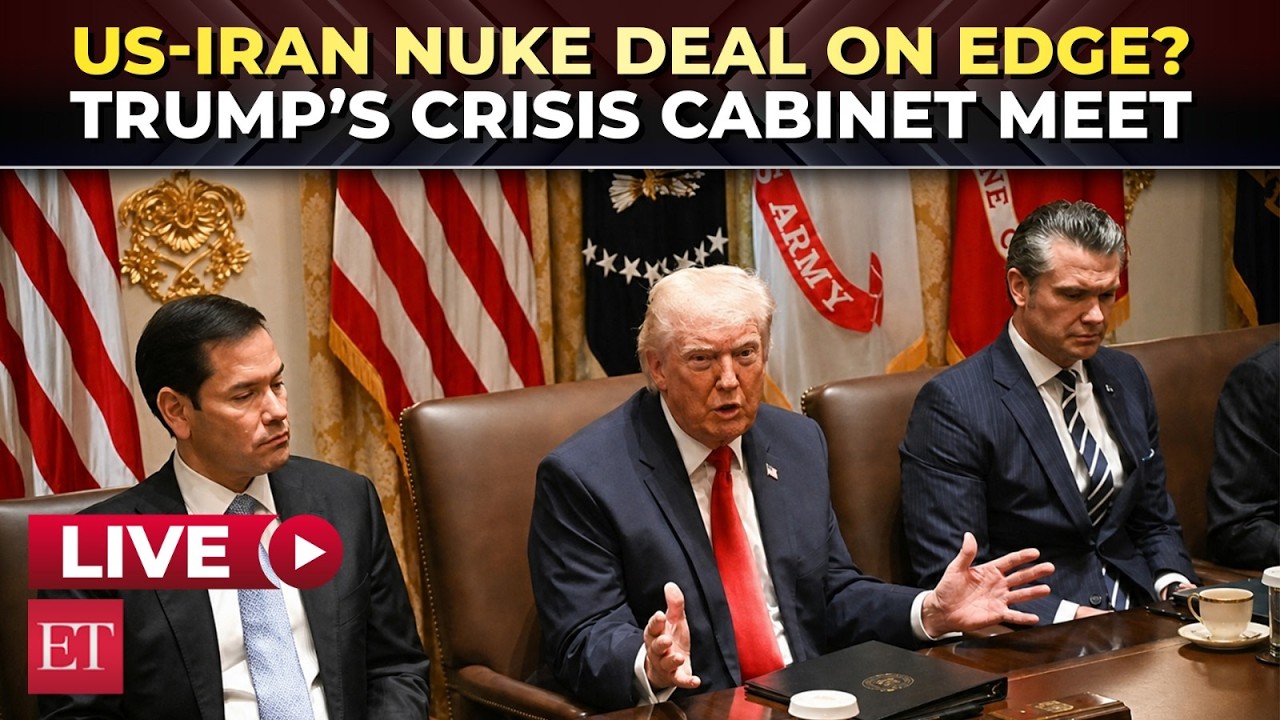
TRUMP LIVE | POTUS makes massive announcement on Iran nuke deal in high-stakes cabinet meeting
TheEconomicTimes
536 views•2026-05-28

The Silence Around Alex Coughlan | #80
RealEddieHobbs
2K views•2026-05-28

Did China Get to Marco Rubio?
ChinaUnscripted
1K views•2026-05-28

Sonko Is Now Speaker. But Who Are the Two Men Who Made His Return Possible?
djbwakali
11K views•2026-05-28

Why Was There No Mention of Israel or Gaza in The DNC's Autopsy Report
wearefindout
227 views•2026-05-29

Trump Just Got HUMILIATED... And It's Going VIRAL
harryjsisson
46K views•2026-05-29



