This video masterfully reframes infantile amnesia as a feature of neural optimization rather than a biological bug. It elegantly explains that we must lose our earliest memories to build a brain capable of navigating a complex adult world.
Install our extension to search inside any video instantly.
Why You Can't Remember Being a Baby (The Real Reason)
Added:Try to remember your third birthday. Go ahead, try. You probably can't. Not really. Maybe you have a photo someone showed you and your brain stitched a memory around it like a costume. But the real memory, the one that was actually yours in that moment, is gone. Here's the strange part. You were alive. You were conscious. You were forming thoughts, feeling joy, feeling fear, learning words. your brain was working.
So, where did all of that go? The answer is far stranger than simple forgetting.
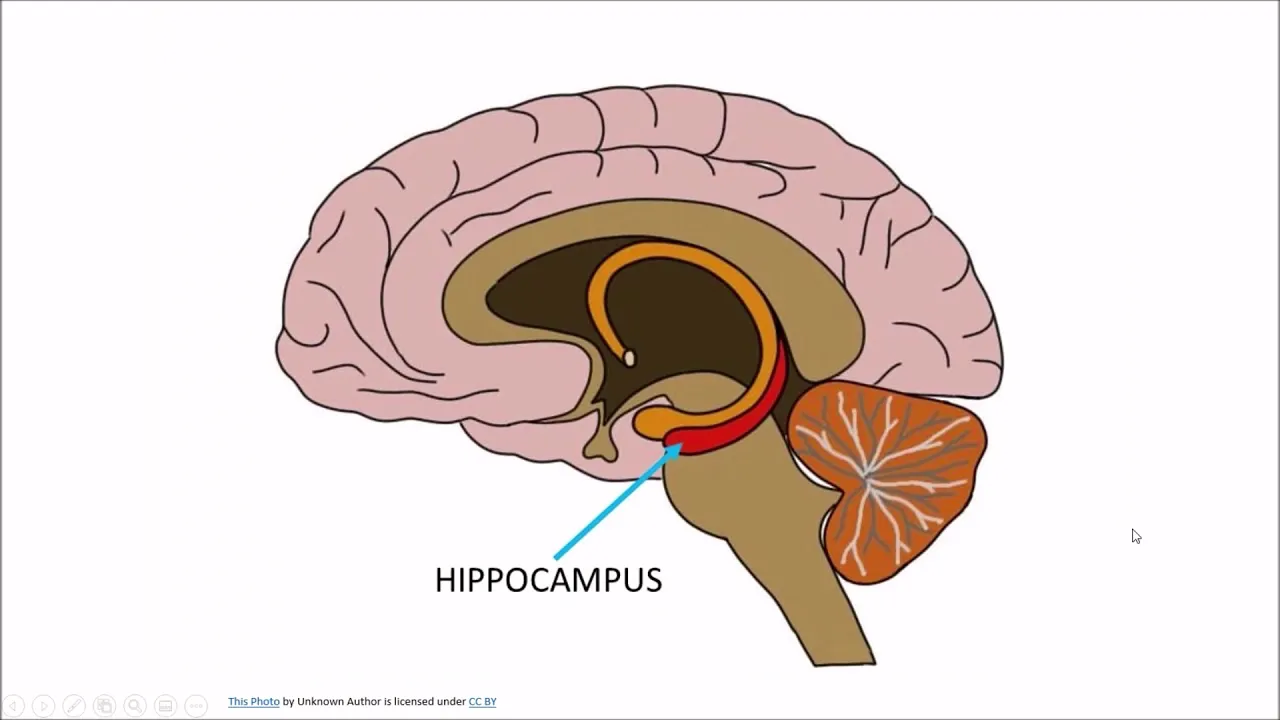
For most of human history, people assumed children just didn't have memories worth keeping. Babies cried, slept, and ate. Nothing happened in there worth storing. That was the quiet assumption for centuries. Then, over a hundred years ago, Sigman Freud noticed something odd. adults could recall almost nothing from before the age of three or four. He called it infantile amnesia. Freud's explanation was wrong, tangled up in repression and childhood trauma. But the observation itself was correct and it has held up in study after study since. So what is actually happening inside a developing brain that erases years of lived experience? Start with the hippocampus. It's the part of your brain shaped like a curled seahorse tucked deep behind your temples. Decode that name and you get the job description for free. The hippo campus is your brain's filing clerk. It takes the raw experience of a moment and converts it into a memory you can pull back out later. In a baby, that filing clerk hasn't finished training yet.
Neuroscientist Paul Franklin at the Hospital for Sick Children in Toronto ran an experiment in 2014 that reframed the entire conversation. He studied infant mice whose brains build new neurons at a blistering pace in early life, much like human infants do.
Franklin's team found that this flood of new neurons called neurogenesis doesn't just add memory capacity. It can actually overwrite and destabilize memories that are trying to form.
Picture a library where new shelves are being installed every single day and the construction crew keeps knocking over the books already sitting there. That's roughly what's happening inside an infant's hippo campus. The brain is building itself so aggressively that it can't hold on to the very experiences passing through it. Does that mean babies aren't learning anything? No.
They're learning constantly. Faces, voices, language, the rules of gravity, the comfort of a parent's smell. But there's a difference between learning a skill and recording an episode. A baby can learn that fire is hot without remembering the specific afternoon she touched a stove. One is called procedural memory. The other is called episodic memory, the kind tied to a particular place and time with you as the main character. Episodic memory is the one that needs a fully wired hippocampus. And that wiring isn't finished until somewhere around age seven. Psychologist Patricia Bower, who has spent decades at Emory University studying how memory develops in young children, found something else just as important. It's not only about the hippo campus maturing. It's about language.
Bower's research shows that children begin forming memories long before they can talk about them. But once language develops, something shifts. Kids start to encode memories with narrative structure, a beginning, a middle, an end, a sense of self moving through time. Before language, experience is more like scattered photographs. After language, it becomes a story. and stories are what stick. This is why your earliest memories, if you have any at all, tend to hover right around the age you started forming full sentences.
Before that point, your brain was recording in a format your adult mind simply can't open anymore. There's a researcher who tested this directly.
Carol Peterson at Memorial University of New Foundland spent years interviewing young children about events from their own lives, then circling back years later to see what survived. Her studies found that children as young as two could recall specific events shortly after they happened. But when researchers checked back years later, those same memories had often vanished completely, even though they clearly existed at the time. So the memories were real. They just didn't survive the trip into adulthood. Why would a healthy functioning brain throw away real memories on purpose? Here's where it gets uncomfortable, in a good way. Some researchers believe this isn't a flaw at all. It might be a feature. Holding on to every memory from infancy would mean dragging around fragments of a world that no longer exists. The infant brain that experienced the particular crib a particular caregivers's face, a particular sense of helplessness isn't useful baggage for the adult brain trying to navigate a job interview decades later. Forgetting may be the cost of building a brain efficient enough to handle the world you'll actually grow into. In other words, infantile amnesia isn't your brain failing, it's your brain in busting.
Now, here's the part that should genuinely unsettle you. This isn't something that only happened to you once long ago and then stopped. Your hippocampus is still generating new neurons today, just with a dramatically slower rate than it did in infancy.
Adult neurogenesis is real and it continues quietly for your entire life.
Which raises an uncomfortable question.
Is some version of this erasing process still happening to you right now? Most researchers would say the effect is far smaller in adulthood. Your hippocampus is mature. Your memories are encoded with language structure and a stable sense of self that an infant doesn't have yet. But the underlying mechanism, new growth, quietly reshaping old wiring, never fully switches off. So maybe you're not as far from that erased toddler as you think. Think about how often you've already forgotten something from last year. A conversation, an argument, a Tuesday that felt important at the time and is now simply gone. You didn't lose those memories the way you lost your third birthday. But you lost them. Your brain has been quietly editing your life story since before you could speak, and it hasn't stopped since. So maybe that's not a tragedy.
Maybe it's the only way a brain can keep moving forward without collapsing under the weight of everything it has ever felt. So go ahead, try to remember your third birthday again. This time, notice that the silence isn't empty. It's evidence. evidence that your brain was already doing exactly what it was built to do long before you ever knew it was doing anything at
Related Videos
8:08
Neuroscience
What is neurodegeneration?
TheSheekeyScienceShow
3K views•2019-08-19
57:35
Neuroscience
IPL - Ruth Empson "Mind the Gap"
otagouniversity
251 views•2019-07-08
14:01
Neuroscience
How our body shapes our mind | Pancho Tolchinsky | TEDxNapoli
TEDx
2K views•2019-12-05
1:00:02
Neuroscience
Impact of Early Life Deprivation Danielle Stolzenberg Marcus Pembrey Bruce McEwen
uctv
4K views•2019-12-01
10:32
Neuroscience
β-Caryophyllene for Parkinson’s: Protecting Dopamine & Easing Symptoms
parkinsonsdiseaseeducation
6K views•2025-08-09

20:44
Neuroscience
New Insights from Inside the Brain with Rodrigo Braga, PhD
NUFeinbergMed
421 views•2025-04-14
9:57
Neuroscience
Highlights for dystonia • 2025 MDS Congress
movedisorder
145 views•2025-10-27
58:17
Neuroscience
Animal Welfare Synergy Series: Dr Tom Smulders on hippocampal neurogenesis
costactionlift
135 views•2025-07-14
Trending

13:38
Law
WOW! Judge TURNS THE TABLES on Trump in His OWN $10B LAWSUIT!!!
MeidasTouch
197K views•2026-07-23

13:25
Business
Playstation NO DISC/NO BUY Fight Is Over...
DavidJaffeGames
4K views•2026-07-23

22:40
Business
Steam and Xbox Just Dropped The Hammer On PlayStation
OhNoItsAlexx
9K views•2026-07-23

16:52
Anthropology
Americans Confused in Australia for 17 Minutes Straight
IWrocker
17K views•2026-07-23