It’s a classic over-intellectualization where modern neuroscience is used to "discover" what common sense and tradition have known for millennia. Using complex brain terminology to validate the simple act of handwriting feels less like a breakthrough and more like a desperate search for academic legitimacy.
Install our extension to search inside any video instantly.
Scientists Discovered What Happens When You Write Scripture by Hand
Added:I want to tell you something that scientists just figured out that the church has known for over a thousand years. There's something that happens in your brain when you pick up a pen and you write something by hand. Something that doesn't happen when you type, doesn't happen when you read, doesn't happen when you scroll. A specific, measurable neurological event that changes how deeply you understand and retain what you're writing. And when that thing you are writing is the word of God, the implications are extraordinary. This is not a devotional theory. This is not a feel-good spiritual tip. This is neuroscience. And once you hear it, you'll never look at a pen and a piece of paper the same way again. Or at least that's my goal. So in 2003, researchers at the Norwegian University of Science and Technology published a study in the journal Frontiers in Psychology that has been making waves ever since. They took 36 university students and attached 250 electrode EEG nets to their heads, which are devices that measure electrical activity across your entire brain in real time. And then they had the students alternatively type words and then write them by hand and they watched what happened. And the difference wasn't subtle. When the students typed, the brain showed limited localized activity.
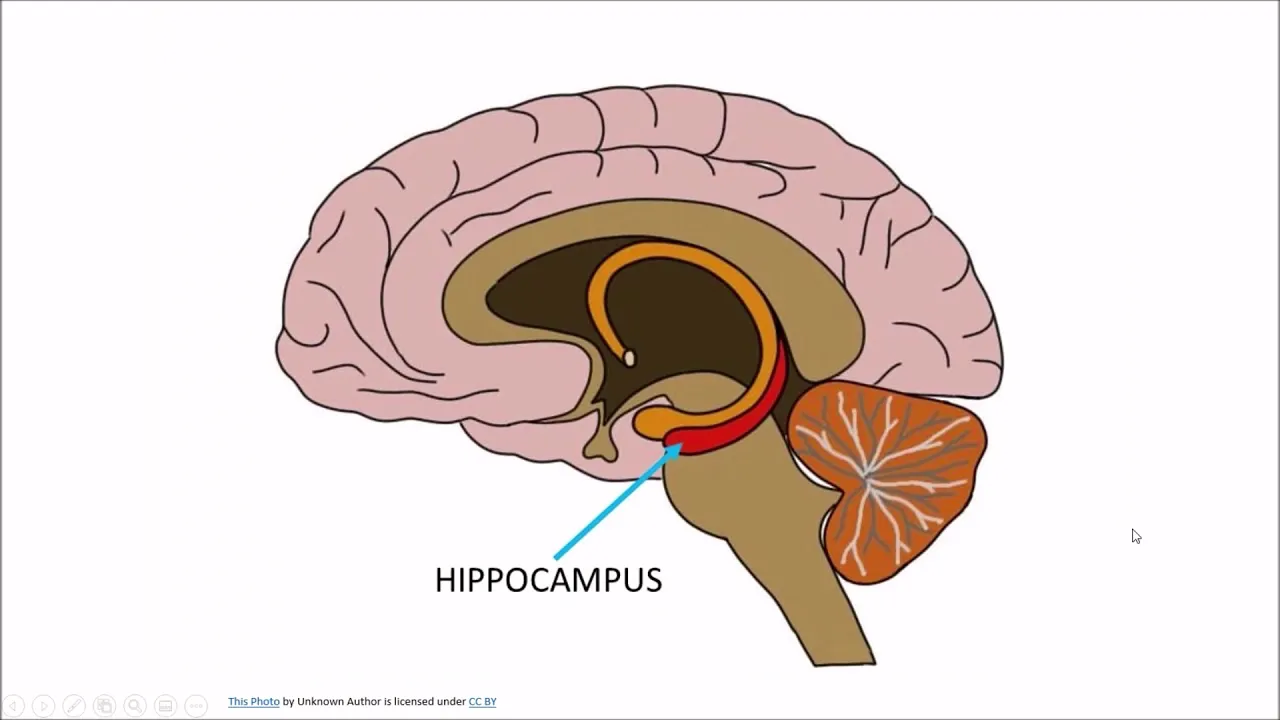
The motor areas for finger movement, a little sensory processing, and not much else. So it was efficient, fast, but shallow. When the students wrote by hand, something completely different happened. The brain lit up across an interconnected network of regions. The preoter cortex, the I don't know these scientical words, the cerebellum, cerebellum, the hippocampus. I knew that one. So all of them were firing together, all in communication with each other. And the researchers saw strong activity in what are called theta and alpha frequency bands. For you non-science nerds out there like myself, those are these specific brain wave patterns that are most strongly associated with memory formation and deep learning. The lead researcher said that the brain activity data from handwriting is characterized by an almost explosive activity. So her conclusion was direct. For memory, for learning, for deep understanding, handwriting is not just better than typing, it's categorically different from typing. They are not two versions of the same thing. They are two different cognitive experiences entirely. So here's what that means practically. When you write something by hand, your brain doesn't just record it.
It processes it. It builds neural connections around it. It encodes it in a way that makes it retrievable, that makes it feel understood rather than just seen. You're not just putting words on a paper. You're building architecture inside of your mind. Now, a separate study found that students who handwrite notes consistently outperform students who type notes on comprehension tests.
even when the typed notes are more detailed and more complete because the brain does not care about the volume of information but it does care about how deeply the information was processed and handwriting forces depth. It forces you to slow down to select to engage. You cannot write as fast as you can type and that constraint is a feature not a bug.
It's the constraint aspect of it that makes the learning actually happen. And then there's one more detail from the research that I think is the most important of them all. The study that published these findings in 2025 was led by researchers at the Catholic University of the Sacred Heart in Rome.
The Catholic University of the Sacred Heart studying the neuroscience of handwriting. I don't think that's a coincidence. I think that is God being a little funny. So, if you take everything that I just told you about handwriting and what it does to the brain, the connectivity, the memory, the processing, etc., and you apply it to the word of God, what do you get?
Because if handwriting builds stronger neural architecture around anything that you write, then what do you think it does when you're writing the living word of God? Words that the church has always taught carry actual spiritual power.
Hebrews 4:12 says, "The word of God is living and active, sharper than any two-edged sword, piercing to the division of soul and spirit." Living and active. That's not a metaphor about a book. That's the claim about what happens when you engage with scripture, that something very real occurs. And if writing by hand builds the deepest possible neural engagement with whatever it is that you write, then writing scripture by hand is layering depth on top of spiritual reality. So you're not just studying the word, you're building it into the structure of your actual mind. So God told people to do this thousands of years before neuroscience existed. We see it in Deuteronomy 6. God doesn't just tell his people to read the law or hear it out loud. He says, "These words shall be on your heart." And he says, "Write them on the doorpost of your house." In Deuteronomy 11, he says, "Fix these words. Write them." In Exodus 34, God says to Moses directly, "Write these words." He says, "Write the vision. Write these words." So over and over in different books across centuries of Revelation, the instruction isn't just to know the word or hear the word.
It's to write the word, to engage with it physically with your hand at the speed that your hand requires. and in the slowness that your body demands. God wasn't giving ancient people a workaround for the printing press. He was giving them a spiritual technology, a practice, a way of engaging with sacred words that goes deeper than reading, deeper than hearing, and deeper than anything else available to a human being. And that neuroscience is now confirming thousands of years later that it actually does something unique and irreplaceable in the human brain. This is also not new to Christian tradition.
The church has understood this for 15 centuries. Beginning around the sixth century, monasteries across Europe became what historians call scriptoria.
So rooms dedicated entirely to copying of sacred texts. Monks would sit there for hours, sometimes an entire day, and copy the Bible word for word, letter by letter in silence. And this wasn't a job or just busy work. It was a spiritual discipline. A monk who founded a monastery in the sixth century and wrote one of the most important guides to monastic life described the work of copying scripture this way as a blessed purpose, a praiseworthy zeal to preach to men with the hand to set tongues free with one's fingers and in silence to give mankind salvation. He said that Satan receives as many wounds as the scribe writes words of the Lord. So writing scripture was spiritual warfare.
Writing scripture was an act of prayer.
Writing scripture was so sacred that some monasteries required monks to recite psalms quietly while they copied so that the words passed through their mouths and their hands simultaneously.
The rule of St. Benedict, the foundational document of western monasticism written in the sixth century and still followed by Benedictine monasteries today endorsed lectio deina as the center of the monk's spiritual life. Leodina means sacred reading. It's a four-step practice where you read slowly. You meditate on what you read.
You pray in response to what you meditated on and then rest in contemplative silence with God. And in many monasteries, writing was integrated into that practice. And it wasn't a separate exercise, but it was really meant to be a form of meditation itself.
To write the word slowly was to meditate on it with the body, not just the mind.
These monks didn't have EEG nets with 256 electrodes. They didn't know about the waves or hippocampus connectivity or neural encoding, but they understood through centuries of lived experience through watching what this practice did to people that something happened when you wrote the word of God by hand. That didn't happen any other way. The people who came out of those monasteries weren't just people who knew scripture.
They were people who had been formed by it and shaped by it and who thought in it and prayed in it and lived in it because it had been built into them word by word, letter by letter at the speed of a hand moving across a page. So the science explains what happens in the brain. But what I want to talk about now is what happens in the soul because I think there's something happening when you write scripture that goes beyond what any EEG can actually measure. So when you type something, you're a producer. You're generating output. When you read something, you're a consumer.
You are receiving input. When you write something by hand, you're neither.
You're something more like a vessel.
You're allowing words to pass through you from their source, through your mind, down your arm, through your fingers, onto the page. The movement is slow enough that you have to stay with each word. You can't skim. You can't rush. And the pen won't even let you. So when the words are sacred words, when they're words that you believe carry real actual weight, actual power, actual truth about who God is and who you are, that slowness can become something else entirely. It can become a kind of dwelling. So you're not just reading that God is your shepherd. You are writing it letter by letter and word by word. And somewhere in the middle of writing it, you stop being a reader and start being a person who's sitting inside that sentence long enough to feel what it means. People who practice scripture writing consistently describe the same experience. They notice things that they've read a hundred times and have never seen before. A word that maybe they always skipped over suddenly stops them. A verse that they've known their whole life suddenly opens up in a new way. And it's because they've slowed down enough to actually be present to these things. So these things are not a coincidence. This is really what happens when you give the word of God the one thing it's always been asking for, which is your full unhurrieded attention. So, I don't want this to be a video where you watch and you think, "Well, that was cool. That was interesting." And then nothing changes. So, start. You just need a pen and a piece of paper and 5 to 10 minutes. Pick one verse or one scripture, one sentence, whatever it may be. Maybe just go with the Sunday's readings and pick the first line from the gospel and write it slowly. So don't write it to finish it and you know put that period at the end of the sentence, but write it to stay in it. Write it once, read it back, write it again. Some people write a verse five or 10 times and others write it once and then spend the rest of that time writing just what comes up, what the verse is saying to you, what questions it raises, or what it makes you want to ask God. Then put the pen down and sit in silence. Just 60 seconds. just sit there and let what you just wrote stay with you. You have just spent 10 minutes building that verse into your neural architecture. So let your brain and your soul do what they do with it. You don't need a cool journal.
You don't need to go buy anything. You don't need nice handwriting. You don't need to post it anywhere. This practice is between you and God. And it's one of the simplest but very powerful ways that you can spend 10 minutes of your day.
The monks who sat in Scriptoriia for hours writing the word of God by hand and candle at silence didn't have the vocabulary of neuroscience. They couldn't have told you about the waves or the connectivity or the encoding and blah blah blah insert all science terms here. But they knew what they were doing. They knew that they were building the word of God into themselves letter by letter, word by word, day by day until it wasn't just something that they knew, but it was something that they were. And remember what that monk said?
He said that every word of the Lord written by the scribe is a wound inflicted on Satan.
A wound inflicted on Satan. That's not a little devotional exercise or a spiritual habit for people who just have extra time. That is an act of warfare. A pen moving across a page as an assault on the enemy. Hello. That's great incentive if you ask me to start doing this. So, pick up a pen this week, write one verse, write it slowly, and write it like it matters because it does. I wish I could add music because it does matter. But I thought that was so cool and I wanted to share with you guys and I hope that some of you try this out and if you do, let me know in the comments below. I will be starting it today. Today is July 1st, so I'll come back in a week and post an update.
But thank you guys for spending this time with me. I am your host Anna and I will see you after mass.
Related Videos
8:08
Neuroscience
What is neurodegeneration?
TheSheekeyScienceShow
3K views•2019-08-19
57:35
Neuroscience
IPL - Ruth Empson "Mind the Gap"
otagouniversity
251 views•2019-07-08
14:01
Neuroscience
How our body shapes our mind | Pancho Tolchinsky | TEDxNapoli
TEDx
2K views•2019-12-05
1:00:02
Neuroscience
Impact of Early Life Deprivation Danielle Stolzenberg Marcus Pembrey Bruce McEwen
uctv
4K views•2019-12-01
10:32
Neuroscience
β-Caryophyllene for Parkinson’s: Protecting Dopamine & Easing Symptoms
parkinsonsdiseaseeducation
6K views•2025-08-09

20:44
Neuroscience
New Insights from Inside the Brain with Rodrigo Braga, PhD
NUFeinbergMed
421 views•2025-04-14
9:57
Neuroscience
Highlights for dystonia • 2025 MDS Congress
movedisorder
145 views•2025-10-27

58:17
Neuroscience
Animal Welfare Synergy Series: Dr Tom Smulders on hippocampal neurogenesis
costactionlift
135 views•2025-07-14
Trending

13:25
Business
Playstation NO DISC/NO BUY Fight Is Over...
DavidJaffeGames
4K views•2026-07-23

22:40
Business
Steam and Xbox Just Dropped The Hammer On PlayStation
OhNoItsAlexx
9K views•2026-07-23

16:52
Anthropology
Americans Confused in Australia for 17 Minutes Straight
IWrocker
17K views•2026-07-23

20:36
Business
SuperBike Factory Has Gone... What's Next for the Motorcycle Industry?
thatbikersimon
11K views•2026-07-22